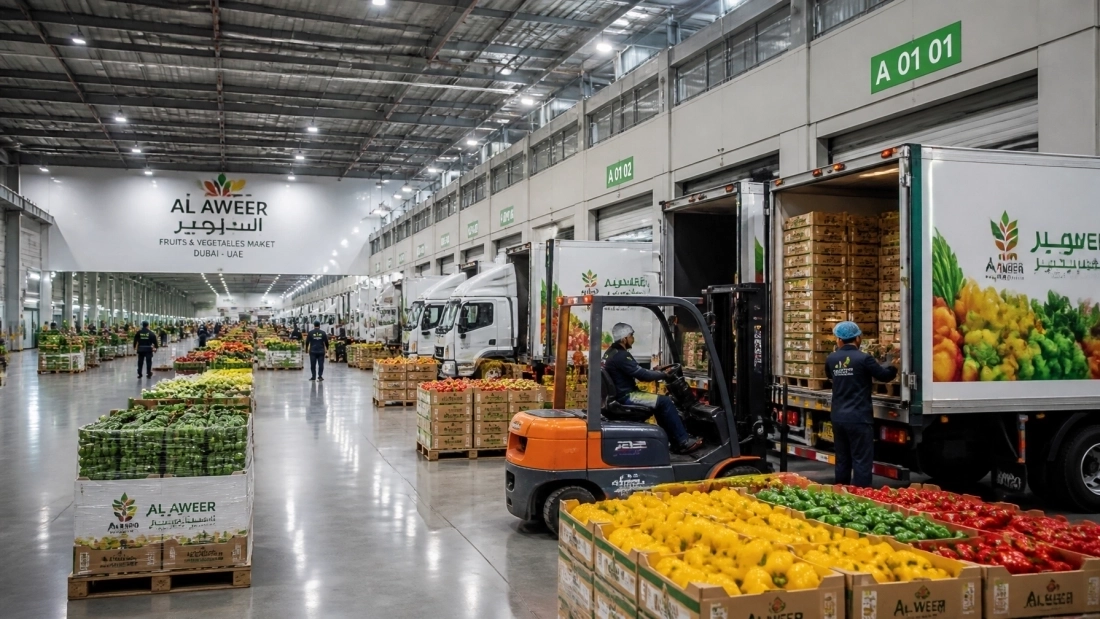
rVPCjf2GV5b-1100x619-3-1100x619

UAE Export News & Al Aweer Market Updates: September 22, 2026 – Supply Chain Protection Push, Global Food Week 2026 Model, and Verified Buyer Opportunities

Daily UAE export and wholesale market briefing: Tuesday, September 22, 2026

The UAE food trade continues to expand, but exporters are operating in a market where supply chain protection, regulatory compliance, logistics resilience, and accurate wholesale pricing are increasingly important.

Today’s briefing covers the latest UAE export news, Al Aweer market updates, regulatory requirements, food manufacturing developments, and opportunities for international exporters seeking a verified buyer for exporters UAE. It also explains how Mayil Global’s 3 percent commission distributor UAE model and immediate cash-and-carry container purchases can support compliant market entry.

1. UAE Export News: Supply Chain Protection and Food Security

Protecting global food and fertilizer flows

The UAE has called for stronger protection of global supply chains and international maritime routes to safeguard food security. The warning is particularly relevant to food-importing countries that depend on stable access to fertilizer, seeds, animal feed, energy, and agricultural inputs.

As reported in UAE coverage on September 21, persistent disruption to international trade routes can affect:

  • Fertilizer availability and agricultural production.
  • Freight, insurance, and handling costs.
  • Food prices in import-dependent markets.
  • Delivery schedules for perishable products.
  • International economic and political stability.

The UAE’s position is that freedom of navigation and uninterrupted trade flows are essential to food security. Disruptions through strategic maritime corridors can create consequences far beyond the original point of conflict.

For exporters shipping fresh produce, rice, spices, eggs, and other food products, the practical lesson is clear: supply chain planning must include alternative routing, reliable documentation, flexible inventory planning, and a UAE distribution partner capable of managing arrival requirements.

Global Food Week 2026 expands its commercial model

Global Food Week 2026 is introducing a broader model that combines its established B2B trade, policymaking, and investment platform with consumer-facing activity.

The new model includes a direct business-to-consumer dimension, including the “Shop at the Show” concept. This structure creates additional exposure for food manufacturers, agricultural suppliers, ingredient companies, retailers, and technology providers.

The event’s specialised focus areas include:

  1. Food trade and procurement.
  2. Supply chain resilience.
  3. AgriTech and agricultural innovation.
  4. Sustainable food systems.
  5. Alternative proteins and future foods.
  6. Agricultural investment and finance.
  7. Animal feed.
  8. Honey and related value-chain activities.

The combined B2B and B2C approach reflects the UAE’s broader objective of connecting food production, market access, consumer awareness, and investment. It also creates opportunities for international exporters that can demonstrate consistent quality, documented sourcing, compliant labelling, and dependable delivery.

Dubai food manufacturing moves toward 2028 targets

Dubai is positioning itself as a major centre for next-generation food manufacturing ahead of Gulfood Manufacturing 2026, scheduled for November 3–5, 2026.

The national direction includes a target of AED 40 billion in food trade by 2028, alongside increased local production, food processing, automation, packaging, and supply chain capability.

Recent industry developments include:

  • Investindustrial-backed Nexture agreeing to acquire Dubai-based food ingredients manufacturer La Crema.
  • Increased attention on advanced food processing and ingredient manufacturing.
  • Circus SE launching commercial autonomous AI robotics food production in the UAE with Royal Prestige Catering.
  • Continued investment in automation, food safety, packaging, and production efficiency.

These developments support the UAE’s transition from a food-import and distribution hub into a more integrated food manufacturing and re-export platform. For exporters, this creates demand not only for raw produce but also for ingredients, spices, rice, eggs, semi-processed foods, and private-label supply.

Sharjah–Oman logistics corridor records strong early performance

The Sharjah–Oman logistics corridor has handled approximately US$463 million in cargo during its first three months. The corridor strengthens connections between UAE logistics infrastructure, Omani ports, inland distribution, and regional trade routes.

The development is relevant to food exporters because it may provide:

  • Additional routing options for regional cargo.
  • Better integration between ports and inland distribution.
  • More flexible movement of food inputs and finished products.
  • Greater resilience when maritime routes face disruption.

The Sharjah–Oman logistics development reinforces the importance of route diversification and professional logistics coordination.

Global cargo shipping containers and logistics management for UAE food distribution

2. Al Aweer Market Updates: September 22 Wholesale Benchmarks

The following figures are indicative wholesale benchmarks for Al Aweer market planning on September 22, 2026.

Product Indicative wholesale benchmark
Onions AED 2.20–2.25/kg
Tomatoes AED 1.44–4.00/kg, depending on variety and grade
White potatoes AED 1.43/kg
Garlic AED 7.58/kg
Ginger AED 6.29/kg

These prices are not fixed offers. Al Aweer wholesale prices move daily according to quality, origin, grade, packaging, arrival timing, available volume, and negotiation.

Market direction

The current market direction indicates:

  • The gourd complex is rallying.
  • Cucumber prices are soft.
  • Leafy vegetables are also soft.
  • Garlic and ginger remain firm relative to several other vegetable categories.
  • Tomato pricing continues to show a wide range by variety, origin, and presentation.
  • Onion values require origin-specific analysis before shipment planning.

Exporters should verify live rates before loading or dispatching a container. A price that appears attractive at origin may not remain viable after freight, clearance, handling, inspection, storage, commission, and market-level negotiation.

Mayil Global supports market assessment through local wholesale distribution, product inspection, organized logistics, and direct B2B access. This approach helps exporters align product grade and shipment timing with actual UAE demand.

3. Regulatory Updates: FIRS, ZAD, Labelling, and Certificates

Registration before Dubai Customs clearance

Food exporters must complete the required registration and import procedures before cargo reaches Dubai Customs clearance. For Dubai-bound shipments, FIRS registration and per-shipment import permits are key operational requirements.

Exporters should also confirm alignment with the federal ZAD platform and the relevant emirate-level food safety systems. Requirements can vary by product category, origin, packaging format, and whether the shipment includes animal-derived products.

Core documentation typically includes:

  • Commercial invoice and packing list.
  • Bill of lading or airway bill.
  • Certificate of origin.
  • Health certificate.
  • Phytosanitary certificate for applicable plant products.
  • Certificate of analysis, or CoA.
  • Certificate of conformity where required.
  • Product registration records.
  • Import permit.
  • Approved Arabic-English label artwork.
  • Halal documentation for applicable products.

Arabic-English labels and document consistency

Labels must accurately state the product name, ingredients, allergens, country of origin, dates, net weight, storage conditions, and other mandatory information in Arabic and English where required.

The physical packaging, approved label, invoice, product registration, and certificates must match. Inconsistencies can result in inspection delays, clearance issues, relabelling costs, or rejection.

The reported return of more than 200 containers of Iranian agricultural products is a clear reminder that compliance risk can create substantial commercial losses. Exporters should complete a pre-shipment review with their UAE importer and verify current requirements through the relevant authorities. The MOCCAE food safety guidance provides an important reference point.

4. Market Insights for International Exporters

Why shipment timing matters

Al Aweer is a high-volume wholesale market, but it is not a uniform pricing environment. Buyers assess product condition, origin, pack size, shelf life, grade, and expected turnover.

Before shipping, exporters should confirm:

  1. The target buyer and sales channel.
  2. The required grade and pack format.
  3. The current wholesale price range.
  4. The expected transit and clearance schedule.
  5. The applicable registration and permit requirements.
  6. The financial structure for the shipment.

Fresh produce requires especially precise coordination. Delays can reduce shelf life, affect grade, and increase handling costs. Premium products require strong documentation and careful temperature and hygiene controls from farm to market.
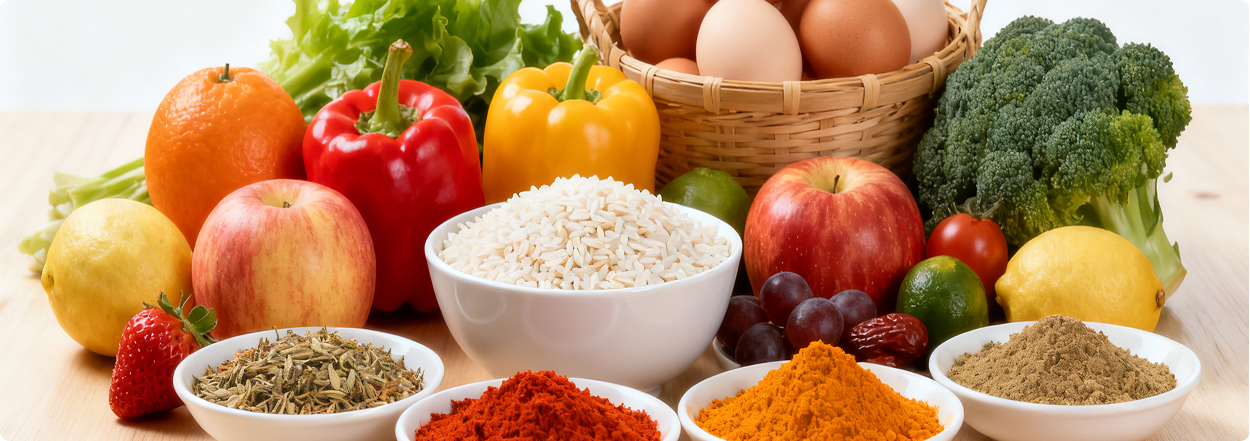
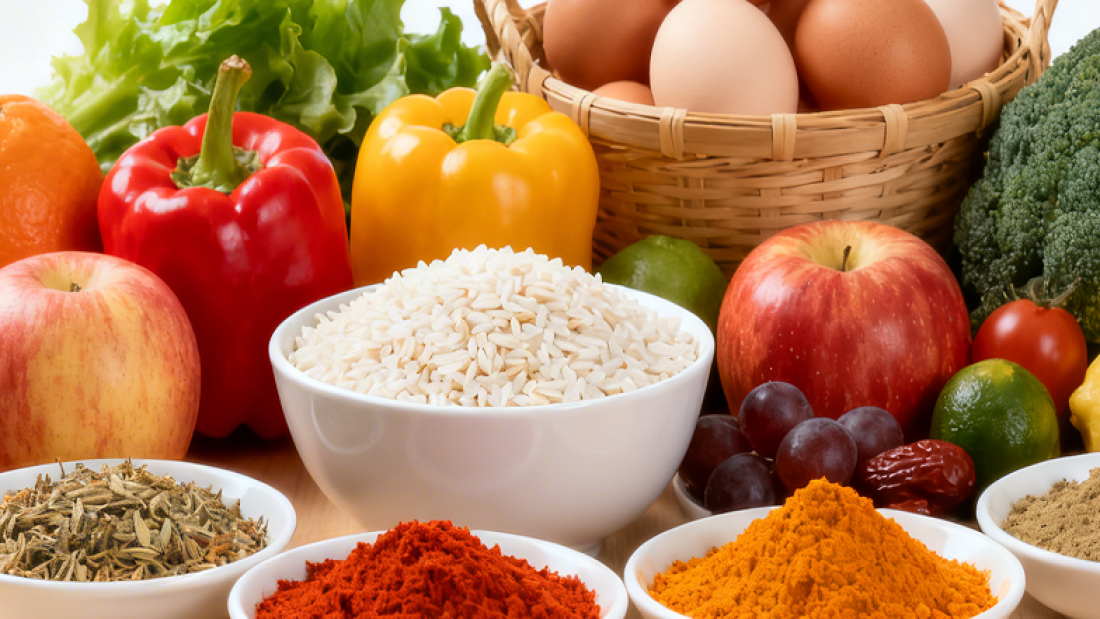
Fresh fruits, vegetables, spices, rice, and eggs prepared for UAE B2B buyers

5. How to Export Food to Dubai Through a Verified Buyer

Understanding how to export food to Dubai begins with selecting the correct local importer or distribution partner.

A practical process includes:

Step 1: Confirm the product opportunity

Share the product specification, origin, grade, pack size, available volume, harvest or production schedule, and expected shipment frequency.

Step 2: Review compliance requirements

Check FIRS, ZAD, import permits, label requirements, CoA, certificates of conformity, phytosanitary documentation, halal certification, and shelf-life requirements.

Step 3: Match the shipment with market demand

Compare the product with current Al Aweer market benchmarks. The correct shipment plan depends on quality, origin, arrival date, and the intended buyer segment.

Step 4: Complete pre-shipment inspection

Quality control should cover appearance, weight, packaging, contamination risk, temperature, damage, and conformity with the approved specification.

Step 5: Agree commercial terms

Exporters may use a conventional wholesale arrangement, Mayil Global’s 3 percent commission distributor UAE model, or an immediate cash-and-carry container purchase for approved products.

6. Mayil Global: Verified Buyer for UAE Exporters

Mayil Global is a verified buyer for exporters UAE, supporting qualifying international suppliers with local wholesale distribution across the UAE.

The company supplies supermarkets, restaurants, retailers, and wholesale distributors with:

  • Fresh fruits and vegetables.
  • Premium spices.
  • Premium rice.
  • Farm fresh eggs.
  • Other approved food products.

Mayil Global operates through farm-direct sourcing, trusted global suppliers, inspection at every stage, hygienic handling, proper storage, and organized logistics. These controls are designed to deliver dependable supply and consistent quality to UAE B2B customers.

For international exporters, the 3 percent commission distributor UAE model provides a transparent alternative to higher-margin brokerage structures. Approved exporters can also discuss immediate cash-and-carry container purchases, subject to product specifications, compliance approval, inspection, and agreed commercial terms.

The model is designed to improve liquidity, reduce receivables exposure, and provide practical access to UAE wholesale distribution.

Mayil Global’s sourcing and logistics system supports reliable movement from supplier to market. Exporters can also review the product range and the broader verified buyer and export model.

Closing: Discuss Your Next UAE Food Shipment

UAE export opportunities remain strong, but success depends on compliance, accurate market intelligence, quality control, and dependable distribution.

International suppliers of fruits, vegetables, spices, rice, eggs, honey, ingredients, and other food products can contact Mayil Global to discuss:

  • UAE wholesale demand.
  • Al Aweer market opportunities.
  • FIRS and ZAD preparation.
  • Arabic-English labelling.
  • CoA and certificate requirements.
  • The 3 percent commission distributor UAE model.
  • Immediate cash-and-carry container purchases.

Contact Mayil Global to present your product, confirm buyer requirements, and plan your next compliant shipment to the UAE.
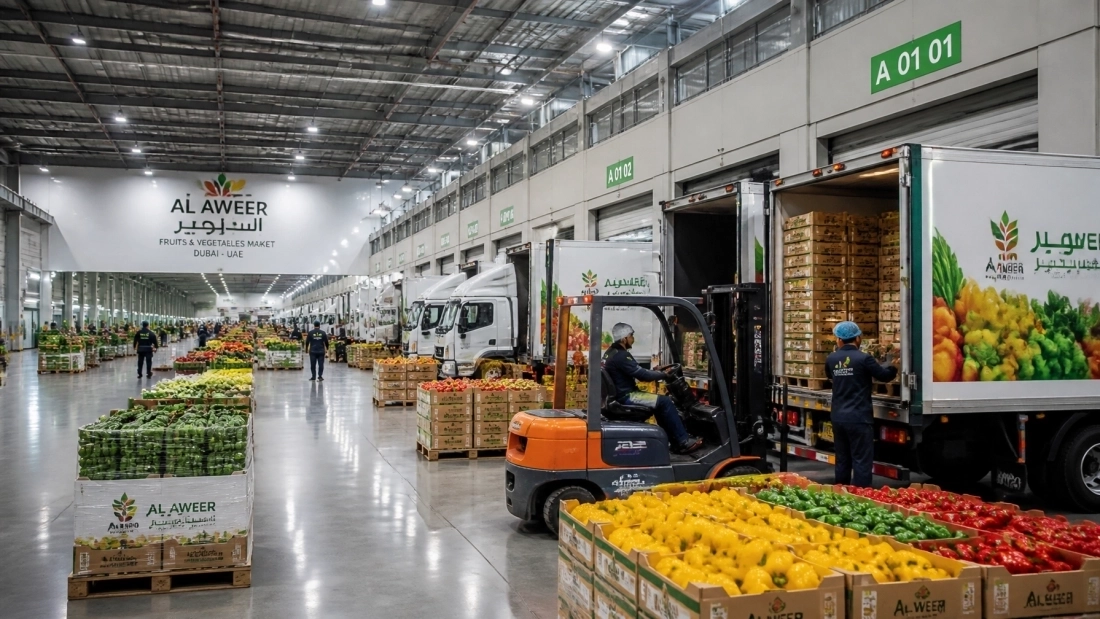

rVPCjf2GV5b-1100x619-3-1100x619

Verified Buyer & Exporter Authority Series: October 12 Al Aweer Market Briefing, Rebound Levels Consolidate, Onion Origin Arbitrage Economics, Container-Level Shelf-Life Discipline, Buyer Qualification After Global Food Week 2026, and How to Export Food to Dubai

This daily UAE export news and Al Aweer market updates briefing uses the latest available Al Aweer board reference dated 19 September 2026. No newer board has been published. The market is therefore best understood as a consolidation and holding pattern following the 17 September correction and the subsequent rebound.

For exporters, the central requirements remain consistent: dependable sourcing, accurate landed-cost planning, documented quality control, compliant logistics, and a verified UAE buyer.

1. Al Aweer Market Direction: Rebound Levels Consolidate

The 19 September board showed a broad rebound across fresh produce. The largest increases included:

Product Board movement
Green capsicum +336.7%
Cucumber +144.0%
Cabbage +130.8%
Lettuce +125.0%
Iceberg +108.5%
Ground tomato +93.1%
Red chilli pepper +80.4%
Green chilli pepper +79.7%
Eggplant +76.5%
Yellow and red capsicum +75.0%
Greenhouse tomato +69.2%
White onion +66.9%
Cauliflower +57.1%
Brown onion and zucchini green +50.0%

Additional gains covered Jordan road tomato (+46.9%), white cucumber (+42.9%), small purple brinjal (+39.9%), French beans (+35.3%), dark purple brinjal (+31.3%), kiwi Hayward green and cherry tomatoes (+25.0%), carrot from Iran and green papaya (+22.2%), snake gourd and valery (+24.8%), beetroot (+24.7%), pink Sudan onion (+21.8%), long green brinjal (+20.2%), Lebanon potato and pumpkin (+20.0%), Jordan sweet melon (+20.1%), and Kenya air hass avocado (+8.7%).

Selected lines softened. Green chilli G4 fell 30.0% to AED 3.68/kg, long purple brinjal declined 28.6% to AED 3.57/kg, garlic India fell 12.0% to AED 6.67/kg, and strawberry Egypt declined 9.1% to AED 20.00/kg. Mango Kent, pomegranate India, South Africa lemon, Egypt onion and leaf of arum also recorded lower levels.

The pattern indicates price recovery rather than a uniform shortage. Exporters should avoid extrapolating one board movement into a container decision.

Reference prices

Product Indicative reference
UAE local cucumber, 20 kg carton AED 2.25/kg
UAE local white cucumber AED 2.50/kg
UAE local zucchini, 20 kg carton AED 1.75/kg
Green capsicum, 7 kg carton AED 10.00/kg
Red or yellow capsicum AED 8.75/kg
UAE local bottle gourd AED 4.20/kg
UAE local okra AED 6.00/kg
Greenhouse tomato AED 4.89/kg
UAE local eggplant AED 3.00/kg
Chinese garlic, normal AED 5.00/kg
Chinese garlic, pure white AED 7.14/kg
China ginger AED 9.64/kg
India ginger AED 6.29/kg
Kenya air hass avocado AED 12.50/kg
Mexico air hass avocado AED 25.00/kg
Rwanda hass avocado AED 13.00/kg

Compliance warning: Iran-origin prices appearing on the board, including Iran cucumber, cabbage, lettuce, iceberg, ground tomato, capsicum, eggplant, carrot and other lines, are historical intelligence only. They are not executable because of the UAE suspension effective 19 August 2026. They must not be used for procurement, shipment planning, container budgeting or negotiations.

2. Onion Origin Arbitrage: Price Is Only the First Variable

Onion origin economics currently show a meaningful spread:

Origin and pack Indicative price
India new crop, 18 kg AED 3.75/kg
Egypt, 20 kg PPE bag AED 2.10/kg
Sudan pink, approximately 50 mm AED 3.35/kg
Turkey red onion AED 2.55/kg
Yemen onion AED 2.55/kg

India’s Maharashtra crop is reportedly delayed by one to one-and-a-half months. Remaining Garwa pink stocks are limited, and only a small share is considered suitable for export. Nashik farmgate pricing is reported at approximately USD 42–52 per quintal, with an upside scenario of USD 84–94 per quintal if Diwali demand exceeds supply.

The sharpest potential pricing window is 25 September to 30 October 2026. There is currently no Indian onion export ban, minimum export price or export duty. Exporters must still monitor current DGFT notifications before committing cargo.

Illustrative landed-cost calculation

The following is a planning example for 20,000 kg of Indian onions at AED 3.75/kg:

  1. Product cost: 20,000 kg × AED 3.75 = AED 75,000
  2. Assumed freight, port, documentation and handling: AED 15,000
  3. Base landed cost: AED 90,000
  4. Assumed shrinkage of 5%: 19,000 kg saleable
  5. Usable landed cost: AED 90,000 ÷ 19,000 = AED 4.74/kg
  6. Assumed 5% customs duty on product value: AED 3,750
  7. Adjusted usable landed cost: approximately AED 4.93/kg, before VAT, commission and separately agreed charges

India–UAE CEPA may provide zero-duty treatment for qualifying goods, subject to classification and complete supporting documentation. This calculation is illustrative and is not a quotation or commercial commitment.

3. Shelf-Life Discipline Determines Realised Container Margin

Board price does not determine container profitability. Saleable quantity, remaining shelf life and clearance timing determine the realised margin.

Products generally require at least 50% remaining shelf life at arrival. Products with a total shelf life of three months or less may require two-thirds remaining shelf life. Exporters should plan for 50–70% remaining shelf life wherever possible.

Risk-based inspection and sampling at Jebel Ali typically requires approximately two to five working days. The commercial impact is direct:

  • Transit time reduces the saleable window.
  • Inspection dwell increases inventory exposure.
  • Cold-chain interruptions accelerate deterioration.
  • Shrinkage raises the usable landed cost per saleable kilogram.
  • A delayed release can cause the shipment to miss the strongest Al Aweer trading period.

A container purchased at a low board price can still produce a loss if quality deterioration reduces saleable volume. Mayil Global maintains quality control through inspection, hygienic handling, appropriate storage and organised distribution from farm to market.

Quality inspection and hygienic handling for UAE food distribution

4. How to Export Food to Dubai: Regulatory Preparation Sequence

Exporters planning how to export food to Dubai should complete the following sequence before dispatch:

  1. Confirm the importer
    Verify that the UAE importer holds a valid trade licence with food-trading activity.

  2. Register every SKU
    Complete federal ZAD registration and Dubai Municipality FIRS registration before arrival.

  3. Approve labels
    Ensure Arabic-English labels accurately state the product name, origin, ingredients, allergens, dates, net weight and storage conditions. Apply Nutri-Mark A-to-E nutrition grading where required.

  4. Obtain certificates
    Secure phytosanitary certificates for fresh produce. Obtain health certificates and halal certification from a MOCCAE-recognised body for animal-derived products.

  5. Obtain electronic permits
    Secure electronic MOCCAE import permits before dispatch.

  6. Align documents
    Keep HS codes, commercial invoice, packing list, certificate of origin, bill of lading or airway bill, product specifications and physical labels fully consistent.

  7. Protect shelf life
    Plan production, packing, transport, inspection and delivery around the required remaining shelf-life threshold.

  8. Allow inspection time
    Include the expected two-to-five-working-day inspection period in the arrival and sales plan.

Requirements vary by product, origin, emirate and import route. Exporters must confirm the final requirements with the importer and relevant authorities. The MOCCAE guidance referenced in Mayil Global’s export brief should be reviewed alongside current Dubai Municipality requirements.

5. Buyer Qualification After Global Food Week 2026

Global Food Week 2026, held from 6–8 October at ADNEC Centre Abu Dhabi, should be used to verify buyers rather than collect unqualified leads.

Before accepting a purchase order or appointing a distributor, verify:

  • UAE trade licence and food-trading activity
  • Approved product categories and import routes
  • Warehouse and cold-chain capability
  • Purchase volume, frequency and payment terms
  • FIRS, ZAD, labelling and import-permit readiness
  • Actual distribution coverage across supermarkets, restaurants and retailers

A buyer who cannot demonstrate import readiness may create clearance delays, payment exposure and product losses. Buyer qualification is therefore a supply-chain control, not a sales formality.

6. Mayil Global: Verified Buyer and 3% Commission Distributor UAE

Mayil Global operates as a verified buyer for exporters UAE and a 3 percent commission distributor UAE, not as an unqualified buyer-search listing.

Qualifying exporters can choose between:

  • A 3% commission on agreed realised sale value, or
  • An immediate cash-and-carry container purchase, subject to approval

For example, on an AED 100,000 realised sale value:

  • Realised sale value: AED 100,000
  • 3% commission: AED 3,000
  • Balance to exporter: AED 97,000, before separately agreed costs

This provides a transparent alternative to a publicly advertised 5% commission structure.

Six-stage approval process

  1. Offer and specification review
  2. Technical and compliance review
  3. Buyer and market validation
  4. Pre-shipment inspection
  5. Commercial approval
  6. Container acceptance and settlement

Exporter submissions should include origin, variety, grade, pack size, quantity, harvest date, shelf life, certifications, product photos, HS code, target price, shipment schedule and preferred settlement route.

Exporters can review Mayil Global’s products, sourcing and logistics system, and previous Al Aweer market briefing.

Fresh produce and premium food products for UAE wholesale buyers

7. UAE Wholesale Supply for Supermarkets, Restaurants and Retailers

Mayil Global supplies supermarkets, restaurants, retailers and wholesale distributors across the UAE with:

  • Fresh fruits and vegetables
  • Premium spices
  • Premium rice
  • Farm-fresh eggs

The operating model combines farm-direct sourcing, trusted international suppliers, inspection at every stage, hygienic handling and packaging, proper storage, organised logistics and timely delivery.

For local UAE B2B buyers, this supports dependable replenishment and consistent quality. For exporters, it provides structured market access through a verified buyer, transparent 3% commission and immediate cash-and-carry options subject to approval.

Contact Mayil Global to submit a product offer or discuss wholesale requirements.

Data Note and Disclaimer

Prices are indicative references from the 19 September 2026 Al Aweer board. Actual prices vary by origin, grade, packaging, volume, timing, quality and negotiation. Iran-origin pricing is historical intelligence only and is not executable because of the UAE suspension effective 19 August 2026. The onion landed-cost calculation is illustrative and is not a quotation, guarantee or commitment. Regulatory requirements must be confirmed with the importer and relevant UAE authorities before shipment.

ChatGPT-Image-Apr-27-2026-07_36_46-PM

Rice, Pulses, and Grains Export Series with 3% Commission Model: Exporting Golden Sella Basmati Rice, Masoor Dal, and Pearl Millet to Dubai

The Dubai market requires dependable access to staple food products, consistent container-level quality, and clear commercial terms. Golden Sella Basmati Rice, Masoor Dal, and Pearl Millet are established products for supermarkets, restaurants, retailers, institutional kitchens, and wholesale distributors across the UAE.

Mayil Global supports this supply chain through farm-direct sourcing from trusted farms and global suppliers, structured quality control, hygienic handling, and organised distribution. For international exporters, the company provides a transparent 3% commission-based distribution model and immediate Cash & Carry container purchase options.

For UAE buyers, this creates a direct route to wholesale food products with cost visibility, reliable logistics, and quality control from sourcing through delivery.

Why These Products Matter in Dubai’s Wholesale Market

Dubai serves both local consumption and regional re-export demand. Food products entering the market must meet practical requirements for shelf stability, cooking performance, packaging, documentation, and delivery reliability.

Golden Sella Basmati Rice

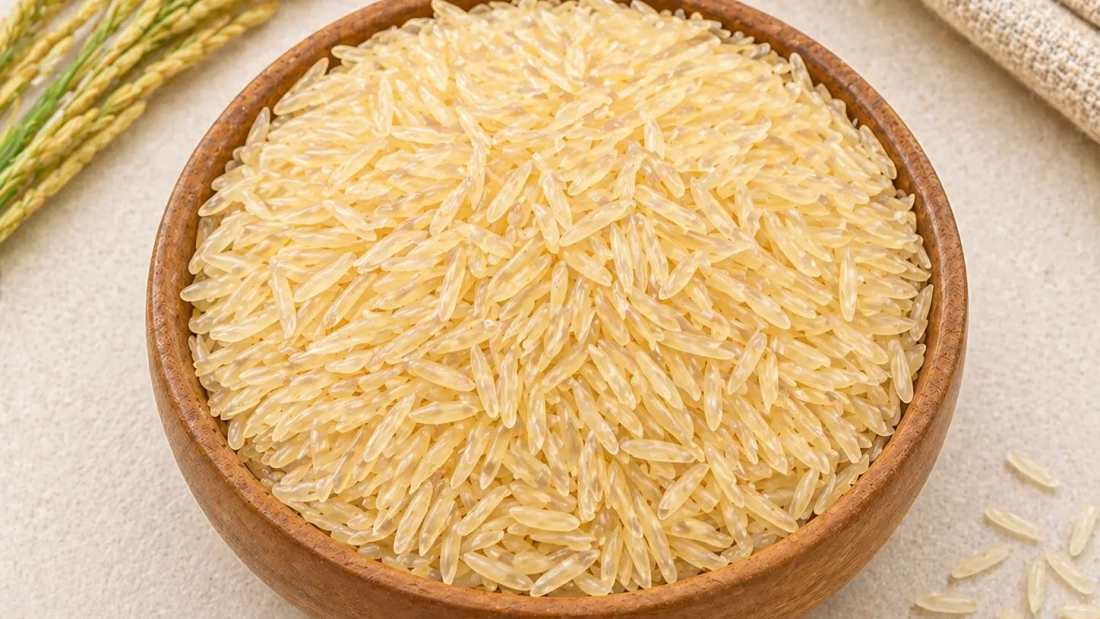
Golden Sella Basmati is a parboiled rice category recognised for its golden colour, long grain profile, and suitability for bulk cooking. It is commonly used by restaurants, catering businesses, supermarkets, and foodservice distributors.

The 1121 variety is a frequent export specification. One UAE-facing product listing identifies 1121 Golden Sella with an average grain length of approximately 8.30–8.35 mm, subject to the contracted grade and supplier specification. Buyers should approve the final product specification, sample, packaging, and tolerance before container loading.

For businesses comparing bulk rice suppliers Dubai, the key purchasing factors include:

  • Grain length and uniformity
  • Broken grain percentage
  • Moisture level
  • Foreign matter and admixture controls
  • Crop year and origin
  • Packaging format and private-label requirements
  • Container loading weight
  • Delivery terms and documentation

Mayil Global coordinates these specifications before shipment so buyers receive a commercially clear offer.

Masoor Dal

Masoor Dal, or red lentils, is a practical staple for retail and foodservice channels. It supports demand from supermarkets, restaurants, caterers, wholesalers, and distributors serving South Asian and wider regional consumer segments.

The product may be supplied as whole or split lentils depending on the buyer’s requirement. Colour, size, cleanliness, moisture, packaging, and cooking performance must be agreed during the sample approval stage.

Pearl Millet

Pearl Millet, commonly known as bajra, supports specialty retail, traditional food channels, health-oriented product ranges, and food manufacturers. Buyers may require whole grain, cleaned grain, milled formats, or specific packaging sizes.

As with rice and pulses, the commercial value of Pearl Millet depends on consistent grading, hygienic handling, suitable storage, and dependable replenishment. Mayil Global’s sourcing network allows buyers to evaluate these products as part of a wider grains and staples procurement programme.

Food supply chain and logistics operations supporting wholesale distribution in the UAE

The 3% Commission Model for International Exporters

Mayil Global’s 3% commission model is designed for international and local exporters that want UAE market access without absorbing multiple layers of traditional trading margins.

Under the model, Mayil Global supports buyer matching, commercial coordination, product positioning, order management, and distribution through its UAE B2B network. The commission is structured as a clearly defined 3% charge, with the calculation base and payment terms agreed before the transaction proceeds.

This single-digit commission model offers several operational benefits:

  1. Cost transparency
    Exporters understand the distribution cost before entering the transaction.

  2. Reduced margin stacking
    A defined 3% commission can limit the accumulation of multiple intermediary margins. Final landed cost still depends on freight, customs, duties, packaging, insurance, and agreed trade terms.

  3. Market access
    Exporters gain access to supermarkets, restaurants, retailers, and wholesale distributors seeking regular supply.

  4. Commercial control
    Product specifications, price, commission, delivery terms, and documentation responsibilities are established in advance.

  5. Repeat-order potential
    Consistent quality and reliable fulfilment support long-term supply relationships rather than isolated spot transactions.

For exporters searching for a 3 percent commission distributor UAE, the most important consideration is not only the percentage. The distributor must also provide verified market access, operational follow-up, quality control, and reliable payment coordination.

Why UAE Wholesale Buyers Benefit

A UAE wholesale food buyer Dubai requires more than a low initial quotation. The supply must remain consistent across containers, deliveries must arrive according to schedule, and the product must meet the approved specification.

Mayil Global supports buyers through:

  • Direct sourcing from trusted farms and global suppliers
  • Product inspection before dispatch
  • Hygienic packing and secure handling
  • Proper storage from farm to market
  • Organised container and last-mile logistics
  • Documentation coordination
  • Consistent communication during shipment
  • Access to Cash & Carry container purchases where applicable

Cash & Carry purchasing can provide immediate access to available inventory and support faster stock rotation. It can also reduce the waiting period associated with longer distribution cycles. Buyers should confirm product availability, inspection terms, payment conditions, and delivery arrangements for each shipment.

Quality control and hygienic handling of food products within the wholesale supply chain

Mayil Global’s Transparent Export Workflow

Transparency is central to the 3% commission model. The following process explains how exporters and UAE buyers can move from enquiry to delivery.

1. Enquiry and Product Brief

The exporter or buyer submits an enquiry covering:

  • Product and variety
  • Required quantity
  • Packaging format
  • Origin preference
  • Target price or trade terms
  • Delivery location
  • Required certifications and documentation
  • Expected shipment frequency

For Golden Sella Rice, the enquiry should identify the variety, grain length, broken percentage, moisture, packing size, and whether private-label packaging is required.

2. Verified Buyer Matching

Mayil Global reviews the requirement and matches the product with suitable UAE B2B demand. This may include supermarkets, restaurants, retailers, institutional caterers, and wholesale operators.

This step is important for exporters seeking a verified buyer for exporters UAE. Buyer matching helps reduce unqualified enquiries and aligns the shipment with a realistic purchasing channel.

3. Sample Approval

Before final confirmation, the buyer reviews a product sample or approved specification sheet. The sample approval establishes the commercial benchmark for the shipment.

The parties should confirm the agreed grade, packaging, labelling, shelf-life information, country of origin, and quality tolerances in writing.

4. Inspection and Quality Control

Inspection takes place at appropriate stages of sourcing, processing, packing, and loading. Checks may cover cleanliness, grain or pulse uniformity, packaging integrity, moisture, foreign matter, and conformity with the approved specification.

Mayil Global’s broader sourcing and logistics system is designed to maintain quality from supplier selection through storage and transportation.

5. Container Loading

After approval, the goods are packed and loaded according to the agreed shipment plan. Container-level consistency is important because wholesale buyers require the same commercial performance across multiple deliveries.

Loading records, quantity checks, packaging verification, and inspection documentation support better control over the shipment.

6. Documentation

The document pack depends on the product, origin, destination, and agreed trade terms. Typical documents may include:

  • Commercial invoice
  • Packing list
  • Certificate of origin
  • Bill of lading
  • Health or quality certificate where applicable
  • Phytosanitary documentation for relevant products
  • Product specification and labelling information

Exporters should confirm current UAE import requirements with their compliance advisers and the relevant authorities. Mayil Global’s guide on how to export food to Dubai provides additional operational guidance.

7. Delivery in the UAE

Once the shipment clears the required procedures, Mayil Global coordinates storage, wholesale distribution, or delivery to the buyer. Proper handling during the final stage protects product condition and supports reliable customer service.

Delivery trucks prepared for wholesale food distribution across the UAE

Choosing the Right Commercial Route

Exporters typically have two primary routes through Mayil Global:

3% Commission-Based Distribution

This option suits exporters seeking ongoing UAE market development, buyer access, and distribution support while retaining a transparent cost structure.

Immediate Cash & Carry Container Purchase

This option suits exporters prioritising faster stock movement and immediate commercial settlement, subject to product inspection, availability, and agreed terms. Mayil Global has previously outlined the Cash & Carry model for bulk rice in Dubai.

Both routes support the same operational priorities: dependable supply, consistent quality, hygienic handling, and organised logistics.

Building a Reliable Rice, Pulses, and Grains Supply Chain

Golden Sella Basmati Rice, Masoor Dal, and Pearl Millet can form a commercially useful product portfolio for the Dubai market. The strongest results come from aligning product specifications with buyer requirements, approving samples before shipment, controlling quality at every stage, and maintaining clear commercial documentation.

Mayil Global combines global sourcing, UAE wholesale distribution, quality control, and structured logistics to support both sides of the trade. Exporters receive a transparent 3% commission model and access to verified B2B demand. UAE buyers receive a dependable wholesale partner focused on consistent quality and timely delivery.

To discuss product specifications, container quantities, commission terms, or Cash & Carry availability, visit Mayil Global or review the company’s about us page.

rVPCjf2GV5b-1100x619-3-1100x619

Verified Buyer & Exporter Authority Series: October 11 Al Aweer Market Briefing, Capsicum and Cucumber Rebounds Hold, Onion Origin Substitution Economics, the UAE’s UN Supply-Chain Push, Global Food Week 2026, and How to Export Food to Dubai

Daily entry dated 22 September 2026. Latest Al Aweer pricing reference: 19 September 2026.

1. Al Aweer Market Updates: Rebound Momentum Returns

Tracking the 19 September Al Aweer board shows a broad rebound following the 17 September correction. Green capsicum increased 336.7%, cucumber increased 144.0%, cabbage increased 130.8%, lettuce increased 125.0%, and iceberg increased 108.5%.

The cucumber reference was AED 2.44/kg for an Iran sea 9 kg carton. This is a market reference only. Iran-origin lines remain non-executable under the UAE suspension effective 19 August 2026 and must not be used for procurement, shipment planning, container budgeting, or negotiations.

Product 19 September reference Movement
Green capsicum Board reference +336.7%
Cucumber, Iran sea 9 kg carton* AED 2.44/kg +144.0%
Cabbage AED 3.00/kg +130.8%
Lettuce AED 5.40/kg +125.0%
Iceberg AED 4.17/kg +108.5%
Ground tomato AED 2.78/kg +93.1%
Onion, pink Sudan approximately 50 mm AED 3.35/kg +21.8%
Onion, Egypt 20 kg PPE bag AED 2.10/kg −4.5%

Iran-origin pricing is shown only as historical board intelligence and is not an executable trade indication.

Monitoring the full board also shows strong gains in red and yellow capsicum, chilli peppers, eggplant, greenhouse tomato, white onion, zucchini, French beans, kiwi, beetroot, carrot, and green papaya. Selected lines softened, including green chilli G4 at AED 3.68/kg, garlic from India at AED 6.67/kg, strawberry at AED 20.00/kg, and Egypt onion at AED 2.10/kg.

Specification continues to determine value. China garlic normal was AED 5.00/kg, while pure white garlic was AED 7.14/kg. Hass avocado ranged from AED 12.50/kg for Kenya air to AED 25.00/kg for Mexico air. These differences confirm that origin, grade, packaging, and arrival condition must be evaluated together.

2. Importing Onions Dubai: Origin Substitution Economics

Comparing onion origins is essential for exporters and UAE B2B buyers managing the September–October supply window.

Origin and specification Reference price
India new crop, 18 kg AED 3.75/kg
Egypt, 20 kg PPE bag AED 2.10/kg
Sudan pink, approximately 50 mm AED 3.35/kg
Turkey red onion AED 2.55/kg
Yemen onion AED 2.55/kg

India’s Maharashtra crop is reportedly delayed by one to one-and-a-half months. Remaining Garwa pink stock is limited, and only a small share is suitable for export. Nashik farmgate prices have reached approximately USD 42–52 per quintal, with an upside scenario of USD 84–94 per quintal if Diwali demand exceeds available supply.

The sharpest potential price window is 25 September to 30 October 2026. There is currently no Indian onion export ban, minimum export price, or export duty. Exporters must continue monitoring DGFT notifications before committing cargo.

Usable landed-cost example

Calculating saleable cost prevents exporters from comparing origin prices without accounting for shrinkage.

  • Shipment quantity: 20,000 kg
  • India product cost: 20,000 kg × AED 3.75 = AED 75,000
  • Assumed freight, port, documentation, and handling: AED 15,000
  • Base landed cost: AED 90,000
  • Assumed shrinkage: 5%
  • Saleable quantity: 19,000 kg
  • Usable landed cost: AED 90,000 ÷ 19,000 kg = AED 4.74/kg

If a 5% customs duty applies to the product value, the additional AED 3,750 produces an adjusted cost of approximately AED 4.93/kg before VAT, commission, and separately agreed charges. Qualifying Indian goods may receive zero-duty treatment under the India–UAE CEPA, subject to classification and documentation.

This example is not a quotation. Actual cost depends on freight, inspection, duty treatment, packaging, storage, shrinkage, and settlement terms.

Fresh produce sourcing and logistics operations for UAE distribution

3. UAE Export News: Supply-Chain Resilience Becomes Commercial Priority

Monitoring UAE export news shows that food supply-chain resilience is now directly connected to national and international stability.

At an Arria Formula meeting on the sidelines of the 81st UN General Assembly on 17 September, UAE Minister of State Khalifa Al Marar warned that global supply-chain threats could push up to 45 million people into acute food insecurity. He identified secure supply chains, trade routes, energy flows, and fertiliser availability as essential priorities.

WFP leadership has also warned that maritime chokepoint disruption could push millions toward hunger. UAE authorities are reportedly prioritising food supplies in vessel berthing and clearance processes. Exporters should therefore build buffer time into transit schedules, inspection planning, and shelf-life calculations.

The UAE’s food-security strategy is moving beyond reserve-building toward:

  1. Diversified import origins.
  2. Strategic reserves.
  3. High-technology local production.
  4. Documented and compliant supply networks.

For exporters, multi-origin offers and complete documentation provide a stronger commercial position than single-origin dependency.

4. Global Food Week 2026 and Exporter Verification

Preparing for Global Food Week 2026 means using the event for buyer verification rather than collecting unqualified leads. The event runs from 6–8 October 2026 at ADNEC Centre Abu Dhabi and connects international F&B companies, distributors, retailers, agricultural producers, investors, and food-security stakeholders.

Exporters should use the event to verify:

  • The buyer’s UAE trade license and food-trading activity.
  • Product categories and approved import routes.
  • Warehouse and cold-chain capability.
  • Purchase volume and payment terms.
  • FIRS, ZAD, labelling, and import-permit readiness.
  • Actual distribution coverage across supermarkets, restaurants, and retailers.

The APEDA–Gulfood 2027 cooperation also supports Indian agricultural and processed-food exporters through buyer connectivity and the India–UAE CEPA framework. Exporters should monitor APEDA participation notices for Gulfood 2027.

5. How to Export Food to Dubai: Compliance Sequence

Executing how to export food to Dubai requires regulatory preparation before dispatch.

  1. Confirm the importer. The UAE importer must hold a valid trade license with food-trading activity.
  2. Register every food product. Complete federal ZAD registration and Dubai Municipality FIRS registration for every applicable SKU before arrival.
  3. Approve labels. Use accurate Arabic-English labelling. Packaged categories subject to the requirement must carry the Nutri-Mark A-to-E nutrition grade.
  4. Secure certificates. Prepare phytosanitary certificates for fresh produce, health certificates, and halal certification for animal-derived products from a MOCCAE-recognised body.
  5. Obtain permits. Secure electronic MOCCAE import permits before dispatch.
  6. Align documents. Keep HS codes, commercial invoice, packing list, certificate of origin, bill of lading or airway bill, product specifications, and labels consistent.
  7. Protect shelf life. Products generally require at least 50% remaining shelf life at arrival. Products with total shelf life of three months or less may require two-thirds remaining shelf life. Planning for 50–70% remaining shelf life provides stronger operational protection.
  8. Allow inspection time. Risk-based inspection and sampling at Jebel Ali typically requires approximately two to five working days.

Dubai Municipality provides services for food-item registration and imported-food release. Requirements may vary by product, origin, emirate, and import route.

Quality control inspection and hygienic handling of food products

6. Mayil Global: Verified Buyer and 3% Commission Distributor UAE

Delivering dependable wholesale fruits and vegetables Dubai buyers requires farm-direct sourcing, inspection at every stage, hygienic handling, proper storage, and organised distribution.

Mayil Global operates as a verified buyer for exporters UAE, not as an unqualified buyer-search listing. Qualifying exporters can choose between:

  • A 3% commission on agreed realised sale value.
  • An immediate cash-and-carry container purchase, subject to approval.

For an AED 100,000 realised sale value:

  • Gross realised sale value: AED 100,000
  • 3% commission: AED 3,000
  • Balance to exporter: AED 97,000

This balance is before separately agreed costs. The model provides a transparent alternative to a publicly advertised 5% commission structure and supports faster liquidity.

Six-stage approval process

  1. Offer and specification review.
  2. Technical and compliance review.
  3. Buyer and market validation.
  4. Pre-shipment inspection.
  5. Commercial approval.
  6. Container acceptance and settlement.

Exporters should submit origin, variety, grade, pack size, quantity, harvest date, shelf life, certifications, photos, HS code, target price, shipment schedule, and preferred settlement route.

UAE buyers should provide business license details, product requirements, weekly volume, delivery locations, packaging specifications, quality tolerances, and payment terms.

7. Wholesale Supply for UAE B2B Buyers

Supplying supermarkets, restaurants, retailers, and wholesale distributors, Mayil Global handles fresh fruits, vegetables, premium spices, premium rice, and farm-fresh eggs through a controlled supply chain.

Fresh fruits, vegetables, spices, rice, and farm-fresh eggs for UAE B2B buyers

Building long-term relationships depends on consistent quality, dependable replenishment, hygiene, and documented logistics. Buyers can review the Mayil Global product range and sourcing and logistics process.

Exporters can review the 3% commission distribution model or contact Mayil Global through the official contact page.

Data note and disclaimer

Al Aweer prices are indicative references from the 19 September 2026 board. Actual prices vary by origin, grade, packaging, volume, timing, quality, and negotiation. Iran-origin references are non-executable and must not be used for procurement or shipment planning. The onion landed-cost example is an illustrative planning calculation, not a quotation, purchase commitment, or guaranteed market return. Regulatory requirements must be confirmed with the UAE importer and relevant authorities before dispatch.

Frame-1-1-2-1100x619

Rice, Pulses, and Grains Export Series with 3% Commission Model: Exporting Sharbati Basmati Rice, Urad Dal, and Finger Millet to Dubai

Dubai remains a strategic distribution hub for rice, pulses, and grains supplied to supermarkets, restaurants, retailers, caterers, and wholesale distributors across the UAE. Buyers require dependable supply, consistent specifications, compliant documentation, and timely delivery. Exporters require direct access to reliable B2B demand without building a separate local distribution operation.

Mayil Global connects these requirements through farm-direct sourcing, global supplier relationships, strict quality control, and organized UAE distribution. For qualified exporters, the company provides a transparent 3% commission distribution model and immediate cash-and-carry container purchase options, subject to product inspection, documentation, and agreed commercial terms.

This installment of the Rice, Pulses, and Grains Export Series focuses on three products for Dubai: Sharbati Basmati Rice, Urad Dal, and Finger Millet, also known as Ragi.

Product Focus: Sharbati Rice, Urad Dal, and Finger Millet

These products serve complementary B2B demand segments in Dubai. They can be supplied to ethnic grocers, foodservice operators, bulk repackers, health-food retailers, and general wholesale distributors.

Sharbati Basmati Rice

Sharbati rice is positioned as a value-focused aromatic rice suitable for everyday cooking, catering, restaurants, canteens, and retail distribution. It provides buyers with an economical alternative to higher-priced premium rice varieties while maintaining a familiar aroma and cooking profile.

Commercial specifications should be agreed before loading. These may include:

  • Rice type and processing format.
  • Moisture percentage.
  • Broken grain tolerance.
  • Grain length and appearance.
  • Milling and polishing standards.
  • Foreign matter and impurity limits.
  • Packaging format and bag weight.
  • Crop year, lot number, and shelf-life information.

For businesses searching for bulk rice suppliers dubai, Sharbati rice can support regular-volume purchasing where cost control and consistent availability are operational priorities.

Urad Dal

Urad dal, or black gram, is used in dal preparations, idli and dosa batter, papad production, snacks, and South Asian foodservice operations. Demand comes from restaurants, wholesalers, repackers, supermarkets, and specialty food retailers.

Buyers may require whole urad, split urad, polished or unpolished formats, and different grading specifications. Quality control should verify:

  1. Moisture and storage suitability.
  2. Purity and absence of stones, dust, and foreign seeds.
  3. Uniformity of size and colour.
  4. Absence of live infestation and unacceptable insect damage.
  5. Packaging integrity during loading and transportation.
  6. Laboratory results where required by the importer or buyer.

Finger Millet

Finger millet, commonly known as Ragi, is used in flour production, traditional foods, bakery applications, health-food products, and specialty retail. It can be supplied in whole-grain or processed formats according to the buyer’s requirements.

Ragi requires careful moisture control and hygienic handling. The specification should define grain cleanliness, moisture, colour, size, broken material, pesticide-residue requirements, and packaging. Dry storage with adequate ventilation is essential to protect shelf life and milling performance.

Rice grains and wheat representing bulk rice, pulses, and grain sourcing

How Mayil Global’s 3% Commission Model Works

Mayil Global operates as a UAE distribution partner for international and local exporters. The 3 percent commission distributor uae model is structured to provide market access, operational support, and cost visibility.

The process follows defined stages:

  1. Product submission
    The exporter provides product details, country of origin, available volume, packaging format, target price, product specifications, and shipment schedule.

  2. Supplier and product review
    Mayil Global reviews the exporter’s business profile, processing capability, documentation, laboratory reports, packaging, and readiness for UAE distribution.

  3. Buyer matching
    Suitable products are introduced to supermarkets, restaurants, retailers, foodservice operators, and wholesale distributors based on their required grade, volume, packaging, and price position.

  4. Distribution and reporting
    Mayil Global coordinates local handling, storage, delivery, and sales communication. Commercial reporting is managed according to the agreed distribution arrangement.

  5. Commission settlement
    A flat 3% commission is applied to the agreed sale value under the signed commercial terms.

The model separates distribution costs from product costs. Exporters understand the commercial charge before the product is marketed. This supports more accurate pricing, margin planning, and supply-chain decisions.

The 3% commission applies to distribution services. It does not replace product compliance, quality inspection, import documentation, or agreed buyer specifications.

Cost and Quality Advantages for Dubai Buyers

Dubai-based buyers benefit from a coordinated supply structure rather than managing multiple suppliers for each product category. Mayil Global supports procurement through one B2B distribution network covering sourcing, inspection, storage, and delivery.

For supermarkets and retailers, the benefits include:

  • Consistent product descriptions and packaging specifications.
  • Reliable replenishment planning.
  • Clear lot and batch identification.
  • Reduced procurement complexity.
  • Access to retail and wholesale pack sizes.

For restaurants and caterers, the advantages include:

  • Stable access to rice, pulses, and grains.
  • Product specifications suitable for high-volume cooking.
  • Scheduled delivery coordination.
  • Better control over food-cost planning.
  • Reduced risk from inconsistent grades or mixed-quality supply.

For wholesale distributors, the model provides:

  • Container-level and bulk procurement options.
  • Consolidated sourcing from international suppliers.
  • Organized warehouse and delivery coordination.
  • Transparent product and commercial documentation.
  • Opportunities to build recurring supply programmes.

For a wholesale food buyer dubai, dependable supply and consistent quality are more important than a one-time price advantage. Mayil Global focuses on building long-term relationships through structured sourcing and quality control.

Immediate Cash-and-Carry Container Purchases

Some exporters prefer commission-based market distribution. Others require immediate liquidity after their container reaches Dubai. Mayil Global can facilitate cash-and-carry container purchases for eligible shipments.

This option can help exporters:

  • Convert container inventory into working capital faster.
  • Reduce exposure to extended storage costs.
  • Reinvest in the next production or shipment cycle.
  • Avoid prolonged downstream collection periods.
  • Transfer local handling and secondary distribution to a UAE partner.

Cash-and-carry transactions remain subject to product inspection, documentation verification, packaging condition, agreed specifications, and commercial approval. This protects both the exporter and the buyer while maintaining supply-chain transparency.

Exporters can therefore select the structure that matches their objectives:

  • 3% commission distribution: Suitable for exporters seeking continued market access and structured buyer development.
  • Cash-and-carry container purchase: Suitable for exporters seeking immediate disposal and faster capital recovery.

Farm-Direct Sourcing and Inspection at Every Stage

Mayil Global works with trusted farms, processors, and global suppliers to maintain continuity of supply. Farm-direct sourcing improves visibility into product origin, harvest conditions, processing, and availability. A global supply network also supports more reliable procurement when regional supply conditions change.

Quality control continues throughout the movement of the product:

  1. Supplier and origin verification.
  2. Product specification confirmation.
  3. Pre-shipment inspection.
  4. Laboratory testing where required.
  5. Packaging and bag-strength checks.
  6. Container cleanliness and loading inspection.
  7. Arrival condition review.
  8. Storage and delivery monitoring.

Quality control and hygienic food handling for wholesale distribution

Hygienic handling and secure packaging are non-negotiable. Rice, dal, and ragi must be protected from moisture, pests, contamination, and packaging damage. Food-grade bags, proper lot identification, sealed containers, and controlled loading procedures support product integrity from origin to Dubai.

Dry Storage, Cold-Chain Coordination, and Logistics

Rice, urad dal, and finger millet are dry commodities. Their primary storage requirement is a clean, dry, well-ventilated facility protected from moisture, pests, direct sunlight, and cross-contamination.

Mayil Global’s wider food distribution operation also manages products that may require temperature-controlled handling. Where a shipment or delivery programme includes temperature-sensitive food products, cold-chain coordination must be separated from dry-goods storage. This prevents unsuitable handling conditions and protects the quality of each product category.

Organized logistics includes:

  • Container planning and shipment scheduling.
  • Port and customs coordination.
  • Warehouse receiving and inspection.
  • Dry storage and inventory rotation.
  • Delivery planning for B2B customers.
  • Documentation matching at each stage.
  • Timely distribution to supermarkets, restaurants, retailers, and wholesalers.

Global logistics and container distribution supporting food exports to Dubai

UAE Import Documentation and Food Safety Compliance

Exporters asking how to export food to dubai must prepare for both commercial and regulatory requirements. The exact document set depends on the product, origin, packaging, importer, and intended sales channel.

A standard shipment file may include:

  • Commercial invoice.
  • Packing list with net and gross weights.
  • Bill of lading or transport document.
  • Certificate of origin.
  • Health or food safety certificate, where applicable.
  • Phytosanitary certificate, where applicable.
  • Fumigation certificate, where required.
  • Certificate of Analysis or laboratory report.
  • Pesticide-residue and contaminant test results.
  • Product specifications and batch details.
  • Approved label artwork for packaged products.
  • Customs and importer documentation.

Dubai Municipality requirements should be reviewed before loading. Food traders should consult the Dubai Municipality food traders and establishments guidance, including its Food Code, food transportation guidance, and food-related permits and approvals.

Importers and exporters should also confirm applicable UAE federal standards and conformity requirements associated with ESMA and the relevant federal authority. Product labels should generally include the product name, country of origin, net weight, batch or lot number, dates, storage instructions, manufacturer or packer details, and UAE importer information. Arabic and English labelling should be prepared for the intended market.

Customs documentation must accurately match the physical shipment. Exporters should coordinate with the importer and a qualified customs broker before dispatch. The Dubai Customs process should be aligned with the food-safety and municipality requirements.

Partnering with a Verified Buyer in the UAE

A verified buyer for exporters uae should be able to demonstrate product demand, receiving capability, distribution infrastructure, and a clear commercial process. Mayil Global reviews exporters and buyers before confirming a transaction.

For exporters, the review covers:

  • Company and supplier profile.
  • Product origin and available volume.
  • Processing and packing capability.
  • Quality certificates and laboratory reports.
  • Shipment schedule and Incoterms.
  • Preferred 3% commission or cash-and-carry structure.

For UAE buyers, the review covers:

  • Business identity and wholesale activity.
  • Required product grade and packaging.
  • Monthly or container-level demand.
  • Delivery location and receiving process.
  • Documentation and labelling requirements.
  • Payment and settlement arrangements.

This structured approach matches suitable Sharbati rice, urad dal, and finger millet exporters with suitable Dubai buyers. It supports dependable supply, consistent quality, and long-term commercial relationships.

Partner with Mayil Global

Mayil Global provides a practical route for exporters and UAE buyers seeking reliable food distribution. The company combines global sourcing, farm and supplier relationships, strict quality control, hygienic packaging, dry storage, organized logistics, and B2B market access.

Exporters can review Mayil Global’s products, sourcing and logistics services, and company information. Supermarkets, restaurants, retailers, and wholesale distributors can contact Mayil Global to discuss availability, packaging, specifications, and delivery requirements.

The operating objective remains consistent: sourcing dependable food products, inspecting quality at every stage, maintaining safe handling, and delivering reliable supply to Dubai through a transparent 3% commission model or an approved cash-and-carry container purchase.

rVPCjf2GV5b-1100x619-3-1100x619

Verified Buyer & Exporter Authority Series: October 10 Al Aweer Market Briefing, Cucumber and Leafy Rebound, Gourd and Ginger Firmness, Armenia’s 40-Tonne Weekly UAE Entry, the FIRS Shelf-Life Rule, and How to Export Food to Dubai

Daily series entry: 21 September 2026

This forward-looking October 10 briefing reviews the latest Al Aweer market movement, current UAE export news, onion procurement conditions, and the compliance requirements exporters must follow when learning how to export food to Dubai.

The 19 September 2026 board reversed part of the sharp correction recorded on 17 September. The market is now showing a clear split: cucumber and leafy vegetables rebounded strongly, selected gourds and ginger remain firm, while several individual specifications continued to weaken.

For international suppliers, the commercial requirement remains unchanged: confirm the product specification, verify the UAE buyer, calculate usable landed cost, and complete regulatory checks before loading. Mayil Global supports qualifying exporters as a verified buyer for exporters in the UAE, using a transparent 3 percent commission distributor UAE model and an immediate cash-and-carry container purchase route.

1. Al Aweer Market Updates: Rebound After the 17 September Correction

The 17 September board recorded 46 gainers and 76 fallers. The correction was particularly severe across cucumbers, cabbage, lettuce, capsicum, cauliflower, garlic, and several onion origins.

The 19 September board recorded a strong technical rebound in several lines:

Product 19 September movement
Green capsicum +336.7%
Cucumber +144.0%
Cabbage +130.8%
Lettuce +125.0%
Iceberg +108.5%
Green chilli G4 −30.0%
Long brinjal purple −28.6%
Garlic −12.0%
Leaf of arum −10.5%
Strawberry, 10 × 250 gm −9.1%

The scale of the rebound indicates that the earlier fall was not uniform across all trade channels. Exporters should not treat the latest increase as a permanent price level. Grade, origin, arrival timing, packaging, and buyer segment continue to determine executable value.

Earlier correction remains relevant

The 17 September board showed:

  • Cucumber down 57.1% for Iran and 46.0% for UAE.
  • Cabbage down 38.1%.
  • Lettuce down 36.8%.
  • White cucumber down 36.4%.
  • Green capsicum down 33.2%.
  • Green chilli G4 down 28.6%.
  • Cauliflower down 25.5%.
  • Jordan rock melon down 24.4%.
  • China normal garlic down 21.9%.
  • Indian shallots down 16.6%.

This sequence reinforces the need for daily market intelligence. A product can move from oversupply to shortage quickly when arrivals change or when foodservice and retail buyers replenish inventory.

Fresh produce logistics and international distribution for UAE wholesale supply

2. Gourd and Ginger Firmness: Specification Matters

The gourd complex is splitting by specification rather than moving as one category.

On 17 September, Oman-origin:

  • Snake gourd increased 33.6% to AED 2.86/kg.
  • Ridge gourd increased 24.8% to AED 3.57/kg.
  • Wax gourd increased 20.1% to AED 2.57/kg.
  • Bottle gourd and bitter gourd declined 12.4% to AED 5.00/kg.

This divergence demonstrates why exporters must present a complete offer. “Gourds” is not a sufficient commercial description. Buyers require variety, size, grade, carton weight, harvest date, origin, and expected arrival condition.

China ginger increased 17.4% to AED 9.64/kg, while Indian garlic increased 4.3% to AED 7.58/kg. Yemen pomegranate increased 23.1% to AED 4.00/kg, and Rwanda Hass avocado increased 4.2% to AED 12.50/kg.

The opportunity for exporters is clear, but market entry depends on consistent sourcing, quality control, hygienic packaging, and organized logistics. These controls protect the buyer’s usable yield and support long-term distribution.

3. UAE Export News: Armenia Opens a 40-Tonne Weekly Produce Corridor

Armenia began exporting fresh fruits and vegetables to the UAE in early September 2026 under a memorandum of understanding signed on 27 August 2026 with Dubai-based digital marketplace Watermelon Ecosystem.

The initial programme provides for up to 40 tonnes per week, with planned increases as the corridor develops. The arrangement creates a new origin option for UAE wholesalers, supermarkets, restaurants, and retailers.

Armenian exporters should prepare offers covering:

  1. Product and variety.
  2. Grade and size.
  3. Carton or crate format.
  4. Weekly available volume.
  5. Harvest and packing dates.
  6. Shelf life at arrival.
  7. Phytosanitary and health documentation.
  8. Target arrival date and delivery location.

The programme does not remove the need for a verified local importer. A UAE buyer must confirm the product specification, registration, clearance process, and commercial model before shipment.

The India–UAE APEDA–Gulfood 2027 memorandum also continues to support agricultural export development, including opportunities for Indian producers, MSMEs, and food businesses. Exporters can review relevant trade-fair information through APEDA.

Iran-origin intelligence is not executable

Industry reports indicate that more than 200 containers of Iranian fruits and vegetables have been returned. This figure should be treated as an industry report, not as an official statistic.

Iran-origin lines remain non-executable under the UAE trade suspension effective 19 August 2026. They are for market intelligence only and must not be used for procurement, shipment planning, container budgeting, or executable negotiations.

4. Importing Onions Dubai: Origin Cost Map and Crop Timing

Current reference points for importing onions Dubai include:

Origin and specification Indicative reference
India new crop, 18 kg AED 3.35/kg
Sudan pink, approximately 50 mm AED 2.75/kg
Egypt, 20 kg PPE bag AED 2.20/kg
Turkey red onion AED 2.30/kg
Yemen onion AED 2.25/kg
Iran Non-executable

India’s Maharashtra crop is delayed by approximately one to one-and-a-half months. Only 30–40% of the old Garwa pink crop remains, and only 10–15% of that balance is export-suitable.

Nashik prices have moved from approximately USD 31–42 to USD 42–52 per quintal. The sharpest price window is expected between 25 September and 30 October.

As of this briefing, India has no current onion export ban, minimum export price, or export duty. Exporters should continue monitoring DGFT notifications and applicable quality requirements. APEDA’s fresh onion information provides a useful reference point.

Usable-cost calculation

A nominal product price does not represent the final cost of saleable inventory.

For a 20,000 kg shipment:

  • Product cost: 20,000 kg × AED 3.35 = AED 67,000
  • Freight, clearance, handling, and other landed costs: AED 38,000
  • Total landed cost: AED 105,000
  • Arrival loss: 12%
  • Saleable quantity: 17,600 kg
  • Usable cost: AED 105,000 ÷ 17,600 = AED 5.97 per saleable kg

This method is essential for exporters, wholesalers, and restaurant procurement teams. It accounts for shrinkage instead of comparing origin price directly with a headline wholesale rate.

Diwali falls in November 2026. Buyers should consider forward purchasing three to five weeks ahead for basmati and premium rice, pulses, spices, dates, nuts, premium fruit packs, onions, garlic, and ginger.

5. How to Export Food to Dubai: FIRS, ZAD, and Shelf Life

All food imports must be registered through the federal ZAD platform. For Dubai, every SKU must also be registered with Dubai Municipality’s Food Import and Re-Export System, or FIRS, before arrival. FIRS data feeds into ZAD and must match the physical product, label, invoice, and shipment documentation.

Key requirements include:

  • Arabic-English labelling.
  • MOCCAE import permits where applicable.
  • Phytosanitary certificates for fresh produce.
  • Health certificates for relevant food categories.
  • Consistent HS codes across documents.
  • Commercial invoice and packing list.
  • Certificate of origin.
  • Bill of lading or airway bill.
  • Product, ingredient, allergen, and storage information.
  • Correct production and expiry dates.

Imported goods must generally arrive with at least 50% of total shelf life remaining. For highly perishable products with a total shelf life of three months or less, at least two-thirds of the validity period should remain on arrival. Non-compliant consignments are typically rejected.

Mayil Global recommends planning within a 50–70% remaining-shelf-life range, depending on product risk, transport time, inspection, and onward distribution requirements.

Dubai Municipality inspection and sampling at Jebel Ali typically takes two to five working days. Exporters should include this time in the shelf-life and delivery calculation.

A 5% GCC customs duty reference plus VAT should be included in landed-cost planning, subject to classification and applicable exemptions. Qualifying Indian goods may be eligible for zero-duty treatment under India–UAE CEPA, subject to origin rules and documentation.

Quality control and food safety inspection for wholesale produce

6. Mayil Global’s 3% Commission and Cash-and-Carry Routes

A Dubai trading house publicly advertises a 5% commission. Mayil Global positions its distribution service at a transparent 3% commission on agreed realised sale value, subject to signed commercial terms.

AED 100,000 settlement illustration

If the agreed realised sale value is AED 100,000:

  • Realised sale value: AED 100,000
  • Mayil Global commission at 3%: AED 3,000
  • Balance before separately agreed costs or adjustments: AED 97,000

This illustration is not a quotation. The final agreement must define product condition, accepted deductions, logistics charges, inspection results, payment timing, and settlement documentation.

Immediate cash-and-carry approval stages

The immediate container purchase route follows six approval stages:

  1. Exporter offer review: product, origin, volume, grade, packaging, price, and availability.
  2. Technical and compliance review: certificates, shelf life, HS code, label, and import eligibility.
  3. Buyer and market validation, confirmed UAE demand and realistic wholesale positioning.
  4. Pre-shipment inspection: quantity, condition, temperature, packaging, and documentation.
  5. Commercial approval: written purchase terms, payment structure, and delivery responsibilities.
  6. Container acceptance and settlement: receiving inspection, acceptance record, and agreed payment release.

Mayil Global products for UAE supermarkets, restaurants, retailers, and wholesale distributors

7. Exporter Offer Checklist

Exporters should submit the following information in one complete offer:

  • Product:
  • Origin:
  • Variety and grade:
  • Size or count:
  • Packing format:
  • Net weight per carton or bag:
  • Available quantity:
  • Weekly supply capacity:
  • Harvest date:
  • Packing date:
  • Shelf life at arrival:
  • Target arrival date:
  • Loading location:
  • Incoterm:
  • HS code:
  • Asking price:
  • Certificates available:
  • Product photos and inspection report:
  • Preferred commercial route: 3% commission or cash-and-carry

Incomplete offers delay buyer verification and commercial approval.

8. UAE Buyer Checklist

Supermarkets, restaurants, retailers, and wholesale distributors should confirm:

  1. Required product and specification.
  2. Weekly or monthly volume.
  3. Acceptable origins.
  4. Packaging and labelling requirements.
  5. Delivery location and receiving hours.
  6. Cold-storage capacity.
  7. Required shelf life at receipt.
  8. Payment terms and credit approval.
  9. Forecast requirements for Diwali and other seasonal demand.
  10. Whether the requirement is for immediate delivery, forward purchasing, or container-level procurement.

Mayil Global supplies wholesale fruits and vegetables Dubai buyers through farm-direct sourcing, inspection at every stage, hygienic handling, proper storage, and organized distribution.

Data Note and Disclaimer

All Al Aweer prices and percentage movements in this briefing are indicative market references for planning and may change by origin, grade, size, packaging, timing, quantity, and negotiation. The onion usable-cost example is an illustration and does not constitute a quotation.

Armenia’s 40-tonne weekly programme is reported under the 27 August 2026 MoU and may increase as the corridor develops. Reports concerning returned Iranian containers are treated as industry intelligence, not official statistics. Iran-origin lines remain non-executable under the UAE suspension effective 19 August 2026 and must not be used for procurement, shipment planning, container budgeting, or negotiations.

For product sourcing, verified buyer review, the 3% commission distributor UAE model, or immediate cash-and-carry container purchases, contact Mayil Global. Explore Mayil Global products, sourcing and logistics, and the company’s 3% commission distribution model.

476942

Verified Buyer & Exporter Authority Series: October 9 Al Aweer Market Briefing, Cucumber and Leafy Collapse Versus Gourd and Ginger Firmness, the Iran Container Returns, Diwali Demand Timing, and How to Export Food to Dubai

Daily series date: 21 September 2026 | Market dataset: 17 September 2026 | Board movements recorded through 19 September 2026 | GCC wholesale intelligence: Week 38

The October 9 position is a split market. Oman-origin gourds, Chinese ginger, selected grapes, pomegranate, and other speciality lines are firming. Cucumber, leafy vegetables, capsicum, several onion references, and selected bananas are correcting sharply.

For exporters and UAE buyers, the operational priority is specification control. Origin, grade, pack format, shelf life, freight mode, inspection, and arrival timing are determining value more accurately than commodity headlines.

Data Note

All Al Aweer prices in this briefing are indicative market references. They are not fixed quotations, guaranteed prices, confirmed offers, or binding purchase commitments. Actual transaction values depend on origin, grade, size, packaging, crop condition, moisture, availability, freight, customs, inspection, storage, wastage, shelf life, and negotiation.

Iran-origin lines remain intelligence only. They are non-executable under the UAE trade suspension effective 19 August 2026 until UAE authorities formally announce a change. Iran-origin references must not be used for procurement, shipment planning, container budgeting, or executable negotiations.

Al Aweer Market Movers

The 17 September board recorded 46 gainers and 76 fallers. The table below summarises the principal supplied movements versus the previous board.

Gainers

Product and origin Movement Reference
Snake gourd, Oman +33.6% AED 2.14 to 2.86/kg
Ridge gourd, Oman +24.8% AED 2.86 to 3.57/kg
Pomegranate, Yemen +23.1% AED 3.25 to 4.00/kg
Wax gourd, Oman +20.1% AED 2.14 to 2.57/kg
Ginger, China +17.4% AED 8.21 to 9.64/kg
Zucchini, UAE +16.7% AED 1.50 to 1.75/kg
Red seedless grapes, Lebanon and Turkey +15.6% AED 9.14 to 10.57/kg
Pointed gourd, Bangladesh +14.2% AED 11.67 to 13.33/kg
Green peas, Pakistan +12.5% AED 10.67 to 12.00/kg
Taro, China +12.5% AED 2.00 to 2.25/kg
Nectarine, Jordan +11.1% AED 10.29 to 11.43/kg
Pink potato, Bangladesh +11.0% AED 6.43 to 7.14/kg
Sweet potato, Egypt +10.0% AED 2.50 to 2.75/kg
Okra, UAE +10.0% AED 5.00 to 5.50/kg
Garlic, India +4.3% AED 7.27 to 7.58/kg
Hass avocado, Rwanda +4.2% AED 12.00 to 12.50/kg

Fallers

Product and origin Movement Reference
Cucumber, Iran −57.1% AED 2.33 to 1.00/kg; non-executable
Cucumber, UAE −46.0% AED 2.50 to 1.35/kg
Cabbage, Iran −38.1% AED 2.10 to 1.30/kg
Lettuce, Iran −36.8% AED 3.80 to 2.40/kg
White cucumber, UAE −36.4% AED 2.75 to 1.75/kg
Green capsicum, Iran −33.2% AED 3.43 to 2.29/kg
Green chilli G4, India −28.6% AED 7.37 to 5.26/kg
Cauliflower, Iran −25.5% AED 4.70 to 3.50/kg
Rock melon, Jordan −24.4% AED 2.75 to 2.08/kg
Garlic normal, China −21.9% AED 5.71 to 4.46/kg
Eggplant, Iran −19.0% AED 2.10 to 1.70/kg
Lime, Egypt −18.8% AED 3.20 to 2.60/kg
Brown onion, Iran −18.0% AED 2.44 to 2.00/kg; non-executable
Shallots, India −16.6% AED 8.00 to 6.67/kg
G9 Cavendish banana, India −16.3% AED 4.23 to 3.54/kg
Watermelon, Iran −15.0% AED 2.00 to 1.70/kg; non-executable
Onion new crop, India, 18 kg −11.8% AED 3.80 to 3.35/kg
Pink onion, Sudan, approximately 50 mm −11.3% AED 3.10 to 2.75/kg
Onion, Yemen −10.0% AED 2.50 to 2.25/kg
Red onion, Turkey −9.8% AED 2.55 to 2.30/kg

Review the Al Aweer market report, daily movers, and product references for cucumber and onions.

The Gourd Complex Is Splitting by Specification

Snake gourd, ridge gourd, and wax gourd from Oman rose strongly together. However, bottle gourd and bitter gourd from Oman corrected by 12.4% to AED 5.00/kg.

This confirms that the gourd complex is not moving as one block. Exporters should not price a container simply as “Oman gourds.” Grade, firmness, size, pack format, crop condition, and arrival timing determine the realised price.

For exporters, the practical rule is direct:

  1. Define the exact gourd variety.
  2. State size and tolerance.
  3. Confirm firmness and harvest date.
  4. Specify carton, crate, or mesh format.
  5. Match loading and arrival timing to confirmed UAE demand.

Cucumber and Leafy Vegetable Collapse

The sharpest corrections are concentrated in cucumber and leafy vegetables:

  • Iran cucumber: −57.1%
  • UAE cucumber: −46.0%
  • UAE white cucumber: −36.4%
  • Iran cabbage: −38.1%
  • Iran lettuce: −36.8%
  • Iran cauliflower: −25.5%
  • Iran green capsicum: −33.2%
  • India green chilli G4: −28.6%

UAE local cucumber at AED 1.35/kg and white cucumber at AED 1.75/kg now sit below many imported references. Buyers should pause discretionary cucumber and leafy-vegetable airfreight, avoid chasing a collapsing board, and review existing purchase commitments.

A low board price does not automatically represent an opportunity. It may indicate oversupply, weak absorption, quality deterioration, or impending wastage. Importers should confirm off-take before adding volume.

Ginger and Spice Position

The ginger market is divided by origin:

  • Chinese ginger: +17.4% to AED 9.64/kg
  • Indian ginger: −4.3% to AED 6.29/kg
  • Indian garlic: +4.3% to AED 7.58/kg
  • Chinese garlic normal: −21.9% to AED 4.46/kg
  • Chinese garlic pure white: −5.6% to AED 6.07/kg

Chinese ginger at AED 9.64/kg versus Indian ginger at AED 6.29/kg creates an origin spread of approximately 53% on the same commodity. Buyers should specify origin, grade, maturity, moisture, pack format, and expected shelf life instead of requesting only “ginger.”

Produce quality control and inspection for wholesale supply

Iran Container Returns and Supply Diversification

Industry reports referenced for this briefing indicate that more than 200 containers of Iranian fruit and vegetables have been returned. The reason has not been publicly clarified, and the specific figure should be treated as an industry report rather than a verified official statistic.

The commercial implication remains material. Iran-origin lines are non-executable while the UAE trade suspension remains effective. Importers should substitute routine Iranian supply with executable origins including:

  • Egypt
  • Turkey
  • Sudan
  • Yemen
  • Oman
  • Jordan
  • Pakistan
  • India
  • Armenia

For exporters from these executable origins, a near-term supply window exists where Iranian volumes previously filled routine wholesale demand. The opportunity depends on compliant documentation, verified demand, inspection, and adequate shelf-life protection.

Diwali Demand Timing

Diwali falls in November 2026, and Indian-origin festive demand is building. Forward purchasing is likely to be relevant for:

  • Basmati and premium rice
  • Pulses
  • Spices
  • Dates
  • Nuts
  • Premium fruit packs
  • Onions, garlic, and ginger

Buyers should consider forward-contracting three to five weeks ahead with fixed specifications. Gifting packs and foodservice packs should be confirmed separately because their quantities, labelling, presentation, and delivery schedules differ.

Importing Onions Dubai: Origin, Timing, and Usable Cost

The 17 September board references for importing onions Dubai are:

Origin Reference Indicative price
India New crop, 18 kg AED 3.35/kg
Sudan Pink, approximately 50 mm AED 2.75/kg
Egypt 20 kg PPE bag AED 2.20/kg
Turkey Red onion AED 2.30/kg
Yemen Standard onion AED 2.25/kg
Iran Brown onion Non-executable

The Maharashtra crop is delayed by approximately one to one-and-a-half months, with full-scale arrivals expected after November. Only 30–40% of the old Garwa pink crop remains, and only 10–15% of that balance is expected to be export-suitable.

Nashik and Maharashtra prices have moved from approximately USD 31–42 per quintal to USD 42–52 per quintal. The sharpest price window is expected between 25 September and 30 October.

India currently has no onion export ban, minimum export price, or export duty in force. Exporters must continue monitoring DGFT notifications because policy can change quickly.

Usable-cost method

The correct calculation is saleable cost, not purchase price:

  • Product: 20,000 kg Indian onions at AED 3.35/kg = AED 67,000
  • Landed costs: AED 38,000
  • Total landed cost: AED 105,000
  • Arrival loss: 12%
  • Saleable quantity: 17,600 kg
  • Usable cost: AED 5.97 per saleable kilogram

This calculation demonstrates why a low board reference can still produce a high operating cost after freight, clearance, wastage, storage, and quality loss.

Onion logistics and Dubai wholesale distribution

Wholesale Fruits and Vegetables Dubai: GCC Week 38

Al Aweer functions as a major pricing benchmark for wholesale fruits and vegetables Dubai, serving supermarkets, restaurants, retailers, caterers, and regional distributors.

UAE local and Oman road-freight lines generally provide lower landed cost and shorter transit. Airfreight lines provide premium pricing but carry higher timing and shelf-life risk.

Selected GCC wholesale references for Week 38 include:

Product Reference
Forelle pears, United States US$26.67–29.33
Vermont Beauty pears US$24.00–26.13
Philippine bananas US$13.87
Ecuadorian bananas US$14.67–15.47
Indian bananas US$11.47–12.80
Australian carrots US$15.47–17.33
UAE lemons US$17.70
UAE Valencias US$22.88–23.48
Navel oranges US$21.24–21.79
Nova mandarins US$10.13–10.67
Nadorcott mandarins US$16.00–18.67

South African citrus remains under pressure from cumulative arrivals and variable transit quality. Jeddah clearance delays also affect delivery timing, working capital, and landed cost.

Egypt-origin references include custard apple at AED 13.75/kg, black seedless grapes at AED 8.57/kg, globe seed grapes at AED 6.57/kg, red seedless grapes at AED 7.71/kg, white seedless grapes at AED 7.14/kg, guava at AED 6.00/kg, Keitt mango at AED 6.29/kg, Kent mango at AED 7.14/kg, pomegranate at AED 2.57/kg, Valencia oranges at AED 3.27–3.67/kg, and strawberries at AED 22.00/kg.

Hass avocado references further demonstrate origin spread:

  • Rwanda: AED 12.50/kg
  • Kenya: AED 11.50/kg
  • Mexico: AED 24.00/kg

Origin and specification must therefore be included in every buyer request.

Mayil Global’s 3% Commission and Cash-and-Carry Models

Mayil Global is a verified buyer and distribution partner for exporters supplying the UAE. It is also a wholesale supplier to UAE supermarkets, restaurants, retailers, and distributors.

Under the 3 percent commission distributor UAE model, Mayil Global applies a transparent 3% commission on the agreed realised sale value, subject to a written agreement defining:

  • Product and specification
  • Buyer and sales channel
  • Agreed sale value
  • Inspection and receiving responsibility
  • Delivery and handling responsibility
  • Claims process
  • Settlement timing

A Dubai trading house publicly advertises a 5% commission model. Mayil Global positions its model at a transparent 3%, subject to signed commercial terms.

AED 100,000 realised-sale illustration

Item Amount
Realised sale value AED 100,000
Mayil Global 3% commission AED 3,000
Agreed inspection and receiving AED 1,200
Local delivery and handling AED 1,800
Clearance and storage AED 2,500
Approved quality claim or wastage deduction AED 1,500
Illustrative exporter settlement AED 90,000

Actual deductions, responsibility, claim procedures, supporting documents, and payment timing must be stated in the signed agreement.

The immediate cash-and-carry container purchase option follows six approval stages:

  1. Product submission.
  2. Buyer and specification verification.
  3. Document review.
  4. Pre-loading inspection.
  5. Arrival and receiving.
  6. Settlement.

Cash-and-carry does not remove customs, food-safety, labelling, product-registration, inspection, or import-permit requirements.

How to Export Food to Dubai

Exporters asking how to export food to Dubai should complete these nine steps:

  1. Register the UAE importer. Confirm the importer’s trade licence, food activity, warehouse, receiving location, and purchasing authority.
  2. Register products through ZAD and Dubai Municipality FIRS. Complete product and barcode registration before port clearance where applicable.
  3. Prepare Arabic-English labels. Include product name, ingredients, allergens, origin, dates, net weight, storage conditions, and importer details.
  4. Protect shelf life. Target approximately 50–70% remaining shelf life on arrival, subject to product category and buyer specification.
  5. Obtain certificates and permits. Arrange phytosanitary and health certificates and any applicable MOCCAE import permits before loading. For fresh plant products, confirm whether the relevant process is import release supported by a phytosanitary certificate.
  6. Keep HS codes consistent. Use the same HS code across invoice, packing list, and customs declaration. Use the general 5% GCC customs duty reference, plus VAT, and assess India-UAE CEPA zero-duty eligibility for qualifying Indian goods.
  7. Complete pre-shipment inspection. Retain photographs, batch details, inspection records, temperature records, and packing evidence.
  8. Plan Dubai inspection and sampling. Dubai Municipality inspection and sampling at Jebel Ali may typically require 2–5 working days, creating storage and demurrage exposure.
  9. Clear, store, and distribute hygienically. Use an organised UAE supply chain with controlled handling, storage, delivery, and receiving procedures.

Relevant guidance is available from Dubai Municipality food traders and MOCCAE agricultural consignment release services.

Exporter Offer Structure

A standard exporter offer should include:

  • Product and variety
  • Origin
  • Grade, size, and tolerance
  • Crop date
  • Quantity and container type
  • Packaging and net weight
  • Incoterm
  • Freight mode and ETA
  • Remaining shelf life
  • Certificates and HS code
  • Target price and payment terms
  • Preferred route: 3% commission distribution or immediate cash-and-carry purchase

Fill-in exporter checklist

  • Product:
  • Variety:
  • Origin and region:
  • Grade and size:
  • Quantity:
  • Pack format:
  • Net weight:
  • Loading date:
  • Freight mode:
  • ETA to UAE:
  • Remaining shelf life:
  • Certificates available:
  • HS code:
  • Incoterm:
  • Target price:
  • Payment terms:
  • Preferred Mayil Global route:

UAE buyer checklist

  • Confirm executable origin.
  • Define grade, size, tolerance, and pack.
  • Calculate landed cost and usable cost.
  • Confirm arrival date and receiving capacity.
  • Review shelf life and inspection requirements.
  • Maintain alternative origins for essential products.
  • Confirm delivery, claims, and settlement terms in writing.

Fresh fruits, vegetables, spices, rice, and eggs for UAE B2B buyers

Conclusion

The October 9 position is a split market. Gourd, ginger, and selected fruit lines are firming while cucumber, leafy vegetables, capsicum, and several onion references are under pressure.

For onion buyers, usable cost and executable origin matter more than board price alone. For exporters, the requirements are verified demand, complete documentation, pre-shipment inspection, shelf-life protection, and written commercial terms.

Mayil Global provides fresh fruits, vegetables, premium spices, premium rice, and farm-fresh eggs to UAE B2B buyers. Exporters can use Mayil Global’s transparent 3% commission distribution model or apply for approved immediate cash-and-carry container purchases.

Review Mayil Global products, sourcing and logistics, and contact Mayil Global.

Sources

Disclaimer: All Al Aweer prices in this article are indicative market references, not fixed quotations, guaranteed prices, confirmed offers, or binding purchase commitments. Actual transaction values depend on origin, grade, size, packaging, crop condition, moisture, availability, freight, customs, inspection, storage, wastage, shelf life, and negotiation. Iran-origin lines remain intelligence only and are non-executable under the UAE trade suspension effective 19 August 2026 until UAE authorities formally announce a change. They must not be used for procurement, shipment planning, container budgeting, or executable negotiations. Buyers and exporters must verify current prices, regulations, permits, product registration, customs treatment, and written commercial terms before proceeding.

rVPCjf2GV5b-1100x619-3-1100x619

UAE Export News & Al Aweer Market Updates: September 21, 2026 – UAE GAP Quality Shift, AD Ports Food Processing MoU, Iran Container Returns, and Verified Buyer Opportunities

This daily briefing covers the latest UAE export news, Al Aweer market updates, regulatory requirements, and commercial opportunities for exporters, supermarkets, restaurants, retailers, and wholesale distributors.

The UAE food market is moving toward stricter quality assurance, wider origin diversification, and faster distribution cycles. Exporters must combine compliant documentation with accurate market timing, reliable logistics, and a verified UAE buyer.

UAE Export News: Trade, Processing, and Market Access

AD Ports, BUA, and MAIR advance food-processing cooperation

AD Ports Group has signed a memorandum of understanding with BUA Group and MAIR Group to explore sugar refining, edible-oil processing, agro-industrial development, and integrated logistics solutions.

The proposed food-processing corridor is centred on Abu Dhabi and Khalifa Port. It is intended to connect commodities from Nigeria and other international origins with UAE processing, storage, and re-export infrastructure.

For food exporters, the agreement reinforces several commercial trends:

  1. Abu Dhabi is strengthening its role as a regional food-processing hub.
  2. Processing and value addition are becoming central to food supply-chain development.
  3. Khalifa Port is gaining importance for bulk commodities and international distribution.
  4. Exporters with reliable volumes may access new UAE-based processing and re-export channels.

APEDA and InD Events prepare for Gulfood 2027

The APEDA–InD Events MoU for Gulfood 2027 is expected to improve market access for Indian food exporters, including small and medium-sized businesses, farmer producer organisations, and value-added food manufacturers.

The initiative supports structured participation in one of the region’s most important food trade platforms. Indian exporters of rice, spices, pulses, honey, fresh produce, processed food, and animal-derived products can use the event to develop importer, distributor, and wholesale relationships.

Exporters should prepare before exhibition participation by confirming:

  • Product registration requirements.
  • UAE-compliant Arabic–English labels.
  • Production and health certificates.
  • Shelf-life and packaging specifications.
  • Consistent container availability.
  • A confirmed buyer or distribution partner.

APEDA’s official trade-fair information provides the relevant participation framework.

Iran-origin supply remains suspended

The continued suspension of Iran-origin trade is reshaping the Al Aweer supply map. More than 200 containers of Iranian fruits and vegetables have reportedly been returned, reducing the availability of several established product lines.

This situation creates both supply risk and substitution opportunities. UAE buyers are now assessing alternative origins from Egypt, Turkey, Yemen, Sudan, India, Pakistan, and other established suppliers.

The immediate commercial requirements are clear:

  • Confirm origin documentation before shipment.
  • Avoid relying on informal or unverified routing.
  • Match replacement origins to required grade and pack size.
  • Maintain sufficient shelf life during longer transit routes.
  • Work with a UAE importer or verified buyer for exporters uae before dispatch.

Armenia and Rwanda expand the origin network

New produce corridors involving Armenia and Rwanda are adding to the UAE’s supply diversification. Armenia has already begun fresh produce shipments to the UAE, with initial volumes reported at up to 40 tonnes per week. Armenpress reported on the Armenia–UAE produce corridor.

These emerging routes will be assessed according to the same commercial standards as established origins: quality consistency, packaging, phytosanitary documentation, arrival timing, and price competitiveness.

Fresh Armenian produce prepared for UAE wholesale distribution

UAE GAP Is Raising Buyer Expectations

The National Agriculture Centre and Abu Dhabi Agriculture and Food Safety Authority have launched the national UAE Good Agricultural Practices project. The programme aims to improve local farm standards, traceability, food safety, and export readiness.

The UAE GAP project signals a broader shift in buyer expectations. Supermarkets, restaurants, and wholesale distributors increasingly require documented control over:

  • Farm and supplier traceability.
  • Pesticide use and residue compliance.
  • Water and worker hygiene.
  • Grading and product consistency.
  • Packhouse inspection.
  • Cold-chain management.
  • Sustainable production practices.

For imported products, GLOBALG.A.P or equivalent farm assurance remains important. For UAE-grown produce, UAE GAP will increasingly function as a recognised quality benchmark.

Quality certification is therefore becoming an entry requirement rather than a marketing advantage. Exporters should provide certificates, inspection records, product specifications, and traceability documents before commercial discussions are completed.

Al Aweer Market Updates: September 17 Rate Card

The latest published Al Aweer rate card used for this briefing is dated 17 September 2026. All figures below are indicative wholesale benchmarks in AED per kg, subject to product quality, origin, packaging, arrival timing, volume, and negotiation.

Product or category Origin or specification Indicative rate Movement
Snake gourd Market benchmark AED 2.86/kg +33.6%
Ridge gourd Market benchmark AED 3.57/kg +24.8%
Wax gourd Market benchmark Rate varies by origin +20.1%
Pomegranate Yemen road AED 4.00/kg +23.1%
Ginger China AED 9.64/kg +17.4%
Ginger India AED 6.29/kg Firm comparison
Cucumber Iran sea AED 1.00/kg −57.1%
Cucumber UAE local AED 1.35/kg −46.0%
Cabbage Mixed market AED 1.30/kg −38.1%
Lettuce Mixed market AED 2.40/kg −36.8%
White cucumber Market benchmark Rate varies by origin −36.4%
Green capsicum Market benchmark Rate varies by grade −33.2%
Green chilli G4 Market benchmark Rate varies by grade −28.6%
Cauliflower Market benchmark Rate varies by origin −25.5%
Garlic India AED 7.58/kg –
Garlic China normal AED 4.46/kg –
Garlic Pure white AED 6.07/kg –
Potato Pakistan white AED 1.43/kg –
Potato Egypt AED 3.00/kg –
Potato Lebanon AED 2.50/kg –
Banana Ecuador Dole AED 6.77/kg +7.3%
Banana Ecuador Del Monte Rate varies by pack +9.0%

Onion origin map

Onion origin and pack Indicative rate
Yemen road AED 2.25/kg
Egypt, 20 kg PPE AED 2.20/kg
India, new crop AED 3.35/kg
Sudan, pink AED 2.75/kg
Turkey, red AED 2.30/kg

Tomato divisions

Tomato specification Indicative rate
Jordan road AED 2.43/kg
Iranian greenhouse AED 2.89/kg
Ground tomato AED 1.44/kg

These figures should be used for planning rather than as guaranteed transaction prices. The Al Aweer market report series provides additional market reference data.

Reading the Market: Firming Versus Collapse

A firming complex indicates that demand is exceeding immediately available supply, or that logistics and origin restrictions are limiting arrivals. The gourd rally is a clear example. Snake gourd, ridge gourd, and wax gourd are showing stronger pricing, creating an opportunity for suppliers using reliable road logistics from Oman.

Oman road suppliers should focus on:

  1. Consistent harvest scheduling.
  2. Correct carton weight and ventilation.
  3. Rapid delivery to reduce field-heat deterioration.
  4. Pre-arrival confirmation with a UAE buyer.
  5. Grade selection aligned with restaurant and wholesale demand.

A collapsing complex requires a different strategy. The sharp declines in cucumber, cabbage, lettuce, capsicum, green chilli, and cauliflower indicate oversupply, weak demand, quality pressure, or substitution by competing origins.

Exporters facing a collapsing market should avoid shipping without a confirmed order. Lower-grade product may move through foodservice channels, but only when freight, handling, and wastage costs remain controlled.

The Iran supply vacuum creates substitution space for Egypt, Turkey, Yemen, and Sudan. However, replacement suppliers must compete on delivered cost, not only origin price. Freight, clearance, inspection, packaging, shelf life, and local distribution determine the actual margin.

Regulatory Requirements for Exporters

Businesses asking how to export food to Dubai should complete the following controls before dispatch:

  • Register food products and applicable SKUs on the federal ZAD platform.
  • Confirm Dubai Municipality FIRS registration for Dubai-bound shipments.
  • Obtain the electronic MOCCAE import permit before arrival.
  • Submit accurate commercial invoices, packing lists, certificates of origin, health certificates, and phytosanitary certificates where applicable.
  • Use Arabic–English bilingual labels for mandatory food information.
  • Provide ingredients, allergens, origin, net weight, dates, storage conditions, and nutrition information.
  • Complete Nutri-Mark grading where applicable to packaged food categories.
  • Obtain recognised Halal certification for meat, poultry, eggs, and other animal-derived products.
  • Plan arrival with at least 50% of declared shelf life remaining, subject to category-specific rules.

Documents, labels, packaging, and shipment details must match. Inconsistencies can cause inspection delays, additional storage costs, relabelling requirements, or rejection.

Mayil Global: Verified Buyer and 3% Commission Distribution

Mayil Global supports international exporters seeking a practical UAE market-entry route. As a verified buyer for exporters uae, the company reviews qualifying offers for fruits, vegetables, eggs, rice, spices, honey, and other food products.

The Mayil Global model combines:

  • Farm-direct and global supplier sourcing.
  • Quality inspection at every stage.
  • Hygienic handling and packaging.
  • Organised storage and distribution.
  • Access to UAE supermarkets, restaurants, retailers, and wholesale buyers.
  • A transparent 3 percent commission distributor uae structure.
  • Immediate cash-and-carry container purchases for approved products.

The 3% commission model gives exporters a lower-cost alternative to conventional distribution margins. Immediate cash-and-carry purchases can also reduce receivable exposure and improve shipment liquidity.

Fresh fruits, vegetables, spices, rice, and eggs for UAE B2B buyers

Mayil Global’s sourcing and logistics operation is designed to support dependable supply, consistent quality, and timely distribution across the UAE.

Exporter Action List for September 21

Before confirming the next shipment:

  1. Compare origin cost with the latest Al Aweer benchmark.
  2. Identify whether the product is in a firming or collapsing complex.
  3. Confirm UAE GAP, GLOBALG.A.P, health, phytosanitary, or Halal documentation.
  4. Verify ZAD and FIRS registration.
  5. Confirm the electronic import permit.
  6. Check Arabic–English labels and Nutri-Mark requirements.
  7. Calculate remaining shelf life at arrival.
  8. Obtain a written purchase commitment from a UAE buyer.
  9. Agree whether the shipment uses standard distribution, the 3% commission model, or cash-and-carry terms.
  10. Confirm cold-chain, delivery, and inspection arrangements.

For exporters, the UAE remains a high-volume regional market, but success depends on operational discipline. Reliable sourcing, strict quality control, compliant documentation, and organised logistics are now essential commercial requirements.

Contact Mayil Global to discuss a product offer, container purchase, or wholesale supply requirement.

sQw9mlPNzoB

UAE Export News & Al Aweer Market Updates: September 20, 2026 – UAE GAP Rollout, Food Processing Hub MoU, and Verified Buyer Opportunities

Daily market brief: Sunday, 20 September 2026

The UAE food trade is entering the final quarter with stronger export infrastructure, tighter agricultural standards, and continuing demand for reliable wholesale supply. The latest UAE export news points to a national strategy built around technology-driven agriculture, certified production, food processing, re-export capability, and efficient logistics.

At the wholesale level, Al Aweer market updates show continued price variation across origins and product specifications. For exporters, supermarkets, restaurants, and wholesale distributors, the commercial priority remains clear: secure dependable supply, maintain consistent quality, and control landed cost.

UAE Export News: Standards, Processing, and Global Market Access

UAE GAP strengthens agricultural export readiness

The Abu Dhabi Agriculture and Food Safety Authority (ADAFSA) and the National Agriculture Centre launched the UAE Good Agricultural Practices (UAE GAP) project on 19 September 2026.

The programme is designed to:

  1. Improve local farm production standards.
  2. Support technology-driven agriculture.
  3. Strengthen traceability and food safety.
  4. Improve access to international markets.
  5. Increase the competitiveness of UAE-grown agricultural products.

The wider UAE strategy is connecting agriculture, manufacturing, certification, sustainability, conformity standards, and international distribution. A recent UAE government-related report on national products and global markets confirms that the country is developing an integrated production and export ecosystem.

For buyers, UAE GAP can improve confidence in farm-level controls. For exporters, it creates a stronger benchmark for presenting agricultural products to supermarkets, foodservice operators, and regional distributors.

UAE farm production, quality inspection, and technology-enabled agricultural export operations

Food processing hub MoU expands infrastructure

AD Ports, BUA, and MAIR signed a memorandum of understanding on 18 September to develop food processing hubs. The agreement is expected to strengthen the UAE’s processing, storage, distribution, and food trade infrastructure.

Processing hubs can support:

  • Value-added food manufacturing.
  • Bulk commodity handling.
  • Cold-chain storage.
  • Regional re-export operations.
  • Packaging and consolidation.
  • Improved supply chain resilience.

This direction is consistent with the UAE’s broader objective of retaining more value locally while using the country’s ports, logistics networks, and commercial connectivity to reach international markets.

Other developments exporters should monitor

Several additional developments are relevant to Q4 planning:

  • Al Dahra’s USD 500 million wheat supply deal with Egypt is moving UAE-origin or aggregated grain into North Africa through a structured food-security supply channel.
  • Ajman Chamber is promoting UAE food products at WorldFood Moscow 2026, improving international visibility for local producers and suppliers.
  • Global Food Week 2026 is scheduled for 6–8 October in Abu Dhabi under the patronage of Mansour bin Zayed. Exporters planning Q4 market entry should use the event to review buyers, partnerships, and market access opportunities.
  • Armenia fresh produce exports to the UAE continue at up to 40 tonnes per week, adding another origin to the UAE’s diversified produce supply network.
  • Wahdat Poultry enriched egg shipments are continuing. Four containers have been dispatched, three more are in process, and the September programme represents approximately 6,867 cases.
  • The APEDA–Gulfood 2027 MoU continues to support Indian MSMEs and Farmer Producer Organisations seeking international distribution and UAE market access.

Al Aweer Market Updates: Indicative Wholesale Rates

The following indicative rates are based on 17 September 2026 data. They are planning references only. Actual transaction values depend on origin, grade, size, packaging, arrival condition, freight, clearance, storage, and daily demand.

Product Indicative wholesale rate
Tomatoes AED 1.44–4.00/kg
Bunch tomatoes AED 4.00/kg
Greenhouse tomatoes AED 2.89/kg
Ground tomatoes AED 1.44/kg
Red onions AED 2.30/kg
White potatoes AED 1.43/kg; wider range AED 1.43–4.42/kg
Garlic AED 7.58/kg
Indian ginger AED 6.29–6.57/kg
Grapes AED 4.00–11.14/kg, based on 15 September data

The latest Al Aweer market report should be reviewed before purchase approval because perishable pricing can change quickly.

Onion origin cost map

Origin remains a major factor in onion procurement. Current indicative references include:

  • Egypt: approximately AED 2.20/kg.
  • Yemen: approximately AED 2.50/kg.
  • India: approximately AED 3.80/kg.
  • Red onion reference: approximately AED 2.30/kg.

The lowest market price is not automatically the lowest landed cost. Buyers should compare bulb size, crop condition, packaging, freight mode, moisture, wastage, shelf life, and clearance requirements.

Iran-origin price data is non-executable following the UAE trade suspension that took effect on 19 August 2026. Such references must be excluded from quotations, container budgets, and purchase decisions unless formal compliance clearance or an official policy change is issued.

Cucumber prices are showing a potential recovery window after recent volatility. Buyers should monitor daily arrivals, quality levels, and restaurant demand rather than relying on a single historical reference. Rwanda avocado charter supply is also relevant for buyers evaluating alternative origins and airfreight-linked replenishment.

Al Aweer wholesale market with tomatoes, onions, potatoes, garlic, ginger, grapes, and organized logistics

Regulatory Requirements for UAE Food Imports

Exporters entering Dubai must manage federal and emirate-level requirements before shipment.

Core registration and clearance requirements

  1. ZAD federal product registration: Each food SKU must be registered through the federal system overseen by MOCCAE. Variations in brand, formulation, pack size, or label may require separate registration.
  2. Dubai Municipality FIRS registration: Food items entering Dubai require SKU registration, label assessment, and shipment clearance through the Food Import and Re-export System.
  3. Per-shipment import request: Every consignment must be submitted for import approval and clearance.
  4. Electronic MOCCAE import permit: The permit must correspond to the registered product and shipment details.
  5. Arabic-English labelling: Labels should include required product, ingredient, origin, weight, date, storage, importer, and nutrition information in compliant Arabic-English format.
  6. Nutri-Mark and claims review: Where Nutri-Mark or nutrition claims apply to the product category, exporters should confirm the current requirement with the importer and relevant authority before printing packaging.
  7. Halal certification: Animal-derived products, poultry, eggs, meat, and related products may require halal certification from an approved issuing body.
  8. Shelf life: Products should arrive with at least 50% of their total shelf life remaining.
  9. Risk-based inspection: MOCCAE, Dubai Municipality, and ADAFSA may inspect shipments according to product and shipment risk.
  10. Document matching: Health certificates, invoices, packing lists, certificates of origin, permits, and labels must match the actual shipment.

UAE food import compliance workflow with bilingual labels, certificates, SKU paperwork, and refrigerated logistics

UAE Re-Export Growth and the 3% Commission Advantage

The UAE re-export economy reached approximately AED 380 billion in the first half of 2026. This reinforces the country’s role as a regional distribution centre for food, agricultural commodities, and processed products.

Traditional distributor margins commonly range from 15% to 30%. Mayil Global offers a structured 3 percent commission distributor UAE model for approved exporters, subject to agreed specifications, documentation, inspection, buyer requirements, and written commercial terms.

This model can reduce avoidable margin pressure while providing access to UAE supermarkets, restaurants, retailers, and wholesale distributors.

Exporters should also budget for hidden costs, including:

  • SKU registration and label assessment.
  • Retail or distributor listing fees of approximately AED 5,000–15,000.
  • Cold-chain storage and handling.
  • Payment terms extending 30–90 days.
  • 5% customs duty where applicable.
  • 5% VAT.
  • Demurrage of approximately AED 450–900 or more per day for a 40-foot container.
  • Inspection, clearance, local transport, and wastage.

A transparent 3% commission can provide a clearer commercial structure than an undefined resale margin. Approved exporters may also discuss immediate cash-and-carry container purchases, subject to product quality, documentation, demand, and agreed settlement terms.

How to Export Food to Dubai: Practical Checklist

Exporters asking how to export food to Dubai should complete the following steps:

  1. Define the product: Confirm variety, origin, grade, size, packaging, quantity, and shelf life.
  2. Verify the buyer: Confirm the UAE importer, trade licence, receiving location, and distribution channel.
  3. Check the HS code: Review customs duty, permits, restrictions, and certificates.
  4. Register the SKU: Complete ZAD and Dubai Municipality requirements where applicable.
  5. Approve the label: Ensure Arabic-English information, nutrition details, origin, dates, storage, and claims are compliant.
  6. Prepare documents: Arrange health, phytosanitary, halal, origin, invoice, packing list, and transport documents.
  7. Protect shelf life: Plan production and freight so that at least 50% of shelf life remains on arrival.
  8. Inspect before loading: Check quality, packaging, quantity, moisture, batch information, and container condition.
  9. Confirm distribution: Allocate the shipment to supermarkets, restaurants, retailers, or wholesale distributors before dispatch wherever possible.

Mayil Global: Verified Buyer for Exporters in the UAE

Mayil Global operates as a verified buyer for exporters UAE suppliers can approach for structured market access and distribution.

The company supports:

  • Farm-direct sourcing from trusted farms and global suppliers.
  • Strict quality control with inspection at every stage.
  • Hygienic handling and packaging following safety standards.
  • Efficient distribution and organized logistics.
  • A global supply network across multiple countries.
  • Proper storage and handling from farm to market.
  • Wholesale supply of fresh fruits, vegetables, premium spices, premium rice, and farm fresh eggs.

For exporters, Mayil Global provides a practical route into UAE B2B channels through the 3% commission model or approved immediate cash-and-carry container purchases. For local buyers, the company provides dependable supply, consistent quality, and organized delivery to supermarkets, restaurants, and wholesale distributors.

Contact Mayil Global to discuss export distribution, container supply, or wholesale food requirements in the UAE. You can also review the company’s sourcing and logistics services.

Market disclaimer: Al Aweer prices in this brief are indicative references and are not fixed quotations or binding offers. Iran-origin price data is non-executable without formal compliance clearance. Buyers and exporters should verify current prices, regulations, documentation, and commercial terms before committing to a shipment.

476942

Verified Buyer & Exporter Authority Series: October 8 Al Aweer Market Briefing, Cucumber and Ginger Firmness Versus Grape and Onion Corrections, Global Food Week 2026 Exporter Briefing, the UAE GAP Quality Shift, and How to Export Food to Dubai

Data Note: The September 15 Reference Dataset

This October 8, 2026 briefing uses Al Aweer board data dated 15 September 2026, board movements recorded between 17 and 19 September 2026, and GCC wholesale intelligence for Weeks 37–38.

All Al Aweer prices are indicative market references. They are not fixed quotations, guaranteed prices, confirmed offers, or binding purchase commitments. Actual transaction values depend on origin, grade, size, packaging, crop condition, moisture, availability, freight, customs, inspection, storage, wastage, shelf life, and negotiation.

Compliance note: Iran-origin lines remain intelligence only and are non-executable under the UAE trade suspension effective 19 August 2026, until UAE authorities formally announce a change. They must not be used for procurement, shipment planning, container budgeting, or executable negotiations.

Global Food Week 2026 Exporter Briefing

Global Food Week 2026 runs from 6–8 October 2026 at ADNEC Centre Abu Dhabi under the theme “Global Partnerships for a Resilient Food Future.” The event is held under the patronage of Sheikh Mansour bin Zayed and brings together agri-producers, manufacturers, distributors, retailers, innovators, investors, and public-sector stakeholders.

Global Food Week 2026 at ADNEC Centre Abu Dhabi

For exporters already shipping to Dubai or evaluating the UAE market, the event is a live commercial opportunity to:

  1. Meet UAE and GCC buyers face-to-face.
  2. Verify buyer identity, trade licences, and purchasing authority.
  3. Present compliant product specifications and certificates.
  4. Discuss volumes, delivery windows, Incoterms, and payment terms.
  5. Convert market interest into written commercial terms.

Event interest is not a confirmed order. Exporters should arrive with product specifications, certificates, available supply capacity, shelf-life data, inspection records, and a defined commercial offer.

New sectors include animal feed and a dedicated honey exhibition. The Shop at the Show B2C platform also expands the event’s market-facing activity. For B2B exporters, however, the priority remains buyer verification, documentation, supply consistency, and written terms.

UAE Quality and Food Security Shift

The UAE is accelerating efforts to take national products to international markets. At the same time, the National Project for UAE Good Agricultural Practices (UAE GAP) is being reinforced as a domestic quality and food-safety benchmark.

The operating implications for exporters are direct:

  • Documented Good Agricultural Practices are increasingly important.
  • Farm-level traceability supports repeat programme approval.
  • Residue records and input controls must be available.
  • Cold-chain procedures should be documented and auditable.
  • Product specifications must align with UAE buyer and regulatory requirements.
  • Quality claims should be supported by certificates and inspection evidence.

The promotion of UAE products at WorldFood Moscow 2026, including activity supported by Ajman Chamber, reflects the UAE’s broader export orientation. Separately, the AD Ports Group, BUA Group, and MAIR Group MoU explores sugar refining and agro-industrial development at Khalifa Port, including a corridor for grains, pulses, animal feed, and related commodities.

The market is therefore developing in two directions: UAE import demand is diversifying, while quality expectations are rising. Exporters that can provide reliable supply, traceability, residue documentation, and controlled logistics will be better positioned for long-term programmes.

Executive Market Position

Al Aweer remains a major wholesale hub for supermarkets, restaurants, retailers, caterers, and regional distributors.

The latest intelligence shows four operational signals:

  1. Cucumber and related vegetable lines are firming.
  2. Ginger is showing selective upward movement by origin.
  3. White seedless grapes and several onion lines have corrected sharply.
  4. Indian onion supply requires forward planning because the seasonal supply window remains restricted.

The market should be read by specification rather than by headline movement. Buyers must compare origin, grade, size, packaging, crop condition, freight mode, arrival date, and saleable yield before approving a shipment.

Al Aweer Market Movers

Category Product and origin Movement Reference
Leading gainer Cucumber, Iran +45.9% AED 1.22 to AED 1.78/kg; non-executable
Gainer Ridge gourd, Oman +33.6% AED 2.14 to AED 2.86/kg
Gainer Snake gourd, Oman +33.6% AED 2.14 to AED 2.86/kg
Gainer Zucchini, UAE +28.6% AED 1.75 to AED 2.25/kg
Gainer Pomegranate, Yemen +23.1% AED 3.25 to AED 4.00/kg
Gainer White cucumber, UAE +20.0% AED 2.00 to AED 2.40/kg
Gainer Wax gourd, Oman +20.1% AED 2.14 to AED 2.57/kg
Gainer Ginger, China +12.6% AED 5.71 to AED 6.43/kg
Gainer Ginger, India +9.2% AED 3.14 to AED 3.43/kg
Leading faller White seedless grapes −51.1% AED 12.86 to AED 6.29/kg
Faller Pomegranate, specification not matched to Yemen line −22.3% AED 7.50 to AED 5.83/kg
Faller White onion −24.8% AED 1.33 to AED 1.00/kg
Faller Yellow capsicum −20.0% AED 6.25 to AED 5.00/kg
Faller Brown/red onion, Iran −18.0% AED 2.44 to AED 2.00/kg; non-executable
Faller Brown onion −11.6% AED 1.89 to AED 1.67/kg

Cucumber Recovery Watch

The latest board shows cucumber rising 45.9%, white cucumber rising 20.0%, and zucchini rising 28.6% after a sharp multi-week correction in cucumber and leafy lines.

This is a recovery signal to monitor, not a confirmed trend. Buyers should compare:

  • Grade and firmness.
  • Size and length.
  • Local or imported origin.
  • Packing format.
  • Harvest and loading date.
  • Arrival condition and expected shelf life.

One board movement does not establish a sustained price direction. Mayil Global’s sourcing and quality-control process focuses on specification verification, inspection, hygienic handling, and organised distribution before supply is allocated.

Ginger and Grape Position

Chinese ginger moved from AED 5.71 to AED 6.43/kg, while Indian ginger moved from AED 3.14 to AED 3.43/kg on the cited gainers list. Other Indian ginger references were reported around AED 6.29–6.57/kg, demonstrating the impact of grade, pack, or product line differences.

White seedless grapes corrected from AED 12.86 to AED 6.29/kg. This is a material correction and increases the importance of arrival timing, cold-chain control, and sales allocation. Grape buyers should not compare a premium specification with a lower-grade or different-origin reference.

Importing Onions to Dubai: Origin Comparison and Procurement Playbook

The onion market is the central planning issue for the October supply window.

Maharashtra red onion crop timing has been delayed by approximately one to one-and-a-half months because of weather. Full-scale arrivals are expected only after November. Only 30–40% of the old Garwa pink crop remains, and only 10–15% of that balance is expected to be export-suitable.

Nashik and Maharashtra prices moved from approximately USD 31–42 per quintal last month to USD 42–52 per quintal this month, an increase of approximately 25–30%. The sharpest price window is expected between 25 September and 30 October. If demand exceeds exportable supply, prices could reach approximately USD 84–94 per quintal.

India currently has no onion export ban, minimum export price, or export duty in force. The export duty withdrawn on 1 April 2025 remains a relevant reference, but exporters must continue monitoring India’s DGFT notifications.

Executable Onion Alternatives

  • Egypt: The most practical mainstream alternative through October. Stored spring harvests support steady exports. Fresh onions have been quoted around EUR 0.90/kg FOB Cairo.
  • Turkey: A viable alternative for red-onion programmes and shorter regional replenishment routes.
  • Pakistan: Facing high onion prices and elevated transport costs.
  • India: Available, but exposed to crop timing, limited export-suitable balance, and higher procurement risk.

Freight to Oman, Kuwait, Qatar, Bahrain, or the UAE can reach approximately USD 26,000–31,500 per shipment. Freight cost alone does not determine the best origin.

Usable-Cost Method

Usable cost = Total landed cost ÷ Saleable kilograms after arrival

Total landed cost should cover:

  1. Purchase price.
  2. Inland transport and export handling.
  3. Freight, insurance, and customs.
  4. Port clearance, inspection, storage, and local delivery.
  5. Trimming, sprouting, moisture loss, rot, and rejected bulbs.

Worked Onion Example

  • Quantity: 20,000 kg Indian onions.
  • Reference value: AED 3.35/kg.
  • Product value: AED 67,000.
  • Freight, clearance, handling, and other landed costs: AED 38,000.
  • Total landed cost: AED 105,000.
  • Arrival losses: 12%.
  • Saleable quantity: 17,600 kg.
  • Usable cost: AED 105,000 ÷ 17,600 kg = AED 5.97 per saleable kilogram.

This calculation is more useful than comparing the original purchase price with a Dubai board price. Buyers should approve onions against expected saleable yield and confirmed distribution channels.

GCC Wholesale Intelligence: Weeks 37–38

Product Indicative wholesale reference
Forelle pears US$26.67–29.33
Vermont Beauty pears US$24.00–26.13
Philippine bananas US$13.87
Ecuadorian bananas US$14.67–15.47
Indian bananas US$11.47–12.80
Australian carrots US$15.47–17.33
UAE lemons US$17.70
UAE Valencias US$22.88–23.48
Navel oranges US$21.24–21.79
Nova mandarins US$10.13–10.67
Nadorcott mandarins US$16.00–18.67

South African citrus remains under pressure from cumulative arrivals and variable transit quality. Jeddah clearance delays are affecting delivery timing, working capital, and landed cost.

Egypt-origin board references include custard apple at AED 13.75/kg, black seedless grapes at AED 8.57/kg, globe seed grapes at AED 6.57/kg, red seedless grapes at AED 7.71/kg, white seedless grapes at AED 7.14/kg, guava at AED 6.00/kg, Keitt mango at AED 6.29/kg, Kent mango at AED 7.14/kg, Egyptian pomegranate at AED 2.57/kg, Valencia oranges at AED 3.27–3.67/kg, and strawberries at AED 22.00/kg.

Africa–Gulf Cold Chain: Testing Commercial Viability

Kenya’s UAE horticultural trade demonstrates the importance of controlled post-harvest logistics. The UAE was Kenya’s third-largest horticultural export destination by value in 2024, accounting for approximately 7.4% of exports. Kenya exported approximately 23,100 tonnes of avocados to the UAE, worth about US$27.7 million. Pineapple exports approached 19,000 tonnes, valued at approximately US$13.1 million.

Global sourcing and cold-chain coordination for fresh produce distribution

UN estimates place post-harvest food loss in sub-Saharan Africa at approximately 19.95%, the highest regional rate. For selected fresh-produce categories, air freight can represent 30–50% of landed cost, with additional pressure during Ramadan, Eid, and peak horticultural seasons.

The weakest links are usually:

  1. Farm-level cooling and pre-cooling.
  2. Road transport and consolidation.
  3. Airport handling and storage.
  4. Air freight and Gulf last-mile delivery.

The commercial test is landed cost plus saleable shelf life, not freight price alone. Regional cold-storage collection hubs, refrigerated road transport, shared digital temperature records, and auditable cold-chain procedures improve repeat buying.

Mayil Global’s 3% Commission and Immediate Cash-and-Carry Models

Mayil Global is a verified buyer and distribution partner for exporters supplying the UAE. It also operates as a wholesale supplier for UAE supermarkets, restaurants, retailers, and distributors.

Under the approved 3% commission distributor UAE model, Mayil Global applies a transparent 3% commission on the agreed realised sale value, subject to a written agreement.

The agreement should define:

  • Product and specification.
  • Buyer and sales channel.
  • Agreed sale value.
  • Inspection and receiving responsibility.
  • Delivery and handling responsibility.
  • Claims process.
  • Settlement timing.

A Dubai trading house publicly advertises a 5% commission model. Mayil Global positions its distributor model at a transparent 3% commission, subject to written commercial terms.

AED 100,000 Realised-Sale Illustration

Item Amount
Realised sale value AED 100,000
Mayil Global 3% commission AED 3,000
Agreed inspection and receiving AED 1,200
Local delivery and handling AED 1,800
Clearance and storage AED 2,500
Approved quality claim or wastage deduction AED 1,500
Illustrative exporter settlement AED 90,000

Actual deductions, responsibility, claim procedures, supporting documents, and payment timing must be stated in the signed agreement.

Immediate Cash-and-Carry Container Purchase

The immediate cash-and-carry option is subject to product verification, buyer approval, specification matching, document review, inspection, arrival condition, and agreed payment terms.

The six-stage approval process is:

  1. Product submission: Exporter submits product, origin, quantity, price, and loading details.
  2. Buyer and specification verification: Mayil Global confirms demand, buyer identity, grade, size, packing, and route.
  3. Document review: Certificates, invoice details, HS code, and import requirements are checked.
  4. Pre-loading inspection: Product condition, quantity, packaging, moisture, and batch details are inspected.
  5. Arrival and receiving: Shipment is inspected on arrival and received through an organised UAE supply chain.
  6. Settlement: Payment and any agreed deductions are processed according to the signed terms.

Cash-and-carry does not remove customs, food-safety, labelling, product-registration, inspection, or import-permit requirements.

How to Export Food to Dubai: Nine Compliance Steps

  1. Register the UAE importer. Confirm that the UAE importer holds a valid trade licence covering the relevant food activity and has approved premises for storage and handling.

  2. Register products through ZAD and Dubai Municipality FIRS. Product registration must be completed before port clearance and sale. There is no general category exemption. The applicable federal and emirate-level systems must be verified before shipment.

  3. Prepare Arabic-English labels. Labels should show product identity, country of origin, net weight, production and expiry dates, storage conditions, ingredients where applicable, and required declarations.

  4. Protect remaining shelf life. Target approximately 50–70% remaining shelf life on arrival, subject to product category, buyer specification, transport mode, and UAE requirements.

  5. Obtain certificates and permits. Obtain phytosanitary certificates for applicable plant products and health certificates for applicable food consignments. Confirm any required MOCCAE import permits before loading.

  6. Use consistent customs information. Apply the same HS code across the commercial invoice, packing list, and customs declaration. Use the general 5% GCC customs duty reference plus VAT while verifying the exact tariff treatment. For qualifying Indian goods, assess India-UAE CEPA zero-duty eligibility using the applicable rules of origin and a valid CEPA Certificate of Origin.

  7. Complete pre-shipment inspection. Retain photographs, batch details, inspection records, product specifications, and temperature records.

  8. Plan for Dubai Municipality inspection. Sampling and testing at Jebel Ali may typically require 2–5 working days. Storage and demurrage can accrue during inspection or document delays.

  9. Clear, store, and distribute hygienically. Products must move through an organised UAE supply chain with suitable storage, hygienic handling, and controlled local delivery.

Standard Exporter Offer Structure

Each exporter submission should include:

  • Product and variety.
  • Country and region of origin.
  • Grade, size, and tolerance.
  • Crop or production date.
  • Quantity and container type.
  • Packaging and net weight.
  • Incoterm and loading location.
  • Freight mode and estimated arrival.
  • Remaining shelf life.
  • Certificates and HS code.
  • Target price and payment terms.
  • Preferred route: 3% commission distribution or immediate cash-and-carry purchase.

Fill-In Exporter Checklist

  • Product:
  • Variety:
  • Origin and production region:
  • Grade and size:
  • Acceptable tolerance:
  • Crop or production date:
  • Available quantity:
  • Container type:
  • Packaging and net weight:
  • Loading location:
  • Earliest loading date:
  • Freight mode:
  • Estimated arrival:
  • Remaining shelf life:
  • Certificates available:
  • HS code:
  • Target price:
  • Payment terms:
  • Preferred route:
  • Pre-loading inspection availability:
  • Contact and company registration details:

UAE Buyer Checklist

  • Confirm origin, grade, size, packaging, and arrival condition.
  • Compare executable origins only.
  • Calculate full landed cost and expected wastage.
  • Confirm product registration and required certificates.
  • Verify delivery frequency and receiving capacity.
  • Use written specifications for recurring supply.
  • Maintain alternative origins for essential products.
  • Confirm inspection, claims, and settlement procedures.
  • Work with a supplier that provides quality control, hygienic handling, and organised logistics.

Gulfood 2027 Opportunity Note

Gulfood 2027 is scheduled for 15–19 March 2027. India has been confirmed as the Official Partner Country for a second consecutive year following the APEDA–InD Events MoU.

The programme is expected to focus on MSMEs, Farmer Producer Organisations, startups, commodity boards, and government institutions. This is an opportunity for exporters to build buyer relationships and present compliant supply programmes. It is not a confirmed order, guaranteed market allocation, or binding purchase commitment.

Mayil Global Wholesale Supply

Mayil Global supplies fresh fruits, vegetables, premium spices, quality rice, and farm-fresh eggs to supermarkets, restaurants, retailers, and wholesale distributors in the UAE.

The company supports dependable supply through farm-direct sourcing, trusted global suppliers, inspection at every stage, hygienic packaging, appropriate storage, and organised logistics.

Review the Mayil Global product range, sourcing and logistics process, or contact Mayil Global to discuss verified buyer access, 3% commission distribution, immediate cash-and-carry container purchases, or wholesale supply in the UAE.

Conclusion

The October 8 market position shows firmness in cucumber, related vegetable lines, and selected ginger references, while grapes, capsicum, and onion lines have corrected or remain exposed to specification and seasonal risk.

For onion buyers, the priority is usable cost, not purchase price alone. For exporters, the priority is verified demand, complete documentation, inspection, shelf-life protection, and written commercial terms.

Global Food Week 2026 provides a timely platform for exporters to meet UAE buyers, but event interest must be converted into verified specifications and documented commitments. The UAE GAP quality shift further demonstrates that traceability, food safety, residue records, and auditable cold-chain performance are becoming core requirements for repeat business.

Mayil Global supports exporters through a transparent 3% commission distribution model and approved immediate cash-and-carry container purchases, while supplying UAE B2B buyers through controlled sourcing, quality control, hygienic handling, and organised distribution.

Sources

Disclaimer: All Al Aweer prices and GCC wholesale references are indicative, non-binding market references and not fixed quotations, guaranteed prices, confirmed offers, or binding purchase commitments. Actual transaction values depend on origin, grade, size, packaging, crop condition, moisture, availability, freight, customs, inspection, storage, wastage, shelf life, and negotiation. Iran-origin lines are intelligence only and non-executable under the UAE trade suspension effective 19 August 2026 until UAE authorities formally announce a change. Exporters and buyers must verify current registration requirements, ZAD and FIRS status, certificates, phytosanitary and health requirements, customs treatment, VAT, HS codes, CEPA eligibility, import permits, product labels, demurrage exposure, and all commercial terms before shipping or purchasing.