

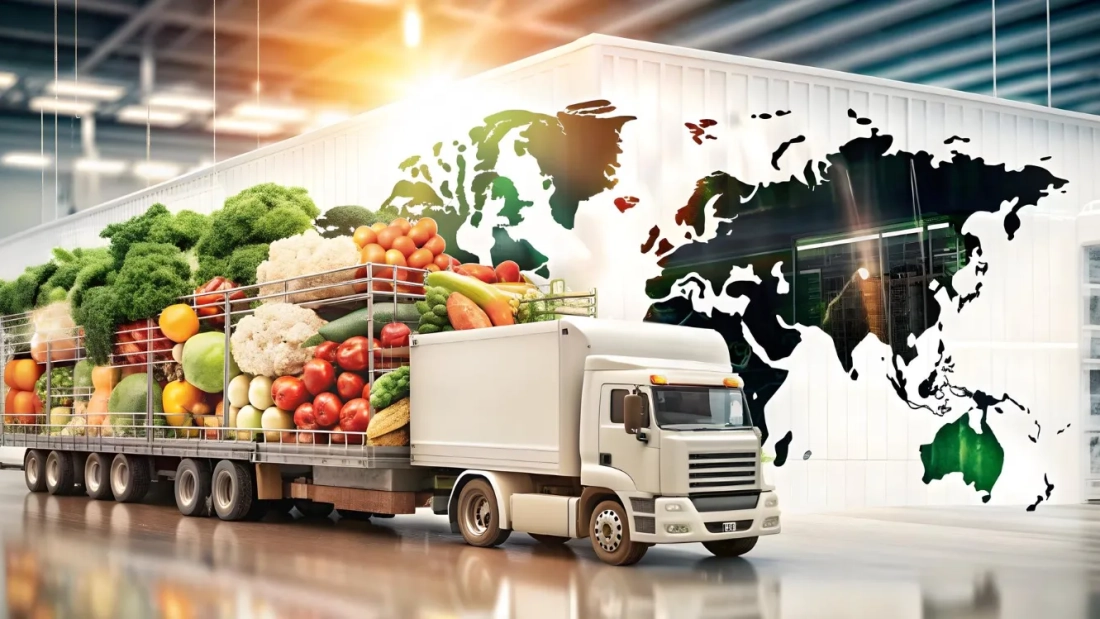
The UAE food supply chain is being redesigned around a clear operational priority: keep dependable volumes moving, even when established shipping patterns are disrupted. For exporters, that shift changes what buyers value. Retailers sourcing at scale need suppliers who can deliver consistent grades, documentation and inspection-ready quality, not just a competitive spot price.
This October 22 briefing looks at three connected developments: retailers consolidating supply through dedicated vessel charters, Egypt’s push to strengthen agricultural ties with the UAE, and short-term price swings at Al Aweer. Together, these developments point to a market where supplier readiness and buyer verification matter more than ever.
Retailers are building supply chains they can control
About 80% of food in the UAE is imported, according to The National’s October 9 report by Alexander Christou. The report describes how the Iran war and closure of the Strait of Hormuz disrupted shipping, with some sea shipments taking up to 70 days. A serious challenge for short-shelf-life products.
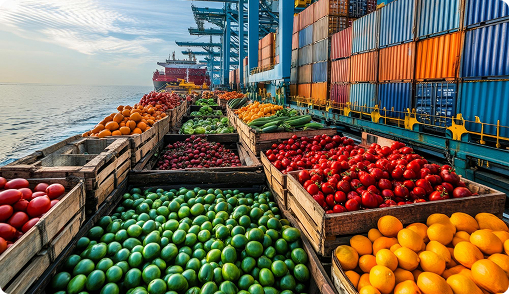
LuLu Group International responded by moving away from shared shipments and chartering entire vessels exclusively for its consolidated cargo. The reported sourcing markets include India, Thailand, China, Indonesia, Spain, Turkey and Italy. The group also shifted some sourcing from distant markets toward closer alternatives. As private-label director Shamim Sainulabdeen put it: “We are not waiting for this situation to get corrected. We made our own supply chain.”
This does not mean every retailer will charter a vessel or every product will move through the same route. It does show a strategic preference for more control over sourcing, shipment timing and supply continuity. The same report describes United Foods placing raw-material orders months in advance and holding up to five months of stock, while Al Ain Farms Group emphasized local manufacturing and the reputation of UAE-made products for food safety and regulation.
At Global Food Week in Abu Dhabi, the emphasis was on moving “from being agile to being ready,” with resilience and AI-driven efficiency among the themes. For exporters, readiness increasingly means showing that capacity, quality systems and supply plans are in place before a buyer faces an urgent shortage.
What vessel-scale sourcing means for exporters
When a retailer consolidates orders into a dedicated shipment, the supplier’s role changes. A retailer is not simply comparing one container price against another. It is assessing whether partners can contribute reliable volume to a broader procurement plan and maintain product specifications through the journey.
For exporters, that creates a practical opening, but only when the offer is operationally credible. Buyers need confidence in:
- Volume capacity: realistic, repeatable quantities and a clear production or procurement schedule.
- Grade consistency: agreed sizes, maturity, packaging and tolerances across lots.
- Shipment readiness: confirmed availability, lead times and loading plans.
- Quality and compliance records: documentation that is complete and ready for review.
- Cold-chain control: handling records and temperature information appropriate to the product.
The focus is shifting from chasing one-off spot orders to building fewer, more dependable supplier relationships. Exporters seeking a verified buyer for exporters uae should be prepared to share precise product specifications and demonstrate that their supply can meet the buyer’s stated requirements. Mayil Global’s sourcing and logistics approach centers on trusted farms and suppliers, inspection, hygienic handling and organized distribution. Our 3 percent commission distributor uae model is a separate option for exporters using our distribution channel; terms should be confirmed for the specific product and transaction. Immediate cash-and-carry container purchases may also suit sellers prioritizing a direct, faster sale rather than ongoing commission distribution.
Egypt’s near-origin opportunity, and its limits
On October 7, Egypt’s State Information Service reported that Egypt is seeking stronger agricultural trade and investment ties with the UAE to support regional food security. The announcement signals a policy interest in expanding cooperation, including agricultural trade and investment.
For UAE buyers, Egypt’s proximity makes it a market to watch as retailers reassess sourcing distance and resilience. For exporters already supplying Al Aweer, the development may mean more competition from near-origin produce, especially in vegetable categories where shipping time and freshness are central to commercial value.
The announcement should be read accurately: it establishes an intention to strengthen trade and investment, not a fully specified produce corridor with confirmed volumes, routes or start dates. It is a signal to monitor, rather than evidence that a particular product’s Al Aweer price movement is caused by Egyptian supply. For exporters, the useful response is to track buyer specifications, seasonal availability, transport options and the full landed cost of competing origins.
Al Aweer market updates: a two-day swing, not a market-wide verdict
The October 20 Al Aweer price report shows gains in goose berry (amla) (+10.2%), drumstick (+9.9%), pomegranate (~10 pc) (+9.1%), lemon (+8.6%) and normal garlic (+8.2%). Pomelo honey and onion each fell 20.0%; generic garlic declined 18.3%, small shallots 16.7% and red pomelo 12.4%.
The October 19 report had a different pattern: cabbage rose 33.3%, fresh turmeric root 28.0%, green chili 25.1%, zucchini 18.2% and red pomelo 14.2%. Broccoli fell 27.8%, while cherry tomatoes and bunch tomato each declined 20.0%; white onion and cucumber also decreased.
The two-day comparison highlights how rapidly individual categories can move as supply and buying conditions change. Tomato lines dropped sharply on October 19 after a strong day for cabbage. Garlic also split by listing and grade: normal garlic gained on October 20 while generic garlic fell. Meanwhile, amla, drumstick and lemon firmed, suggesting demand support for some specialty produce. These figures are indicative wholesale movements, not guaranteed transaction prices; actual rates vary by quality, quantity and negotiation.
For buyers and sellers alike, monitoring Al Aweer market updates is useful for context, but a daily price move should not replace a product-specific assessment of grade, volume and arrival condition.
Dependable supply still depends on perishable handling
The importance of timing is also reflected in Dubai’s operational response. Khaleej Times reported on October 6 that Dubai authorities would prioritize perishable food shipments at ports amid vessel delays and regional logistics disruption. The report also described coordination with traders on berthing, shipping and trucking challenges. For fresh produce exporters, this background reinforces a simple point: port priority helps, but it does not replace sound packaging, cold-chain planning or accurate paperwork.
For UAE supermarkets, restaurants and distributors, a reliable wholesaler helps translate international sourcing into consistent local availability. Mayil Global supplies fresh fruits and vegetables, premium spices, rice and farm-fresh eggs to B2B customers, supported by quality control, hygienic handling and organized logistics. Explore our product range or contact Mayil Global to discuss wholesale requirements.
Practical next steps for exporters
Retailers chartering whole vessels need suppliers who can contribute to a controlled, well-documented supply plan. Before presenting an offer, prepare:
- A volume schedule showing available quantities, frequency and realistic lead times.
- A written grade specification covering size, maturity, packaging and acceptable tolerances.
- Cold-chain documentation relevant to the product, including handling and temperature records where applicable.
- Inspection-ready quality with clear lot identification and records available for review.
- A verified buyer check confirming the buyer’s legal identity, purchasing authority, product requirements, volume expectations and commercial terms.
Buyer matching should be product-specific: establish that the counterparty is a verified buyer of that particular product before committing harvest, packing or shipment capacity. This reduces avoidable mismatches and supports long-term relationships built on clear expectations.
For exporters researching how to export food to dubai, the operational starting point is not only a shipping quote. It is a complete, buyer-ready offer: product, origin, grade, volume, documents, delivery plan and commercial terms. In the current UAE export news environment, suppliers who can prove readiness have a stronger basis for earning repeat business. Mayil Global’s 3% commission distribution option and immediate cash-and-carry container purchases offer two ways to discuss market access, depending on the exporter’s transaction needs.
Sources: The National, October 9, 2026; Egypt State Information Service, October 7, 2026; Khaleej Times, October 6, 2026; Al Aweer price reports, October 19–20, 2026.