

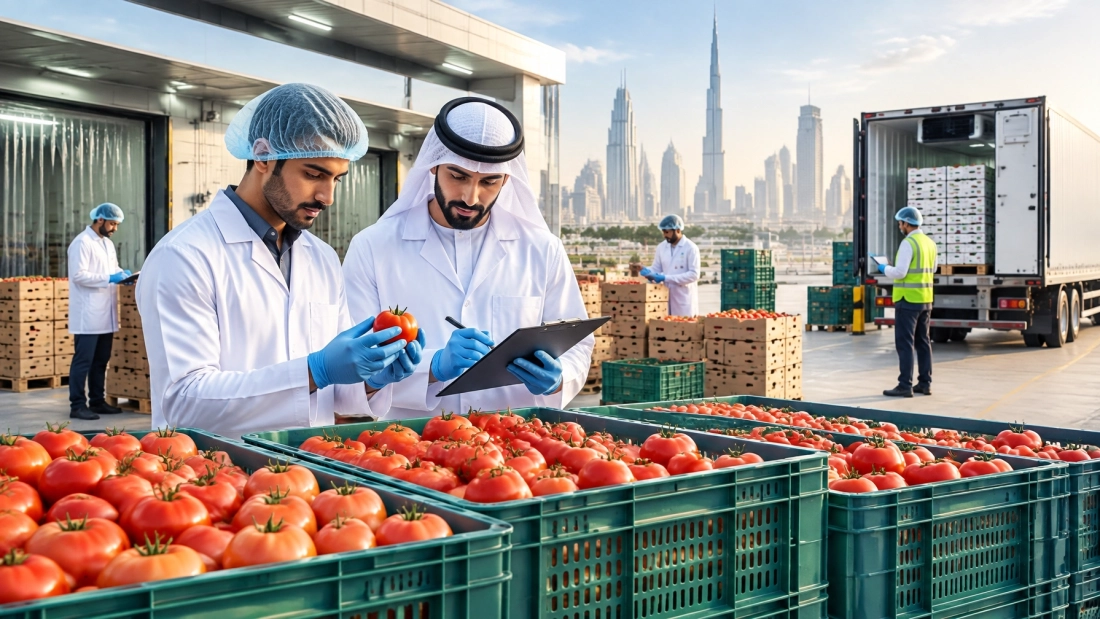
Importing tomatoes to Dubai involves more than securing a competitive farm-gate price. Exporters need to align product specifications, phytosanitary documents, customs clearance, temperature management and distribution before cargo leaves origin. Each step affects the condition of a highly perishable product, and the price it can achieve at Al Aweer Central Fruit & Vegetable Market.
This step-by-step guide explains how to plan a tomato shipment, interpret wholesale pricing and choose a distribution arrangement. Mayil Global supports exporters and UAE buyers through farm-direct sourcing, quality checks and organized logistics, with a 3% commission-based distribution model and a Cash & Carry wholesale option for suitable shipments.
Step 1: Match the tomato to the buyer and market
Start by confirming what the UAE buyer needs. “Tomatoes” is not a complete product specification. Agree on variety, size, grade, colour and maturity at dispatch, plus packaging type, net weight per carton and acceptable defect tolerances.
Tomatoes intended for supermarket shelves may need consistent sizing and appearance. Restaurants and wholesale distributors may prioritize firmness, yield and pack format. Confirm the destination channel and expected delivery window before harvest and packing.
Mayil Global sources through trusted farms and global suppliers, then coordinates inspections and hygienic handling through the supply chain. This farm-direct approach helps exporters plan against real buyer requirements rather than shipping a generic lot and negotiating after arrival.
Step 2: Confirm import requirements before loading
Before booking freight, confirm that the UAE importer is set up to import food and that the product and label meet the applicable Dubai Municipality requirements. Requirements can vary by origin, product details and the shipment’s route, so exporters should have the UAE importer or customs broker confirm the current process for the specific consignment.
For fresh tomatoes, MOCCAE’s agricultural consignment release requirements identify a phytosanitary certificate issued by the exporting country’s competent authority, a customs manifest or transport document, and an invoice or contents list. A certificate of origin is also required when origin is not shown on the phytosanitary certificate. Additional documents or checks may apply.
Pay particular attention to origin-specific plant-health measures. MOCCAE states that tomatoes from countries affected by Tomato leafminer require an additional declaration on the phytosanitary certificate confirming freedom from all pest stages. Some origins may also require pesticide-residue analysis for produce. Check current requirements before shipment; do not assume an earlier consignment’s paperwork will apply to a new origin or season.
Step 3: Prepare a consistent shipment file
Align the documents before the cargo departs. Differences in product description, quantity, origin or marks between documents can delay clearance and add dwell time.
A typical file for an imported tomato shipment includes:
- Commercial invoice and packing list or contents list.
- Certificate of origin.
- Bill of lading for sea freight or airway bill for air freight.
- Phytosanitary certificate, including any applicable additional declaration.
- Food-health or laboratory documents when required for the origin or consignment.
- Delivery order and other documents requested by the customs broker or relevant authorities.
Share draft documents with the importer and broker before dispatch. Confirm tomato description, packaging, weights, origin and consignee details across the entire file. For further regulatory reference, consult the Dubai Customs Service Guide and the relevant UAE authorities for shipment-specific instructions.
Step 4: Clear the cargo and move it promptly
Sea shipments commonly enter through Jebel Ali; air-freighted cargo follows the relevant airport cargo process. The importer or authorized customs broker submits the customs declaration and supporting documents, pays applicable charges and coordinates any required inspections or release approvals. Agricultural shipments may be subject to visual inspection and, where required, laboratory testing by the competent authorities.
Once released, arrange a temperature-controlled vehicle to move the consignment to Al Aweer or the buyer’s facility. Pre-book transport and receiving arrangements rather than waiting for clearance to begin planning. Reducing port and transfer delays protects remaining shelf life and helps the cargo reach the market in saleable condition.

Mayil Global’s sourcing and logistics operations focus on organized distribution and timely delivery. For exporters, pre-arrival coordination and clear receiving plans help connect port release with inspection and market placement.
Step 5: Protect tomato quality through the cold chain
Tomatoes are perishable, but they are also sensitive to inappropriate cooling. A generic low-temperature setting can harm quality, especially when fruit is held too cold for too long. Establish a written temperature plan based on variety, maturity, journey duration and the buyer’s specifications, and confirm that it meets current UAE handling requirements.
Maintain control from packing to arrival:
- Use clean, food-suitable, ventilated cartons or crates that protect fruit from compression.
- Pack tomatoes dry and avoid overfilling or stacking that can bruise lower layers.
- Pre-cool where appropriate and maintain stable conditions during transit.
- Use a calibrated temperature logger and retain the shipment record.
- Keep cartons clear of direct heat and allow airflow around the load.
- Inspect on arrival for firmness, colour, bruising, leakage and signs of condensation.
Hygienic packaging and handling are non-negotiable. Quality control at packing, loading and receipt helps identify problems early and supports consistent grading. Mayil Global emphasizes inspection at every stage to protect product condition and buyer confidence.
Step 6: Read Al Aweer prices as a moving reference
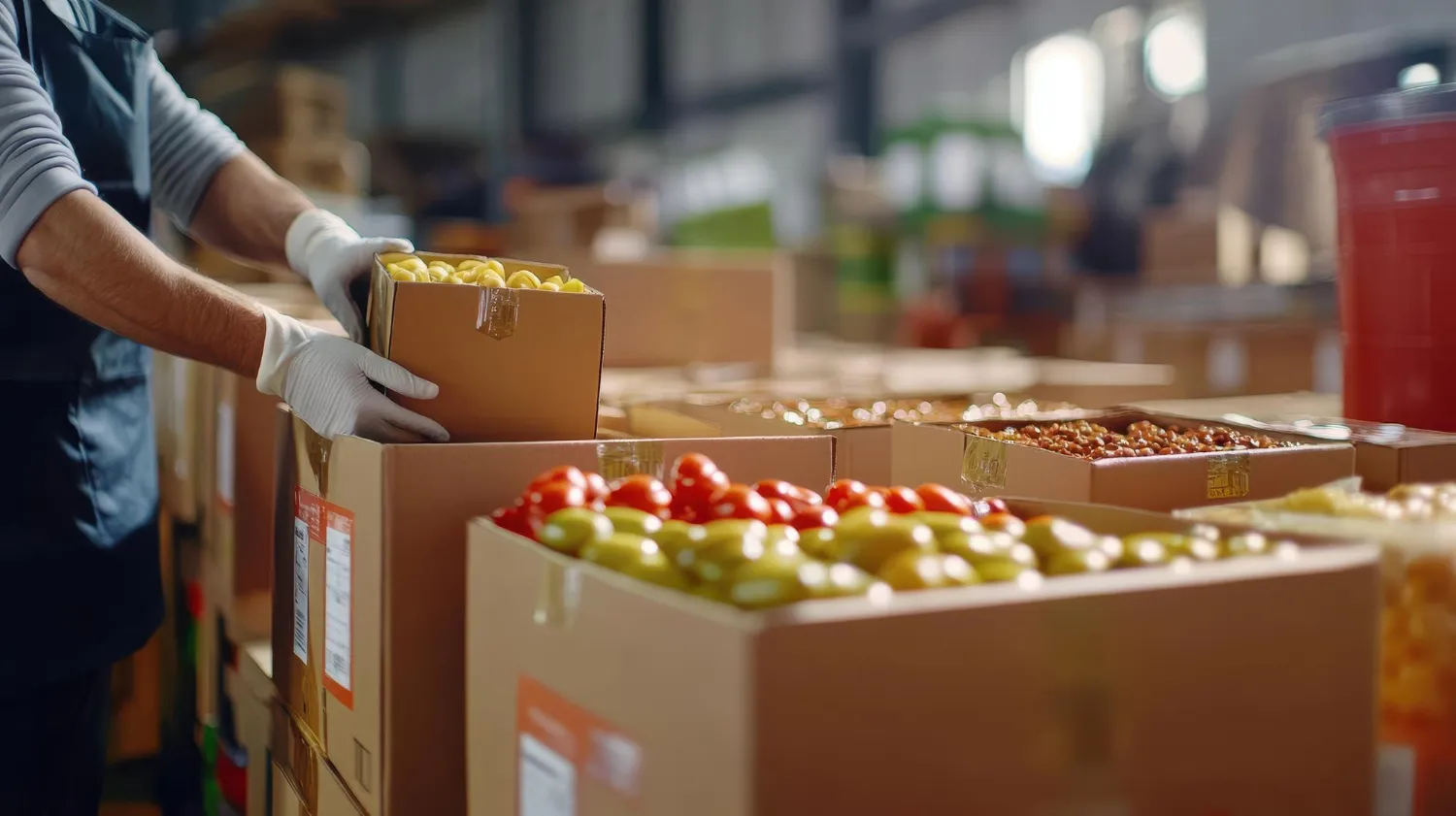
Al Aweer is a major wholesale distribution hub, not a fixed-price market. Tomato prices change with origin, grade, size, maturity, packaging, arrival volume, freight costs and daily demand. Two offers quoted per kilogram may not be comparable if one is for a premium grade in small cartons and the other is a mixed lot in heavier crates.
Seasonal supply also matters. Prices can ease when regional and imported volumes are abundant and firm when weather, crop gaps, shipping disruption or changes in origin reduce arrivals. Demand peaks and buyer requirements can add further variation. Build a landed-cost calculation that includes freight, clearance, handling, market distribution and expected wastage, not just the farm price.
As an illustration of daily variability, an Al Aweer market tracker reported Iranian cherry tomatoes at AED 8.00/kg on 20 October 2026, sold in 2.5 kg crates. Its reported 60-trading-day average was AED 9.80/kg, with a range of AED 6.00–14.80/kg. These are indicative cherry-tomato wholesale figures, not a guaranteed price or benchmark for all tomato grades. Check the current cherry-tomato market listing and obtain same-day quotes for the exact product and pack.
Step 7: Choose the right distribution and payment model
Traditional consignment distribution generally relies on selling stock into the market before the exporter receives proceeds. That arrangement may suit some suppliers, but it can leave working capital tied up while a perishable shipment is being sold.
Mayil Global offers exporters two routes, subject to shipment quality, inspection and agreed terms:
- 3% commission-based distribution: Mayil Global manages market distribution for a clear 3% commission, with sales and settlement details set out transparently. This gives exporters a defined distribution fee and access to local B2B channels.
- Cash & Carry wholesale purchase: For accepted shipments, exporters can pursue a direct container purchase rather than waiting for the full consignment to sell through. Purchase price, inspection criteria and settlement terms are agreed in advance.
The 3 percent commission distributor UAE model is designed for exporters seeking a clear fee and local distribution support. Cash & Carry is an alternative for suppliers prioritizing a direct wholesale transaction. Neither model removes the need to agree quality specifications, pricing and payment terms in writing.
For exporters searching the phrase “verified buyer for exporters UAE,” the practical checks are a buyer’s business credentials, inspection process, written commercial terms, settlement method and ability to handle delivery. Mayil Global works with UAE supermarkets, restaurants and wholesale distributors, linking dependable supply with local distribution requirements.

Plan the shipment around quality, not just freight
A reliable tomato export programme starts with a defined buyer specification, verified import requirements and aligned documents. It continues with controlled handling, prompt clearance and a distribution plan that reflects current Al Aweer conditions.
Mayil Global combines farm-direct sourcing from trusted farms and global suppliers, strict quality control, hygienic handling and organized logistics to support dependable supply for UAE buyers. For exporters, the 3% commission model and Cash & Carry option provide distinct routes to market. For local buyers, the result is access to wholesale fruits and vegetables in Dubai through a supply network built for consistent quality and timely delivery.
Explore Mayil Global’s sourcing and logistics, product range or contact the team to discuss tomato specifications, shipment volumes and distribution terms.