

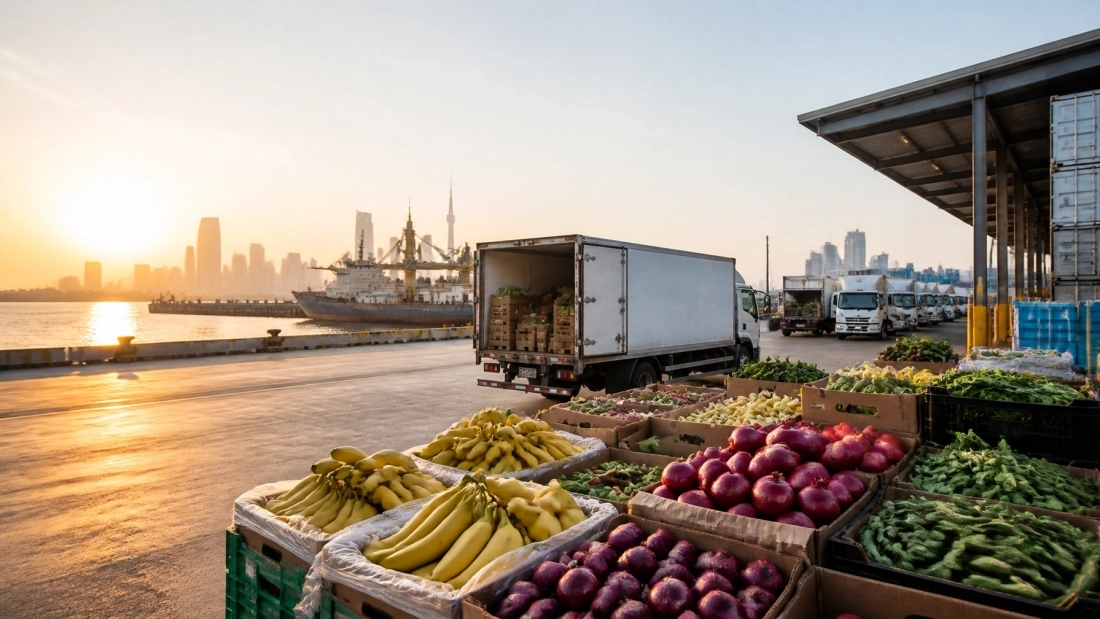
Daily B2B briefing , Tuesday, September 8, 2026
This daily briefing covers UAE export news, indicative Al Aweer market updates, food-export compliance requirements, and current exporter and buyer opportunities. The operating priorities remain dependable supply, consistent quality, documented sourcing, and efficient distribution.
For international and local exporters, the UAE continues to provide a strategic entry point into Gulf food markets. For supermarkets, restaurants, retailers, and wholesale distributors, supply reliability depends on origin diversification, quality control, hygienic handling, and timely logistics.
UAE Export News Headlines
Egypt–UAE wheat agreement moves from framework to execution
Al Dahra Agriculture Trading, the Abu Dhabi Exports Office (ADEX), and Egypt’s General Authority for Supply Commodities (GASC) have activated a five-year wheat supply agreement valued at up to US$500 million.
The agreement represents approximately US$100 million per year in imported milling wheat supplies to Egypt. ADEX provides the financing mechanism supporting the programme. The arrangement converts an earlier strategic framework into an operational supply channel for GASC.
The agreement was reported by WAM and covered in related trade reporting.
The commercial significance is clear:
- Long-term supply agreements strengthen food-security planning.
- Export finance supports predictable payment and procurement structures.
- UAE-based suppliers gain a stronger role in regional agricultural distribution.
- Egypt receives a more stable channel for imported wheat requirements.
The development reinforces the importance of structured sourcing, financing, and logistics in food commodities. It also demonstrates how UAE companies can support large-scale regional supply chains through reliable procurement and execution.
UAE-grown produce exports to Bahrain expand
Elite Agro has partnered with Life Global Foods W.L.L as an exclusive distribution partner in Bahrain for UAE-grown fruits and vegetables. The partnership is reported to cover more than 31 varieties of UAE-grown produce, strengthening regional food security and improving access to locally produced supply.
The initial product focus includes UAE-grown blueberries and potatoes, including Elite Berry and Elite Fresh products. The agreement supports a broader UAE–Bahrain fresh-produce corridor based on regional sourcing and distribution.
The development was reported by News of Bahrain and announced through Elite Agro’s LinkedIn communication.
For B2B buyers, regional produce corridors can improve replenishment planning and reduce dependence on long-distance supply routes. For exporters and producers, the Bahrain partnership demonstrates the value of:
- Consistent farm production.
- Defined product specifications.
- Export-ready packaging.
- Verified distribution partners.
- Documented food-safety procedures.
- Coordinated cross-border logistics.
Regional distribution requires more than product availability. It requires controlled quality, correct documentation, proper storage, and a delivery schedule aligned with buyer requirements.
Al Aweer Market Updates: Indicative Prices for September 8, 2026
The following figures are planning benchmarks only for selected products relevant to wholesale procurement in Dubai.
| Product | Indicative benchmark |
|---|---|
| Indian new-crop onions | Approximately AED 2.00/kg |
| Egyptian onions | Approximately AED 1.30/kg |
| Chinese garlic | Approximately AED 16.00 per 2.8 kg carton |
| Tomatoes | Approximately AED 3.14/kg |
| Cucumbers | Approximately AED 1.75/kg |
| G9 Cavendish bananas | Approximately AED 3.85/kg |
These figures are not fixed quotations, confirmed offers, or binding commercial prices. Actual prices vary according to origin, grade, size, pack format, arrival condition, seasonality, freight, availability, volume, storage, wastage, and negotiation.
Buyers and exporters should verify same-day pricing with local distributors and review current market references through Al Aweer Prices. A product benchmark should not replace shipment-level inspection or written commercial confirmation.
For procurement teams, the immediate planning priorities are:
- Confirm the required origin and grade.
- Match pack size to the receiving operation.
- Check expected arrival condition and usable shelf life.
- Confirm delivery timing and payment terms.
- Review the complete landed cost before purchase approval.
Regulatory Updates Affecting Food Exporters
Exporters supplying food products to Dubai and the wider UAE must complete product registration, documentation, labelling, and import procedures before shipment.
ZAD and Dubai Municipality registration
Food products generally require registration through the federal ZAD system. Dubai-bound consignments also require the importer to use Dubai Municipality systems, including the Food Import and Re-Export Services (FIRS) process where applicable.
Each product and pack format should be assessed for registration requirements before loading. Exporters should provide:
- Product descriptions and specifications.
- Brand and pack-size information.
- Country of origin.
- Ingredient and allergen details for packaged products.
- Storage conditions.
- Shelf-life information.
- Product and label artwork.
Arabic and English labelling
Food labels should include Arabic information and are commonly prepared in bilingual Arabic–English format. Labels should clearly state:
- Product name.
- Ingredients and additives.
- Allergen information.
- Net weight.
- Country of origin.
- Production and expiry dates.
- Storage instructions.
- Manufacturer and UAE importer details.
- Batch or lot number.
- Applicable nutrition information.
Arabic stickers may be accepted in specific cases, but they must not obscure original dates, mandatory information, or product identification details. Label approval should be completed before dispatch.
Certificates and remaining shelf life
Fresh produce shipments may require valid health or phytosanitary certificates issued by the competent authority in the country of origin. Other standard documents can include the certificate of origin, commercial invoice, packing list, and any required certificates of analysis.
Exporters must also confirm remaining shelf life on arrival. The product must arrive in a condition suitable for inspection, clearance, storage, and distribution. Temperature control, packaging integrity, and transit duration directly affect acceptance and commercial value.
Market Insights and Supply Notes
Origin diversification
The Egypt wheat agreement and UAE-grown produce exports to Bahrain demonstrate the importance of origin diversification. Buyers should avoid depending on one supply source for critical products. A multi-origin sourcing plan improves continuity when weather, freight, regulatory changes, or regional disruptions affect a particular route.
Specification control
Price comparisons are meaningful only when specifications are comparable. Onion prices, for example, must be assessed against origin, crop, size, grade, pack format, moisture, condition, and delivery point.
Specification control reduces claims, receiving disputes, and avoidable wastage. It also enables exporters to present a clear offer to the verified buyer of that particular product.
Faster commercial decisions
Exporters should provide complete commercial information at the first stage of discussion. This includes product, origin, volume, packing, loading date, certificates, expected arrival, target price, and settlement terms.
Complete information supports faster evaluation by UAE buyers and distributors. It also allows logistics and quality-control requirements to be confirmed before the transaction proceeds.
Mayil Global: Verified Buyer for Exporters UAE
Mayil Global supports approved exporters seeking a verified buyer for exporters UAE through structured wholesale distribution and commercial coordination.
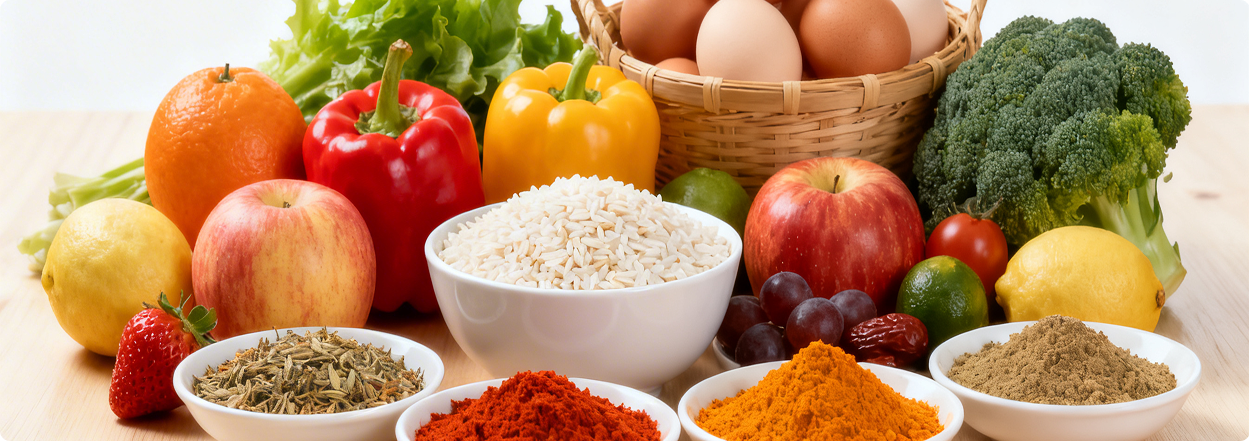
The company works with trusted farms and global suppliers across fresh fruits, vegetables, premium spices, premium rice, and farm-fresh eggs. Its product range serves supermarkets, restaurants, retailers, and wholesale distributors in the UAE.
Exporters should submit:
- Product name and variety.
- Country and region of origin.
- Available quantity.
- Grade and pack size.
- Loading location and date.
- Health, phytosanitary, and origin documents.
- Expected arrival date.
- Commercial terms and payment expectations.
Mayil Global reviews the product, documentation, quality requirements, and distribution suitability before confirming the appropriate commercial route.
The 3 Percent Commission Distributor UAE Model
Mayil Global offers a transparent 3 percent commission distributor UAE model for approved exporters.
Under this structure, Mayil Global applies a flat 3 percent commission on the agreed gross sales value. The agreement should define the product, buyer, sales value, commission calculation, delivery responsibility, inspection process, claims procedure, and settlement timing.
The model provides exporters with a structured route to UAE buyers while maintaining clarity over commercial costs. It is suitable for suppliers that want distribution support without an unclear or variable intermediary margin.
The 3 percent commission remains a key Mayil Global value proposition for exporters seeking dependable UAE market access, buyer coordination, and organized distribution.

Immediate Cash-and-Carry Container Purchases
Approved exporters may also discuss immediate cash-and-carry container purchases with Mayil Global.
This model is intended for exporters seeking faster liquidity after shipment arrival or before allocating a container to the UAE market. Purchases remain subject to:
- Product and supplier verification.
- Documentation review.
- Origin confirmation.
- Quality inspection.
- Container condition.
- Market demand.
- Agreed pricing and payment terms.
- Delivery and receiving arrangements.
Cash-and-carry purchasing does not remove compliance requirements. Food products must still meet UAE import, safety, labelling, documentation, and quality standards.
Exporters can review Mayil Global’s sourcing and logistics process before submitting a shipment proposal.
Note for UAE Wholesale Buyers
Supermarkets, restaurants, retailers, and wholesale distributors can use Mayil Global as a structured wholesale supply channel for fresh produce and premium food products.
Buyers should provide the product, volume, preferred origin, pack format, delivery location, delivery frequency, and required quality standard. Mayil Global coordinates sourcing, inspection, hygienic handling, storage, and distribution through an organized supply chain.

The operating objective is consistent: delivering dependable supply, maintaining quality control, and supporting timely delivery to UAE businesses.
Conclusion
The September 8 UAE export news cycle highlights two important developments. The US$500 million UAE–Egypt wheat agreement has moved into execution, while UAE-grown fruits and vegetables are gaining a stronger distribution route into Bahrain.
Al Aweer market updates continue to provide useful planning references, but all prices require same-day verification. Exporters must also complete ZAD and Dubai Municipality requirements, prepare bilingual labels, secure the correct certificates, and protect remaining shelf life throughout the supply chain.
Mayil Global provides exporters with a verified buyer for exporters UAE, a flat 3 percent commission distributor UAE model, and immediate cash-and-carry container purchase opportunities for approved products. UAE wholesale buyers can access fresh produce and premium food products through farm-direct sourcing, global supplier relationships, strict quality control, hygienic handling, and organized logistics.
Contact Mayil Global to discuss export distribution, wholesale supply, or verified buyer opportunities in the UAE.
Disclaimer: All Al Aweer prices in this article are indicative planning benchmarks only. They are not fixed quotations, guaranteed prices, or binding offers. Actual prices vary according to origin, grade, quality, pack size, availability, timing, logistics, storage, and negotiation. Buyers and exporters must verify current prices with local distributors and confirm all regulatory and commercial requirements before proceeding.