


Daily series date: 21 September 2026 | Market dataset: 17 September 2026 | Board movements recorded through 19 September 2026 | GCC wholesale intelligence: Week 38
The October 9 position is a split market. Oman-origin gourds, Chinese ginger, selected grapes, pomegranate, and other speciality lines are firming. Cucumber, leafy vegetables, capsicum, several onion references, and selected bananas are correcting sharply.
For exporters and UAE buyers, the operational priority is specification control. Origin, grade, pack format, shelf life, freight mode, inspection, and arrival timing are determining value more accurately than commodity headlines.
Data Note
All Al Aweer prices in this briefing are indicative market references. They are not fixed quotations, guaranteed prices, confirmed offers, or binding purchase commitments. Actual transaction values depend on origin, grade, size, packaging, crop condition, moisture, availability, freight, customs, inspection, storage, wastage, shelf life, and negotiation.
Iran-origin lines remain intelligence only. They are non-executable under the UAE trade suspension effective 19 August 2026 until UAE authorities formally announce a change. Iran-origin references must not be used for procurement, shipment planning, container budgeting, or executable negotiations.
Al Aweer Market Movers
The 17 September board recorded 46 gainers and 76 fallers. The table below summarises the principal supplied movements versus the previous board.
Gainers
| Product and origin | Movement | Reference |
|---|---|---|
| Snake gourd, Oman | +33.6% | AED 2.14 to 2.86/kg |
| Ridge gourd, Oman | +24.8% | AED 2.86 to 3.57/kg |
| Pomegranate, Yemen | +23.1% | AED 3.25 to 4.00/kg |
| Wax gourd, Oman | +20.1% | AED 2.14 to 2.57/kg |
| Ginger, China | +17.4% | AED 8.21 to 9.64/kg |
| Zucchini, UAE | +16.7% | AED 1.50 to 1.75/kg |
| Red seedless grapes, Lebanon and Turkey | +15.6% | AED 9.14 to 10.57/kg |
| Pointed gourd, Bangladesh | +14.2% | AED 11.67 to 13.33/kg |
| Green peas, Pakistan | +12.5% | AED 10.67 to 12.00/kg |
| Taro, China | +12.5% | AED 2.00 to 2.25/kg |
| Nectarine, Jordan | +11.1% | AED 10.29 to 11.43/kg |
| Pink potato, Bangladesh | +11.0% | AED 6.43 to 7.14/kg |
| Sweet potato, Egypt | +10.0% | AED 2.50 to 2.75/kg |
| Okra, UAE | +10.0% | AED 5.00 to 5.50/kg |
| Garlic, India | +4.3% | AED 7.27 to 7.58/kg |
| Hass avocado, Rwanda | +4.2% | AED 12.00 to 12.50/kg |
Fallers
| Product and origin | Movement | Reference |
|---|---|---|
| Cucumber, Iran | −57.1% | AED 2.33 to 1.00/kg; non-executable |
| Cucumber, UAE | −46.0% | AED 2.50 to 1.35/kg |
| Cabbage, Iran | −38.1% | AED 2.10 to 1.30/kg |
| Lettuce, Iran | −36.8% | AED 3.80 to 2.40/kg |
| White cucumber, UAE | −36.4% | AED 2.75 to 1.75/kg |
| Green capsicum, Iran | −33.2% | AED 3.43 to 2.29/kg |
| Green chilli G4, India | −28.6% | AED 7.37 to 5.26/kg |
| Cauliflower, Iran | −25.5% | AED 4.70 to 3.50/kg |
| Rock melon, Jordan | −24.4% | AED 2.75 to 2.08/kg |
| Garlic normal, China | −21.9% | AED 5.71 to 4.46/kg |
| Eggplant, Iran | −19.0% | AED 2.10 to 1.70/kg |
| Lime, Egypt | −18.8% | AED 3.20 to 2.60/kg |
| Brown onion, Iran | −18.0% | AED 2.44 to 2.00/kg; non-executable |
| Shallots, India | −16.6% | AED 8.00 to 6.67/kg |
| G9 Cavendish banana, India | −16.3% | AED 4.23 to 3.54/kg |
| Watermelon, Iran | −15.0% | AED 2.00 to 1.70/kg; non-executable |
| Onion new crop, India, 18 kg | −11.8% | AED 3.80 to 3.35/kg |
| Pink onion, Sudan, approximately 50 mm | −11.3% | AED 3.10 to 2.75/kg |
| Onion, Yemen | −10.0% | AED 2.50 to 2.25/kg |
| Red onion, Turkey | −9.8% | AED 2.55 to 2.30/kg |
Review the Al Aweer market report, daily movers, and product references for cucumber and onions.
The Gourd Complex Is Splitting by Specification
Snake gourd, ridge gourd, and wax gourd from Oman rose strongly together. However, bottle gourd and bitter gourd from Oman corrected by 12.4% to AED 5.00/kg.
This confirms that the gourd complex is not moving as one block. Exporters should not price a container simply as “Oman gourds.” Grade, firmness, size, pack format, crop condition, and arrival timing determine the realised price.
For exporters, the practical rule is direct:
- Define the exact gourd variety.
- State size and tolerance.
- Confirm firmness and harvest date.
- Specify carton, crate, or mesh format.
- Match loading and arrival timing to confirmed UAE demand.
Cucumber and Leafy Vegetable Collapse
The sharpest corrections are concentrated in cucumber and leafy vegetables:
- Iran cucumber: −57.1%
- UAE cucumber: −46.0%
- UAE white cucumber: −36.4%
- Iran cabbage: −38.1%
- Iran lettuce: −36.8%
- Iran cauliflower: −25.5%
- Iran green capsicum: −33.2%
- India green chilli G4: −28.6%
UAE local cucumber at AED 1.35/kg and white cucumber at AED 1.75/kg now sit below many imported references. Buyers should pause discretionary cucumber and leafy-vegetable airfreight, avoid chasing a collapsing board, and review existing purchase commitments.
A low board price does not automatically represent an opportunity. It may indicate oversupply, weak absorption, quality deterioration, or impending wastage. Importers should confirm off-take before adding volume.
Ginger and Spice Position
The ginger market is divided by origin:
- Chinese ginger: +17.4% to AED 9.64/kg
- Indian ginger: −4.3% to AED 6.29/kg
- Indian garlic: +4.3% to AED 7.58/kg
- Chinese garlic normal: −21.9% to AED 4.46/kg
- Chinese garlic pure white: −5.6% to AED 6.07/kg
Chinese ginger at AED 9.64/kg versus Indian ginger at AED 6.29/kg creates an origin spread of approximately 53% on the same commodity. Buyers should specify origin, grade, maturity, moisture, pack format, and expected shelf life instead of requesting only “ginger.”

Iran Container Returns and Supply Diversification
Industry reports referenced for this briefing indicate that more than 200 containers of Iranian fruit and vegetables have been returned. The reason has not been publicly clarified, and the specific figure should be treated as an industry report rather than a verified official statistic.
The commercial implication remains material. Iran-origin lines are non-executable while the UAE trade suspension remains effective. Importers should substitute routine Iranian supply with executable origins including:
- Egypt
- Turkey
- Sudan
- Yemen
- Oman
- Jordan
- Pakistan
- India
- Armenia
For exporters from these executable origins, a near-term supply window exists where Iranian volumes previously filled routine wholesale demand. The opportunity depends on compliant documentation, verified demand, inspection, and adequate shelf-life protection.
Diwali Demand Timing
Diwali falls in November 2026, and Indian-origin festive demand is building. Forward purchasing is likely to be relevant for:
- Basmati and premium rice
- Pulses
- Spices
- Dates
- Nuts
- Premium fruit packs
- Onions, garlic, and ginger
Buyers should consider forward-contracting three to five weeks ahead with fixed specifications. Gifting packs and foodservice packs should be confirmed separately because their quantities, labelling, presentation, and delivery schedules differ.
Importing Onions Dubai: Origin, Timing, and Usable Cost
The 17 September board references for importing onions Dubai are:
| Origin | Reference | Indicative price |
|---|---|---|
| India | New crop, 18 kg | AED 3.35/kg |
| Sudan | Pink, approximately 50 mm | AED 2.75/kg |
| Egypt | 20 kg PPE bag | AED 2.20/kg |
| Turkey | Red onion | AED 2.30/kg |
| Yemen | Standard onion | AED 2.25/kg |
| Iran | Brown onion | Non-executable |
The Maharashtra crop is delayed by approximately one to one-and-a-half months, with full-scale arrivals expected after November. Only 30–40% of the old Garwa pink crop remains, and only 10–15% of that balance is expected to be export-suitable.
Nashik and Maharashtra prices have moved from approximately USD 31–42 per quintal to USD 42–52 per quintal. The sharpest price window is expected between 25 September and 30 October.
India currently has no onion export ban, minimum export price, or export duty in force. Exporters must continue monitoring DGFT notifications because policy can change quickly.
Usable-cost method
The correct calculation is saleable cost, not purchase price:
- Product: 20,000 kg Indian onions at AED 3.35/kg = AED 67,000
- Landed costs: AED 38,000
- Total landed cost: AED 105,000
- Arrival loss: 12%
- Saleable quantity: 17,600 kg
- Usable cost: AED 5.97 per saleable kilogram
This calculation demonstrates why a low board reference can still produce a high operating cost after freight, clearance, wastage, storage, and quality loss.

Wholesale Fruits and Vegetables Dubai: GCC Week 38
Al Aweer functions as a major pricing benchmark for wholesale fruits and vegetables Dubai, serving supermarkets, restaurants, retailers, caterers, and regional distributors.
UAE local and Oman road-freight lines generally provide lower landed cost and shorter transit. Airfreight lines provide premium pricing but carry higher timing and shelf-life risk.
Selected GCC wholesale references for Week 38 include:
| Product | Reference |
|---|---|
| Forelle pears, United States | US$26.67–29.33 |
| Vermont Beauty pears | US$24.00–26.13 |
| Philippine bananas | US$13.87 |
| Ecuadorian bananas | US$14.67–15.47 |
| Indian bananas | US$11.47–12.80 |
| Australian carrots | US$15.47–17.33 |
| UAE lemons | US$17.70 |
| UAE Valencias | US$22.88–23.48 |
| Navel oranges | US$21.24–21.79 |
| Nova mandarins | US$10.13–10.67 |
| Nadorcott mandarins | US$16.00–18.67 |
South African citrus remains under pressure from cumulative arrivals and variable transit quality. Jeddah clearance delays also affect delivery timing, working capital, and landed cost.
Egypt-origin references include custard apple at AED 13.75/kg, black seedless grapes at AED 8.57/kg, globe seed grapes at AED 6.57/kg, red seedless grapes at AED 7.71/kg, white seedless grapes at AED 7.14/kg, guava at AED 6.00/kg, Keitt mango at AED 6.29/kg, Kent mango at AED 7.14/kg, pomegranate at AED 2.57/kg, Valencia oranges at AED 3.27–3.67/kg, and strawberries at AED 22.00/kg.
Hass avocado references further demonstrate origin spread:
- Rwanda: AED 12.50/kg
- Kenya: AED 11.50/kg
- Mexico: AED 24.00/kg
Origin and specification must therefore be included in every buyer request.
Mayil Global’s 3% Commission and Cash-and-Carry Models
Mayil Global is a verified buyer and distribution partner for exporters supplying the UAE. It is also a wholesale supplier to UAE supermarkets, restaurants, retailers, and distributors.
Under the 3 percent commission distributor UAE model, Mayil Global applies a transparent 3% commission on the agreed realised sale value, subject to a written agreement defining:
- Product and specification
- Buyer and sales channel
- Agreed sale value
- Inspection and receiving responsibility
- Delivery and handling responsibility
- Claims process
- Settlement timing
A Dubai trading house publicly advertises a 5% commission model. Mayil Global positions its model at a transparent 3%, subject to signed commercial terms.
AED 100,000 realised-sale illustration
| Item | Amount |
|---|---|
| Realised sale value | AED 100,000 |
| Mayil Global 3% commission | AED 3,000 |
| Agreed inspection and receiving | AED 1,200 |
| Local delivery and handling | AED 1,800 |
| Clearance and storage | AED 2,500 |
| Approved quality claim or wastage deduction | AED 1,500 |
| Illustrative exporter settlement | AED 90,000 |
Actual deductions, responsibility, claim procedures, supporting documents, and payment timing must be stated in the signed agreement.
The immediate cash-and-carry container purchase option follows six approval stages:
- Product submission.
- Buyer and specification verification.
- Document review.
- Pre-loading inspection.
- Arrival and receiving.
- Settlement.
Cash-and-carry does not remove customs, food-safety, labelling, product-registration, inspection, or import-permit requirements.
How to Export Food to Dubai
Exporters asking how to export food to Dubai should complete these nine steps:
- Register the UAE importer. Confirm the importer’s trade licence, food activity, warehouse, receiving location, and purchasing authority.
- Register products through ZAD and Dubai Municipality FIRS. Complete product and barcode registration before port clearance where applicable.
- Prepare Arabic-English labels. Include product name, ingredients, allergens, origin, dates, net weight, storage conditions, and importer details.
- Protect shelf life. Target approximately 50–70% remaining shelf life on arrival, subject to product category and buyer specification.
- Obtain certificates and permits. Arrange phytosanitary and health certificates and any applicable MOCCAE import permits before loading. For fresh plant products, confirm whether the relevant process is import release supported by a phytosanitary certificate.
- Keep HS codes consistent. Use the same HS code across invoice, packing list, and customs declaration. Use the general 5% GCC customs duty reference, plus VAT, and assess India-UAE CEPA zero-duty eligibility for qualifying Indian goods.
- Complete pre-shipment inspection. Retain photographs, batch details, inspection records, temperature records, and packing evidence.
- Plan Dubai inspection and sampling. Dubai Municipality inspection and sampling at Jebel Ali may typically require 2–5 working days, creating storage and demurrage exposure.
- Clear, store, and distribute hygienically. Use an organised UAE supply chain with controlled handling, storage, delivery, and receiving procedures.
Relevant guidance is available from Dubai Municipality food traders and MOCCAE agricultural consignment release services.
Exporter Offer Structure
A standard exporter offer should include:
- Product and variety
- Origin
- Grade, size, and tolerance
- Crop date
- Quantity and container type
- Packaging and net weight
- Incoterm
- Freight mode and ETA
- Remaining shelf life
- Certificates and HS code
- Target price and payment terms
- Preferred route: 3% commission distribution or immediate cash-and-carry purchase
Fill-in exporter checklist
- Product:
- Variety:
- Origin and region:
- Grade and size:
- Quantity:
- Pack format:
- Net weight:
- Loading date:
- Freight mode:
- ETA to UAE:
- Remaining shelf life:
- Certificates available:
- HS code:
- Incoterm:
- Target price:
- Payment terms:
- Preferred Mayil Global route:
UAE buyer checklist
- Confirm executable origin.
- Define grade, size, tolerance, and pack.
- Calculate landed cost and usable cost.
- Confirm arrival date and receiving capacity.
- Review shelf life and inspection requirements.
- Maintain alternative origins for essential products.
- Confirm delivery, claims, and settlement terms in writing.
Conclusion
The October 9 position is a split market. Gourd, ginger, and selected fruit lines are firming while cucumber, leafy vegetables, capsicum, and several onion references are under pressure.
For onion buyers, usable cost and executable origin matter more than board price alone. For exporters, the requirements are verified demand, complete documentation, pre-shipment inspection, shelf-life protection, and written commercial terms.
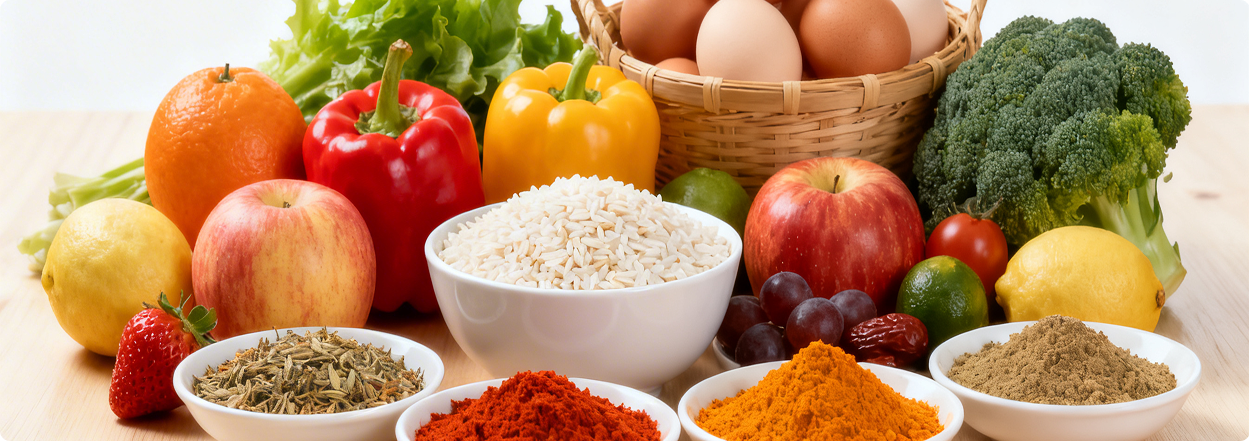
Mayil Global provides fresh fruits, vegetables, premium spices, premium rice, and farm-fresh eggs to UAE B2B buyers. Exporters can use Mayil Global’s transparent 3% commission distribution model or apply for approved immediate cash-and-carry container purchases.
Review Mayil Global products, sourcing and logistics, and contact Mayil Global.
Sources
- Al Aweer Prices: 17 September 2026 board
- Al Aweer daily movers
- Al Aweer cucumber reference
- Al Aweer onion reference
- Mayil Global: 19 September UAE export news and Al Aweer market updates
- Mayil Global: onion import playbook and wholesale market briefing
- Mayil Global: Egypt-origin produce references
- Dubai Municipality: Food Traders and Establishments
- MOCCAE: Release of imported agricultural products consignment
- MOCCAE: Import permit services
- Mayil Global products
- Mayil Global sourcing and logistics
- Mayil Global contact page
Disclaimer: All Al Aweer prices in this article are indicative market references, not fixed quotations, guaranteed prices, confirmed offers, or binding purchase commitments. Actual transaction values depend on origin, grade, size, packaging, crop condition, moisture, availability, freight, customs, inspection, storage, wastage, shelf life, and negotiation. Iran-origin lines remain intelligence only and are non-executable under the UAE trade suspension effective 19 August 2026 until UAE authorities formally announce a change. They must not be used for procurement, shipment planning, container budgeting, or executable negotiations. Buyers and exporters must verify current prices, regulations, permits, product registration, customs treatment, and written commercial terms before proceeding.