

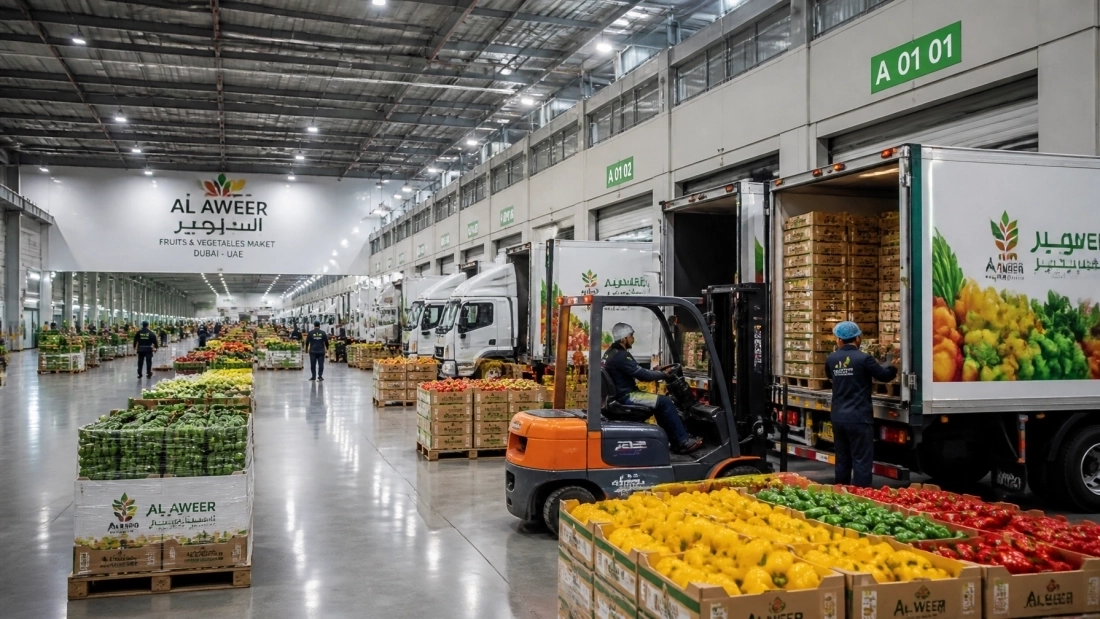
This daily briefing covers the latest UAE export news, Al Aweer market updates, regulatory requirements, and commercial opportunities for exporters, supermarkets, restaurants, retailers, and wholesale distributors.
The UAE food market is moving toward stricter quality assurance, wider origin diversification, and faster distribution cycles. Exporters must combine compliant documentation with accurate market timing, reliable logistics, and a verified UAE buyer.
UAE Export News: Trade, Processing, and Market Access
AD Ports, BUA, and MAIR advance food-processing cooperation
AD Ports Group has signed a memorandum of understanding with BUA Group and MAIR Group to explore sugar refining, edible-oil processing, agro-industrial development, and integrated logistics solutions.
The proposed food-processing corridor is centred on Abu Dhabi and Khalifa Port. It is intended to connect commodities from Nigeria and other international origins with UAE processing, storage, and re-export infrastructure.
For food exporters, the agreement reinforces several commercial trends:
- Abu Dhabi is strengthening its role as a regional food-processing hub.
- Processing and value addition are becoming central to food supply-chain development.
- Khalifa Port is gaining importance for bulk commodities and international distribution.
- Exporters with reliable volumes may access new UAE-based processing and re-export channels.
APEDA and InD Events prepare for Gulfood 2027
The APEDA–InD Events MoU for Gulfood 2027 is expected to improve market access for Indian food exporters, including small and medium-sized businesses, farmer producer organisations, and value-added food manufacturers.
The initiative supports structured participation in one of the region’s most important food trade platforms. Indian exporters of rice, spices, pulses, honey, fresh produce, processed food, and animal-derived products can use the event to develop importer, distributor, and wholesale relationships.
Exporters should prepare before exhibition participation by confirming:
- Product registration requirements.
- UAE-compliant Arabic–English labels.
- Production and health certificates.
- Shelf-life and packaging specifications.
- Consistent container availability.
- A confirmed buyer or distribution partner.
APEDA’s official trade-fair information provides the relevant participation framework.
Iran-origin supply remains suspended
The continued suspension of Iran-origin trade is reshaping the Al Aweer supply map. More than 200 containers of Iranian fruits and vegetables have reportedly been returned, reducing the availability of several established product lines.
This situation creates both supply risk and substitution opportunities. UAE buyers are now assessing alternative origins from Egypt, Turkey, Yemen, Sudan, India, Pakistan, and other established suppliers.
The immediate commercial requirements are clear:
- Confirm origin documentation before shipment.
- Avoid relying on informal or unverified routing.
- Match replacement origins to required grade and pack size.
- Maintain sufficient shelf life during longer transit routes.
- Work with a UAE importer or verified buyer for exporters uae before dispatch.
Armenia and Rwanda expand the origin network
New produce corridors involving Armenia and Rwanda are adding to the UAE’s supply diversification. Armenia has already begun fresh produce shipments to the UAE, with initial volumes reported at up to 40 tonnes per week. Armenpress reported on the Armenia–UAE produce corridor.
These emerging routes will be assessed according to the same commercial standards as established origins: quality consistency, packaging, phytosanitary documentation, arrival timing, and price competitiveness.

UAE GAP Is Raising Buyer Expectations
The National Agriculture Centre and Abu Dhabi Agriculture and Food Safety Authority have launched the national UAE Good Agricultural Practices project. The programme aims to improve local farm standards, traceability, food safety, and export readiness.
The UAE GAP project signals a broader shift in buyer expectations. Supermarkets, restaurants, and wholesale distributors increasingly require documented control over:
- Farm and supplier traceability.
- Pesticide use and residue compliance.
- Water and worker hygiene.
- Grading and product consistency.
- Packhouse inspection.
- Cold-chain management.
- Sustainable production practices.
For imported products, GLOBALG.A.P or equivalent farm assurance remains important. For UAE-grown produce, UAE GAP will increasingly function as a recognised quality benchmark.
Quality certification is therefore becoming an entry requirement rather than a marketing advantage. Exporters should provide certificates, inspection records, product specifications, and traceability documents before commercial discussions are completed.
Al Aweer Market Updates: September 17 Rate Card
The latest published Al Aweer rate card used for this briefing is dated 17 September 2026. All figures below are indicative wholesale benchmarks in AED per kg, subject to product quality, origin, packaging, arrival timing, volume, and negotiation.
| Product or category | Origin or specification | Indicative rate | Movement |
|---|---|---|---|
| Snake gourd | Market benchmark | AED 2.86/kg | +33.6% |
| Ridge gourd | Market benchmark | AED 3.57/kg | +24.8% |
| Wax gourd | Market benchmark | Rate varies by origin | +20.1% |
| Pomegranate | Yemen road | AED 4.00/kg | +23.1% |
| Ginger | China | AED 9.64/kg | +17.4% |
| Ginger | India | AED 6.29/kg | Firm comparison |
| Cucumber | Iran sea | AED 1.00/kg | −57.1% |
| Cucumber | UAE local | AED 1.35/kg | −46.0% |
| Cabbage | Mixed market | AED 1.30/kg | −38.1% |
| Lettuce | Mixed market | AED 2.40/kg | −36.8% |
| White cucumber | Market benchmark | Rate varies by origin | −36.4% |
| Green capsicum | Market benchmark | Rate varies by grade | −33.2% |
| Green chilli G4 | Market benchmark | Rate varies by grade | −28.6% |
| Cauliflower | Market benchmark | Rate varies by origin | −25.5% |
| Garlic | India | AED 7.58/kg | – |
| Garlic | China normal | AED 4.46/kg | – |
| Garlic | Pure white | AED 6.07/kg | – |
| Potato | Pakistan white | AED 1.43/kg | – |
| Potato | Egypt | AED 3.00/kg | – |
| Potato | Lebanon | AED 2.50/kg | – |
| Banana | Ecuador Dole | AED 6.77/kg | +7.3% |
| Banana | Ecuador Del Monte | Rate varies by pack | +9.0% |
Onion origin map
| Onion origin and pack | Indicative rate |
|---|---|
| Yemen road | AED 2.25/kg |
| Egypt, 20 kg PPE | AED 2.20/kg |
| India, new crop | AED 3.35/kg |
| Sudan, pink | AED 2.75/kg |
| Turkey, red | AED 2.30/kg |
Tomato divisions
| Tomato specification | Indicative rate |
|---|---|
| Jordan road | AED 2.43/kg |
| Iranian greenhouse | AED 2.89/kg |
| Ground tomato | AED 1.44/kg |
These figures should be used for planning rather than as guaranteed transaction prices. The Al Aweer market report series provides additional market reference data.
Reading the Market: Firming Versus Collapse
A firming complex indicates that demand is exceeding immediately available supply, or that logistics and origin restrictions are limiting arrivals. The gourd rally is a clear example. Snake gourd, ridge gourd, and wax gourd are showing stronger pricing, creating an opportunity for suppliers using reliable road logistics from Oman.
Oman road suppliers should focus on:
- Consistent harvest scheduling.
- Correct carton weight and ventilation.
- Rapid delivery to reduce field-heat deterioration.
- Pre-arrival confirmation with a UAE buyer.
- Grade selection aligned with restaurant and wholesale demand.
A collapsing complex requires a different strategy. The sharp declines in cucumber, cabbage, lettuce, capsicum, green chilli, and cauliflower indicate oversupply, weak demand, quality pressure, or substitution by competing origins.
Exporters facing a collapsing market should avoid shipping without a confirmed order. Lower-grade product may move through foodservice channels, but only when freight, handling, and wastage costs remain controlled.
The Iran supply vacuum creates substitution space for Egypt, Turkey, Yemen, and Sudan. However, replacement suppliers must compete on delivered cost, not only origin price. Freight, clearance, inspection, packaging, shelf life, and local distribution determine the actual margin.
Regulatory Requirements for Exporters
Businesses asking how to export food to Dubai should complete the following controls before dispatch:
- Register food products and applicable SKUs on the federal ZAD platform.
- Confirm Dubai Municipality FIRS registration for Dubai-bound shipments.
- Obtain the electronic MOCCAE import permit before arrival.
- Submit accurate commercial invoices, packing lists, certificates of origin, health certificates, and phytosanitary certificates where applicable.
- Use Arabic–English bilingual labels for mandatory food information.
- Provide ingredients, allergens, origin, net weight, dates, storage conditions, and nutrition information.
- Complete Nutri-Mark grading where applicable to packaged food categories.
- Obtain recognised Halal certification for meat, poultry, eggs, and other animal-derived products.
- Plan arrival with at least 50% of declared shelf life remaining, subject to category-specific rules.
Documents, labels, packaging, and shipment details must match. Inconsistencies can cause inspection delays, additional storage costs, relabelling requirements, or rejection.
Mayil Global: Verified Buyer and 3% Commission Distribution
Mayil Global supports international exporters seeking a practical UAE market-entry route. As a verified buyer for exporters uae, the company reviews qualifying offers for fruits, vegetables, eggs, rice, spices, honey, and other food products.
The Mayil Global model combines:
- Farm-direct and global supplier sourcing.
- Quality inspection at every stage.
- Hygienic handling and packaging.
- Organised storage and distribution.
- Access to UAE supermarkets, restaurants, retailers, and wholesale buyers.
- A transparent 3 percent commission distributor uae structure.
- Immediate cash-and-carry container purchases for approved products.
The 3% commission model gives exporters a lower-cost alternative to conventional distribution margins. Immediate cash-and-carry purchases can also reduce receivable exposure and improve shipment liquidity.
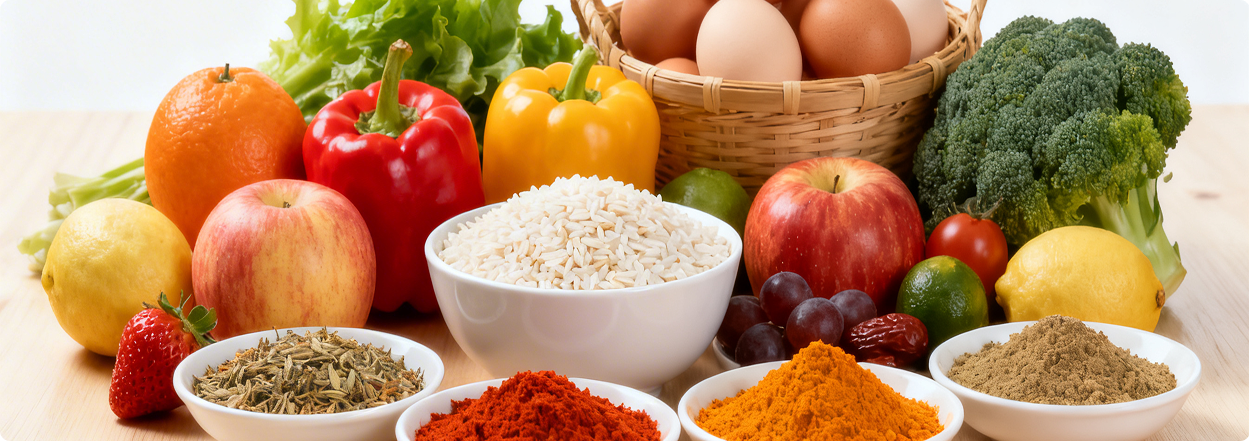
Mayil Global’s sourcing and logistics operation is designed to support dependable supply, consistent quality, and timely distribution across the UAE.
Exporter Action List for September 21
Before confirming the next shipment:
- Compare origin cost with the latest Al Aweer benchmark.
- Identify whether the product is in a firming or collapsing complex.
- Confirm UAE GAP, GLOBALG.A.P, health, phytosanitary, or Halal documentation.
- Verify ZAD and FIRS registration.
- Confirm the electronic import permit.
- Check Arabic–English labels and Nutri-Mark requirements.
- Calculate remaining shelf life at arrival.
- Obtain a written purchase commitment from a UAE buyer.
- Agree whether the shipment uses standard distribution, the 3% commission model, or cash-and-carry terms.
- Confirm cold-chain, delivery, and inspection arrangements.
For exporters, the UAE remains a high-volume regional market, but success depends on operational discipline. Reliable sourcing, strict quality control, compliant documentation, and organised logistics are now essential commercial requirements.
Contact Mayil Global to discuss a product offer, container purchase, or wholesale supply requirement.