zO7wW8324I1

Exporting Toor Dal, Moong Dal, and Brown Rice to Dubai: Expanding Pulse and Grain Supply Chains with Mayil Global’s 3% Commission Model

Dubai’s position as a premier global trade hub continues to strengthen, particularly within the essential food sector. For international exporters of pulses and grains, the United Arab Emirates represents a critical market characterized by structural demand and high-volume consumption. As we navigate 2026, commodities such as Toor Dal (Pigeon Peas), Moong Dal (Green Gram), and Brown Rice have emerged as vital components of the region’s food security and wholesale trade.

Mayil Global is facilitating this trade through a transparent and highly efficient 3 percent commission distributor uae model. This strategic approach allows exporters to bypass traditional, opaque middleman structures, ensuring higher margins and faster capital rotation. By positioning ourselves as a leading wholesale food buyer dubai, we provide a direct pipeline from global farms to the retail and hospitality sectors of the UAE.

Toor Dal and Moong Dal: Meeting the High-Frequency Demand of the UAE

The UAE is home to a vast expatriate population, particularly from South Asia, where pulses are a non-negotiable dietary staple. This creates a consistent, year-round demand for high-quality Toor Dal and Moong Dal.

Toor Dal (Pigeon Peas)

Toor Dal is a high-demand commodity in the Al Aweer wholesale market. With retail prices often stabilizing around AED 9.95 per kilogram, the wholesale movement is significant. Exporters who can provide consistent, cleaned, and polished Toor Dal will find ourselves as a verified buyer of that particular product capable of handling container-level volumes. Our sourcing network ensures that every shipment meets the strict quality standards required by Dubai’s regulatory authorities.

Moong Dal (Green Gram)

Moong Dal serves as a versatile ingredient in both household kitchens and industrial catering units. The demand for Moong Dal is driven by its nutritional profile and its role in a variety of traditional cuisines. For exporters, the key to success in the Dubai market lies in maintaining consistent grain size and moisture levels. At Mayil Global, we facilitate the distribution of Moong Dal by leveraging our organized logistics to ensure that the product reaches the end-user in peak condition.

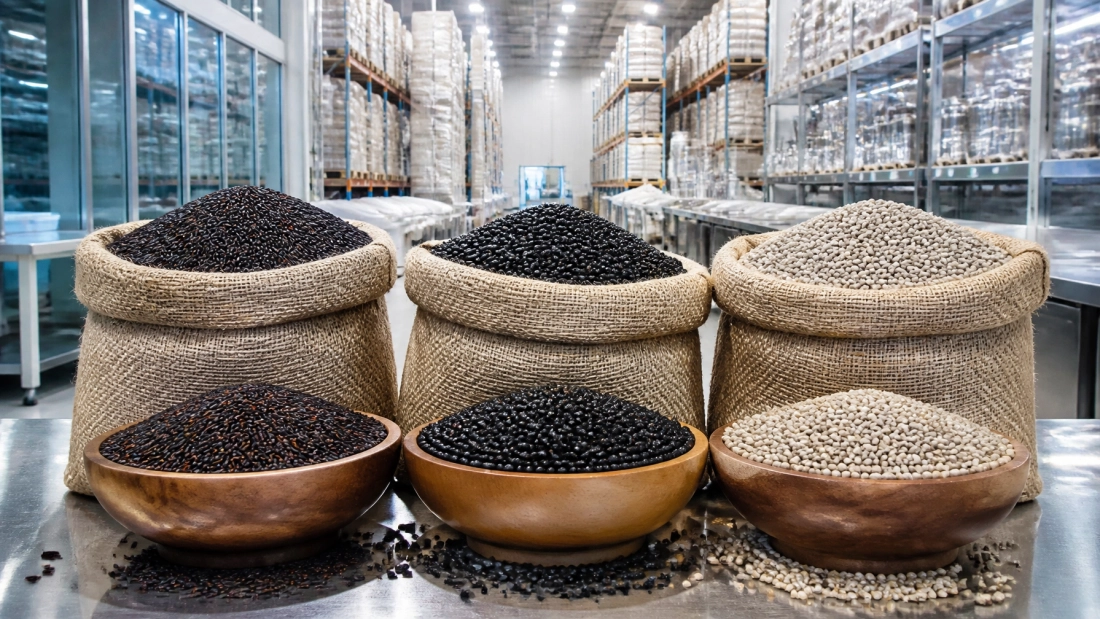
High-quality bowls of Toor Dal, Moong Dal, and Brown Rice

Brown Rice: Capturing the Emerging Health and Wellness Segment

While white rice remains the volume leader, there is a notable shift toward health-conscious consumption in urban centers like Dubai and Abu Dhabi. Brown Rice, including Brown Basmati and long-grain varieties, is experiencing a growth surge within the premium retail and organic sectors.

As one of the specialized bulk rice suppliers dubai, Mayil Global recognizes the potential of this higher-margin niche. Brown rice retail prices can be significantly higher than standard white rice, often ranging from AED 3.15 to AED 8.75 per kilogram. This segment appeals to a demographic that prioritizes low-glycemic index foods and whole-grain nutrition. By utilizing our 3% commission model, exporters of premium brown rice can secure a larger share of this lucrative market while maintaining control over their pricing strategy.

The Mayil Global 3% Commission Advantage

Traditional food distribution in the UAE often involves hidden costs and lengthy credit cycles that can tie up an exporter's capital. Mayil Global’s 3 percent commission distributor uae model is designed to provide operational clarity and financial stability.

How the Model Works:

  1. Flat Fee Structure: We charge a fixed 3% commission on the transaction value. There are no hidden markups or ambiguous fees.
  2. Price Control: Exporters retain full authority over the selling price of their goods. This allows you to respond dynamically to market fluctuations in the Dubai pulses and grains sector.
  3. Immediate Liquidity: We emphasize a cash-and-carry approach. For container-level shipments, we facilitate immediate payment, allowing exporters to reinvest in their next production cycle without waiting for 60-90 day payment terms.
  4. Market Intelligence: We provide our partners with real-time data on price trends at Al Aweer and other major hubs, ensuring that shipments are timed for maximum profitability.

Strategic Logistics and Quality Control

Mayil Global's operational framework is built on the pillars of safety, hygiene, and international standards. We manage the entire sourcing and logistics chain to protect the integrity of the produce.

Rigorous Inspection Processes

Every shipment of Toor Dal, Moong Dal, or Brown Rice undergoes strict quality control. Our inspectors examine the grain quality, moisture content, and packaging durability at every stage, from the farm-direct source to the final delivery at the customer’s warehouse. This commitment to excellence ensures that we remain a trusted partner for both international exporters and local B2B buyers.

Quality control inspector examining pulses in a clean facility

Hygienic Handling and Storage

Grains and pulses are sensitive to environmental factors. Our storage facilities are equipped with climate-control technology and follow the highest safety standards to prevent contamination. This meticulous attention to detail is why we are considered a premier wholesale food buyer dubai for premium food products.

Why Partner with Mayil Global?

Whether you are an international exporter seeking a reliable gateway into the Middle East or a local supermarket chain looking for bulk rice suppliers dubai, Mayil Global offers a comprehensive B2B solution.

  • Global Supply Network: We maintain a robust network across multiple countries, ensuring a steady and reliable supply of pulses and grains regardless of seasonal variations.
  • Organized Logistics: Our logistics team manages the complexities of customs clearance and last-mile delivery, ensuring timely arrival at supermarkets, restaurants, and retail outlets.
  • B2B Specialization: Our focus is strictly on the B2B sector, allowing us to tailor our services to the specific needs of wholesale distributors and institutional buyers.

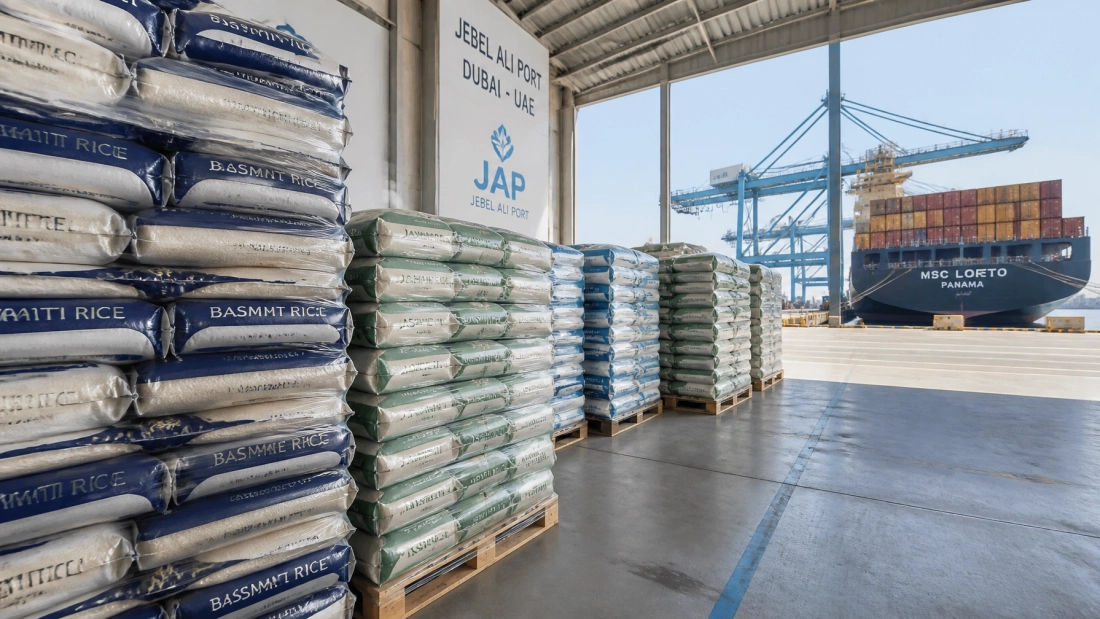
Cargo ship and logistics management at Jebel Ali Port, Dubai

Expanding Your Reach in the UAE Market

The demand for Toor Dal, Moong Dal, and Brown Rice in Dubai is not merely a trend but a structural reality of the region's food economy. By partnering with a 3 percent commission distributor uae, exporters can gain a competitive edge through transparent pricing and efficient capital management.

Mayil Global is more than just a distributor; we are a strategic partner dedicated to building long-term relationships based on trust and operational excellence. If you are an exporter with a high-quality supply of pulses or grains and are looking for a verified buyer of that particular product in the UAE, our team is ready to facilitate your market entry.

To learn more about our distribution models or to browse our current product range, please visit our About Us page or contact us directly to discuss your specific requirements.
eVcQNYgJryO

Verified Buyer & Exporter Authority Series: Grade 1 vs. Grade 2 Produce in Dubai : Why the 20–30% Price Premium Gap Is the Biggest Opportunity for Exporters in 2026

The landscape of food distribution in the UAE has reached a pivotal juncture in the second half of 2026. As the UAE’s non-oil foreign trade surged to a historic AED 1.937 trillion in H1 2026: a robust 13.1% year-on-year increase: the fresh produce sector is witnessing a structural shift in how value is captured. For international exporters and local distributors, the most significant trend of the year is not merely the volume of trade, but the widening economic divide between "Grade 1" (Class 1) and "Grade 2" (Class 2) commodities.

In the Al Aweer Central Fruit & Vegetable Market, the primary price-setting hub for the GCC, current analysis as of late July 2026 shows that while staple prices are entering a plateau phase, the premium for Grade 1 produce has expanded to a 20–30% gap. This price premium represents the single largest opportunity for exporters to offset rising logistics costs and capture higher margins in a competitive market.

At Mayil Global, we facilitate this transition for exporters through our 3% commission-based distribution model, ensuring that high-spec cargo reaches the right buyers without the traditional risks of liquidity and price volatility.

Decoding the 20–30% Premium: Why Grading Matters in 2026

The Dubai market has matured rapidly. In 2026, the demand from supermarket chains, high-end hospitality (HORECA), and export-oriented retailers is strictly focused on Class 1 specifications. This demand is driving a price divergence that makes wholesale fruits and vegetables in Dubai a tale of two markets.

Comparison of Grade 1 versus Grade 2 produce illustrating the quality standards in Dubai

1. Visual Integrity and Uniformity

Grade 1 produce is defined by near-perfect visual consistency. In the current market, Class 1 items are resisting the seasonal "softening" of prices seen in mid-2026. While Grade 2 arrivals are often sold at a discount to clear inventory, Grade 1 items command a firm price floor because they meet the rigorous shelf-life and aesthetic requirements of major UAE retailers.

2. Shelf-Life and Spoilage Resistance

With India's mango shipments suffering 10% spoilage earlier this year due to Gulf-related logistics delays, the market value of "hard-spec" Grade 1 produce has skyrocketed. Buyers are willing to pay a 20-30% premium for produce that is pre-sorted and packed to withstand the challenges of the 2026 supply chain.

3. The "Supermarket Standard"

Supermarkets in the UAE are no longer flexible on grading. To maintain their brand equity, they exclusively source Class 1 material. Exporters who fail to grade at the source find their containers relegated to the "cash-and-carry" floor of Al Aweer, where they face the 20-30% discount typical of Grade 2 material.

Commodity Spotlight: Where the Opportunities Lie

Pakistani Mangoes: The Premium Leader

In the 2026 season, Pakistani mangoes are trading at a ~20% premium compared to previous cycles. This is driven by tighter supply and a heightened demand for Grade 1 fruit that meets international export standards. For exporters, focusing on the Grade 1 segment of the Pakistani mango crop is the most effective way to maximize ROI, particularly when utilizing a verified buyer for exporters in the UAE.

Rice: Scaling for the 1.1M Metric Ton Forecast

The UAE's push for food security has led to a forecast of 1.1 million metric tons of rice imports for the 2026-2027 period. As one of the leading bulk rice suppliers in Dubai, Mayil Global has observed that the price gap between premium long-grain Basmati and standard varieties is widening as consumers prioritize quality and food safety.

Onions: Navigating the Plateau

While importing onions to Dubai has seen a price softening in July 2026 (with new-crop onions trading approximately 41% lower than June peaks), Grade 1 Indian onions continue to hold a premium over other origins. The 3% commission model allows exporters to navigate these fluctuations by ensuring their premium product is sold at the highest possible daily rate.

Premium Pakistani mangoes and long-grain Basmati rice representing high-value UAE imports

The Logistics Challenge: 5x Freight Surges and the Strait of Hormuz

Success in 2026 is as much about logistics as it is about produce quality. The 5x freight surge through the Strait of Hormuz has fundamentally altered the cost-plus pricing model. When shipping costs are high, the economic logic of exporting Grade 2 produce collapses.

If an exporter pays a 5x premium on freight, they cannot afford to sell their cargo at a 20-30% discount in the Dubai market. This makes Grade 1 produce the only viable option for international shippers. By focusing on premium goods, the fixed cost of logistics becomes a smaller percentage of the total sales value, protecting the exporter's bottom line.

A container ship navigating shipping lanes reflecting the 2026 logistics challenges

How Mayil Global Solves the Exporter's Dilemma

Navigating the Dubai wholesale market requires a partner who understands the "Who, What, and How" of local operations. Mayil Global positions itself as the wholesale food buyer in Dubai that prioritizes the exporter's liquidity and market access.

The 3% Commission Model

Our primary USP is a transparent, 3% commission-based distribution model. Unlike traditional traders who might buy at a steep discount to maximize their own margins, we act as your operational arm in the UAE. We sell your Grade 1 produce at the highest market price and charge a flat 3% fee. This ensures that the 20-30% quality premium goes directly into your pocket, not ours.

Immediate Cash-and-Carry Container Purchases

For exporters who require immediate liquidity to fund their next shipment, Mayil Global offers a cash-and-carry purchasing option. We buy full containers of Grade 1 produce outright, assuming the market risk so that you can maintain your cash flow. This is particularly vital for exporters of perishable goods like onions and mangoes.

Strict Quality Control and Inspection

We maintain rigorous inspection standards at every stage: from arrival at the port to final delivery at the supermarket or restaurant. By ensuring your cargo is handled hygienically and stored in temperature-controlled environments, we preserve the "Grade 1" status of your produce, justifying the premium price point.

Digital dashboard showing transparent commission and a professional B2B handshake

Conclusion: Strategy for H2 2026

The data is clear: the UAE's food import sector is expanding, but it is also becoming more discerning. With non-oil trade hitting record highs and food security becoming a national priority, the demand for premium, Grade 1 produce is at an all-time high.

Exporters who want to succeed in 2026 must:

  1. Prioritize Grading: Move away from Grade 2 volume and focus on Grade 1 quality to capture the 20-30% price premium.
  2. Mitigate Logistics Risk: Use premium margins to offset the 5x freight surges in the region.
  3. Partner for Transparency: Utilize a 3 percent commission distributor in the UAE to ensure fair market value.

As the Al Aweer market enters its next phase of growth, Mayil Global remains committed to being the most reliable bridge between global farms and UAE markets. Whether you are exporting food to Dubai for the first time or looking to optimize your existing supply chain, our professional team is ready to facilitate your success.

Contact Mayil Global today to discuss your next shipment and secure your place in the UAE's premium food market.

Ojfwbm3qxRB

UAE Export Trade Hits Record Dh1.94 Trillion + Al Aweer Market Update : July 23, 2026

The United Arab Emirates continues to solidify its position as a dominant global trade hub. As of today, July 23, 2026, the nation’s economic indicators reflect a period of unprecedented expansion in the non-oil sector. For international exporters and local market participants, these figures represent more than just statistics; they signal a robust environment for sourcing and logistics across the Middle East.

This report provides a comprehensive breakdown of the latest UAE export news, critical developments in the Al Aweer market, and the regulatory updates defining the current trade landscape.

UAE Export News: Record-Breaking Non-Oil Growth

The first half of 2026 has witnessed a historic surge in the UAE’s non-oil foreign trade. Reaching a record Dh1.937 trillion, the trade volume has grown by 13.1% compared to the same period in 2025. The most significant driver of this growth is the non-oil export sector, which surged by 23.9% to reach Dh452.8 billion.

Strategic Trade Agreements (CEPAs)

The UAE’s "Global Dubai" vision is being realized through an aggressive expansion of its Comprehensive Economic Partnership Agreement (CEPA) network. Currently, 37 CEPAs have been concluded, with 18 already in full force. By the end of 2026, the government aims to finalize an additional 5 to 7 agreements with nations including Canada, Rwanda, Ghana, Zambia, Peru, and Bangladesh.

These agreements are designed to eliminate tariffs, remove technical barriers to trade, and streamline customs procedures, making the UAE an even more attractive destination for verified buyers for exporters in the UAE.

Logistics Infrastructure: DP World and the Fujairah Expansion

In a strategic move to secure trade routes and bypass the Strait of Hormuz, DP World has signed a 50-year concession to build and operate two deepwater terminals in Fujairah. This expansion is critical for the steady supply of commodities, including fresh produce and premium food products. The new terminals will enhance the UAE’s ability to handle massive container volumes, ensuring that the logistics chain remains resilient against regional geopolitical shifts.

Modern Deepwater Port Terminal in Fujairah

US Export Control Status: Category A5 Upgrade

The United States has officially upgraded the UAE to Category A5 export control status. This administrative shift simplifies the transfer of high-tech and dual-use goods, signaling deep trust in the UAE’s regulatory and security frameworks. For the food distribution industry, this upgrade indirectly benefits the supply chain by facilitating the import of advanced agricultural technology and cold-chain monitoring systems.

Al Aweer Market Updates: Supply Abundance and Price Trends

As of July 23, 2026, the Al Aweer Central Fruit and Vegetable Market is experiencing a period of high liquidity and downward price pressure. This trend is largely attributed to an influx of new shipments from global partners, facilitated by the UAE’s expanding trade network.

Minister of Economy Market Tour

The UAE Minister of Economy recently conducted a formal tour of the Al Aweer Market. During the inspection, the Minister confirmed that the supply of essential commodities is at an optimal level, ensuring price stability for consumers while posing a competitive challenge for wholesalers.

Current Market Dynamics:

  • Price Trends: Trending downward due to abundant supply and seasonal harvests.
  • Supply Volume: High availability across all major categories including onions, potatoes, and premium fruits.
  • Daily Fluctuations: Market rates remain volatile on a day-to-day basis, requiring exporters to have a reliable partner who can manage price risks effectively.

Al Aweer Market Fresh Produce Inspection

For exporters navigating these fluctuations, Mayil Global offers a specialized 3% commission strategy designed to secure daily liquidity even in a downward-trending market.

Regulatory Corner: Compliance and Quality Standards

Operating within the UAE food sector requires strict adherence to evolving regulatory frameworks. Ensuring safety and hygiene is a non-negotiable pillar of our business process at Mayil Global.

Key Regulatory Requirements for 2026:

  1. ZAD Portal Registration: Mandatory registration for all food items entering the UAE to ensure traceability.
  2. FIRS for Dubai: All food shipments must be cleared through the Food Import and Re-export System (FIRS) managed by Dubai Municipality.
  3. Arabic Labeling: All packaging must feature prominent Arabic labeling, including ingredients, nutritional facts, and expiry dates.
  4. Halal Certification: Mandatory for relevant food categories, ensuring compliance with Islamic dietary laws.
  5. Risk-Based Inspection Model: The UAE has implemented a sophisticated inspection model that prioritizes shipments based on risk factors, rewarding compliant exporters with faster clearance times.

UAE Trade Growth and Logistics Analysis

Why Mayil Global: Your 3% Commission Distributor in the UAE

Navigating the complexities of the UAE export news and the Al Aweer market updates requires a partner with deep local roots and a transparent operational model. Mayil Global stands as a leading wholesale supplier and verified buyer for exporters in the UAE.

The 3% Commission Model for Exporters

International and local exporters often struggle with the lack of liquidity and hidden costs in traditional distribution models. Mayil Global addresses this by offering a transparent 3% commission-based distribution model. This ensures that exporters receive the maximum possible return on their shipments while we handle the local logistics, market placement, and sales.

  • Immediate Cash-and-Carry: We specialize in the immediate purchase of containers, providing exporters with the cash flow they need to sustain operations.
  • B2B Focus: Our primary supply chain serves supermarkets, restaurants, and wholesale distributors across the UAE.
  • Operational Excellence: From farm-direct sourcing to strict quality control, we manage every stage of the supply chain with professional rigor.

Exporters seeking to maximize their margins should consider the benefits of our 3% commission model over traditional, less transparent alternatives.

Reliable Supply for UAE B2B Buyers

For restaurants and retailers, Mayil Global serves as a dependable wholesale supplier. Our cash-and-carry food wholesale model is designed to help local businesses manage their inventory more efficiently, reducing waste and ensuring the freshness of produce delivered to the end consumer.

3 Percent Commission Distribution Model Icon

Conclusion

The UAE's trade trajectory is one of consistent and impressive growth. With a record Dh1.94 trillion in non-oil trade and a strategic expansion of port infrastructure, the opportunities for exporters and local businesses are vast. However, success in this market depends on staying informed of Al Aweer market updates and partnering with a 3 percent commission distributor in the UAE that understands the regulatory and logistical landscape.

Mayil Global is committed to building long-term, trust-based relationships with our partners by delivering consistent quality and operational excellence.

Contact Mayil Global Today

Are you an exporter looking for a verified buyer or a local business in need of a reliable wholesale supplier? Contact us today to learn more about our 3% commission model and how we can support your growth in the UAE market.

VdS6V5Cjnem

How to Export Food to Dubai: The Ultimate Guide for the Verified Buyer of Wholesale Fruits and Vegetables

Dubai serves as the primary logistical gateway for food distribution across the Middle East and North Africa. For global exporters, penetrating this market requires more than just high-quality produce; it demands a strategic partnership with a verified buyer for exporters UAE. Mayil Global stands at the forefront of this industry, providing a sophisticated infrastructure for wholesale fruits and vegetables in Dubai.

This guide outlines the critical operational steps, regulatory requirements, and the financial advantages of utilizing Mayil Global’s unique 3% commission model and Cash & Carry wholesale system to maximize export profitability.

Navigating the Al Aweer Central Market

The Al Aweer Central Fruit and Vegetable Market is the epicenter of fresh produce trade in the UAE. Understanding the dynamics of this market is essential for any exporter aiming to maintain steady volume and competitive pricing.

Selling in Al Aweer traditionally involves complex layers of middle-men and fluctuating market fees. Mayil Global simplifies this through a transparent distribution framework. As a 3 percent commission distributor UAE, we act as your operational arm in the market, ensuring that your cargo is cleared, positioned, and sold at the highest daily market price with minimal overhead.

How to Export Food to Dubai: A Step-by-Step Operational Framework

Exporting to the UAE requires strict adherence to federal and municipal regulations. Failure to comply with documentation or quality standards can result in shipment rejection or costly delays.

1. Regulatory Registration and Compliance

Every product entering Dubai must be registered in the Food Import and Re-export System (FIRS) managed by the Dubai Municipality.

  • Entity Registration: Exporters must work with a licensed local importer. Mayil Global handles the registration of your specific products and labels within the FIRS system.
  • Standards: Compliance with UAE.S 9:2019 regarding harvest and packing dates is non-negotiable for fresh produce.

2. Essential Documentation for Clearance

To ensure seamless customs clearance, the following documents must accompany every consignment:

  • Phytosanitary Certificate: Issued by the agricultural authority in the country of origin.
  • Certificate of Origin: Authenticated by the relevant Chamber of Commerce.
  • Health Certificate: Confirming the produce is fit for human consumption.
  • Detailed Packing List and Commercial Invoice: Specifying HS codes, net/gross weights, and variety types.

Refrigerated shipping container being loaded with pallets of fresh produce, highlighting cold chain logistics and operational excellence.

3. Logistics and Cold Chain Management

Maintaining the integrity of the cold chain is the most critical factor in how to export food to dubai. Most fresh produce requires reefer containers set to specific temperatures (typically ≤ 8°C). Mayil Global’s logistics network ensures that from the moment your cargo arrives at Jebel Ali Port or Dubai World Central, it is moved directly to temperature-controlled storage or the market floor to preserve freshness.

The 3% Commission Model: Maximizing Exporter Margins

The primary challenge for international exporters is the erosion of margins due to high distribution fees. Mayil Global addresses this by offering a 3% commission-based distribution model.

Unlike traditional wholesalers who may take a 10-15% cut or hide costs in "market fees," our model is built on transparency:

  • Direct Sales: We sell your produce directly to our network of supermarkets, restaurants, and retailers.
  • Transparent Reporting: Exporters receive detailed sales reports showing the exact price achieved for each unit.
  • Risk Mitigation: As your verified buyer for exporters UAE, we handle the local market volatility, allowing you to focus on production and sourcing.

A professional business meeting in a modern Dubai office, symbolizing the partnership and trust in Mayil Global's 3% commission model.

Strategic Focus: Importing Onions and Staple Crops to Dubai

Onions, potatoes, and garlic represent some of the highest-volume commodities in the UAE. Importing onions to Dubai requires a specific understanding of variety preferences (e.g., Red Nasik, Yellow Onions) and packaging requirements.

Mayil Global specializes in the bulk handling of these staples. We ensure that your onions are packed in export-quality mesh bags and labeled according to GSO 124:1990 standards. By utilizing our 3% commission structure, onion exporters can secure higher net returns compared to fixed-price sales, which often undervalue the product during peak demand periods.

Premium red and white onions professionally packed for export, demonstrating high quality control standards.

Cash & Carry: Solving the Liquidity Gap

For many exporters, the delay between shipping and payment is a significant barrier to growth. Mayil Global’s Cash & Carry wholesale system provides an alternative for exporters who prefer immediate liquidity.

We offer immediate container purchases on a cash-and-carry basis for verified high-quality consignments. This allows exporters to reinvest capital into their next shipment immediately, rather than waiting for retail sales cycles to complete. This hybrid approach: combining 3% commission sales for long-term margin growth and Cash & Carry for immediate cash flow: makes Mayil Global the preferred partner for wholesale fruits and vegetables in Dubai.

Quality Control and Hygienic Handling

Mayil Global maintains rigorous standards of hygiene and safety. Our facilities follow international food safety protocols, ensuring that every stage: from unloading to final distribution: is conducted in a clean, controlled environment.

Our sourcing and logistics department conducts inspections at every stage:

  1. Origin Inspection: Verifying quality before the container is sealed.
  2. Arrival Inspection: Checking for transit damage or temperature fluctuations.
  3. Market Inspection: Ensuring produce meets the aesthetic and freshness standards of UAE buyers.

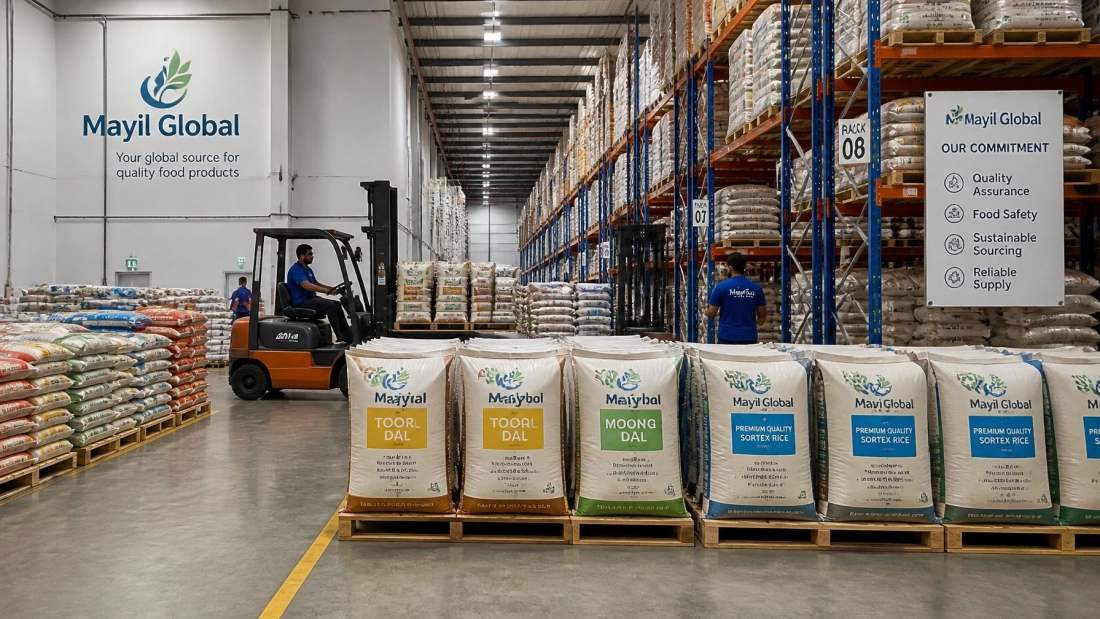
Interior of a modern, hygienic wholesale warehouse in Dubai showing organized storage of premium rice and spices.

Conclusion: Partner with a Verified UAE Buyer

Exporting food to Dubai is a high-reward venture for those who navigate the regulatory and logistical landscape correctly. By partnering with Mayil Global, you gain access to a world-class distribution network, a transparent 3% commission model, and the security of a verified B2B buyer.

Whether you are importing onions to Dubai or distributing premium rice and spices, our operational excellence ensures your products reach the market in peak condition, yielding maximum returns.

Contact Mayil Global today to register as a verified supplier and begin your export journey to the UAE.

TOdfGXG1N0X

Black Rice, Urad Dal, and Pearl Millet: Expanding Dubai’s Wholesale Grain Repertoire with Mayil Global’s 3% Commission Model

The landscape of the UAE food industry is undergoing a significant shift toward diversification. While traditional staples remain high in demand, the market is increasingly receptive to high-value, nutrient-dense grains such as Black Rice, Urad Dal, and Pearl Millet. For international exporters and local B2B buyers, navigating this evolving market requires more than just a supply of goods; it requires a transparent, reliable, and operationally efficient distribution partner.

Mayil Global, a leading wholesale food buyer in Dubai, is at the forefront of this transition. By implementing a standardized 3% commission model, we provide a clear pathway for global exporters to enter the UAE market while ensuring local supermarkets and restaurants have access to premium-grade produce. This article outlines the market potential of these three key grains and details how Mayil Global’s logistics and distribution framework facilitates seamless trade.

The Growing Demand for Alternative Grains in the UAE

Dubai serves as a global hub for the re-export and domestic distribution of food products. As consumer preferences lean toward health-conscious and gluten-free alternatives, grains like Pearl Millet and Black Rice are moving from niche categories into mainstream wholesale.

Black Rice: The Premium Nutritional Segment

Black Rice, often referred to as "forbidden rice," is gaining traction among gourmet restaurants and health-focused retailers in Dubai. Its high antioxidant content and striking visual appeal make it a high-margin product for exporters. As bulk rice suppliers in Dubai expand their portfolios, Black Rice represents a strategic opportunity for exporters to differentiate their offerings.

Urad Dal: The Consistent Volume Staple

Urad Dal (Black Gram) remains a non-negotiable staple for the UAE’s massive South Asian expatriate population and the robust hospitality sector. The demand for high-quality, split, and whole Urad Dal is consistent, necessitating a supply chain that prioritizes moisture control and purity. Mayil Global ensures that every batch of Urad Dal meets strict hygiene and quality standards before entering the retail market.

Pearl Millet: The Sustainable Supergrain

With the UAE government’s focus on food security and sustainable agriculture, Pearl Millet (Bajra) has seen a surge in interest. As a resilient and nutrient-rich grain, it is increasingly requested by wholesale buyers looking for gluten-free staples. The CAGR for the millets market in the UAE is projected to remain strong through 2031, positioning it as a core growth area for international shippers.

Detailed close-up of Black Rice, Urad Dal, and Pearl Millet highlighting their textures and quality.

Leveraging Mayil Global’s 3% Commission Model

For many international shippers, the primary barrier to entry in the Middle East is the lack of a verified buyer for exporters in the UAE. Traditional distribution models often involve opaque pricing and high margins that erode exporter profits.

Mayil Global operates on a transparent 3 percent commission distributor UAE model. This structure is designed to foster long-term partnerships by providing:

  1. Cost Transparency: Exporters pay a flat 3% commission on the distribution value, ensuring they retain the majority of their margins.
  2. Immediate Liquidity: For qualified shipments, we offer a cash-and-carry model, providing immediate payment for container-load purchases. This eliminates the cash-flow gaps often associated with international trade.
  3. Market Access: Our established network includes direct links to supermarkets, restaurants, and retail chains, ensuring that products like Black Rice and Pearl Millet reach the right end-users.

How to Export Food to Dubai: A Step-by-Step Guide

Navigating the regulatory environment in the UAE is a critical component of successful food distribution. When exporters partner with Mayil Global, they benefit from our expertise in local compliance and logistics.

1. Regulatory Compliance and Registration

Every food product must be registered in the ZAD federal portal and the Dubai Municipality’s Food Import & Re-export System (FIRS). Mayil Global acts as your importer-of-record, managing the technical documentation, including label approvals and health certificates.

2. Documentation Requirements

To ensure a shipment is cleared without delay, the following documents are mandatory:

  • Phytosanitary Certificate: Essential for grains and pulses to confirm they are pest-free.
  • Original Health Certificate: Issued by the governing authority in the country of origin.
  • Certificate of Origin: Authenticated by the relevant Chamber of Commerce.
  • Bilingual Labeling: Labels must include Arabic text, production/expiry dates, and country of origin.

3. Quality Control and Logistics

Upon arrival at the port, Mayil Global manages the logistics chain. Our process includes:

  • Strict Inspection: Every container is inspected for freshness and safety.
  • Hygienic Storage: Products are moved to climate-controlled warehouses to maintain the integrity of the grains.
  • Organized Distribution: Our logistics fleet ensures timely delivery to B2B clients across the UAE.

Conceptual image representing the transparent 3% commission model for international trade in Dubai.

Benefits for Local B2B Buyers in the UAE

Supermarkets and restaurants in the UAE require a steady, reliable supply of high-quality grains. As a premier wholesale food buyer in Dubai, Mayil Global offers several advantages to local businesses:

  • Steady Supply: Our global network of trusted farms ensures that we can maintain inventory even during seasonal fluctuations.
  • Competitive Pricing: By working directly with exporters on a commission basis, we reduce unnecessary middleman costs, passing those savings to our B2B customers.
  • Quality Assurance: Our commitment to strict quality control means that every bag of rice or pulse delivered is fit for immediate retail or culinary use.

Strategic Logistics in the Al Aweer Market

Much of the UAE's food trade flows through the Al Aweer market area. Mayil Global’s presence in this hub allows us to manage high-volume transitions efficiently. Whether it is exporting onions to Dubai or handling container loads of premium rice, our operational presence ensures that we stay ahead of market pricing and logistics trends.

Exporters looking for a verified buyer in the Al Aweer market can rely on our team to handle the complexities of "cash and carry" transactions, ensuring that liquidity remains a constant in their business operations.

A professional reviewing logistics and supply chain data, representing efficient distribution.

Conclusion: Partnering for Global Excellence

The expansion of Dubai’s grain repertoire to include Black Rice, Urad Dal, and Pearl Millet represents a significant opportunity for growth. However, success in this market is dependent on a partner who prioritizes transparency, hygiene, and efficient distribution.

Mayil Global’s 3% commission model and cash-and-carry purchasing provide a secure, profitable framework for exporters worldwide. By handling the intricacies of how to export food to Dubai, we allow our partners to focus on what they do best: sourcing high-quality produce.

For international exporters seeking a reliable distributor or local B2B buyers looking for bulk rice suppliers in Dubai, Mayil Global is the definitive choice for operational excellence.


Frequently Asked Questions (FAQ)

1. What is the 3% commission model?
It is a distribution agreement where Mayil Global acts as the importer-of-record and distributor for a flat 3% commission on the sales value, ensuring maximum profit retention for the exporter.

2. Does Mayil Global buy containers for cash?
Yes. For verified suppliers and high-demand products like Urad Dal and Rice, we offer a cash-and-carry model to provide immediate liquidity to exporters.

3. What grains are currently seeing the highest growth in the UAE?
Pearl Millet (Bajra) and Black Rice are seeing significant growth due to increasing consumer interest in gluten-free and antioxidant-rich diets.

4. How can I verify my food products for the Dubai market?
Products must be registered through the ZAD and FIRS systems. Mayil Global manages this entire registration process for our partner exporters.

FsdU4gJ3XO1

UAE Export News & Al Aweer Market Updates : July 22, 2026

The United Arab Emirates continues to solidify its position as a preeminent global trade hub, driven by aggressive economic diversification and the strategic expansion of its non-oil foreign trade sectors. As of July 22, 2026, the nation’s trade infrastructure reflects unprecedented growth, supported by a robust network of Comprehensive Economic Partnership Agreements (CEPAs) and a highly efficient domestic distribution landscape.

For international exporters and local market participants, staying abreast of UAE export news and Al Aweer market updates is essential for navigating this high-velocity environment. At Mayil Global, we monitor these developments closely to ensure our partners: ranging from global growers to UAE-based retailers: benefit from a stable, transparent, and profitable supply chain.

UAE Non-Oil Trade Hits Historic Highs in H1 2026

The first half of 2026 has witnessed a transformative leap in the UAE’s economic performance. Data recently released indicates that the UAE’s non-oil foreign trade grew by 13.1% in H1 2026, reaching a record valuation of Dh1.937 trillion. This trajectory places the nation on track to surpass the Dh4 trillion mark by the end of the year, a testament to the efficacy of the "We the UAE 2031" vision.

More significantly for the export community, national non-oil exports reached an all-time high of Dh452.8 billion, representing a 23.9% annual increase. This surge is not merely a reflection of volume but an indicator of the UAE's growing industrial maturity and its role as a vital re-export node for global markets.

Strengthening Global Ties: CEPAs and Export Controls

The UAE’s trade diplomacy remains a primary driver of this growth. To date, the UAE has signed 37 CEPAs, with 18 already in force. The Ministry of Economy anticipates the finalization of 5 to 7 additional agreements by the end of 2026, including key markets such as Canada, Peru, Rwanda, Ghana, Zambia, and Bangladesh.

Furthermore, in a major development this July 2026, the United States upgraded the UAE to Category A5 export control status. This administrative shift streamlines the movement of sensitive and high-technology goods, reinforcing the UAE's status as a trusted partner in global secure trade and high-value logistics.

Al Aweer Market Updates: Supply Dynamics and Pricing Trends

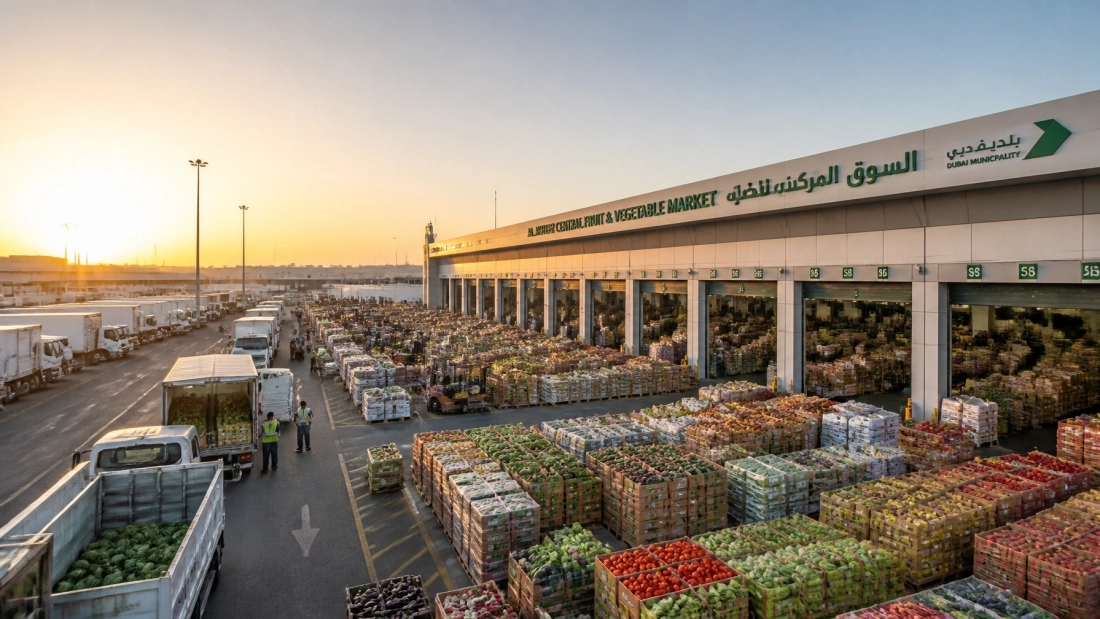
As the central nervous system of the GCC’s fresh produce trade, the Al Aweer Central Market in Dubai provides a real-time pulse of regional food security and commodity pricing. Current Al Aweer market updates indicate a period of high liquidity and abundant supply, though marked by the characteristic volatility of a high-throughput wholesale hub.

Bustling wholesale fruit and vegetable activity at Al Aweer market in Dubai

Abundant Supply and Cooling Price Trends

Supply levels for core commodities: including onions, potatoes, citrus, and leafy greens: remain high due to steady arrivals from both traditional corridors and emerging CEPA partners. This abundance has led to a noticeable cooling trend in wholesale prices across several categories.

While certain imported items face moderate upward pressure due to regional freight adjustments, the overall market sentiment is one of stability. For exporters, this environment necessitates a sophisticated approach to distribution. High volumes mean that quality differentiation and rapid turnover are the primary levers for maintaining healthy margins.

The Impact of Cold-Chain Excellence

The market is increasingly prioritizing shipments that utilize advanced cooling and cold-chain infrastructure. At Al Aweer, the correlation between temperature management and price realization is absolute. Produce that maintains a robust cold chain from the farm gate to the market floor commands an "A-grade" premium, whereas sub-optimal cooling leads to rapid discounting to clear inventory before spoilage.

This emphasizes the importance of partnering with a verified buyer for exporters uae like Mayil Global, where cold-chain integrity is a non-negotiable standard.

Regulatory Updates: Essential Compliance for UAE Exporters

Navigating the regulatory landscape is critical for operational success in the Dubai market. Failure to comply with registration and labeling standards can lead to costly delays at the port of entry or rejection of shipments.

Mandatory Food Registration

All imported food products must be registered on the ZAD system (the federal portal) or the Food Import and Re-export System (FIRS) for Dubai. This registration ensures that all products entering the market meet the stringent safety and traceability requirements set by the UAE authorities.

Labeling and Certification Standards

The UAE maintains specific standards for consumer transparency and food safety:

  • Bilingual Labeling: Labels must be in both English and Arabic. They must include the product name, brand, list of ingredients (in descending order), net weight, country of origin, and manufacturer details.
  • Halal Certification: Mandatory for all meat, poultry, and animal-derived products. Certification must be issued by a recognized and approved Islamic organization in the country of origin.
  • Shelf Life: A minimum of 50-75% remaining shelf life is required upon the arrival of the goods at UAE ports.

Strict quality control and temperature monitoring in a UAE food distribution facility

Strategic Distribution: The Mayil Global 3% Commission Model

For international exporters seeking to capitalize on the UAE's record trade growth, the choice of a distribution partner is the most critical variable. Mayil Global offers a unique value proposition designed to eliminate the risks traditionally associated with the Al Aweer market.

Positioned as Your Verified Buyer for Exporters in the UAE

Mayil Global acts as a verified buyer for exporters uae, providing a secure and transparent pathway for container-level shipments. We specialize in the wholesale supply of fresh fruits, vegetables, premium spices, and rice to supermarkets, restaurants, and retailers across the Emirates.

The 3% Commission Advantage

Unlike traditional distributors who may have hidden costs or opaque pricing structures, we operate on a highly competitive 3 percent commission distributor uae model. This model is designed for maximum transparency:

  • 3% Commission: We charge a flat fee for our distribution services.
  • Immediate Liquidity: We facilitate cash-and-carry container purchases, ensuring that exporters receive their funds without the protracted waiting periods common in the industry.
  • Market Intelligence: Our partners receive real-time feedback on Al Aweer market trends, allowing them to adjust their shipping volumes and grades for maximum profit.

Exporters interested in securing their margins through this model can learn more about how our 3% commission model maximizes profit.

Operational Excellence: From Farm to Market

Our commitment to quality control is the foundation of our operations. We maintain strict standards at every stage of the supply chain to ensure that the produce arriving at our facilities: and eventually at our clients’ locations: is of the highest caliber.

  1. Farm-Direct Sourcing: We bypass intermediaries to source directly from trusted farms and global suppliers, ensuring freshness and competitive pricing.
  2. Rigorous Inspection: Every shipment undergoes inspection at multiple stages, from the loading port to our UAE distribution centers.
  3. Hygienic Handling: Our facilities follow international safety standards for packaging and handling, minimizing contamination risks.
  4. Organized Logistics: Our logistics network is optimized for the UAE’s unique climate, ensuring that "farm fresh" is not just a slogan but a delivered reality.

A professional business agreement representing a verified partnership and trade success

Conclusion: Navigating the Future of UAE Trade

The data from July 2026 confirms that the UAE's trade sector is in a state of vigorous expansion. With record non-oil exports and an ever-expanding web of international partnerships, the opportunities for global exporters have never been more significant. However, success in this market requires more than just high-quality produce; it requires a deep understanding of UAE export news, compliance with evolving regulations, and a partnership with a reliable 3 percent commission distributor uae.

Mayil Global is dedicated to providing the stability and transparency that international exporters need to thrive in the Dubai market. By combining global reach with local expertise and a performance-based commission model, we ensure that our partners are always positioned for success.

For exporters looking to move containers of onions, potatoes, rice, or spices into the UAE, Mayil Global stands ready as your trusted, verified partner.

F_K5ScSFMQ3

Verified Buyer & Exporter Authority Series: Exporting Premium Spices and Herbs to Dubai : How Mayil Global’s 3% Commission Model Connects Verified Suppliers with UAE Wholesale Buyers

The landscape of international food trade in the United Arab Emirates is undergoing a transformative shift. As the UAE’s non-oil foreign trade hits record highs in 2024, the demand for reliable, high-quality food supply chains has never been greater. For global exporters of premium spices and herbs, Dubai remains the premier gateway to the Middle East and North Africa (MENA) region.

Navigating this lucrative market requires more than just a quality product; it requires a strategic partnership with a verified buyer for exporters in the UAE. Mayil Global is leading this evolution through a transparent 3% commission distributor model, designed to bridge the gap between international producers and local wholesale demand.

The UAE’s Strategic Push for Food Security and Trade Expansion

Recent geopolitical developments have fortified the UAE’s position as a global food hub. Understanding these macro-trends is essential for any exporter looking to master how to export food to Dubai.

The UAE-India Food Security Corridor

A landmark development is the UAE-India Food Security Corridor, recently bolstered by a specific partnership with Andhra Pradesh. This initiative aims to connect Indian farms directly to UAE ports. With over US$7 billion pledged by UAE entities to India’s food ecosystem, the corridor is designed to triple bilateral food trade by 2025. For exporters in Andhra Pradesh and across India, this means streamlined logistics and reduced tariffs under the Comprehensive Economic Partnership Agreement (CEPA).

Egypt’s Ascendance in the Spice Market

Egypt has emerged as a top exporter to the UAE, shipping over 185,000 tons of goods to 194 countries, with the UAE remaining a primary destination. Egyptian herbs and spices: including cumin, coriander, and basil: are in high demand within the Dubai wholesale market.

Strengthening Regional Ties

The recent UAE-Syria food security pact further illustrates the Emirates' commitment to diversifying its sourcing network. As the UAE non-oil trade continues to break records, the infrastructure for importing, storing, and distributing premium spices is expanding at an unprecedented rate.

Navigating the Regulatory Framework: How to Export Food to Dubai

Successfully entering the Dubai market requires strict adherence to technical and safety standards. As a leading wholesale fruits and vegetables Dubai supplier, Mayil Global assists partners in meeting these rigorous requirements.

  1. HS Code Identification: Correct classification of spice and herb products is critical for determining tariffs and control measures.
  2. Dubai Municipality Registration: Every food item must be registered via the Food Import & Re-export System (FIRS). This involves submitting ingredient lists, label artwork, and shelf-life details.
  3. Labeling Standards: Labels must be in Arabic (or bilingual Arabic/English) and include mandatory information such as country of origin, production/expiry dates, and allergen declarations.
  4. Phytosanitary Certification: Exporting countries must provide health and phytosanitary certificates to ensure products are free from contaminants and meet UAE pesticide residue limits.

Quality control and hygienic handling in a modern UAE warehouse

The Mayil Global Advantage: The 3% Commission Model Explained

The traditional distribution model often leaves exporters vulnerable to high fees, delayed payments, and opaque pricing. Mayil Global addresses these "liquidity gaps" through our signature 3% commission distributor UAE model.

1. Transparent Pricing and Low Commission

Unlike traditional distributors who may take significant margins, Mayil Global operates on a flat 3% commission. This ensures that the bulk of the profit remains with the exporter, fostering a sustainable, long-term partnership.

2. Immediate Liquidity through Cash-and-Carry

One of the primary challenges for international exporters is the waiting period for payment. Mayil Global offers cash-and-carry container purchases, providing immediate liquidity for verified suppliers. This allows exporters to reinvest in their next harvest or shipment without the burden of long credit cycles.

3. Verified Buyer Status

Exporters need to know their goods are in safe hands. As a verified buyer for exporters in the UAE, Mayil Global provides the security and reliability required for large-scale international trade. We manage the local complexities of the Al Aweer Market and wider distribution networks, ensuring your products reach the right B2B buyers.

Streamlining Sourcing and Logistics

Our operational excellence is built on strict quality control and organized logistics. For exporters of premium spices and herbs, the integrity of the product must be maintained from the farm to the final customer.

  • Farm-Direct Sourcing: We prioritize direct relationships with trusted farms and global suppliers.
  • Hygienic Handling: Our facilities follow international safety standards, ensuring that spices are stored and packaged in a way that preserves their aroma and potency.
  • Global Supply Network: With a steady supply chain across multiple countries, we provide a reliable outlet for exporters regardless of seasonal fluctuations.

Global logistics and container shipping for food exports

Targeting the UAE B2B Market: Supermarkets, Restaurants, and Wholesalers

The end-users of our premium spices and herbs are the UAE’s leading B2B entities. By positioning your products through Mayil Global, you gain access to:

  • Supermarkets and Retailers: High-demand outlets looking for consistent, high-quality spice blends and raw herbs.
  • Horeca Sector (Hotels, Restaurants, Cafes): Professional kitchens in Dubai require premium grade spices that meet strict safety certifications.
  • Wholesale Distributors: Local distributors who rely on our bulk supplies to feed the city's vast food ecosystem.

The demand for wholesale fruits and vegetables in Dubai is often mirrored by the demand for spices. A restaurant ordering fresh produce from Mayil Global often requires the corresponding spices to complete their inventory, creating a comprehensive supply solution for our local clients.

Building Strategic Partnerships Across Value Chains

Our mission is to foster a resilient supply chain that benefits both the producer and the buyer. The 3% commission model is not just a pricing strategy; it is a commitment to operational excellence.

As part of our ongoing Authority Series, we continue to educate our partners on the evolving market conditions in the UAE. Whether it is navigating the nuances of bulk rice supply or the complexities of the spice trade, Mayil Global stands as a beacon of stability.

Strategic business partnership in a Dubai corporate setting

Conclusion: Securing Your Position in the Dubai Market

The opportunity for spice and herb exporters in Dubai has never been more promising. With the UAE’s non-oil trade at record levels and strategic food corridors in place with countries like India and Egypt, the path to market is clear.

Mayil Global provides the final, essential piece of the puzzle: a reliable, low-cost, and efficient distribution partner. By leveraging our 3% commission model and cash-and-carry purchasing, exporters can secure their margins, eliminate liquidity risks, and focus on what they do best: producing world-class food products.

For more information on becoming a verified supplier or to learn more about our wholesale offerings, contact us today. Let us build a more efficient, transparent, and profitable food supply chain together.


About Mayil Global

Mayil Global is a premier wholesale supplier and distributor of fresh produce and premium food products in the UAE. Specialized in B2B supply to supermarkets, restaurants, and retailers, we prioritize farm-direct sourcing and rigorous quality control. Learn more about us and our commitment to the UAE food industry.

yJ-e3Eu3LK2

Verified Buyer & Exporter Authority Series: Cash & Carry vs. Traditional Credit : Why the 3% Commission Model is the Fastest Path to Liquidity for Dubai Food Exporters

In the high-stakes environment of the Dubai food trade, particularly within the Al Aweer Central Fruit and Vegetable Market, liquidity is the primary determinant of an exporter's longevity. For international suppliers, the traditional model of extending 30, 60, or even 90 days of credit to regional buyers has long been the industry standard. However, this legacy system often creates a structural bottleneck, tying up critical working capital and exposing exporters to unnecessary market volatility.

Mayil Global is redefining this paradigm. By prioritizing immediate liquidity through our 3% commission model and Cash & Carry wholesale system, we provide a robust financial framework that allows exporters to bypass the traditional credit trap. This article analyzes the mechanical differences between credit-based distribution and the Mayil Global liquidity model, demonstrating why the latter is the superior path for those seeking to scale their operations in the UAE.

The Liquidity Trap: Understanding the Cost of Traditional Credit

For many years, exporters entering the UAE market have operated on an "open account" or credit basis. While this lowers the barrier to entry for local distributors, it places the entire financial burden on the exporter.

1. Capital Stagnation

When an exporter ships a container of wholesale fruits and vegetables to Dubai, their capital is effectively "frozen" from the moment the goods leave the port of origin. If the buyer operates on a 60-day credit cycle, the exporter may not see a return on investment for nearly three months. This delay prevents the procurement of the next shipment, stalling the supply chain and limiting annual turnover.

2. Market Exposure and Price Erosion

Fresh produce is a perishable asset. In a credit model, the exporter remains exposed to price fluctuations in the Al Aweer market throughout the credit period. If the local market price for importing onions to Dubai drops significantly while the goods are in transit or storage, the exporter often bears the loss, while the distributor’s commission remains protected.

3. Counterparty Risk

Extended credit terms increase the risk of payment defaults or "price adjustments" after delivery. Without a verified buyer for exporters in the UAE, many suppliers find themselves negotiating from a position of weakness once the cargo has already been cleared and distributed.

Comparing Liquidity vs Credit Cycles

The Mayil Global Model: 3% Commission & Cash & Carry

Mayil Global operates as a specialized 3 percent commission distributor in the UAE, offering a transparent, performance-driven alternative to traditional credit cycles. Our model is built on two primary pillars designed to maximize exporter liquidity and minimize risk.

The 3% Commission Advantage

Unlike standard market agents who may charge 5% or more, often with hidden costs, Mayil Global operates on a flat 3% commission on gross sales.

  • Transparency: Exporters receive detailed sales reports. We act as a service provider, ensuring that you retain ownership and control over the pricing strategy until the final sale.
  • Incentive Alignment: Because our fee is a percentage of the final sale, we are incentivized to achieve the highest possible market price. This turns the distributor into a strategic partner rather than just a middleman.
  • Faster Settlement: Once the container is liquidated in the market, funds are settled according to a pre-agreed, expedited timeline, significantly faster than the 90-day industry average.

The Cash & Carry Wholesale System

For exporters requiring immediate cash flow, our wholesale food buyer Dubai services include a direct "Cash & Carry" purchase option.

  • Immediate Liquidity: Mayil Global purchases the container outright upon customs clearance.
  • Risk Transfer: Once the transaction is complete, Mayil Global assumes all market price risks. The exporter receives their funds immediately and can reinvest in their next shipment.
  • Simplified Operations: This model is ideal for high-volume commodities like bulk rice suppliers in Dubai or large-scale vegetable shipments where speed of turnover is more important than marginal price upside.

Real-World Comparison: Traditional Credit vs. Mayil Global

To illustrate the impact on your bottom line, consider the following data-driven comparison of a standard 40ft reefer container shipment.

Feature Traditional Credit (30-90 Days) Mayil Global 3% Commission Mayil Global Cash & Carry
Payment Timeline 30 – 90 Days post-delivery Expedited post-sale (7-14 days) Immediate (Upon Clearance)
Commission/Fee 5% – 10% (Often hidden) Fixed 3% N/A (Direct Purchase)
Market Risk Borne by Exporter Borne by Exporter (Full Upside) Borne by Mayil Global
Transparency Low (Minimal reporting) High (Daily Sales Reports) High (Fixed Purchase Price)
Capital Velocity 3 – 4 shipments per year 8 – 10 shipments per year 12+ shipments per year

Sourcing and Distribution: Who, What, and How

Maintaining a consistent supply chain requires more than just financial agility; it requires operational excellence. Mayil Global’s infrastructure is designed to support the entire lifecycle of the food export process.

Strategic Sourcing

We focus on farm-direct sourcing from trusted global suppliers. This ensures that the products: whether they are premium spices, farm-fresh eggs, or seasonal fruits: meet the stringent quality control standards of the UAE.

Logistics and Quality Control

Our logistics network ensures timely delivery and hygienic handling. Every stage, from the port of entry to the Al Aweer market facility, is managed with strict adherence to safety standards. This reliability is why we are considered a premier wholesale food buyer in Dubai.

Bulk Onion and Rice Inventory Management

Step-by-Step Guide: How to Export Food to Dubai via Mayil Global

For exporters looking to leverage our 3% commission or Cash & Carry models, follow these professional steps to ensure a seamless entry into the UAE market:

  1. Verification and Documentation: Ensure your company and products are registered. We assist in verifying that your documentation meets Dubai Municipality and FIRS requirements.

  2. Product Selection: Focus on high-demand items. We specialize in importing onions to Dubai and bulk rice distribution.
  3. Model Selection: Choose between the 3% Commission model (to capture market upside) or the Cash & Carry model (for immediate liquidity).
  4. Logistics Coordination: Ship your container to Jebel Ali Port. Mayil Global manages the clearing, forwarding, and transport to our organized logistics hubs.
  5. Market Execution: Our sales team executes the distribution in the Al Aweer market or directly to our B2B network of supermarkets and restaurants.
  6. Liquidation and Settlement: Receive transparent reporting and fast payment, allowing you to cycle your capital back into production immediately.

Establishing Trust through Operational Excellence

In the B2B sector, trust is built through consistent performance. Mayil Global’s commitment to being a verified buyer for exporters in the UAE is backed by our physical presence in the market and our transparent financial practices. We do not just facilitate trades; we build long-term relationships based on the "Who, What, and How" of stable business operations.

By reducing the commission to 3% and offering immediate cash-and-carry options, we empower exporters to take control of their financial destiny. No longer must you wait for 90 days to see the fruits of your labor.

Building Long-Term Export Partnerships in Dubai

Conclusion: Accelerate Your Growth in the UAE

The choice between traditional credit and the Mayil Global liquidity model is a choice between stagnation and growth. For exporters of wholesale fruits and vegetables in Dubai, the 3% commission model offers the perfect balance of market exposure and cost efficiency, while the Cash & Carry model provides the ultimate protection against market volatility and liquidity gaps.

As part of our Verified Buyer & Exporter Authority Series, we invite global suppliers to experience a more professional, corporate, and reliable approach to food distribution. Secure your margins, accelerate your cash flow, and build a sustainable export business with Mayil Global.

For more insights on maximizing your export profits, read our guide on The 3% Commission Strategy for Daily Liquidity or explore our wholesale vegetable distribution services.


rusFn2TjFus

Basmati and Jasmine Rice: Exporting Premium Long-Grain Varieties to Dubai with Mayil Global’s 3% Commission Model

The United Arab Emirates represents one of the most dynamic and high-volume markets for premium rice in the Middle East. As a critical hub for food security and international trade, Dubai serves as the primary entry point for high-demand varieties such as Basmati from India and Pakistan, and Jasmine rice from Thailand and Vietnam. For international exporters, the challenge often lies not in the quality of the product, but in navigating the complexities of the UAE supply chain, managing logistics at Jebel Ali Port, and securing fair distribution terms.

Mayil Global is redefining this landscape. By operating as a 3 percent commission distributor UAE, we provide a transparent, high-efficiency pathway for exporters to reach wholesale food buyer Dubai networks and major retailers. Our model prioritizes the exporter's margins while ensuring that the Dubai market receives a steady, reliable supply of premium long-grain varieties.

The Strategic Importance of Premium Rice in the UAE Market

Rice is a non-negotiable staple in the UAE, with a consumption profile that spans from daily household use to high-end hospitality and catering. The market demand is bifurcated between two primary premium categories:

1. Basmati Rice (The Fragrant Giant)

Sourced primarily from the fertile plains of India and Pakistan, Basmati is prized for its extra-long grains, distinct aroma, and fluffy texture after cooking. In Dubai, Basmati is the preferred choice for traditional Middle Eastern and South Asian cuisines. As leading bulk rice suppliers Dubai, we specialize in sourcing 1121 Sella, Pusa, and Traditional Basmati to meet the rigorous standards of UAE's culinary sector.

2. Jasmine Rice (The Silky Staple)

Hailing from Thailand and Vietnam, Jasmine rice is essential for the UAE’s extensive East Asian culinary scene and health-conscious consumer base. Its slightly sticky texture and floral fragrance make it a premium commodity in both the Aweer Market and high-end supermarket chains.

3. Specialty and Global Varieties

Beyond the long-grain staples, Mayil Global manages the distribution of specialty grains including:

  • Arborio Rice: Essential for the UAE’s sophisticated Italian dining sector.
  • Sushi Rice: Serving the rapidly growing Japanese culinary market.
  • Brown Rice: Meeting the increasing demand for whole-grain, health-focused options among urban professionals.

Quality inspection of premium Basmati and Jasmine rice grains

Understanding the 3% Commission Model: A Game-Changer for Exporters

For many international shippers, the traditional "buy-sell" model in the UAE can be opaque, often resulting in squeezed margins and delayed payments. Mayil Global addresses these "liquidity gaps" through our specialized 3% commission-based distribution model.

How the Model Benefits Exporters

  • Fixed Low Commission: We operate on a flat 3% commission, ensuring that the vast majority of the market value stays with the exporter.
  • Daily Liquidity: We facilitate immediate cash-and-carry container purchases, solving the cash flow issues often associated with international trade.
  • Transparent Pricing: Exporters gain direct visibility into the market prices in Dubai, allowing for better strategic planning.
  • Verified Buyer Status: Mayil Global acts as a verified buyer for exporters UAE, providing a secure and trusted partnership that mitigates the risk of non-payment.

This model is particularly effective for exporters who have established high-quality production lines but require a reliable partner to manage the "last mile" of distribution within the UAE.

How to Export Food to Dubai: Documentation and Compliance

Navigating the regulatory framework of the UAE is the most critical step for any successful rice export operation. When shipping to Jebel Ali Port, documentation must be precise to avoid costly delays or container detentions.

Essential Export Documents for Rice

To ensure a seamless transition from the port to the Aweer Market, exporters must provide the following:

  1. Bill of Lading (BL): The primary transport document issued by the shipping line.
  2. Commercial Invoice: Must clearly state the HS Code (typically 1006.30 for milled rice), unit price, and total value.
  3. Packing List: Detailing the net/gross weight and number of bags per container.
  4. Certificate of Origin (CoO): Stamped by the Chamber of Commerce in the country of origin.
  5. Phytosanitary Certificate: Mandatory for all grains to prove the shipment is free from pests.
  6. Fumigation Certificate: Required to confirm the rice has been treated according to international safety standards.
  7. Health Certificate: Confirming the product is fit for human consumption.
  8. Halal Certificate: While rice is naturally halal, many UAE retailers and supermarkets require this for branded retail packs.

By partnering with a specialized wholesale supplier, exporters can ensure their documentation is reviewed prior to shipment, minimizing risk at the Dubai Customs stage.

Cinematic view of Jebel Ali Port, the logistics hub of Dubai

Logistics Excellence: From Jebel Ali to Aweer Market

The journey of premium rice involves two major landmarks in Dubai’s trade infrastructure: Jebel Ali Port and the Aweer Central Fruit & Vegetable Market.

Jebel Ali Port: The Gateway

As one of the world's most advanced ports, Jebel Ali handles the bulk of the UAE's food imports. Mayil Global’s logistics team manages the clearing process, ensuring that containers are moved efficiently through customs and Dubai Municipality food control. Our proximity and deep understanding of port operations mean that we can handle high volumes of Basmati and Jasmine rice with minimal turnaround time.

Aweer Market: The Wholesale Hub

Once cleared, the rice is moved to our strategically located warehouses near the Aweer Market. This location is vital for distributing to local UAE B2B buyers. Aweer serves as the central nervous system for wholesale trade in Dubai, where restaurants, smaller distributors, and supermarkets source their bulk requirements.

Quality Control and Storage Standards

Rice is a sensitive commodity. Improper storage can lead to moisture gain, pest infestation, or the loss of the delicate aroma that defines premium Jasmine and Basmati varieties. Mayil Global employs strict quality control measures:

  • Climate-Controlled Storage: We maintain optimal humidity levels to preserve the integrity of the grain.
  • Hygienic Handling: Our facilities follow international food safety standards, ensuring that every bag of rice remains pristine from the time it leaves the container until it reaches the buyer.
  • Visual Inspection: Every shipment undergoes a secondary inspection upon arrival to verify grain length, purity, and the absence of broken kernels.

Wholesale trade office in Dubai with premium rice samples and export documents

Conclusion: Partnering for Profitability in the UAE

The Dubai rice market offers immense opportunities for exporters of premium long-grain varieties. However, success depends on choosing a partner who understands the nuances of the local market and prioritizes the exporter’s financial health.

Whether you are looking for bulk rice in Dubai or searching for a verified buyer for exporters UAE, Mayil Global provides the infrastructure, transparency, and the unique 3% commission model to ensure your business thrives. By streamlining the supply chain and focusing on operational excellence, we ensure that premium Basmati and Jasmine rice reach the tables of Dubai with unmatched efficiency.

Ready to export to the UAE? Contact Mayil Global today to learn how our 3% commission model can maximize your margins and secure your position in the Dubai wholesale market.

3bLHbXrzk15

Verified Buyer & Exporter Authority Series: Importing Onions and Fresh Produce to Dubai : A Step-by-Step Logistics Guide with Mayil Global’s 3% Commission Model

The UAE’s position as a global trade hub has reached unprecedented heights. In the first half of 2026, the UAE’s non-oil trade hit a staggering AED 1.937 trillion, underscoring the nation's critical role in international food security and logistics. For exporters looking at importing onions to Dubai or expanding into wholesale fruits and vegetables in Dubai, the market presents both significant opportunities and rigorous regulatory demands.

Success in this high-volume environment requires more than just high-quality produce; it demands a deep understanding of Dubai’s logistical framework and a reliable local partner. Mayil Global continues to lead this sector by providing a transparent, 3% commission-based distribution model that prioritizes exporter liquidity and operational efficiency.

The 2026 Market Context: Growth and Supply Dynamics

The landscape of food imports in the UAE is evolving rapidly. Recent trade milestones include India’s first successful exports of Areko cherries and Scentrose plums to the UAE, alongside specialized shipments of Ladakh apricots. Furthermore, the establishment of the UAE-Syria food security corridor has streamlined the movement of essential commodities across the region.

However, the market remains sensitive to supply fluctuations. Currently, the Al Aweer Fruit and Vegetable Market is experiencing notable trends:

  • Onion Supply Constraints: Tightening supply from traditional corridors has increased the demand for new, verified sources.
  • Pricing Trends: Fresh grapes are currently trading at approximately 21–24 AED per 5.5kg box, reflecting the high standards and competitive nature of the Al Aweer auction system.

For exporters, navigating these trends requires a partner who acts as a verified buyer for exporters in the UAE, ensuring that containers are moved quickly and at the best possible market rates.

Step 1: Navigating Documentation and Compliance

To successfully execute the process of how to export food to dubai, exporters must adhere to a strict multi-layered documentation process. Failure to comply with these digital and physical standards can result in costly delays or shipment rejections at the port.

1. MOCCAE and ZAD Registration

All food products must be registered in the National Food Accreditation and Registration System (ZAD), overseen by the Ministry of Climate Change & Environment (MOCCAE). This ensures all agricultural imports meet UAE health and safety standards.

2. The FIRS Platform

For shipments entering through Dubai ports, such as Jebel Ali, the Food Import & Re-export System (FIRS) is mandatory. The importer must file a Food Import Request for every consignment, detailing HS codes (e.g., HS 0703.10 for fresh onions).

3. Essential Certificates

Every container must be accompanied by:

  • Phytosanitary Certificate: Issued by the exporting country’s National Plant Protection Organization (NPPO).
  • Original Health Certificate: Attesting that the produce is fit for human consumption.
  • Certificate of Origin (COO): To verify the source and comply with customs regulations.
  • Bilingual Labeling: For retail-packed items, labels must be in both Arabic and English, listing the product name, country of origin, net weight, and shelf-life dates.

Premium quality onions and fresh vegetables in crates

Step 2: Al Aweer Market Logistics and Quality Control

Once the produce clears the port, the focus shifts to the Al Aweer Fruit and Vegetable Market. This is the central nervous system for wholesale fruits and vegetables in Dubai. Managing the transition from the container terminal to the auction floor requires precision.

Cold Chain Handling

Maintaining the cold chain is non-negotiable. Produce like onions, while more resilient than leafy greens, still require temperature-controlled environments to prevent sprouting or rot during the transition. Mayil Global ensures that all logistics partners utilize refrigerated transport that meets strict hygiene standards.

Quality Inspection and Grading

At Al Aweer, quality dictates price. Upon arrival, consignments undergo a physical inspection. Inspectors look for:

  • Consistency: Uniform sizing and grading within the crates.
  • Integrity: Freedom from mechanical damage, pests, and moisture.
  • Compliance: Verification that the physical goods match the FIRS declaration and phytosanitary documents.

Quality control inspection of fresh produce in Dubai

Step 3: Mayil Global’s 3% Commission and Cash & Carry Model

Traditional distribution models often leave exporters waiting for weeks to realize their returns. Mayil Global has revolutionized this by offering two distinct paths for exporters:

1. The 3% Commission Distribution Model

We operate as your dedicated agent in the Al Aweer market. We handle the sales, logistics, and collections for a flat 3% commission. This model ensures that the exporter retains the majority of the profit while benefiting from our established network of buyers. You can learn more about how this 3 percent commission distributor UAE model functions.

2. Immediate Cash & Carry Purchases

For exporters who prioritize immediate liquidity, Mayil Global offers a Cash & Carry system. We purchase entire containers at a fair market price upon arrival and inspection. This Cash & Carry wholesale solution eliminates the risk of market price fluctuations for the exporter and provides instant cash flow for their next shipment.

Step-by-Step: From Farm-Gate to Al Aweer Sale

For a seamless export experience, follow this operational blueprint developed by Mayil Global:

  1. Sourcing and Grading: Source onions or fresh produce from trusted farms. Ensure they are graded and packed into clean, standardized crates suitable for international transit.
  2. Document Preparation: Secure the Phytosanitary Certificate, Health Certificate, and COO. Ensure your UAE importer (Mayil Global) has registered the product in ZAD and FIRS.
  3. Container Loading: Load the produce into a pre-cooled refrigerated container. Ensure the temperature and humidity settings are calibrated for the specific variety of produce.
  4. Dubai Arrival and Clearance: Upon arrival at Jebel Ali, Mayil Global manages the customs clearance and MOCCAE inspections.
  5. Market Placement: The container is transported to our facilities at the Al Aweer market. Depending on the agreed model, the produce is either sold via auction at the wholesale vegetables in Dubai hub or purchased directly by us.
  6. Liquidity Realization: Exporters receive their funds based on the 3% commission sales or the immediate Cash & Carry agreement.

Al Aweer Fruit and Vegetable Market auction floor

Conclusion: Partnering for Reliable Supply Chains

The Dubai market is rigorous but highly rewarding for exporters who prioritize quality and compliance. By leveraging Mayil Global’s infrastructure, you gain access to a verified buyer who understands the intricacies of importing onions to Dubai and the broader wholesale fruits and vegetables sector.

Our commitment to a transparent 3% commission and immediate cash-and-carry options provides the stability exporters need to scale their operations in the UAE. Whether you are shipping onions from India, cherries from the Levant, or vegetables from Europe, Mayil Global is your operational anchor in Dubai.

For inquiries regarding container-level distribution and verified buyer services, contact Mayil Global today to secure your position in the UAE's thriving food trade network.