

SEO slug: late-august-dubai-food-export-al-aweer-onion-prices-3-percent-commission
Meta description: Learn how to export food to Dubai during the late-August demand recovery window, with Al Aweer onion pricing, compliance steps, and Mayil Global’s 3% commission model.
Market brief: Sunday, August 16, 2026
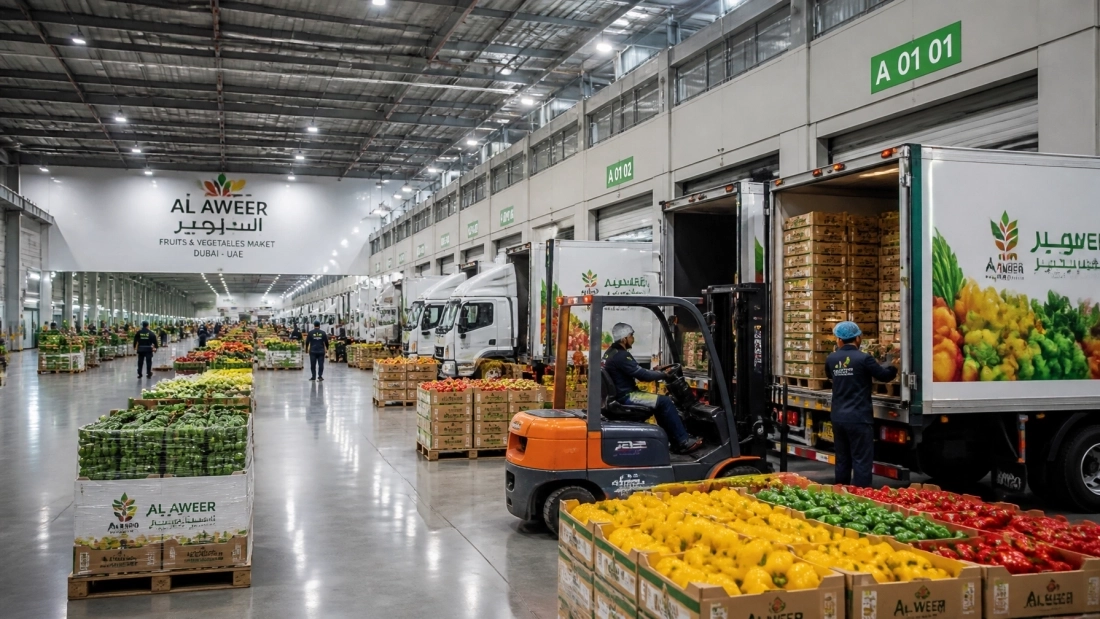
Late August is creating a defined planning window for international exporters targeting the UAE. Retailers, restaurants, caterers, and hospitality operators are preparing for the post-summer-vacation demand rebound expected as customers and businesses return later this month.
At the same time, Al Aweer Central Market is showing a more stable working baseline for new-crop onions, while other fresh produce categories are experiencing significant price movements. Exporters must therefore combine daily market intelligence with compliant documentation, controlled logistics, and a reliable UAE distribution route.
Mayil Global supports international and local exporters through a transparent 3% commission distribution model and an immediate Cash & Carry wholesale container purchase system. Both routes are designed to provide dependable UAE market access, improve liquidity, and reduce avoidable supply chain risk.
Late-August Market Signal: Stable Onions and Uneven Category Pricing
Al Aweer onion baseline
New-crop onions in 18 kg bags are trading around AED 1.95/kg at Al Aweer Central Market. This represents an indicative value of approximately AED 35.10 per 18 kg bag before adjustments for origin, grade, size, packaging, quantity, handling, and negotiation.
The current benchmark is approximately 41% lower than the late-June level, following abundant international shipments and improved market availability. However, stability does not mean that exporters can use one fixed price for an entire shipment cycle.
Daily terminal arrivals continue to influence the market. Quality differences, vessel discharge schedules, truck inflows, storage availability, and buyer demand can create intraday movements of up to 30% in sensitive produce categories.
The Al Aweer onion price reference lists multiple onion varieties and pack sizes. The current new-crop 18 kg benchmark should therefore be treated as a working market reference, not a guaranteed transaction price.

Category-specific price swings
The late-August market is not moving uniformly across all products.
- Avocados: Severe supply gaps are supporting increases of approximately US$5–6 per carton, depending on origin, grade, carton weight, and market.
- South African lemons: Prices are under downward pressure, with key Gulf markets reporting reductions of approximately US$3 per carton.
- Mandarins: Indicative declines of approximately US$2–3 per carton are being reported in selected Gulf markets.
- Onions: New-crop 18 kg bags at Al Aweer remain comparatively stable around the AED 1.95/kg reference.
These figures should be used for commercial planning alongside same-day trader quotations. They are not substitutes for product-specific offers based on grade, origin, packing format, and arrival date.
Demand Recovery Creates a Timing Advantage
UAE supermarkets and foodservice operators are rebuilding inventory ahead of the post-summer demand recovery. Restaurants, hotels, catering companies, and retailers require dependable supply as operating volumes normalize.
This creates opportunities for exporters that can provide:
- Consistent product specifications.
- Accurate shipment documentation.
- Reliable arrival schedules.
- Hygienic packaging and proper handling.
- Fast market placement after clearance.
- A transparent settlement structure.
The planned expansion of the Dubai Food District is also positioning the existing fruit and vegetable market infrastructure for more than double its current scale. The direction is clear: Dubai is strengthening its position as a regional wholesale, distribution, and re-export hub for fresh produce.
For exporters, greater market capacity increases the importance of professional execution. It does not remove the need for a verified UAE distribution partner.
How to Export Food to Dubai: The Compliance Sequence
Understanding how to export food to Dubai requires more than arranging a container and booking freight. Exporters must coordinate origin-country requirements with UAE import approvals, customs procedures, food safety controls, and market-specific quality expectations.
1. Confirm the product and commercial route
Define the commodity before negotiating shipment terms. For onions, confirm:
- Crop and origin.
- Bulb size and grade.
- Moisture and curing condition.
- Packaging format, including 18 kg bags where applicable.
- Expected quantity and container type.
- Arrival window.
- Intended UAE distribution channel.
The exporter should also confirm whether Mayil Global is the verified buyer of that particular product. This distinction is important because product acceptance depends on specification, current market demand, documentation, and available distribution capacity.
Mayil Global supplies and distributes fresh fruits, vegetables, premium spices, rice, and farm-fresh eggs to supermarkets, restaurants, retailers, and wholesale distributors across the UAE.
2. Prepare the document file
Fresh produce shipments commonly require the following documents:
- Commercial invoice.
- Detailed packing list.
- Certificate of origin.
- Phytosanitary certificate.
- Bill of lading or delivery authorization.
- Customs manifest.
- Health or fitness certificate where applicable.
- Pesticide residue analysis certificate where required.
- Correct HS code and product description.
- Container, seal, net weight, and gross weight details.
The MOCCAE release service confirms that fresh fruit and vegetable consignments require a phytosanitary certificate, customs manifest or bill of lading, certificate of origin where necessary, and a contents list or invoice. Visual inspection and laboratory testing may also apply.
Requirements can vary by product and country of origin. Exporters should verify the final document list with the UAE importer, customs broker, freight forwarder, and relevant authorities before loading.
3. Complete pre-arrival logistics planning
The importer and shipping parties should match all shipment information across the invoice, packing list, certificate of origin, phytosanitary certificate, bill of lading, and customs declaration.
Inaccurate quantities, inconsistent product descriptions, missing container details, and late shipping instructions can create customs delays, storage charges, or missed market windows.
Mayil Global’s sourcing and logistics system focuses on supplier coordination, product inspection, hygienic handling, storage, and organized distribution from origin to UAE buyers.

4. Protect product quality in transit
Food safety and hygiene are non-negotiable. Fresh produce must be inspected before loading and handled in a way that protects quality throughout the supply chain.
For onions, exporters should:
- Load mature, dry, firm bulbs.
- Reject onions with visible fungal growth, excessive bruising, sprouting, or wet surfaces.
- Use breathable mesh bags or ventilated packaging.
- Maintain airflow throughout the container.
- Prevent condensation during storage and transport.
- Use temperature and humidity data loggers where appropriate.
- Arrange rapid transfer after port clearance.
Onions do not require the same temperature program as leafy vegetables, but summer heat, humidity, and poor ventilation can still cause rot, skin deterioration, and reduced market value.
Importing Onions to Dubai Through a Structured Distribution Model
The commercial objective in importing onions Dubai shipments is not simply to land cargo. The objective is to convert compliant, market-ready cargo into timely wholesale value.
Mayil Global provides two routes for suitable exporters.
The 3% commission distribution model
Under the 3% commission model, Mayil Global distributes approved exporter cargo through its UAE B2B network. The commercial structure provides a defined distribution fee while giving the exporter access to local market execution.
Key advantages include:
- Transparent 3% commission terms.
- Access to supermarkets, restaurants, retailers, and wholesale distributors.
- Local market placement through organized distribution.
- Product inspection and quality control at receiving stages.
- Coordination of storage, handling, and delivery.
- Reduced dependence on multiple intermediaries.
- Clearer visibility over inventory movement and sales activity.
The 3% commission model is suitable for exporters that want UAE market access while retaining greater control over the product and commercial outcome.
Immediate Cash & Carry container purchases
The Cash & Carry wholesale route is designed for exporters that prioritize immediate settlement and working-capital recovery.
Subject to product inspection, quality approval, volume, and agreed commercial terms, Mayil Global can purchase suitable containers directly for wholesale distribution. This route can help exporters:
- Reduce receivables exposure.
- Avoid prolonged collection cycles.
- Release capital for the next shipment.
- Move inventory quickly into UAE wholesale channels.
- Simplify market entry through a direct B2B transaction.
The Cash & Carry system and the 3% commission model address different commercial priorities. One emphasizes immediate container absorption. The other emphasizes structured distribution through a transparent 3% commission.

Exporter Action Plan for August 16–31
Exporters planning late-August shipments should apply the following operating sequence.
1. Confirm demand and specifications
Match the product to a defined UAE requirement. Confirm grade, origin, pack size, quality tolerance, and arrival timing.
2. Review the daily Al Aweer benchmark
Use approximately AED 1.95/kg as the current reference for new-crop onions in 18 kg bags. Reconfirm the price on the day of negotiation because daily arrivals and quality can change the market.
3. Select the commercial route
Choose Mayil Global’s 3% commission distribution model or request an immediate Cash & Carry container purchase for suitable cargo.
4. Complete compliance before loading
Secure the phytosanitary certificate, certificate of origin, commercial invoice, packing list, and any product-specific analysis certificates. Confirm that all shipment data is consistent.
5. Protect summer handling conditions
Load dry product, use suitable ventilation, monitor environmental conditions, and coordinate refrigerated or protected transfers where required.
6. Plan clearance and final delivery
Arrange the UAE importer, customs broker, food-control submission, inspection, storage, and delivery before the vessel or truck arrives.
7. Maintain a daily market review
Track onions, avocados, lemons, mandarins, and other sensitive categories separately. A stable onion market does not indicate stable prices across the wider produce basket.

Building a Dependable Dubai Food Supply Chain
Late August is a practical demand-recovery window for exporters that can combine compliant sourcing with disciplined logistics. Al Aweer onion pricing is currently providing a more stable planning baseline, while avocado and citrus movements demonstrate the need for category-specific market monitoring.
Successful wholesale fruits and vegetables Dubai operations depend on:
- Verified product demand.
- A verified buyer of that particular product.
- Accurate import documentation.
- Strict quality control.
- Hygienic packaging and safe handling.
- Organized storage and transport.
- Transparent commercial terms.
- Reliable final-mile distribution.
Mayil Global connects international exporters with UAE wholesale channels through farm-direct sourcing, inspection at each stage, structured logistics, and dependable B2B distribution. The company’s 3% commission model and Cash & Carry wholesale container purchase system provide practical routes for exporters seeking market access and liquidity.
Review Mayil Global’s product range, read the UAE food export guide, or contact the Mayil Global trade team to discuss onions, fresh produce containers, and UAE distribution requirements.