

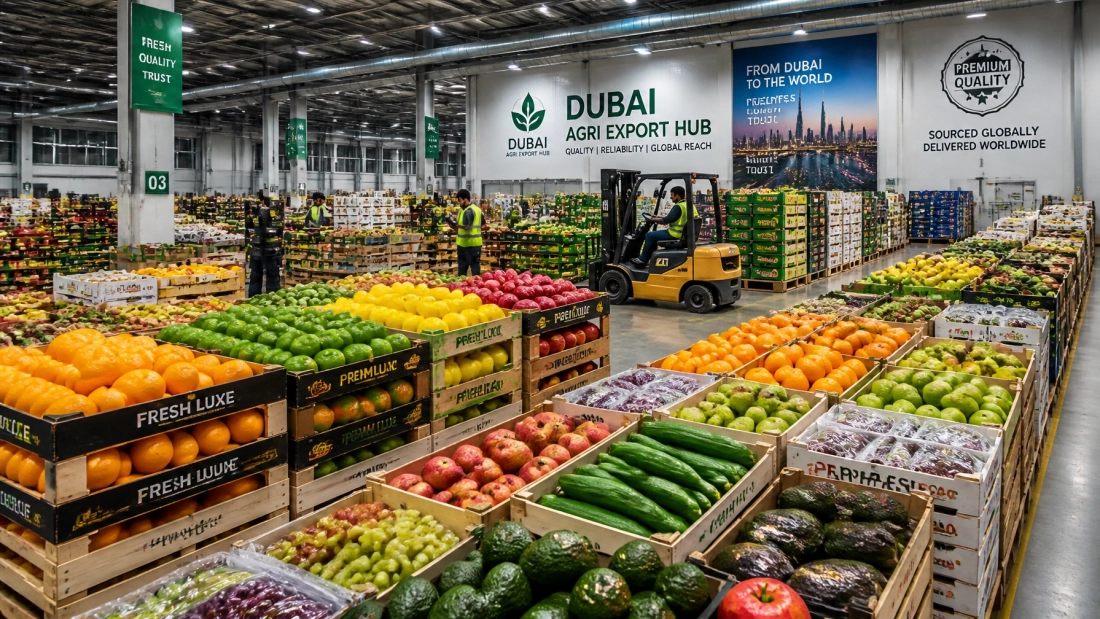
Entering the United Arab Emirates food market represents a significant commercial opportunity for global agricultural exporters. However, navigating the regulatory frameworks, logistics infrastructure, and wholesale distribution channels of the UAE requires meticulous planning and strategic partnership. As a premier wholesale supplier and distribution partner in the UAE, Mayil Global empowers international shippers to bridge the gap between origin farms and thriving local markets.
This comprehensive guide details how to export food to Dubai, explores the dynamics of wholesale fruits and vegetables dubai, and outlines the precise methodology for importing onions dubai: all while maximizing profitability through Mayil Global's industry-leading 3% commission model and Cash & Carry wholesale framework.
1. Understanding the Al Aweer Central Market Ecosystem
For any international exporter targeting the UAE, mastering the operational realities of the Al Aweer Central Fruits and Vegetables Market is non-negotiable. Al Aweer functions as the primary commercial heartbeat for fresh produce in Dubai, operating strictly on a Business-to-Business (B2B) model.
Why Direct Retail Access is Impractical for Foreign Exporters
Foreign entities cannot independently lease stalls or execute direct retail transactions within Al Aweer without a local commercial presence. Regulatory standards mandate that all incoming consignments be cleared, received, and distributed through UAE-licensed importers and wholesale authorities.
- Strictly B2B Trading: Transactions occur in fast-paced morning trading hours, requiring established local networks.
- Transparent Pricing Dynamics: Market valuations fluctuate based on daily supply inflows, seasonal shifts, and international shipping rates.
- Operational Necessity: Partnering with an established UAE distributor ensures seamless municipal compliance and immediate market placement.
Exporters seeking deep market penetration must align with a trusted local entity that possesses deep-rooted connections within Al Aweer. Mayil Global provides the exact institutional infrastructure required to convert raw shipments into liquid, high-margin sales.
2. Step-by-Step Guide: How to Export Food to Dubai
Successfully moving agricultural cargo from origin countries to Dubai's commercial hubs involves a rigorous, multi-stage compliance and logistics sequence.

Step 1: Securing Origin Compliance and Certification
Before booking container space, exporters must acquire all necessary regulatory paperwork from their country of origin. This includes valid Phytosanitary Certificates confirming pest-free status, Certificate of Origin authenticated by a recognized Chamber of Commerce, and comprehensive Health/Fitness certificates. For specific insights into regional compliance, review our guide on wholesale vegetables in dubai.
Step 2: Product Registration and Labeling Approval in Dubai
Dubai Municipality enforces strict safety and hygiene benchmarks. Under the Food Import and Re-export System (FIRS/ZAD), your UAE partner must pre-register products prior to vessel arrival. Furthermore, packaging must adhere to GSO standards, featuring mandatory Arabic labeling that outlines the product name, ingredients, net weight, country of origin, and explicit shelf-life dates.
Step 3: Streamlined Port Logistics and Reefer Transport
Fresh commodities demand precise temperature-controlled supply chains. Cargo arriving via sea freight docks at Jebel Ali Port, while perishable air cargo lands at Dubai International Airport. Utilizing refrigerated containers (reefers) maintains optimal cold-chain integrity from farm to market. For broader updates on regional trade agreements and border logistics, consult recent market briefings on UAE export news and CEPA updates.
3. Specialized Protocols for Importing Onions to Dubai
Agricultural commodities such as onions, potatoes, and garlic require specialized handling to prevent spoilage, sprouting, or moisture damage during transit.

Quality Benchmarks and Grading Standards
When importing onions dubai buyers demand uniform sizing, tightly dried outer skins, and total absence of sprouting or fungal decay. Standard commercial preferences favor medium-to-large sizing (60mm+) packaged in breathable mesh bags or ventilated cartons that facilitate continuous airflow inside reefer containers.
Mitigating Transit Risks
Shipping onions across maritime lanes requires vigilant humidity control. Mayil Global coordinates closely with origin packers to enforce strict pre-shipment drying and grading protocols, ensuring that every container entering Jebel Ali meets the exacting standards expected by Al Aweer wholesalers. For a deeper dive into onion logistics, explore our detailed analysis on exporting onions to dubai.
4. Maximizing Margins Through Mayil Global’s 3% Commission Model
Traditional export arrangements frequently expose global shippers to opaque intermediary fees, delayed payouts, and unpredictable commission structures that erode profit margins. Mayil Global eliminates these commercial friction points through our transparent, exporter-first business model.
The Power of Transparent Distribution
By capping our distribution fee at a flat 3% commission, we align our commercial success directly with yours. Exporters retain complete visibility over market realizations, pricing trends, and operational expenditures.
- Predictable Cost Structures: No hidden handling fees or surprise deductions upon market clearance.
- Enhanced Profit Retention: Retain up to 97% of gross sales revenue from your wholesale consignments.
- Direct Market Access: Leverage Mayil Global's established stall presence and daily auction participation in Al Aweer.
This model transforms volatile export ventures into stable, recurring revenue streams backed by absolute financial transparency.
5. Accelerating Liquidity with Cash & Carry Wholesale Operations
Cash flow velocity remains the primary metric of success for international food exporters. Waiting weeks or months for invoice reconciliation creates severe liquidity bottlenecks that stall subsequent supply cycles.

Eliminating Payment Delays
Mayil Global integrates a robust Cash & Carry wholesale system alongside our consignment distribution network. By catering directly to verified supermarkets, volume restaurants, and institutional food-service buyers in the UAE, we convert inventory into capital rapidly.
- Rapid Settlement Cycles: Get paid faster without enduring prolonged corporate credit terms.
- Guaranteed Offtake: Steady demand from our vetted B2B buyer network absorbs container volumes quickly.
- Reduced Counterparty Risk: Eliminate bad debt and payment defaults through our secure cash-and-carry infrastructure.
For further reading on how accelerated liquidity improves supply chain efficiency, review our corporate whitepaper on cash and carry food wholesale in dubai.
Conclusion: Partner with Mayil Global for Reliable UAE Expansion
Expanding your agricultural export footprint into the United Arab Emirates requires operational rigor, regulatory compliance, and a dependable local ally. By mastering Al Aweer market dynamics, complying with stringent Dubai food import standards, and leveraging Mayil Global's transformative 3% commission model and Cash & Carry wholesale system, international exporters can secure long-term profitability.
Partner with Mayil Global today to streamline your supply chain, protect your margins, and establish an enduring presence in the thriving UAE wholesale market.