

Daily UAE export news and Al Aweer market briefing : Friday, 4 September 2026 | Week 36
Executive Market Position
This edition of UAE export news highlights stronger retail visibility for Thai rice and produce, continued diversification of fresh-produce supply corridors, and rising onion procurement risk linked to drought-affected Indian kharif acreage.
The Al Aweer market updates also show product-specific volatility. Brinjal and capsicum lines recorded strong gains in the latest dated daily report, while lime, rock melon, zucchini and sweet corn declined. Published figures remain indicative references rather than fixed quotations.
For exporters, the operating priorities remain clear:
- Confirm a verified UAE buyer before loading.
- Match product specifications with current demand.
- Complete food-import and sanctions checks.
- Control quality, hygiene, packaging and logistics.
- Select between a 3 percent commission distributor UAE model and an immediate cash-and-carry container purchase.
Thai Fruits and Food Festival Creates Retail Opportunities
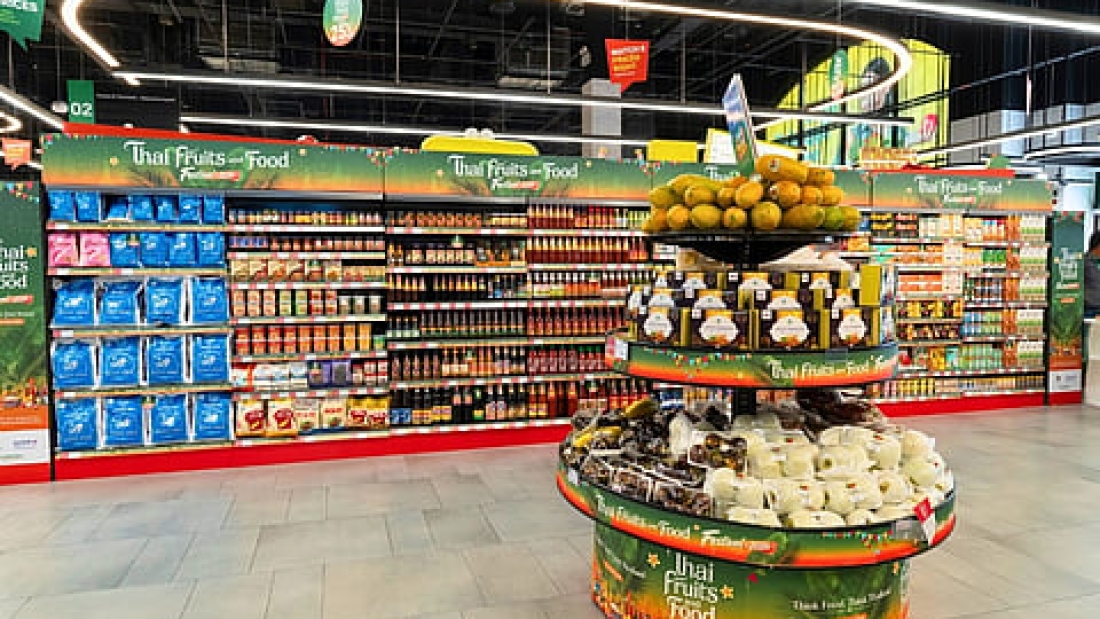
The Thai Trade Center Dubai has launched the Thai Fruits and Food Festival 2026 across UAE supermarkets during September. The wider campaign uses the message “Think Food, Think Thailand,” while the rice-focused promotion positions Thailand as a consistent source of premium rice and food products.
UAE campaign schedule
| Retailer | Participating outlets | Campaign dates |
|---|---|---|
| Choithrams | 16 stores | 4–17 September 2026 |
| Al Maya | 10 stores | 15–29 September 2026 |
The campaign features Thai Hom Mali, Brown Hom Mali, Riceberry and Multigrain rice, alongside seasonal fruits and vegetables, coconut products, sauces, curry pastes, snacks and other grocery lines. Selected products are promoted with discounts of up to 25 percent.
For Thai exporters, the campaign provides a defined retail demand window. It also demonstrates that UAE buyers assess more than origin and price. Consistent grading, compliant labels, reliable replenishment and controlled logistics are essential for converting a promotional listing into a long-term supply programme.
Thai exporters seeking UAE distribution should prepare:
- Product specifications and pack sizes.
- Monthly and weekly supply capacity.
- Shelf-life and storage information.
- Health and phytosanitary documentation where applicable.
- UAE label and product-registration files.
- Inspection photographs before loading.
- A clear settlement and delivery structure.
Mayil Global can support approved exporters through a 3 percent commission distributor UAE model or immediate cash-and-carry container purchases, subject to product approval, quality inspection and commercial agreement.
Armenia–UAE Produce Corridor: Brief Refresh
The Armenia fresh produce corridor to the UAE is scheduled to begin with up to 40 tonnes of fruit and vegetables weekly from September 2026 through the Watermelon Ecosystem marketplace.
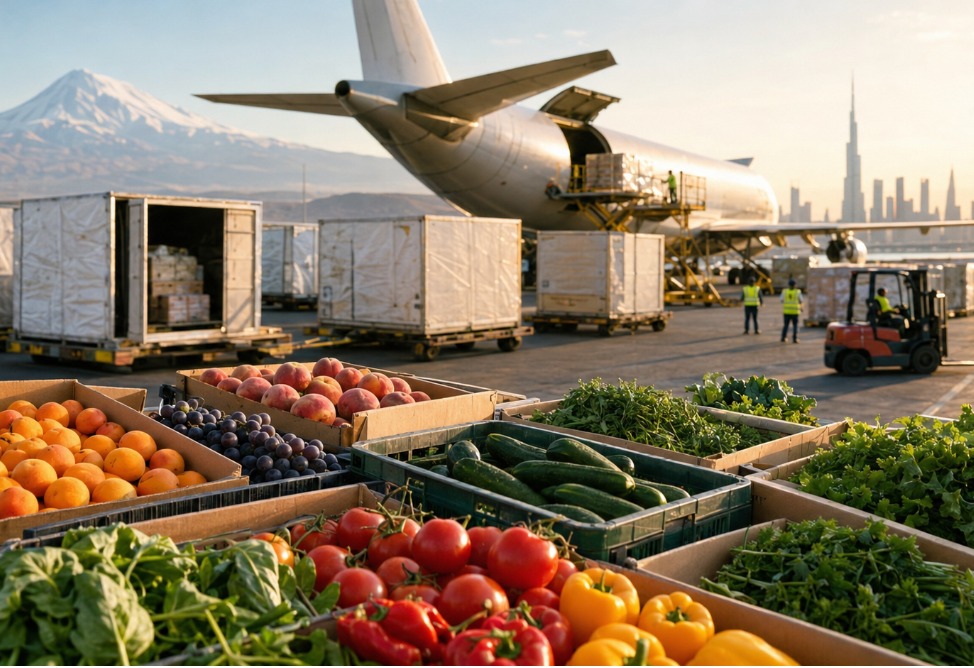
This creates another origin option for UAE supermarkets, restaurants and wholesale distributors. The commercial test will depend on arrival condition, grading consistency, documentation and repeat supply. A corridor announcement does not replace shipment-level inspection, phytosanitary compliance or buyer confirmation.
India Onion Outlook: Supply Pressure Extends Into 2027
Indian onion supply is becoming a central procurement issue for UAE importers and Al Aweer traders.
According to The Hindu BusinessLine, drought and water scarcity in Karnataka reduced kharif onion acreage to approximately 68,000 hectares, compared with 90,000 hectares in the year-ago period. Across India, kharif onion acreage reached approximately 1.30 lakh hectares, against 2.06 lakh hectares previously.
The reported price indicators are equally important:
- All-India average retail onion price: approximately ₹50/kg.
- Wholesale price: approximately ₹40/kg.
- Government buffer stock release: approximately ₹35/kg.
- Larger rabi supplies are expected around April 2027.
The Hindu reports that the government has started calibrated releases of buffer stock through railway and road transport to major consumption centres. This may moderate extreme price increases, but it does not remove the underlying production shortfall.
Implications for UAE importers
UAE buyers should expect continued attention on:
- Origin diversification: Compare India with Egypt, Yemen, Jordan, Oman and other compliant origins.
- Crop and size specification: “Indian onion” is not a single price category.
- Landed cost: Include freight, clearance, storage, wastage and market commission.
- Forward planning: Secure replenishment schedules before rabi supply improves.
- Quality control: Inspect firmness, dryness, size uniformity and packaging before loading.
Iran-origin listings remain non-executable references only while the UAE suspension of trade and financial transactions with Iran remains in effect.
Al Aweer Market Movers and Indicative References
The latest complete movers reference published on alaweerprices.com appears dated 1 September 2026 and carries a notice that prices are being updated. A dated report for 3 September 2026 is also available and shows a separate set of daily percentage movements.
3 September daily report
| Top gainers | Movement | Top drops | Movement |
|---|---|---|---|
| Long Brinjal Purple | +40.1% | Lime | −23.1% |
| Brinjal Green / Purple (R) | +40.0% | Rock Melon Long | −16.8% |
| Capsicum Green | +29.5% | Rock Melon Long | −16.7% |
| Capsicum Yellow | +25.0% | Zucchini | −16.7% |
| Capsicum Red | +25.0% | Sweet Corn | −15.4% |
The repeated rock melon entry reflects different listings or origins. Any Iran-origin entry must be treated as a non-executable reference only.
Latest published Al Aweer reference data
| Product and origin | Indicative reference | Movement |
|---|---|---|
| India new-crop onion | AED 3.40/kg | −15.0% |
| Egypt onion, 20kg PPE | AED 1.95/kg | −11.4% |
| Yemen onion | AED 2.50/kg | −3.8% |
| UAE cucumber | AED 3.25/kg | −13.3% |
| Iran cucumber | AED 2.78/kg | Non-executable reference |
| Jordan tomato | AED 2.57/kg | Not stated |
| G9 Cavendish banana green, India | AED 3.31/kg | Not stated |
| White potato, Pakistan | AED 1.43/kg | Not stated |
| Hass avocado, Kenya | AED 13.00/kg | Not stated |
| Hass avocado, Mexico | AED 24.50/kg | Not stated |
| Red seedless grapes, Egypt | AED 8.00/kg | −12.5% |
Other notable movements in the 1 September reference included rises in Oman brinjal star (+22.2%), UAE bitter gourd (+16.7%), Pakistan green peas (+12.5%) and China normal garlic (+10.1%).
Reported declines included onion new crop (−15.0%), Valery yellow (−14.3%), cucumber (−13.3%), ivy gourd (−12.6%), cluster beans (−12.5%) and red seedless grapes (−12.5%).

All figures are indicative wholesale references. Actual prices vary by origin, grade, pack format, volume, arrival condition, availability and negotiation.
2026 UAE Food Import Essentials
Food exporters and UAE importers should complete the following controls before shipment:
- Hold a valid trade licence with a food-trading activity.
- Complete federal ZAD registration where applicable.
- Register the importer and shipment through Dubai Municipality FIRS for Dubai-bound products.
- Obtain product registration and label pre-approval for each SKU.
- Use Arabic-English bilingual labels.
- Apply the mandatory nationwide Nutri-Mark A-to-E classification where required.
- Obtain halal certification for relevant products and ingredients.
- Prepare a commercial invoice, packing list, certificate of origin, health certificate and phytosanitary certificate for applicable plant products.
- Complete customs, food-safety and shipment-level inspection procedures.
- Screen suppliers, banks, vessels, routes and counterparties for sanctions exposure.
Hygienic handling, traceability, storage control and accurate documentation are non-negotiable. UAE food-control systems continue to move toward stronger inspection, risk management and international alignment.
How to Export Food to Dubai
1. Define the product
Specify the variety, grade, size, origin, pack format, net weight, shelf life and temperature requirements.
2. Confirm the UAE importer
Use a licensed food-trading importer with the required customs and municipality registrations.
3. Register the product
Complete ZAD, FIRS and per-SKU label requirements before dispatch. Packaged products must meet bilingual labelling and applicable Nutri-Mark rules.
4. Verify the buyer
Confirm the legal identity, receiving location, quantity, quality standards and payment terms. Exporters need a verified buyer for exporters UAE, not an unconfirmed lead.
5. Prepare certificates
Arrange the invoice, packing list, certificate of origin, health certificate, phytosanitary certificate and halal certificate where relevant.
6. Inspect before loading
Record carton condition, weights, temperature, photographs, seal numbers and loading details.
7. Calculate landed cost
Include product cost, packaging, inland transport, freight, insurance, customs, clearance, storage, wastage and distribution commission.
8. Select the commercial model
Approved suppliers may discuss Mayil Global’s 3 percent commission distribution model or immediate cash-and-carry container purchases.
9. Coordinate arrival
Manage customs clearance, inspection, storage and delivery to Al Aweer, supermarkets, restaurants, retailers or wholesale facilities.
Mayil Global Wholesale Supply Summary
Mayil Global supplies UAE supermarkets, restaurants, retailers and wholesale distributors with:
- Fresh fruits and vegetables.
- Premium spices.
- Premium rice.
- Farm-fresh eggs.
The supply model combines farm-direct sourcing, global supplier relationships, quality inspection at every stage, hygienic packaging, proper storage and organized distribution.
For international exporters, Mayil Global provides a UAE route through a transparent 3 percent commission distributor UAE model. Exporters requiring faster liquidity can also discuss immediate cash-and-carry container purchases, subject to compliance, inspection, product acceptance and agreed terms.
For UAE buyers, the benefit is dependable wholesale supply, consistent quality and coordinated delivery. For exporters, the objective is a verified buyer, clear commercial terms and reliable distribution.

Conclusion
The 4 September 2026 market position combines Thai retail promotion, new origin opportunities and continued onion supply pressure.
The Thai Fruits and Food Festival places Hom Mali, Brown Hom Mali, Riceberry and Multigrain rice in front of UAE consumers through 26 participating Choithrams and Al Maya stores. The Armenia corridor adds up to 40 tonnes of weekly fresh-produce capacity. India’s drought-affected kharif onion acreage requires UAE buyers to plan for volatility until larger rabi supplies arrive.
At Al Aweer, brinjal and capsicum lines are leading the latest reported gains, while lime, rock melon, zucchini and sweet corn are declining. These are planning signals, not fixed quotations.
Mayil Global supports exporters and UAE B2B buyers through reliable sourcing, strict quality control, hygienic handling, efficient logistics, a 3 percent commission distributor UAE model and immediate cash-and-carry container purchase opportunities.
Contact Mayil Global to discuss wholesale supply, export distribution or verified buyer opportunities in the UAE.
Disclaimer
All prices and percentage movements in this article are indicative market references and must not be treated as fixed quotations, offers or guarantees. Actual prices depend on origin, grade, quantity, packaging, quality, availability, logistics, inspection, storage, wastage and negotiation.
Iran-origin listings are non-executable references only while the UAE suspension of trade and financial transactions with Iran remains in effect. Exporters and importers must independently confirm current UAE customs, food-safety, labelling, sanctions and financial-compliance requirements before committing to a shipment.
Sources
- Gulf News: Thai Trade Center Dubai launches Thai Fruits and Food Festival 2026
- The Hindu BusinessLine: Spike in onion prices likely to persist as drought hits Karnataka cultivation
- The Hindu: Centre releases more onion from buffer to ease prices
- Al Aweer Prices: 3 September 2026 report
- Al Aweer Prices: market listings and movers
- FreshPlaza: Armenia to start exporting fruit and vegetables to the UAE
- Food Business Middle East & Africa: UAE and FAO assess the food-control system
- Reuters: UAE suspension of Iran trade and financial transactions
- Mayil Global: 3 percent commission and cash-and-carry export model
- Mayil Global: previous UAE export and Al Aweer briefing