


UAE export news: non-oil exports reach a record level
The latest UAE export news indicates continued expansion in non-oil trade, supported by broader international partnerships, CEPA market access, and resilient logistics infrastructure.
According to Zawya’s report based on WAM data, UAE non-oil foreign trade reached approximately AED 1.937 trillion during the first half of 2026. National non-oil exports reached approximately AED 452.8 billion during the same period.
The figures demonstrate the UAE’s growing role as a global trade, re-export, and distribution hub. For food exporters, this environment creates opportunities to use the UAE as a regional gateway to supermarkets, restaurants, wholesalers, and distributors across the Gulf, Africa, Asia, and Europe.
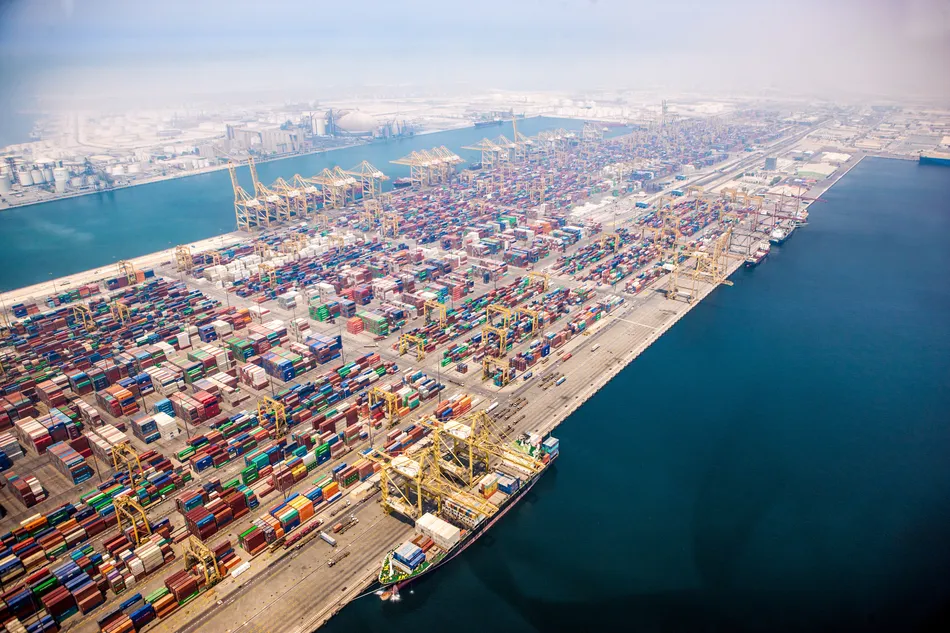
Reported fact: The UAE has concluded 38 Comprehensive Economic Partnership Agreements (CEPAs) since launching the programme in 2021. Trade with countries where agreements have entered into force reached approximately AED 304.3 billion in H1 2026, while UAE exports to these markets reached approximately AED 66.1 billion, according to Zawya.
What the export growth means for food businesses
Exporters and international suppliers can benefit from:
- Broader market access: CEPA agreements can reduce customs barriers and improve access to selected partner markets.
- Improved re-export potential: UAE-based distributors can consolidate products and serve multiple regional destinations.
- Stronger demand for logistics services: Warehousing, cold-chain management, customs coordination, and last-mile distribution remain essential.
- Greater buyer competition: Consistent quality, accurate documentation, and reliable delivery will remain important differentiators.
CEPA benefits do not remove the need for product-specific compliance. Exporters must verify tariff schedules, rules of origin, HS classifications, certificates, and destination-market requirements before shipment.
CEPA trade expansion strengthens UAE-India food corridors
India remains one of the UAE’s most important trading partners, particularly for fresh produce, rice, spices, and other food products.
Khaleej Times reports that UAE-India bilateral trade exceeded US$101.25 billion in financial year 2025–26, with both countries targeting US$200 billion in bilateral trade by 2032.
The UAE-India CEPA has reduced trade barriers and supported stronger commercial links. The agreement also creates a foundation for integrated supply chains involving Indian farms, exporters, UAE importers, wholesale markets, storage facilities, and regional distributors.
For food exporters, the practical opportunity is not limited to selling one shipment. Exporters can build a UAE distribution channel that supports:
- New-crop onion and potato shipments.
- Basmati and premium rice distribution.
- Fresh fruits and vegetables.
- Premium spices and processed food products.
- Re-export programmes for GCC and African markets.
Businesses should treat CEPA as a wider supply-chain framework rather than only a tariff-reduction mechanism. Correct certificates of origin, product classification, valuation, and shipment documentation remain necessary for receiving any applicable trade preference.
Supply-chain resilience remains a commercial priority
Regional shipping disruption has demonstrated the importance of alternative logistics routes and flexible distribution planning.
According to Gulf News, AD Ports Group added 400 trucks, increased rail service frequency, expanded warehousing and storage capacity, and introduced air-cargo solutions to maintain the movement of essential goods, including food and pharmaceuticals.
The report also noted the deployment of 27 container vessels and five bulk vessels across alternative routes. More than 54,000 square metres of additional warehousing and storage capacity supported the response.
At the same time, the article reported that UAE container throughput declined by 65 percent year-on-year during the quarter, while bulk and general cargo volumes declined by 67 percent. These figures show that logistics resilience does not mean that disruption has no commercial impact. Freight rates, transit times, container availability, and arrival schedules can still change quickly.
Regulatory and trade update: UAE announcement on Iran-linked trade activity
Reported fact: On 19 August 2026, the UAE Ministry of Foreign Affairs announced an indefinite suspension of trade, commercial exchange, and financial transactions with Iran. The official announcement is available from the UAE Ministry of Foreign Affairs.
This is a regulatory and trade-policy development. It should be read carefully and operationally. The announcement itself is the primary fact. Any effect on specific products, lanes, pricing, or availability will depend on how traders, logistics providers, customs participants, banks, and counterparties apply the measure in practice.
Practical implications for exporters and buyers
Operational analysis: Exporters and buyers may need to review:
- Origin declarations: Confirm that product origin statements, certificates of origin, and supplier records are complete and internally consistent.
- Routing plans: Recheck vessel routings, trans-shipment points, land corridors, and any intermediate handling points.
- Documentation sets: Ensure invoices, packing lists, HS codes, phytosanitary or health certificates, and transport documents match exactly.
- Counterparty screening: Confirm trading parties, payment channels, and transaction structures against current compliance requirements.
- Supply continuity: Reassess lead times, replacement supply options, and warehouse coverage for critical SKUs.
This article does not make unsupported claims about immediate price changes or product shortages. Instead, the practical conclusion is narrower: businesses with exposure to affected corridors should verify compliance, documentation, and continuity plans before shipment or purchase confirmation.
Market insight: alternative sourcing and logistics planning
Operational analysis: In this environment, prudent businesses may strengthen alternative sourcing and routing options. Depending on product category, season, and buyer specification, this can include:
- India for onions, ginger, garlic, bananas, turmeric, and a broad range of fresh produce.
- Egypt for selected vegetables, citrus, and broader regional produce programmes.
- Jordan for nearby regional supply and shorter overland response options on relevant categories.
- Local UAE production where commercially suitable, especially for continuity planning on selected fresh lines.
These are market-planning considerations, not reported government directives. Buyers should distinguish clearly between verified public announcements and commercial risk-management analysis.
Practical implications for exporters
Exporters supplying the UAE should:
- Confirm vessel schedules before finalising loading dates.
- Allow time for possible trans-shipment or route changes.
- Maintain accurate cargo and container documentation.
- Protect produce through suitable packaging and ventilation.
- Coordinate arrival timing with the buyer, warehouse, and customs broker.
- Avoid relying on a single transport route where practical.
- Reconfirm landed cost calculations if freight or handling charges change.
- Review payment, origin, and route compliance in light of current regulatory developments.
Reliable sourcing and organised logistics reduce operational uncertainty. Mayil Global’s sourcing and logistics system is structured around supplier coordination, quality inspection, hygienic handling, storage, and distribution across the UAE.

Food-export regulatory considerations for UAE shipments
Fresh produce and food shipments require more than a commercial agreement. Exporters should confirm the applicable UAE and destination-country requirements before dispatch.
For fresh onions, fruits, vegetables, and other plant products, the exporting country’s competent plant-protection authority generally issues the required phytosanitary certificate. The UAE Ministry of Climate Change and Environment provides guidance through its agricultural consignment release service.
Typical documentation may include:
- Phytosanitary certificate for applicable plant products.
- Certificate of origin.
- Commercial invoice.
- Packing list or list of contents.
- Bill of lading, airway bill, or transport document.
- Pesticide-residue analysis where applicable.
- Health or veterinary certificates for relevant food categories.
- Halal certification for applicable meat and poultry products.
- Product registration, labelling, and shelf-life information where required.
For UAE exporters and re-exporters of plant products, the MOCCAE phytosanitary certificate service states that the certificate is issued for export or re-export and is valid for 14 days from the date of issue. The exporter must also meet the importing country’s specific requirements.
Documentation must be consistent across the invoice, packing list, certificate of origin, health or phytosanitary certificate, and transport document. Mismatched quantities, incorrect HS codes, missing certificates, or unclear product descriptions can delay clearance and increase storage costs.
Mayil Global applies quality control and hygienic handling throughout sourcing, packaging, storage, and distribution. The company’s quality and handling process is designed to support dependable supply and consistent product condition for UAE B2B buyers.

Al Aweer market updates: indicative approved references for 19 August 2026
The following is an indicative market reference only, not a complete daily price table and not a fixed offer. Buyers and exporters should use it as a same-day benchmark and confirm availability, pack details, and commercial terms before concluding any transaction.
According to the My Veg Market Al Aweer price page, approved on 19 August 2026, the following public references were accessible:
- India onion, 1kg pack — AED 2.00
- India ginger, 3kg — AED 7.00
- India pomegranate, 2kg — AED 13.00
- India small onion, 3kg — AED 14.00
- India garlic, 3kg — AED 16.00
- India YB banana, 4kg — AED 16.00
- India green chilli, 4.5kg — AED 17.00
- India cluster beans, 3kg — AED 17.00
- India ivy gourd, 3kg — AED 18.00
- India RK banana, 4kg — AED 20.00
- India G9 banana green, 13kg — AED 37.00
- India G9 banana yellow, 13kg — AED 45.00
- India okra, 3kg — AED 32.00
- India fresh turmeric, 3kg — AED 38.00
- India dry coconut, 13kg — AED 48.00
These are indicative references, not fixed offers. Final trading levels can vary based on grade, size, packaging, loading point, arrival condition, container volume, and the timing of negotiation. Same-day confirmation is advisable.
How to read these references
Reported fact: The My Veg Market page provides a public approved reference for the stated date.
Operational analysis: The listed figures should not be treated as automatic container-equivalent pricing. A 1kg retail-style or small wholesale pack reference does not translate directly into a full container price, and one product format should not be generalized across another without inspection and specification matching.
Implications for exporters and buyers
Exporters should avoid quoting only a broad product name such as “Indian onions” or “Indian ginger.” A commercially usable offer should state:
- Crop and origin.
- Pack size and packaging type.
- Grade and approximate size.
- Loading location and estimated arrival.
- Quantity available.
- Inspection and rejection terms.
- Required certificates and documents.
- Price validity period.
Restaurants, supermarkets, and wholesale distributors should compare landed cost rather than headline price alone. Quality claims, usable yield, packaging performance, clearance charges, delivery timing, and storage requirements all affect the final margin.
Mayil Global: a verified buyer for exporters UAE
Mayil Global is a UAE wholesale supplier serving supermarkets, restaurants, retailers, and wholesale distributors. The company sources fresh fruits, vegetables, premium spices, premium rice, and farm-fresh eggs through trusted farms and global suppliers.
For exporters offering suitable Indian onion shipments, Mayil Global is positioned as a verified buyer for exporters UAE, subject to product specifications, documentation, inspection, shipment timing, and mutually agreed commercial terms.
Mayil Global supports exporters through two practical distribution models:
1. 3 percent commission-based distribution
The 3 percent commission distributor UAE model gives international and local exporters access to UAE distribution support without requiring them to build a complete local sales and logistics operation.
Under agreed commercial terms, Mayil Global can support:
- Buyer coordination.
- Market distribution.
- Wholesale customer access.
- Product movement and storage planning.
- Quality checks and shipment coordination.
- Commercial communication with UAE B2B buyers.
The 3 percent commission should be confirmed in writing before the shipment, together with responsibilities for freight, customs, storage, delivery, inspection, and payment.
2. Immediate cash-and-carry container purchases
Exporters requiring faster liquidity can discuss immediate cash-and-carry container purchases for approved products and specifications. This model is subject to shipment inspection, available demand, documentation, and agreed pricing.
It can help exporters reduce receivable cycles and move confirmed container volumes through a UAE wholesale channel. It also gives UAE buyers access to organised supply with defined quality and handling procedures.
Exporter checklist
Before presenting an onion or food shipment to Mayil Global, prepare:
- Product name, origin, crop, grade, and pack size.
- Container quantity and expected arrival date.
- Recent product photographs and specifications.
- Commercial invoice and packing list.
- Certificate of origin.
- Phytosanitary or health certificate, as applicable.
- Bill of lading or shipping details.
- Pesticide-residue documentation, where required.
- Price basis and validity period.
- Preferred purchase model: 3 percent commission distribution or cash-and-carry.
Conclusion: dependable supply requires verified execution
The latest UAE export news shows strong non-oil export growth, approximately AED 1.937 trillion in H1 2026 non-oil foreign trade, approximately AED 452.8 billion in non-oil exports, and continued CEPA expansion to 38 concluded agreements. The latest Al Aweer market updates provide public approved references for India-origin onions, ginger, garlic, bananas, okra, turmeric, dry coconut, and other lines as of 19 August 2026, while exact transaction pricing still depends on quality, packaging, arrivals, and same-day verification.
The UAE Ministry of Foreign Affairs announcement of 19 August 2026 regarding the indefinite suspension of trade, commercial exchange, and financial transactions with Iran is a material regulatory development. The verified fact is the announcement itself. The operational response for exporters and buyers is to review origins, routes, documentation, compliance checks, and supply continuity planning without making unsupported assumptions about immediate prices or availability.
Exporters need a UAE partner that can combine buyer access with sourcing discipline, quality control, hygienic handling, documentation, storage, and distribution. Mayil Global provides wholesale supply for UAE businesses and offers exporters a 3 percent commission-based distribution model together with immediate cash-and-carry container purchase discussions.
Contact Mayil Global to discuss Indian onions, fresh produce, premium food products, wholesale supply, or distribution opportunities in the UAE.
Sources
- UAE Ministry of Foreign Affairs: Director of the Strategic Communications Department at MoFA: All Trade, Commerical Exchange, and Financial Transcations with Iran Halted
- Zawya: UAE expands global trade agreements as non-oil exports hit $123.3bn
- Khaleej Times: CEPA powers UAE-India trade beyond $100 billion milestone
- Gulf News: AD Ports adds trucks, ships and air cargo routes during Strait of Hormuz disruption
- My Veg Market: Al Aweer Prices
- MOCCAE: Release of imported agricultural products consignment
- MOCCAE: Phytosanitary certificate for export or re-export