


Exporting food to Dubai requires more than arranging freight and delivering a container to Jebel Ali. International exporters must coordinate product specifications, UAE import compliance, quality control, logistics, wholesale distribution, and payment terms.
For onions, fruits, and vegetables, the commercial route is equally important. Exporters can distribute through the Dubai wholesale market on a transparent 3% commission model or sell an entire container through an immediate cash-and-carry purchase. Both models provide structured access to UAE buyers, but they address different commercial objectives.
Mayil Global supports international exporters and local UAE businesses through dependable sourcing, organized logistics, hygienic handling, and B2B wholesale distribution.
Why Dubai Is a Strategic Food Export Market
Dubai operates as both a major consumption market and a regional re-export hub. Supermarkets, restaurants, hotels, catering companies, retailers, and wholesale distributors require consistent access to imported food products throughout the year.
The strongest opportunities are available to exporters that can provide:
- Consistent product specifications
- Reliable shipment schedules
- Competitive landed pricing
- Complete documentation
- Verified UAE distribution
- Clear settlement terms
- Effective handling of perishable goods
Fresh onions, potatoes, tomatoes, citrus fruits, mangoes, rice, spices, and other food products move through established channels such as the Al Aweer Central Fruit & Vegetable Market and direct B2B supply networks.
The operating principle is straightforward: sourcing, quality control, and distribution must work together to create dependable supply for UAE buyers.

Step 1: Define the Product Specification
Every successful food export shipment begins with a clear product specification. The exporter and UAE buyer should confirm the details before production, packing, and loading.
For onions, the specification should include:
-
Origin and variety
Examples include Nashik red onions, brown onions, white onions, and other market-specific varieties. -
Grade and size
Medium and large onions are commonly requested for wholesale distribution. Size uniformity affects both pricing and buyer acceptance. -
Packaging format
Common formats include 18 kg or 25 kg breathable mesh bags. Packaging must protect the product during loading, sea freight, port handling, and local distribution. -
Quantity and container type
Confirm the expected metric tonnage, container size, and loading plan. -
Shelf-life and arrival condition
Fresh produce must be packed, ventilated, and handled according to the product’s storage requirements.
The same process applies to fruits and vegetables. A buyer should receive a written specification covering variety, size, grade, packaging, country of origin, expected shelf life, and inspection requirements.
Mayil Global’s fresh fruits and vegetables supply supports supermarkets, restaurants, retailers, and wholesale buyers requiring consistent product quality and dependable availability.
Step 2: Select the Right Dubai Distribution Route
Exporters should decide how the shipment will be sold before it leaves the origin country. The two principal routes are 3% commission-based distribution and cash-and-carry container purchase.
The 3% Commission Distribution Model
Under the 3% commission model, Mayil Global distributes the exporter’s shipment through its UAE B2B network and wholesale channels. The distributor charges a flat 3% commission on the gross sales value, subject to agreed local handling, port, storage, or other operational costs.
The process generally includes:
- Confirming the product specification and shipment schedule
- Reviewing current UAE market demand and wholesale pricing
- Receiving and clearing the shipment
- Distributing the goods to suitable B2B buyers
- Reporting sales and settlement details
- Deducting the agreed 3% commission and remitting the balance
The model gives exporters access to local market knowledge without requiring them to build their own UAE sales operation. It is suitable for suppliers that want to retain exposure to market pricing while using an established distribution partner.
Mayil Global explains the commercial structure in its guide to exporting onions to Dubai through the 3% commission and cash-and-carry models.
Immediate Cash-and-Carry Container Purchases
A cash-and-carry transaction involves the sale of the full container to a UAE buyer at an agreed price. The buyer takes ownership of the shipment and assumes the subsequent market risk.
This approach is appropriate when the exporter prioritizes:
- Immediate or near-immediate liquidity
- A fixed settlement value
- Reduced exposure to daily wholesale price changes
- Faster reinvestment in the next shipment
- A straightforward container-level transaction
The price may be negotiated below the potential open-market upside because the UAE buyer assumes the risk of price movements, unsold inventory, storage, and product deterioration.
The decision should be made shipment by shipment. The 3% commission model can provide greater market participation when prices are strong, while cash-and-carry can provide faster liquidity when working capital and shipment turnover are the priority.
Step 3: Understand Indicative Onion Pricing in Dubai
Onion prices in Dubai change according to origin, crop cycle, variety, grade, supply volume, demand, freight costs, and arrival timing. Exporters should treat market references as indicative benchmarks rather than fixed quotations.
Recent mid-August 2026 references for the Al Aweer wholesale market indicate the following approximate ranges:
- Indian new-crop onions in 18 kg packs: AED 1.90–2.15 per kg
- Brown onions: approximately AED 2.22 per kg
- Pink onions: approximately AED 2.10 per kg
- Red onions: approximately AED 1.65 per kg
- White onions: approximately AED 1.33 per kg
- Smaller onions and shallots: higher prices depending on grade and availability
Indian new-crop onions were reported around AED 1.95–2.00 per kg during recent market observations, with Grade 1 lots potentially reaching the upper end of the range.
For reliable pricing analysis, exporters should calculate the following:
- FOB cost at origin
- Packing and inland transport
- Ocean freight and insurance
- Port and customs charges
- UAE handling and storage
- Wholesale selling price
- 3% commission, where applicable
- Expected wastage or quality claims
For example, if a shipment contains 40,000 kg and achieves an average selling price of AED 2.00 per kg:
- Gross sales: AED 80,000
- 3% commission: AED 2,400
- Net before other agreed charges: AED 77,600
This calculation must be compared with the total landed cost. A strong wholesale price does not automatically produce a profitable shipment if freight, handling, or origin costs are too high.
Step 4: Complete UAE Food Import Compliance
Food shipments must meet the requirements of UAE customs, plant quarantine authorities, and Dubai Municipality. The precise documents vary according to the product and origin, so exporters should confirm current requirements with the licensed UAE importer and relevant authorities.
For fresh fruits and vegetables, the typical documentation package includes:
- Commercial invoice
- Packing list
- Bill of lading or transport document
- Certificate of origin
- Phytosanitary certificate
- Health or food safety certificate where required
- Pesticide residue analysis where applicable
- Delivery order for container shipments
- Import and re-export approvals where applicable
The MOCCAE service for release of imported agricultural consignments provides official guidance on agricultural product clearance, inspection, and required documents.
Dubai Municipality requirements should also be reviewed through the Food Safety Department’s import and re-export guidelines.
Documentation should be accurate and consistent across the invoice, packing list, bill of lading, certificates, product labels, and customs declaration. Errors can lead to inspection delays, additional charges, reduced shelf life, or rejection.
Step 5: Protect Product Quality During Logistics
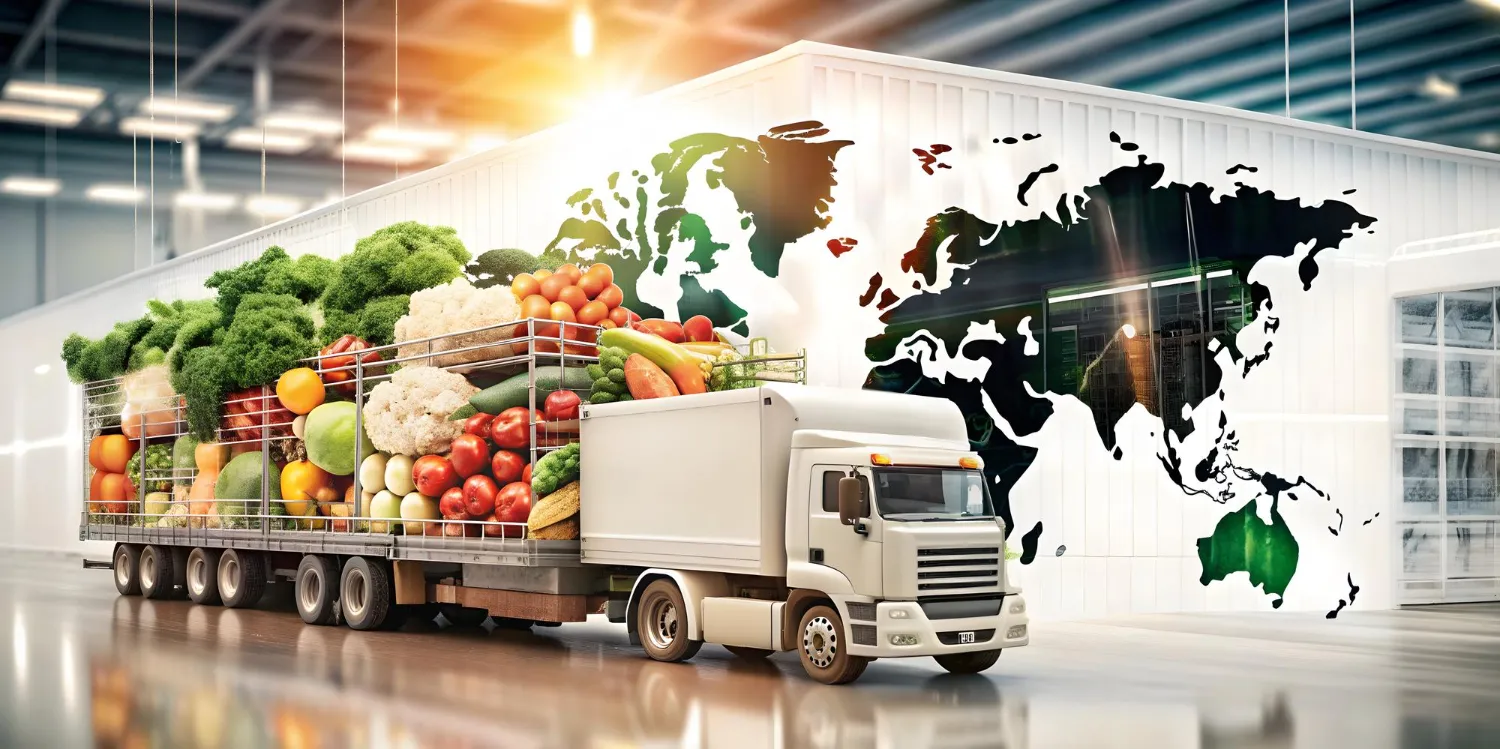
Efficient logistics is essential for maintaining commercial value. Fresh products can lose quality quickly when they are exposed to incorrect temperature, poor ventilation, moisture, unsuitable stacking, or extended port delays.
Exporters and distributors should coordinate:
- Pre-shipment inspection
- Correct grading and packing
- Ventilated loading arrangements
- Clean and suitable transport equipment
- Port clearance planning
- Proper storage after arrival
- Timely movement to wholesale buyers
Mayil Global maintains a structured approach to sourcing and logistics, including supplier selection, product inspection, hygienic packaging, storage, and organized distribution.
Quality control must continue after the container arrives. Receiving teams should inspect product condition, count and weight, packaging integrity, visible damage, moisture, sprouting, and compliance with the agreed specification.

Serving Local UAE B2B Buyers
Mayil Global also operates as a wholesale supplier for local UAE businesses. Supermarkets, restaurants, retailers, and wholesale distributors need a supply partner that can provide more than a single product line.
The company’s portfolio includes:
- Fresh fruits and vegetables
- Premium spices
- Quality rice
- Farm-fresh eggs
The Mayil Global product range is supported by farm-direct sourcing, global supplier relationships, quality inspection, hygienic handling, and organized delivery.
For buyers, this creates several operational benefits:
- Fewer supplier coordination requirements
- More consistent product availability
- Centralized quality control
- Better planning for recurring orders
- Reliable delivery across the UAE
- Access to both fresh produce and premium food products

A Practical Exporter Checklist
Before loading a food shipment for Dubai, confirm the following:
- Product specifications are agreed in writing.
- The UAE buyer or distributor is verified and licensed.
- The commercial model is selected: 3% commission distribution or cash-and-carry purchase.
- Current wholesale pricing has been reviewed.
- All certificates and shipping documents are prepared.
- Packaging is suitable for the product and transport route.
- Inspection procedures and claim terms are defined.
- Port clearance and local handling responsibilities are clear.
- Settlement timing is documented.
- The shipment has a confirmed distribution plan after arrival.
Conclusion
Exporting food to Dubai is a coordinated supply chain process involving sourcing, compliance, logistics, quality control, and distribution. Onion exporters must understand current wholesale pricing, product specifications, port requirements, and the commercial route that best supports their working capital objectives.
Mayil Global provides international exporters with access to UAE B2B distribution through a transparent 3% commission model. For exporters seeking immediate liquidity, the company also supports cash-and-carry container purchases based on agreed terms.
For local supermarkets, restaurants, retailers, and wholesale distributors, Mayil Global delivers dependable access to fresh produce and premium food products through organized sourcing, hygienic handling, and reliable UAE distribution.
Contact Mayil Global to discuss your next food shipment, wholesale requirement, or 3% commission distribution opportunity.