Ug5me_FFkDG

Verified Buyer & Exporter Authority Series: The August 2026 Wholesale Supply Window in Dubai : How Exporters Can Capitalize on Seasonal Shifts in Fruits, Vegetables, and Onion Imports with the 3% Commission Model

As global agricultural markets navigate the peak heat of August 2026, Dubai remains the undisputed commercial nucleus for Middle Eastern food distribution. For international exporters, farmers, and bulk traders, understanding the operational rhythms of the Al Aweer Central Fruit and Vegetable Market is essential for securing profitable trade volumes. At Mayil Global, we bridge the gap between international producers and local UAE B2B buyers through operational excellence, strict quality control, and our pioneering 3% commission model.

In this exhaustive authority briefing, we analyze the August 2026 supply window, examine seasonal shifts in wholesale fruits and vegetables dubai, provide a masterclass on importing onions dubai, and outline exact strategies on how to export food to dubai with guaranteed liquidity and zero payment friction.


Navigating the August 2026 Al Aweer Market Dynamics

The Al Aweer Central Market in Ras Al Khor serves as the primary artery for all fresh produce entering the United Arab Emirates. During August, scorching summer temperatures across the Gulf require rigorous cold-chain management and rapid inventory turnover. Supermarkets, luxury hotels, and commercial catering businesses rely heavily on steady, dependable imports to maintain stable retail shelves and kitchen menus.

International food exporters examining bulk onion shipments and logistics in Dubai

Key Factors Impacting August Supply:

  • Stringent Temperature Controls: Sourcing and warehousing require unbroken reefer container chains from Jebel Ali Port directly to climate-controlled wholesale bays.
  • Rapid Price Fluctuations: Seasonal crop transitions in exporting nations necessitate real-time pricing intelligence and transparent B2B trading frameworks.
  • Volume Demand for Staple Roots: High baseline demand for onions, potatoes, and garlic remains constant across all commercial sectors, shielding bulk exporters from seasonal demand drops.

The Strategic Importance of Importing Onions to Dubai in August

Onions represent one of the highest-volume commodities traded within the UAE agricultural sector. Understanding the mechanics of importing onions dubai during the August window requires familiarity with multi-modal transport corridors and regional grading standards.

Origin Corridors and Logistics

Dubai’s wholesale ecosystem sources onions year-round from diverse global origins:

  1. Red Onions from Turkey: Typically imported via efficient road transport corridors, prized for robust skin quality and extended shelf life.
  2. White Onions from Iran: Shipped in bulk via maritime routes, arriving in ventilated mesh bags (e.g., 9 kg or 25 kg formats) tailored for wholesale redistribution.
  3. Shallots and Small Onions from India: Frequently expedited via air freight to meet immediate gourmet and retail demand.

By partnering with Mayil Global, exporters eliminate customs clearance bottlenecks. Our team manages phytosanitary documentation, port inspection, and immediate placement into our Cash & Carry wholesale network. Explore our complete range of high-demand staples on our Products Page.


How to Export Food to Dubai: The Mayil Global Advantage

Entering the UAE market independently exposes foreign exporters to credit risks, delayed receivables, and costly storage demurrage. Mastering how to export food to dubai successfully demands a trusted local partner who understands municipal compliance and immediate buyer liquidation.

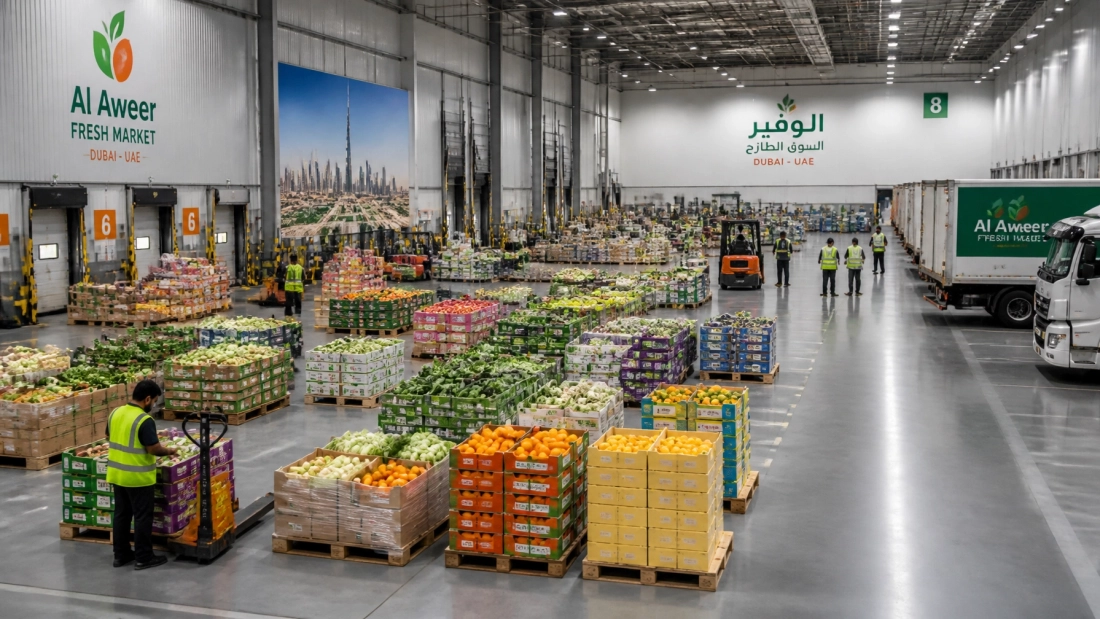
Commercial wholesale food distribution warehouse in the UAE with stacked pallets

Why Exporters Choose Mayil Global's Infrastructure:

  • Verified Buyer Status: We pre-qualify every supermarket chain, restaurant group, and regional wholesaler, eliminating default risks.
  • Cash & Carry Container Purchases: Immediate cash settlement for container loads upon arrival, ensuring optimal cash flow for international shippers.
  • Transparent 3% Commission Model: Exporters retain complete control over pricing while leveraging our established distribution network for a flat, predictable 3% commission. No hidden fees, no delayed payouts.

Exporter Action Plan & Checklist for August 2026

To maximize profitability during this peak seasonal window, international exporters and suppliers should execute the following operational checklist:

  1. Verify Phytosanitary & Labeling Compliance: Ensure all shipments comply with UAE Ministry of Climate Change and Environment (MOCCAE) standards, featuring clear Arabic and English labeling.
  2. Secure Reefer Logistics Early: Book temperature-controlled containers well in advance to prevent port congestion delays at regional entry points.
  3. Lock In Container Volumes: Partner with Mayil Global for immediate Cash & Carry container absorption, protecting your working capital against market volatility.
  4. Establish Pricing Transparency: Utilize our verified market intelligence to price competitive bulk consignments of fruits, vegetables, and specialized onion grades.
  5. Initiate Direct Dialogue: Connect with our commercial desk today via our Contact Us Page to review container schedules and commission structures.

Maximizing Margins with the 3% Commission Model

Traditional middlemen often erode exporter margins through opaque markups and extended 90-day payment cycles. Mayil Global’s revolutionary 3% commission model redefines B2B trade in Dubai by aligning our success directly with yours.

Trade documents and digital logistics tracking dashboards highlighting the 3% commission model

By maintaining total operational transparency across every stage: from Al Aweer market distribution to direct retail fulfillment: we empower global exporters to scale their operations with absolute confidence. Whether you are shipping tons of fresh produce or managing complex multi-origin food portfolios, our team delivers the stability, speed, and security your business requires.

Ready to secure your August 2026 trade allocations in Dubai? Contact Mayil Global today and experience wholesale distribution built on trust, transparency, and operational excellence.

pA8m66wBOWf

How Onion Exporters in India Can Find a Verified Buyer in Dubai

Expanding agricultural export operations into the United Arab Emirates requires rigorous due diligence, robust logistical planning, and strategic partnerships. For Indian agricultural producers specializing in red and pink onions, establishing secure trade channels in the Gulf market is both a lucrative opportunity and an operational challenge. Navigating international trade laws, customs compliance, and credit risks demands a systematic approach.

At Mayil Global, operating as a premier wholesale distributor in the UAE, we streamline this supply chain. By bridging the gap between farm-direct sourcing in India and commercial demand across Dubai, we empower producers to achieve secure, predictable growth. This comprehensive guide details the precise methodologies Indian agricultural shippers must implement to master how to export food to Dubai, secure a verified buyer for exporters uae, locate a verified buyer of that particular product, and leverage our signature 3 percent commission distributor uae model for maximum profitability.


The Strategic Importance of the Dubai Onion Market

Dubai serves as the central trading hub for the entire Middle East and North Africa (MENA) region. Central wholesale distribution centers, most notably the Al Aweer Fruit and Vegetable Market, handle thousands of metric tons of produce daily. India remains one of the primary origins for fresh onions (HS code 07031010) imported into the UAE due to geographic proximity, freight efficiency, and consistent consumer preference for Indian red and pink varieties.

However, exporting perishables across international borders exposes businesses to price volatility, currency fluctuations, and payment defaults. To protect capital and ensure sustainable margins, exporters must move away from informal broker networks and connect directly with established commercial importers. Securing a reliable trade partner eliminates speculative risks and guarantees steady volume absorption.

Business meeting between agricultural exporters and wholesale food distributors in Dubai


Essential Steps on How to Export Food to Dubai

Successfully executing an agricultural export shipment to the UAE requires strict adherence to regulatory standards set by local authorities. Shippers must maintain complete transparency and operational compliance at every stage of the supply chain.

1. Achieving Export Readiness in India

Before initiating international transactions, producers must secure mandatory government registrations:

  • Import-Export Code (IEC): Issued by the Directorate General of Foreign Trade (DGFT), compulsory for all Indian commercial entities.
  • APEDA Registration: Certification from the Agricultural and Processed Food Products Export Development Authority, mandatory for fresh horticultural exports.
  • Phytosanitary Compliance: Pre-shipment inspection and certification by the Plant Quarantine Information System (PQIS) to verify pest-free status.

2. Complying with UAE Import Regulations

Dubai customs and food safety authorities enforce stringent entry prerequisites for all food shipments:

  • Food Trading License & Importer Code: The importing entity in the UAE must hold a valid commercial food trading license and an active customs code.
  • MOCCAE Import Permit: An official permit from the Ministry of Climate Change and Environment must be secured prior to cargo dispatch from India.
  • FIRS Registration: Cargo must be registered through the Food Import and Re-export System prior to vessel arrival at Jebel Ali or other UAE ports.

For detailed procedural insights, review our comprehensive resource on how to export food to dubai.


Locating a Verified Buyer for Exporters UAE

Finding dependable counterparties in a foreign market requires utilizing verified trade data directories, customs manifests, and established B2B distribution networks. Avoid relying solely on unverified social media ads or speculative intermediaries.

Utilizing Trade Data and Customs Records

Modern B2B intelligence platforms provide shipment-level visibility, showing active importers who regularly clear fresh produce from India. Reviewing Bill of Lading histories confirms whether a prospective partner possesses a proven track record of handling bulk agricultural containers.

Partnering with Established B2B Wholesale Distributors

Rather than fragmenting sales across dozens of untested retail outlets, sophisticated exporters partner with established wholesale distributors who maintain direct access to UAE supermarkets, HORECA (hotels, restaurants, catering) groups, and central market traders. This consolidation minimizes credit exposure and optimizes logistics overhead.

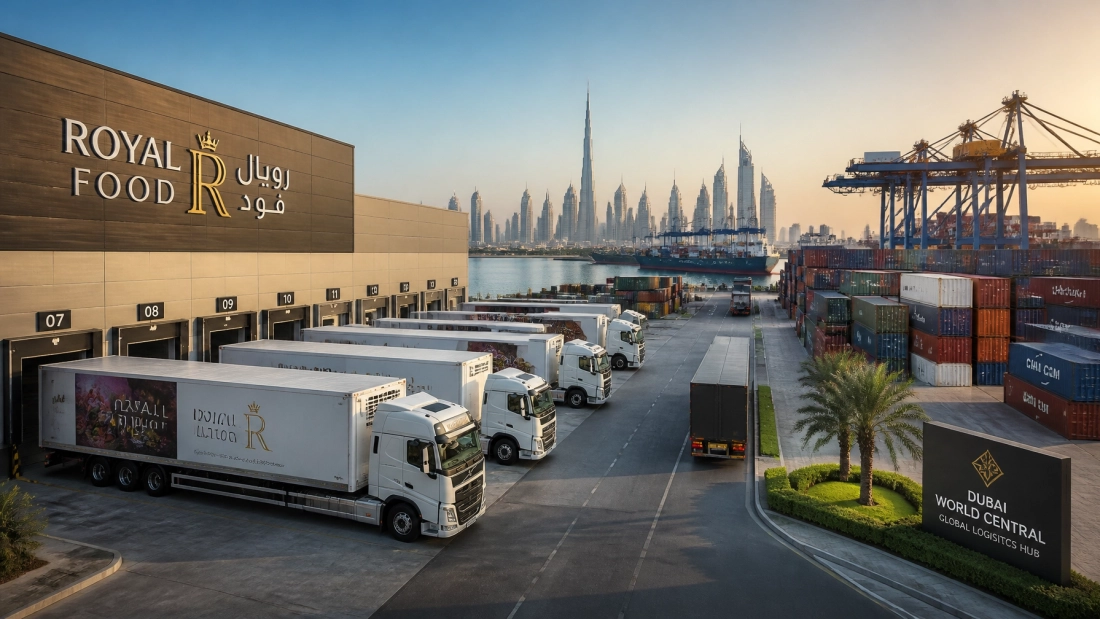
Container port terminal in Dubai showcasing logistics operations for international food imports


Securing a Verified Buyer of That Particular Product

When dealing in agricultural commodities, generic buyer lists are insufficient. Exporters must identify a verified buyer of that particular product: specifically, entities with verified refrigerated storage capacity, active municipal licenses, and dedicated distribution channels for fresh onions.

Why Product-Specific Verification Matters

Onions require careful temperature management, proper ventilation, and prompt clearance to prevent sprouting or spoilage. A buyer experienced in dry groceries or non-perishable goods lacks the necessary cold-chain infrastructure to handle fresh horticultural shipments. Confirming that your counterparty specializes strictly in fresh vegetable wholesale ensures that your cargo is handled in accordance with stringent food hygiene standards.

When evaluating potential partners, request:

  • Commercial trade licenses explicitly covering vegetable trading.
  • Proof of established cold storage facilities at or near the Al Aweer market.
  • Trade references from previous agricultural suppliers.

Overcoming Liquidity Hurdles with Mayil Global's 3 Percent Commission Distributor UAE Model

Traditional export models often subject shippers to extended payment terms (e.g., 60 to 90 days), trapping vital working capital and creating severe cash flow bottlenecks. Mayil Global revolutionizes this dynamic through our transparent 3 percent commission distributor uae framework.

How Our 3% Commission Model Works

  1. Direct Representation: We act as your trusted in-market wholesale partner in the UAE, managing local distribution to verified supermarkets, restaurants, and wholesale retailers.
  2. Ultra-Low Commission: We charge a flat, transparent 3% commission on distribution, ensuring that the vast majority of the sales revenue goes directly back to the producer.
  3. Operational Excellence: We oversee customs clearance, municipal food inspections, warehousing, and local transport, eliminating administrative burdens for the exporter.

This structure aligns our success directly with yours: the higher the market realization for your produce, the greater your net return. Read more about this mechanism in our analysis on exporting onions to dubai.


Immediate Cash-and-Carry Container Purchases for Maximum Exporter Returns

For international and local agricultural exporters seeking immediate liquidity without waiting for retail distribution cycles, Mayil Global offers an alternative commercial pathway: immediate cash-and-carry container purchases.

Commercial wholesale food market aisle in Dubai displaying fresh produce with high hygiene standards

Benefits of Cash-and-Carry Container Absorption

  • Instant Capital Liquidity: Receive immediate payment upon container delivery and inspection at our UAE facilities, eliminating credit risk entirely.
  • Guaranteed Offtake: Bypass protracted sales negotiations and secure immediate volume absorption for entire container loads (FCL).
  • Mitigated Market Volatility: Shield your business from daily spot-price fluctuations in the central wholesale market by locking in agreed purchase valuations upfront.

Conclusion: Partner with Mayil Global for Reliable UAE Expansion

Expanding agricultural trade into the United Arab Emirates requires operational discipline, regulatory compliance, and unwavering financial security. By partnering with Mayil Global, Indian onion exporters gain access to an established wholesale distribution network, rigorous quality control protocols, and transparent commercial terms.

Whether you choose our industry-leading 3 percent commission distributor uae framework for managed market distribution or opt for immediate cash-and-carry container purchases, our team ensures your products reach verified buyers efficiently and profitably. Contact Mayil Global today to secure your supply chain and scale your agricultural exports into Dubai with absolute confidence.

rRwSzsYhjdk

UAE Export News & Al Aweer Market Updates: August 1, 2026 – H1 Trade Records, Summer Supply Dynamics & Verified Buyer Opportunities

As the United Arab Emirates enters the second half of 2026, the nation’s commercial landscape continues to demonstrate unprecedented resilience and expansion. For international exporters, domestic wholesalers, and B2B buyers operating within the Al Aweer Fruit and Vegetable Market, understanding current macroeconomic trajectories, seasonal supply dynamics, and evolving regulatory frameworks is vital for operational success.

At Mayil Global, we maintain an unwavering commitment to bridging international supply networks with local UAE demand. Through rigorous quality control, farm-direct sourcing, and transparent distribution models such as our industry-leading 3 percent commission distributor UAE framework, we empower stakeholders to navigate market shifts with absolute confidence. Below is our comprehensive update for August 1, 2026.


1. Macroeconomic Overview & UAE Export News (H1 2026 Trade Data)

The official release of the H1 2026 trade data by UAE authorities underscores the nation's position as a dominant global trade hub. Driving unprecedented economic momentum, UAE non-oil foreign trade reached a historic milestone of AED 1.937 trillion, representing a robust 13.1% increase year-on-year (YoY).

Major UAE container port terminal with stacked cargo containers and modern shipping logistics representing record-breaking non-oil foreign trade

Key performance indicators defining the H1 2026 export landscape include:

  • Record Non-Oil Exports: Non-oil exports surged to AED 452.8 billion, marking an extraordinary 23.9% YoY growth and solidifying the manufacturing and agricultural sectors as core economic pillars.
  • CEPA Expansion: With 18 Comprehensive Economic Partnership Agreements (CEPA) currently in force and up to 7 additional agreements scheduled to take effect by the end of 2026, market access for bilateral food and agricultural trade has never been more streamlined.
  • Strategic Energy and Logistics: UAE oil exports have successfully recovered to 85% of prewar levels via the Habshan-to-Fujairah pipeline, successfully bypassing the Strait of Hormuz and ensuring uninterrupted energy support for regional industrial logistics.
  • Export Financing Tranche: The Abu Dhabi Exports Office (ADEX) deployed its initial AED 367 million tranche ($99.9 million) of dedicated export financing to bolster 8 national manufacturers, enhancing liquidity and export scalability.

For global shippers monitoring UAE export news, these macroeconomic indicators confirm that structural trade policies, trade agreements, and robust financial infrastructure are actively creating secure pathways for incoming wholesale shipments.


2. Al Aweer Market Price Trends (August 1, 2026 Update)

Operating at the heart of Dubai's fresh produce distribution network, the Al Aweer Market exhibits distinct seasonal adjustments as peak summer conditions set in. Wholesale buyers and international suppliers must account for the following current pricing and supply dynamics:

Rigorous quality control inspection of fresh farm produce and premium onions in a clean wholesale warehouse in Dubai

  • Onion Market Stability: Onions remain stable at approximately ~AED 1.95/kg for standard 18kg packaging, backed by steady inventory replenishment from key origin markets.
  • Perishable Vegetable Volatility: High ambient summer temperatures are impacting shelf life, resulting in intraday price volatility of up to 30% for highly perishable items such as cauliflower, cucumbers, and assorted gourds.
  • Premium Fruit Pressures: Premium imported fruit categories, including apples and citrus, are experiencing upward price pressure driven by the Southern Hemisphere seasonal transition and elevated international freight tariffs.
  • Grade Differentials: A persistent 20% to 30% price premium is currently commanded by Grade 1 produce over Grade 2 equivalents, reflecting strict B2B client demands for superior visual and structural quality.
  • Institutional Demand: Robust tourism and hospitality activity across the UAE continues to sustain strong daily offtake from hotels, restaurants, and catering (HORECA) operators.

As these Al Aweer market updates demonstrate, maintaining margin stability requires strategic inventory management and direct relationships with established distributors who understand local market absorption rates.


3. Regulatory and Compliance Updates

Navigating UAE food import regulations requires absolute precision. Regulatory bodies have enforced strict compliance measures to ensure consumer safety and supply chain transparency across all emirates:

  • MOCCAE Unified Food Safety System: The Ministry of Climate Change and Environment's unified food safety inspection and quarantine system is now fully operational across all ports of entry.
  • ZAD Platform Integration: Registration and pre-approval via the ZAD platform are strictly mandatory for all commercial food importers operating within the federation.
  • Nutri-Mark Enforcement: Pre-packaged food items must fully comply with mandatory Nutri-Mark labeling standards, ensuring transparent nutritional grading for retail and wholesale distribution.
  • Updated HS Codes: The updated Harmonized System (HS) codes for 2026 are fully enforced via Dubai Trade's E-Mirsal II portal, requiring accurate declaration to prevent customs clearance delays.

At Mayil Global, our regulatory compliance team works proactively with customs brokers and regulatory agencies to ensure every container clears inspection without administrative friction. Learn more about our operational standards on our about us page.


4. Mayil Global's Position & Immediate Partnership Opportunities

For international exporters and container owners arriving at the Al Aweer Market, securing prompt payment and reliable local distribution is paramount. Mayil Global offers an unmatched commercial infrastructure designed to eliminate logistical bottlenecks and cash-flow delays.

Modern food wholesale distribution center in Dubai showcasing organized pallet storage and efficient inventory management

Why Partner with Mayil Global?

  • 3% Commission Distributor UAE Model: We operate on a transparent, low-margin 3 percent commission distributor uae structure that maximizes exporter net returns while maintaining aggressive wholesale pricing for local supermarkets and restaurants.
  • Verified Buyer for Exporters UAE: As a trusted verified buyer for exporters uae, we absorb counterparty risk and provide immediate, dependable market offtake for incoming shipments.
  • Instant Container Liquidity: We provide immediate liquidity for container owners arriving at Al Aweer Market, transforming stranded inventory into settled capital within hours.
  • End-to-End Operational Excellence: From farm-direct sourcing and strict quality control inspections to hygienic cold-chain packaging and organized logistics, we oversee every stage of the supply chain.

Explore our available product catalog via our products page or review our comprehensive logistics frameworks on our sourcing and logistics portal.

Secure Your Container Placement Today

Are you an exporter or agricultural producer seeking an established wholesale partner in Dubai? Contact us today to lock in guaranteed off-take and leverage Mayil Global’s premier distribution network.

Read our detailed strategic breakdown on how to export food to Dubai using Mayil Global's 3% commission model to begin scaling your enterprise in the UAE market.


9LUVWWFHYel

Verified Buyer & Exporter Authority Series: Navigating UAE Customs Clearance for Agricultural Containers : A Sunday Step-by-Step Guide for Exporters Using Dubai’s Weekend Window

As global agricultural trade accelerates, international and local exporters face stringent operational demands when routing perishable cargo into the United Arab Emirates. Mastering the intricacies of UAE customs clearance at Jebel Ali Port is critical for maintaining supply chain continuity, ensuring regulatory compliance, and protecting profit margins. Operating within Dubai’s strategic weekend window requires precision, timely documentation, and an established distribution framework.

As a premier wholesale supplier and 3 percent commission distributor in the UAE, Mayil Global bridges the gap between international agricultural exporters and dynamic local B2B buyers. Whether you are importing onions to Dubai, distributing bulk produce, or supplying wholesale fruits and vegetables in Dubai, understanding port protocols is essential for seamless market entry. This Sunday step-by-step guide outlines the precise procedures required to clear agricultural containers efficiently and secure immediate liquidity through a verified buyer for exporters in the UAE.


1. Pre-Arrival Preparation: Document Integrity and Regulatory Compliance

Sourcing agricultural commodities from global farms requires rigorous documentation long before a vessel docks at Jebel Ali Port. Because food and agricultural goods are classified as regulated cargo, Dubai Customs and relevant health authorities enforce strict compliance standards to safeguard public safety.

Essential Documentation Checklist

To ensure frictionless customs clearance during Dubai’s operational windows, exporters must prepare and verify the following core documents:

  1. Commercial Invoice & Packing List: Detailing exact HS codes, product descriptions, net and gross weights, and clear valuation in alignment with international Incoterms.
  2. Bill of Lading (BL) / Sea Waybill: Issued by the shipping line confirming consignment details.
  3. Certificate of Origin (CoO): Authenticated by the relevant Chamber of Commerce in the origin country.
  4. Phytosanitary & Health Certificates: Mandatory for fresh fruits, vegetables, and plant-based products, certifying that shipments are pest-free and compliant with UAE food safety regulations.
  5. Fumigation & Quality Certificates: Crucial for specific commodities such as grains, nuts, or organic packaging materials.

Logistics experts reviewing digital customs clearance documents

By ensuring complete synchronization across all shipping papers, logistics managers eliminate discrepancies that trigger physical inspections or costly demurrage fees.


2. Electronic Declaration Filing via Dubai Trade and Mirsal2

Operating within modern logistics ecosystems demands advanced digital integration. The second critical phase of clearing agricultural containers involves electronic declaration submission.

Executing the Customs Declaration

  • System Access: Utilizing the Dubai Trade / Mirsal2 portal to lodge export or import declarations prior to container discharge.
  • Data Accuracy: Cross-referencing cargo manifests with container numbers and bill of lading details to prevent administrative holds.
  • Channel Assignment: Dubai Customs automated risk engine assigns declarations to specific channels: Green (immediate release), Yellow (document verification), or Red (physical inspection).

For exporters learning how to export food to Dubai, leveraging an established local partner ensures that electronic filings are managed proactively, minimizing dwell times at the terminal yard.


3. Port Handling, Gate Procedures, and Sunday Logistics

Jebel Ali Port operates continuously, making weekend operational windows vital for maintaining the freshness of perishable commodities.

Navigating Yard and Gate Protocols

  • Container Discharge and Staging: Upon vessel berthing, containers are offloaded and transferred to designated terminal yards or Container Freight Stations (CFS).
  • Verified Gross Mass (VGM): Mandatory submission of VGM data is required before container movement or loading operations can proceed.
  • Customs Inspection Execution: If a container is flagged for the Red channel, port officials conduct thorough visual and physical checks, verifying agricultural produce against accompanying phytosanitary certificates.

Wholesale fruits and vegetables distribution warehouse in Dubai

Maintaining strict temperature control and hygienic handling throughout port transit preserves the commercial integrity of perishable food items destined for local supermarkets and wholesale markets.


4. Securing Immediate Liquidity: The Mayil Global 3% Commission Advantage

Navigating customs clearance is only the first hurdle in the commercial supply chain. Exporters frequently struggle with prolonged payment cycles, currency conversion risks, and market volatility. Mayil Global solves these operational bottlenecks through a transparent, exporter-centric business model.

Why Exporters Partner With Mayil Global

  • Verified Buyer Status: We act as an established, trustworthy counterparty for international shippers seeking secure placement for bulk food containers.
  • Transparent 3% Commission Model: Exporters retain maximum control over their margins while benefiting from organized, structured distribution across the UAE.
  • Cash-and-Carry Container Purchases: Immediate purchasing power eliminates accounts receivable lag, providing instant liquidity upon container arrival.
  • Extensive Distribution Network: Seamless integration into top commercial hubs, ensuring high-volume turnover for commodities ranging from daily vegetables to specialized spices and grains.

Professional corporate handshake representing a verified buyer partnership


5. Strategic Summary for International Shippers

Optimizing agricultural exports to the UAE requires an uncompromising commitment to regulatory compliance, rapid digital documentation, and reliable local distribution. By aligning with a trusted verified buyer for exporters in the UAE, international producers can bypass logistical friction and focus entirely on core agricultural production.

Mayil Global continues to redefine B2B food distribution through operational excellence, rigorous quality control, and a commitment to transparent partnerships. Connect with our logistics and procurement team today to secure your market entry and optimize your supply chain efficiency across the United Arab Emirates.

Z6yNM0HEl1b

Verified Buyer & Exporter Authority Series: How to Structure an Exporter Price Sheet for Al Aweer Buyers : Winning Containers at the Weekend Wholesale Window in Dubai

As global agricultural trade accelerates across the United Arab Emirates, international shippers and wholesale producers face a highly competitive, fast-moving marketplace. Operating at the commercial epicenter of the region, the Al Aweer Central Fruit and Vegetable Market in Dubai dictates benchmark pricing, volume absorption, and seasonal inventory turnover. For international exporters, securing container placement during the high-demand weekend wholesale window requires more than competitive commodities: it demands precision-engineered price sheets, rigorous regulatory compliance, and immediate liquidity solutions.

At Mayil Global, we bridge international agricultural producers with high-volume buyers across the UAE. Utilizing our transparent 3% commission distributor model and acting as a trusted verified buyer for global exporters, we eliminate counterparty risk and streamline supply chain execution. In this installment of our Verified Buyer & Exporter Authority Series for Saturday, August 1, 2026, we examine the precise mechanics of structuring an exporter price sheet for Al Aweer buyers, focusing on wholesale pricing tiers, onion container economics, packaging specifications, documentation checklists, and the power of our cash-and-carry model.


1. Decoding Al Aweer Market Dynamics and Wholesale Pricing Tiers

Navigating wholesale fruits and vegetables dubai markets requires a clear understanding of terminal pricing architecture, freight economics, and daily arrivals. Al Aweer operates on rapid turnover cycles where pricing reacts instantly to container arrivals from India, Egypt, Iran, Pakistan, and beyond.

When international exporters draft their Cost and Freight (CFR Jebel Ali) price sheets, quotes must account for local terminal dynamics, inland haulage, customs clearance, and distributor margins. Pricing tiers must reflect product grade, size classification, harvest date, and packaging integrity.

  • Tier 1 (Premium Sorted Produce): High-grade, calibrated fruits and vegetables destined for elite supermarket chains and premium hospitality venues. These items demand flawless visual appeal and command top-tier pricing.
  • Tier 2 (Bulk Commercial Grade): Standard wholesale volume categories (such as onions, potatoes, and bulk citrus) traded heavily among regional wholesalers, catering companies, and traditional wet markets.
  • Tier 3 (Promotional Volume Batches): Rapid-clearance stock designed for immediate weekend absorption, where swift inventory liquidation takes precedence over peak margin capture.

By aligning your CFR Jebel Ali price sheet with these operational tiers, you ensure that local Al Aweer buyers can instantly evaluate your container offers against prevailing market liquidity.


2. Market Benchmark: How to Price Containers of Onions for the UAE Market

For global producers specializing in importing onions dubai operations, current Al Aweer pricing provides a clear baseline for profitable container structuring. Recent market indicators reflect stabilized pricing following abundant international shipments.

Professional B2B wholesale market price sheet and premium onion mesh bags in a clean, modern Dubai distribution warehouse

Current Al Aweer Onion Pricing Benchmarks

  • New-Crop Indian Onions (18kg mesh bags): Averaging approximately ~AED 1.95/kg at the Al Aweer terminal, representing strong institutional demand.
  • Indicative CFR Jebel Ali Target: To remain competitive against existing Al Aweer ex-market levels, international exporters should target CFR Jebel Ali quotes in the region of AED 1.40 to AED 1.60/kg for standard new red onions. This leaves sufficient margin for local port handling, inland transport to Al Aweer, and efficient distributor margins.
  • Alternative Regional Origins: Egyptian onions in 20 kg PPE bags trade around AED 1.45/kg, Iranian red Shirazi (65mm+) hovers near AED 1.15/kg, and Iranian brown onions command approximately AED 2.22/kg.

When structuring your onion price sheet, explicitly detail origin, bulb diameter (e.g., 55mm+), harvest season, and exact net weight per container to accelerate buyer decision-making during the weekend window. Explore our comprehensive sourcing and logistics network to see how we optimize container flows from farm to terminal.


3. Strict Packaging Specifications: Protecting Cargo Integrity from Port to Terminal

In the UAE wholesale produce trade, packaging is not merely a containment vessel: it is a critical determinant of market value and cargo acceptance. Substandard packaging leads to bruising, spoilage, and severe price penalties at the Al Aweer loading dock.

Quality inspection and logistics handling at a modern UAE distribution warehouse

Essential Packaging Standards for Dubai Exporters

  • Onions: Standardized 18kg breathable mesh bags remain the gold standard for Indian and regional onion imports. Mesh construction ensures optimal ventilation during maritime transit in refrigerated containers (reefers), preventing moisture accumulation and fungal decay.
  • Fresh Fruits (Apples, Citrus, Stone Fruit): Premium ventilation-slotted corrugated cardboard cartons, individually lined with protective tissue or foam nets. Cartons must be palletized and strapped securely to withstand high-velocity mechanical handling.
  • Root Vegetables: Durable poly-woven or perforated polyethylene (PPE) bags ranging from 10kg to 38kg, engineered for heavy stacking strength in cold storage facilities.

Mayil Global’s quality control inspectors examine every incoming pallet at the port and warehouse level, ensuring adherence to international hygiene and safety standards before the product enters our product catalog and distribution channels.


4. Documentation Checklist for Smooth Customs Clearance in Dubai

Executing a seamless food export operation into the UAE requires meticulous compliance with federal regulatory frameworks. Delays in documentation result in demurrage charges and potential cargo rejection. Exporters must prepare and verify the following paperwork prior to container arrival:

  1. Phytosanitary Certificate: Issued by the agricultural authority of the exporting country, certifying that the consignment is free from pests and plant diseases.
  2. Certificate of Origin (COO): Authenticated by the local Chamber of Commerce, verifying the exact geographic source of the agricultural produce.
  3. ZAD System Registration: Mandatory pre-registration of all imported food items through the UAE Ministry of Climate Change and Environment’s digital ZAD platform.
  4. Commercial Invoice & Packing List: Detailing exact gross/net weights, container numbers, seal numbers, and tiered pricing breakdowns.
  5. Bilingual Labeling: Compliance with UAE standards requiring clear, indelible Arabic and English labeling detailing product description, net weight, country of origin, and storage instructions.

Review our detailed guide on how to export food to dubai for an in-depth breakdown of regulatory compliance and customs protocols.


5. Winning the Weekend Wholesale Window: Mayil Global’s 3% Commission & Cash & Carry Model

The Al Aweer market operates on dynamic weekend trading windows where buyers finalize weekly inventory commitments. For international shippers, waiting for traditional credit terms or navigating fragmented buyer networks introduces unacceptable liquidity friction.

Modern container port terminal in Dubai reflecting record non-oil trade

Mayil Global solves this operational challenge through our twin pillars of commercial efficiency:

  • The Transparent 3% Commission Model: We operate on a low-margin 3% distribution commission. This guarantees that international exporters retain maximum profit realization while leveraging our established B2B sales force, temperature-controlled warehousing, and active supermarket relationships.
  • Immediate Cash & Carry Container Purchases: As a verified buyer for exporters in the UAE, Mayil Global provides immediate liquidity and cash-and-carry container acquisition. We absorb counterparty risk, eliminate payment delays, and ensure your capital is reinvested rapidly into your next harvest cycle.

Conclusion

Structuring an exporter price sheet for Al Aweer buyers demands an exact alignment of terminal pricing benchmarks, rigorous packaging standards, flawless documentation, and dependable local partnership. By pricing your containers competitively: targeting CFR Jebel Ali levels around AED 1.40–1.60/kg for standard onions: and utilizing standardized 18kg mesh bags, international producers can capture substantial market share in Dubai's thriving economy.

Are you an international agricultural exporter or wholesale shipper seeking a dependable verified buyer in the UAE? Partner with Mayil Global today to leverage our transparent 3% commission model and secure immediate placement for your containers during the weekend wholesale window. Contact our commercial team today to discuss your upcoming shipment schedules.

UFGW8KfkXvY

Struggling to Find a Verified Buyer for Exporters in the UAE? Here Are 10 Things You Should Know Before Shipping Your Container

Entering the United Arab Emirates food distribution market represents a significant commercial opportunity for international agricultural exporters, producers, and trade aggregators. However, dispatching a container without rigorous preparation, inadequate risk management, or an unverified counterparty frequently leads to severe financial exposure, extended demurrage charges, and margin erosion. As part of our Verified Buyer & Exporter Authority Series, this comprehensive operational guide outlines the ten critical factors every exporter must evaluate before committing cargo to the UAE market.

Whether you specialize in wholesale fruits and vegetables dubai, importing onions dubai, or coordinating with bulk rice suppliers dubai, understanding local market mechanics is paramount to securing consistent profitability.


1. Master the Regulatory Framework and Documentation

Before arranging freight forwarding, exporters must thoroughly understand how to export food to dubai. Dubai Municipality enforces rigorous food safety, labeling, and import regulations. Every shipment requires precise documentation, including Certificates of Origin, Phytosanitary Certificates, bills of lading, and commercial invoices that strictly align with UAE standards. Failing to comply with pre-clearance protocols results in port delays and potential cargo rejection.

2. Secure a Genuine, Verified Buyer for Exporters UAE

The most common pitfall for international shippers is engaging with unverified intermediaries who promise unrealistic profit margins but lack established distribution networks. Locating a truly verified buyer for exporters uae requires inspecting commercial credentials, verifying trade licenses issued by the Department of Economy and Tourism, and confirming physical warehousing capabilities within major trade hubs such as the Al Aweer Central Market.

Commercial wholesale market interior in Dubai Al Aweer with organized crates

3. Leverage the Advantage of a 3 Percent Commission Distributor UAE

Traditional commission structures in regional wholesale markets often involve hidden fees, opaque pricing tiers, and deductions that can exceed 5% to 8% of gross sales. Partnering with a specialized 3 percent commission distributor uae changes this dynamic entirely. Under a transparent 3% flat commission model, the distributor acts as your commercial agent, maintaining your product ownership during consignment while aggressively competing for peak market pricing in Dubai.

4. Understand the Dynamics of the Al Aweer Central Market

The Al Aweer Central Fruit and Vegetable Market serves as the epicenter of food distribution across the Emirates. Navigating this fast-paced environment requires localized expertise. Exporters dealing in wholesale fruits and vegetables dubai must understand daily price volatility, seasonal demand fluctuations, and buyer purchasing habits to prevent distressed selling upon container arrival.

5. Implement Strict Cold Chain Standards for Perishables

Perishable commodities require uncompromising temperature control throughout the supply chain. From maritime reefer container plugging at Jebel Ali Port to specialized refrigerated transport heading into regional distribution centers, maintaining unbroken cold chains preserves product integrity. For sensitive commodities, rigorous handling prevents premature ripening and weight loss, protecting your bottom line.

6. Optimize Logistics for Bulk Commodity Imports Like Onions

Commodities with high volume turnover, such as onions and potatoes, require specialized storage and rapid clearance protocols. When importing onions dubai, ventilation, humidity regulation, and immediate post-discharge inspection are critical. Working with a wholesale partner who understands bulk agricultural logistics ensures your cargo reaches B2B buyers in pristine condition.

Business professionals reviewing logistics and supply chain documents in Dubai

7. Evaluate Cash & Carry Versus Consignment Models

Cash flow is the lifeblood of international trade. While consignment models allow exporters to capture upside market pricing, traditional payment cycles can strain liquidity. Integrating a Cash & Carry wholesale facility: where trusted distributors purchase your container outright upon arrival: eliminates credit risk and provides immediate liquidity for subsequent production cycles.

8. Partner with Established Bulk Rice Suppliers and Buyers

The UAE serves as a major re-export hub for staple grains across the Middle East and East Africa. Exporters collaborating with bulk rice suppliers dubai must ensure that grading, milling standards, and moisture content certifications match local consumer expectations. Reliable distribution partners ensure steady, high-volume absorption through supermarket and institutional channels.

9. Identify a Trusted Wholesale Food Buyer Dubai for B2B Channels

Retail hypermarkets, independent supermarkets, five-star hospitality groups, and catering enterprises form the backbone of UAE food consumption. B2B exporters must bypass fragmented retail chains and connect directly with an established wholesale food buyer dubai who maintains direct supply agreements with institutional end-users, guaranteeing continuous demand.

10. Partner with Mayil Global for Operational Excellence

Navigating the UAE import landscape is significantly streamlined when you collaborate with an industry leader. Mayil Global provides comprehensive wholesale distribution services across the UAE, combining farm-direct sourcing, rigorous quality control, hygienic packaging, and organized logistics.

By offering both a transparent 3% commission model and immediate Cash & Carry container purchases, Mayil Global eliminates the uncertainty of finding a verified buyer for exporters uae. Whether you are shipping fresh fruits, vegetables, farm-fresh eggs, or bulk staples, Mayil Global stands as your dependable bridge to the lucrative Dubai market.

Fresh agricultural produce, onions, bulk rice bags in a wholesale warehouse


Secure Your UAE Export Profits Today

Ready to eliminate market uncertainty and secure reliable buyers for your next container? Contact Mayil Global today to leverage our transparent 3% commission structure, instant Cash & Carry liquidity, and robust B2B distribution network across the UAE.

fxX36nckBwc

Exporting Ponni Rice, Toor Dal, and Ragi to Dubai : Strengthening the UAE’s Wholesale Staple Supply with Mayil Global’s 3% Commission Model

Welcome to the latest installment of Mayil Global's Rice, Pulses, and Grains Export Series. As the demand for authentic, high-quality South Indian food staples continues to accelerate across the United Arab Emirates, international exporters and local trade partners require robust supply chain frameworks. Operating within the dynamic Jebel Ali and Al Aweer trade corridors, Mayil Global bridges the gap between primary producers and commercial buyers.

This guide examines the export mechanics, quality specifications, and market advantages of three core staples: Ponni Rice, Toor Dal, and Ragi. Furthermore, we explore how our transparent 3% commission model and container-load cash-and-carry purchasing options empower wholesale food buyers in Dubai and international suppliers alike.


1. The Strategic Importance of Staple Imports in the UAE Food Sector

The United Arab Emirates maintains a highly diversified and consumption-driven food market. Driven by expanding hospitality sectors, multi-ethnic residential demographics, and growing retail networks, the demand for consistent, high-grade agricultural commodities remains steady year-round.

For institutional buyers, supermarkets, and catering companies, supply chain reliability is non-negotiable. Partnering with experienced bulk rice suppliers in Dubai ensures that kitchens, retail shelves, and distribution hubs remain fully stocked without disruptive price volatility. Mayil Global coordinates farm-direct logistics, stringent quality inspections, and streamlined port clearance to deliver uncompromising standards across every shipment.


2. Product Spotlight: Ponni Rice : The Cornerstone of South Indian Cuisine

Close up of high quality sorted Ponni rice grains in a burlap sack

Origin, Varieties, and Culinary Profile

Ponni rice: specifically Thanjavur raw and boiled varieties: holds a revered position in South Indian households and commercial kitchens across Dubai. Known for its medium grain size, excellent water absorption, and distinct texture after cooking, it serves as the preferred choice for daily meals, traditional dishes, and preparation of idly and dosa batter.

Quality Parameters and Sourcing Excellence

Sourcing premium Ponni rice requires rigorous adherence to agricultural standards. Mayil Global procures directly from established agrarian belts in Southern India, ensuring:

  • Moisture Control: Maintained strictly below 14% to prevent spoilage during maritime transit.
  • Sortex Cleaning: Advanced optical sorting guarantees zero foreign matter, paddy, or damaged grains.
  • Aging Process: Properly aged paddy to deliver optimal firmness, aroma, and non-sticky cooking results.

3. Product Spotlight: Toor Dal : The Essential Protein Staple

Clean sorted split Toor dal pigeon peas in bulk wholesale packaging

Market Demand and HORECA Integration

Toor dal (pigeon pea / split red gram) is the most widely consumed lentil across Indian households and commercial dining establishments in the UAE. Its rich protein profile, fast cooking time, and savory flavor profile make it indispensable for authentic dal preps, sambar, and institutional catering menus.

Specifications and Packaging Standards

As a leading 3 percent commission distributor uae partner, Mayil Global facilitates bulk shipments of Oily and Dry Toor Dal varieties. Our supply chain protocols mandate:

  • Uniform Grading: Consistent split size ensuring even cooking times.
  • Hygienic Packaging: Food-grade PP bags (ranging from 10kg to 50kg) engineered to withstand high humidity and protect against pest infestation during long-haul transport.
  • Laboratory Verification: Every batch undergoes comprehensive testing for heavy metals, pesticide residues, and moisture content before dispatch.

4. Product Spotlight: Ragi (Finger Millet) : Capitalizing on the Health Food Surge

Organic ragi finger millet grains in a modern distribution facility

The Rise of Ancient Gluten-Free Grains

Ragi (finger millet) has transitioned from a regional dietary staple into a global health food phenomenon. High in calcium, dietary fiber, and essential amino acids, ragi flour and whole grains experience surging demand among health-conscious consumers, specialty retailers, and modern bakeries in Dubai.

Sourcing and Supply Chain Integrity

Integrating ragi into your commercial product portfolio requires meticulous handling. Mayil Global ensures:

  • Farm-Direct Traceability: Direct collaboration with certified millet farmers practicing sustainable agriculture.
  • Strict Milling and De-stoning: Advanced mechanical cleaning to eliminate mineral impurities common in millet harvesting.
  • Secure Containerization: Sealed dry-van container loads protecting nutritional integrity from origin farm to destination warehouse.

5. Maximizing Exporter Margins: The Mayil Global 3% Commission Advantage

Navigating traditional export channels often exposes international shippers and local traders to opaque fee structures, delayed settlements, and eroded profit margins. Mayil Global transforms this dynamic through our innovative 3% commission model.

How the Model Operates for International Exporters

  • Transparent Fee Structure: Exporters pay a flat, predictable 3% commission on managed transactions, eliminating hidden brokerage fees.
  • Immediate Cash-and-Carry Liquidity: Container purchases and immediate trade settlements eliminate protracted payment cycles, securing capital velocity for our partners.
  • Direct Market Access: Connecting global suppliers directly with pre-vetted wholesale food buyers in Dubai, supermarkets, and HORECA distributors.

6. End-to-End Logistics and Quality Control Infrastructure

Operational excellence relies on rigorous execution across every node of the supply chain. Mayil Global enforces strict control protocols:

  1. Pre-Shipment Inspection (PSI): Independent verification of weight, grade, packaging, and phytosanitary compliance at loading ports.
  2. Cold Chain & Dry Storage Management: Climate-controlled warehousing maintaining optimal temperature and humidity parameters.
  3. Optimized Logistics Routing: Dedicated freight forwarding partnerships ensuring reliable transit schedules through Jebel Ali and regional UAE ports.

7. Partner with Mayil Global Today

Strengthening the UAE’s wholesale staple supply requires dependable partnerships, uncompromising product standards, and financial transparency. Whether you are an international exporter seeking reliable placement for your harvest or a wholesale food buyer in Dubai looking for consistent bulk supplies of Ponni Rice, Toor Dal, and Ragi, Mayil Global delivers operational excellence.

To learn more about our export procedures, view our current market catalogs, or engage with our trade desk, visit Mayil Global. Secure your market positioning with our industry-leading 3% commission framework today.

q_FNG4-WB4c

UAE Export News & Al Aweer Market Updates – July 31, 2026

Delivering consistent supply chain reliability, Mayil Global presents its comprehensive weekly briefing on national trade performance and Al Aweer Market dynamics for Friday, July 31, 2026. As the UAE solidifies its position as an international commerce nexus, understanding the intersection of macroeconomic milestones, local wholesale fluctuations, and regulatory compliance is vital for B2B stakeholders, exporters, and wholesale distributors.


Macroeconomic Overview: UAE Non-Oil Foreign Trade Reaches Historic Milestones in H1 2026

Driving unprecedented economic diversification, the United Arab Emirates has recorded exceptional performance in its external trade sector. Official figures released for the first half of 2026 underline a robust expansion across non-oil economic corridors.

  • Total Non-Oil Foreign Trade: Reached a record AED 1.937 trillion in H1 2026, marking a 13.1% year-on-year increase compared to the corresponding period in 2025.
  • National Non-Oil Exports: Surged to AED 452.8 billion, registering a remarkable 23.9% year-on-year growth and setting an all-time high for half-year export performance.
  • Comprehensive Economic Partnership Agreements (CEPAs): The UAE has successfully concluded 37 CEPA deals, with 18 agreements currently in full force and up to 7 additional pacts slated for implementation by the end of 2026.
  • Strategic Trade Status: Reinforcing high-tech and industrial collaboration, the United States recently upgraded the UAE to Category A:5 export status, significantly streamlining access and compliance for dual-use technology and specialized equipment.

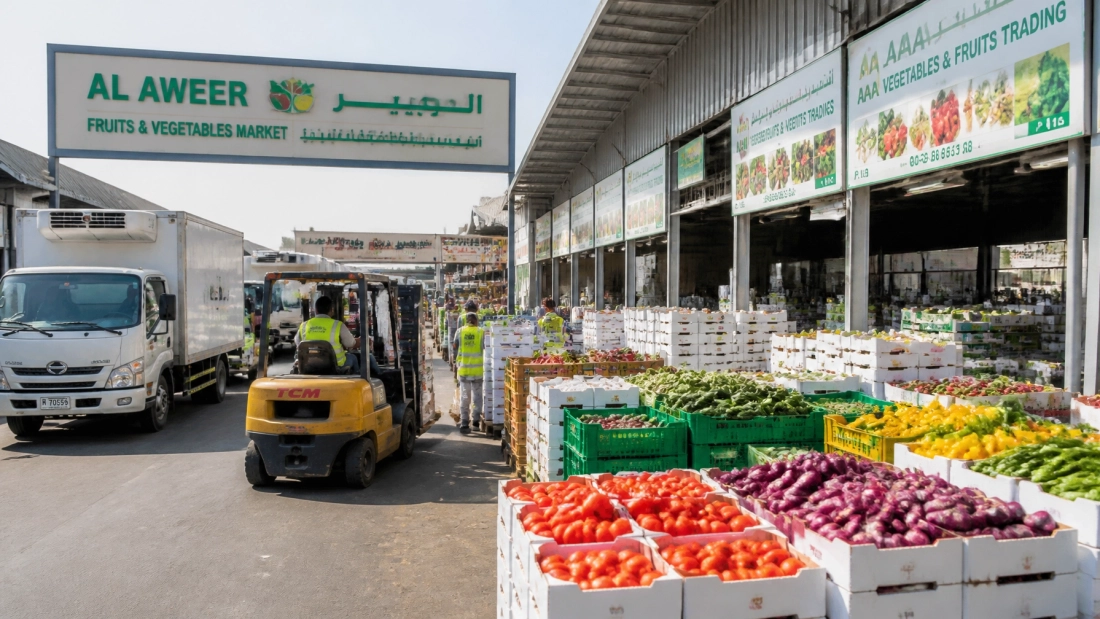
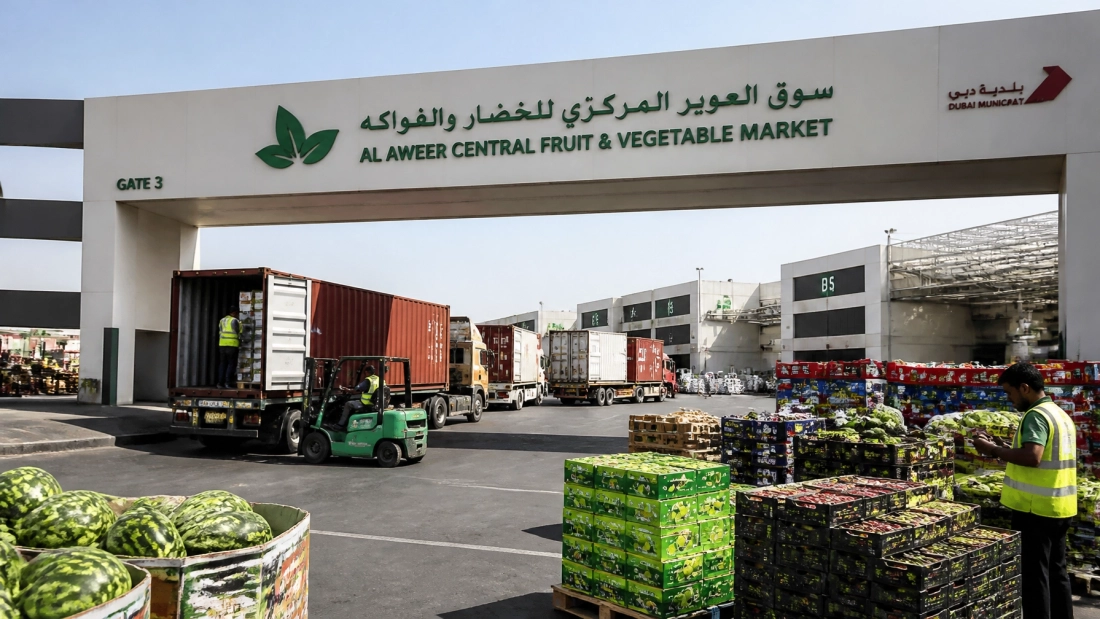
Busy and vibrant scene inside Al Aweer Central Fruit and Vegetable Market in Dubai


Al Aweer Market Price Trends & Regional Produce Dynamics

Operating at the heart of Dubai’s fresh produce ecosystem, the Al Aweer Central Fruit and Vegetable Market reflects dynamic supply and demand shifts across staple commodities. Wholesale buyers and importers navigating current inventory cycles must account for distinct pricing behaviors:

Commodity-Specific Price Movements

  1. Onions: Stabilized at an efficient wholesale rate of AED 1.95 per kilogram, representing a notable 41% decrease over the past month due to steady import inflows from primary agricultural corridors.
  2. Perishable Vegetables: Cauliflower, cucumbers, and gourds exhibit heightened intraday price volatility of up to 30%, driven by shifting harvest yields and rapid local retail demand spikes.
  3. Fruits & Citrus: Apples, imported citrus varieties, and premium Pakistani mangoes remain under sustained upward price pressure resulting from seasonal transition gaps and elevated freight costs.
  4. Quality Grading: A consistent 20% to 30% price premium separates Grade 1 produce from Grade 2 inventory across all major fruit and vegetable categories, reflecting stringent supermarket and restaurant quality demands.

Regulatory Compliance & Import-Export Frameworks

Ensuring strict adherence to federal mandates is non-negotiable for commercial operators in the UAE. Regulatory bodies have implemented critical updates to safeguard public health and streamline customs clearance:

  • Unified Federal Food Safety System: Oversight is now fully consolidated under the Ministry of Climate Change and Environment (MOCCAE), establishing uniform inspection standards across all emirates.
  • Mandatory ZAD Platform Registration: All food importers and wholesale distributors must complete registration on the official ZAD platform to verify product traceability and source authenticity.
  • Nutri-Mark Packaging Standards: Compliance with mandatory Nutri-Mark nutritional labeling is strictly enforced across retail and wholesale food packaging.
  • 2026 HS Code Updates: Exporters must utilize updated Harmonized System (HS) codes for all customs declarations to prevent immediate consignment rejections via the E-Mirsal II digital gateway.
  • Halal Certification Protocols: Certified documentation remains compulsory for all imported meat and poultry consignments, ensuring complete alignment with Islamic dietary standards.

Sleek modern cargo port and shipping container terminal in the UAE


Optimizing Exporter Profitability: Mayil Global’s Verified Buyer Model

Navigating international trade volatility requires secure financial structures and dependable local distribution channels. Mayil Global bridges the gap between global agricultural producers and UAE commercial buyers through industry-leading operational models.

Why Exporters Choose Our 3% Commission Distributor Model

For international growers, exporters, and container shippers arriving at Al Aweer, securing immediate liquidity and mitigating default risks are primary operational challenges. Mayil Global addresses these requirements directly:

  • Eliminating Payment Delays: Our structured distribution network replaces protracted credit terms with secure, transparent transactions.
  • Transparent 3% Commission Structure: Exporters benefit from a highly competitive 3 percent commission distributor UAE model, allowing partners to retain maximum margins while leveraging established supermarket and restaurant distribution channels.
  • Verified Buyer Network: As a trusted verified buyer for exporters UAE partner, Mayil Global connects container owners directly with vetted, credit-worthy B2B purchasers across Dubai and the wider Emirates.

For further insights into optimizing your supply chain margins, explore our detailed guides on why our 3% commission distributor model changes the way you export and discover how our cash and carry food wholesale framework in Dubai accelerates your cash flow.

Professional business meeting in a modern Dubai corporate office


Partnering for Long-Term Supply Chain Excellence

As the UAE continues to expand its global trade footprint under visionary economic initiatives, reliable partnerships remain the cornerstone of sustainable commercial growth. Mayil Global combines rigorous quality control, hygienic handling, global sourcing networks, and efficient logistics to deliver uncompromised food distribution services.

Whether you are an international exporter seeking secure container liquidation or a local B2B buyer requiring dependable fresh produce supply, Mayil Global ensures operational excellence at every stage of the supply chain. Connect with our trade desk today to explore collaborative wholesale opportunities tailored to your enterprise.

tTGZIKWkG1E

UAE Export News & Al Aweer Market Updates: July 30, 2026 – H1 Trade Records, Price Trends & Verified Buyer Opportunities

As global supply chains navigate dynamic shifts, the United Arab Emirates continues to solidify its position as the premier international trade and logistics nexus. Following our July 29 market overview, today’s edition of UAE export news and Al Aweer market updates delivers critical macro-economic figures, regulatory mandates, and operational opportunities for international and local exporters. With H1 2026 trade milestones shattering records, fresh produce suppliers and agricultural exporters must align their strategies with current market realities, stringent compliance requirements, and efficient distribution frameworks.

Mayil Global remains fully committed to supporting global exporters and local UAE B2B buyers through our transparent 3 percent commission distributor uae model and immediate container purchase solutions. Below is the comprehensive analysis for July 30, 2026.


H1 2026 Macro-Economic Milestone: UAE Non-Oil Foreign Trade Reaches AED 1.937 Trillion

Official data released for the first half of 2026 underscores an unprecedented era of economic diversification and bilateral trade expansion. UAE non-oil foreign trade surged to AED 1.937 trillion in H1 2026, registering a robust 13.1% year-on-year increase compared to the corresponding period in 2025. This historic performance marks the first time non-oil trade has approached the AED 2 trillion threshold within a mere six-month window, reflecting a massive 39.6% jump over H1 2024 and a 54.5% surge over H1 2023.

Key Growth Drivers in Non-Oil Exports

Driving this macroeconomic momentum is an extraordinary expansion in non-oil exports, which reached AED 452.8 billion: a remarkable 23.9% increase year-on-year. Consequently, the share of non-oil exports within total foreign trade climbed to 23.4%, demonstrating the nation's successful transition toward a production- and export-driven economy.

  • Leading Trading Partners: China maintained its position as the UAE’s top non-oil trading partner at AED 180.7 billion, followed by Switzerland (AED 138.4 billion) and India (AED 107.5 billion), alongside strong double-digit growth with Egypt, Oman, and Hong Kong.
  • Dominant Commodities: Gold retained its status as the leading non-oil traded commodity at AED 706.2 billion (up 48.8% YoY), supported by high-value trade in telecommunications equipment, gold jewelry, automobiles, and industrial diamonds.

Modern container port and cargo logistics hub in Dubai UAE

Expansion of Comprehensive Economic Partnership Agreements (CEPAs)

A primary catalyst behind these record-breaking figures is the strategic expansion of the UAE’s CEPA network. To date, the nation has concluded 37 CEPAs, with 18 currently in full force. Trade volume across CEPA-covered markets reached AED 304.3 billion in H1 2026.

Furthermore, international trade relations received a major boost with the finalization of the UAE-Canada CEPA on July 25, 2026, opening new tariff-free and preferential corridors for agricultural goods, food products, and industrial inputs. Additionally, on July 10, 2026, the United States formally upgraded the UAE to Category A:5 export status, streamlining advanced technology and specialized industrial trade between the two nations.


Al Aweer Market Updates: July 30, 2026 Price Trends & Operational Volatility

As the primary wholesale distribution hub for fresh fruits and vegetables in Dubai, the Al Aweer Market continues to experience high trading activity and intraday price fluctuations. Exporters supplying the domestic market must closely monitor daily price discovery mechanisms to protect margins and secure optimal placement.

Commodity Price Breakdown and Volatility

  • Onions: After weeks of supply adjustments, onion pricing has stabilized around AED 1.95/kg for standard commercial grades. Premium Grade 1 imported produce continues to command a steady price premium due to superior uniformity and extended shelf-life. Exporters can review our specialized guide on exporting onions to Dubai to optimize container shipments.
  • Intraday Volatility in Cauliflowers and Cucumbers: Trading sessions on July 30 exhibited sharp intraday price swings of up to 30% between morning arrivals and evening closing sessions. This volatility is driven by rapid shifts in regional harvest arrivals, localized container clearance rates, and heightened hospitality demand.
  • Quality Grading Standards: Wholesalers and institutional buyers in Al Aweer are increasingly rejecting sub-standard produce. Strict adherence to grading, sorting, and temperature-controlled logistics is mandatory for suppliers seeking immediate liquidity.

High quality fresh vegetables including onions and cauliflowers displayed in a clean modern wholesale warehouse


Regulatory Compliance: ZAD Platform Registration & Arabic Labeling Mandates

Navigating UAE import and export regulations requires absolute precision. Regulatory bodies continue to enforce rigorous compliance protocols across all ports of entry and wholesale distribution centers.

1. Mandatory ZAD Platform Registration

All food importers, wholesale distributors, and international food manufacturers must ensure full registration and compliance through the ZAD platform. This digital system oversees food safety traceability, hazard analysis, and import clearance validation across the UAE. Shipments lacking proper ZAD pre-clearance face immediate border detention and costly demurrage fees.

2. Strict Arabic Labeling Requirements

Compliance regarding product labeling is non-negotiable. All pre-packaged food products, fresh produce containers, and wholesale packaging units must feature clear, indelible Arabic labeling. Essential mandatory disclosures include:

  • Accurate product nomenclature and net weight.
  • Complete ingredient listings and country of origin.
  • Clear storage instructions, shelf-life dates, and halal certifications where applicable.

Failure to comply with Arabic labeling standards results in mandatory re-exportation or confiscation by municipal health authorities.


Partnering with Mayil Global: Your Trusted Verified Buyer & 3% Commission Distributor in the UAE

For international exporters arriving at Al Aweer with perishable containers or bulk shipments, liquidity management and reliable off-take are paramount. Securing a dependable counterparty prevents distressed selling and inventory spoilage.

Mayil Global operates as the premier verified buyer for exporters uae, providing immediate cash-and-carry container purchases and stable commercial pathways.

Why Exporters Choose Mayil Global's 3% Commission Model:

  1. Guaranteed Daily Liquidity: We eliminate prolonged payment terms by offering immediate financial settlement for container arrivals.
  2. Transparent 3% Commission Distribution: Our straightforward cash and carry food wholesale model ensures fair market pricing with a nominal, transparent 3% distributor commission, maximizing net returns for international shippers. Learn more about our 3 percent commission distributor uae framework.
  3. Rigorous Quality Control: Our state-of-the-art cold storage facilities and strict inspection protocols guarantee that Grade 1 produce retains its market value from port to supermarket shelf.
  4. Established B2B Network: We maintain direct supply agreements with leading supermarkets, hotel chains, and retail networks across the UAE, ensuring steady, high-volume absorption of your agricultural exports.

Professional B2B warehouse interior with stacked pallets of fresh produce and food products


Conclusion

The exceptional economic performance of H1 2026: highlighted by AED 1.937 trillion in non-oil trade, expansive CEPAs, and enhanced bilateral agreements: cements the UAE as the ultimate global trade destination. While Al Aweer market updates reveal ongoing intraday price volatility for items like cauliflowers and cucumbers alongside stable onion pricing at AED 1.95/kg, compliant exporters can capture remarkable profit margins by adhering to ZAD platform mandates and Arabic labeling laws.

By partnering with Mayil Global, international exporters gain a trusted verified buyer for exporters uae equipped with a transparent 3 percent commission distributor uae model. Secure your supply chain, protect your margins, and optimize your distribution strategy with Mayil Global today.


M4w4_9w_Vzf

Verified Buyer & Exporter Authority Series: Overcoming Customs and Municipal Compliance Hurdles in Dubai : How Mayil Global’s 3% Commission Model Streamlines UAE Food Imports

As the United Arab Emirates continues to solidify its position as the premier commercial and logistical gateway of the Middle East, the influx of international agricultural produce and packaged food items is scaling rapidly. For global exporters, shipping high-demand commodities: ranging from wholesale fruits and vegetables Dubai markets require to bulk rice and essential staples such as importing onions Dubai businesses demand: presents immense commercial opportunities. However, navigating the stringent regulatory ecosystem established by Dubai Customs and the Dubai Municipality can pose significant operational bottlenecks.

At Mayil Global, we bridge the gap between international agricultural producers and the UAE's bustling commercial landscape. Through our transparent 3% commission model, robust farm-direct sourcing, and rapid B2B distribution networks, we serve as the trusted verified buyer for exporters UAE shippers rely upon for operational stability and guaranteed liquidity.


1. The Complexities of Dubai Food Imports: Navigating Customs and Municipal Standards

Entering the UAE food market requires strict adherence to federal and municipal regulations designed to safeguard public health and consumer safety. For any entity acting as a wholesale food buyer Dubai supermarkets and retailers depend on, compliance is non-negotiable.

The regulatory framework is anchored by two primary authorities:

  • Dubai Customs: Responsible for verifying tariff declarations, commercial invoices, certificates of origin, and collecting applicable duties.
  • Dubai Municipality (Food Safety Department): Oversees pre-import product and label registrations via digital platforms such as FIRS and Montaji/ZAD, alongside physical inspections and laboratory testing upon arrival.

Key Compliance Pillars for Exporters

  1. Product & Label Registration: Every SKU and its corresponding label artwork must be pre-registered and approved by the Dubai Municipality. Mandatory data points: including ingredients, net weight, country of origin, and storage instructions: must feature clear Arabic labeling.
  2. Mandatory Certification: Shipments must be accompanied by original documentation, including official Health Certificates verifying human consumption fitness, and where applicable, Halal Certificates issued by recognized Islamic organizations.
  3. Port Inspection & Sampling: Upon vessel or aircraft arrival, Dubai Municipality inspectors conduct risk-based physical examinations and laboratory analyses to ensure absolute adherence to microbiological and chemical safety standards.

Failure to meet these exact specifications can result in costly cargo detentions, port storage fees, or mandatory re-exportation. Exporters need a seasoned local partner with deep regulatory expertise to ensure smooth, compliant entry into distribution channels.


2. The Exporter's Dilemma: Time-Consuming Clearance and Liquidity Gaps

International exporters frequently encounter significant financial and logistical friction when attempting to clear and distribute perishables and bulk commodities independently in the UAE.

Professional food inspectors conducting rigorous quality control at Al Aweer wholesale market in Dubai

When shipping essential food items: whether you are exporting onions to Dubai or coordinating shipments with bulk rice suppliers Dubai: time directly correlates with product viability. Delays at customs directly degrade the shelf-life of fresh fruits, vegetables, and sensitive commodities. Furthermore, traditional trade credit terms can lock up exporter capital for 60 to 90 days, severely restricting operational cash flow and scalability.

To mitigate these systemic risks, global agricultural producers partner with established local entities that possess immediate market access, established customs clearance protocols, and immediate financial settlement capabilities.


3. How Mayil Global's 3% Commission Model Transforms UAE Food Distribution

To eliminate the friction of traditional trade intermediaries, Mayil Global operates on a disruptive yet highly reliable 3 percent commission distributor UAE framework.

Our business model is engineered to provide absolute transparency and rapid liquidity for international exporters and local B2B buyers alike:

  • Fixed 3% Commission Structure: We operate as your dedicated agent and verified buyer in the UAE, charging a flat, transparent 3% commission on transactions. This eliminates hidden markups and ensures maximum net returns for agricultural producers.
  • Immediate Cash-and-Carry Container Purchases: We provide immediate container absorption and cash-and-carry purchasing power for verified exporters, entirely neutralizing payment delays and currency transfer risks.
  • Streamlined Regulatory Execution: Our dedicated logistics and compliance teams manage the intricate web of Dubai Customs declarations, FIRS registrations, and municipal clearances before your containers even hit the market floor.

Learn more about our comprehensive operational framework by exploring our About Us and Sourcing & Logistics pages.


4. Operational Excellence at Al Aweer Market: Rigorous Quality Control and Cold-Chain Integrity

Physical distribution in Dubai is anchored by central commercial hubs, most notably the Al Aweer Central Fruit & Vegetable Market. Maintaining product integrity from the farm gate to the wholesale market floor requires meticulous supply chain management.

State-of-the-art cold-chain storage warehouse for fresh produce and bulk goods in Dubai

Mayil Global enforces stringent quality control measures across every stage of the supply chain:

  • Farm-Direct Sourcing: We source directly from audited, trusted agricultural producers globally, guaranteeing superior quality and traceability.
  • Rigorous Inspection at Al Aweer: Every incoming consignment undergoes multi-stage quality inspections by our trained agronomists and logistics specialists at our Al Aweer facilities.
  • Unbroken Cold-Chain Integrity: Perishable commodities: including delicate fruits, leafy greens, and farm-fresh vegetables: are stored and transported in temperature-controlled environments that comply with international hygiene and safety standards.

Discover our full range of high-grade commodities by visiting our Products catalog.


5. Partnering with Mayil Global: A Step-by-Step B2B Procurement and Export Framework

For international exporters and local B2B buyers seeking a dependable wholesale partner, Mayil Global provides a structured, four-step operational roadmap:

[1. Verification & Sourcing Alignment] 
   └──> [2. Regulatory Documentation & Municipal Pre-Approval] 
          └──> [3. Port Clearance & Al Aweer Inspection] 
                 └──> [4. Rapid B2B Distribution to Supermarkets & Restaurants]
  1. Verification & Sourcing Alignment: Exporters connect with our procurement desk to align on product specifications, volume capacities, and shipping schedules.
  2. Regulatory Documentation & Municipal Pre-Approval: Our compliance division reviews certificates of origin, health certificates, and label artworks to ensure seamless municipal approval.
  3. Port Clearance & Al Aweer Inspection: Upon arrival at UAE ports, our logistics teams facilitate rapid customs release and transport goods directly to our temperature-controlled facilities in Al Aweer for final quality grading.
  4. Rapid B2B Distribution: Goods are swiftly distributed across our established network of supermarkets, hypermarkets, and HoReCa (Hotel, Restaurant, and Cafe) clients throughout the UAE.

Conclusion: Securing Long-Term Growth in the UAE Food Market

Overcoming the regulatory and logistical hurdles of the Dubai food import sector requires more than basic shipping arrangements: it demands an authoritative, operationally excellent partner with proven local expertise. By leveraging Mayil Global's farm-direct sourcing, strict quality control, cold-chain infrastructure, and pioneering 3% commission model, international exporters and UAE buyers can secure long-term profitability and uninterrupted supply chain reliability.

Commercial B2B food distribution in the UAE with modern delivery trucks supplying supermarkets

Ready to expand your market reach and streamline your export operations in the UAE? Contact Us Today to partner with Mayil Global.