

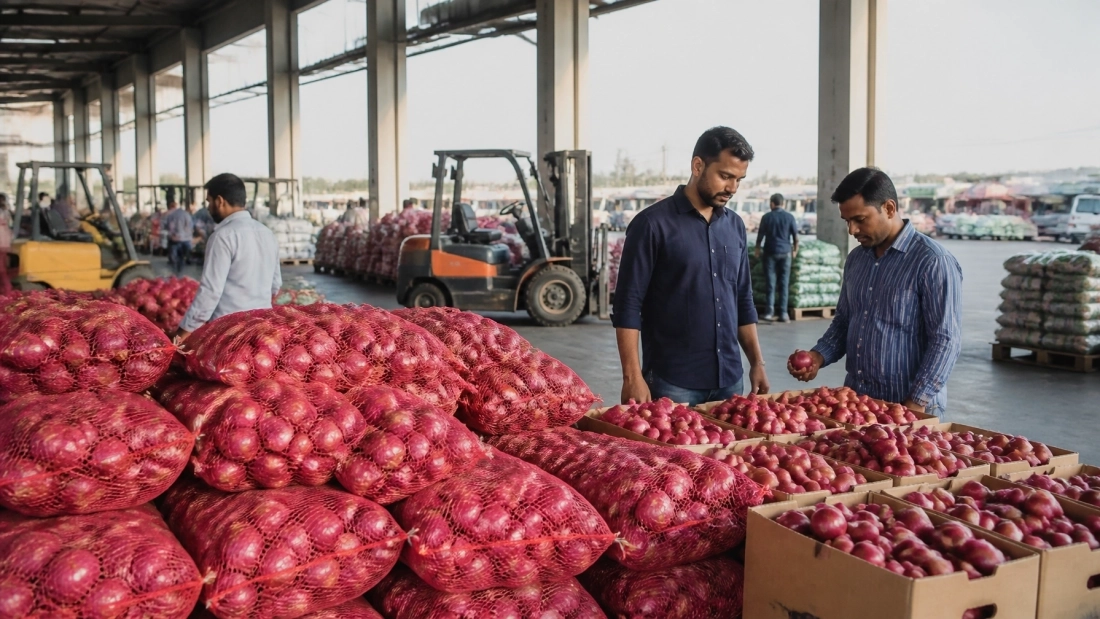
This daily entry in the Verified Buyer & Exporter Authority Series covers Saturday, August 29, 2026: the first day of the UAE weekend and the close of GCC Week 34. Buyers are consolidating weekend replenishment while planning Week 35 opening requirements for Monday, August 31. The information below is for market planning only. It is not a quotation, offer, or guarantee of availability. Product value varies according to origin, grade, size, packing, arrival condition, quantity, and timing. Use alaweerprices.com for live verification before confirming a transaction.
1. India-Origin Planning Benchmarks at Al Aweer
The following benchmarks continue the August series reference set. They are planning indicators, not fixed quotations.
| India-origin product | Pack reference | Planning benchmark |
|---|---|---|
| Onion | 1kg | AED 2.00 |
| Ginger | 3kg | AED 7.00 |
| Garlic | 3kg | AED 16.00 |
| Okra | 3kg | AED 32.00 |
| Green chilli | 4.5kg | AED 26.00 |
| Pomegranate | 2kg | AED 13.00 |
| Small onion | 3kg | AED 14.00 |
| Cluster beans | 3kg | AED 17.00 |
| Ivy gourd | 3kg | AED 18.00 |
| Fresh turmeric | 3kg | AED 38.00 |
| G9 banana, green | 13kg | AED 37.00 |
| G9 banana, yellow | 13kg | AED 45.00 |
| Dry coconut | 13kg | AED 48.00 |
| Amla | 3.5kg | AED 24.00 |
| Drumstick | 3kg | AED 28.00 |
| YB banana | 4kg | AED 16.00 |
| RK banana | 4kg | AED 20.00 |
| Banana leaf | 4kg | AED 24.00 |
| Suran | 9kg | AED 24.00 |
These planning benchmarks vary by grade, size, crop, packing, inspection result, loading date, freight, and market timing. Exporters and UAE buyers should confirm the exact specification and current market position before loading or purchase approval.
2. Weekend Trading Position and Week 35 Planning
Saturday is the first day of the UAE weekend. Buyers are managing immediate weekend replenishment while forward-positioning stock for Week 35 opening on Monday, August 31.
The priority is dependable supply rather than unverified price chasing. Supermarkets, restaurants, retailers, and wholesale distributors should complete the following planning actions:
- Consolidate weekend requirements by product, grade, pack format, and delivery location.
- Verify delivery windows with suppliers, transporters, warehouses, and receiving teams.
- Confirm Week 35 loading plans before the weekend closes.
- Obtain confirmed buyer allocation before loading containers.
- Match the shipment with a verified buyer of that particular product.
- Recheck documentation, inspection status, and arrival timing before dispatch.
Planning demand without confirmed allocation creates avoidable exposure. A container should not be loaded solely because a market indication appears favourable.
3. Onion Origin Competition at Al Aweer
Current planning references show competitive onion values by origin:
- India new-crop: approximately AED 2.00 per kg.
- Egyptian: approximately AED 1.30 per kg.
- Yemeni: approximately AED 1.60 per kg.
These are planning references, not quotations. Origin selection must compare the complete commercial and operational position. The lowest headline price may not provide the lowest usable landed cost.
Buyers should compare:
- Complete landed cost.
- Variety and crop condition.
- Size and grade specification.
- Net weight and packaging.
- Phytosanitary and regulatory eligibility.
- Availability and loading capacity.
- Transit time and arrival reliability.
- Expected wastage and usable yield.
- Buyer acceptance requirements.
India may provide suitable new-crop programmes for buyers requiring specific sizes or pack formats. Egypt and Yemen may offer different freight and transit advantages. The correct decision depends on specification, compliance, delivery timing, and reliability: not price alone.
4. Fresh Category Moves from the August 24 Al Aweer Data
The August 24, 2026 Al Aweer report recorded significant intra-week movements.
Top increases
- Grapes Black: +185.6%
- Grapes Red Seedless: +157.2%
- Grapes White Seedless: +154.0%
- Wax Gourd: +67.3%
- Zucchini: +40.0%
Top declines
- Green Capsicum: -35.0%
- Celery: -28.5%
- Purple Cabbage: -28.1%
- Tomato: -19.9%
The figures demonstrate intra-week volatility across both fruit and vegetable categories. Grape movements were particularly sharp, while selected vegetables moved in opposite directions as arrivals, supply availability, and buyer demand changed.
The report provides indicative wholesale market data. Actual traded prices vary according to quality, quantity, negotiation, and product condition. Buyers planning weekend or Week 35 purchases should lock product specifications and confirm the buyer before committing to a shipment.
A generic instruction such as “send grapes” is commercially insufficient. The offer should state variety, colour, seed status, pack format, grade, origin, count, shelf life, and arrival requirement.
5. Avocado Premium and Citrus Discount Pressure
Avocado premium conditions continue. Tight regional spot inventory and supply gaps added approximately USD 5–6 per carton during August 2026, depending on origin, variety, size, and channel.
The premium must be matched to a confirmed channel before loading. Premium avocado can lose value through delayed clearance, incorrect maturity, bruising, unsuitable temperature management, or a buyer specification mismatch.
South African lemons and mandarins remain under discount pressure from peak-season arrivals. Extended transit and condition differences are creating separate outcomes for premium and secondary lots. Premium lots should be matched with supermarkets and higher-specification retailers. Secondary lots require an appropriate wholesale, foodservice, or processing channel.
6. UAE Export News and Regional Supply Routes
The latest UAE export news shows continued expansion in regional trade and distribution capacity.
Oman’s non-oil exports to the UAE nearly doubled in the first half of 2026, increasing by approximately 93% to OMR 1.1 billion. Route changes and regional logistics disruption have increased the relevance of Oman’s land routes and green-corridor supply options for fresh produce entering Dubai.
For importers, Oman's proximity can support shorter road transit for selected onions, vegetables, and fruit categories. It does not remove the need for origin documentation, inspection, food-safety compliance, and confirmed delivery planning.
The UAE’s non-oil foreign trade reached approximately AED 1.937 trillion in H1 2026. National non-oil exports reached approximately AED 452.8 billion, according to the Dubai Government Media Office.
The UAE–Russia Trade in Services and Investment Agreement, or TISIA, was reported as in force on August 23, 2026. It concerns services and investment. It is not a direct goods-tariff change for fresh produce and should not be treated as an automatic tariff benefit for food shipments.
Egypt also continues to demonstrate strong export capacity. For the week ending August 21, 2026, Egypt’s National Food Safety Authority reported:
- 208,000 tons of food exports.
- 4,370 shipments.
- 1,410 exporting companies.
- Approximately 758 food products.
- Approximately 50,000 tons of vegetables and tubers.
- Approximately 10,000 tons of onions.
The NFSA report coverage confirms the scale of Egypt’s export pipeline.
The UAE–Iran trade, commercial exchange, and financial transaction suspension remains in force. Iranian benchmarks are non-executable without formal regulatory, banking, origin, and shipment confirmation. Alternative origins must be screened for compliance before use.
7. Importing Onions Dubai: Specification and Compliance Checklist
Businesses involved in importing onions Dubai should complete the following checklist before confirming a shipment:
- Origin: Confirm the country of origin and supporting certificate.
- Variety and crop: State the onion variety, new-crop or stored crop status, and harvest information.
- Size and grade: Specify millimetre range, grade, tolerance, and defect limits.
- Net weight and packing: Confirm bag or carton type, declared net weight, palletisation, and count.
- Condition: Record firmness, dryness, sprouting, mould, bruising, cuts, and visible defects.
- Shelf life: Confirm expected usable life at arrival and required storage conditions.
- Documents: Prepare invoice, packing list, certificate of origin, phytosanitary certificate, transport document, and applicable inspection records.
- Inspection: Complete inspection before dispatch and document weights, photographs, seals, and loading condition.
- Commercial acceptance: Confirm the buyer, price basis, delivery point, payment structure, rejection terms, and claim process.
Origin and product descriptions must remain consistent across all documents. Incorrect quantities, unclear variety descriptions, and mismatched certificates can delay clearance and increase storage costs.
8. Freight and Landed-Cost Discipline
CMA CGM lowered the North Europe-to-Middle East Gulf reefer Peak Season Surcharge to approximately USD 1,000 per container, effective August 15, 2026. CMA CGM emergency fuel exposure was approximately USD 165 per reefer TEU, subject to the booking, route, and carrier confirmation.
For a 24,000kg reefer, a USD 1,000 surcharge equals approximately AED 0.15 per kg, before other freight and handling charges.
Maersk emergency exposure was approximately:
- USD 3,800 per reefer container for emergency freight.
- USD 1,000 per container for vessels transiting the Strait of Hormuz.
These figures are planning references only. Confirm all surcharges, booking restrictions, transit conditions, and equipment availability in writing for the specific shipment.
Landed cost should include product, packing, inland transport, ocean freight, surcharges, insurance, customs, clearance, storage, delivery, commission, and estimated wastage.
9. How to Export Food to Dubai: Eight Controlled Steps
Businesses researching how to export food to Dubai should follow a controlled sequence:
-
Define the specification
Confirm product, variety, origin, grade, size, packing, quantity, and shelf life. -
Verify the buyer
Confirm registration, receiving capability, product demand, delivery location, and payment terms. -
Check regulatory eligibility
Review food-safety, agricultural, labelling, certificate, origin, and import requirements. -
Calculate landed cost
Include every logistics, clearance, storage, commission, and wastage cost. -
Agree the commercial model
Select commission-based distribution or an immediate Cash & Carry container purchase. -
Inspect before dispatch
Record quality, net weights, packaging, seals, photographs, and temperature requirements. -
Coordinate clearance and delivery
Align shipping documents, customs clearance, transport, warehouse receiving, and final delivery. -
Review performance
Measure buyer acceptance, wastage, realized price, delivery timing, and repeat-order potential.
Mayil Global’s sourcing and logistics process is structured around supplier coordination, quality control, hygienic handling, storage, and organized distribution.
10. Mayil Global’s 3% Commission Distributor UAE Model
Mayil Global provides a defined 3 percent commission distributor UAE model for international and local exporters seeking professional UAE market access.
The 3% commission is a key Mayil Global USP. Under agreed terms, the model can include:
- Product-specific buyer coordination.
- UAE wholesale distribution.
- Delivery and storage planning.
- Shipment communication.
- Quality and document coordination.
- Commercial reporting.
- Access to supermarkets, restaurants, retailers, and wholesale distributors.
The agreement should define the product, commission basis, responsibilities, payment timing, storage, delivery, inspection, deductions, and claims process.
Immediate Cash & Carry Container Purchases
Exporters requiring immediate liquidity can discuss Cash & Carry container purchases for approved products and specifications. Transactions remain subject to inspection, documentation, legal eligibility, current demand, arrival feasibility, and agreed commercial terms.
This option can reduce receivables exposure and help exporters recover working capital faster. It also gives UAE buyers access to organized supply through a controlled wholesale channel.
11. Wholesale Fruits and Vegetables Dubai
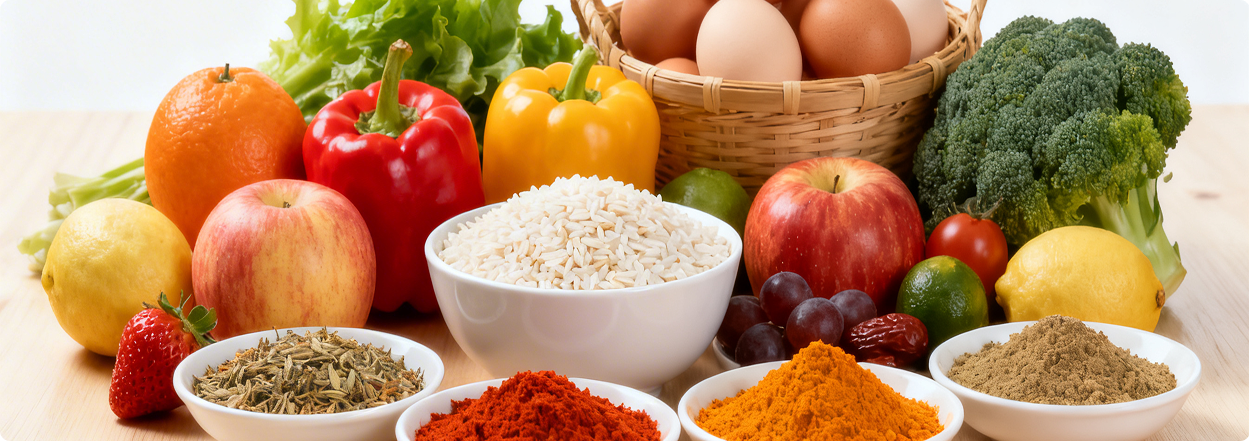
Mayil Global supplies fresh fruits, vegetables, premium spices, premium rice, and farm-fresh eggs to supermarkets, restaurants, retailers, and wholesale distributors.
The company combines:
- Farm-direct sourcing.
- Trusted global suppliers.
- A multi-country supply network.
- Quality control with inspection at every stage.
- Hygienic handling and safety-standard packaging.
- Proper storage from farm to market.
- Organized logistics and timely delivery.
This operating model supports UAE buyers requiring dependable supply, consistent quality, and long-term commercial relationships. Buyers can review Mayil Global’s product categories for current sourcing discussions.

12. Verified Buyer Guidance for Exporters
Exporters seeking a verified buyer for exporters UAE should submit a complete product-specific offer. The commercial requirement is a verified buyer of that particular product, grade, and condition.
Every offer should include:
- Product and variety.
- Origin and crop.
- Grade, size, count, and tolerance.
- Pack format and net weight.
- Available quantity.
- Loading date.
- Estimated arrival date.
- Required certificates.
- Shelf-life expectation.
- Inspection terms.
- Commercial structure.
- Price basis and validity period.
A buyer suitable for Indian onions may not be suitable for avocados, grapes, okra, premium rice, spices, or farm-fresh eggs. Product-specific verification reduces disputes, rejection risk, and unsuitable shipment allocation.
Conclusion: Dependable Supply Requires Verified Execution
The August 29 position combines weekend replenishment, Week 35 opening planning, onion origin competition, sharp grape volatility, avocado premiums, citrus discount pressure, freight exposure, and continuing compliance requirements.
Market benchmarks are useful for planning, but they are not quotations. Final decisions require current verification, exact specifications, complete landed-cost calculations, and a confirmed buyer.
Mayil Global’s 3% commission distribution model provides a defined route for exporters seeking UAE distribution. Immediate Cash & Carry container purchases provide an alternative for approved shipments requiring faster liquidity. Mayil Global also supplies wholesale fruits and vegetables, premium spices, premium rice, and farm-fresh eggs to UAE B2B buyers.
For sourcing, a verified buyer of that particular product, 3% distribution, Cash & Carry container purchases, or wholesale supply in Dubai, contact Mayil Global.
Sources
- Al Aweer Prices: August 24, 2026 market report
- Al Aweer Central Market live price platform
- Dubai Government Media Office: UAE non-oil foreign trade H1 2026
- Egypt Independent: NFSA food exports reach 208,000 tons
- Container News: CMA CGM lowers reefer PSS
- Maersk: Middle East operational update
- The National: UAE–Russia trade and investment agreement
- AGBI: Oman non-oil exports to the UAE
- Mayil Global contact page