476942

Verified Buyer & Exporter Authority Series: October 3 Al Aweer Market Briefing : Importing Onions Dubai Origin Cost Map, Cucumber and Leafy Corrections, Gourd Complex Rally, and How to Export Food to Dubai

Publication edition: 3 October 2026
Market date: 17 September 2026
Dataset: 159 Al Aweer listings across 23 origins, normalised to AED/kg

This edition identifies three procurement signals for international exporters and UAE B2B buyers:

  1. An onion origin cost reset, led by Indian new-crop supply.
  2. A sharp correction in cucumber, cabbage and leafy vegetables, concentrated in short-shelf-life lines.
  3. A rally across the gourd complex, with Oman road supply repricing upward while selected airfreight lines soften.

These Al Aweer market updates support better sourcing, logistics and distribution decisions. They are indicative references, not binding quotations.

1. Importing onions Dubai: origin cost map and the reset

The Indian new-crop onion line corrected from AED 3.80/kg to AED 3.35/kg. This reduces the premium that opened in mid-August when Indian onions traded materially above Egyptian and Yemeni alternatives.

Product Origin and logistics Pack AED/kg Move
Onion new crop India, sea Sold by weight, 18 kg 3.35 −11.8%
Egyptian onion Egypt, sea 20 kg PPE bag 2.20 Flat
Yemen onion Yemen, road Mesh bag 2.25 −10.0%
Sudan pink onion, ~50 mm Sudan, road By weight 2.75 −11.3%
Turkish red onion Turkey, road By weight 2.30 −9.8%

The spread between the cheapest executable origin, Egypt at AED 2.20/kg, and Indian new crop at AED 3.35/kg is AED 1.15/kg. That difference reflects grade, size, skin finish, neck condition and freight economics, not origin alone.

For businesses importing onions Dubai-bound, every quotation should specify:

  • Count or calibre and size tolerance.
  • Skin and neck condition.
  • Sprouting tolerance.
  • Net weight per bag.
  • Inspection point and rejection procedure.
  • Delivery timing and payment terms.

Iran-origin onion listings: including red Shirazi 65 mm+, Tabrezi red, white and brown onion: remain market intelligence only under the UAE trade suspension effective 19 August 2026. They must not support a quotation, purchase order or shipment unless regulations formally change. Origin diversification is therefore an operational requirement.

2. The correction window: cucumber, cabbage and lettuce

Quality-control handling of packed fresh produce

The deepest single-week corrections in the dataset are concentrated in high-water-content, short-shelf-life products.

Product Origin and logistics Pack AED/kg Move
Cucumber Iran, sea 9 kg carton 1.00 −57.1%
Cucumber UAE local 20 kg carton 1.35 −46.0%
White cucumber UAE local 20 kg carton 1.75 −36.4%
Cabbage Iran, sea 10 kg crate 1.30 −38.1%
Lettuce Iran, sea 5 kg crate 2.40 −36.8%
Zucchini UAE local 20 kg carton 1.75 :
Valery, green UAE local 20 kg carton 2.00 :
Valery, yellow UAE local 20 kg carton 1.50 :

Local UAE supply has returned to the market for cucumber and zucchini. This is a controlled buying window, not a permanent price level. Buyers should confirm usable yield, firmness, pack condition and delivery timing. A 46% board-price reduction does not guarantee a 46% reduction in landed cost.

For wholesale fruits and vegetables Dubai buyers serving restaurants and supermarkets, this is the week to lock practical volume on cucumber, cabbage, lettuce and zucchini while rechecking condition daily.

3. Gourd complex rally and the airfreight-to-local spread
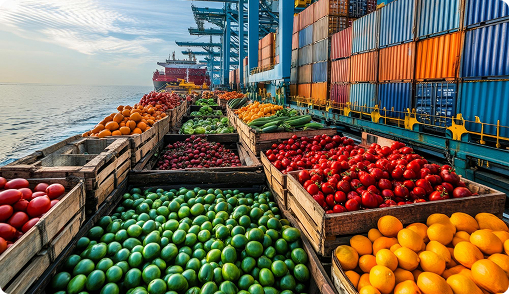
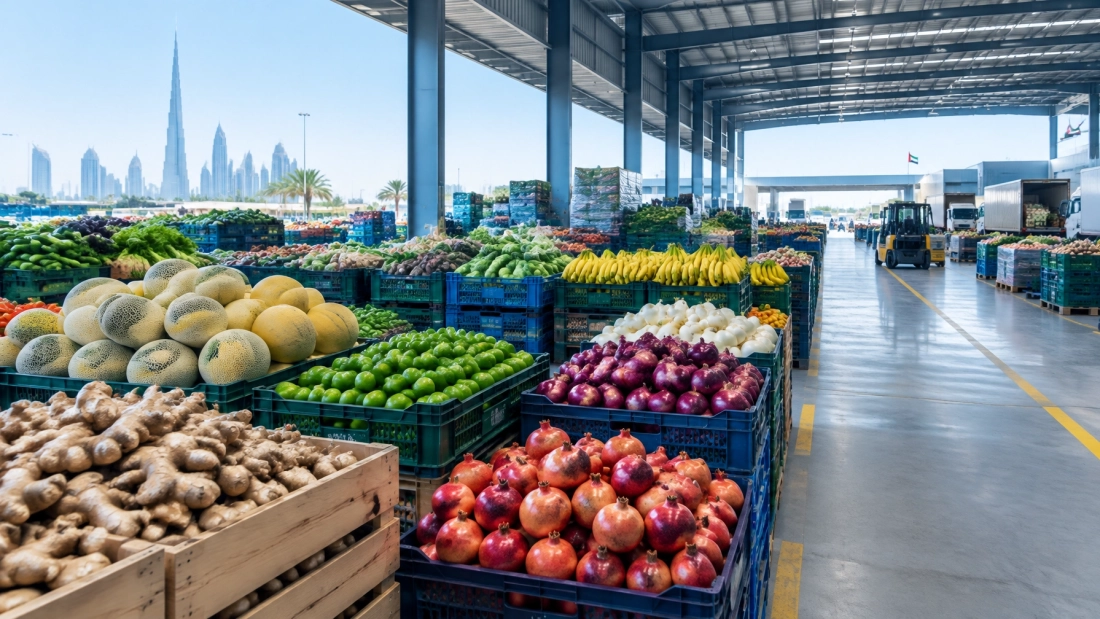
Fresh produce moving through global supply and port logistics

Oman road supply is repricing upward across gourd lines, while several airfreight products are softening. The air-versus-local spread is narrowing and, in some cases, inverting.

Product and route Pack AED/kg Move
Snake gourd, Oman road 7 kg carton 2.86 +33.6%
Ridge gourd, Oman road 7 kg carton 3.57 +24.8%
Wax gourd, Oman road 7 kg carton 2.57 +20.1%
Bottle gourd, Oman road 7 kg carton 5.00 :
Bottle gourd, UAE local 10 kg carton 4.00 :
Bitter gourd, Oman road 7 kg 5.00 :
Bitter gourd, Pakistan air 4 kg carton 8.75 :
Bitter gourd, UAE local 10 kg carton 5.50 :
Okra, India air 4 kg carton 8.00 −8.6%
Okra, UAE local 10 kg carton 5.50 +10.0%
Long beans, UAE local 10 kg carton 4.00 −11.1%
Green peas, Pakistan air 1.5 kg mesh bag 12.00 +12.5%

Cluster beans are AED 10.67/kg, drumstick AED 5.67/kg, ivy gourd AED 8.67/kg, sweet corn AED 4.50/kg and Bangla bottle gourd AED 5.00/kg.

Use airfreight for urgent replenishment, narrow availability, premium specification or very short shelf life. Use UAE local and Oman road supply for routine volume where quality and continuity are confirmed. Always compare delivery timing, package condition and usable yield rather than headline price alone.

4. Fruit and root reference points

Key fruit references include Yemen pomegranate at AED 4.00/kg, Egypt at AED 2.57/kg and India at AED 6.00/kg. Egypt lime is AED 2.60/kg, South African lemon AED 3.87/kg, South African green pears AED 3.50/kg and Rosemary pears AED 4.00/kg.

Grape references range from Egypt white seedless at AED 7.14/kg to Turkey black at AED 11.43/kg. Valencia oranges are AED 3.67/kg for 72-count, AED 3.47/kg for 80-count and AED 3.27/kg for 88-count. Grapefruit is AED 3.80/kg from South Africa and AED 3.70/kg from Turkey.

Hass avocado is AED 11.50/kg from Kenya, AED 12.50/kg from Rwanda and AED 24.00/kg from Mexico. Fruete avocado is AED 5.50/kg from Kenya and Uganda.

Ecuador banana brands range from Lavida at AED 6.15/kg to Al Bakrawe at AED 6.92/kg. India G9 Cavendish is AED 3.23/kg green and AED 3.54/kg yellow. The AED 0.77/kg Ecuador brand spread shows how pack presentation, brand and ripening programmes create value within one origin.

China normal garlic is AED 4.46/kg, pure white garlic AED 6.07/kg and India garlic AED 7.58/kg. China ginger is AED 9.64/kg, while India ginger is AED 6.29/kg.

Root references include Pakistan pink potato at AED 1.70/kg, white potato at AED 1.43/kg, Egypt unwashed potato at AED 3.00/kg, Egypt sweet potato at AED 2.75/kg, China carrot at AED 2.75/kg, China taro at AED 2.25/kg, Sri Lanka tapioca at AED 4.00/kg and India elephant yam at AED 2.78/kg.

5. UAE export news and GCC market intelligence

The Week 37 GS Intelligence GCC wholesale report recorded bananas down by approximately US$4 across GCC floors. Philippines bananas were US$13.87, Ecuador US$14.67–15.47 and India US$11.47–12.80. Australian carrots increased to US$15.47–17.33, while South African pears increased by US$4–6. South African citrus remained under pressure from cumulative arrivals and variable transit quality. Jeddah Islamic Port customs and transport constraints continued to extend yard dwell times.

A new APEDA and InD Events Dubai MoU supports Gulfood 2027 participation for Indian exporters, including MSMEs, Farmer Producer Organisations, startups and women- and SC/ST-led exporters. Dubai is positioned as a gateway to the GCC, wider Middle East and Africa.

Under India–UAE CEPA, approximately 90% of food export lines may qualify for 0% customs duty when requirements are met, including a CEPA-specific Certificate of Origin. Exporters must still complete ZAD and Dubai FIRS registration, SKU-level pre-registration, ingredient and nutrition disclosures, Arabic–English labelling, applicable Nutri-Mark requirements and halal certification for animal-derived products.

An MoU, trade show or duty exemption does not replace a confirmed buyer for a specific product, origin, pack and shipment. Exporters must diversify origins, pre-qualify buyers and complete documentation before disruption occurs.

6. Mayil Global’s transparent distribution routes

Mayil Global provides two documented routes for international exporters:

  1. 3 percent commission distributor UAE model: The agreement records whether the 3% applies to FOB, CIF, delivered or realised sale value. Freight, customs, storage, inspection, VAT and local transport are itemised separately.
  2. Immediate cash-and-carry container purchase:
    1. Submit documents for commercial review.
    2. Complete product, origin and shipment compliance review.
    3. Confirm arrival and inspection location.
    4. Inspect quantity, condition and hygiene.
    5. Approve valuation and payment terms.
    6. Transfer title under documented conditions.

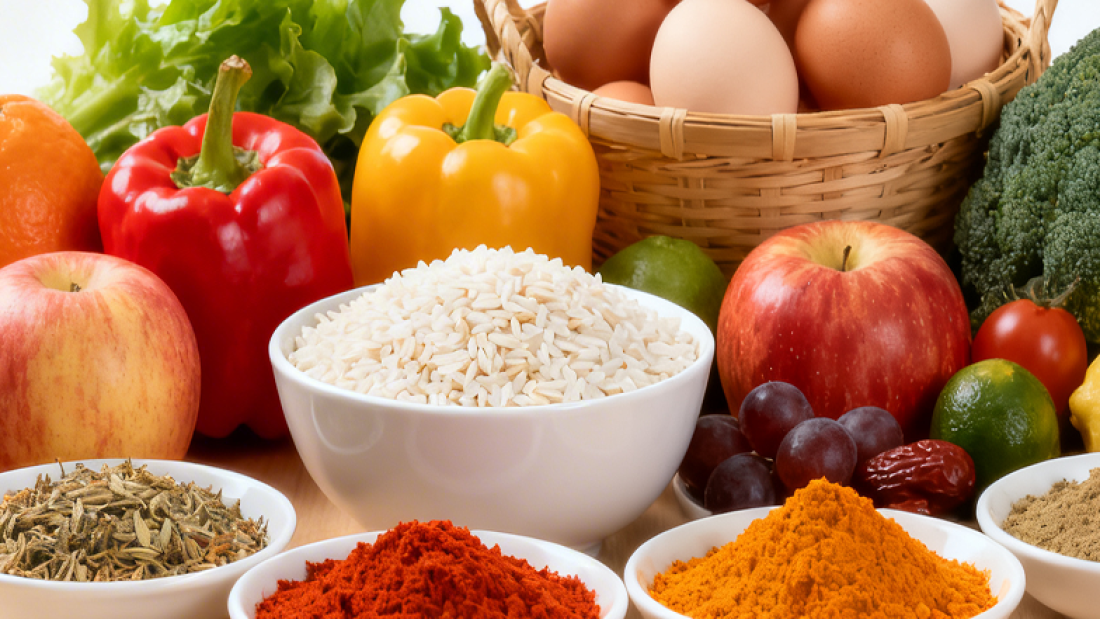
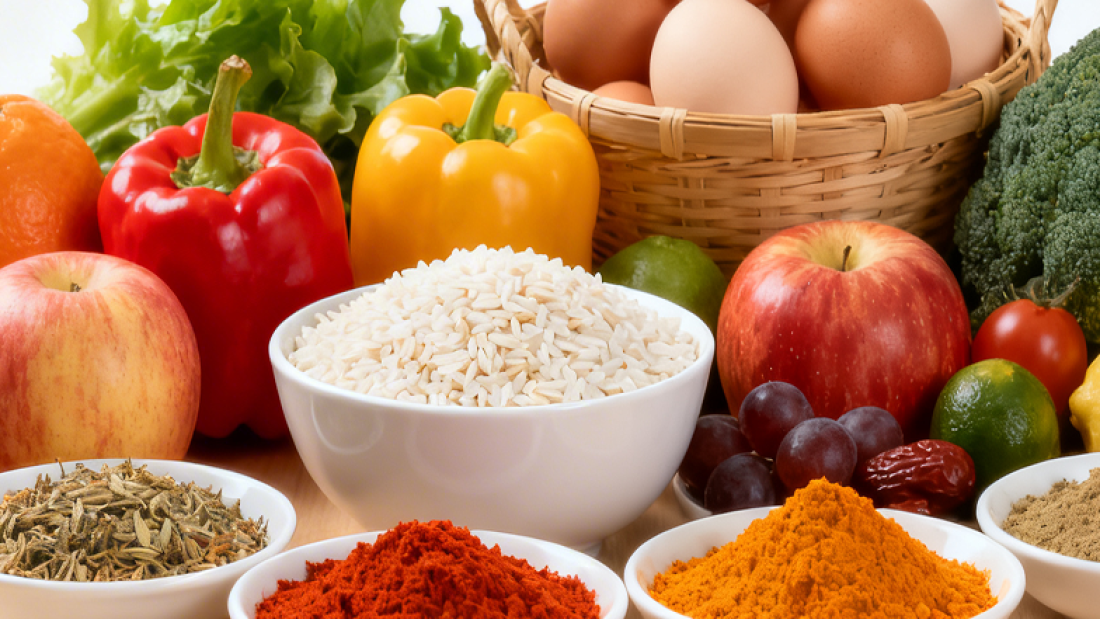
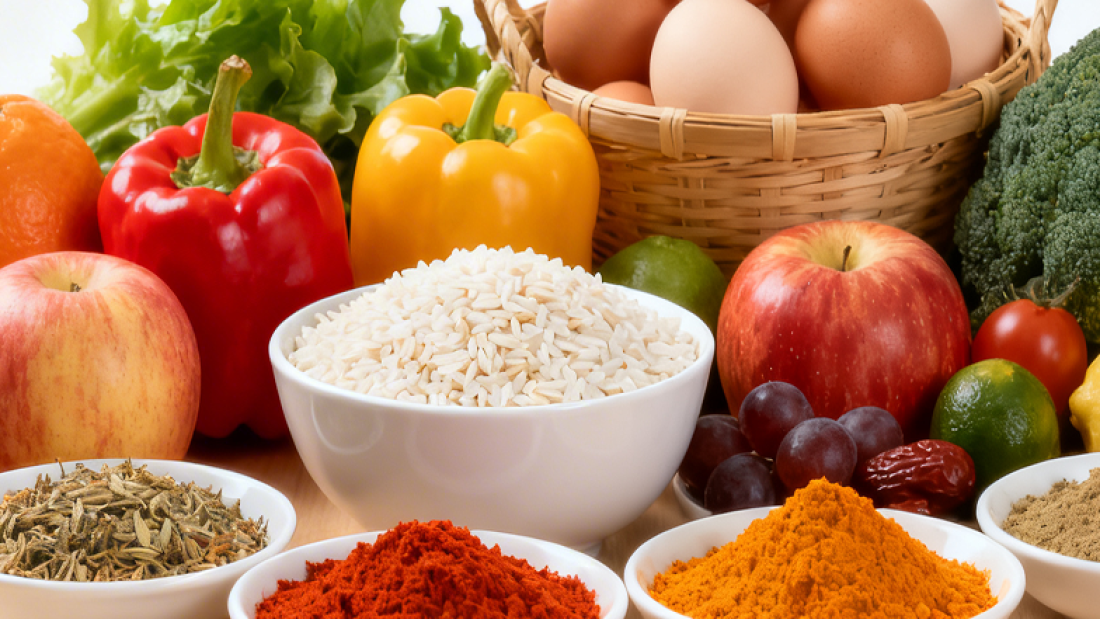
Mayil Global operates as a verified buyer for exporters UAE standard, not as a general expression of interest. The company sources farm-direct from trusted farms and global suppliers, applies quality control at every stage, manages hygienic packaging and organised logistics, and maintains a multi-country supply network. Products include fresh fruits, vegetables, premium spices, premium rice and farm-fresh eggs for supermarkets, restaurants, retailers and wholesale distributors.

Learn more about sourcing and logistics, products, the 3 percent commission distributor UAE model and cash-and-carry purchasing.

7. How to export food to Dubai: operational guide

For exporters asking how to export food to Dubai, follow this sequence:

  1. Confirm product, variety, grade, origin and pack format.
  2. Check UAE compliance and origin restrictions.
  3. Prepare specifications, origin and health documents, phytosanitary certificates where applicable, packing details, shelf-life data, Certificate of Origin, invoice, packing list and transport documents.
  4. Register on ZAD and the relevant emirate system; pre-register each SKU and confirm Arabic–English labelling.
  5. Verify a buyer for the exact product, origin, pack and shipment.
  6. Agree either 3% commission distribution or cash-and-carry purchase, with all additional costs itemised.
  7. Sign inspection, rejection, title-transfer and payment terms.
  8. Confirm the arrival window and delivery point.

The Al Aweer trading peak is approximately 4:00 am to 9:00 am. Quote per package and per kilogram. Each offer should state product, grade, origin, net weight, route, availability date, delivery point, inspection terms and commercial route.

Signed exporter checklist

  • Product, origin and pack confirmed
  • UAE compliance and origin restrictions checked
  • Buyer verified for this specific product
  • 3% commission basis documented or cash-and-carry approved
  • Inspection, title transfer and payment terms signed
  • Freight, customs, storage, VAT and transport itemised separately

Exporter name/signature: ____________________
Date: ____________________

Signed UAE buyer checklist

  • Required grade, package and net weight specified
  • Airfreight, UAE local and Oman road alternatives compared
  • Quality, firmness, moisture and hygiene standards confirmed
  • Delivery window and inspection location agreed
  • Origin compliance checked before purchase order
  • Supply continuity and alternative origins reviewed

Buyer name/signature: ____________________
Date: ____________________

Sources and disclaimer

The market reference is the Al Aweer market board and price list for 17 September 2026, covering 159 listings and 23 origins. Additional references include the Dubai Government Media Office, APEDA export-market announcement and GS Intelligence/Fruitnet GCC Week 37 report.

All prices are indicative market references, not binding quotations. Product condition, availability, compliance, freight and payment terms require daily confirmation. UAE export news and Al Aweer market updates must be verified before any quotation, purchase order, shipment or commercial commitment.

For current requirements, contact Mayil Global.

Rectangle-2-3

Rice, Pulses, and Grains Export Series: Partnering with a Verified Buyer of Basmati and Pulses in Dubai

Exporting rice, pulses, and grains to Dubai requires more than a competitive product price. International suppliers need a verified UAE market partner that understands buyer requirements, import documentation, quality control, logistics, storage, and local distribution.

Mayil Global supports exporters seeking structured access to the UAE food market through a transparent 3% commission-based distribution model. The company connects approved international and local suppliers with B2B buyers, including supermarkets, restaurants, retailers, foodservice operators, and wholesale distributors.

For exporters of Basmati rice, Jasmine rice, lentils, beans, and other grains, this model provides a practical route into Dubai’s established food distribution network. For UAE businesses, Mayil Global operates as a dependable wholesale food supplier focused on consistent quality, hygienic handling, and timely delivery.

Dubai’s Role in Rice, Pulses, and Grain Distribution

Dubai is a major commercial and logistics hub for food imports into the UAE and wider regional markets. Its port, warehousing, wholesale, retail, and foodservice infrastructure supports both domestic consumption and re-export activity.

Rice remains a core food category across the UAE. Demand comes from households, restaurants, hotels, catering companies, supermarkets, industrial kitchens, and regional distributors. Pulses and grains form part of the same procurement cycle because many buyers prefer to source essential dry foods through established multi-product suppliers.

The market includes several product segments:

  • Premium Basmati rice for retail, restaurants, catering, and specialty foodservice.
  • Jasmine rice for Asian restaurants, supermarkets, and international food retailers.
  • Non-Basmati long-grain rice for institutional and high-volume foodservice use.
  • Brown rice and other health-oriented grain products.
  • Lentils, including red lentils, green lentils, brown lentils, and split pulses.
  • Beans such as kidney beans, chickpeas, black beans, and other dry legumes.
  • Grains and staple commodities selected according to buyer specifications.

This demand creates opportunities for exporters that can provide dependable supply, accurate documentation, stable quality, and professional market representation.

Product Focus: Basmati, Jasmine, Pulses, and Grains

Basmati Rice

Basmati rice is one of the most commercially important rice categories in Dubai. Buyers commonly evaluate grain length, aroma, cooking performance, breakage, moisture, purity, packaging, and price positioning.

Mayil Global can coordinate Basmati supply programs according to the requirements of approved buyers and exporters. Common specifications may include:

  • 1121 Basmati rice.
  • Steam Basmati.
  • Sella or parboiled Basmati.
  • Golden Sella Basmati.
  • Traditional Basmati.
  • Brown Basmati.
  • Private-label and bulk packaging formats.

Each buyer may require different grain grades and packaging sizes. Retailers may require branded or private-label packs, while restaurants and foodservice distributors may prefer commercial sacks or larger bulk formats.

Jasmine Rice

Jasmine rice serves a different market segment from Basmati. It is used extensively by Asian restaurants, catering companies, supermarkets, and food retailers that require a fragrant, soft-textured rice variety.

Exporters should present clear product information, including:

  1. Country of origin.
  2. Crop or production details where applicable.
  3. Grain specifications.
  4. Moisture and broken-grain limits.
  5. Available packaging.
  6. Monthly supply capacity.
  7. Required commercial and food safety documentation.

A clear product specification allows Mayil Global to match supply with the correct wholesale food buyer Dubai market segment.

Pulses and Lentils

Pulses are essential products for retail and foodservice distribution. Lentils and beans are purchased by supermarkets, restaurants, institutional caterers, food manufacturers, and wholesale traders.

Relevant categories include:

  • Red lentils and split red lentils.
  • Green and brown lentils.
  • Toor dal and moong dal.
  • Chickpeas and kabuli chana.
  • Kidney beans.
  • Black beans and other specialty beans.
  • Cowpeas and selected dry legumes.

Pulses require proper cleaning, grading, drying, packaging, and storage. Buyers also assess foreign matter, insect damage, moisture levels, uniformity, and shelf life. Strict quality control protects product performance and reduces the risk of rejection or customer complaints.

Other Grains

The export program can also cover selected grains based on supply availability and verified buyer demand. These may include wheat-based products, millet, corn, oats, and other dry staples.

The commercial opportunity is strongest when exporters offer consistent shipment volumes rather than isolated spot quantities. A stable supply program enables buyers to plan inventory, manage promotions, and maintain continuity across retail and foodservice operations.

Different rice varieties prepared for specification-based export programs

The Mayil Global 3% Commission Distribution Model

The central advantage for international exporters is Mayil Global’s 3 percent commission distributor UAE model.

Instead of selling through several layers of intermediaries, exporters can use Mayil Global’s local market access, distribution capabilities, and buyer relationships for a transparent commission of 3% on agreed sales.

How the Model Works

  1. Product registration and specification review
    The exporter provides product details, available grades, origin, packaging, certifications, shipment capacity, and commercial terms.

  2. Buyer and market matching
    Mayil Global reviews demand from approved B2B buyers in Dubai and across the UAE. The product is positioned according to the needs of supermarkets, restaurants, retailers, and distributors.

  3. Commercial coordination
    Pricing, quantity, packaging, delivery terms, documentation, and payment conditions are discussed with the relevant buyer.

  4. Distribution and logistics support
    Mayil Global coordinates local distribution, storage, handling, and delivery according to the agreed transaction structure.

  5. Commission settlement
    The exporter pays a transparent 3% commission on the applicable sale, subject to the agreed commercial terms.

This arrangement allows exporters to retain stronger control over pricing and market positioning. It also reduces the need to establish a separate local sales and distribution operation before testing demand in Dubai.

Immediate Cash-and-Carry Container Purchases

Some exporters require faster liquidity after a container reaches the UAE. Mayil Global also promotes immediate cash-and-carry container purchases for suitable products and approved transactions.

Under this approach, a qualified exporter may present an available container for direct purchase rather than placing the shipment into a longer sales cycle. This can help exporters:

  • Convert inventory into cash more quickly.
  • Reduce local storage exposure.
  • Minimize delays between arrival and payment.
  • Manage working capital more effectively.
  • Respond to urgent supply requirements in the UAE wholesale market.

Cash-and-carry purchasing depends on product specifications, documentation, quality approval, market demand, and commercial agreement. It is not a substitute for quality control. Each container must meet the agreed standards before purchase or distribution.

Container logistics supporting rice and food distribution across the UAE

Quality Control from Origin to Buyer

Reliable distribution begins with product verification. Mayil Global maintains a supply chain approach based on sourcing discipline, inspection, hygienic handling, secure packaging, and organized logistics.

For rice, pulses, and grains, quality control may include:

  • Supplier and mill verification.
  • Pre-shipment inspection.
  • Product sampling and specification checks.
  • Verification of packaging integrity.
  • Review of moisture, purity, and foreign matter requirements.
  • Inspection for pest damage or contamination.
  • Confirmation of shelf-life information.
  • Storage monitoring after arrival.
  • Documentation review before distribution.

Food products must be handled in a manner that protects safety, freshness, and product integrity. Hygienic packaging and proper storage reduce the risk of contamination, moisture damage, infestation, and deterioration during transportation.

Mayil Global’s wider sourcing and logistics system is designed to maintain quality across the supply chain. The objective is consistent: delivering dependable supply and consistent quality to UAE businesses.

Documentation and Compliance for Exporters

Exporters should prepare a complete documentation file before presenting rice, pulses, or grains to Dubai buyers. Requirements vary according to product, origin, packaging, and shipment structure, but commonly include:

  • Commercial invoice.
  • Packing list.
  • Certificate of origin.
  • Bill of lading.
  • Health or conformity certificates where required.
  • Phytosanitary documentation where applicable.
  • Fumigation certificate where applicable.
  • Product specifications and laboratory reports.
  • Arabic and English labeling information.
  • Production, expiry, and storage details.

Documentation accuracy supports smoother customs clearance and reduces avoidable logistics delays. Exporters should confirm current requirements with the relevant authorities, customs agents, and importing partners before shipment.

Why Exporters Partner with Mayil Global

Mayil Global provides a UAE-based commercial and distribution channel for suppliers that want to reach professional buyers without depending entirely on unverified inquiries.

The partnership is structured around:

  • A transparent 3% commission model.
  • Access to a growing B2B buyer network.
  • Local distribution and logistics coordination.
  • Support for bulk and container-scale transactions.
  • Immediate cash-and-carry opportunities for suitable shipments.
  • Strict quality control and hygienic handling.
  • A global sourcing network across multiple countries.
  • Long-term relationships with exporters and buyers.

The company’s product range includes quality rice and other premium food products supplied to businesses across the UAE. Product availability, specifications, and shipment programs are evaluated according to current market demand and supplier capacity.

A Practical Route into the Dubai Market

Exporters of Basmati rice, Jasmine rice, pulses, and grains need a partner that combines local market knowledge with operational discipline. Mayil Global provides that structure through verified buyer engagement, organized distribution, quality control, and a clear commission framework.

For international suppliers, the 3 percent commission distributor UAE model offers a transparent way to enter or expand in the Dubai market. For local supermarkets, restaurants, retailers, and distributors, Mayil Global provides access to dependable wholesale food products through an organized supply chain.

To discuss export supply, container purchases, or wholesale requirements, visit the Mayil Global contact page or learn more about the company. Building dependable supply begins with verified partners, clear specifications, and consistent execution.

Frame-1-1-4-1100x619

Rice, Pulses, and Grains Export Series with 3% Commission Model: Exporting 1121 Basmati Rice, Moong Dal, and Sorghum to Dubai

Dubai remains a strategic market for exporters of staple food products. Its supermarkets, restaurants, retailers, wholesale distributors, and re-export channels require reliable access to consistent volumes of rice, pulses, and grains.

In this edition of the Rice, Pulses, and Grains Export Series, Mayil Global focuses on three products with established applications in the UAE food market:

  • 1121 Basmati rice
  • Moong dal, also known as green gram
  • Sorghum, also known as jowar

Mayil Global connects international and local exporters with UAE B2B buyers through a transparent 3% commission-based distribution model. Approved exporters can also consider an immediate cash-and-carry container purchase, subject to inspection, documentation, and agreed commercial terms.

The operating objective remains consistent: delivering dependable supply, consistent quality, strict quality control, and organized distribution for businesses across the UAE.

Dubai Market Demand for Rice, Pulses, and Grains

Dubai’s food distribution system depends on international sourcing. Supermarkets require dependable retail and bulk stock. Restaurants and catering companies require stable product specifications and predictable replenishment. Wholesale distributors require container-scale supply for onward sales across Dubai and the wider UAE.

1121 Basmati Rice

1121 Basmati rice is suitable for premium retail, restaurants, catering, hospitality, and wholesale distribution. Its long-grain format and established demand make it a commercially relevant product for exporters targeting Dubai.

Exporters may offer 1121 Basmati in different processing formats, including:

  • Raw Basmati rice
  • Steam Basmati rice
  • Sella or parboiled Basmati rice
  • Bulk foodservice packs
  • Retail and private-label packs

Moong Dal

Moong dal is derived from green gram and is supplied as whole green moong or split moong dal. It serves South Asian grocery channels, restaurants, catering businesses, food manufacturers, and wholesale buyers.

Buyers may require specific parameters for:

  • Whole or split format
  • Polished or unpolished finish
  • Moisture level
  • Purity and foreign matter
  • Seed size and colour
  • Packaging and private-label requirements
  • Monthly or container-level availability

Sorghum

Sorghum, commonly called jowar, is used in foodservice, retail, grain trading, food manufacturing, and selected health-oriented product categories. The product must be clearly specified by variety, grade, moisture, cleanliness, packaging, and intended use.

Mayil Global’s products portfolio supports businesses sourcing rice and other premium food products for wholesale and professional foodservice requirements.

Product Specifications for Dubai Wholesale Buyers

Successful export transactions begin with clear specifications. Exporters should submit a product dossier before samples, pricing, and shipment schedules are finalized.

Product Key commercial details
1121 Basmati rice Processing type, grain length, broken percentage, moisture, origin, crop year, ageing status, packaging, and available volume
Moong dal Whole or split format, polishing, moisture, purity, foreign matter, size, origin, packaging, and laboratory results
Sorghum Variety, grain condition, moisture, impurities, grade, origin, packaging, storage requirements, and monthly capacity

The final specification is agreed between the exporter, Mayil Global, and the UAE buyer. Product descriptions, laboratory reports, packaging information, and certificates must correspond with the actual shipment.

Packaging may be structured for wholesale, foodservice, or retail distribution. Common formats include food-grade woven polypropylene bags, laminated bags, printed retail packs, and private-label packaging. Labelling must be reviewed for UAE market requirements before loading.

Mayil Global’s 3% Commission Distribution Model

Mayil Global operates as a 3 percent commission distributor UAE exporters can use to access local B2B demand without establishing a separate UAE sales and distribution structure.

Under the model, Mayil Global supports buyer development, local distribution, commercial coordination, and sales execution. The exporter retains visibility over the agreed product specification, target pricing, shipment terms, and supply schedule.

The principal advantages include:

1. Transparent commission structure

The distribution commission is set at 3% of the agreed realized sales value, subject to the written commercial agreement. The agreement defines the commission basis, responsibilities, settlement schedule, and treatment of separately agreed costs.

For example, if the realized sales value is USD 50,000, the 3% commission is USD 1,500. The remaining USD 48,500 is settled before any separately agreed expenses, taxes, or other contractual deductions.

2. Access to UAE B2B buyers

Mayil Global connects suitable products with supermarkets, restaurants, retailers, foodservice companies, and wholesale distributors. This provides exporters with a structured route to Dubai’s food distribution network.

3. Lower market-entry friction

A 3% commission model can reduce the administrative and commercial burden of developing a local distribution structure independently. Exporters can access established buyer channels while maintaining clarity over the commercial process.

4. Sales and buyer feedback

Product movement, buyer feedback, pricing conditions, replenishment requirements, and packaging preferences can be reviewed during the distribution cycle. This supports better planning for repeat shipments.

5. Long-term supply development

The model is suitable for exporters seeking recurring supply programs rather than one-time transactions. Regular shipments can be planned for 1121 Basmati rice, moong dal, sorghum, spices, and other food categories.

The 3% commission remains a key commercial advantage for exporters seeking dependable UAE distribution with a documented cost structure.

Immediate Cash-and-Carry Container Purchases

Some exporters prioritize immediate liquidity over extended local distribution. For approved products, Mayil Global can also discuss an immediate cash-and-carry container purchase.

This option is suitable for exporters with:

  1. A ready 20-foot or 40-foot container.
  2. Confirmed product specifications.
  3. Export-ready documentation.
  4. Agreed packaging and labelling.
  5. Clear ownership and payment terms.
  6. Products available for inspection before purchase or delivery.

The cash-and-carry route can help exporters convert a ready shipment into faster working capital. It may support the next production cycle, reduce holding time, and simplify the local sales process.

The two models serve different objectives:

  • 3% commission distribution: Suitable for exporters seeking continuing market access, local sales development, and recurring UAE demand.
  • Cash-and-carry container purchase: Suitable for exporters seeking a direct transaction and faster settlement for an approved shipment.

Mayil Global reviews each shipment according to product quality, documentation, buyer demand, quantity, and commercial terms.

Quality Control from Origin to Dubai

Quality control is a non-negotiable part of food distribution. Mayil Global works with trusted farms, processors, mills, and international suppliers. Inspection is applied throughout the supply chain to protect product conformity and buyer confidence.

Food distribution and quality control process for safe wholesale supply in the UAE

The process includes:

1. Supplier and origin review

Supplier capability, product origin, processing standards, export history, and available capacity are reviewed before commercial engagement.

2. Specification alignment

The exporter and buyer confirm grade, moisture, purity, packaging, quantity, delivery terms, and required documentation.

3. Sample and pre-shipment inspection

Samples, laboratory reports, product photographs, and shipment condition may be reviewed before dispatch. Independent inspection can be arranged where required by the transaction.

4. Hygienic handling and packaging

Rice, pulses, and grains are packed in food-grade formats designed to protect the products during loading, transport, storage, and distribution.

5. Arrival and distribution checks

Packaging condition, batch information, documentation, and product conformity are reviewed as part of the UAE distribution process.

Mayil Global’s sourcing and logistics system combines global sourcing, inspection at every stage, hygienic handling, organized logistics, and timely delivery.

How to Export Food to Dubai

Exporters asking how to export food to Dubai should begin with product readiness and documentation. A structured process reduces delays and prevents specification mismatches.

For exporters

  1. Submit the company profile and export history.
  2. Provide product origin, grade, processing format, packaging, and available volume.
  3. Share product photographs, certificates, and laboratory reports.
  4. Confirm the preferred Incoterm, such as FOB or CIF Jebel Ali.
  5. Select the 3% commission model or cash-and-carry option.
  6. Approve samples and commercial specifications.
  7. Finalize the agreement, shipment schedule, and settlement terms.
  8. Prepare compliant export and import documentation.

Typical documents may include:

  • Commercial invoice
  • Packing list
  • Certificate of origin
  • Bill of lading
  • Certificate of analysis
  • Health or food safety certificate, where applicable
  • Phytosanitary certificate, where required
  • Fumigation certificate, where applicable
  • Product label and packaging artwork
  • Pre-shipment inspection report, where requested

UAE importers should confirm current requirements with the relevant authorities, customs representatives, and food control agencies. Exporters can also review the UAE import requirements and documentation guide before shipment planning.

Supporting UAE Wholesale Buyers

For a wholesale food buyer Dubai, dependable supply means more than a competitive quotation. Buyers require consistent product quality, accurate documentation, hygienic handling, secure packaging, and reliable delivery scheduling.

Mayil Global supports:

  • Supermarkets requiring retail and bulk formats
  • Restaurants requiring regular foodservice supply
  • Retailers requiring consistent consumer-pack products
  • Wholesale distributors requiring container-scale quantities
  • Food manufacturers requiring defined specifications
  • Importers requiring coordinated logistics and documentation

Businesses searching for bulk rice suppliers Dubai can use Mayil Global’s wider sourcing network to discuss 1121 Basmati rice and related food products.

Exporters seeking a verified buyer for exporters UAE can submit their product dossier, shipment readiness, target pricing, and preferred commercial model for review. Buyer suitability, product demand, and documentation are assessed before any transaction proceeds.

Global sourcing network supporting organized food logistics and UAE distribution

Why Choose Mayil Global?

Mayil Global provides a practical connection between international exporters and UAE wholesale buyers.

The company’s operating advantages include:

  • A transparent 3% commission distribution model
  • Immediate cash-and-carry container purchase options for approved shipments
  • A global supply network across multiple countries
  • Trusted sourcing from farms, processors, and international suppliers
  • Strict quality control with inspection at every stage
  • Hygienic handling and food-grade packaging
  • Organized logistics and timely distribution across the UAE
  • Wholesale supply for supermarkets, restaurants, retailers, and distributors
  • A focus on dependable supply, consistent quality, and long-term relationships

Mayil Global’s mission is to deliver fresh produce and premium food products through trusted sourcing, strict quality control, and reliable distribution across the UAE. This approach applies equally to staple food exports and local wholesale supply.

Contact Mayil Global

Exporters with 1121 Basmati rice, moong dal, or sorghum can submit their company details, product specifications, available container volume, origin, packaging format, certificates, and preferred commercial model.

UAE supermarkets, restaurants, retailers, and distributors can share their required grades, monthly volumes, delivery locations, and packaging requirements.

Contact Mayil Global to discuss:

  • 3% commission distribution
  • Immediate cash-and-carry container purchases
  • Bulk rice and grain supply
  • Moong dal and sorghum distribution
  • Private-label and foodservice packaging
  • UAE delivery and recurring supply programs

Email: trade@mayilglobal.com
Phone: +971 585058626
Business address: Office 54, M Floor, City Gate Building, Deira, Dubai, UAE

Mayil Global continues to build dependable food supply through global sourcing, strict quality control, hygienic handling, and efficient distribution. For exporters and Dubai-based wholesale buyers, the 3% commission model provides a clear and cost-controlled route into the UAE food market.

Frame-1-1

UAE Export News & Al Aweer Market Updates: September 17, 2026 – APEDA–Gulfood 2027 MoU, Hatta Corridor Growth, and Verified Buyer Opportunities

Daily UAE export news and Al Aweer market updates for supermarkets, restaurants, retailers, exporters, and wholesale distributors.

UAE Export News: Trade Access, Land Corridors, and Supply Resilience

India will be the Official Partner Country at Gulfood 2027, scheduled for 15–19 March 2027 in Dubai. APEDA and InD Events Dubai signed an MoU to expand market access for Indian agricultural and processed food exporters. The programme is designed to support MSMEs, Farmer Producer Organisations, startups, commodity boards, and women- and SC-ST-led businesses through product showcases, conferences, and structured B2B meetings.

The agreement strengthens India–UAE food trade under the CEPA framework. India’s agri-food exports to the UAE reached approximately USD 3.54 billion in FY2025–26. Qualifying products can benefit from duty removal on 97% of tariff lines when supported by a valid electronic Certificate of Origin.

Supply chain logistics supporting food distribution

Hatta supports alternative land-based logistics

Trade through the Hatta Customs Crossing reached AED 37.08 billion in H1 2026, increasing 175% year on year. Loaded truck movements rose 160.1% to 108,811 trucks.

Dubai Customs attributes this growth to the Green Corridor initiative and improved customs controls. The Shahin satellite-based smart electronic seal was used on 7,870 trucks without additional customer fees. The route provides an alternative land-based channel for trade between the UAE, Oman, and wider regional markets.

For fresh produce exporters, corridor diversification supports more flexible sourcing and distribution planning. Transit-sensitive products can be matched with appropriate road, sea, air, or land-sea routes based on shelf life, grade, and delivery requirement.

UAE trade and food security indicators remain positive

The UAE’s non-oil foreign trade reached a record AED 1.937 trillion in H1 2026, increasing 13.1% year on year. National non-oil exports rose 23.9% to AED 452.8 billion. Trade with countries covered by fully implemented CEPAs reached AED 304.3 billion.

The UAE is also maintaining food supply resilience through strategic reserves, distributed storage, alternative ports, and rerouted cargo. Fujairah and other east-coast logistics channels provide additional flexibility when traditional sea routes face disruption. Authorities continue to monitor stocks and pricing, with penalties applying to unjustified price increases on nine staple commodities.

Sharjah’s Integrated Agri-Tech Innovation Centre and new AI-supported vertical farming initiatives further support long-term domestic food security. These developments do not replace imports, but they strengthen supply planning and reduce dependence on a single production or logistics source.

Al Aweer Market Updates: Latest Price Snapshot

The latest published Al Aweer dataset is dated 15 September 2026 and contains 159 listings across 23 origins, normalised to AED per kilogram. Today’s rates had not yet been published at the time of writing. Actual traded prices vary according to quality, grade, packaging, quantity, origin, logistics mode, and negotiation.

The Al Aweer trading peak is approximately 4:00 am to 9:00 am, making early market checks important for buyers planning same-day procurement.

Fresh fruits and vegetables for wholesale buyers

Key gainers

Product and origin Pack reference Indicative price Movement
Garlic normal, China 2.8 kg carton AED 5.71/kg +38.9%
G9 Cavendish banana green, India 13 kg carton AED 3.85/kg +31.8%
Shallots/small onion, India 3 kg air-freight mesh AED 8.00/kg +26.4%
Garlic, India 3.3 kg mesh bag AED 7.27/kg +26.2%
Bitter gourd, UAE local 10 kg AED 5.50/kg +22.2%
Ginger, China 2.8 kg carton AED 8.21/kg +15.0%
Carrot, China 4 kg carton AED 3.00/kg +14.1%
Cucumber, UAE local 20 kg AED 2.50/kg +11.1%

Other notable increases included okra from India at AED 8.75/kg, cherry tomatoes at AED 8.80/kg, and unwashed potato from Lebanon at AED 2.75/kg.

Key drops

Lime from Egypt was listed at AED 3.20/kg, down 20.0%. Zucchini from the UAE was AED 1.50/kg, down 14.3%. Pomegranate from Yemen was AED 3.25/kg, down 13.3%, while snake gourd from Oman was AED 2.14/kg, down 11.9%.

Hass avocado from Rwanda was AED 12.00/kg, down 7.7%. Other softer lines included sweet potato from Egypt at AED 2.50/kg and semi-husked coconut from India at AED 3.69/kg.

Key onion references included India new crop at AED 3.80/kg, Egypt at AED 2.20/kg, Yemen at AED 2.50/kg, Turkey red onion at AED 2.55/kg, and Sudan pink onion at AED 3.10/kg. China garlic normal was AED 5.71/kg, China pure white garlic AED 6.43/kg, and India garlic AED 7.27/kg. China ginger was AED 8.21/kg, compared with AED 6.57/kg for India ginger.

Iran-origin listings remain NON-EXECUTABLE under the UAE trade suspension effective 19 August 2026 : market intelligence only.

The relevant white onion, red onion, tomato, and cucumber figures may help with origin comparison, but they must not be treated as executable offers or procurement references while the suspension remains in force.

Container-Value Perspective: Onion, Garlic, and Ginger

A 20-foot reefer typically carries approximately 20–24 tonnes, depending on product density, packaging, loading configuration, and operational limits. The following calculations represent product value only.

Onion

  • India new crop at AED 3.80/kg: AED 76,000–91,200 per 20–24 tonnes.
  • Egypt at AED 2.20/kg: AED 44,000–52,800.
  • Yemen at AED 2.50/kg: AED 50,000–60,000.

Garlic

  • China normal at AED 5.71/kg: AED 114,200–137,040.
  • China pure white at AED 6.43/kg: AED 128,600–154,320.
  • India at AED 7.27/kg: AED 145,400–174,480.

Ginger

  • China at AED 8.21/kg: AED 164,200–197,040.
  • India at AED 6.57/kg: AED 131,400–157,680.

These are indicative product-value calculations. Freight, insurance, customs, clearance, inspection, handling, storage, wastage, VAT, local transport, and distribution are additional costs. Grade and packaging can materially change the final delivered value.

Regulatory Update: UAE Food Import and Re-Export Compliance

Businesses evaluating how to export food to Dubai must complete product, documentation, and importer checks before shipment departure.

Dubai Municipality’s Food Import and Re-export System, or FIRS, governs food registration, label assessment, import notifications, inspection, clearance, and re-export procedures. Importers require a UAE trade licence with the appropriate food trading activity and must register products or SKUs with label artwork, ingredients, and relevant certificates before shipment.

Key requirements include:

  1. Arabic labelling: The Arabic label panel must be present and consistent with the English content. Missing or inconsistent Arabic information can trigger a hold.
  2. Product information: Labels should show product name, country of origin, ingredients and allergens, net weight or volume, production and expiry dates, storage conditions, importer details, and nutritional information where required.
  3. Claims and certifications: Halal, organic, nutritional, or other special claims must be supported by valid certification.
  4. Federal registration: The MOCCAE/ZAD platform and applicable import permits support federal registration requirements. Phytosanitary documentation applies to relevant plant and agricultural products.
  5. Re-export control: Food released for re-export must be declared in FIRS and completed within the applicable 45-day grace period, supported by official exit documentation.
  6. Inspection: Laboratory testing at Jebel Ali typically takes two to five working days when a consignment is selected.

Dubai Municipality is also expanding digital and remote inspection tools, including smart glasses, alongside the wider Montaji+ framework for regulated trade operations. Exporters should verify current requirements with Dubai Municipality, MOCCAE, customs authorities, and the importer before shipping.

Common shipment documents include the commercial invoice, packing list, bill of lading or airway bill, certificate of origin, phytosanitary certificate, health certificate, halal or veterinary documents for animal-origin products, certificate of analysis, conformity declaration, and product registration and label approval records.

Mayil Global: Verified Buyer and 3% Commission Distribution Partner

Mayil Global supports exporters seeking a 3 percent commission distributor UAE model and UAE buyers requiring dependable wholesale supply. The commercial structure is documented in writing, with the commission basis clearly defined as FOB, CIF, delivered value, or realised sale value.

Freight, customs, storage, inspection, VAT, and local transport are itemised separately. This gives exporters a clear cost structure and enables buyers to assess delivered economics before confirming a programme.

Mayil Global can also evaluate immediate cash-and-carry container purchases, subject to product inspection, grade, origin, packaging, documentation, shipment timing, and commercial agreement.

A verified buyer for exporters UAE is product-specific. Mayil Global confirms buyer interest only after reviewing:

  • Product and variety.
  • Origin and harvest or production period.
  • Grade, size, and tolerance.
  • Packaging and labelling.
  • Quantity and shipment schedule.
  • Required certificates and import documentation.
  • Expected delivery point and commercial terms.

Mayil Global supplies fresh fruits and vegetables, premium spices, quality rice, and farm-fresh eggs to supermarkets, restaurants, retailers, and wholesale distributors. Farm-direct sourcing, global supplier relationships, inspection at every stage, hygienic packaging, proper storage, and organised logistics support consistent quality and dependable supply.

Mayil Global sourcing and distribution network

Exporter Action Checklist / UAE Buyer Action Checklist

Exporter checklist

  1. Confirm the product specification, origin, grade, packaging, and available quantity.
  2. Prepare the certificate of origin, health or phytosanitary documents, analysis reports, and label artwork.
  3. Verify Arabic and English label consistency before production.
  4. Select the logistics route according to shelf life and arrival condition.
  5. Request a written 3% commission proposal with the commission basis defined.
  6. Confirm whether the opportunity is a commission distribution programme or an immediate cash-and-carry container purchase.
  7. Obtain same-day market confirmation before loading.

UAE buyer checklist

  1. Define weekly or monthly demand by product, grade, and pack size.
  2. Compare origin-based prices rather than relying on one commodity average.
  3. Confirm stock, arrival condition, and available documentation.
  4. Review delivered cost, including clearance, inspection, storage, and local transport.
  5. Schedule procurement around the Al Aweer trading window.
  6. Use Mayil Global’s sourcing and distribution network for repeat supply programmes.

September 17 Outlook

The market is operating within a broader framework of expanding trade access, stronger land corridors, diversified food logistics, and increased compliance oversight. APEDA’s Gulfood 2027 partnership creates a structured opportunity for Indian exporters, while Hatta’s growth confirms the importance of alternative regional routes.

For exporters, the immediate priorities are documentation, grade discipline, origin transparency, and a commercially clear distribution model. For UAE buyers, current Al Aweer movements favour active comparison across origins and packaging formats.

Mayil Global remains positioned as a wholesale supplier, verified buyer, and 3% commission distribution partner for compliant food exporters and UAE B2B customers.

Contact Mayil Global

Email: trade@mayilglobal.com
Phone: +971 585058626
Office: 54 M Floor, City Gate Building, Deira, Dubai, UAE
Website: mayilglobal.com

Sources

Prices are indicative market references based on the latest published dataset available at the time of writing. Buyers and exporters must verify current prices, product availability, import eligibility, trade restrictions, documentation requirements, and clearance procedures with Al Aweer market participants, Dubai Municipality, Dubai Customs, MOCCAE, and other relevant UAE authorities before making a commercial commitment.

WkTTBZEgg1D-1100x619

Verified Buyer & Exporter Authority Series: October 2 Al Aweer Market Briefing : Shallot and Ginger Firmness, Airfreight Versus Local Supply Spread, Pomegranate Correction Window, and How to Export Food to Dubai

Publication edition: 2 October 2026
Market date: 15 September 2026
Dataset: 159 Al Aweer listings across 23 origins, normalised to AED/kg

This edition of the Verified Buyer & Exporter Authority Series focuses on three procurement signals: firmness and pack-format premiums in shallots and ginger, the narrowing spread between airfreight and UAE local supply, and a correction window across pomegranate, citrus, roots and selected vegetables.

The market data should support sourcing decisions, not replace product inspection or a confirmed commercial transaction. For exporters, the operational requirement remains clear: identify a verified buyer for exporters UAE for the specific product, origin, pack format and shipment under discussion.

1. Shallot and ginger firmness: moisture, pack format and airfreight

Small onion and ginger values are showing the cost of preserving condition through a time-sensitive supply chain.

Product Origin and logistics Pack AED/kg Move
Shallots, small onion India, air 3 kg mesh bag 8.00 +26.4%
Ginger China 2.8 kg carton 8.21 +15.0%
Ginger India 3.5 kg mesh bag 6.57 :

The China ginger line carries a carton-format premium over Indian mesh-packed ginger: AED 8.21/kg versus AED 6.57/kg. Origin is relevant, but it is not the only driver. Carton protection, handling, lot presentation and airfreight economics also influence the spread.

For buyers, firmness and skin condition require physical verification. Moisture loss can reduce net weight and weaken commercial value. A quotation should therefore specify:

  1. Net weight per package and acceptable tolerance.
  2. Firmness and visible dehydration limits.
  3. Skin condition, sprouting and mechanical damage standards.
  4. Package type, count and ventilation.
  5. Inspection point and rejection procedure.

Mayil Global applies quality control and inspection at every stage, supported by hygienic handling, safe packaging and organised logistics. This is essential for wholesale fruits and vegetables Dubai buyers managing restaurant, supermarket and retail requirements.

Quality control and hygienic handling in a global fresh produce supply chain

2. Airfreight versus local UAE supply

Air cargo remains justified where urgency, shelf life, size or availability requirements outweigh the freight premium. However, UAE local and Oman road supply is currently more competitive for many restaurant and wholesale programmes.

Product Supply route and pack AED/kg Move
Okra India, air, 4 kg carton 8.75 +9.4%
Okra UAE local, 10 kg carton 5.00 −9.1%
Bitter gourd Pakistan, air, 4 kg carton 8.75 +6.1%
Bitter gourd UAE local, 10 kg carton 5.50 +22.2%
Bitter gourd Oman, road, 7 kg carton 5.71 :
Cluster beans India, air, 3 kg mesh bag 11.00 +3.1%
Drumstick India, air, 3 kg mesh bag 6.00 +5.8%
Ivy gourd India, air, 3 kg mesh bag 9.33 +3.7%
Green peas Pakistan, air, 1.5 kg mesh bag 10.67 +6.7%
Long beans UAE local, 10 kg carton 4.50 +12.5%
Cucumber UAE local, 20 kg carton 2.50 +11.1%
Sweet corn UAE local, 10 kg carton 4.50 +12.5%

The procurement insight is that the usual air-versus-local gap is narrowing. UAE local supply is tightening on bitter gourd, cucumber, long beans and sweet corn, with each line increasing by double digits where a move is provided. Local supply remains more competitive, but buyers should not assume unlimited availability.

For restaurants and wholesale distributors, the operating choice is straightforward:

  • Use airfreight for urgent replenishment, narrow availability, premium specifications or short shelf-life products.
  • Use UAE local supply for routine volume where quality and continuity are confirmed.
  • Evaluate Oman road supply as an alternative for selected vegetables.
  • Confirm delivery timing, package condition and usable yield rather than comparing headline price alone.

3. The correction window: pomegranate, citrus and root crops

Several lines are correcting lower and may create controlled buying opportunities. The opportunity remains conditional on grade, condition, origin approval and delivery timing.

Product Origin and pack AED/kg Move
Lime Egypt, 5 kg crate 3.20 −20.0%
Zucchini UAE local, 20 kg carton 1.50 −14.3%
Pomegranate Yemen, 4 kg carton 3.25 −13.3%
Pomegranate Egypt, 3.5 kg crate 2.57 −10.1%
Snake gourd Oman, 7 kg carton 2.14 −11.9%
Pears, rosemary South Africa, 10 kg carton 4.00 −11.1%
Arum Bangladesh, air, 3.8 kg mesh bag 6.84 −10.4%
Sweet potato Egypt, 4 kg crate 2.50 −9.1%
Hass avocado Rwanda, air, 4 kg 12.00 −7.7%
Pink potato Bangladesh, 2.8 kg mesh bag 6.43 −9.9%

Other reference points include green pears from South Africa at AED 3.50/kg; Hass avocado from Kenya at AED 11.75/kg and Mexico airfreight at AED 24.50/kg; Fruete avocado from Kenya at AED 5.00/kg and Uganda at AED 5.50/kg (+10.0%).

Potato alternatives include pink potato from Pakistan at AED 1.79/kg, white potato from Pakistan at AED 1.43/kg, unwashed Egyptian potato at AED 3.00/kg and Lebanese potato at AED 2.75/kg. Valencia oranges from Egypt range from AED 3.33–3.67/kg across 72-, 80- and 88-piece counts.

The correction is not universal. Watermelon from Iran is listed at AED 2.00/kg (+14.3%), while Iranian cherry tomatoes are AED 8.80/kg (+10.0%).

Iran-origin compliance flag

Iran-origin lines in the dataset: including red Shirazi onion, Tabrezi red onion, white onion, brown onion, watermelon, cherry tomatoes, capsicum, cucumber, eggplant, tomato, apple, grape and stone-fruit lines: remain non-executable market intelligence only under the UAE trade suspension effective 19 August 2026.

No quotation, purchase order or shipment should be based on these listings unless regulations are formally changed.

Staple reference points

  • New-crop Indian onion, 18 kg: AED 3.80 (+4.1%)
  • Egyptian onion, 20 kg PPE: AED 2.20 (+2.3%)
  • Yemen onion mesh: AED 2.50 (+8.7%)
  • Turkish red onion: AED 2.55 (+2.0%)
  • Sudan pink onion, approximately 50 mm: AED 3.10 (−6.1%)
  • Jordan tomato: AED 2.57
  • China normal garlic: AED 5.71 (+38.9%)
  • China pure white garlic: AED 6.43 (+9.2%)
  • India garlic: AED 7.27 (+26.2%)
  • India G9 Cavendish green: AED 3.85 (+31.8%)
  • India G9 Cavendish yellow: AED 4.23 (+22.3%)
  • India RK banana: AED 7.50 (+11.1%)
  • India YB banana: AED 6.25 (+4.2%)
  • India banana leaf, 4 kg: AED 6.50 (−3.7%)
  • Ecuador bananas: AED 5.92–6.54, with all listed brands easing between −1.3% and −3.6%

UAE export news and verified-buyer discipline

The latest uae export news includes an APEDA MoU with InD Events Dubai to expand market access for Indian food exporters and connect them with international buyers. The programme explicitly includes MSMEs, Farmer Producer Organisations, startups, women-led exporters and SC/ST-led exporters, and is linked to India–UAE CEPA.

Commerce Secretary Rajesh Agrawal framed the initiative as an “expanding market access platform.” Dubai is positioned as a gateway to the GCC, wider Middle East and Africa. This is relevant to first-time exporters, but an MoU does not replace a confirmed buyer for a particular product.

Other supply-chain developments include Wahdat Poultry expanding enriched egg shipments to the UAE, Armenian fresh fruit and vegetable exports reportedly reaching up to 40 tonnes per week, and continued UAE investment in strategic reserves, pre-approved supplier programmes and origin diversification. Freight and insurance costs rose sharply during the Hormuz disruption, with import costs reaching three to five times their earlier levels at the peak.

The conclusion for exporters is operational: diversify origins, pre-qualify buyers and complete documentation before disruption occurs.

Mayil Global’s transparent distribution routes

Mayil Global supports international exporters and UAE B2B buyers through two defined routes:

3% commission distribution

The 3 percent commission distributor UAE model is documented before commercial activity begins. The agreement specifies whether the 3% applies to FOB, CIF, delivered or realised sale value. Freight, customs, storage, inspection, VAT and local transport are itemised separately. They are not treated as undisclosed commission.

Immediate cash-and-carry container purchase

For exporters requiring liquidity, the approval sequence covers:

  1. Document submission and commercial review.
  2. Compliance review for product, origin and shipment.
  3. Confirmation of arrival and inspection location.
  4. Quantity, condition and hygiene inspection.
  5. Valuation and payment-term approval.
  6. Documented transfer of title after agreed conditions are met.

Mayil Global operates as a verified buyer of the particular product under review: not as a general expression of interest. Its sourcing, inspection, hygienic packaging, storage and distribution processes support supermarkets, restaurants, retailers and wholesale distributors across the UAE. The company also supplies fresh produce, premium spices, rice and farm-fresh eggs through a global supply network.

How to export food to Dubai: operational guide

For exporters asking how to export food to Dubai, prepare product specifications, origin documents, health and phytosanitary documents where applicable, packing details, shelf-life data, certificates, invoices and transport information before seeking a buyer.

The Al Aweer trading peak window is approximately 4:00 am to 9:00 am. Buyers should send quotations early and quote per package, not only per kilogram. Each offer should state:

  • Product, variety, grade and origin.
  • Package type, net weight and count.
  • AED/kg and AED/package.
  • Air, road or sea route.
  • Availability date and delivery point.
  • Inspection, rejection and payment terms.
  • Whether the offer is for commission distribution or cash-and-carry purchase.

Signed action checklists

International exporter sign-off

  • Product, origin and pack format confirmed.
  • UAE compliance and origin restrictions checked.
  • Buyer verified for this specific product.
  • 3% commission basis documented, or cash-and-carry route approved.
  • Inspection, title transfer and payment terms signed.
  • Freight, customs, storage, VAT and transport itemised separately.

Exporter name/signature: ____________________

UAE buyer sign-off

  • Required grade, package and net weight specified.
  • Airfreight, local UAE and Oman road alternatives compared.
  • Quality, firmness, moisture and hygiene standards confirmed.
  • Delivery window and inspection location agreed.
  • Origin compliance checked before purchase order.
  • Supply continuity and alternative origins reviewed.

Buyer name/signature: ____________________

Sources and disclaimer

Market reference: Al Aweer market board, price list PDF and movers for 15 September 2026, covering 159 listings and 23 origins. See also the Dubai Government Media Office, APEDA export-market announcement, and reporting on Wahdat Poultry’s UAE shipments.

Mayil Global references: sourcing and logistics, products, 3% commission distribution, cash-and-carry purchasing, and contact page.

All prices are indicative market references, not binding quotations. Product condition, availability, compliance, freight and payment terms require daily confirmation. UAE export news and Al Aweer market updates must be verified before any quotation, purchase order, shipment or commercial commitment.

au7PWtyukll-1100x619-3-1100x619

Verified Buyer & Exporter Authority Series: October 1 Al Aweer Market Briefing : Onion Origin Cost Map, Ecuador Banana Brand Spread, Garlic–Ginger Firmness, and How to Export Food to Dubai

Market date: 15 September 2026 | Publication edition: 1 October 2026

Executive Market Position

The latest available Al Aweer Central Fruit & Vegetable Market dataset records 159 listings across 23 origins, normalized to AED per kilogram. The market continues to show clear segmentation by origin, pack format, crop age, grade, transport mode, brand and buyer channel.

For exporters and UAE B2B buyers, the principal position is straightforward:

  • Onions are trading through a wide origin-cost spread, making landed-cost discipline essential.
  • Ecuador bananas are separating by brand tier, while Indian G9 bananas serve a lower-cost volume segment.
  • Garlic and ginger remain specification-sensitive, with white garlic and Chinese ginger commanding a premium.
  • Air-freighted vegetables continue to carry high premiums against local UAE supply.
  • Quality corrections are creating procurement opportunities in selected fruits, vegetables and root crops.
  • UAE trade activity remains strong. The UAE’s non-oil foreign trade reached AED 1.937 trillion in H1 2026, up 13.1% year on year, while non-oil exports reached a record AED 452.8 billion, up 23.9%.

This is a market for documented specifications, dependable supply and disciplined distribution: not general expressions of interest.

Fresh produce in hygienic wholesale handling and logistics operations

Onion Origin Cost Map: The Procurement Question Behind Importing Onions Dubai

The onion market is not represented by one benchmark. The relevant comparison is an origin-cost map combining origin, crop age, bulb size, pack format, shelf life, transport and expected condition on arrival.

Origin and specification Pack or mode AED/kg Movement
India new crop 18 kg 3.80 +4.1%
Egypt 20 kg PPE bag 2.20 +2.3%
Yemen Mesh bag 2.50 +8.7%
Turkey red onion : 2.55 +2.0%
Sudan pink onion, approximately 50 mm : 3.10 −6.1%

India’s new-crop price reflects a higher-cost proposition that may be justified by crop freshness, sizing and shelf-life potential. Egypt offers a lower-cost 20 kg PPE format, while Yemen and Turkey occupy intermediate positions. Sudan pink onion is moving lower despite its specific colour and sizing profile.

What Buyers Must Compare

Before importing onions into Dubai, buyers should compare:

  1. Crop age and maturity: New crop can provide stronger shelf-life potential, but actual condition must be inspected.
  2. Sizing: A 50 mm bulb and a 65 mm-plus bulb serve different supermarket and restaurant requirements.
  3. Pack format: 18 kg and 20 kg bags influence handling, unit economics and redistribution.
  4. Ventilation: Mesh and suitable ventilated packaging can reduce condensation and rot risk.
  5. Expected shrinkage: The cheapest landed price is not necessarily the lowest usable cost.
  6. Channel fit: Supermarkets may require uniform size and presentation; restaurants and wholesale buyers may prioritize price and continuity.

Iran-Origin Listings: Compliance-Restricted Intelligence

The dataset also records Iran-origin references:

Iran-origin listing AED/kg
Red Shirazi, 65 mm+ 1.70
Tabrezi red onion 1.80
White onion, 9 kg mesh 1.33
Brown onion, 9 kg mesh 2.44

These listings are non-executable market intelligence only under the UAE trade suspension effective 19 August 2026. No quotation, purchase order or shipment should be based on them unless regulations are formally changed. Origin eligibility and current documentation must be confirmed before any commercial commitment.

Ecuador Banana Brand Spread

Ecuador banana pricing demonstrates a brand-led tier structure. All listed products are sea shipments in 13 kg cartons, and all are softening between −1.3% and −3.6%.

Ecuador banana brand AED/kg
Al Bakrawe 6.54
Dole 6.31
Romantica 6.15
Terioca 6.15
Del Monte 6.00
Extraban 6.00
Lavida 5.92

For comparison:

India product AED/kg
G9 Cavendish green 3.85
G9 Cavendish yellow 4.23
RK Banana, Elaichi 7.50
YB Banana 6.25
Banana leaf, 50 pieces, 4 kg carton 6.50

This creates two practical segments:

  • Supermarkets: Ecuadorian brands can support branded shelf positioning, uniform cartons and differentiated retail presentation.
  • Restaurants and foodservice: Indian G9 green bananas can provide a lower-cost volume option where ripening schedules and kitchen usage are more important than brand recognition.

Origin-tier and brand-tier comparisons must remain specification-specific. A brand premium can reflect consistency, carton presentation, ripening management and established buyer demand: not only country of origin.

Garlic and Ginger Firmness

The garlic and ginger board shows a clear quality and format spread.

Product Pack AED/kg
China garlic, normal : 5.71
China garlic, pure white : 6.43
India garlic 3.3 kg mesh 7.27
China ginger 2.8 kg carton 8.21
India ginger 3.5 kg mesh 6.57

Pure white garlic and Indian mesh-packed garlic command premiums that may be linked to appearance, grade, pack format and buyer preference. Chinese ginger in a carton is also priced above Indian mesh-packed ginger. Buyers should inspect firmness, dryness, sprouting, mould, skin condition and actual net weight before accepting a price comparison.

Selected Market Moves Worth Noting

Product and origin Reference
Elephant Yam, Suran, India, 9 kg jute bag AED 2.89/kg, +4.0%
Okra, India, air AED 8.75/kg, +9.4%
Okra, UAE local, 10 kg AED 5.00/kg, −9.1%
Sweet corn and long beans, UAE local AED 4.50/kg, +12.5%
Cucumber, UAE local, 20 kg AED 2.50/kg, +11.1%
Cherry tomatoes, Iran AED 8.80/kg, +10.0%
Cluster beans, India, air AED 11.00/kg
Drumstick, India, air AED 6.00/kg
Ivy gourd, India, air AED 9.33/kg
Unwashed potato, Lebanon AED 2.75/kg, +10.0%
Unwashed potato, Egypt AED 3.00/kg
White potato, Pakistan, 2.8 kg AED 1.43/kg
Pink potato, Pakistan AED 1.79/kg
Pink potato, Bangladesh AED 6.43/kg
Valencia orange, Egypt, 72 pieces AED 3.67/kg
Valencia orange, Egypt, 80 pieces AED 3.47/kg
Valencia orange, Egypt, 88 pieces AED 3.33/kg

The okra spread illustrates the cost of air freight. UAE local okra is currently the more competitive restaurant and wholesale option, while Indian air cargo remains relevant for specific freshness, size or availability requirements.

Corrections and Lower-Cost Opportunities

The following movements are useful for buyers reviewing replacement origins or short-term purchasing windows:

Product and origin AED/kg and movement
Lime, Egypt, 5 kg crate 3.20, −20.0%
Zucchini, UAE local, 20 kg 1.50, −14.3%
Pomegranate, Yemen, 4 kg 3.25, −13.3%
Pomegranate, Egypt, 3.5 kg 2.57
Snake gourd, Oman, 7 kg 2.14, −11.9%
Rosemary pear, South Africa, 10 kg 4.00, −11.1%
Green pear 3.50
Arum, Bangladesh, air, 3.8 kg mesh 6.84, −10.4%
Sweet potato, Egypt, 4 kg 2.50, −9.1%
Hass avocado, Rwanda, air, 4 kg 12.00, −7.7%
Hass avocado, Kenya 11.75
Hass avocado, Mexico, air, 10 kg 24.50
Fruete avocado, Uganda 5.50, +10.0%
Fruete avocado, Kenya 5.00
Strawberry, Egypt, 10 × 250 g 22.80
Fresh red figs, Jordan 45.00
Mangosteen, Indonesia 37.00
Rambutan, Indonesia 32.00
Custard apple, Egypt 14.75
Custard apple, Lebanon, air 21.14
Seedless red, black and green grapes, Egypt, Lebanon and Turkey 6.29–11.14
Rock melon, Jordan, 12 kg 2.75
Sweet melon, Iran 3.08
Sweet melon, Jordan 3.83
Watermelon, Iran, pickup truck, approximately 4 MT 2.00, +14.3%
Tapioca, Sri Lanka, 7 kg 4.00
Taro, Arbi, China, 4 kg mesh 2.00
Green papaya, Oman 2.86
Radish, Oman 5.00
Bottle gourd, Oman 5.00
Bottle gourd, UAE local 4.00
Bitter gourd, Oman, 7 kg 5.71
Bitter gourd, Pakistan, air 8.75
Bitter gourd, UAE local 5.50
Star brinjal, Oman, 7 kg 7.14
Long purple brinjal, Oman 5.00
Long green brinjal, Oman 3.57
Green/purple brinjal, UAE local 3.00
Beetroot, Iran, 3 kg PP bag 2.67
Butternut pumpkin squash, Iran, 10 kg open carton 0.30

Mayil Global’s 3% Commission Distribution Model

Mayil Global provides a documented 3 percent commission distributor UAE model for international exporters requiring organized market access without establishing a complete local distribution operation.

The model covers:

  1. Market placement with UAE supermarkets, restaurants, retailers and wholesale distributors.
  2. Sales facilitation and buyer coordination.
  3. Product, specification and documentation review.
  4. Quality control and inspection coordination.
  5. Organized logistics from arrival through delivery.
  6. Sales, quantity and market-condition reporting.

The 3% commission is documented in writing before commercial activity begins. The parties must specify whether the commission applies to FOB value, CIF value, delivered value or realized sale value. Freight, customs, storage, inspection, VAT and local transport must be itemized separately and must not be treated as undisclosed commission.

This structure supports dependable supply, transparent settlement and long-term B2B relationships. It is designed for exporters with repeatable supply who require a verified buyer of that particular product, not a general expression of interest.

Immediate Cash-and-Carry Container Purchases

Exporters requiring liquidity may request an immediate cash-and-carry container purchase. The normal approval sequence is:

  1. Submit company, product, origin, pack and shipment documents.
  2. Complete commercial and compliance review.
  3. Confirm container arrival, inspection location and title-transfer terms.
  4. Conduct quantity, condition, hygiene and quality inspection.
  5. Approve valuation and payment terms.
  6. Complete payment and documented transfer of title.
  7. Move the goods into Mayil Global’s wholesale distribution process.

The structure is subject to approval, documentation accuracy, acceptable product condition, available liquidity and UAE compliance requirements. It does not guarantee acceptance of an off-specification, damaged, undocumented or origin-ineligible shipment.

Wholesale produce container purchase and distribution operations

Importing Onions into Dubai: Operational Guide

A compliant onion shipment requires coordination before loading.

  1. Confirm the pack: Select 18 kg, 20 kg PPE or suitable mesh-bag formats based on the buyer and channel.
  2. Define the product: Confirm colour, variety, size, crop age, grade, allowable defects and shelf-life requirement.
  3. Prepare documents: Coordinate the phytosanitary certificate, health certificate where required, certificate of origin, commercial invoice, packing list and bill of lading.
  4. Confirm treatment: Arrange fumigation where applicable and verify container cleanliness and ventilation.
  5. Validate the importer: The UAE importer must hold the relevant trade licence, customs registration and food-safety registrations.
  6. Coordinate arrival inspection: Record condition, moisture, damage, shortages, bulb firmness and visible contamination.
  7. Store correctly: Onions require dry, hygienic, ventilated storage. Potatoes, garlic and ginger also require product-specific temperature, airflow and humidity control.
  8. Redistribute by channel: Deliver suitable grades to supermarkets, restaurants and wholesale buyers without unnecessary dwell time.

Al Aweer’s principal trading peak is approximately 4:00 am to 9:00 am. Buyers should use block-based navigation, confirm the exact seller or warehouse location and quote on a per-package basis before converting to AED/kg.

Sea freight remains the primary mode for planned container supply. Road transport supports regional and GCC movement, while air freight is appropriate only where shelf-life, urgency or product value justifies the premium.

How to Export Food to Dubai

A practical export checklist is:

  1. Define the exact product, origin, grade, pack and intended channel.
  2. Validate UAE compliance, origin eligibility and required certificates.
  3. Confirm packaging, labelling, ventilation and transport suitability.
  4. Select sea, road or air based on shelf life and landed cost.
  5. Confirm a verified buyer of that particular product with volume, delivery point and terms in writing.
  6. Inspect the product before loading and retain photographs and reports.
  7. Plan customs clearance, arrival inspection, storage and final delivery.
  8. Document settlement, deductions, commission and title transfer.

What Genuine Buyer Verification Means

A genuine verified buyer has confirmed:

  • Exact product and specification
  • Required volume
  • Origin eligibility
  • Packaging and net weight
  • Delivery point
  • Arrival window
  • Purchase, commission or cash-and-carry terms
  • Inspection and claims procedure
  • Settlement method and timing

A general statement that a buyer is interested in food products is not sufficient for a perishable shipment.

Gulf Supply-Chain Context

The wider Gulf food environment remains import-dependent, with approximately 90% of food requirements supplied through imports. Diversified routes through Oman, the southern UAE and Turkey, together with continuing investment in supply-chain resilience, create opportunities for compliant exporters.

Traders must still confirm origin eligibility, certificates, importer registration and current UAE requirements before committing cargo. Market access depends on documentation and operational execution as much as on price.

Action Checklists

For International Exporters

  • Submit exact product and origin details.
  • Confirm pack format, sizing and crop age.
  • Calculate full landed cost.
  • Verify the buyer of that particular product.
  • Agree the 3% commission basis in writing.
  • Separate freight, customs, storage, inspection, VAT and local transport.
  • Complete pre-loading inspection.
  • Confirm certificates and importer approvals.
  • Select the correct transport and storage conditions.
  • Agree reporting and settlement procedures.

For UAE Buyers

  • Compare origin, grade and usable yield: not headline price alone.
  • Confirm package weight and ventilation.
  • Inspect firmness, maturity, moisture and damage.
  • Check origin eligibility and documentation.
  • Specify supermarket, restaurant or wholesale requirements.
  • Confirm delivery timing and storage capacity.
  • Use a documented quotation and inspection procedure.
  • Maintain dependable supply through approved sources.

Sources and Disclaimer

Market references are based on the Al Aweer 15 September 2026 dataset, including its market board, price list and movers references:

Disclaimer: All prices in this briefing are indicative wholesale references, not binding quotations. Actual prices vary with quality, quantity, origin, packaging, logistics, inspection, storage, market conditions and negotiation. Compliance requirements, origin eligibility and documentation must be confirmed with the licensed UAE importer, customs broker and relevant authorities before shipment. Mayil Global promotes hygienic handling, safety, inspection at every stage, farm-direct sourcing, dependable supply and long-term B2B relationships across the UAE food distribution market.

UAE export news and Al Aweer market updates require daily verification. For structured distribution, immediate cash-and-carry container discussions or wholesale supply across the UAE, contact Mayil Global.
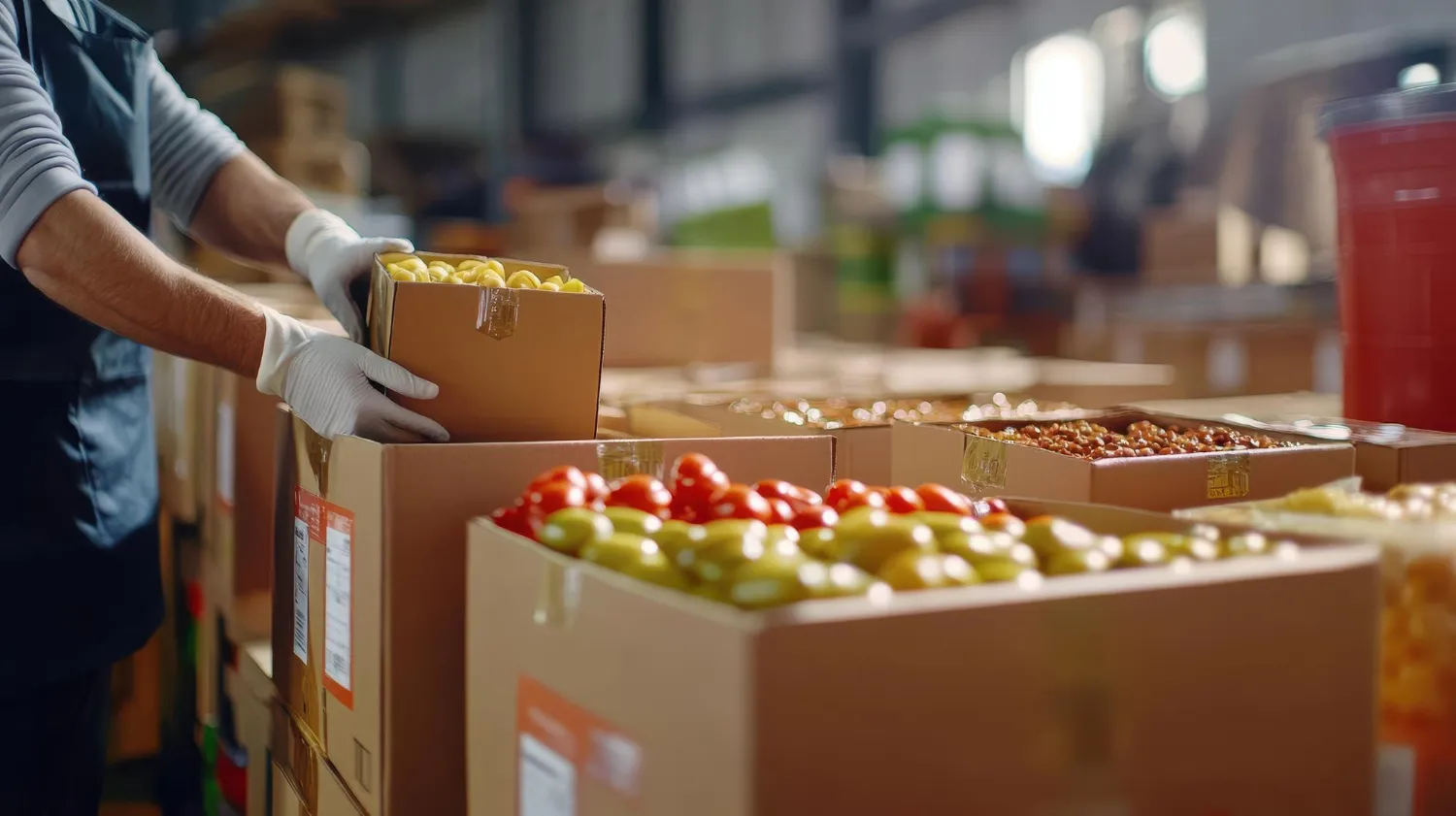
7nrHGt2KHuy

UAE Export News & Al Aweer Market Updates: Working with a 3 Percent Commission Distributor UAE

UAE food trade is entering a period of stronger international participation, faster price movement, and higher demand for dependable distribution. National non-oil exports reached a record AED 452.8 billion in the first half of 2026, increasing 23.9% year on year, while total non-oil foreign trade reached AED 1.937 trillion. These results reinforce the UAE’s position as a major import, re-export, and distribution hub.

For exporters, the opportunity is clear. However, market access depends on compliant documentation, dependable logistics, verified buyers, and disciplined quality control. For supermarkets, restaurants, retailers, and wholesale distributors, consistent supply and accurate market intelligence remain essential.

This daily briefing reviews the latest UAE export news, Al Aweer market updates, regulatory requirements, and the role of a 3 percent commission distributor UAE model.

UAE Export News: Trade Growth Supports Food Distribution

The UAE’s non-oil foreign trade performance is strengthening the operating environment for international food exporters and local suppliers.

According to the Dubai Government Media Office:

  • Non-oil foreign trade reached AED 1.937 trillion in H1 2026.
  • Non-oil exports increased 23.9% to AED 452.8 billion.
  • Exports represented 23.4% of total non-oil foreign trade.
  • Trade with international partners continued to expand through logistics, re-export, and Comprehensive Economic Partnership Agreement channels.

This growth supports demand for fresh produce, premium food products, rice, spices, eggs, and other wholesale categories. Exporters can use Dubai as a commercial entry point to reach supermarkets, restaurants, retailers, and regional distributors.

Recent Export Developments

Several company and origin-level developments are relevant to UAE food trade:

  1. Wahdat Poultry is expanding enriched egg exports to the UAE. The company is reported to be shipping seven containers during September, demonstrating continued demand for differentiated egg products and reliable containerized supply.

  2. Armenian producers are beginning fresh fruit and vegetable exports to the UAE. Reported volumes may reach up to 40 tonnes per week, creating a new supply corridor for fresh produce buyers.

  3. UAE-based Elite Agro and Life Global Foods are supplying Bahrain. Their distribution activity covers more than 31 varieties of fresh produce, showing how UAE-based companies can support onward Gulf supply.

These developments reflect the importance of origin diversification, professional handling, and reliable wholesale distribution. Exporters entering the UAE market must compete on more than price. Product condition, documentation, delivery timing, and buyer confidence directly affect commercial performance.

Refrigerated containers and organized produce pallets supporting UAE food distribution

Al Aweer Market Updates: Wholesale Price Trends on 13 September 2026

The latest Al Aweer market snapshot dated 13 September 2026 shows significant movement across selected fruit and vegetable categories. Actual transaction prices vary according to origin, grade, pack size, quality, transport mode, and availability.

Notable Market Risers

Commodity Origin Movement Indicative price
Ginger India +109.2% AED 6.57/kg
Sweet melon Jordan +92.3% AED 4.00/kg
Rock melon long Iran +66.4% AED 2.08/kg
Green lime Vietnam +57.1% AED 4.40/kg
Pomegranate Yemen +50.0% AED 3.75/kg

The ginger movement is particularly significant for exporters and foodservice buyers. Large changes in supply availability can quickly affect wholesale pricing. Importers holding confirmed inventory should provide accurate specifications, photographs, certificates, and loading schedules before requesting buyer approval.

Melons, limes, and pomegranates are also showing stronger price levels. Buyers should compare origins and grades rather than relying on a single market quote.

Notable Market Fallers

Commodity Origin Movement Indicative price
Red chili pepper Iran -27.1% AED 2.29/kg
Green chili pepper Iran -25.3% AED 1.71/kg
Red apple Iran -20.8% AED 3.80/kg
Fresh turmeric root India -20.0% AED 9.14/kg

Falling prices may create purchasing opportunities for restaurants, retailers, and distributors with flexible procurement schedules. Quality inspection remains essential because a lower price may reflect differences in grade, size, shelf life, pack format, or arrival condition.

Additional Al Aweer Reference Prices

Product Origin or specification Indicative price
Banana Ecuador AED 6.15–6.77/kg
Garlic China, normal AED 4.11/kg
Onion, new crop India AED 3.65/kg
White onion Iran AED 1.22/kg
Watermelon Egypt AED 1.75/kg
White potato Pakistan AED 1.43/kg
Zucchini UAE AED 1.75/kg

These figures should be used as indicative wholesale references, not guaranteed selling prices. The Al Aweer market report and individual market listings should be reviewed alongside direct inspection and supplier confirmation.

What Exporters Should Confirm Before Shipping

Exporters should structure every offer around clear commercial and operational information:

  1. Product name, variety, origin, grade, and size.
  2. Available quantity and container type.
  3. Packing format and net weight.
  4. Production, harvest, or packing date.
  5. Remaining shelf life.
  6. Photographs and inspection records.
  7. Health, phytosanitary, halal, or laboratory certificates where applicable.
  8. Loading date, port, freight mode, and estimated arrival.
  9. Target price and payment terms.
  10. UAE importer or receiving-party details.

Delivering this information in advance reduces delays and enables the buyer to assess the shipment against current Al Aweer demand.

UAE Food Import and Export Compliance

Food exporters and UAE buyers must maintain regulatory compliance before cargo arrives. Requirements may vary according to product category, emirate, shipment purpose, and customs classification.

Core Registration Requirements

A UAE food importer generally requires:

  • A valid UAE trade license with a food-related activity.
  • Registration in the federal ZAD food product system where applicable.
  • Registration and product approval through Dubai Municipality’s FIRS system for food entering through Dubai.
  • A Dubai Customs import code where required.
  • Product and packaging information for each relevant SKU and pack size.

Dubai Municipality provides services for registering and assessing food items, releasing imported food consignments, and approving food imports for re-export.

Required Shipment Documentation

Exporters should prepare the following documents according to the product category:

  • Commercial invoice.
  • Packing list.
  • Certificate of origin.
  • Health certificate.
  • Phytosanitary certificate for applicable fresh produce.
  • Halal certification for meat and poultry.
  • Bill of lading or air waybill.
  • Product registration and import approval records.

Packaged food should carry Arabic labelling. Arabic-English bilingual labelling is the standard commercial approach for UAE buyers. Labels should clearly identify the product, ingredients, country of origin, net weight, dates, importer details, storage requirements, batch information, allergens, and barcode where applicable.

Many packaged products must arrive with at least 50% of their stated shelf life remaining. Exporters should confirm this requirement before loading. Certain categories, including some rice, spices, dry goods, and fresh untreated produce, may follow different date rules.

A 5% GCC customs duty applies to many processed food imports, although the final tariff depends on the HS code, product classification, exemptions, and applicable trade arrangements. Buyers should confirm the current tariff with customs brokers or UAE Customs.

Where Nutri-Mark or buyer-specific nutrition grading applies, suppliers should prepare compliant nutrition information and obtain approval before dispatch. Regulatory requirements should be confirmed for each product category rather than assumed across all food items.

Mayil Global: A Wholesale Supplier and Distribution Partner

Mayil Global supplies fresh fruits, vegetables, premium spices, rice, and farm-fresh eggs to supermarkets, restaurants, retailers, and wholesale distributors across the UAE.

The company’s operating model is based on:

  • Farm-direct sourcing from trusted farms and global suppliers.
  • Quality control and inspection at every stage.
  • Hygienic handling and secure packaging.
  • Organized storage and distribution logistics.
  • A global supply network across multiple countries.
  • Dependable supply for recurring B2B requirements.

Read more about Mayil Global sourcing and logistics, or review the company’s wholesale food products.

The 3 Percent Commission Distributor UAE Model

The 3 percent commission distributor UAE model provides exporters with a practical route into the local wholesale market without immediately establishing a full UAE sales and distribution operation.

The process includes:

  1. Reviewing the exporter’s product and supply capacity.
  2. Confirming UAE buyer demand and specifications.
  3. Checking documentation and regulatory readiness.
  4. Coordinating inspection, logistics, and delivery requirements.
  5. Supporting distribution to supermarkets, restaurants, retailers, and wholesale buyers.
  6. Building a dependable, long-term supply relationship.

A transparent commission structure allows exporters to access local distribution support while maintaining control over their supply and commercial strategy.

Immediate Cash-and-Carry Container Purchases

For approved products and suitable commercial terms, Mayil Global also evaluates immediate cash-and-carry container purchases. This route is relevant to exporters seeking faster liquidity for available inventory and to UAE buyers requiring confirmed containerized supply.

Exporters seeking a verified buyer for exporters UAE should provide:

  • Product and origin details.
  • Available container quantity.
  • Packing specifications.
  • Inspection photographs and certificates.
  • Loading location and date.
  • Target price.
  • Payment and delivery terms.

Mayil Global then assesses the opportunity against market demand, quality requirements, logistics, and current Al Aweer price conditions.

Quality control inspection of fresh produce cartons in a hygienic UAE distribution warehouse

Market Outlook for UAE Buyers and Exporters

The current UAE export news and Al Aweer market updates show a market with strong trade momentum and active price differentiation.

Exporters should focus on compliant documentation, reliable supply schedules, suitable packaging, and a verified UAE receiving party. Local buyers should compare origin, grade, quality, and total delivered cost before confirming purchase orders.

Mayil Global combines wholesale distribution, farm-direct sourcing, strict quality control, hygienic handling, and organized logistics. For exporters, the company offers a practical 3 percent commission distributor UAE model and the potential for immediate cash-and-carry container purchases. For UAE B2B buyers, it provides access to dependable supply across fresh produce and premium food categories.

For current supply discussions, visit the Mayil Global contact page.

Market prices are indicative wholesale references for 13 September 2026. Actual prices vary according to origin, grade, quality, pack size, quantity, logistics, inspection results, timing, and negotiation. Regulatory requirements should be confirmed with the relevant UAE authority or customs broker before shipment.

Frame-1-1-6-1100x619-1-1100x619

Exporting Indrayani Rice, Cowpeas, and Spelt to Dubai Through Mayil Global’s 3% Commission Model

Rice, Pulses, and Grains Export Series: 16 September 2026

Dubai is a strategic food distribution market connecting international exporters with supermarkets, restaurants, retailers, caterers, and wholesale distributors across the UAE and wider GCC. Buyers require consistent specifications, dependable availability, accurate documentation, and controlled logistics.

This installment focuses on Indrayani Rice, Cowpeas, and Spelt. These products can enter the Dubai market through Mayil Global’s transparent 3% commission-based distribution model or, for qualifying shipments, through an Immediate Cash & Carry container purchase.

Mayil Global connects exporters with UAE B2B demand while supplying local businesses through farm-direct sourcing, a global supply network, strict quality control, hygienic handling, proper storage, and organized logistics.

Dubai Demand for Rice, Pulses, and Specialty Grains

Dubai’s wholesale food market serves diverse consumer and commercial channels. Each channel requires dependable supply, stable quality, and packaging suited to its operating model.

Indrayani Rice is a premium short-grain aromatic rice from Maharashtra, India. Its aroma, texture, and cooking characteristics support restaurants, regional foodservice operators, ethnic retailers, supermarkets, and specialty rice distributors.

Cowpeas, also known as black-eyed peas or lobia, are a staple pulse used across retail, foodservice, catering, and wholesale channels. Buyers require clean, uniform, food-grade cowpeas with controlled moisture and reliable availability.

Spelt is an ancient wheat grain serving health-food retailers, specialty grocery businesses, bakeries, food manufacturers, and restaurants. Its nutty profile and whole-grain positioning support premium and specialty food channels. Spelt contains gluten, and any gluten-related claim must be supported by appropriate certification.

Dubai wholesale buyers assess:

  • Product origin, grade, and crop information
  • Moisture, purity, foreign matter, and infestation control
  • Grain size, colour, aroma, and cooking performance
  • Food-grade packaging and available pack sizes
  • Laboratory testing and quality certificates
  • Shelf life and storage requirements
  • Container availability and delivery schedules
  • Arabic and English labelling compliance
  • Transparent pricing and settlement terms
  • Capacity for repeat orders and consistent replenishment

Businesses comparing bulk rice suppliers Dubai should assess the complete supply chain rather than the product price alone. Mayil Global coordinates sourcing, inspection, storage, distribution, and buyer communication through one B2B supply channel.

Product Specifications for Dubai Wholesale Buyers

Specifications must be confirmed in writing before quotation, contracting, and shipment. The following parameters represent typical commercial targets and must be adjusted according to the buyer’s required grade, origin, packaging, and destination terms.

Indrayani Rice

Indrayani is an aromatic short-grain rice variety associated with Maharashtra, India. It is supplied to restaurants, ethnic retailers, supermarkets, caterers, and wholesale distributors that require a distinctive regional rice profile.

Typical wholesale parameters include:

  • Variety: Indrayani Rice
  • Origin: Maharashtra, India
  • Grade: Export-grade, machine-cleaned and sortex-cleaned
  • Moisture: 12–13% maximum
  • Broken grains: 1–2% maximum, subject to the agreed grade
  • Purity: 95% minimum
  • Processing: Raw or steam processing according to buyer requirement
  • Appearance: Uniform short grains with controlled discolouration and foreign matter
  • Quality evidence: Moisture analysis, purity report, broken-grain analysis, and certificate of analysis
  • Packaging: 25 kg or 50 kg food-grade PP or jute bags; retail packs can be arranged

Pre-shipment samples should confirm aroma, grain appearance, cooking performance, and processing format. Clear specifications reduce receiving disputes and support consistent repeat supply.

Rice and food products prepared for wholesale specification review

Cowpeas

Cowpeas, black-eyed peas, and lobia are whole dried pulses supplied to supermarkets, restaurants, caterers, retailers, food manufacturers, and wholesale distributors.

Typical wholesale parameters include:

  • Product: Whole dried cowpeas, black-eyed peas, or lobia
  • Grade: Food-grade, machine-cleaned export quality
  • Moisture: 12–14% maximum
  • Purity: 98% minimum
  • Colour: Uniform colour within the approved lot
  • Foreign matter: Controlled according to the agreed specification
  • Insect condition: No live infestation and no unacceptable pest damage
  • Size: Calibrated according to buyer requirement
  • Testing: Laboratory testing for aflatoxin, pesticide residues, moisture, and other contaminants where required
  • Packaging: 25 kg or 50 kg food-grade bags

Cowpeas require protection from moisture, pests, contamination, and excessive heat during storage and transportation. Hygienic handling, secure packaging, proper storage, and stock rotation help preserve product quality in the UAE climate.

Spelt

Spelt is supplied as a whole ancient wheat grain for health-food stores, specialty retailers, bakeries, restaurants, food manufacturers, and premium wholesale channels.

Typical commercial parameters include:

  • Product: Whole spelt grain
  • Grade: Food-grade and suitable for human consumption
  • Moisture: Typically 12–13% maximum, subject to contract
  • Purity: Typically 98–99% minimum for premium export lots
  • Foreign matter: Controlled according to the buyer’s specification
  • Processing: Cleaned, graded, and sorted
  • Grain condition: Uniform whole grains with controlled damage and discolouration
  • Testing: Certificate of analysis, microbiological testing, pesticide-residue reports, and contaminant testing where applicable
  • Packaging: 25 kg or 50 kg wholesale bags; retail packs and private-label formats can be arranged

Spelt is a wheat product and naturally contains gluten. Claims such as “gluten-free,” “low-gluten,” or suitability for specific dietary requirements must not be used without valid certification and regulatory support.

Mayil Global’s 3% Commission Distribution Model

Mayil Global operates as a UAE market-access and distribution partner for approved food products. Under the model, Mayil Global distributes products through supermarkets, restaurants, retailers, and wholesale distributors for an agreed 3% commission on the applicable realized sale value.

For exporters seeking a 3 percent commission distributor UAE, the process provides structured market access without requiring immediate investment in a local sales office, independent distribution team, or separate buyer network.

The process includes:

  1. Submitting exporter and product details
    Provide company information, product specifications, origin, available quantity, packaging, pricing basis, certificates, and shipment timing.

  2. Reviewing commercial and buyer requirements
    Mayil Global evaluates product suitability, market demand, documentation, packaging, and potential UAE sales channels.

  3. Approving samples and specifications
    Samples, laboratory reports, moisture limits, purity, packaging, and labelling are reviewed before shipment confirmation.

  4. Confirming the commercial agreement
    The agreement identifies the 3% commission basis, Incoterms, logistics responsibilities, inspection requirements, storage, settlement, and other approved costs.

  5. Managing distribution and settlement
    Mayil Global coordinates UAE buyer engagement, receiving, storage, wholesale distribution, reporting, and settlement according to the agreed terms.

Illustrative USD 60,000 Calculation

Assume the shipment achieves a realized sale value of USD 60,000.

  1. Realized sale value: USD 60,000
  2. Mayil Global commission at 3%: USD 1,800
  3. Balance before separately agreed costs and adjustments: USD 58,200

Customs duties, port charges, inspection, transport, storage, taxes, and other statutory or operational expenses should be identified separately in the commercial agreement.

The model provides exporters with:

  • A predictable distribution cost
  • Access to UAE B2B buyers
  • Local market coordination
  • Transparent settlement logic
  • Lower market-entry infrastructure requirements
  • Support for repeat orders
  • A verified buyer for exporters UAE market-access route
  • Confirmation that Mayil Global is the verified buyer of that particular product under the agreed commercial terms

The 3% commission model remains a central Mayil Global USP for international and local exporters.

Immediate Cash & Carry Container Purchases

Exporters requiring faster liquidity can discuss Mayil Global’s Immediate Cash & Carry container purchase option. Under this model, Mayil Global may purchase qualifying containerized shipments directly, subject to product approval, market demand, inspection, documentation, and agreed settlement terms.

The process generally includes:

  1. Submit product, origin, grade, packaging, and quantity details.
  2. Provide samples, certificates, product photographs, and loading information.
  3. Confirm UAE regulatory eligibility and receiving requirements.
  4. Agree on price, inspection, delivery, and settlement responsibilities.
  5. Complete the purchase and receiving process under written terms.
3% Commission Distribution Immediate Cash & Carry
Mayil Global distributes the shipment in the UAE Mayil Global may purchase the qualifying container
Exporter retains exposure to the realized market value Exporter receives an agreed purchase value
Commission is 3% of the applicable sale value Price and settlement are agreed before completion
Suitable for market access and repeat distribution Suitable for faster liquidity and working-capital recovery

Both models require approved quality, compliant documentation, suitable packaging, and proper logistics planning.

Quality Control from Origin to Dubai

Food safety, hygiene, and quality control are non-negotiable. Mayil Global applies a structured seven-step sourcing and logistics process.

  1. Farm and supplier sourcing
    Mayil Global works with trusted farms, mills, processors, and international suppliers through a global supply network across multiple countries.

  2. Supplier capability review
    Origin, processing standards, available volume, export readiness, documentation, and product history are assessed before commercial confirmation.

  3. Product specification approval
    Variety, grade, moisture, purity, packaging, shelf life, and destination requirements are documented and approved.

  4. Pre-shipment inspection
    Inspection covers product identity, grain condition, foreign matter, infestation, bag condition, net weight, batch numbers, and lot information.

  5. Laboratory and compliance testing
    Testing may include moisture, purity, aflatoxin, pesticide residues, microbiological parameters, and other product-specific controls.

  6. Hygienic loading and organized logistics
    Clean containers, secure loading, food-grade packaging, correct sealing, and accurate shipping documentation protect product integrity.

  7. Controlled receiving, storage, and distribution
    Products are received, stored, handled, and distributed through organized logistics designed to support timely delivery and stock quality.

Mayil Global’s sourcing and logistics system integrates supplier selection, inspection, hygienic handling, proper storage, transportation, and UAE distribution.

Food quality inspection and controlled handling before UAE distribution

Export Documentation and How to Export Food to Dubai

Understanding how to export food to Dubai requires coordination between the exporter, UAE importer, customs broker, shipping agent, and relevant authorities. Common documents may include:

  • Commercial invoice
  • Export packing list
  • Certificate of origin
  • Bill of lading
  • Certificate of analysis
  • Phytosanitary certificate where applicable
  • Health, conformity, or inspection certificate where required
  • Fumigation certificate where applicable
  • Pesticide-residue and contaminant reports
  • Importer and product registration documents
  • Insurance certificate where applicable
  • Export registrations and licences required by the country of origin

Indian exporters should review APEDA’s official requirements for rice exports, APEDA cereals resources, and current DGFT notifications before shipment. Requirements can vary by product, origin, destination, and trade-policy conditions.

For Dubai imports, the UAE importer should verify product registration, food-release procedures, and current label requirements with the Dubai Municipality Food Safety Department.

Prepacked products should generally display:

  • Product name and description
  • Country of origin
  • Net weight
  • Production or packing date
  • Best-before or expiry date
  • Batch or lot number
  • Storage instructions
  • Manufacturer, packer, and importer details
  • Arabic and English product information where required
  • Nutritional information and supported claims where applicable

All claims relating to organic status, gluten, health benefits, or special dietary suitability must be supported by valid certification and accepted by the relevant authorities.

Benefits for Dubai Wholesale Buyers

Mayil Global supplies products to multiple B2B channels, including:

  • Supermarkets
  • Restaurants
  • Hotels and caterers
  • Ethnic retailers
  • Health-food stores
  • Specialty bakeries
  • Food manufacturers
  • Wholesale distributors
  • Re-export and regional trading businesses

Dubai buyers benefit from:

  • Farm-direct sourcing and trusted global suppliers
  • A global supply network across multiple countries
  • Consistent product specifications
  • Inspection at every stage
  • Hygienic handling and secure packaging
  • Proper storage and stock management
  • Organized logistics and timely distribution
  • Bulk, container, and retail-pack options
  • Support for recurring procurement requirements
  • One coordinated B2B supply relationship

A wholesale food buyer Dubai businesses can depend on must provide more than product availability. It must provide dependable supply, consistent quality, documented quality control, accurate communication, and efficient delivery coordination.

Global sourcing network supporting wholesale food distribution

Contact Mayil Global

International exporters of Indrayani Rice, Cowpeas, and Spelt can contact Mayil Global to discuss specifications, samples, container volumes, documentation, pricing, and the preferred commercial model.

Dubai supermarkets, restaurants, retailers, and distributors can submit their wholesale requirements for dependable supply.

Conclusion

Exporting Indrayani Rice, Cowpeas, and Spelt to Dubai requires accurate specifications, verified sourcing, strict quality control, hygienic handling, proper storage, complete documentation, and organized logistics.

Mayil Global’s transparent 3% commission model gives international and local exporters a structured route to UAE B2B buyers. The Immediate Cash & Carry option provides an alternative for qualifying exporters seeking direct container purchases and faster liquidity.

For supermarkets, restaurants, retailers, and wholesale distributors, Mayil Global operates as a reliable wholesale supply partner. By combining farm-direct sourcing, a global supply network, inspection at every stage, and efficient distribution, Mayil Global supports dependable supply, consistent quality, and long-term commercial relationships across the UAE.

The Rice, Pulses, and Grains Export Series continues daily with further product opportunities for the Dubai market.

Frame-1-1

Verified Buyer & Exporter Authority Series: September 30 Al Aweer Market Briefing : Garlic Normalization, Banana–Coconut Spread, Avocado Origin Divergence, and How to Export Food to Dubai

Market date: 15 September 2026
Briefing focus: Garlic, bananas, coconut, avocados, onions, export readiness, and Dubai wholesale distribution.

Executive Market Position

The latest Al Aweer wholesale dataset dated 15 September 2026 covers 160 listings across 22 origins, normalized to AED per kilogram. The dataset indicates firm pricing across garlic, bananas, shallots, ginger, carrots, and selected gourds, while corrections are visible in lime, zucchini, pomegranate, snake gourd, pears, and Kenya Hass avocado.

Review the Al Aweer 15 September 2026 market report, the daily movers page, and the Al Aweer price list and buying board for ongoing Al Aweer market updates.

The leading signals are:

  1. Garlic normal from China has normalized at AED 5.71/kg, following a 38.9% move from AED 4.11/kg.
  2. India G9 bananas are firm, with green fruit at AED 3.85/kg and yellow fruit at AED 4.23/kg.
  3. Coconut is trading below the banana reference, at AED 3.69/kg after a 4.2% correction.
  4. Avocado pricing is origin-sensitive, with Kenya Hass weakening while Uganda Fruete advances.
  5. Onion origins are separating, requiring structured procurement rather than a single benchmark.

Fresh produce sourcing and logistics operations for UAE wholesale buyers

Gainers: Firm Lines Requiring Active Procurement

Product and origin Logistics and pack AED/kg Move
Garlic normal, China Sea, 2.8 kg carton 5.71 +38.9%
G9 Cavendish banana green, India Sea, 13 kg carton 3.85 +31.8%
Shallots, India Air, 3 kg mesh bag 8.00 +26.4%
Garlic, India Sea, 3.3 kg mesh bag 7.27 +26.2%
G9 Cavendish banana yellow, India Sea, 13 kg carton 4.23 +22.3%
Bitter gourd, UAE local 10 kg carton 5.50 +22.2%
Ginger, China Sea, 2.8 kg carton 8.21 +15.0%
Carrot, China Sea, 4 kg carton 3.00 +14.1%
Bitter gourd, Pakistan Air, 4 kg carton 8.75 +6.1%

Drops: Corrections and Value Opportunities

Product and origin Logistics and pack AED/kg Move
Lime, Egypt Road, 5 kg crate 3.20 −20.0%
Zucchini, UAE local 20 kg carton 1.50 −14.3%
Pomegranate, Yemen Market reference 3.25 −13.3%
Snake gourd, Oman Market reference 2.14 −11.9%
Pears Rosemary, South Africa Market reference 4.00 −11.1%
Dry semi-husked coconut, India 25 nuts 3.69 −4.2%
Hass avocado, Kenya Market reference 11.75 −4.1%

Commodity Deep Dives

Garlic Normalization

China garlic normal is now the leading normalized garlic reference in this dataset. The line moved from AED 4.11/kg to AED 5.71/kg, a 38.9% increase. India garlic is higher at AED 7.27/kg, confirming a meaningful origin premium.

For supermarkets and restaurants, the buying decision should include grade, carton weight, firmness, moisture condition, arrival date, and expected shelf life. For exporters, the current spread demonstrates why a Dubai buyer must validate the exact product specification before quoting.

Mayil Global operates as a verified buyer of that particular product when the grade, origin, packaging, documentation, and shipment timing are confirmed. This reduces the risk of presenting a generic garlic offer against a specific market requirement.

Banana–Coconut Spread

G9 Cavendish green banana from India is priced at AED 3.85/kg, while yellow G9 is at AED 4.23/kg. Dry semi-husked coconut from India is at AED 3.69/kg after a 4.2% correction.

The current entry-line spread between green banana and coconut is only AED 0.16/kg. This does not make the commodities interchangeable. Their handling requirements, packaging, demand cycles, and shelf-life risks remain different. However, the comparison is useful for mixed-container planning and procurement budgeting.

Exporters should specify:

  • Product maturity and intended point of sale.
  • Carton or bag weight and count.
  • Sea or air freight requirements.
  • Inspection standard before dispatch.
  • Required delivery window in Dubai.
  • Buyer channel, including supermarket, restaurant, or wholesale distribution.

Avocado Origin Divergence

The avocado market is separating by origin and variety:

  • Hass avocado, Kenya: AED 11.75/kg, down 4.1%.
  • Fruete avocado, Uganda: AED 5.50/kg, up 10.0%.
  • Fruete avocado, Kenya: AED 5.00/kg, holding steady.

This divergence indicates that avocado procurement cannot rely on a single “market price.” Variety, origin, airfreight exposure, fruit size, maturity, and buyer segment materially influence the executable value.

Premium retail buyers may require Hass specifications, while restaurants and value-focused wholesalers may accept Fruete avocado if the quality and ripening profile meet their operational needs. A verified buyer for exporters UAE must therefore match the offer to a documented demand profile rather than circulate a broad commodity quote.

Onion Import Playbook

The onion complex remains divided by origin:

  • India new crop, 18 kg: AED 3.80/kg, up 4.1%.
  • Egypt, 20 kg PPE: AED 2.20/kg, up 2.3%.
  • Yemen mesh bag: AED 2.50/kg, up 8.7%.
  • Turkey red onion: AED 2.55/kg, up 2.0%.
  • Sudan pink onion: AED 3.10/kg, down 6.1%.

Buyers should separate standard yellow onion, red onion, pink onion, crop age, bag format, and destination channel. Exporters should submit a complete offer containing origin, crop, pack size, available volume, inspection terms, and loading date.

Iran-origin listings are market intelligence only and are NON-EXECUTABLE under the UAE trade suspension effective 19 August 2026. No commercial commitment, quotation, purchase order, or shipment should be based on those listings unless applicable regulations are formally changed and confirmed by competent authorities.

Mayil Global’s 3% Commission Distribution Model

Mayil Global supports international and local exporters through a transparent 3 percent commission distributor UAE model. The model is designed for exporters seeking market access without the higher and less transparent commission structures commonly associated with distribution.

The service focuses on:

  1. Market placement with UAE B2B buyers.
  2. Sales facilitation and buyer communication.
  3. Product and documentation review.
  4. Quality control and inspection coordination.
  5. Organized logistics from arrival to delivery.
  6. Reporting on sales, quantities, and market conditions.

Read the full 3% commission distribution model.

Immediate Cash-and-Carry Container Purchases

Exporters requiring immediate liquidity can discuss cash-and-carry container purchases with Mayil Global. Under this structure, an approved UAE buyer purchases an available container or defined shipment volume immediately, subject to:

  • Product approval and specification confirmation.
  • Commercial invoice and packing-list review.
  • UAE food safety and customs compliance.
  • Physical or pre-shipment inspection where required.
  • Agreed payment, delivery, and title-transfer terms.
  • Proper storage and handling after arrival.

This approach is relevant for garlic, onions, rice, spices, bananas, coconuts, and other products with clear wholesale demand. Availability depends on product condition, documentation, volume, and buyer acceptance.

How to Export Food to Dubai: Operational Checklist

Businesses researching how to export food to Dubai should complete the following steps:

  1. Define the product: Confirm variety, grade, origin, pack size, net weight, and shelf-life requirement.
  2. Validate compliance: Prepare commercial documents, certificates of origin, health or phytosanitary certificates, and any product-specific approvals.
  3. Confirm packaging: Use hygienic, secure packaging suitable for sea, road, or air logistics.
  4. Select the route: Match the shipping method to perishability, arrival window, and cost.
  5. Confirm the buyer: Work with a verified buyer of that particular product before dispatch.
  6. Inspect the shipment: Check quality, quantity, labeling, damage, temperature, and maturity.
  7. Plan clearance and delivery: Coordinate customs, transport, storage, and final B2B delivery.
  8. Document settlement: Confirm payment terms and commission arrangements in writing.

Mayil Global’s sourcing and logistics system supports farm-direct sourcing, strict quality control, hygienic handling, organized logistics, timely delivery, multi-country supply, and proper storage from farm to market.

Verified Buyer for Exporters UAE

A reliable verified buyer for exporters UAE should provide more than a general expression of interest. The buyer should confirm the exact product, volume, origin, packaging, delivery point, and purchase terms.

Mayil Global supplies supermarkets, restaurants, retailers, and wholesale distributors across the UAE. Its product range includes fresh fruits and vegetables, premium spices, rice, and farm-fresh eggs.

For local UAE B2B buyers, this provides a structured wholesale supply channel with quality inspection at every stage. For international exporters, the same network provides market access through a controlled distribution process and a transparent 3% commission.

UAE Export News and Trade Context

The latest official UAE export news confirms the strength of the wider trade environment. According to the Dubai Government Media Office, UAE non-oil foreign trade reached AED 1.937 trillion in the first half of 2026, representing 13.1% annual growth. Non-oil exports reached a record AED 452.8 billion, up 23.9% year on year.

For food exporters, this reinforces the importance of dependable sourcing, compliant logistics, and regional distribution capability. Dubai remains a commercially significant gateway for imported food products and re-export activity. Market participants should still distinguish official trade statistics from daily wholesale prices, which vary by quality, volume, negotiation, and delivery conditions.

Action Checklists

For exporters

  • Submit a complete product specification.
  • Confirm available volume and loading date.
  • Provide origin and compliance documents.
  • Request a buyer assessment for the exact product.
  • Compare the 3% commission model with existing distribution costs.
  • Ask about immediate cash-and-carry container purchase options.

For UAE buyers

  • State weekly or monthly requirements.
  • Define acceptable origins and pack sizes.
  • Confirm quality and delivery standards.
  • Request current wholesale availability.
  • Use structured procurement for volatile garlic, onion, banana, and avocado lines.

Sources and Disclaimer

Primary market sources: Al Aweer 15 September report, Al Aweer movers, and Al Aweer price list.

Company sources: Mayil Global products, sourcing and logistics, 3% commission model, and contact Mayil Global.

Prices are indicative wholesale references based on the 15 September 2026 dataset. Actual transactions depend on quality, quantity, origin, packaging, logistics, inspection, market conditions, and negotiation. Iran-origin listings referenced in market intelligence remain non-executable under the UAE trade suspension effective 19 August 2026. For product availability, buyer verification, distribution terms, or export planning, contact Mayil Global.

au7PWtyukll-1100x619

How to Export Food to Dubai: Wholesale Fruits & Vegetables, Importing Onions, and the Verified Buyer Advantage

Dubai is a strategic entry point for food exporters supplying the UAE and wider Gulf region. The market serves supermarkets, restaurants, retailers, HORECA operators and wholesale distributors that require dependable access to fresh produce and food products.

For international suppliers, success depends on more than product availability. Exporters must align sourcing, documentation, quality control, shipping, buyer verification and payment terms before dispatching a container.

Mayil Global supports this process through two practical commercial models: a transparent 3% commission distribution model and an immediate Cash & Carry container purchase option. Both models help exporters access UAE buyers while reducing distribution friction and improving commercial visibility.

Understanding the Wholesale Fruits and Vegetables Dubai Market

The Al Aweer Central Fruit and Vegetable Market is one of Dubai’s most important distribution points for imported produce. Products entering through Jebel Ali and other UAE gateways can move into the market for onward distribution to supermarkets, restaurants, retailers and wholesale buyers.

Al Aweer pricing changes according to:

  1. Product origin and crop cycle
  2. Grade, size and appearance
  3. Packaging and net weight
  4. Daily arrivals and available volume
  5. Freight, port and clearance costs
  6. Seasonal demand from retail and HORECA buyers
  7. Condition and shelf life on arrival

Exporters should never rely on a general commodity price. A quotation must relate to the exact specification being shipped.

Indicative Al Aweer Onion Benchmarks

The following figures were published as planning references for August 19, 2026. They are not fixed quotations and must be checked again before negotiation or shipment.

Onion origin or type Indicative reference
Indian new-crop onions Approximately AED 2.00/kg
Iranian brown onions Approximately AED 1.67/kg
Egyptian onions Approximately AED 1.30/kg
Yemeni onions Approximately AED 1.60/kg
Red Shirazi onions Approximately AED 1.05/kg

Exporters should compare current information through the Al Aweer price reference platform and confirm the expected selling range with a verified UAE buyer.

The relevant commercial calculation is the expected market price minus the full landed cost. This includes farm pricing, sorting, packaging, inland transport, export documentation, freight, insurance, port charges, customs clearance, storage, distribution fees and potential quality deductions.

Importing Onions Dubai: Begin With a Complete Specification

Successful importing onions Dubai operations begin with a written product specification. “Indian onions” or “red onions” is not sufficient for a commercial shipment.

Before sending a quotation, confirm:

  • Country and region of origin
  • Variety and crop season
  • Bulb size and grade
  • Acceptable defect percentage
  • Harvest and packing dates
  • Net weight per bag or carton
  • Packaging material and ventilation
  • Expected arrival date
  • Shelf-life expectations
  • Storage and handling requirements
  • Inspection and quality-claim procedures

Onions require dry handling, suitable ventilation and careful loading. Excess moisture, poor airflow, damaged bulbs and unsuitable packaging can increase rot, sprouting and weight loss during transit.

Mayil Global’s sourcing and logistics process is based on supplier selection, inspection, hygienic handling, suitable packaging, proper storage and organized distribution.

International food logistics and wholesale produce distribution through a UAE supply chain

How to Export Food to Dubai: A Practical Process

The process of how to export food to Dubai varies by product category, origin and packaging format. Fresh fruits and vegetables require particular attention because they are perishable and may be subject to plant-health controls.

1. Select the Product and Target Channel

Define whether the shipment is intended for:

  • Supermarkets
  • Restaurants and catering companies
  • Retailers
  • Wholesale distributors
  • Al Aweer market traders
  • UAE re-export channels

Each channel may require a different pack size, grade, delivery schedule and payment structure.

2. Verify the UAE Buyer

Do not ship a perishable container based only on an informal inquiry. The exporter and buyer should confirm:

  1. Legal company name and trade license
  2. Food-trading activity and import authorization
  3. Delivery location and receiving facility
  4. Required quantity and shipment frequency
  5. Payment terms and settlement timing
  6. Responsibility for customs, storage and distribution
  7. Quality acceptance standards and deduction rules

Mayil Global can operate as a verified buyer for exporters UAE and as a local distribution partner for international suppliers seeking structured access to the market.

3. Calculate the Landed Cost

The landed-cost worksheet should include:

  • Product purchase price
  • Grading and sorting
  • Export packing
  • Inland movement to port
  • Certificate and documentation costs
  • Freight and insurance
  • Port and terminal charges
  • Customs clearance
  • UAE transport and storage
  • Quality inspection
  • Distribution commission
  • Expected shrinkage or wastage

A shipment is commercially viable only when the projected net return supports the complete cost structure.

4. Prepare the Documentation

The importer, exporter and customs broker should coordinate documents before loading. A typical fresh-produce shipment may require:

  • Commercial invoice
  • Packing list
  • Certificate of origin
  • Bill of lading
  • Phytosanitary certificate
  • Health or food-safety certificate, where applicable
  • Product registration or import documentation, where applicable
  • Correct HS code
  • Container and seal details
  • Pesticide residue analysis or certificate of analysis, where required

Dubai Municipality processes food imports through the Food Import and Re-export System. Plant-origin products may also require federal plant-health procedures and permits. Requirements can change by product, origin and packaging format, so exporters should confirm the current requirements with the licensed UAE importer and relevant authorities. The Dubai food import requirements document provides a useful regulatory reference.

5. Control Loading and Arrival Inspection

Before loading, inspect product condition, size consistency, dryness, packaging integrity and visible contamination. The container should be clean, dry, suitable for food cargo and free from foreign odours.

At arrival, the receiving party should document:

  • Quantity and package count
  • Product condition
  • Visible damage
  • Moisture or deterioration
  • Weight shortages
  • Temperature where relevant
  • Inspection findings and deductions

Consistent quality control protects both the exporter and the UAE buyer.

Quality control and food safety inspection for fresh produce in the supply chain

The Mayil Global 3% Commission Distribution Model

The 3 percent commission distributor UAE model is designed for exporters who want local market access without establishing a complete UAE distribution operation.

Under this structure:

  1. The exporter confirms the product, specification and shipment terms.
  2. Mayil Global coordinates distribution through its UAE B2B network.
  3. A transparent 3% commission is applied to the agreed gross sales value.
  4. Sales, deductions and settlement information are documented.
  5. The exporter receives market feedback and commercial reporting.

The key advantage is cost clarity. Instead of relying on uncertain intermediary margins, exporters work with a defined commission structure. This improves price planning and supports long-term supply relationships.

The model is suitable for exporters who:

  • Supply regular containers
  • Want access to UAE wholesale channels
  • Prefer transparent distribution costs
  • Require local market coordination
  • Want to retain commercial visibility
  • Are building repeat business with UAE buyers

Mayil Global’s distribution network supports fresh fruits, vegetables, rice, spices, eggs and other wholesale food products. The company’s onion export distribution model explains how commission-based distribution can support international suppliers.

Global food supply chain connecting farms, shipping containers and UAE wholesale distribution

Immediate Cash & Carry Container Purchases

The Cash & Carry model is designed for exporters who prioritize immediate or near-immediate liquidity. Rather than waiting for the container to sell through multiple distribution stages, the exporter can discuss a direct container purchase after commercial approval and inspection.

This model may benefit exporters who:

  • Need faster payment cycles
  • Want to reduce post-arrival market exposure
  • Prefer a direct sale instead of commission distribution
  • Need to reinvest in the next shipment
  • Have a specification-compliant container ready for delivery

Terms remain subject to product quality, quantity, documentation, inspection and commercial approval. The Cash & Carry option is not a substitute for proper buyer verification or regulatory compliance. It is a structured purchasing route for approved shipments.

For exporters managing perishable goods, payment speed directly affects supply-chain capacity. Faster settlement can support repeat procurement, farmer payments, packaging purchases and additional shipments.

Supporting UAE Wholesale Buyers

Mayil Global also serves UAE-based B2B buyers requiring consistent wholesale supply. Through its product portfolio, the company supplies fresh fruits, vegetables, premium rice, spices and farm-fresh eggs.

The operating priorities are direct:

  • Sourcing from trusted farms and global suppliers
  • Inspecting products at key stages
  • Maintaining hygienic handling and packaging
  • Coordinating organized logistics
  • Supporting dependable delivery schedules
  • Protecting food safety and product integrity

This approach benefits supermarkets, restaurants, retailers and wholesale distributors that require reliable replenishment rather than irregular spot-market supply.

Hygienic packing and handling of wholesale food products for UAE distribution

Exporter Checklist Before Shipment

Before confirming a container to Dubai, verify:

  • Exact product origin, variety, grade and size
  • Packaging format and net weight
  • Current Al Aweer reference for the same specification
  • Complete landed-cost calculation
  • UAE buyer identity and import capability
  • FIRS and other relevant regulatory requirements
  • Phytosanitary and health documentation
  • Correct HS code and manifest details
  • Loading, transit and arrival inspection procedures
  • Storage and distribution arrangements
  • Agreed 3% commission or Cash & Carry terms
  • Settlement timing and responsibility for charges

Build a Dependable UAE Market Position

Exporting food to Dubai requires coordinated sourcing, logistics, documentation, quality control and buyer management. Onions and other fresh produce must be planned around market timing, product condition and the requirements of the receiving buyer.

Mayil Global combines a verified buyer for exporters UAE approach with a transparent 3% commission distribution model and immediate Cash & Carry container purchases. The result is a structured route into the wholesale fruits and vegetables Dubai market for international exporters and UAE B2B buyers.

For exporters seeking dependable market access, and for UAE importers requiring consistent supply, Mayil Global provides the operational foundation for long-term trade relationships. Contact Mayil Global to discuss product specifications, shipment volumes and the most suitable commercial model.