

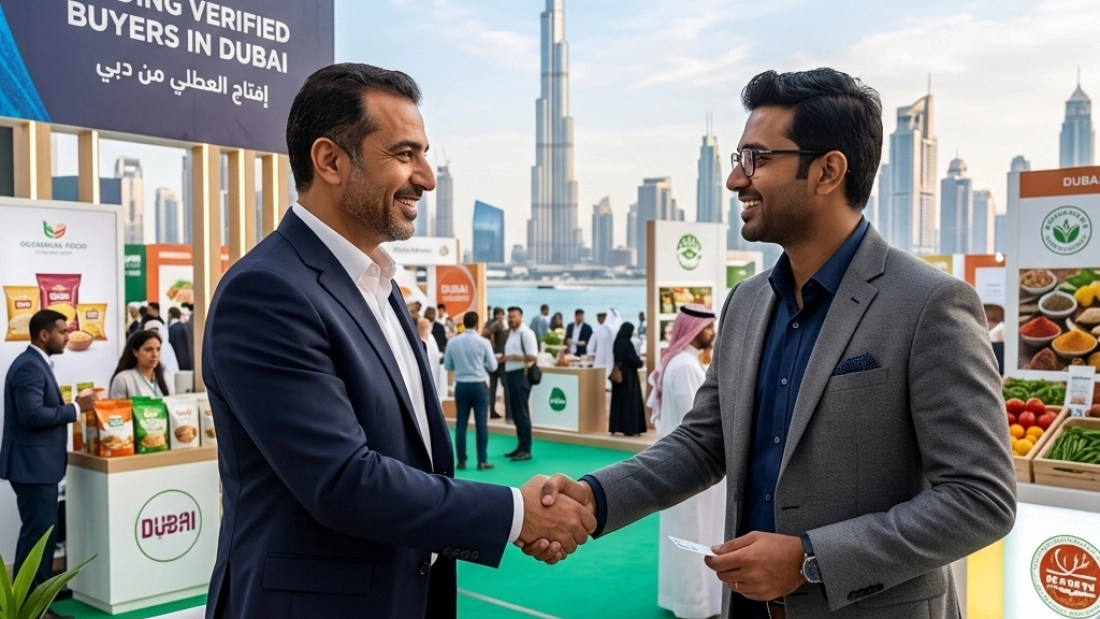
Dubai stands as one of the most significant trading and re-export hubs in the world. For international exporters, the UAE market represents a gateway to the Middle East, Africa, and Europe. However, the complexity of the food distribution landscape means that "how to export food to dubai" is only half the question. The more critical half is: who is buying your goods, and can they be trusted?
Finding a verified buyer is the difference between a profitable long-term partnership and a one-off logistical nightmare. At Mayil Global, we specialize in bridging this gap through a transparent, high-efficiency distribution model. Here are 10 essential things you need to know about finding and working with a verified buyer in the Dubai food market.
1. Dubai is a Strategic Re-Export Hub
Dubai is not just a destination for local consumption; it is a global redistribution point. Understanding this helps exporters realize that a verified buyer often handles volumes intended for both the local UAE market and neighboring GCC countries. When you are importing onions to Dubai or shipping bulk grains, your buyer needs the infrastructure to handle large-scale transit and storage.
A verified buyer should have established roots in major hubs like the Al Aweer Central Fruit & Vegetable Market. This location is the heartbeat of food commerce in the region, dictating daily prices and demand trends across the Middle East.
2. The Risks of Unverified Middlemen
The export industry is frequently plagued by intermediaries who promise high returns but lack the physical infrastructure to back them up. These middlemen often operate without warehouse facilities or direct retail connections, leading to payment delays or cargo abandonment if market prices fluctuate.
A verified buyer, by contrast, operates as a licensed entity with a physical presence. They provide security by taking ownership of the goods or facilitating the sale through a transparent fee structure. At Mayil Global, we mitigate this risk by providing a direct link between global producers and the UAE's wholesale fruits and vegetables dubai market.

3. The 3% Commission Model: A Game Changer for Exporters
One of the most important things to look for in a verified partner is their fee structure. Many traditional traders take a significant "cut" of the profits, often hidden in complicated accounting or low-ball offer prices.
Mayil Global has pioneered a 3% commission strategy. Under this model, the exporter retains 97% of the market value of the goods sold. This transparency ensures that you, the producer, benefit from the actual market price in Dubai rather than an arbitrary figure set by a trader. This model is particularly effective for high-volume commodities like potatoes, onions, and citrus fruits.
4. Cash & Carry: Solving the Liquidity Gap
For many exporters, the biggest challenge is the waiting period for payment. Traditional export cycles can take 30 to 60 days, tying up your working capital. A verified buyer who offers a Cash & Carry model provides immediate liquidity.
Mayil Global acts as a bulk purchaser, allowing exporters to move full containers and receive payments faster. This "Cash & Carry" approach is essential for maintaining a healthy supply chain, allowing you to reinvest in your next harvest or production cycle without delay. You can read more about how this changes restaurant and wholesale inventory management to understand the buyer-side benefits as well.
5. Strict Compliance with Dubai Municipality Standards
A buyer isn't truly "verified" if they don't insist on quality. The UAE Ministry of Climate Change and Environment (MOCCAE) and the Dubai Municipality have rigorous standards for food safety and hygiene.
Exporters must ensure their goods are accompanied by:
- Phytosanitary certificates for fresh produce.
- Lab reports for customs clearance.
- Clear, accurate packaging lists.
- Proper labeling in Arabic and English (where required).
A professional partner will guide you through these requirements to ensure your container isn't stuck at Jebel Ali Port.

6. Real-Time Market Pricing at Al Aweer
Prices for wholesale fruits and vegetables in Dubai can fluctuate daily based on arrivals from around the world. A verified buyer provides you with real-time data from the Al Aweer market.
Understanding these price fluctuations is critical. For example, the price of ginger or tomatoes can vary significantly within a 24-hour window. Working with a partner who operates on a 3% commission ensures that when prices go up, your profits go up with them. We provide the transparency needed to make informed decisions on when to ship and when to hold.
7. Importance of Packaging and Logistics
Logistics in the food industry is about more than just moving boxes; it is about maintaining the cold chain. For products like apples or delicate greens, packaging quality is non-negotiable.
Many exporters fail because they attempt to save costs on packaging, only to have 20% of their cargo arrive damaged. A verified buyer will provide specific feedback on packaging standards required for the UAE climate. Proper sourcing and logistics management is what separates professional exporters from amateurs.
8. Diversification of Product Demand
While onions and potatoes are staples, the Dubai market has a massive appetite for a wide variety of goods. From bulk rice and pulses to exotic fruits and spices, a verified buyer has the network to distribute diverse product lines.
If you are looking at how to export food to Dubai, consider the breadth of the market. Mayil Global manages everything from bulk rice exports to seasonal vegetable shipments, providing a single point of contact for multiple product categories.

9. Verifying the Buyer’s Infrastructure
Before committing to a shipment, investigate the buyer’s operational capabilities.
- Do they have cold storage? Dubai’s heat is unforgiving.
- Do they have a fleet for distribution? Moving goods from the port to the market or to B2B clients requires reliable transport.
- What is their reputation in the market? Trust is the primary currency in Al Aweer.
Mayil Global prides itself on operational excellence, ensuring that the supply chain: from the moment the container arrives to its final sale: is handled with professional rigor.
10. Building Long-Term B2B Relationships
The ultimate goal of finding a verified buyer is to move away from "spot deals" and toward a consistent, reliable partnership. The most successful exporters to the UAE are those who ship weekly or monthly, year-round.
By utilizing a model like our 3% commission distribution, exporters become partners in the business. This creates a feedback loop where the buyer informs the exporter about market trends, and the exporter adjusts production to meet Dubai’s high standards.

Conclusion: Securing Your Export Future
Exporting food to Dubai is a highly lucrative venture if approached with the right strategy. By focusing on verified buyers who offer transparent fee structures, immediate liquidity through Cash & Carry, and deep market expertise, you can secure your margins and grow your business sustainably.
At Mayil Global, we are committed to being that professional partner. Whether you are exporting onions, potatoes, or ginger, our goal is to ensure your goods find the best possible market value with the lowest possible overhead.
For more information on how to start your journey with a verified Dubai buyer, visit our About Us page or Contact Us today to discuss your next shipment.