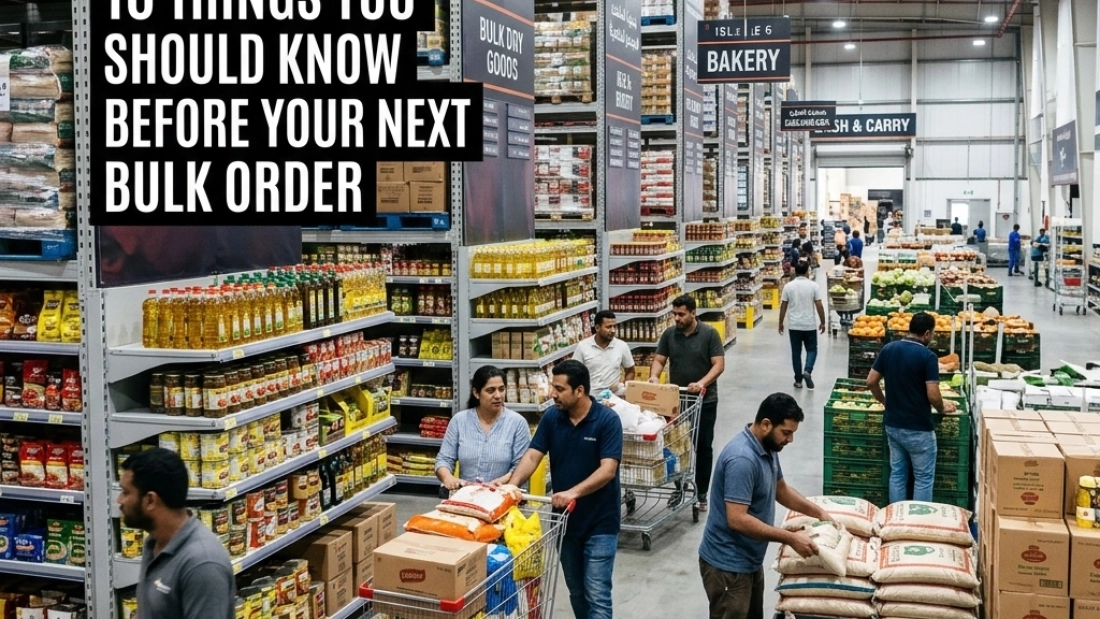
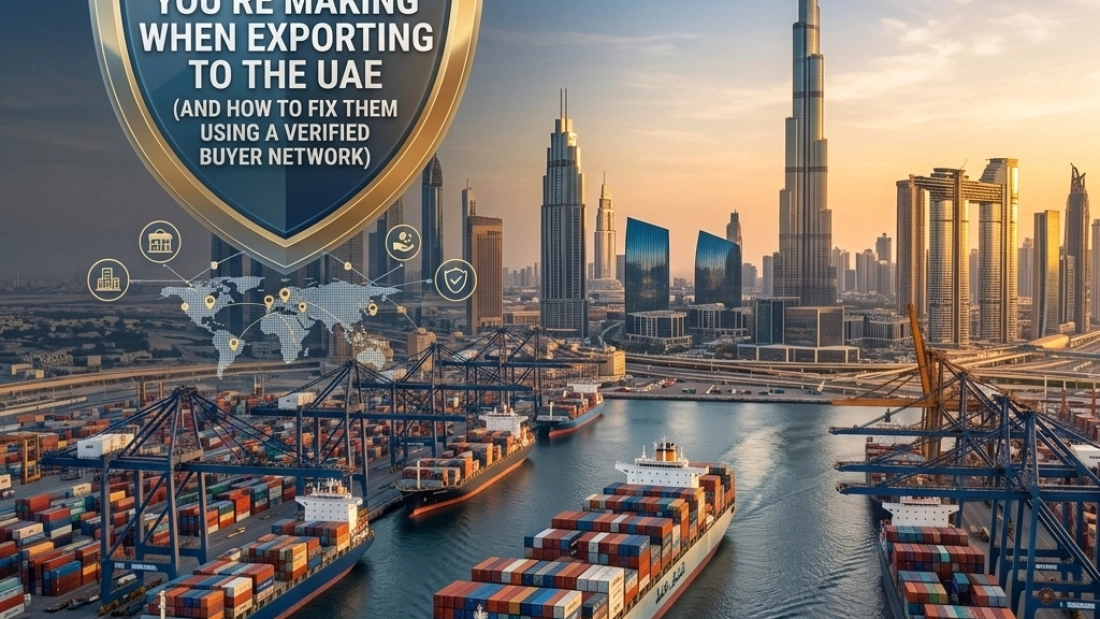
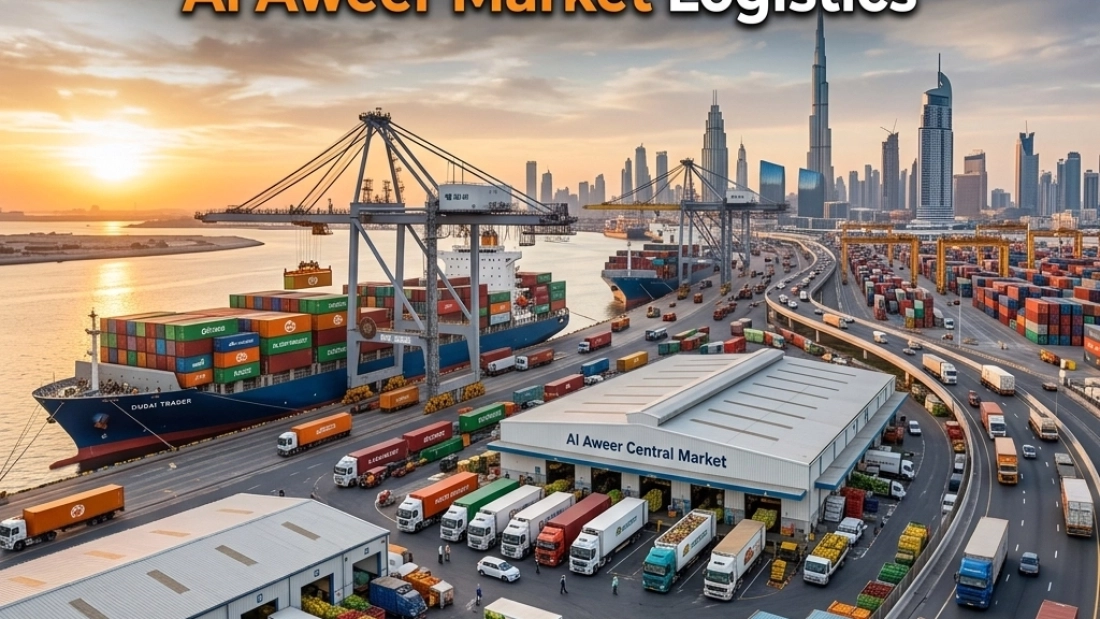
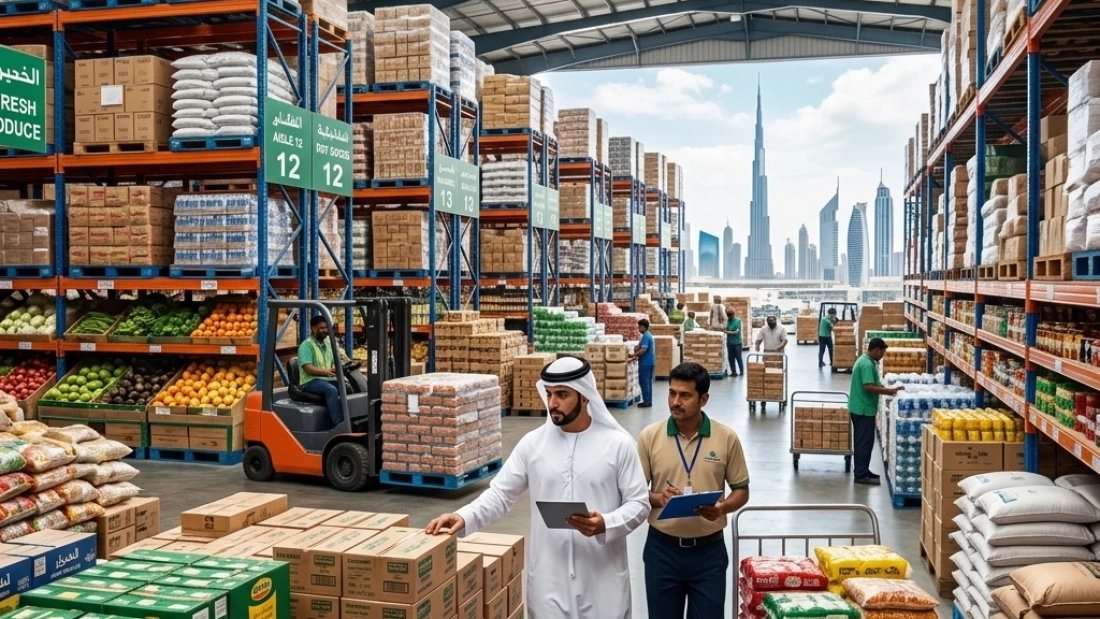
Dubai serves as the primary logistical gateway for the Middle East, North Africa, and South Asia. For global exporters, understanding how to export food to Dubai is not merely about navigating customs: it is about mastering a sophisticated regulatory environment and choosing a distribution partner that ensures profitability and liquidity. As the UAE imports approximately 80% to 90% of its food requirements, the opportunities for international shippers are immense, provided they follow the rigorous standards set by the Dubai Municipality and UAE federal authorities.
At Mayil Global, we facilitate this transition for exporters by offering a transparent 3% commission model and a robust Cash & Carry system designed to eliminate the common pitfalls of the Al Aweer Fruit and Vegetable Market. This guide provides a comprehensive roadmap for succeeding in the Dubai food trade.
1. Establishing Your Business Presence
The first step in entering the UAE market is ensuring your corporate structure is compliant with local laws. You cannot export food to Dubai without a UAE-licensed entity or a registered local distributor to act as your representative.
Licensing and Registration
Exporters must partner with a company that holds a valid Food Trading License. If you are setting up your own operations, you may choose a Dubai free zone: such as the Meydan Free Zone or Dubai Multi Commodities Centre (DMCC): which offers streamlined setups for international trade. Once the license is obtained, the company must register with Dubai Customs to receive an Import-Export Code. This code is mandatory for all shipments entering Jebel Ali Port or Dubai World Central.

2. Navigating Dubai Municipality and the FIRS System
In Dubai, food safety is governed by the Dubai Municipality’s Food Control Department. Every single food item must be registered in the Food Import and Re-Export System (FIRS) before it arrives at the port.
The Product Registration Process
Whether you are dealing in processed FMCG goods or wholesale fruits and vegetables in Dubai, FIRS activation is mandatory. You must provide:
- Detailed ingredient lists and nutritional information.
- Country of origin and manufacturing details.
- HS Codes (Harmonized System).
- Shelf-life data and storage requirements.
Failure to pre-register products often leads to expensive delays, storage fees, or even the rejection of the entire container. Mayil Global assists its partners by ensuring all documentation aligns with FIRS requirements before the ship leaves its port of origin.
3. Essential Health and Safety Certifications
The UAE maintains some of the highest standards for food hygiene in the world. To clear customs, your shipment must be accompanied by specific certificates that vary depending on the product type.
- Original Health Certificate: Issued by the government authority in the exporting country, certifying that the food is fit for human consumption.
- Halal Certification: Mandatory for all meat and poultry products. This must be issued by an organization approved by the UAE’s Ministry of Industry and Advanced Technology (MoIAT).
- Phytosanitary Certificate: Required for those importing onions to Dubai or any other fresh produce, ensuring the goods are free from pests.

4. Labeling and Packaging Standards
Incorrect labeling is one of the leading causes of shipment rejection in Dubai. The label acts as the primary source of information for both the consumer and the regulatory authorities.
Labeling Requirements:
- Language: Labels must be in Arabic, or a bilingual format (Arabic/English).
- Date Marking: Production and expiration dates must be printed directly on the packaging. Stickers are generally not accepted for these specific fields.
- Product Description: A clear description of the product, including its brand name and net weight.
- Manufacturer Details: The name and address of the manufacturer and the importer.
For fresh produce exporters, using export-grade packaging is vital to maintain freshness during the voyage to Jebel Ali, especially for high-turnover items found in the Mayil Global product catalog.
5. Shipping and Logistics to Dubai
Most bulk food consignments enter the UAE through Jebel Ali Port, the largest man-made harbor in the world and a massive logistics hub.
Logistics Pathways
- Sea Freight: The most cost-effective method for bulk staples, grains, and hard vegetables like onions and potatoes.
- Air Freight: Reserved for highly perishable items such as berries or premium exotic fruits.
- Refrigerated Containers (Reefers): Essential for maintaining the cold chain. Any break in the cold chain can lead to total loss of the cargo upon inspection by Dubai Municipality officials.

6. The Mayil Global Advantage: Maximizing Your Margins
While the logistics of exporting are technical, the business of exporting is financial. Many exporters struggle with the traditional commission models in Dubai, where distributors may charge 10% to 15%, or where payments are delayed by 30 to 60 days.
The 3% Commission Strategy
Mayil Global has disrupted the traditional market by implementing a 3% commission model. By reducing the distributor's take, we ensure that the lion’s share of the profit returns to the exporter. This model is built on transparency, providing real-time data on market pricing at the Al Aweer market.
Cash & Carry Wholesale
Liquidity is the biggest challenge in the food trade. When you have a container arriving, you need to ensure the capital is recycled quickly to fund the next shipment. Our Cash & Carry model provides immediate liquidity, allowing exporters to get paid faster and maintain a consistent supply chain without the burden of credit risks.

7. Strategic Sourcing: Onions, Ginger, and Beyond
Success in the Dubai market often depends on identifying high-demand commodities and timing the market correctly.
- Importing Onions to Dubai: Onions are a staple with year-round demand. However, price volatility is common. By leveraging our insights into Al Aweer market pricing, exporters can time their shipments to hit the market during peak demand. You can read more on our specific strategy for exporting onions to Dubai.
- Ginger and Garlic: These commodities often see significant price fluctuations based on supply from China and India. Our ginger buyer services focus on securing profits through rapid turnover.
- The Tomato Trade: Managing perishability is key here. Our distribution network ensures that tomatoes reach wholesale buyers within hours of clearing customs. Check our guide on finding a tomato buyer.
8. Managing Liquidity and the "Container in Aweer" Problem
For many exporters, the "Al Aweer Market" can be a daunting place. Containers often sit in the yard while prices drop, or exporters are forced to sell on credit to unknown buyers.
At Mayil Global, we solve the liquidity problems associated with containers in Aweer. We act as a "Verified Buyer," purchasing the container or distributing it through our 3% model to our network of pre-vetted B2B clients, including restaurants, supermarkets, and smaller wholesalers.
9. Common Mistakes to Avoid
To ensure success when you export food to Dubai, avoid these frequent errors:
- Incomplete Documentation: Missing an original health certificate will lead to the container being held at the port.
- Ignoring Labeling Laws: Stickers for production/expiry dates are often rejected.
- High Commission Structures: Don't settle for 10% commission when the Mayil Global 3% model is available.
- Credit Selling: Avoid selling on long credit terms in the wholesale market, which can stifle your cash flow.
Conclusion: Your Path to Profitability in the UAE
Exporting food to Dubai is a high-reward venture for those who prioritize compliance and strategic partnerships. By understanding the regulatory requirements of the Dubai Municipality and utilizing the logistics power of Jebel Ali, you can tap into one of the world's most vibrant food markets.
Mayil Global stands ready to be your operational partner on the ground. Whether you are looking for a potato buyer or seeking a reliable distributor for bulk grains and spices, our mission is to provide you with the transparency, safety, and liquidity you need to scale your export business.
The Dubai market moves fast: ensure your supply chain is built on the foundations of professional excellence and the Mayil Global 3% advantage.