KP08hDSX23Q

Looking For a Verified Buyer for Exporters in the UAE? Here Are 10 Things You Should Know About Wholesale Fruits and Vegetables Dubai

Navigating the landscape of wholesale fruits and vegetables in Dubai requires a strategic approach, especially for international exporters seeking a reliable foothold in the Middle East. The UAE market is a vibrant, high-volume hub, characterized by its central role in global food distribution. However, for many exporters, the primary challenge remains finding a verified buyer who offers transparency, liquidity, and fair market access.

At Mayil Global, we specialize in bridging the gap between global producers and the Dubai market. By leveraging our unique 3% commission model and immediate Cash & Carry options, we provide a secure environment for exporters to flourish. If you are considering how to export food to Dubai, here are 10 essential insights into the wholesale fruits and vegetables market.

1. The Centrality of Al Aweer Fruit & Vegetable Market

Al Aweer is the pulse of the wholesale fruits and vegetables trade in Dubai. It is not merely a marketplace; it is a massive logistics hub where hundreds of containers are processed daily. For an exporter, having a presence or a partner in Al Aweer is non-negotiable. This market dictates the daily pricing for the entire region. Understanding the movement within Al Aweer is the first step toward successful exportation. Mayil Global maintains a robust presence here, ensuring that our partners' produce is positioned where the demand is highest.

2. The Search for a Verified Buyer

The UAE market hosts over 400 registered importers and wholesalers. While the sheer volume of options is high, the risk of dealing with unverified entities can lead to delayed payments or disputes over quality. A verified buyer is an entity with a proven track record, physical infrastructure in key markets like Dubai Investment Park or Al Aweer, and transparent financial practices. Mayil Global stands as a verified partner, offering exporters the security they need to ship high-value containers with confidence.

3. The Mayil Global 3% Commission Advantage

Standard distribution models in the UAE can often be opaque, with hidden fees eating into exporter margins. We have revolutionized this through our 3% commission strategy. This model is designed for maximum transparency: we charge a flat 3% fee to handle the distribution and sale of your produce. This allows exporters to retain the lion's share of the market price. You can learn more about how this 3% commission strategy provides daily liquidity to our partners.

Professional business desk with fresh produce and growth chart illustrating Dubai wholesale profit margins.

4. Immediate Liquidity through Cash & Carry

One of the biggest hurdles in international food trade is the waiting period for payment. Traditional cycles can stretch for weeks, tying up an exporter's capital. Mayil Global addresses this through our Cash & Carry wholesale model. For qualified shipments, we offer immediate purchase of containers. This provides exporters with the instant cash flow required to reinvest in their next harvest or shipment, eliminating the "liquidity gap" common in the industry.

5. Strategic Commodity Focus: Importing Onions and Essential Vegetables

Certain commodities hold a perennial demand in the Dubai wholesale sector. For example, importing onions to Dubai remains a high-volume business due to the vegetable's status as a dietary staple. Similarly, there is consistent demand for ginger, tomatoes, and potatoes. Understanding which crops are currently in high demand at Al Aweer allows exporters to time their shipments for maximum profit. Whether you are looking for a tomato buyer or a potato distributor, aligning with a partner who understands these specific commodity cycles is vital.

6. Compliance, Quality, and International Standards

Dubai’s Municipality and food safety authorities maintain some of the strictest standards in the world. Success in the wholesale fruits and vegetables Dubai market depends on your ability to meet these hygiene and quality benchmarks. Every shipment must be accompanied by the correct phytosanitary certificates and meet specific packaging requirements. At Mayil Global, we guide our exporters through these sourcing and logistics hurdles to ensure that no container is rejected at the port.

Quality control inspection of fresh fruit ensuring international food safety standards for UAE exports.

7. Pricing Dynamics and Market Intelligence

Pricing in the Dubai wholesale market can fluctuate based on global supply chains, seasonal shifts, and local demand. For instance, a delay in shipments from India or Egypt can cause a sudden spike in onion or lemon prices. Staying informed is critical. Exporters should look for partners who provide real-time market intelligence. We help our clients understand price stability and market trends so they can make data-driven decisions on when to ship.

8. Managing Logistics from Port to Warehouse

The journey of your produce does not end at Jebel Ali Port. Efficient inland logistics are required to move goods from the port to cold storage or the wholesale floor. Mayil Global manages this entire chain. Our infrastructure is designed to maintain the "cold chain," ensuring that perishables remain fresh from the moment they arrive until they reach the end B2B buyer. Efficient logistics management directly reduces wastage, which is the number one profit-killer in the fruit and vegetable trade.

Fleet of refrigerated trucks managing cold-chain logistics for wholesale fruit and vegetable distribution in Dubai.

9. Avoiding Common Exporting Mistakes

Many new entrants into the UAE market make avoidable errors, such as improper grading of produce or failing to account for the competitive nature of Al Aweer. For example, exporting lower-grade apples when the market demands premium quality can lead to significant losses. We have documented these pitfalls in our guide on 7 mistakes you’re making with apple exports. Working with a verified buyer like Mayil Global helps you avoid these costly missteps by providing expert feedback before you even book your freight.

10. Building a Long-Term B2B Partnership

The Dubai market is built on relationships and reliability. While one-off transactions can be profitable, the most successful exporters are those who build long-term partnerships with established distributors. By consistently delivering quality and working within a transparent model like our 3% commission structure, exporters can secure a permanent spot in the UAE's supply chain. Mayil Global is committed to building these long-term relationships, focusing on mutual growth and operational excellence.

B2B partnership handshake in a Dubai office symbolizing a trusted relationship with a verified food buyer.

Why Exporters are Switching to Mayil Global

The transition to our model is driven by a need for better margins and faster payments. Traditional buyers often operate on long credit terms, which can stifle an exporter's growth. By offering a 3% commission distributor model, we align our success directly with yours. If your produce sells well and at a high price, we both benefit. This transparency is why more global shippers are choosing us as their verified buyer in the UAE.

How to Get Started

If you are ready to explore the opportunities within the wholesale fruits and vegetables Dubai sector, the process is straightforward. We invite exporters of onions, potatoes, ginger, garlic, and fresh fruits to reach out to us.

  1. Consultation: Share your product details and capacity.
  2. Strategy: We determine the best approach: either the 3% commission model for maximum profit or the Cash & Carry model for immediate liquidity.
  3. Execution: We handle the logistics, market placement, and sale at Al Aweer.

For more information on our products and how we can assist your export business, visit our products page or contact us today to speak with our procurement team.

Large scale warehouse stock of wholesale onions, ginger, and apples for the Dubai food market.

Conclusion

The UAE remains one of the most lucrative markets for food exporters globally. By understanding the importance of the Al Aweer market, prioritizing verified buyers, and utilizing innovative financial models like Mayil Global’s 3% commission, you can transform your export business. Don't leave your margins to chance: partner with a company that prioritizes your liquidity and growth in the heart of Dubai’s wholesale trade.
vJDx7jbfdi0

5 Steps How to Export Oranges to Dubai and Maximize Your Margins (Easy Guide for Global Shippers)

The United Arab Emirates, and specifically Dubai, serves as one of the most significant hubs for fruit and vegetable distribution in the Middle East. With a growing population and a high dependency on food imports, the demand for fresh citrus: specifically oranges: remains consistently high throughout the year. For global shippers, exporting oranges to Dubai represents a lucrative opportunity, provided they can navigate the complexities of international trade, logistics, and market pricing.

However, many exporters struggle with low profit margins due to high intermediary fees, lack of transparency in the Aweer Market, and delayed payments. At Mayil Global, we specialize in solving these challenges through our transparent 3% commission model and our robust Cash & Carry system. This guide outlines the essential steps to successfully export oranges to Dubai while ensuring you retain the maximum possible return on your investment.

Looking for an Orange Buyer in Dubai?

If you are currently searching for a reliable orange buyer in Dubai, you are likely looking for two things: security and profitability. The traditional trading model often leaves exporters in the dark regarding the final sale price of their containers, leading to "hidden" deductions that eat into margins.

At Mayil Global, we function differently. We provide a platform where international exporters can access the UAE market with total clarity. Whether you are shipping Valencias from Egypt, Navels from South Africa, or high-quality citrus from India, our infrastructure is designed to handle bulk volume while prioritizing your liquidity.


Step 1: Obtain Essential Documentation and Registrations

Before the first crate of oranges leaves your facility, you must ensure your business is legally compliant for international trade. For exporters, particularly those based in India, this involves several layers of registration.

Key Certifications Required:

  • Import Export Code (IEC): This is the primary requirement for any business looking to export from India.
  • APEDA Registration: The Agricultural and Processed Food Products Export Development Authority (APEDA) license is vital for citrus exporters. It ensures your products meet the quality standards required for global markets.
  • Trade License and TIN: Standard business registrations that establish your company as a legal entity.
  • AD Code: An Authorized Dealer Code from your bank is necessary to track foreign exchange and ensure your payments are processed legally.

Having these documents ready avoids administrative delays at the port. Preparation at this stage is the foundation of a professional supply chain.

Shipping documents and a fresh orange on a desk representing the first steps of exporting citrus to Dubai.


Step 2: Comply With UAE Food Safety and Labeling Standards

The UAE market is governed by strict regulations managed by the Ministry of Climate Change & Environment (MOCCAE). Failure to comply with these standards can result in the rejection of your entire shipment, leading to massive financial losses.

Labeling Requirements:

Every carton of oranges must be clearly labeled in both English and Arabic. The labels must include:

  • Product Name (e.g., "Fresh Valencia Oranges")
  • Country of Origin
  • Net Weight
  • Production and Expiration Dates
  • Name and Address of the Producer/Exporter

Quality and Hygiene:

The UAE adheres to international food safety standards, including ISO and HACCP. Ensuring your oranges are free from pests, chemical residues, and rot is non-negotiable. At Mayil Global, we prioritize quality control to ensure that the produce arriving at our facilities meets the high expectations of UAE B2B buyers and retailers.


Step 3: Sourcing High-Quality Oranges and Managing Logistics

The profitability of your export venture is heavily dictated by the quality of the fruit and the efficiency of the cold chain. Oranges are perishable, and any break in the temperature-controlled environment can lead to spoilage.

Sourcing Strategy:

Work with growers who understand export-grade requirements. Oranges should be uniform in size, color, and juice content. For example, the transit time from Mumbai to Dubai is typically only 3 to 5 days, which is ideal for maintaining freshness. However, for shippers from more distant regions, choosing the right freight forwarder is critical.

Logistics and Cold Chain:

Oranges should be transported in refrigerated containers (Reefers) at temperatures between 3°C to 8°C, depending on the variety and duration of travel. Proper ventilation is also required to prevent the buildup of ethylene gas.

For more information on how we manage these complexities, you can read our guide on sourcing and logistics.


Step 4: Utilize the 3% Commission Model for Transparency

One of the biggest risks for exporters in the Dubai market is the "Consignment" model, where the agent sells your goods but provides vague reports on the final price. This lack of transparency is why many shippers are switching to Mayil Global.

The 3% Commission Strategy Explained:

We operate on a fixed 3% commission model. This means that as an exporter, you know exactly what our fee is. There are no hidden charges or surprise deductions. We act as your dedicated distribution partner in the Aweer Market, ensuring your oranges are sold at the best possible market rate while providing you with full visibility into the transaction.

This model is designed to:

  • Eliminate Opaque Pricing: You receive clear reports on sales.
  • Increase Trust: We build long-term relationships based on measurable data.
  • Maximize Returns: Lower commission rates mean more money stays in your pocket.

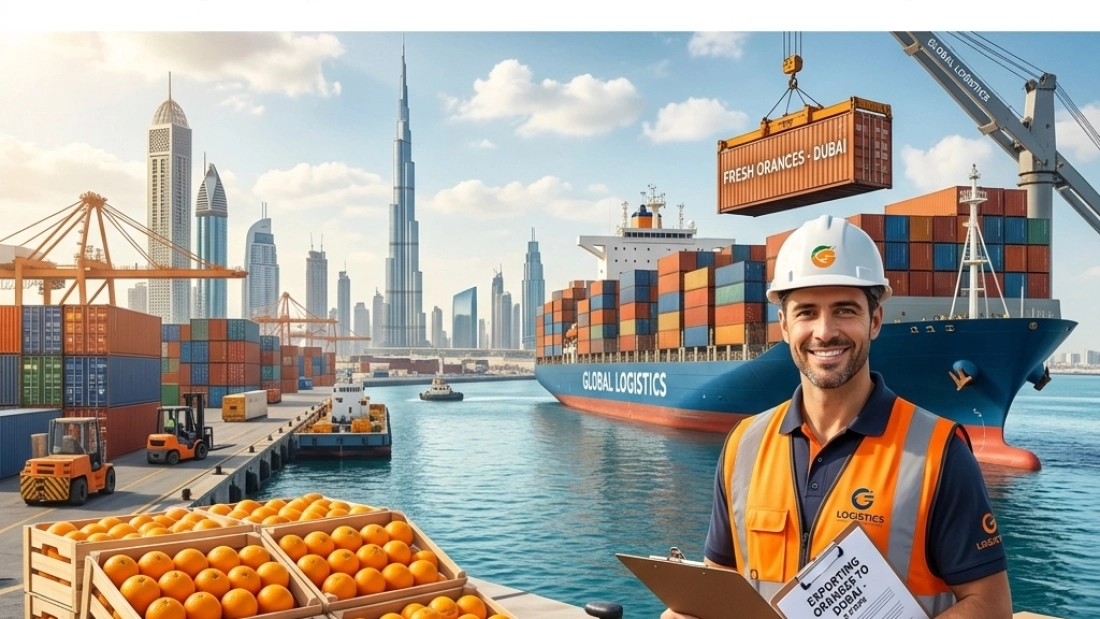
Fresh oranges in a refrigerated container at Dubai port with the city skyline in the background.


Step 5: Secure Fast Liquidity with Cash & Carry

In the world of food distribution, cash flow is king. Waiting weeks or months for payment can cripple an export business. This is where Mayil Global’s Cash & Carry model provides a significant competitive advantage.

Solving the Liquidity Gap:

For many shippers, the "Cash & Carry" approach means that once the container arrives and the quality is verified, the goods are moved quickly through our wholesale channels. This generates immediate liquidity, allowing you to reinvest in your next shipment without delay.

By combining the 3% commission for distribution with the speed of Cash & Carry, Mayil Global helps exporters avoid the common pitfalls of the UAE market. Whether you are exporting tomatoes, lemons, or oranges, the goal is always the same: get paid faster and maintain higher margins.


Maximizing Your Margins with Government Incentives

Beyond the operational efficiencies provided by Mayil Global, exporters should also take advantage of government-backed schemes. For Indian exporters, tools like the RODTEP (Remission of Duties and Taxes on Exported Products) scheme can provide a 3% return on the export value. Additionally, a duty drawback of approximately 0.15% can further boost your bottom line.

When you combine these government incentives with Mayil Global’s low 3% commission, you are looking at one of the most profitable ways to export oranges to the UAE.

Why Choose Mayil Global for Your Orange Exports?

Mayil Global is not just a buyer; we are a strategic partner in the UAE food distribution sector. Our business is built on the pillars of Safety, Hygiene, and International Standards. We understand that for an exporter, your reputation is as important as your profit.

Our Professional Commitment:

  • Dependable Supply Chain: We manage the movement of goods from the port to our wholesale facilities with rigorous attention to detail.
  • Operational Excellence: Our team handles the local complexities so you can focus on sourcing and production.
  • Direct B2B Access: We connect your products directly with bulk buyers, including supermarkets, catering companies, and restaurants across the UAE.

If you are ready to scale your orange export business and want to work with a partner who values transparency as much as you do, it is time to connect with us.

Explore our full range of products or contact us today to discuss how we can help you secure your margins in the Dubai market. By choosing the right model today, you ensure the growth of your business for years to come.

yuhAb3dvwfe

Why Everyone Is Talking About the 3% Commission Strategy (And You Should Too)

In the high-stakes environment of the Dubai food wholesale market, particularly within the bustling hubs like Al Aweer, the traditional ways of doing business are undergoing a radical transformation. For decades, exporters and local distributors operated on legacy models characterized by opaque fee structures, fluctuating margins, and, most critically, delayed liquidity. However, a new standard is emerging that has captured the attention of international exporters and local B2B buyers alike: the 3% commission strategy.

At Mayil Global, we have pioneered this transparent approach to food distribution. By offering a fixed, low-percentage commission for container owners and exporters, we are not just changing a number; we are redefining the supply chain's efficiency. This strategy, paired with our robust Cash & Carry model, ensures that fresh produce, spices, and grains move from the port to the shelf with unprecedented speed and financial clarity.

The Shift Toward Transparent Wholesaling

For many years, the "standard" commission in the UAE food trade was often a moving target. Exporters sending containers of onions, potatoes, or citrus fruits often faced hidden costs, storage fees, and administrative charges that chipped away at their margins. When the final settlement arrived, the effective commission could easily climb into double digits.

The 3% commission strategy is a direct response to the need for operational transparency. It provides a fixed, predictable cost for the exporter. When you know exactly what your distribution cost is, you can price your goods more competitively and forecast your returns with pinpoint accuracy. This reliability is why Mayil Global is increasingly recognized as a leading 3 percent commission distributor in the UAE.

Why 3% is the Magic Number for Exporters

For an exporter managing thin margins on high-volume commodities like rice or onions, every percentage point matters. A 3% commission represents a lean, performance-based incentive for the distributor. It aligns the interests of the exporter and the distributor: both parties want the container sold quickly, at the best market price, to ensure high turnover and immediate reinvestment.

  1. Predictability: Exporters can calculate their net profit before the container even leaves the home port.
  2. Competitiveness: Lower distribution costs allow exporters to offer better prices to UAE retailers, securing faster sales.
  3. Trust: A fixed fee eliminates the friction of post-sale "adjustments" that often plague traditional wholesale relationships.

Shipping containers at a port illustrating the 3 percent commission distributor UAE model and growth.

Solving the Liquidity Gap: Cash & Carry in Dubai

While the 3% commission handles the cost side of the equation, the Cash & Carry model addresses the most significant pain point in the Aweer market: liquidity. In the traditional "consignment" model, an exporter might wait 15, 30, or even 45 days to receive payment after their goods are sold. For a business that depends on cash flow to purchase the next harvest or secure the next shipment, these delays are paralyzing.

Mayil Global’s Cash & Carry food wholesale Dubai operations bridge this gap. We prioritize immediate liquidity for our partners. By moving goods rapidly through our B2B network: consisting of supermarkets, restaurants, and catering companies: we generate the cash flow necessary to settle with exporters faster than the industry average.

Navigating the Al Aweer Market Dynamics

The Al Aweer Central Fruit and Vegetable Market is the heartbeat of food distribution in the UAE. It is a high-velocity environment where prices fluctuate by the hour. Managing a container in this space requires a distributor who is not just a middleman, but an active market participant with a deep understanding of demand cycles.

Whether you are exporting onions to Dubai or shipping premium apples, the 3% model ensures that your distributor is incentivized to move the product at the peak of its freshness. We handle the logistics, the quality control, and the B2B sales, allowing the exporter to focus on what they do best: sourcing world-class produce.

Expanding the Model: From Fresh Produce to Premium Staples

While the 3% commission strategy gained its initial fame in the fresh produce sector, Mayil Global has successfully scaled this model across our entire product range. Our wholesale vegetables in Dubai are just the beginning.

1. Premium Spices and Grains

The UAE is a global hub for the spice trade. Exporters of turmeric, ginger, and cardamom often face complex distribution networks. By applying the 3% commission to bulk spices, we provide a direct route to the UAE’s professional kitchens and retail shelves. Similarly, our bulk rice solutions offer exporters a way to bypass the liquidity traps common in the grain trade.
2. Egg Distribution and Cold Chain Integrity

Perishable items like eggs require a distributor with impeccable cold chain logistics. Our Cash & Carry model is particularly effective here, ensuring that stock is rotated daily and delivered to B2B clients in peak condition. The 3% structure applies here as well, providing a clear cost-benefit analysis for poultry exporters looking to enter the UAE market.

Premium wholesale spices and rice highlighting reliable sourcing for food distribution companies in UAE.

A Direct Benefit to B2B Buyers: Supermarkets and Restaurants

The "3% conversation" isn't just for exporters. It has a massive ripple effect on local B2B buyers: the supermarkets, hotel chains, and restaurant groups that form the backbone of the UAE's hospitality sector.

When Mayil Global operates on a lean 3% commission, we are able to pass those savings down the chain. As one of the premier food distribution companies in the UAE, we provide our B2B clients with:

  • Cost Stability: Lower distribution overheads mean more stable pricing for retailers, even during market fluctuations.
  • Freshness Guarantee: Our focus on high-velocity Cash & Carry means products spend less time in warehouses and more time on shelves.
  • Reliable Sourcing: Our strong relationships with global exporters (attracted by our 3% model) ensure that our product list remains stocked with premium items year-round.

Why Quality Control is Non-Negotiable

In a model built on speed and transparency, quality control (QC) is the glue that holds everything together. A 3% commission only works if the product is of a standard that sells quickly. At Mayil Global, our QC process begins before the container even arrives at the port.

We work closely with exporters to ensure that goods like ginger, tomatoes, and lemons meet the stringent hygiene and safety standards required by UAE authorities. By maintaining these rigorous standards, we protect the margins of the exporter and the reputation of the B2B buyer. For instance, exporters looking for a ginger buyer in Dubai know that our 3% model is backed by a commitment to preserving the quality of their harvest through every step of the logistics chain.

Quality inspection of fresh produce ensuring standards for wholesale fruits and vegetables Dubai distribution.

Future-Proofing Your Food Business in the UAE

The 3% commission strategy is more than a trend; it is a shift toward a more mature, professional, and transparent food ecosystem in the Middle East. As the UAE continues to solidify its position as a global logistics hub, the demand for "lean distribution" will only grow.

Exporters who embrace this model today are positioning themselves for long-term success. They are choosing a partner in Mayil Global who values their liquidity, respects their margins, and understands the operational realities of the Aweer market. Likewise, B2B buyers are realizing that sourcing from a 3% commission distributor is the most effective way to optimize their own supply chain costs.

Summary of the Mayil Global Advantage:

  • Fixed 3% Commission: Transparent, predictable, and fair for all exporters.
  • Immediate Liquidity: Fast-tracking payments through our Cash & Carry model.
  • B2B Expertise: Direct access to a wide network of retailers and food service providers in Dubai.
  • Global Sourcing Power: Reliable supply of wholesale fruits and vegetables in Dubai, as well as spices, rice, and eggs.

Conclusion

If you are a container owner, an international exporter, or a local business owner looking for a more reliable way to manage your food inventory, the conversation around the 3% commission strategy is one you cannot afford to ignore. It represents the end of the "hidden fee" era and the beginning of a new chapter in transparent wholesaling.

At Mayil Global, we are ready to help you navigate this transition. Whether you are looking for a tomato buyer in Dubai or a bulk supplier of premium spices, our team is committed to delivering operational excellence and long-term partnership.

To learn more about our current inventory or to discuss a 3% commission agreement for your next container, visit mayilglobal.com and discover how we are changing the way the UAE eats.

T8GlNnFYI38

The Ultimate Guide to How to Export Food to Dubai: Everything You Need to Succeed in Al Aweer Market

Dubai stands as a global crossroads for the international food trade, serving as the primary gateway to the Middle East, Africa, and beyond. For global exporters, the Al Aweer Central Fruit & Vegetable Market is the epicenter of this activity. Every day, thousands of tonnes of fresh produce move through this hub, supplying supermarkets, hotels, and restaurants across the United Arab Emirates.

However, entering this market requires more than just high-quality produce. It requires a strategic understanding of logistics, regulatory compliance, and, most importantly, a reliable partner who can navigate the complexities of local distribution. At Mayil Global, we specialize in streamlining this process, offering a transparent 3% commission model and immediate Cash & Carry solutions that solve the industry's most significant challenge: liquidity.

Understanding the Landscape: The Al Aweer Market

The Al Aweer Market is not merely a trading floor; it is a critical piece of the UAE’s food security infrastructure. Handling over 7,000 tonnes of fresh produce daily, it serves as the central distribution point for wholesale fruits and vegetables in Dubai. For any exporter looking at how to export food to dubai, understanding Al Aweer is non-negotiable.

The market operates on a B2B wholesale model. International suppliers do not sell directly to the end consumer; instead, they partner with registered wholesale traders who possess the necessary licenses and infrastructure to manage bulk inventory. This is where Mayil Global bridges the gap, acting as your professional representative on the ground.

Bustling Al Aweer market with wholesale fruits and vegetables in Dubai distribution center.

Critical Steps for Exporting Food to Dubai

Successfully landing a container in Dubai involves a series of rigorous steps. Compliance is the foundation of long-term success in the UAE market.

1. Regulatory Compliance and Licensing

Before shipping your first container, you must ensure that all administrative requirements are met. This includes:

  • Trade License: Your partner in Dubai must have a valid trade license with fruit and vegetable trading activity.
  • Dubai Municipality Registration: All food items must be registered with the Dubai Municipality.
  • IEC Registration: As an exporter, you must hold a valid Import Export Code from your country of origin.

2. Product Standards and Grading

The UAE market is highly competitive and quality-conscious. For example, when importing onions to dubai, buyers expect specific grades: typically 60mm+ diameter with tight, intact skins and no signs of sprouting. Similar strict standards apply to tomatoes, ginger, and garlic.

Implementing pre-shipment quality checks is essential. At Mayil Global, we emphasize quality control to ensure that your shipments achieve a high acceptance rate, minimizing the risk of price markdowns or rejections. You can read more about avoiding common mistakes in our guide on 7 mistakes you’re making with food distribution companies in UAE.

3. Documentation Requirements

Precision in documentation prevents costly delays at Jebel Ali Port or Dubai International Airport. The standard required documents include:

  • Commercial Invoice
  • Packing List
  • Bill of Lading (for sea freight) or Airway Bill (for air freight)
  • Certificate of Origin
  • Phytosanitary Certificate (issued by the export country’s agricultural department)

Large container ship at Jebel Ali Port for exporting food to Dubai via sea freight.

Logistics: From Farm to Jebel Ali

Efficiency in logistics directly impacts your margins. Most bulk food exports to Dubai arrive via sea freight at Jebel Ali Port. For shipments from the Indian subcontinent, transit times typically range from 7 to 10 days. Once the container arrives, customs clearance and transport to the Al Aweer market usually take an additional 2 to 3 days.

Maintaining the cold chain is critical. Fresh produce must be transported in temperature-controlled reefer containers to preserve shelf life. For high-value or highly perishable items, air freight via Dubai International Airport offers a 24-48 hour turnaround, though at a significantly higher cost.

The Mayil Global Advantage: 3% Commission Model

The traditional trading model in Al Aweer can often be opaque, with hidden costs and fluctuating margins that leave exporters in a vulnerable position. Mayil Global was founded to bring corporate transparency to this sector.

Our 3% commission model is designed to maximize the exporter's profit. Instead of charging high, variable fees, we charge a flat 3% commission on the sale value. This ensures that the exporter retains the lion's share of the profit while benefiting from our established distribution network.

This model is particularly effective for those exporting onions to Dubai, where high volumes require a lean, efficient cost structure. By providing a fixed commission rate, we allow exporters to calculate their expected returns with much greater accuracy.

Business handshake representing the 3 percent commission model for Dubai food exporters.

Solving the Liquidity Gap with Cash & Carry

Perhaps the biggest hurdle for international exporters is the "wait time" for payment. In many traditional trading arrangements, exporters must wait until the produce is sold to the end-retailer before receiving funds: a process that can take weeks.

Mayil Global’s Cash & Carry wholesale model addresses this directly. We have the capability to purchase containers outright upon arrival. This provides immediate liquidity to the exporter, allowing them to reinvest in their next shipment without waiting for the local market cycle to complete.

Whether you are a tomato exporter or dealing in bulk rice, having access to immediate cash flow is a game-changer for business scalability.

Strategic Insights for Key Commodities

While the general principles of exporting apply to all food items, certain commodities dominate the Al Aweer trade:

  • Onions: A staple of the UAE diet. Demand is consistent year-round, but pricing is sensitive to global supply shifts.
  • Potatoes: High volume demand from both retail and the processing industry. Check our insights on finding a potato buyer in Dubai.
  • Ginger and Garlic: These items require specific storage conditions to prevent moisture loss. Our 3% commission model helps exporters manage the risks associated with these sensitive items. For more, see our ginger buyer guide.

High-quality wholesale onions and fresh produce for importing to Dubai markets.

Why Consistency Wins in the UAE

Success in the Dubai food market is built on the foundation of "Verified Buyer" relationships. It is not enough to send a single high-quality container; the market rewards those who can provide a consistent supply of standardized goods.

At Mayil Global, we work with our exporters to develop long-term supply schedules. By understanding the seasonal peaks and troughs of the Al Aweer market, we help our partners time their shipments for maximum profitability. This strategic approach, combined with our professional Cash & Carry model, ensures that our partners are not just suppliers, but integrated members of the UAE supply chain.

Partnering with Mayil Global

Navigating the complexities of how to export food to dubai is a journey of precision, compliance, and strategic partnership. Mayil Global provides the infrastructure and the financial model necessary for global exporters to thrive in the competitive landscape of the Al Aweer market.

By focusing on operational excellence, transparent pricing through our 3% commission, and financial stability through our Cash & Carry model, we ensure that your entry into the UAE market is both profitable and sustainable.

Cold storage facility for wholesale food distribution and cash and carry logistics in Dubai.

If you have a container ready for shipment or are looking to scale your existing export operations to the UAE, Mayil Global is your dependable partner. We handle the logistics, the distribution, and the financial complexities, allowing you to focus on what you do best: producing world-class food products.

To start your journey with a verified partner in the Al Aweer market, contact us today or explore our full range of products and services. Together, we can build a more efficient and profitable global food supply chain.

o5ueThcEage

5 Steps How to Export Oranges to Dubai and Maximize Your Profits (Easy Guide for International Shippers)

The United Arab Emirates, specifically Dubai, represents one of the most lucrative markets for citrus exporters globally. As a central trade hub for the Middle East and North Africa (MENA) region, Dubai’s demand for high-quality oranges remains consistent year-round. However, for many international shippers, the primary challenge is not just getting the fruit to the port, but ensuring they secure a buyer who offers transparency, fair pricing, and rapid liquidity.

If you are currently looking for an orange buyer in Dubai, understanding the operational landscape is critical. At Mayil Global, we specialize in bridging the gap between global growers and the UAE market through our innovative 3% commission model and Cash & Carry wholesale system. This guide outlines the five essential steps to successfully exporting oranges to Dubai while maximizing your profit margins.

1. Understand Market Standards and Regulatory Compliance

Dubai’s market is characterized by a diverse consumer base with high expectations for quality. Before the first container leaves your facility, you must ensure your product meets the stringent regulatory requirements of the UAE Ministry of Climate Change and Environment (MOCCAE).

Quality oranges: whether Valencia, Navel, or Blood oranges: must be accompanied by specific certifications. These include:

  • ISO and HACCP Certifications: These demonstrate that your facility adheres to international food safety management standards.
  • Halal Certification: While oranges are inherently halal, certain logistics and processing chains require certification to ensure no cross-contamination.
  • Phytosanitary Certificates: Issued by your country’s agricultural department, confirming the shipment is free from pests and diseases.

Furthermore, UAE labeling regulations are non-negotiable. Labels must be in both Arabic and English, clearly stating the country of origin, production and expiry dates, net weight, and the exporter’s details. Failure to comply with these labeling laws often results in costly delays at the Jebel Ali Port or the Al Aweer Fruit and Vegetable Market.

Professional quality inspection of fresh Valencia oranges for export to Dubai markets.

2. Partner with a Certified Packing House

Sourcing oranges directly from a farm is rarely sufficient for international trade. To maximize profits and minimize wastage, exporters must utilize Apaar-registered packing houses. These facilities provide the infrastructure necessary for professional-grade processing, which includes:

  • Washing and Waxing: To preserve moisture and improve shelf life.
  • Grading and Sizing: Dubai buyers typically prefer uniform sizes (Counts 48, 56, 64, 72, 80, 88).
  • Pre-cooling: This is perhaps the most vital step. Oranges are living organisms that respire; removing field heat immediately after harvest is essential to prevent decay during the 10-to-20-day sea transit.
  • Palletization: Ensuring that boxes are secured on pallets to prevent shifting and bruising during maritime transport.

By investing in high-quality packing, you reduce the "wastage" percentage that often eats into an exporter's profit. At Mayil Global, we prioritize sourcing from exporters who understand that quality control begins at the packing house, not at the destination.

3. Secure a Reliable Buyer in Dubai: The 3% Commission Advantage

The most significant risk in the fruit export business is the "hidden cost" of distribution. Traditional distributors often take large margins, sometimes as high as 10-15%, or provide vague accounting regarding the final sale price at the Al Aweer Market.

Looking for an orange buyer in Dubai? Mayil Global offers a revolutionary 3% commission model. Unlike traditional middlemen, we operate with total transparency.

How the 3% Model Works:

  1. Direct Market Sales: We sell your oranges directly to B2B buyers, supermarkets, and restaurants in Dubai.
  2. Fixed Commission: We charge a flat 3% service fee for handling the distribution and sales.
  3. Transparent Reporting: You receive clear data on the sales price, ensuring you know exactly what your product sold for in the UAE market.

This model is designed to maximize the exporter's return on investment. By reducing the intermediary’s cut, more profit stays with the shipper. This strategy has already transformed how exporters handle onions and tomatoes, and it is equally effective for citrus.

Transparent business partnership for exporting oranges to Dubai with high profit margins.

4. Optimize Logistics and Shipping Terms

Oranges are temperature-sensitive perishables. Managing the cold chain is the difference between a profitable shipment and a total loss.

For international shippers, we recommend starting with FOB (Free on Board) terms. This limits your liability once the goods are loaded onto the vessel. However, as you build a relationship with a trusted partner like Mayil Global, moving toward CIF (Cost, Insurance, and Freight) can sometimes offer better control over the supply chain.

Key Logistics Considerations:

  • Reefer Containers: Oranges should typically be shipped at temperatures between 3°C to 7°C, depending on the variety and duration of the voyage.
  • Ventilation: Proper airflow within the container is necessary to prevent the buildup of carbon dioxide and ethylene, which accelerates ripening and spoilage.
  • Transit Times: Shippers from India can expect a 3-5 day transit, while shippers from Egypt, South Africa, or Spain must account for longer durations.

Using the sourcing and logistics services provided by Mayil Global ensures that your containers are tracked and handled with the urgency required for perishable fruit.

Refrigerated reefer container at Jebel Ali Port ensuring cold chain for orange exports.

5. Ensure Liquidity through Cash & Carry Models

One of the greatest pain points for exporters is the "waiting period" for payment. In the traditional wholesale market, it can take weeks to receive funds after a container has been cleared.

Mayil Global solves this through our Cash & Carry wholesale model. We understand that for an export business to scale, liquidity is king. Our model focuses on rapid turnover, allowing exporters to get paid faster so they can reinvest in their next shipment.

Whether you are exporting oranges, bulk rice, or ginger, the ability to secure daily liquidity through the Aweer Market operations provides a competitive edge. This ensures that your working capital is never tied up in unpaid invoices, allowing for a consistent flow of trade.

Why Exporters Choose Mayil Global:

  • Operational Excellence: We handle the complexities of the Dubai market so you can focus on production.
  • Integrity: Our 3% commission is a commitment to fair trade.

  • B2B Reach: We connect your products to a vast network of local buyers who trust our quality standards.

Busy wholesale distribution center in Dubai managing orange inventory for local B2B buyers.

Conclusion: Securing Your Position in the UAE Market

Exporting oranges to Dubai is a high-reward venture if executed with precision. By adhering to international quality standards, utilizing professional packing houses, and partnering with a distributor that prioritizes your margins through a low-commission, high-transparency model, you can build a sustainable and profitable export business.

If you are ready to move your next container of oranges and are seeking a reliable partner in the UAE, contact us today. Let Mayil Global show you how our 3% commission strategy can transform your export margins and provide the stability your business deserves.

For more information on our products and how we facilitate global trade, visit our About Us page or browse our full range of available products.

Nq8CvwBsDZ8

7 Mistakes You’re Making with Bell Pepper Exports to Dubai (and How to Fix Them)

The Dubai fresh produce market is one of the most competitive and high-volume hubs in the Middle East. For international exporters of bell peppers (capsicum), the UAE offers a consistent year-round demand driven by a diverse culinary landscape and a robust hospitality sector. However, many global shippers struggle to maintain profitability due to avoidable operational errors, regulatory oversight, and unfavorable commission structures.

At Mayil Global, we specialize in food distribution and wholesale, providing a transparent bridge between international farms and the Dubai market. By addressing common pitfalls in the supply chain, exporters can secure better margins and long-term stability. If you are currently looking for a bell pepper buyer in Dubai, understanding these seven common mistakes: and their solutions: is the first step toward a successful export operation.

1. Ignoring UAE Food Safety and MOCCAE Standards

The most common reason for shipment rejection at Dubai ports is non-compliance with the Ministry of Climate Change and Environment (MOCCAE) standards. The UAE enforces strict Maximum Residue Levels (MRLs) for pesticides. Bell peppers are particularly scrutinized for chemical residues.

Exporters often fail to conduct independent lab testing before shipping, assuming that certifications from their home country are sufficient. To fix this, you must ensure your produce meets the Gulf Cooperation Council (GCC) standardized food safety requirements.

The Fix: Implement rigorous quality control protocols at the source. Before the container leaves your facility, secure a comprehensive pesticide residue report from an ISO-certified laboratory. Ensuring your documentation aligns with UAE standards prevents costly rejections and disposal fees at the port.

2. Poor Cold Chain Management and Temperature Fluctuations

Bell peppers are highly perishable and consist of approximately 92% water. They are sensitive to both chilling injuries and moisture loss. A common mistake is failing to maintain a consistent temperature of 7°C to 10°C (45°F to 50°F) throughout the entire logistics journey.

Temperatures below 7°C can lead to pitting and skin discoloration, while temperatures above 10°C accelerate ripening and the development of pathogens like Botrytis cinerea (grey mold).

The Fix: Partner with logistics providers who offer real-time temperature monitoring. At Mayil Global, we emphasize the importance of sourcing and logistics that prioritize cold chain integrity. Utilizing data loggers in every container allows you to track fluctuations and hold carriers accountable, ensuring the produce arrives in "A-grade" condition.

Digital temperature sensor monitoring fresh red bell peppers in a refrigerated export container.

3. Inconsistent Grading and Packing Standards

The Dubai market, particularly the B2B sector serving high-end hotels and restaurants, demands aesthetic perfection. A frequent mistake is mixing different grades, sizes, or colors within a single consignment. Inconsistent "blocky" shapes or mixed maturity levels (e.g., green streaks on red peppers) lead to lower price realizations at the Aweer Market.

4. Underestimating the Importance of Packaging Ventilation

Exporters often use standard corrugated boxes without adequate ventilation holes. Without proper airflow, bell peppers generate heat and ethylene gas, which triggers premature softening.

The Fix: Use telescopic cartons or plastic crates designed for high-humidity environments. Ensure that the stacking pattern inside the container allows for vertical airflow. Proper packaging not only protects the physical integrity of the pepper but also extends its shelf life once it reaches our wholesale distribution centers.

4. Inaccurate Documentation and Customs Paperwork

A single typographical error on a Phytosanitary Certificate, Certificate of Origin, or Commercial Invoice can lead to days of delays. In the world of fresh produce, a 48-hour delay at the port can be the difference between a premium sale and a total loss.

The Fix: Double-check all harmonized system (HS) codes and ensure that the weights listed on the packing list exactly match the physical cargo. If you are looking to streamline this process, working with an established partner like Mayil Global ensures that your paperwork is vetted before the ship even docks.

5. Accepting High Commission Rates (The 10-15% Trap)

Many exporters fall into the trap of working with traditional commission agents in Dubai who charge between 10% and 15%. When you factor in freight, insurance, and local handling, these high commission rates often eat into the exporter's entire profit margin, leaving them with a net loss if market prices dip slightly.

The Fix: The Mayil Global 3% Commission Model
We have disrupted the traditional trading model by offering a flat 3% commission for bell pepper exports. This transparent approach ensures that the majority of the value stays with the producer. By reducing the intermediary cost, you gain a competitive edge, allowing you to price your produce more attractively while still securing higher net returns. You can read more about how this model compares to others in our guide on securing margins with the 3% commission model.

A rising profit graph next to a yellow bell pepper symbolizing successful export margins in Dubai.

6. Lack of Liquidity and Delayed Payment Cycles

In the traditional Aweer Market trading system, exporters often wait weeks or even months to receive their sales proceeds. This creates a massive liquidity gap, preventing farmers and shippers from reinvesting in their next crop or shipment.

The Fix: The Cash & Carry Advantage
Mayil Global addresses this through our Cash & Carry model. We specialize in high-volume distribution, which allows us to provide faster liquidity to our partners. Instead of waiting for the "final settlement" from a series of small-scale retailers, our model focuses on bulk movement and immediate turnover. This ensures that you get paid faster, keeping your supply chain moving without financial bottlenecks.

7. Failing to Understand Dubai’s Seasonal Demand Shifts

Exporting bell peppers when the local UAE or regional (Omani/Jordanian) production is at its peak is a strategic error. During these windows, the market is flooded with low-cost local produce, making expensive air-freighted or sea-freighted international bell peppers difficult to move at a profit.

The Fix: Conduct thorough market research or consult with your Dubai partner to identify the "supply gaps." Typically, the demand for high-quality imported bell peppers (especially yellow and orange varieties) remains high when local temperatures soar and greenhouse production slows down.

Cargo ship arriving at Dubai port with fresh bell peppers, representing global export logistics.

Why Mayil Global is Your Strategic Partner in Dubai

Mayil Global is not just a buyer; we are a comprehensive food distribution and wholesale partner dedicated to operational excellence. Our business is built on three pillars: Transparency, Efficiency, and Profitability for the exporter.

The 3% Commission Strategy Explained

Our 3% commission model is designed for the modern exporter who values transparency. Traditional agents often hide extra costs or "market fees." At Mayil Global, we provide a clear breakdown of sales. This allows you to forecast your revenue with precision. For a deeper dive into this strategy, see our article on how Aweer Market exporters can secure daily liquidity.

Cash & Carry for Global Shippers

The Cash & Carry wholesale model is the backbone of our operation. By targeting B2B buyers: including restaurants, catering companies, and smaller wholesalers: we ensure that your bell peppers are moved quickly. This high-velocity turnover reduces the risk of spoilage and ensures that your capital is not tied up in unsold inventory. Explore how this wholesale model is changing UAE inventory management.

How to Start Exporting Bell Peppers to Mayil Global

If you are ready to fix these common mistakes and maximize your profits in the UAE market, the process is straightforward:

  1. Quality Assessment: Ensure your bell peppers meet international grading standards and UAE MRL requirements.
  2. Contact Our Sourcing Team: Reach out via our contact page to discuss your current production volumes and varieties (Red, Yellow, Green, or Orange).
  3. Documentation Review: Our logistics team will review your paperwork to ensure seamless customs clearance in Dubai.
  4. Shipment & Distribution: Once the shipment arrives, we utilize our distribution network to move your product at the best possible market price, applying our industry-low 3% commission.

By moving away from outdated trading habits and embracing a high-efficiency model, you can transform your export business. Whether you are exporting ginger, onions, or bell peppers, the principles of success in Dubai remain the same: quality, compliance, and the right partnership.

For more information on our company and our commitment to professional excellence, visit our About Us page or browse our full range of wholesale products.

Premium quality red, yellow, and orange bell peppers for wholesale food distribution in Dubai.

Conclusion

Exporting bell peppers to Dubai does not have to be a gamble. By avoiding the common mistakes of poor cold chain management, regulatory non-compliance, and high-commission intermediaries, you can build a sustainable and profitable trade route. Mayil Global is here to ensure that your hard work in the field translates into maximum returns in the market.

Looking for a Bell Pepper Buyer in Dubai?
Choose transparency. Choose efficiency. Choose Mayil Global.

wfAt6dWnghl

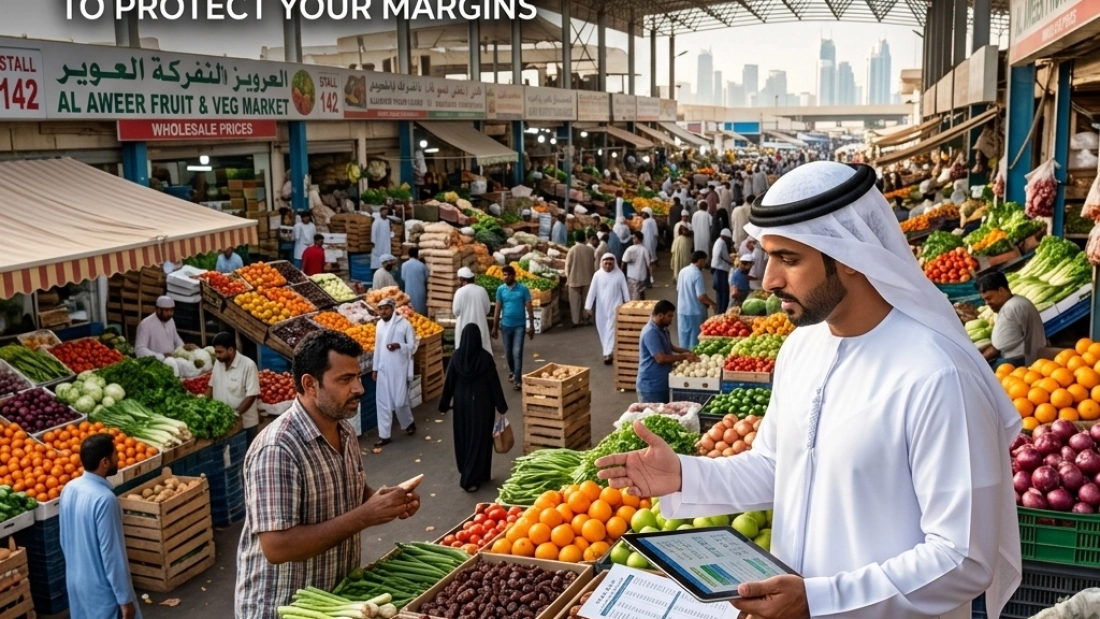
Looking for Al Aweer Market Price Updates? Here Are 10 Things You Should Know to Protect Your Margins

If you are running a supermarket chain, a busy restaurant in Dubai, or a wholesale distribution business, your world likely revolves around the Al Aweer Central Fruit and Vegetable Market. It is the heartbeat of the UAE's food supply chain. However, anyone who has spent time tracking al aweer market price updates knows that the numbers you see on a sheet in the morning rarely tell the whole story.

In the fast-paced world of b2b food supply dubai, price volatility is the only constant. One day, a crate of tomatoes is a bargain; the next, a supply delay at the border sends prices skyrocketing. For business owners, these fluctuations aren't just numbers: they are the difference between a profitable month and a deficit.

To help you navigate this complex landscape, Mayil Global has compiled 10 essential insights you need to know to protect your margins when dealing with the Al Aweer market.

1. Understand the Difference Between Market Rates and Contract Rates

One of the biggest mistakes new buyers make is comparing the prices they see at Al Aweer directly with the quotes from food distribution companies in uae. Al Aweer operates primarily on a cash-and-carry, commission-agent basis. These prices are highly volatile and change by the hour.

Contract rates, like those offered by Mayil Global, are often more stable because they account for long-term sourcing and logistics. If you are looking for price updates to benchmark your costs, remember that the "floor price" at Al Aweer doesn't include the added value of sorting, delivery, and credit terms that a dedicated distributor provides.

2. Timing Is Everything: The 4 AM vs. 9 AM Shift

The Al Aweer market is a living organism. If you are sourcing wholesale fruits and vegetables dubai, the time you check the price dictates the margin you protect. Prices are usually set very early in the morning when the first containers are opened. By mid-morning, prices may drop if there is an oversupply, or they may spike if a particular commodity is running low. To protect your margins, you need a partner who is physically present or has deep roots in the market to catch these windows of opportunity.

Early morning activity at Al Aweer Market with refrigerated trucks supplying wholesale fruits and vegetables in Dubai.

3. The Quality Grading Trap

A "low price" update on onions or potatoes can be misleading. In the Al Aweer market, "Grade A" and "Grade B" can look very similar in the dark of early morning, but the shelf life and wastage rates differ significantly. Protecting your margins means looking at the net yield. If you buy cheap but lose 20% to spoilage, you haven't saved money. This is why Mayil Global focuses on farm-direct sourcing; by controlling the supply chain from the farm to our warehouse, we ensure that the quality matches the price.

4. Logistics Costs Often Outweigh Product Costs

When you see a price update, it usually refers to the price of the goods sitting on the market floor. For a supermarket or a restaurant, the real cost includes "Last Mile" logistics. With the rising costs of fuel and refrigerated transport in the UAE, efficient logistics are non-negotiable. Our team at Mayil Global utilizes optimized routes and a robust fleet to keep these "hidden" costs low, ensuring that the price we quote is the price that keeps your margins healthy.

5. The Power of the 3% Commission Model

For exporters and large-scale buyers, understanding the commission structure at Al Aweer is vital. Many agents charge high fees that eat into your profits. Mayil Global has revolutionized this by offering a 3% commission strategy. By keeping our overheads lean and focusing on volume, we allow exporters to secure better daily liquidity and buyers to access more competitive pricing.

6. Currency and Global Trade Fluctuations

Since the UAE imports the vast majority of its fresh produce, Al Aweer prices are sensitive to global events. Whether it’s a fuel price hike in India affecting onion exports or shipping delays in the Red Sea, these external factors hit the Al Aweer price list within 24 hours. Protecting your margins requires staying informed about global trade news, not just local price lists.

A cargo ship transporting fresh produce containers representing global B2B food supply logistics to Dubai.

7. Seasonality and the "Local" Alternative

Price updates for imported goods like apples or citrus will always fluctuate based on the harvest seasons of the exporting countries. However, smart buyers look for windows where local UAE produce or regional produce from nearby Oman can offset the high costs of long-distance imports. At Mayil Global, we help our B2B clients switch between origins strategically to maintain price stability throughout the year.

8. Cash Flow and Liquidity Issues

Al Aweer is traditionally a cash-heavy market. If you are relying on daily price updates to buy stock, you need to have liquid cash ready to move. For many businesses, this creates a cash flow bottleneck. This is where working with established food distribution companies in uae becomes an advantage. We offer cash and carry food wholesale options that help you manage your inventory without tying up all your capital in daily market fluctuations.

9. Avoid the "Middleman" Markup

Every hand that touches a crate of vegetables adds to the cost. If you are buying from a secondary wholesaler who bought from a commission agent who bought from an importer, your margins are already gone. Mayil Global acts as the direct link. Whether you are looking for a ginger buyer or a tomato supplier, dealing directly with a company that handles its own sourcing and containers is the best way to bypass unnecessary markups.

Farm-direct sourcing and modern warehouse distribution for reliable food distribution companies in UAE.

10. The Importance of Reliable Data

Finally, don't trust every price list you see on a WhatsApp group. Reliable al aweer market price updates come from consistent, daily interaction with the market floor. At Mayil Global, we combine our "on-the-ground" market intelligence with sophisticated supply chain data. This allows us to predict price trends before they happen, giving our partners a competitive edge in the b2b food supply dubai sector.

Why Partner with Mayil Global?

Navigating the Al Aweer market alone is a full-time job. Between tracking prices, checking quality, and managing logistics, it is easy for small errors to lead to big losses.

Mayil Global simplifies this process for you. We are not just another name among food distribution companies in uae; we are your strategic partner in growth. Our core focus is on:

  • Farm-Direct Sourcing: We cut out the unnecessary layers to bring you the freshest produce at the best prices.
  • 3% Commission Model: We provide transparency and liquidity for exporters and cost-savings for buyers.
  • Efficient Logistics: Our supply chain is designed for speed and temperature control, reducing spoilage and protecting your bottom line.
  • Market Expertise: We understand the nuances of wholesale vegetables in dubai and can guide you on when to buy and when to wait.

Whether you need bulk rice or a steady supply of fresh greens, our team is ready to help you secure your margins.

Don't let market volatility dictate your success.

If you are looking for a reliable partner to handle your wholesale fruits and vegetables dubai needs, or if you are an exporter looking for a transparent 3% commission partner, reach out to us today at Mayil Global. Let’s work together to make your food supply chain more profitable and less stressful.

eDOhUFF-9e9

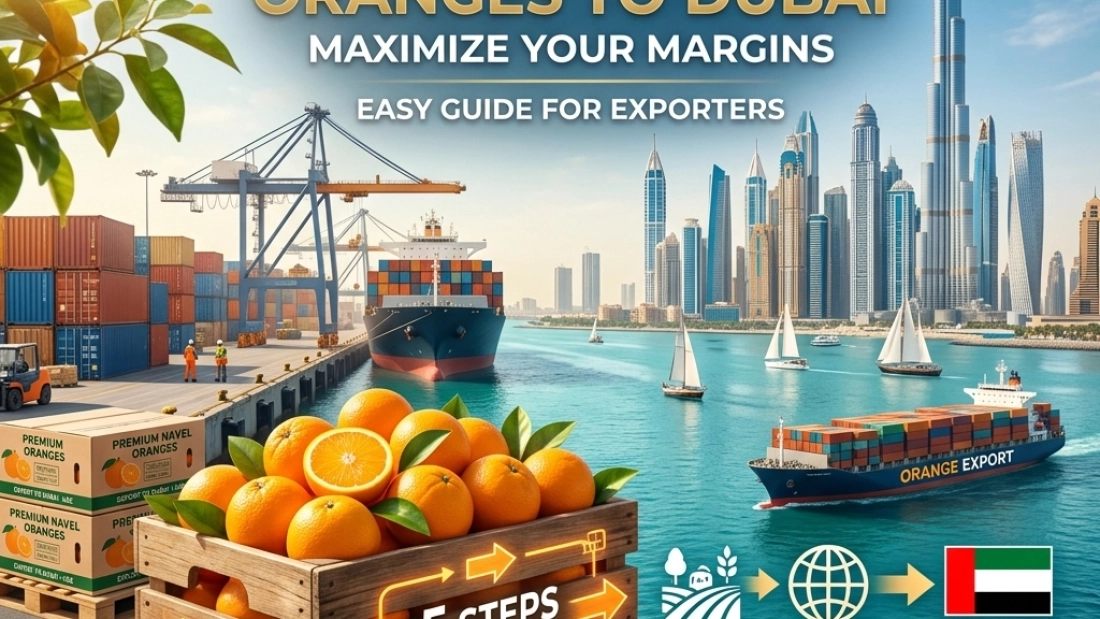
5 Steps How to Export Oranges to Dubai and Maximize Your Profits (Easy Guide for Exporters)

Are you looking for an orange buyer in Dubai? If you are a citrus producer or an international exporter, the United Arab Emirates (UAE) represents one of the most lucrative markets in the Middle East. As a global hub for trade, Dubai acts as the gateway to the entire GCC region. However, navigating the complexities of international logistics, customs regulations, and market volatility can be daunting.

At Mayil Global, we specialize in bridging the gap between global growers and the Dubai wholesale market. By leveraging our unique 3% commission model and our aggressive Cash & Carry approach, we ensure that exporters don't just find a buyer: they find a partner dedicated to maximizing their bottom line.

In this guide, we break down the five essential steps to successfully exporting oranges to Dubai while highlighting how our transparent business model protects your margins.

Step 1: Legal Compliance and Essential Certifications

Before the first crate of oranges leaves your facility, you must ensure your business meets the rigorous legal requirements of both your home country and the UAE. Compliance is the foundation of a sustainable export business.

Obtaining Your Export Credentials

To operate legally, you must possess a valid Import Export Code (IEC) or its equivalent in your jurisdiction. This code is the primary identifier for customs authorities and is mandatory for any commercial shipment.

Phytosanitary and Health Certificates

The UAE Ministry of Climate Change and Environment (MOCCAE) maintains strict standards for fresh produce. Every shipment of oranges must be accompanied by a Phytosanitary Certificate. This document, issued by your local agricultural authority, certifies that the fruit is free from pests, diseases, and chemical contaminants.

Quality and Labeling Standards

Dubai is a premium market that demands excellence. To compete, your oranges should ideally come from facilities with ISO or HACCP certifications. Furthermore, labeling is a critical component of UAE customs clearance. Labels must be in both English and Arabic and must clearly state:

  • Product Name and Variety
  • Country of Origin
  • Net Weight
  • Production and Expiry Dates
  • Packer/Exporter Details

Premium oranges in export crates with digital phytosanitary certificate approval for Dubai market.

Step 2: Understanding UAE Market Demand and Documentation

Success in the Dubai orange trade requires more than just high-quality fruit; it requires market intelligence. Dubai’s population is diverse, consisting of over 200 nationalities, which creates demand for various orange varieties, from Navels and Valencias to easy-peelers like Mandarins and Clementines.

Market Research

Before shipping, analyze the seasonal windows. Dubai relies heavily on imports from Egypt, South Africa, Spain, and India. Identifying the "gap" periods when supply is low can significantly increase your selling price.

Essential Paperwork

To ensure smooth transit, you must prepare a comprehensive documentation folder, including:

  1. Commercial Invoice: Detailing the value and description of the goods.
  2. Packing List: Specifying the number of cartons and weight per pallet.
  3. Certificate of Origin: Authenticated by the relevant Chamber of Commerce.
  4. E-form: Generated through your bank to track foreign exchange and secure payments.

For more details on how we manage the intake of these documents to speed up your sales, visit our Sourcing and Logistics page.

Step 3: Logistics and Cold Chain Integrity

Oranges are perishable. The heat of the Middle East means that any breakdown in the cold chain can result in total loss. To maximize profits, you must minimize "shrinkage" or spoilage.

Selecting a Freight Forwarder

Choose a logistics partner with specific experience in "Reefer" (refrigerated) containers. Oranges typically require a temperature setting between 3°C to 7°C (37°F to 45°F) with controlled ventilation to prevent the buildup of carbon dioxide.

Transit Times

Whether you are shipping via sea freight to Jebel Ali Port or air freight to Dubai World Central, timing is everything. Sea freight is more cost-effective for bulk orange exports, while air freight is reserved for premium, high-value varieties.

Reefer shipping container at Jebel Ali Port representing cold chain logistics for fruit exporters.

Step 4: Packaging for the Export Market

Your packaging is the first thing a buyer in the Aweer Central Market sees. If the boxes are crushed or the fruit is bruised, your price will plummet regardless of the fruit's internal quality.

Export-Grade Materials

Use high-quality, double-walled corrugated fiberboard boxes. Ensure the boxes have adequate ventilation holes to allow for airflow within the reefer container.

Palletization

Standardize your pallets (usually 100x120cm) to ensure they fit perfectly in shipping containers. Proper palletization prevents shifting during transit, which is a leading cause of mechanical damage to the fruit.

Step 5: Partnering with Mayil Global to Maximize Profits

The final and most crucial step is choosing the right distribution partner in Dubai. Traditional fruit importers in the UAE often charge high commissions or provide little transparency regarding the final sale price. This is where Mayil Global changes the game.

The 3% Commission Model

Most distributors in the Aweer Market operate on opaque margins. At Mayil Global, we offer a transparent 3% Commission Strategy. We act as your boots on the ground, selling your oranges at the highest possible market price and taking only a flat 3% fee for our distribution services.

This model ensures that:

  • Transparency: You know exactly what the buyer paid.
  • Profitability: More of the final sale price stays in your pocket.
  • Trust: Our success is directly tied to your success.

You can learn more about how this protects your bottom line in our article on securing margins with the 3% model.

The Cash & Carry Advantage

Liquidity is the lifeblood of any export business. Many exporters struggle with long payment cycles that tie up their capital. Mayil Global’s Cash & Carry model focuses on rapid turnover. By selling directly to B2B buyers: including supermarkets, restaurants, and secondary wholesalers: who pay promptly, we ensure faster capital rotation for you.

Exporters and B2B buyers closing a deal at the Aweer Central Market wholesale food hub in Dubai.

Why Export Oranges to Dubai?

The UAE is not just a consumer; it is a re-export hub. When you send your oranges to Dubai, you aren't just reaching the local population; your fruit often finds its way to Oman, Saudi Arabia, Kuwait, and even East Africa.

By positioning yourself as a reliable supplier and partnering with a transparent distributor like Mayil Global, you tap into a high-volume, high-frequency trade route.

Comparison: Traditional Importers vs. Mayil Global

Feature Traditional Importers Mayil Global
Commission Often 10% or hidden markups Fixed 3% Commission
Transparency Low – final sale price often hidden Full transparency on market sales
Payment 30-60 days credit cycles Focus on Cash & Carry for liquidity
Expertise General trade Specialized Food Distribution & Wholesale

Conclusion: Start Your Orange Export Journey Today

Exporting oranges to Dubai is a high-reward venture if handled with precision and the right local partnership. By following the steps outlined: securing compliance, understanding demand, maintaining the cold chain, and using superior packaging: you set the stage for success.

However, the "secret sauce" to maximizing your profits lies in the distribution. Don't settle for high commissions and "black box" accounting. Join the growing list of international exporters who have switched to Mayil Global to take advantage of our 3% commission model and direct access to the Dubai wholesale market.

Looking for an orange buyer in Dubai?
Let us help you secure your margins and grow your business.

Whether you are shipping ginger, lemons, or oranges, our mission remains the same: delivering transparency, ensuring quality, and maximizing exporter profits in the heart of Dubai. For more insights on other commodities, check out our guide on exporting onions to Dubai.

6mdTmrbx_Xi

5 Steps How to Export Oranges to Dubai and Maximize Your Margins (Easy Guide for Exporters)

Are you an international citrus grower or trader looking for a reliable orange buyer in Dubai? The United Arab Emirates remains one of the world’s most lucrative hubs for fresh produce, acting as a gateway to the broader Middle East and North Africa (MENA) region. However, the path to profitability is often obscured by high middleman fees, lack of price transparency, and payment delays.

At Mayil Global, we have redefined the export-import dynamic. By offering a transparent 3% commission model and immediate Cash & Carry options, we ensure that exporters retain the lion’s share of their profits. This guide outlines the five essential steps to successfully exporting oranges to Dubai while leveraging our unique business model to maximize your margins.

Step 1: Navigate Dubai’s Regulatory and Market Landscape

Before shipping your first container, it is imperative to understand the regulatory environment governed by the UAE Ministry of Climate Change & Environment (MOCCAE) and Dubai Municipality. Dubai maintains rigorous food safety standards that are non-negotiable.

Compliance and Labeling

Every shipment must comply with UAE food labeling regulations. Labels must be legible and provided in both English and Arabic. Key requirements include:

  • Product Name and Brand.
  • Country of Origin.
  • Production and Expiration Dates.
  • Net Weight.
  • Ingredients (if applicable).
  • Storage Instructions (e.g., "Keep Refrigerated").

Market Demand

Dubai’s market is diverse. While Navel oranges are popular for direct consumption, Valencia oranges are highly sought after for the fresh juice industry, which thrives in the UAE’s warm climate. Understanding whether your product fits the retail segment or the HORECA (Hotel, Restaurant, and Cafe) sector will dictate your pricing strategy.

Fresh Valencia and Navel oranges for export to Dubai's premium retail and juice markets.

Step 2: Secure Mandatory Documentation and Certifications

The logistical success of your export operation depends on the accuracy of your paperwork. Incomplete documentation is the leading cause of shipment rejections at Jebel Ali Port or Al Aweer.

The Essential Document Checklist:

  1. IEC (Import Export Code): For Indian exporters, this is issued by the DGFT. Similar registration codes are required from other global jurisdictions.
  2. Phytosanitary Certificate: This is the most critical document for oranges. It certifies that the fruit is free from pests like the Mediterranean fruit fly and complies with UAE plant health standards.
  3. Certificate of Origin: Validates where the oranges were grown, which is essential for determining customs duties.
  4. Health Certificate: Issued by the relevant agricultural authority in the exporting country, confirming the produce is fit for human consumption.
  5. Commercial Invoice and Packing List: Detailed records of the quantity, weight, and value of the shipment.

For more information on how we handle these complexities, visit our sourcing and logistics page.

Step 3: Partner with a Transparent Distributor (The 3% Advantage)

Traditional distribution models in Dubai’s Aweer Market often involve hidden costs and commissions ranging from 10% to 15%. This significantly erodes the exporter's profit margin.

Why Mayil Global is Different

Mayil Global operates on a fixed 3% commission model. We act as your transparent partner in Dubai. Instead of taking a massive cut of your sales, we charge a flat 3% fee to manage the distribution, sales, and collection. This allows you to:

  • Maintain full visibility of the final sale price.
  • Calculate your ROI with precision.
  • Compete more effectively on price while keeping higher margins.

If you are searching for a ginger buyer or a citrus buyer, our model remains consistent across all categories to ensure your financial stability.

Business partnership handshake in Dubai representing a transparent orange export commission model.

Step 4: Prioritize Quality Control and Cold Chain Logistics

Oranges are highly perishable. Maintaining the cold chain from the farm to the warehouse in Dubai is vital to ensuring a premium "A-grade" price.

Packing Standards

To survive the journey, oranges should be packed in telescopic or open-top corrugated fiberboard boxes. These boxes must have:

  • High Compression Strength: At least 500 Kgf to withstand stacking in containers.
  • Ventilation: Approximately 16 holes per box to allow for airflow and prevent ethylene buildup.
  • Sizing: Uniform sizing (count per box) is essential for B2B buyers who demand consistency.

Temperature Management

Oranges generally require a transit temperature between 3°C and 7°C, depending on the variety and duration of the voyage. Any fluctuation in temperature can lead to rind breakdown or fungal growth, which will lead to "discounts" in the open market. By utilizing our wholesale infrastructure, you ensure your goods are handled with the highest standards upon arrival.

Step 5: Optimize Liquidity through Cash & Carry and Government Incentives

The biggest challenge for exporters is the "liquidity gap": the time between shipping the goods and receiving payment. Mayil Global solves this through our Cash & Carry model.

Immediate Cash Flow

For qualified exporters and high-quality shipments, Mayil Global offers a Cash & Carry option. Instead of waiting for the produce to sell in the market on a consignment basis, we can purchase the container outright. This provides you with immediate liquidity to reinvest in your next shipment. This approach has revolutionized the way exporters manage their liquivity gaps.

Leverage Export Schemes

Exporters should also take advantage of home-country incentives. For example:

  • RODTEP (India): Provides a 3% benefit on the export value.
  • Duty Drawback: Offers a percentage of the value back to the exporter, further cushioning the margins.

Loading refrigerated containers with export-grade orange boxes at Jebel Ali Port for UAE distribution.

Why Mayil Global is the Preferred Orange Buyer in Dubai

We understand that as an exporter, you are looking for more than just a buyer; you are looking for a partner who values transparency as much as you do. Our business is built on three pillars:

  1. Fixed 3% Commission: No hidden fees, no surprises. You get the market price, minus 3%.
  2. Strategic Location: Operating at the heart of Dubai’s food trade, we have direct access to bulk buyers, supermarket chains, and the HORECA sector.
  3. Fast Settlement: Whether through our commission model or Cash & Carry, we prioritize getting funds back to the exporter quickly.

Whether you are exporting lemons or oranges, our systems are designed to minimize your risk and maximize your return.

Summary Table: Exporting Oranges to Dubai

Step Focus Area Key Action
1 Regulation Ensure Arabic/English labels and MOCCAE compliance.
2 Documentation Secure Phytosanitary and Health Certificates.
3 Partnership Choose Mayil Global’s 3% model for maximum margin.
4 Logistics Use high-ventilation packing and strict cold chain.
5 Finance Utilize Cash & Carry for immediate liquidity.

Build Your Export Legacy with Mayil Global

The Dubai market is growing, and the demand for high-quality citrus is at an all-time high. By following these five steps and aligning with a partner that offers transparency and financial speed, you can transform your export business into a highly profitable enterprise.

Don't let high commissions and opaque trading practices eat into your hard-earned profits. Join the growing number of global exporters who have switched to the Mayil Global way.

Ready to ship your next container of oranges?

By choosing Mayil Global, you aren't just finding a buyer; you are securing your future in the UAE market. Focus on growing the best produce, and let us handle the complexities of the Dubai trade with the honesty and efficiency you deserve.

T1lkcCjkSqa

5 Steps How to Navigate the 3 Percent Commission Distributor UAE Model (Easy Guide for Global Exporters)

For global exporters targeting the Middle East, the United Arab Emirates: specifically Dubai: serves as the primary gateway. However, the traditional trading model in the Aweer Central Fruit and Vegetable Market can often feel like a "black box" where margins are obscured and payment terms are stretched. At Mayil Global, we have redefined this dynamic by introducing a transparent, high-efficiency distribution framework.

The 3 percent commission distributor UAE model is designed to provide international shippers with maximum visibility and immediate liquidity. Instead of selling to a middleman who marks up prices unpredictably, exporters partner with a distributor who charges a flat 3% service fee to move high volumes of containers directly into the B2B ecosystem.

This guide outlines the five essential steps to successfully navigating this model to secure your profits and scale your export business.

Step 1: Understanding the 3% Commission vs. Traditional Trading

The first step in navigating the UAE market is recognizing the difference between a trader and a commission-based distributor. Traditional traders often buy your goods at a fixed price or on "open account" terms, where the final price is determined only after the goods are sold. This often results in exporters receiving lower returns than expected due to "market fluctuations" that are rarely documented.

In contrast, the 3% commission model offered by Mayil Global operates on total transparency. We act as your boots-on-the-ground partner in the Aweer market. We facilitate the sale of your containers of fresh fruits, vegetables, or spices, and our compensation is a fixed 3% of the gross sales value. This ensures that our interests are perfectly aligned with yours: the higher the price we secure for your produce, the better it is for both parties.

Strategic Dubai business meeting overlooking Jebel Ali port, discussing the 3 percent commission distributor uae model.

Step 2: Ensuring Compliance and Quality Standards

The UAE is home to some of the world's most stringent food safety regulations. Navigating the 3% commission model successfully requires that your cargo meets all sourcing and logistics requirements before the container leaves the port of origin.

To leverage our distribution network, exporters must prioritize:

  • Phytosanitary Certification: Ensuring all fresh produce is free from pests and diseases.
  • Dubai Municipality Standards: Adhering to specific labeling requirements in Arabic and English, including production and expiry dates.
  • Packaging Integrity: Using export-grade packaging that can withstand the temperature-controlled supply chain.

By ensuring your quality is top-tier, you enable Mayil Global to position your products: whether they are wholesale vegetables in Dubai or premium spices: at the highest price point in the market, maximizing your net return after the 3% commission.

Step 3: Coordinating Logistics for the Aweer Central Market

Efficiency in logistics is the backbone of food distribution companies in UAE. Once your container is on the water, the countdown to liquidation begins. Our model relies on rapid turnover to maintain freshness and minimize storage costs.

Exporters should work closely with our team to manage:

  1. Bill of Lading Transfers: Streamlining documentation to avoid demurrage at Jebel Ali Port.
  2. Cold Chain Management: Ensuring the "broken cold chain" risk is zero from the port to our warehouse facilities.
  3. Real-time Tracking: Providing updates so that our B2B buyer network: consisting of supermarkets, hotel chains, and retailers: is ready for the arrival.

Whether you are a ginger buyer in Dubai looking for supply or an exporter shipping bulk onions, the logistics must be seamless to justify the high-volume, low-commission structure.

Cold storage warehouse in Dubai with fresh wholesale fruits and vegetables, optimizing food distribution logistics.

Step 4: Leveraging the Cash & Carry Liquidity Solution

One of the greatest pain points for global exporters is the "credit trap." Many UAE buyers demand 30, 60, or even 90-day payment terms. The Mayil Global strategy solves this through our integrated Cash & Carry food wholesale Dubai model.

When your container arrives, we don't just wait for buyers to show up. We push the inventory through our Cash & Carry channels, where local B2B customers: such as restaurants and small grocery stores: purchase goods in cash. This allows us to provide daily liquidity to the container owner.

For an exporter, this means:

  • Faster Capital Reinvestment: Get your money back quickly to fund the next shipment.
  • Reduced Risk: Minimize exposure to long-term bad debts in a foreign market.
  • Market Price Realization: Sales are made at the current market rate, ensuring you benefit from any price spikes in the Aweer market.

This liquidity is particularly vital for high-turnover items like bulk rice and eggs, where margins are thin and volume is king.

Step 5: Scaling Volume Through Reliable B2B Partnerships

The final step is moving from a single-trial shipment to a consistent supply chain partnership. The 3% commission model is most effective when it is utilized for regular, weekly arrivals. By establishing a "rhythm" of supply, Mayil Global can secure pre-orders from major retailers, ensuring your container is sold even before it clears customs.

We encourage our partners to diversify their shipments based on seasonal demand in the UAE. Our products page showcases the breadth of our distribution capabilities, ranging from fresh tomatoes and lemons to premium rice and spices.

Modern cash and carry food wholesale dubai facility with bulk rice and spices for global B2B distribution.

Why Exporters are Switching to Mayil Global

The shift toward the 3% commission structure is driven by a demand for professional, B2B-focused operations. Traditional methods are failing to keep up with the fast-paced, digital-first economy of the UAE.

At Mayil Global, we provide:

  • Transparent Reporting: You receive clear documentation of every sale made from your container.
  • Market Intelligence: We provide feedback on quality and pricing trends to help you optimize your next shipment.
  • Operational Excellence: Our facilities and processes meet international standards for hygiene and safety.

Whether you are exporting onions to Dubai or looking for a potato buyer, the 5-step navigation of the 3% model ensures that you remain the master of your own margins.

The B2B Buyer Advantage

While this guide focuses on exporters, the 3% commission model also benefits local UAE buyers. Because we eliminate the "trader markup," we can offer more competitive pricing to supermarkets, catering companies, and restaurants. By buying from a distributor that manages the supply chain directly from the source, local businesses get fresher products and more stable pricing.

The synergy between our Cash & Carry wholesale and the 3% commission model creates a robust ecosystem where the exporter gets paid faster, and the local buyer gets a better deal.

B2B buyer inspecting fresh wholesale vegetables in dubai at a modern cash and carry food wholesale center.

Conclusion: Securing Your Future in the UAE Food Trade

Navigating the Dubai food market does not have to be a gamble. By following these five steps: understanding the model, ensuring compliance, mastering logistics, prioritizing liquidity, and scaling through partnership: you can build a sustainable and highly profitable export business.

The 3 percent commission distributor UAE model is more than just a fee structure; it is a commitment to transparency and operational excellence. At Mayil Global, we are ready to be your partner in the Aweer market, helping you navigate the complexities of international trade with ease and reliability.

If you are ready to secure your margins and experience a new level of distribution efficiency, contact us today to discuss your next container shipment.


About Mayil Global
Mayil Global is a leader in food distribution and wholesale in the UAE, specializing in fresh fruits, vegetables, spices, and grains. Our mission is to provide global exporters with a transparent, 3% commission-based gateway to the Middle East market while ensuring local B2B buyers have access to high-quality, sustainably sourced products. Learn more about us and our commitment to excellence.