

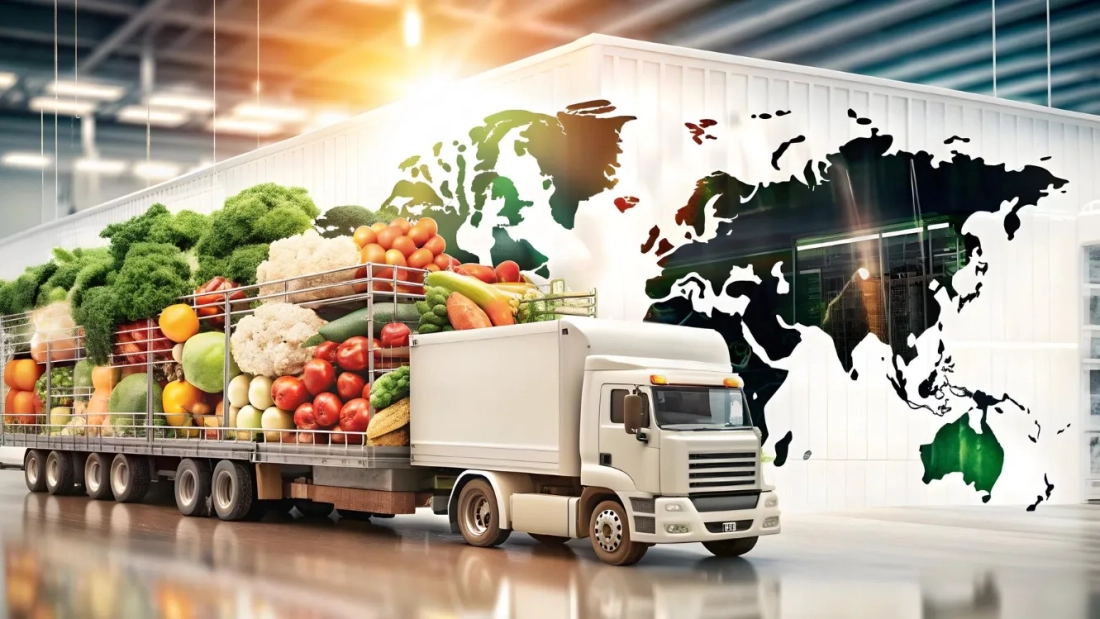
Dubai is a strategic entry point for food exporters serving the UAE and wider Gulf region. Its wholesale distribution network supplies supermarkets, restaurants, retailers, caterers, and wholesale distributors throughout the Emirates.
For international suppliers, entering this market requires more than shipping a container to Jebel Ali. Exporters must coordinate product specifications, compliance documents, quality control, freight, customs clearance, market pricing, and local distribution.
Mayil Global supports this process through a transparent 3% commission-based distribution model and an immediate Cash & Carry wholesale system. These commercial options connect international suppliers with a verified buyer for exporters UAE while giving local UAE businesses access to dependable wholesale food supply.
Why Dubai Is Important for Food Exporters
Dubai’s Al Aweer Central Fruit and Vegetable Market is one of the UAE’s main wholesale hubs for imported produce. It serves professional buyers purchasing onions, potatoes, tomatoes, leafy vegetables, citrus, bananas, and other fresh products in commercial volumes.
Market performance depends on several factors:
- Country of origin
- Product variety, size, and grade
- Harvest timing and seasonal supply
- Container arrival volumes
- Packaging format
- Shipping conditions and delays
- Demand from supermarkets, restaurants, and food-service operators
Exporters entering the market should plan around the full supply chain rather than relying only on the farm-gate price. A commercially viable shipment must account for packing, freight, port handling, inspections, clearance, local transport, distribution costs, wastage, and commission.
Mayil Global’s Exporter Distribution Model
A Transparent 3% Commission Structure
Mayil Global offers eligible exporters access to the UAE wholesale market through a clear 3 percent commission distributor UAE model.
Under this approach, the exporter supplies the agreed product and specifications while Mayil Global supports local distribution, buyer coordination, and market access. The 3% commission provides a defined commercial structure without the uncertainty of multiple intermediaries and unclear deductions.
The model is designed to support:
- Access to UAE supermarkets, restaurants, retailers, and wholesale buyers
- Clear commission calculation
- Local distribution coordination
- Better visibility into market conditions
- Reduced dependence on several intermediaries
- Stronger control over product specifications and shipment timing
- Long-term B2B relationships based on dependable supply
Commercial terms should be agreed in writing before loading. The agreement should define product grade, quantity, arrival timing, inspection standards, payment terms, responsibility for clearance, and the method used to report sales.
Immediate Cash & Carry Container Purchases
The Cash & Carry system is suitable for exporters seeking faster payment and reduced exposure to extended credit cycles. Under agreed terms, Mayil Global can purchase containers or wholesale quantities for immediate resale through UAE distribution channels.
This model can provide:
- Faster payment realization
- Reduced perishable inventory risk
- Improved working-capital availability
- Greater ability to finance the next shipment
- A direct route into the UAE wholesale market
The Cash & Carry option is especially relevant for exporters handling seasonal fruits, vegetables, onions, and other products where delays can reduce shelf life and selling value.

How to Export Food to Dubai: Step-by-Step
1. Select the Product and Confirm Demand
Start by defining the product, origin, variety, grade, size, packaging, monthly volume, and expected arrival window.
Mayil Global sources and distributes fresh fruits, vegetables, premium spices, rice, and farm-fresh eggs. Exporters should match supply plans with the requirements of UAE B2B buyers.
For fresh produce, confirm:
- Harvest or packing date
- Shelf-life expectations
- Size and grade
- Container capacity
- Packaging format
- Storage requirements
- Target selling price
- Expected shipment frequency
Product specifications should be documented before a purchase or commission agreement is finalized.
2. Select the Commercial Route
Exporters should decide whether the shipment will use:
- The 3% commission distribution model
- An immediate Cash & Carry container purchase
- A negotiated wholesale supply arrangement
A verified UAE buyer should confirm the delivery location, clearance responsibility, buyer specifications, payment terms, and acceptable quality tolerances before the exporter books freight.
3. Prepare the Compliance Documents
Fresh fruits and vegetables require plant-health and customs documentation. Requirements can vary by product, origin, and current UAE authority instructions, so exporters should verify the exact requirements before dispatch.
Common documents include:
- Phytosanitary certificate issued by the exporting country’s competent authority
- Commercial invoice
- Detailed packing list or list of contents
- Certificate of origin, where required
- Bill of lading or delivery authorization
- Health certificate, where applicable
- Pesticide residue analysis, where required
- Import approvals and product registrations, where applicable
The official MOCCAE release service for imported agricultural consignments identifies the phytosanitary certificate, customs manifest or bill of lading, certificate of origin, and invoice or list of contents as key documents.
The UAE-based consignee or importer must also hold the appropriate trade license and manage the relevant customs and food-control procedures.
4. Complete Pre-Shipment Quality Control
Quality control must begin at the farm, packing station, or supplier warehouse. Port inspection should not be the first quality check.
A professional inspection process should verify:
- Product freshness and uniformity
- Size and grade consistency
- Absence of rot, mold, pests, and excessive damage
- Correct net weight
- Packaging strength and ventilation
- Batch and traceability information
- Temperature and humidity requirements
- Compliance with the agreed buyer specification
Mayil Global maintains quality control throughout sourcing, handling, packaging, storage, and distribution. This approach protects product condition and gives B2B buyers greater consistency.

Importing Onions to Dubai
Onions are a high-volume product for supermarkets, restaurants, caterers, retailers, and distributors. However, importing onions Dubai requires precise control over origin, variety, size, curing, ventilation, and market timing.
Onion Export Checklist
Confirm Origin and Variety
Specify whether the shipment contains Indian, Egyptian, Iranian, or another origin. Define whether the product is red, yellow, white, or brown onion.
Confirm Size and Grade
The buyer may require a defined size range, such as 45–65 mm or another commercial grade. Mixed sizing can reduce buyer acceptance and weaken the final selling price.
Use Appropriate Packaging
Breathable mesh or jute sacks are commonly used for onions. Pack sizes may include 18 kg, 20 kg, or another format agreed with the buyer. Each sack should display accurate origin and weight information.
Inspect for Defects
Reject onions showing soft bulbs, sprouting, fungal growth, internal rot, excessive moisture, or mechanical damage. Proper curing and dry outer skins help reduce spoilage during transport and storage.
Align With Market Demand
Check current Al Aweer references for the same origin, grade, pack size, and arrival period. General onion prices are not sufficient for quotation decisions.
Al Aweer Pricing and Landed-Cost Planning
Al Aweer prices change according to origin, supply volume, crop timing, quality, and daily demand. Indicative market references reported during August 2026 included approximately:
- Indian new-crop onions: AED 1.95–2.00 per kg
- Egyptian onions: approximately AED 1.45 per kg
- Iranian white or brown onions: approximately AED 1.67–2.22 per kg
These figures are market indicators, not fixed quotations. Exporters should review current Al Aweer price references and Mayil Global’s Al Aweer market updates before confirming a shipment.
A practical landed-cost calculation should include:
- Farm or supplier price
- Sorting, grading, and packing
- Inland transport to the origin port
- Sea freight and insurance
- Port charges
- Inspection and clearance costs
- Local transport to Al Aweer or the buyer’s warehouse
- Storage and handling
- Expected wastage
- The agreed 3% commission, where applicable
The exporter and buyer should compare the complete landed cost with the expected wholesale selling range before loading the container.
Managing Logistics From Jebel Ali to the Buyer
Efficient logistics protect both product quality and margins. Delays can reduce shelf life, increase storage costs, and force the exporter to sell during weaker market conditions.
A coordinated logistics process should manage:
- Vessel arrival and document readiness
- Port inspection and agricultural release
- Customs clearance
- Reefer or suitable transport from the port
- Warehouse or Al Aweer delivery
- Hygienic unloading and handling
- Wholesale order preparation
- Delivery to supermarkets, restaurants, retailers, and distributors
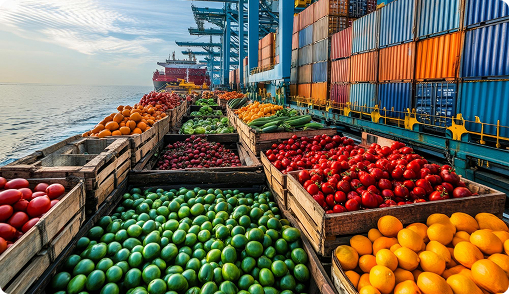
Mayil Global’s Sourcing and Logistics operation is built around trusted farms, international suppliers, quality inspection, hygienic packaging, proper storage, and organized distribution.
Why UAE B2B Buyers Choose Mayil Global
For businesses seeking wholesale fruits and vegetables Dubai, Mayil Global provides a structured supply channel supported by:
- Farm-direct sourcing from trusted farms
- A global supply network across multiple countries
- Inspection at each stage of the supply chain
- Hygienic food handling and packaging
- Proper storage from farm to market
- Organized distribution and timely delivery
- Transparent 3% commission-based distribution
- Immediate Cash & Carry purchase options
The company supplies supermarkets, restaurants, retailers, and wholesale distributors requiring dependable supply and consistent quality. Buyers can review the available fresh fruits, vegetables, premium spices, rice, and eggs.
Final Exporter Checklist
Before shipping food to Dubai, confirm that:
- The UAE buyer and commercial model are verified.
- Product origin, variety, grade, and pack size are agreed.
- The 3% commission or Cash & Carry terms are documented.
- Required certificates are available.
- Labels and traceability details are correct.
- Pre-shipment quality control is complete.
- Freight, clearance, storage, and delivery costs are calculated.
- The shipment aligns with current Al Aweer demand.
- Payment and inspection terms are confirmed in writing.
Exporting food to Dubai becomes more controlled when sourcing, documentation, quality control, logistics, and distribution are managed as one process. Mayil Global supports international exporters as a verified buyer for exporters UAE, while its 3% commission model and Cash & Carry system provide practical routes into the UAE wholesale market.
For exporters seeking a distribution partner, contact Mayil Global to discuss product specifications, shipment volumes, commission terms, and immediate purchase requirements.