S-OCgs4gBuR

5 Steps How to Export Food to Dubai and Get Paid Faster (Easy Guide for Global Shippers)

The United Arab Emirates (UAE) stands as a premier global hub for food trade, with Dubai serving as the central gateway for a multi-billion dollar import market. For global exporters, the opportunity is significant; however, the challenges of navigating complex regulations and ensuring consistent liquidity can often delay business growth. Successfully entering this market requires more than just high-quality produce; it demands a strategic partnership and an understanding of regional logistics.

This guide outlines the critical steps for how to export food to dubai efficiently, focusing on maximizing margins through Mayil Global’s unique 3% commission model and the immediate liquidity of our Cash & Carry wholesale operations.

Step 1: Identifying High-Demand Commodities in the UAE Market

The first step for any exporter is selecting products with consistent demand and high turnover rates. Dubai is heavily dependent on imports for daily essentials. Understanding the specific requirements for wholesale fruits and vegetables in Dubai is essential for selecting the right cargo.

Key commodities currently in high demand include:

  • Dry Onions: A staple with massive daily volume. When importing onions to Dubai, exporters should focus on red and yellow varieties from India, Pakistan, and Egypt.
  • Premium Rice: Particularly Basmati and Long-grain varieties sourced from the Indian subcontinent.
  • Premium Spices: Including black pepper, cardamom, and ginger.
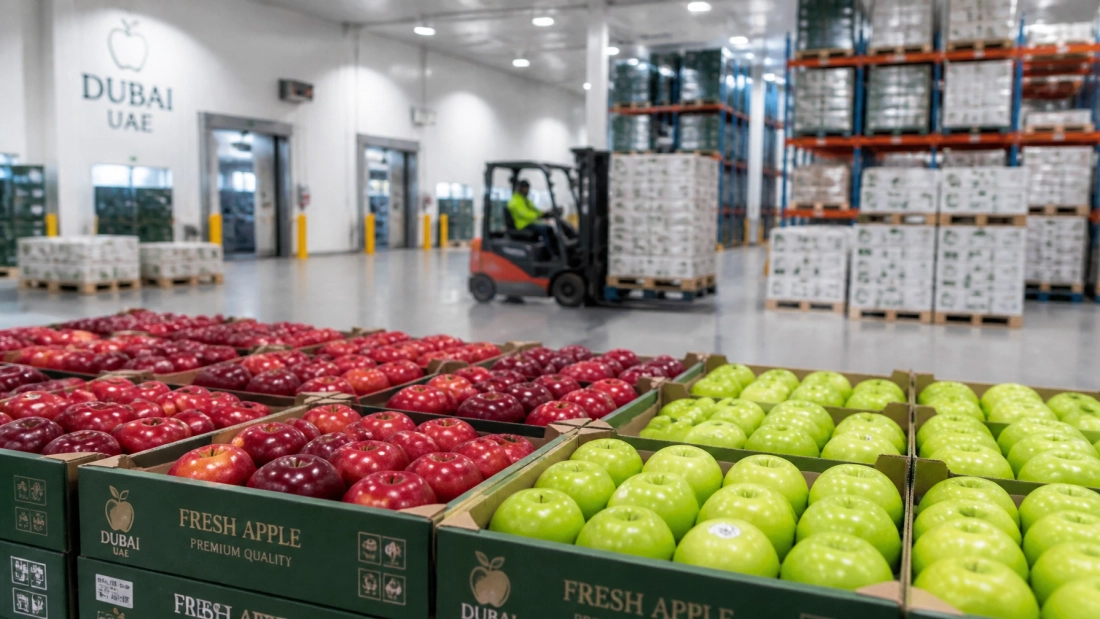
  • Fresh Fruits: Such as apples, citrus, and bananas, which require strict cold-chain maintenance.

Selecting the right product ensures that your container moves quickly upon arrival at the Al Aweer Fruit and Vegetable Market.

Step 2: Navigating Regulatory Compliance and Documentation

Dubai Municipality food import registration and phytosanitary documents

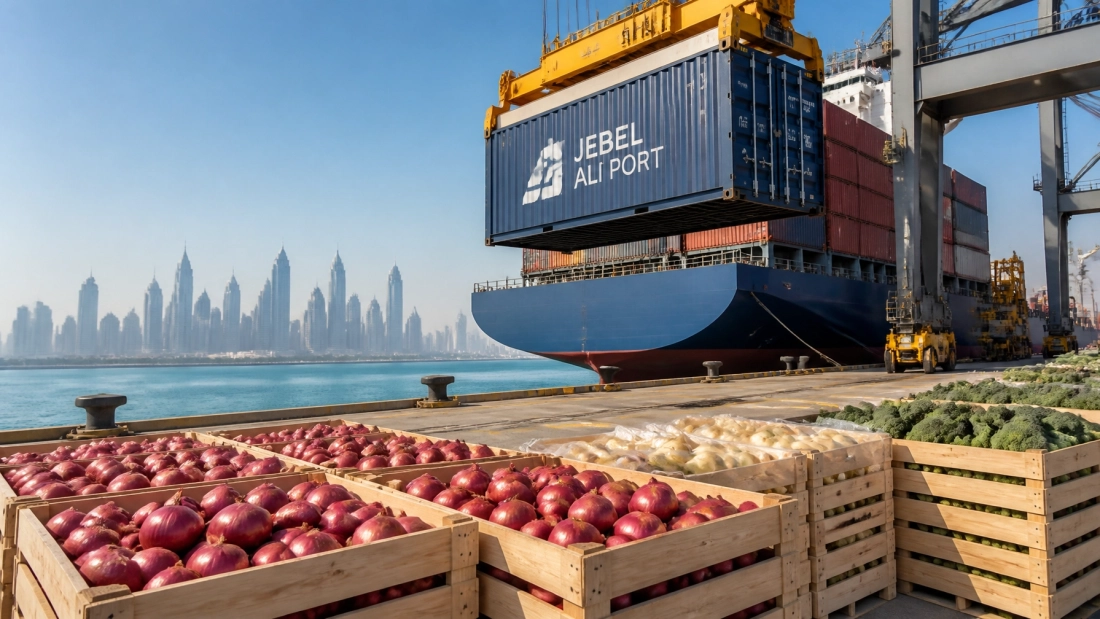
Compliance is the pillar of a successful export operation. Dubai Municipality and the Ministry of Industry and Advanced Technology (MOIAT) enforce rigorous standards to ensure food safety. Failure to provide accurate documentation can lead to shipment rejections or costly delays at Jebel Ali Port.

To ensure a smooth transition, global shippers must secure the following:

  1. Phytosanitary Certificate: Required for all fresh produce to prove it is free from pests and diseases.
  2. Health Certificate: Issued by the competent authority in the country of origin.
  3. Certificate of Origin: To verify the source of the goods for customs and duty calculations.
  4. Food Import & Re-export System (FIRS) Registration: All products must be registered in the Dubai Municipality system by a licensed local importer like Mayil Global.

Proper labeling is also mandatory. All packaging must include the product name, country of origin, net weight, and production/expiry dates, often required in both Arabic and English.

Step 3: Streamlining Logistics and Arrival at Al Aweer Market

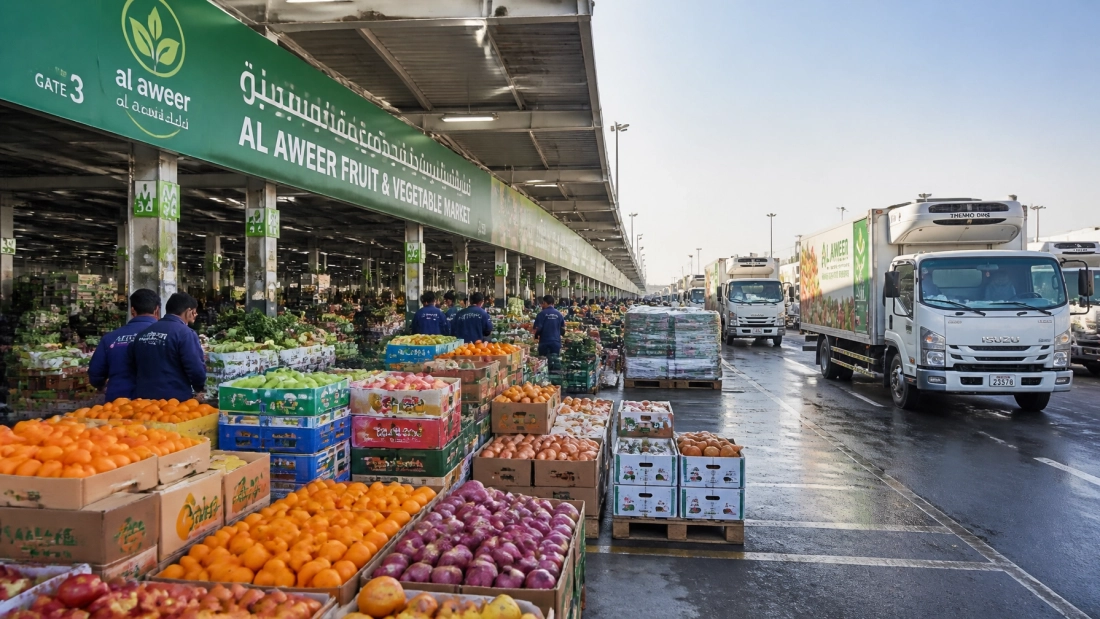
Al Aweer Fruit and Vegetable Market wholesale distribution scene

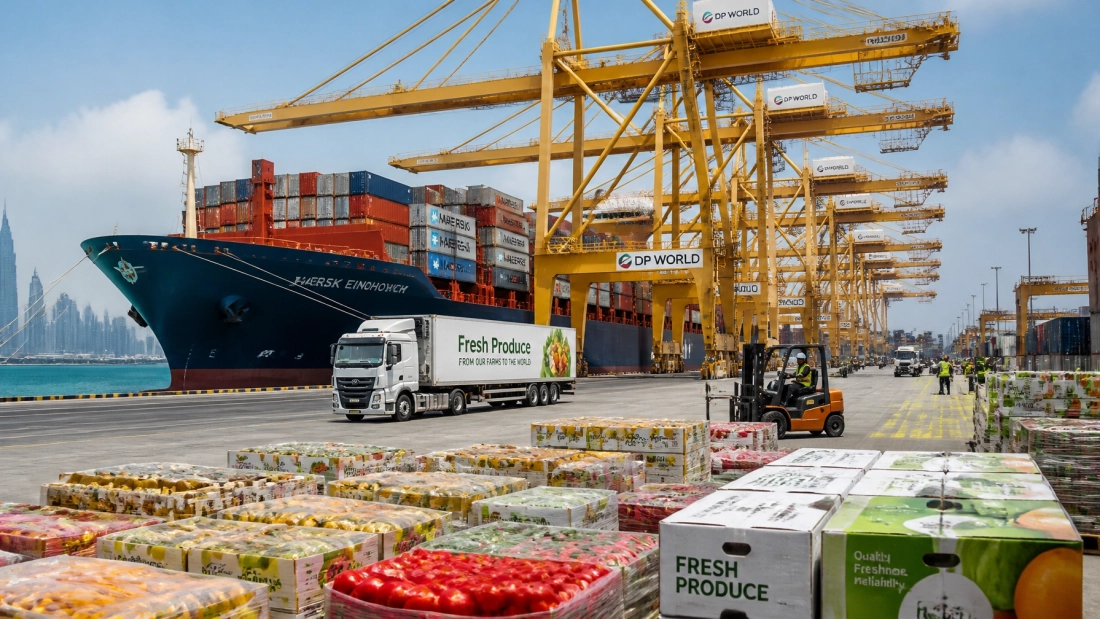
Logistics management defines the profitability of your shipment. Most food imports enter through Jebel Ali Port, the largest marine terminal in the Middle East. From the port, containers are transported to the Al Aweer Fruit and Vegetable Market, the central nervous system of Dubai’s wholesale trade.

Exporters must ensure:

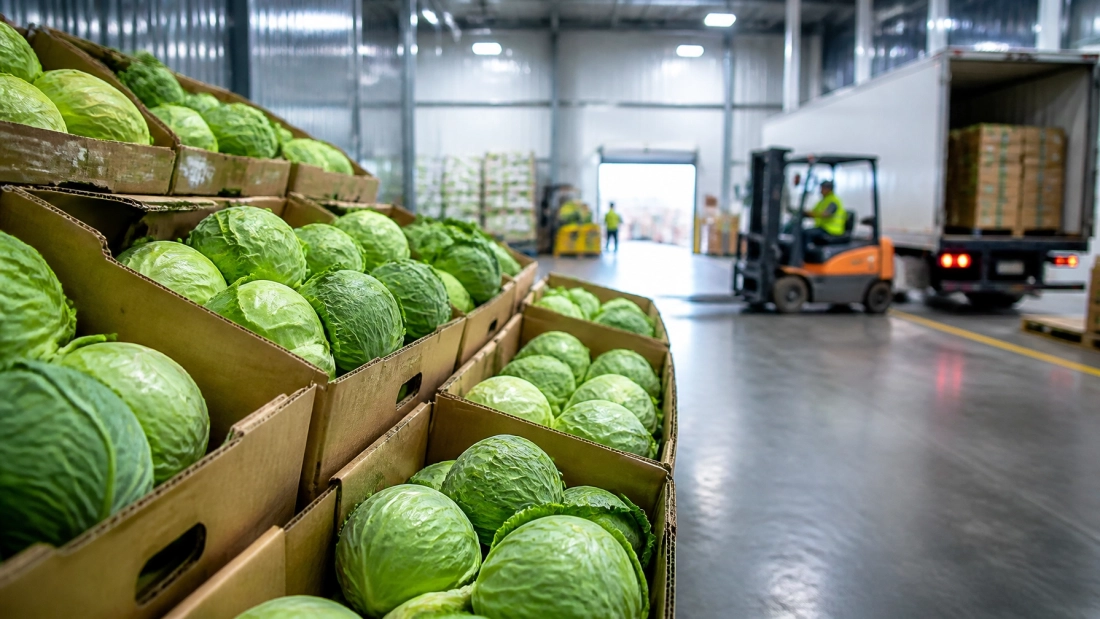
  • Cold Chain Integrity: For perishables, continuous temperature control is non-negotiable. Any fluctuation can lead to quality degradation and lower market prices.
  • Efficient Offloading: Once the container arrives at Al Aweer, rapid offloading and inspection are required to hit the early morning wholesale windows when prices are most competitive.

Mayil Global manages this process with organized logistics, ensuring that your goods are handled with the highest standards of hygiene and speed.

Step 4: Maximizing Margins with the 3% Commission Model

Financial breakdown showing transparent 3% commission model

One of the most significant barriers for exporters is the high commission rates charged by traditional agents in the UAE. Many distributors charge between 5% and 10%, which significantly erodes the exporter's profit.

Mayil Global has revolutionized this by offering a transparent 3% commission strategy. This model is designed to:

  • Increase Net Returns: By lowering the cost of distribution, exporters retain a larger share of the market price.
  • Provide Transparent Reporting: Every sale is documented, providing exporters with clear insights into how their products are performing in the Dubai market.
  • Build Long-Term Trust: We prioritize a partnership-first approach, ensuring that our interests are aligned with yours.

Whether you are importing onions to Dubai or bulk spices, this low-commission model ensures you remain competitive against local and global suppliers.

Step 5: Achieving Daily Liquidity via Cash & Carry

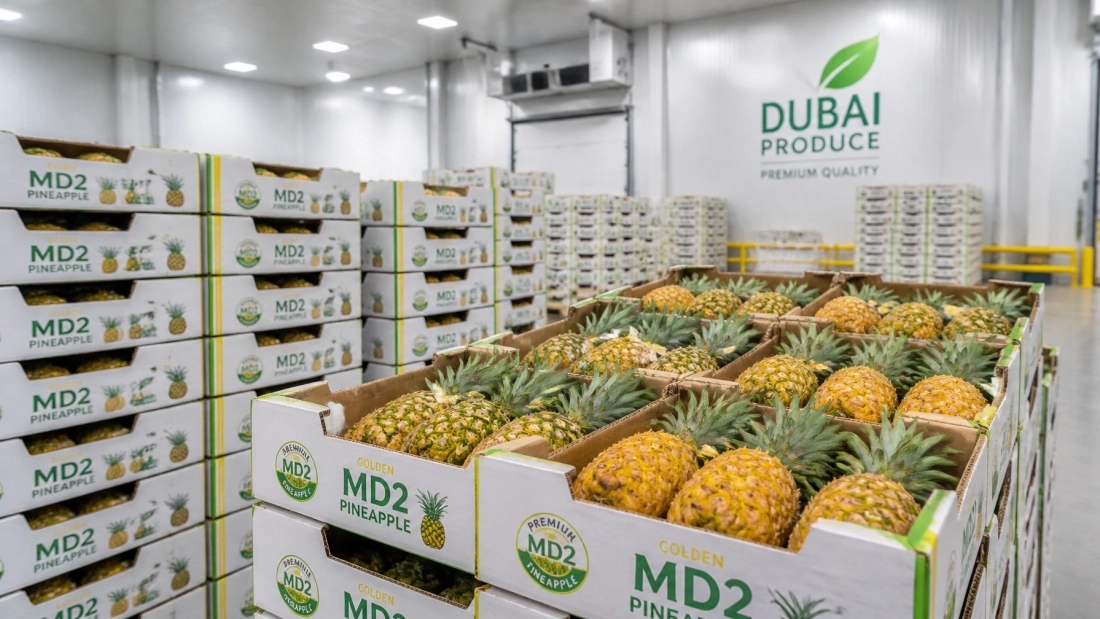
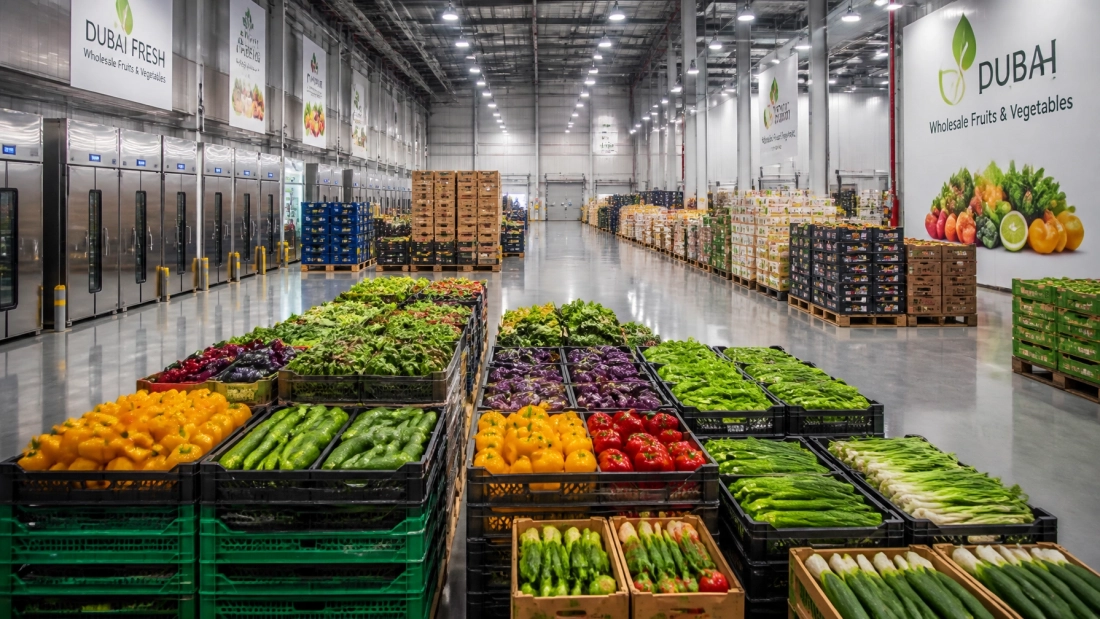
Modern cold storage warehouse showing Cash and Carry wholesale operations

For many global shippers, the biggest challenge isn't finding a buyer, but getting paid quickly. Traditional wholesale cycles can take weeks to settle, creating liquidity gaps that prevent exporters from funding their next shipment.

Mayil Global solves this through our Cash & Carry wholesale model. We offer:

  • Immediate Container Purchases: For qualified shipments of rice, onions, and spices, we provide direct cash-and-carry purchases. This means you get paid immediately upon delivery and inspection.
  • Reduced Risk: By selling directly to us, exporters avoid the risks associated with market price fluctuations during the sales period.
  • Consistent Cash Flow: Immediate payment allows you to reinvest in your supply chain without waiting for retail or supermarket payment cycles.

This approach is particularly beneficial for exporters focusing on bulk rice and other high-volume commodities where capital turnover is key to scaling operations.

Conclusion: Your Strategic Partner in Dubai Food Distribution

Exporting food to Dubai is a high-reward venture for those who understand the operational nuances of the region. By following these five steps: product selection, compliance, logistics optimization, choosing a low-commission model, and securing immediate liquidity: global shippers can build a sustainable and highly profitable trade route.

Mayil Global is committed to being the most reliable bridge between global farms and the UAE market. Whether you are looking for a 3% commission distributor or a direct Cash & Carry buyer, our infrastructure and expertise are at your disposal.

Contact us today to discuss your next shipment and experience a more efficient way to do business in the UAE.
Ib0sG9g7crK

3% Commission vs. Traditional Trading: Which Is Better For Your UAE Food Export Margins?

Navigating the complexities of the UAE food market requires a sophisticated understanding of distribution models and their direct impact on bottom-line profitability. For international exporters and container owners looking to penetrate the Dubai market, the choice between traditional trading structures and the emerging 3% commission model is more than a logistical decision; it is a strategic financial imperative.

In 2026, the UAE continues to solidify its position as a global hub for food re-export and domestic consumption. As demand from supermarkets, restaurants, and retail chains grows, the efficiency of your supply chain: and the transparency of your commissions: determines your long-term viability. Mayil Global stands at the forefront of this evolution, offering a streamlined 3% commission distributor UAE model designed to maximize liquidity and transparency for global shippers.

The Traditional Trading Landscape: Identifying the Margin Erosion

For decades, the Al Aweer Fruit and Vegetable Market has operated on a legacy model of commission-based trading. While this system provided a basic entry point for exporters, it often introduced significant variables that compromised net returns.

High and Variable Commission Structures

Traditional agents in the UAE typically charge commissions ranging from 5% to 10% on the total sales value. Furthermore, these structures are often opaque, with additional "handling" or "service" fees layered on top of the base percentage. For high-volume commodities like citrus, onions, or potatoes, an extra 2–5% in hidden costs can be the difference between a profitable shipment and a financial loss.

Delayed Liquidity and Credit Risks

A significant pain point in traditional trading is the prevalence of credit-based sales. Many traditional distributors sell into the local market on 30-to-90-day credit terms. This forces the exporter to bear the burden of the credit cycle, delaying the settlement of funds and hindering the ability to finance subsequent containers.

Opaque Market Data

In a traditional setup, exporters frequently lack real-time visibility into the actual selling prices achieved at the market level. Without itemized sales reports and verifiable buyer data, exporters remain in a disadvantaged position, unable to verify if they are receiving the true market value for their premium produce.

Global food sourcing and export logistics showing a shipping port with colorful containers

The Mayil Global Advantage: The 3% Commission Paradigm

Modernizing the export experience requires a shift toward transparency and operational speed. Mayil Global has engineered a distribution strategy that prioritizes the exporter's margins through a flat, transparent commission structure.

Fixed 3% Commission for Transparent Growth

Our primary value proposition is a strictly defined 3% commission on the total sales value of the container. This model eliminates the "padding" common in traditional trading. By initiating this flat rate, Mayil Global ensures that the majority of the market upside remains with the producer and the exporter. This predictable cost structure allows for more accurate financial forecasting and aggressive scaling of export volumes.

Operational Excellence in Al Aweer

Operating as a premier wholesale fruits and vegetables Dubai entity, Mayil Global utilizes its established presence in the Al Aweer market to facilitate rapid throughput. We focus on high-volume distribution, where our income is derived from volume-based efficiency rather than high per-unit margins. This aligns our interests directly with yours: the faster and more efficiently we sell your cargo, the better our mutual performance.

  • Sourcing: Direct collaboration with farm-gate owners and exporters.
  • Logistics: Organized handling from the port to the wholesale floor.
  • Distribution: Seamless integration into the UAE’s B2B supply chain.

For a deeper dive into how this affects daily operations, read our comprehensive guide to the 3% commission strategy.

Cash & Carry: Solving the Liquidity Gap for Food Wholesale

The cash and carry food wholesale Dubai model is a critical component of the Mayil Global ecosystem. By targeting B2B buyers who prioritize immediate stock availability and quality over long-term credit, we facilitate a faster cash cycle.

Generating Daily Liquidity

Liquidity is the lifeblood of international trade. Our Cash & Carry approach minimizes the credit tail. By selling primarily to supermarkets, restaurants, and specialized retailers who pay upfront or on highly compressed cycles, we generate daily liquidity. This allows for prompt settlement with exporters, often within days of the final sale, rather than months.

Strategic B2B Supply

Mayil Global is not merely a market agent; we are one of the leading food distribution companies in uae. We supply a wide network of institutional buyers who require consistent, high-quality inventory. This structured demand helps stabilize prices and ensures that your containers are not subject to the extreme volatility of spot-market fluctuations.

Detailed close-up of premium spices and high-grade basmati rice in a clean warehouse environment

Comparative Analysis: 3% Commission vs. Traditional Agents

Feature Traditional Trading (Al Aweer) Mayil Global 3% Commission Model
Commission Rate 5% – 12% (variable) Fixed 3%
Hidden Fees Common (Handling, Service, Market) None (Transparent Itemization)
Payment Cycle 30 – 90 days (Credit-based) Rapid Settlement (Cash & Carry focus)
Market Transparency Limited / Opaque reporting Full visibility of sales prices
Target Buyers Small traditional groceries Supermarkets, Restaurants, Large Retailers
Profit Retention Diluted by layers of fees Maximized for the Exporter

Beyond Fresh Produce: Premium Spices, Rice, and Eggs

While fresh fruits and vegetables form the core of the Al Aweer operations, Mayil Global’s distribution expertise extends to high-demand food categories. Our 3% commission and cash & carry models are equally effective for non-perishable and specialty items.

Premium Spices and Grains

Dubai is a global clearinghouse for premium spices and rice. We facilitate the wholesale distribution of high-grade cardamom, black pepper, and premium basmati rice. Our bulk rice distribution model is specifically designed to handle the high volumes and specific storage requirements of these commodities.

Farm Fresh Eggs

The demand for high-quality protein in the UAE remains robust. We ensure the hygienic handling and rapid distribution of farm-fresh eggs to our B2B network. Our cold-chain logistics and strict quality control protocols ensure that these sensitive products reach the market in optimal condition.

Fresh farm eggs in structured high-quality industrial packaging inside a temperature-controlled cold storage

Sourcing and Logistics: The Foundation of Trust

Reliability in food distribution is built on rigorous standards. Mayil Global maintains strict control over every stage of the supply chain. From global sourcing from trusted international partners to final-mile delivery in the UAE, our processes are designed to mitigate risk and ensure product integrity.

  • Inspection: Rigorous quality checks at the point of origin and upon arrival.
  • Hygienic Handling: Adherence to international safety standards in packaging and storage.
  • Logistics Excellence: Leveraging organized logistics to ensure timely delivery to retailers and supermarkets.

Explore our Sourcing and Logistics page for detailed information on our operational standards.

Securing Your Future in the UAE Market

As the UAE food sector moves toward greater professionalization, the "old way" of trading is becoming a liability for global exporters. High commissions and opaque settlements are inefficiencies that your business cannot afford.

By choosing Mayil Global, you are selecting a partner that prioritizes your margins. Our 3% commission distributor UAE model is more than a service: it is a commitment to transparency, liquidity, and mutual growth. Whether you are exporting onions, potatoes, premium spices, or fresh eggs, our infrastructure is ready to scale with your ambitions.

Organized crates filled with fresh red onions, potatoes, and tomatoes in a modern Dubai distribution hub

Conclusion: Activating the Advantage

The decision is clear. If you value transparency, require rapid liquidity, and seek to maximize your export margins, the traditional 10% commission model is no longer viable. Mayil Global provides the modern alternative.

Join the growing list of international exporters who have optimized their UAE operations through our 3% commission structure. Contact us today to discuss your next shipment and experience the difference that professional, B2B-focused wholesaling can make.

Learn more about our full range of products or get in touch with our procurement team.


Ccx33ROJ5py

5 Steps How to Export Food to Dubai and Secure a Verified Buyer (Easy Guide for Global Exporters)

Dubai stands as one of the world’s most significant re-export hubs and a premier destination for global food trade. For international exporters, the UAE market offers unparalleled opportunities for high-volume sales of fresh produce, spices, and grains. However, the path to successfully how to export food to dubai requires a rigorous understanding of regulatory frameworks, documentation standards, and local market dynamics.

At Mayil Global, we specialize in bridging the gap between global suppliers and the UAE’s robust B2B sector. By positioning ourselves as a verified buyer and offering a transparent 3% commission-based distribution model, we ensure that exporters can enter the market with confidence and liquidity. This guide outlines the five critical steps to establishing a successful export operation to Dubai.


Step 1: Regulatory Compliance and Product Registration

The foundation of any successful food export operation to the UAE is compliance with the standards set by the Dubai Municipality (DM) and the Ministry of Climate Change and Environment (MOCCAE). Dubai operates a sophisticated digital ecosystem to monitor food safety and quality.

Registering with Foodwatch

All food items imported into Dubai must be registered on the Foodwatch platform. This digital portal, managed by the Dubai Municipality, tracks the entire lifecycle of food products. As an exporter, your first priority is ensuring your local partner or importer has registered your products. This process includes:

  • Providing detailed ingredient lists and nutritional information.
  • Submitting label artwork for approval.
  • Ensuring compliance with UAE standard GSO 9/2013 (Labelling of Prepackaged Foodstuffs).

Arabic Labelling Requirements

Dubai’s food safety regulations mandate that certain product information must be available in Arabic. This typically includes the product name, country of origin, and storage instructions. For high-volume items like wholesale fruits and vegetables dubai, packaging must also clearly state the production and expiry dates. Failing to meet these labelling standards can result in costly shipment rejections at the port.


Step 2: Preparing the Essential Document Pack

Documentation is the most frequent cause of delays in the UAE food supply chain. A complete and accurate "Document Pack" is non-negotiable for customs clearance and food safety inspections.

Al Aweer Fruit and Vegetable Market Wholesale Distribution

Mandatory Documents for Food Exports

When importing onions dubai or other perishable commodities, you must provide:

  1. Commercial Invoice: Detailing the HS Code, quantity, unit price, and total value.
  2. Packing List: Providing specific details on weights, dimensions, and packaging types.
  3. Bill of Lading (Sea) or Airway Bill (Air): The title document for the goods.
  4. Certificate of Origin (COO): Issued by the Chamber of Commerce in your home country.
  5. Original Health Certificate: Issued by a recognized government authority, certifying the product is fit for human consumption.
  6. Phytosanitary Certificate: Essential for fresh produce like onions and fruits, confirming the shipment is free from pests.

Maintaining a rigorous filing system for these documents ensures that your local partner can file the import declaration through Dubai Customs without administrative friction.


Step 3: Logistics and Port Handling

Strategic logistics management is vital to maintaining the shelf life and quality of food products. Most food shipments enter the UAE via Jebel Ali Port, the largest marine terminal in the Middle East, or Dubai International Airport for high-value perishables.

Transitioning to Al Aweer Central Market

Once the shipment clears customs and municipality inspections, it is typically moved to the Al Aweer Central Fruit and Vegetable Market. This 100-hectare hub is the nerve center for food distribution in the UAE.

Exporters must coordinate with logistics partners who understand the "cold chain" requirements of the region. Proper storage and handling from the farm to the market are core pillars of Mayil Global’s sourcing and logistics operations. Ensuring that your containers are temperature-controlled and monitored throughout the journey prevents losses and preserves the premium status of your goods.

Quality Control and Food Safety Inspection


Step 4: Real-time Market Intelligence and Pricing

The Dubai food market is highly dynamic, with prices fluctuating daily based on global supply chains and local demand. Success in this environment requires real-time intelligence.

Understanding Al Aweer Pricing

Pricing at the Al Aweer market is traditionally cash-based and determined by daily supply levels. For instance, when importing onions dubai, exporters must stay updated on the arrivals from competing regions like India, Pakistan, and Egypt.

To maximize your returns, you should work with partners who provide transparency regarding these daily rates. Relying on outdated price lists can lead to misaligned expectations. At Mayil Global, we help our partners navigate these fluctuations by providing insights into market trends and ensuring that products are positioned correctly within the wholesale fruits and vegetables dubai category.


Step 5: Securing a Verified Buyer (The Mayil Global Advantage)

The final and most critical step is securing a reliable, verified buyer who can provide immediate liquidity. Many exporters struggle with long payment cycles or opaque commission structures that erode profit margins.

The 3% Commission-Based Model

Mayil Global offers a revolutionary 3% commission-based distribution model designed specifically for global exporters and exporters. Unlike traditional traders who might take a high cut or offer uncertain terms, our 3% model provides:

  • Operational Transparency: You know exactly what the costs are.
  • Market Reach: We leverage our established network to supply supermarkets, restaurants, and retailers.
  • Daily Liquidity: Our model is built for the fast-paced nature of the food industry, ensuring you can reinvest in your next container quickly.

Cash & Carry Wholesale

For exporters looking for immediate disposal of stock, we also facilitate Cash & Carry container purchases. This model is particularly effective for high-demand items like bulk rice and onions. By selling directly to a verified wholesale supplier like Mayil Global, you eliminate the risks associated with middleman uncertainty.

Last-mile Food Distribution in Dubai


Building Long-Term Strategic Partnerships

Exporting food to Dubai is not merely a transaction; it is a strategic operation that requires precision at every stage. From the initial registration on Foodwatch to the final hand-off at Al Aweer, each step must be executed with professional excellence.

By partnering with Mayil Global, you gain more than just a buyer; you gain a distribution powerhouse committed to your growth. Whether you are focused on exporting onions or expanding your reach into the spices and grain trade, our team provides the infrastructure and transparency needed to dominate the UAE market.

Securing the Deal with a Verified Buyer

Take the Next Step

If you are ready to scale your export business and secure your margins with our 3% commission model, contact Mayil Global today. We are actively seeking long-term partners for fresh produce and premium food products.


3 Percent Commission Distributor UAE Secrets Revealed: How to Protect Your Export Margins

![A professional, high-angle view of a modern food distribution warehouse in Dubai, featuring organized pallets of fresh produce, high-tech logistics tracking systems, and bright lighting, symbolizing efficiency and reliability in the wholesale food industry.](https://api.g some-image-generator.com/hero-distribution-logistics.jpg)

The United Arab Emirates, and Dubai in particular, serves as the central nervous system for the global food trade. For exporters of fresh fruits, vegetables, and premium commodities like spices and rice, the Al Aweer Fruit and Vegetable Market represents both immense opportunity and significant risk. The primary challenge facing international exporters today is not just finding a buyer, but protecting paper-thin margins from being eroded by high commissions, hidden logistical costs, and prolonged payment cycles.

At Mayil Global, we have observed that the traditional distribution model is increasingly becoming a barrier to profitability. To address this, the industry is shifting toward a more transparent, volume-driven approach. Understanding the mechanics of a 3 percent commission distributor in the UAE is no longer just an option: it is a strategic necessity for any exporter looking to maintain a sustainable business in the Middle East.

The Hidden Cost of Traditional Distribution in the UAE

For years, the standard operating procedure for food distribution in Dubai involved commissions ranging from 5% to 15%. While these figures are often presented upfront, the true cost to the exporter is frequently much higher. Traditional distributors often operate with "hidden" deductions that only appear on the final settlement report: if they appear at all.

These costs often include:

  • Inflated Handling Fees: Unspecified charges for offloading and local transport that exceed market rates.
  • Storage Surcharges: High fees for cold storage and warehouse space.
  • Market Loss Adjustments: Arbitrary price reductions claimed by the distributor due to perceived "market fluctuations."
  • Credit Risk Exposure: The distributor extends credit to local buyers, but the exporter bears the risk of default or delayed payment.

When these factors are combined, an exporter’s net return can be significantly lower than anticipated, often turning a profitable shipment into a loss. This is why many are now seeking a 3 percent commission distributor in the UAE to secure their financial interests.

![A busy shipping port in Dubai with large cargo ships and stacks of colorful shipping containers, illustrating the scale of international food trade and the volume of produce moving through the UAE.](https://api.g some-image-generator.com/dubai-port-containers.jpg)

How the 3% Commission Model Revolutionizes Export Margins

The 3% commission model is built on the principle of high-volume, low-margin operations. It aligns the incentives of the distributor with those of the exporter. At a flat 3% rate, the distributor only thrives if they move large volumes of goods quickly and at the best possible market prices.

Transparency and Documentation

A reputable 3% distributor provides comprehensive, itemized documentation of all legitimate expenses. This includes customs duties, municipality fees, and standard handling costs. By stripping away hidden fees, the exporter can calculate a precise netback price for every kilogram of produce sold. This transparency is foundational to Mayil Global’s approach to wholesale food distribution.

Aligned Incentives

In a high-commission model (10-15%), a distributor can remain profitable even if they sell slowly or focus on their own inventory. In contrast, a 3% model forces the distributor to prioritize turnover. They must sell your container fast to free up space and maintain their own cash flow, which naturally benefits the exporter's bottom line.

Leveraging the Cash & Carry Model for Daily Liquidity

One of the greatest risks in international trade is the "liquidity gap": the time between shipping a container and receiving payment. Traditional distribution can tie up capital for 30, 60, or even 90 days.

By integrating a cash and carry food wholesale Dubai model, distributors can offer daily or near-daily liquidity. This process works by selling produce directly to a network of B2B buyers: supermarkets, restaurants, and secondary wholesalers: who pay immediately or on very short terms.

For the exporter, this means:

  1. Faster Reinvestment: Capital is returned quickly, allowing for the purchase and shipment of the next container.
  2. Reduced Credit Exposure: Since the distributor is collecting cash, the exporter is not left waiting for local buyers to settle their accounts.
  3. Real-Time Pricing: Frequent settlements provide a clearer picture of current market trends in Al Aweer, allowing exporters to adjust their supply chain in real-time.

![A variety of premium food products including bags of long-grain rice, vibrant spices in wooden bowls, and fresh vegetables, showcasing the range of commodities handled by wholesale food distributors in the UAE.](https://api.g some-image-generator.com/fresh-produce-spices-rice.jpg)

Strategic Steps to Protect Your Export Margins

Securing a 3% commission rate is only half the battle. To truly protect your margins, you must ensure your operational processes are airtight.

1. Strict Quality Control at the Source

In the Al Aweer market, quality determines the price. Even a minor deviation from UAE food safety or grading standards can lead to significant price markdowns. Mayil Global emphasizes farm-direct sourcing and strict inspection at every stage. Exporters should invest in high-quality packaging and climate-controlled logistics to ensure that "farm fresh" remains a reality upon arrival.

2. Precise Documentation

Delays at the port are the silent killers of margin. Ensure all phytosanitary certificates, certificates of origin, and invoices are 100% accurate. A 3 percent commission distributor in the UAE will facilitate fast clearance, but they cannot overcome errors in your paperwork.

3. Monitoring Market Cycles

The UAE market for commodities like onions, potatoes, and lemons is highly seasonal. Understanding how to secure margins during peak supply periods is critical. Use the data provided by your distributor to time your shipments for maximum impact.

![A professional business meeting in a corporate setting in Dubai, with two business owners discussing logistics and supply chain strategy over a tablet, emphasizing the B2B partnership aspect.](https://api.g some-image-generator.com/b2b-business-meeting.jpg)

Why Mayil Global is the Preferred Partner for Aweer Market Exporters

Mayil Global is not just a distributor; we are a strategic partner for exporters, supermarkets, and restaurants across the UAE. Our infrastructure is designed to handle high volumes of fresh produce, premium spices, rice, and eggs with surgical precision.

Our USPs include:

  • 3% Commission Structure: We offer a transparent, flat-fee model for container owners and exporters, ensuring you keep more of your hard-earned profit.
  • Global Supply Network: We bridge the gap between global farms and the UAE’s most demanding B2B buyers.
  • Hygienic Handling & Safety: Every product we handle follows strict safety standards, ensuring that our reputation: and yours: remains untarnished.
  • Organized Logistics: Our logistics network is optimized for the cash and carry food wholesale Dubai environment, providing the speed and reliability that modern business demands.

![A close-up shot of a quality control inspector in a white coat and gloves, carefully examining fresh oranges and green leafy vegetables in a sterile, modern food processing facility.](https://api.g some-image-generator.com/quality-control-inspection.jpg)

Conclusion: Taking Control of Your Export Profitability

The "secrets" of a 3% commission distributor are rooted in operational efficiency and radical transparency. By moving away from traditional, opaque distribution models and embracing a high-turnover, cash-focused strategy, exporters can protect their margins and build a sustainable presence in the UAE market.

Whether you are a container owner looking for a reliable outlet in Al Aweer or a local retailer seeking a dependable wholesale fruits and vegetables Dubai supplier, the path to success lies in choosing partners who prioritize your liquidity and growth.

For exporters ready to secure their margins and experience the advantage of the 3% model, Mayil Global provides the expertise and infrastructure to turn your export ambitions into consistent results.

zb_rXTqBvYk

The Exporter’s Guide to Using the 3% Commission Model at Al Aweer Market

Dubai stands as the primary trade gateway for the Middle East, with the Al Aweer Fruit and Vegetable Market serving as the epicenter of its fresh produce industry. For global exporters, the challenge often lies not in the quality of the harvest, but in navigating the complexities of local distribution, customs, and pricing volatility.

Mayil Global facilitates this transition through a structured 3% commission model, designed to provide international suppliers with transparent, high-speed access to the UAE's wholesale market. This guide outlines the operational framework for exporting to Dubai and leveraging our commission-based distribution to maximize your export margins.

Understanding the Al Aweer Wholesale Landscape

The Al Aweer Market (Ras Al Khor) is the largest wholesale hub for fruits and vegetables in the region. It operates as a high-velocity environment where supply and demand dictate daily price fluctuations. For an exporter, selling directly in this market is not feasible without a local partner who possesses the necessary trade licenses and infrastructure.

Mayil Global serves as that strategic partner. By acting as your commission agent and importer of record, we bridge the gap between your farm and the UAE’s leading supermarkets, restaurants, and sub-wholesalers. Our model focuses on "Cash & Carry" and immediate liquidity, ensuring that your produce is sold at optimal market rates with minimal delay.

The 3% Commission Model: A Strategic Advantage

The traditional export-import relationship often involves flat-fee purchasing or high-margin intermediaries that erode the exporter’s profits. Mayil Global’s 3% commission model is built on the principle of alignment.

  1. Market-Driven Pricing: Your goods are sold at the prevailing market rate in Al Aweer.
  2. Transparent Fee Structure: We deduct a flat 3% commission from the gross sales value.
  3. Operational Coverage: We handle the internal logistics from the port to the market, including customs coordination and municipality clearances.
  4. Accountability: You receive a detailed sales report, providing full visibility into the quantities sold and the prices achieved.

This model is particularly effective for high-volume commodities like onions, potatoes, and citrus fruits, where small percentage differences in fees can significantly impact the bottom line. For more details on how this applies to specific commodities, read our guide on exporting onions to Dubai.

A professional close-up shot of high-quality red and white onions packed in mesh sacks in a clean, organized wholesale warehouse. The onions are firm and fresh.

How to Export Food to Dubai: A Step-by-Step Operational Guide

Navigating the regulatory requirements of the Dubai Municipality and Dubai Customs is the most critical stage of the export process. Failure to comply with documentation or labeling standards can result in shipment rejections or costly delays.

1. Compliance and Registration

Before shipping, your company and products must be registered. In Dubai, this is managed through the Food Import and Re-Export System (FIRS). As your local partner, Mayil Global assists in ensuring that your product labels meet UAE standards, which include mandatory Arabic/English text, origin details, and shelf-life indicators.

2. Core Documentation Requirements

To successfully clear wholesale fruits and vegetables in Dubai, the following documents must accompany every shipment:

  • Commercial Invoice: Detailing the product type, HS code, quantity, and value.
  • Bill of Lading (Sea) or Air Waybill (Air): Specifying the transit details.
  • Phytosanitary Certificate: Issued by the agricultural authority of the exporting country, certifying that the produce is free from pests.
  • Certificate of Origin: Validated by the relevant Chamber of Commerce.
  • Packing List: Providing a breakdown of the cargo configuration.

3. Sourcing and Logistics

Once documentation is in order, the physical movement of goods requires a strict cold chain. Whether you are importing onions to Dubai or high-value berries, maintaining the correct temperature from the farm to our Al Aweer warehouse is non-negotiable.

Mayil Global coordinates the sourcing and logistics from Jebel Ali Port or Dubai International Airport, ensuring that the "farm-fresh" quality is preserved until the point of sale.

A refrigerated cargo container being unloaded at a modern logistics terminal in Dubai. A forklift is moving a pallet of fresh produce.

Maximizing Profitability in Al Aweer

Success in the Al Aweer market requires more than just high-quality produce; it requires timing and market intelligence. The market operates primarily in the late-night and early-morning hours, where the largest B2B transactions occur.

The Role of Cash & Carry

Mayil Global utilizes a Cash & Carry wholesale model. This means we target buyers who are ready to purchase and pay immediately: supermarkets, catering companies, and retailers who require steady, reliable supply. This approach minimizes credit risk and ensures that funds are available to settle the exporter’s accounts faster.

Handling and Inspection

Strict quality control is a pillar of our operation. Upon arrival at our facility, every consignment undergoes inspection. We check for:

  • Physical damage or spoilage.
  • Consistency in grading and sizing.
  • Packaging integrity.
  • Compliance with Dubai Municipality safety standards.

By maintaining these rigorous standards, we uphold the reputation of your brand in the UAE market, allowing for consistent demand and better price negotiation.

A top-down, clean corporate shot of a desk with professional export documents, a shipping map of the UAE, and a bowl of fresh premium fruits.

Why Global Exporters Partner with Mayil Global

Mayil Global is not just a distributor; we are an extension of your export business in the UAE. Our infrastructure is built to support long-term, high-volume partnerships.
  • Global Supply Network: We work with suppliers across multiple continents, ensuring a steady flow of produce regardless of seasonal shifts.
  • Strategic Location: Our presence in Al Aweer provides direct access to the highest concentration of food buyers in the GCC.
  • Fixed 3% Commission: We eliminate the guesswork in pricing. You know exactly what your costs are, allowing for precise financial forecasting.
  • Expertise in High-Volume Commodities: From bulk rice and premium spices to farm-fresh eggs and onions, we understand the specific handling requirements of diverse food categories.

For exporters seeking to secure daily liquidity and stable market access, our 3% commission strategy explained offers a deep dive into the financial benefits of this model.

Conclusion: Securing Your Position in the Dubai Market

The UAE's dependence on food imports creates a massive opportunity for global exporters, but the path to profitability is paved with regulatory and logistical hurdles. By leveraging the 3% commission model at Al Aweer Market, you gain a transparent, efficient, and professional partner in Mayil Global.

We invite serious exporters to contact us to discuss container-load shipments and long-term distribution agreements. Our focus remains on delivering dependable supply and consistent quality to our B2B clients while maximizing the returns for our global partners.

For inquiries regarding current market prices or to initiate your first shipment, contact our team today.


pUMbRIWKmh1

7 Mistakes You’re Making with Pineapple Exports to the UAE (and How to Fix Them Today)

The United Arab Emirates represents one of the most lucrative markets for fresh produce in the Middle East, with Dubai acting as the central hub for redistribution across the GCC. Pineapple, particularly the high-sugar MD2 variety, is in constant demand from supermarkets, luxury hotels, and the hospitality sector. However, for many international exporters, the journey from farm to the Al Aweer Fruit and Vegetable Market is fraught with operational errors that lead to rejected consignments, spoiled fruit, and evaporated profit margins.

At Mayil Global, we observe these challenges daily. As a leading wholesale supplier and distributor in the UAE, we specialize in bridging the gap between global producers and local B2B buyers. Success in this market requires more than just high-quality fruit; it requires rigorous adherence to logistics, documentation, and market-specific standards.

If you are looking for a reliable pineapple buyer in Dubai, or if you are currently shipping and seeing inconsistent returns, you are likely making one of the following seven mistakes. Here is how to fix them.


1. Harvesting Based on Appearance Instead of Brix Levels

One of the most common misconceptions among exporters is that a pineapple will continue to ripen and sweeten after it is harvested. Unlike bananas or mangoes, pineapples are non-climacteric; they do not get sweeter once they are detached from the plant.

Many exporters harvest early to survive long transit times, resulting in "woody," sour fruit that fails to meet the UAE’s premium standards.

The Fix: Implement a scientific harvest protocol. The Dubai market demands a minimum of 13–14° Brix (sugar content), while premium supermarket lines often look for 15° or higher.

  • Action: Use a digital refractometer to test samples across the field.
  • Action: Only harvest when the internal sugar content reaches the target, regardless of the external shell color.

Brix Testing for Quality Control

2. Neglecting the MD2 Variety Supremacy

The UAE market is highly specific regarding variety. While the 'Queen Victoria' or 'Smooth Cayenne' varieties have their niche, the market is overwhelmingly dominated by the MD2 "Golden Ripe" variety.

Exporters who attempt to ship traditional varieties without a pre-secured niche often find their products sold at a steep discount. MD2 is preferred for its uniform shape, lower acidity, and significantly better shelf-life under refrigeration.

The Fix: Focus your export strategy on MD2. If you are growing other varieties, ensure you have a dedicated buyer like Mayil Global who can navigate the specific distribution channels for those products. For general wholesale in the UAE, MD2 is the standard that ensures fast turnover.

3. Inadequate Ventilation and Packaging Standards

Pineapples are highly susceptible to "internal browning" and fermentation if they cannot breathe during transit. We frequently see exporters using standard corrugated boxes without sufficient ventilation holes or using cartons that are not strong enough to withstand high-stacking in containers.

When the bottom boxes collapse due to humidity and weight, the entire airflow of the refrigerated container is compromised, leading to heat pockets and rapid decay.

The Fix: Use export-grade, double-walled corrugated fiberboard cartons.

  • Ventilation: Ensure at least 4% of the side surface area is ventilated.
  • Packing: Stick to standard counts (usually 5, 6, 7, 8, 9, or 10 pieces per 12kg box).
  • Palletization: Use sturdy pallets and edge protectors to ensure the load remains stable throughout the journey to Jebel Ali.

4. Cold Chain Breaks and Temperature Fluctuations

The "Cold Chain" is the most critical link in pineapple logistics. Pineapples are sensitive to both heat and extreme cold. Shipping at the wrong temperature: or allowing the temperature to fluctuate: leads to two main disasters:

  1. Chilling Injury: If temperatures drop below 7°C, the fruit develops dark spots and the crown wilts.
  2. Rapid Decay: If temperatures rise above 12°C, fermentation begins, and the fruit loses its commercial value within days.

The Fix: Maintain a strict set-point of 7.5°C to 8°C with a relative humidity of 85–90%.

  • Action: Use high-quality refrigerated containers (reefers) and place digital temperature loggers deep inside the pallets to monitor for breaks during transshipment.

Refrigerated Logistics at Dubai Port

5. Documentation Misalignment and Regulatory Errors

The UAE’s Ministry of Climate Change and Environment (MOCCAE) and the Dubai Municipality Food Safety Department have strict requirements. A single typo on a Phytosanitary Certificate or a missing ZAD registration can result in your container being held at the port for days. In the heat of the UAE, every hour at the port is an hour of lost shelf-life.

Common Documentation Errors:

  • Botanical name (Ananas comosus) missing or misspelled.
  • Weights on the Bill of Lading not matching the Packing List.
  • Lack of Arabic labeling on the cartons (Product name, Origin, Expiry).

The Fix: Work with an experienced partner like Mayil Global. We ensure that all importer registrations are active and that your documentation is pre-verified before the ship even leaves your port.

6. Losing Margins to 10-15% Commission Agents

Traditional commission agents in the Aweer Market often charge between 10% and 15% to move your product. When you factor in shipping, packaging, and duties, these high commissions often eat the entirety of an exporter's profit. Furthermore, many agents are not transparent about the final sales price, leaving the exporter in the dark.

The Fix: Switch to the Mayil Global 3% Commission Model. We have disrupted the traditional market by offering a transparent, flat 3% commission for distribution. This allows exporters to retain 7% to 12% more of their revenue compared to traditional agents.

  • Transparency: We provide real-time updates on market prices and sales.
  • Efficiency: Our focus is on high-volume, professional B2B supply, not just "dumping" stock in the market.

Learn more about how our 3% commission model can change your export business.

3% Commission and Cash & Carry Visual

7. Suffering from Liquidity Gaps and Delayed Payments

The "wait and see" model of traditional exports is a major mistake. Many exporters ship containers and wait weeks or even months for the final settlement from their agents. This creates a massive liquidity gap, preventing you from purchasing the next harvest or paying your farmers.

The Fix: Utilize our Cash & Carry Model. For exporters with premium-grade MD2 pineapples already in Dubai or arriving shortly, Mayil Global offers an immediate purchase option.

  • Immediate Cash: We buy the container outright at current market rates.
  • Zero Risk: Once the inspection is passed, the payment is settled, removing the risk of market price fluctuations during the sales period.

Explore our Cash & Carry solutions for faster liquidity.


Strategic Partnership: Why Choose Mayil Global?

As a wholesale supplier of fresh produce in the UAE, Mayil Global is more than just a buyer; we are your operational partner on the ground. We understand that a successful export business is built on trust, consistency, and rigorous quality control.

Our infrastructure includes:

  • Direct Farm Sourcing: We value direct relationships with growers who prioritize quality.
  • Organized Logistics: Our distribution network ensures that your pineapples reach the most profitable B2B channels, from supermarkets to wholesalers.
  • Safety Standards: We follow strict hygienic handling and packaging protocols, ensuring your brand maintains a premium reputation in the UAE.

Looking for a Pineapple Buyer in Dubai?

If you have a container of premium pineapples ready for export, or if you are looking to scale your operations in the Middle East, avoid the pitfalls of high commissions and opaque middlemen. Partner with a company that prioritizes your profitability.

Contact Mayil Global today to discuss our 3% commission distribution or our immediate Cash & Carry purchase options. Let’s turn your pineapple exports into a consistent, high-margin revenue stream.

Visit MayilGlobal.com for more information on our services and product categories.

7ie5tn1h6al

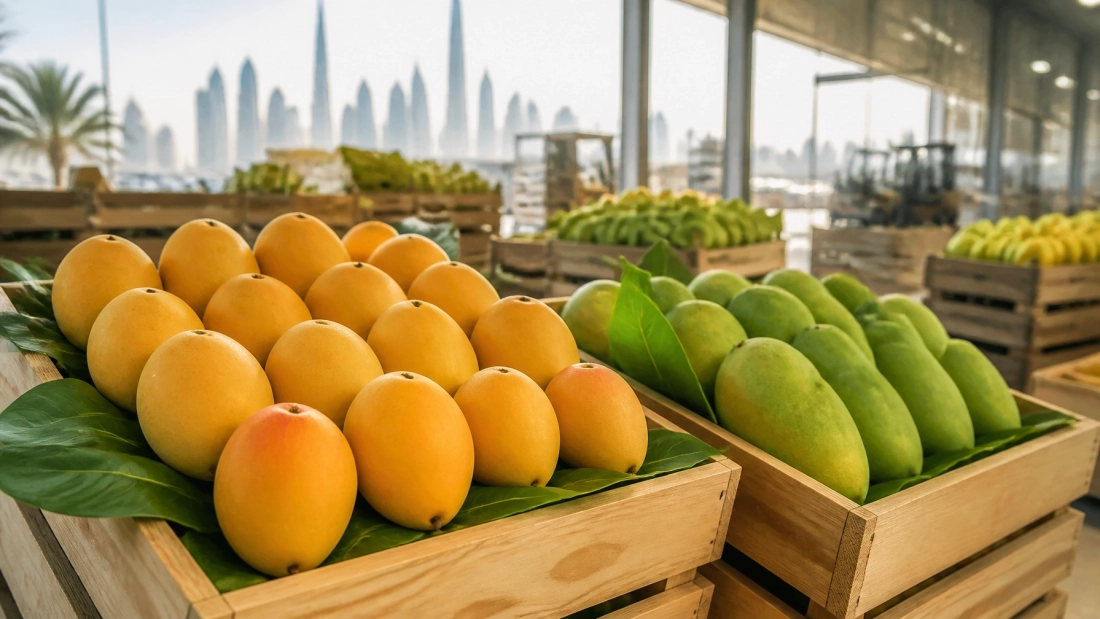
Looking for a Mango Buyer in Dubai? Here Are 10 Things You Should Know About the 3% Commission Model

The Dubai mango market is one of the most dynamic and high-volume sectors in the global fresh produce trade. Serving as a primary gateway for the Middle East, North Africa, and the CIS regions, Dubai offers unparalleled opportunities for international exporters. However, the path to profitability is often obscured by complex commission structures, hidden costs, and opaque logistics.

For exporters in India, Pakistan, Egypt, and beyond, finding a reliable mango buyer in Dubai is about more than just a transaction; it is about securing a partner that understands the nuances of the Al Aweer Central Fruit & Vegetable Market. At Mayil Global, we have optimized the distribution process through our industry-leading 3% commission model.

This article outlines the ten critical factors every exporter must understand when navigating the Dubai mango trade and how our specialized service models maximize your bottom line.

1. Why the 3% Commission Model Outperforms Industry Standards

In the traditional Dubai wholesale market, commission agents typically charge between 5% and 10% for handling produce. When coupled with additional "hidden" service fees, exporters often see their margins significantly eroded before a single carton is sold.

Mayil Global operates on a strictly transparent 3% commission-based distribution model. By lowering the commission rate, we ensure that a higher percentage of the gross sale value returns to the exporter. This competitive edge allows exporters to reinvest in their operations, improve their post-harvest technology, and scale their shipment volumes without being penalized by excessive intermediary costs.

2. Financial Transparency and Real-Time Reporting

One of the primary concerns for international exporters is the lack of clarity regarding the final sale price of their goods. In the mango trade, where price volatility is high, transparency is non-negotiable.

Our operational framework is built on trust and rigorous documentation. When you partner with us, you receive detailed sales statements that break down every aspect of the transaction. There are no "hidden" fees for storage or handling that were not agreed upon upfront. By prioritizing functional clarity over complex billing, we establish a stable environment for long-term B2B relationships.

Financial transparency in mango trading

3. The Advantage of Cash & Carry for Immediate Liquidity

While the commission model is ideal for exporters looking to capitalize on market fluctuations, many businesses require immediate liquidity to manage their supply chain. This is where Mayil Global’s Cash & Carry model provides a distinct advantage.

We offer immediate container purchases for high-quality mango shipments. This "Cash & Carry" approach eliminates the price risk for the exporter, providing a fixed, upfront payment upon delivery and inspection. This is particularly beneficial for large-scale exporters who need to settle payments with their own farm-gate suppliers quickly. Whether you prefer the potential upside of a 3% commission or the security of a cash purchase, our sourcing and logistics infrastructure is designed to accommodate your needs.

4. Accessing the Al Aweer Central Fruit & Vegetable Market

The Al Aweer Market is the heartbeat of Dubai’s fresh produce trade. However, navigating this market requires a local presence and established connections with retailers, supermarkets, and secondary wholesalers.

Mayil Global acts as your operational arm in Al Aweer. We handle the physical distribution, ensuring that your mangoes, whether they are premium Alphonsos from India, Honey Chaunsas from Pakistan, or Keitt mangoes from Egypt, are positioned in front of the right buyers at the right time. Our deep integration into the local wholesale network ensures that your produce does not sit idle, reducing the risk of spoilage and price depreciation.

5. Sourcing and Global Supply Network Integration

Dubai’s mango season is year-round, thanks to its position as a global logistics hub. To maintain a steady supply, we integrate exporters into our global supply network.

From the Indian peak season (March–July) to the Pakistani season (May–September) and the Brazilian/Peruvian off-season supply (October–February), we manage the transition between origins seamlessly. For an exporter, being part of a structured network means more than just one-off sales; it means consistent demand for your produce across different seasons and market conditions.

6. Rigorous Quality Control and Post-Harvest Handling

The UAE market has strict standards for fruit quality, including residue levels, maturity stages, and aesthetic appearance. A single container of substandard fruit can damage an exporter's reputation for years.

At Mayil Global, we implement strict quality control with inspection at every stage. From the moment the container arrives at the port to the point of sale in the wholesale market, our team monitors the temperature, humidity, and physical condition of the fruit. This commitment to international standards ensures that we only deliver "farm-fresh" quality to our B2B clients, which in turn justifies premium pricing for your shipments.

Quality control inspection of mangoes

7. Strategic Logistics and Cold Chain Management

Mangoes are highly perishable and sensitive to temperature fluctuations. A break in the cold chain for even a few hours can result in internal breakdown and sap burn, rendering the fruit unsellable.

We prioritize efficient distribution with organized logistics. Our storage facilities and transport vehicles are equipped to maintain the optimal temperature for different mango varieties. By ensuring proper storage and handling from the port to the market, we minimize waste and maximize the shelf life of your produce, ensuring that the end-customer, whether a high-end supermarket or a luxury restaurant, receives the product in peak condition.

8. Navigating UAE Customs and Compliance

Importing fresh produce into the UAE involves navigating a complex web of documentation, including phytosanitary certificates, certificates of origin, and municipality health clearances. Errors in documentation can lead to costly delays at Jebel Ali Port or Dubai World Central.

Mayil Global provides the administrative expertise needed to ensure smooth clearance. We guide our partners through the necessary compliance steps, ensuring that all paperwork is in order before the vessel even docks. This proactive approach to logistics management is a cornerstone of our service offerings.

Logistics and delivery in Dubai

9. Scaling Your Export Business Through B2B Relationships

The goal of any exporter should be to move beyond transactional sales and toward a sustainable business model. Dubai is a hub for re-export, meaning your mangoes could eventually reach markets in Saudi Arabia, Kuwait, or even Europe via Dubai's world-class logistics infrastructure.

By working with Mayil Global, you gain access to a broad spectrum of B2B buyers. We supply fresh produce to supermarkets, restaurants, and retail chains that value reliability over the lowest possible price. By consistently delivering quality through our 3% commission model, you build a brand name in the UAE market, facilitating long-term growth and predictable revenue streams.

10. Why Mayil Global is the Preferred Partner for Mango Exporters

Choosing a mango buyer in Dubai is a decision that impacts the financial health of your entire export operation. Mayil Global stands out by offering:

  • A 3% Commission Model: The lowest and most transparent rate in the sector.
  • Immediate Cash & Carry: Direct container purchases for instant liquidity.
  • End-to-End Logistics: From port clearance to final wholesale distribution.
  • Market Expertise: In-depth knowledge of the Al Aweer market dynamics.

Our mission is to build a bridge between global farms and UAE consumers, ensuring that every stakeholder in the supply chain benefits from efficient, honest, and professional trade practices.

Wholesale mango trade in Dubai

Conclusion

If you are an international exporter looking for a reliable mango buyer in Dubai, the choice of partner will define your success. Whether you are dealing in bulk varieties or premium branded fruit, our 3% commission and Cash & Carry models are designed to put the control, and the profit, back in your hands.

For more information on how to start your export journey with us, or to discuss a container purchase, please contact us today. We are ready to help you navigate the Dubai market with professional excellence and operational stability.


THaNcQMD4MN

Looking for a Pineapple Buyer in Dubai? 5 Steps How to Export and Maximize Profits (Easy Guide for Global Shippers)

Dubai remains one of the most lucrative hubs for the global fruit trade, particularly for high-demand tropical fruits like pineapples. As a net importer, the United Arab Emirates (UAE) brings in approximately 60,000 tons of pineapples annually, valued at nearly USD 48 million. For international exporters in Costa Rica, the Philippines, India, and Africa, the Dubai market represents a stable and high-volume opportunity.

However, entering the Dubai market requires more than just high-quality produce. It requires a sophisticated understanding of logistics, regulatory compliance, and, most importantly, the right distribution partner. At Mayil Global, we specialize in bridging the gap between global shippers and local B2B buyers.

This guide outlines the five critical steps to exporting pineapples to Dubai while maximizing your profit margins through our unique 3% commission and Cash & Carry models.

Step 1: Aligning with Dubai Market Specifications

Success in the Dubai pineapple trade begins with product alignment. The market is highly segmented, with distinct requirements for retail supermarkets versus wholesale distribution.

Understanding Variety and Quality

The MD2 variety is the dominant force in UAE supermarkets due to its high sugar content, uniform golden color, and extended shelf life. For exporters, ensuring a minimum Brix level of 12° is essential for premium pricing. While other varieties from South Asia and Africa are traded in the Al Aweer wholesale market, they must still meet rigorous "Class I" standards: free from bruises, cracks, and pest damage.

Calibrated Packaging

Standard export cartons typically weigh between 10kg and 13kg. We recommend using high-strength, double-walled corrugated fiberboard boxes with ample side vents to withstand the high humidity levels often encountered during transit and handling.

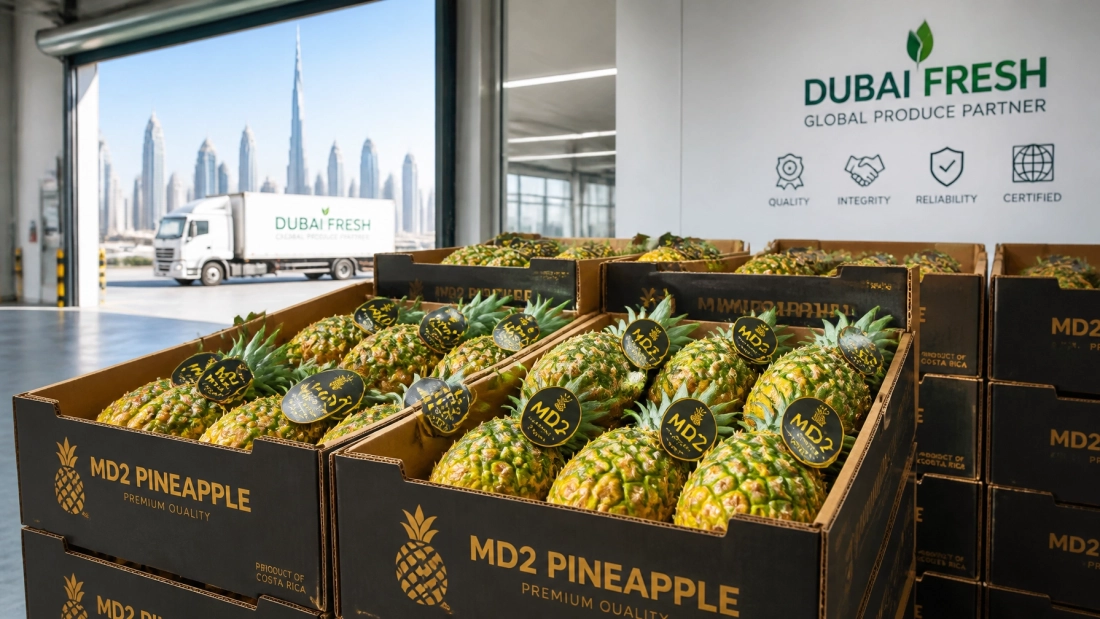
Close-up of export carton labels for pineapples in English and Arabic, showing variety MD2 and product origin.

Step 2: Navigating Regulatory Compliance and Food Safety

Dubai maintains strict food safety standards governed by the Ministry of Climate Change & Environment (MOCCAE) and the Dubai Municipality (DM). Failure to comply with these regulations can lead to shipment rejection or costly delays.

The FIRS System

All food imports must be processed through the Food Import & Re-export System (FIRS). As your local partner, Mayil Global ensures that all products are pre-registered, streamlining the clearance process at Jebel Ali Port or Dubai World Central.

Phytosanitary Requirements

A Phytosanitary Certificate issued by your national plant protection organization (NPPO) is mandatory. This document certifies that your pineapples are free from regulated pests and meet UAE plant health standards. Additionally, pesticide residues must strictly adhere to the Maximum Residue Limits (MRLs) set by the GCC or Codex Alimentarius.

Step 3: Optimizing Logistics and Cold Chain Integrity

Maintaining the cold chain is the single most important factor in ensuring the arrival of "export-grade" produce. Pineapples are sensitive to temperature fluctuations; even minor deviations can lead to chilling injury or accelerated ripening.

Reefer Container Management

For sea freight, we mandate the use of refrigerated containers (reefers) set to a constant temperature of 7°C to 8°C, with relative humidity maintained between 85% and 95%. Continuous ventilation is required to prevent the buildup of carbon dioxide, which can degrade fruit quality.

A white refrigerated shipping container (reefer) at Jebel Ali Port with doors open, revealing stacks of fresh pineapple cartons.

Efficient Sourcing and Logistics

At Mayil Global, we provide comprehensive sourcing and logistics support, ensuring that once your shipment arrives, it is handled with the highest standards of hygiene and speed. Our organized logistics network minimizes the time between the port and the market floor.

Step 4: Mastering the Documentation Checklist

Precision in documentation is non-negotiable for Dubai Customs clearance. Any discrepancy between the physical shipment and the paperwork can result in significant fines.

Exporters must provide the following core documents:

  1. Commercial Invoice: Detailing the HS Code (typically 0804.30), unit price, and total value.
  2. Packing List: Outlining the net and gross weight per carton and total pallet count.
  3. Bill of Lading / Airway Bill: Evidence of the contract of carriage.
  4. Phytosanitary Certificate: Essential for all fresh produce.
  5. Certificate of Origin: Validated by the relevant Chamber of Commerce.

Ensuring these documents are prepared accurately and sent in advance allows our team to facilitate "Express Clearance," moving your produce to our wholesale distribution centers without delay.

A quality control inspector in a high-standard facility checking a fresh pineapple for export quality.

Step 5: Maximizing Profits with the Mayil Global Advantage

Finding a "buyer" in Dubai is simple; finding a partner who maximizes your net returns is difficult. Most distributors in the UAE charge high margins or hide costs in opaque pricing structures. Mayil Global operates differently to prioritize the exporter’s liquidity and profitability.

The 3% Commission Distribution Model

We offer a transparent 3% commission-based distribution model. Unlike traditional traders who might take a 10% to 15% cut, we charge a flat 3% fee to handle the sales and distribution of your container-load shipments. This model ensures that the majority of the market price goes directly back to the exporter. You can read more about how this model secures your margins here.

Immediate Cash & Carry Purchases

For shippers who require immediate liquidity, we offer a Cash & Carry model. Under this arrangement, Mayil Global purchases your entire container-load of pineapples immediately upon arrival and inspection. This eliminates the wait time associated with traditional sales cycles and provides you with the daily liquidity needed to fund your next harvest.

A modern, clean wholesale distribution center in Dubai showing pallets of fresh produce being moved efficiently.

Conclusion: Partnering for Long-Term Success

The Dubai market offers immense potential for pineapple exporters who prioritize quality and compliance. By following these five steps: aligning with market specs, ensuring regulatory adherence, maintaining the cold chain, perfecting documentation, and choosing a transparent partner: you can establish a sustainable and profitable export business in the UAE.

Mayil Global is committed to building long-term relationships with global shippers. Whether you prefer our 3% commission model or our immediate Cash & Carry purchase option, we provide the infrastructure and expertise to ensure your produce reaches the best B2B buyers in the region.

Ready to export your pineapples to Dubai? Contact our procurement team today to discuss your next shipment. Explore our full range of premium food products and see how we are redefining food distribution in the UAE.

6QTWMhNusL_

Looking for an Apple Buyer in Dubai? The Ultimate Guide to Success with Our 3% Commission Model

The United Arab Emirates represents one of the most stable and high-value markets for fresh produce in the Middle East. For international exporters, finding a reliable apple buyer in Dubai is not merely about locating a purchaser; it is about establishing a partnership with a distributor that understands the nuances of the local supply chain, cold storage requirements, and the competitive landscape of the Al Aweer Fruit and Vegetable Market.

At Mayil Global, we have engineered a distribution framework designed specifically to maximize the margins of global exporters. By leveraging our 3% commission model and our Cash & Carry container purchase options, we provide a level of transparency and financial liquidity that traditional trading houses cannot match. This guide outlines the strategic advantages of partnering with us and how you can successfully navigate the Dubai apple market.

The Strategic Importance of the Dubai Apple Market

Dubai is more than just a destination for fresh fruit; it is a global re-export hub. According to industry data, the UAE imports approximately 125,000 tonnes of apples annually, with a market valuation exceeding $154 million. A significant portion of these imports is redistributed via Jebel Ali Port to neighboring GCC countries, including Oman, Kuwait, and Saudi Arabia.

For an exporter, this means that a single point of entry into Dubai offers access to a regional market of millions. However, success in this market requires high-grade varieties such as Royal Gala, Fuji, Red Delicious, and Granny Smith. Consumers in the UAE prioritize visual quality, firmness, and sweetness, making rigorous quality control a non-negotiable pillar of the business.

Maximizing Exporter Profits: The 3% Commission Advantage

Traditional apple buyers in Dubai often operate on high-margin trading models, which can erode the exporter's profit. Mayil Global operates differently. Our primary USP for international exporters is our 3% commission-based distribution model.

How the Model Works

In this model, Mayil Global acts as your dedicated distribution partner in the UAE. We manage the entire sales process within the Al Aweer market and our network of B2B buyers, including supermarkets and catering companies. Instead of purchasing your stock at a low fixed price and taking a large profit, we sell your products at the best possible market price and charge a transparent, flat 3% commission on the gross sales.

Key Benefits:

  1. Transparency: Exporters receive full visibility into the selling price. There are no hidden fees or "middleman" markups.
  2. Market-Linked Returns: If the market price for premium Gala apples rises, the exporter reaps the full benefit of that increase.
  3. Risk Mitigation: By working on a commission basis, we are incentivized to achieve the highest possible price for your shipment.

Immediate Liquidity with Cash & Carry Container Purchases

For exporters who prioritize immediate cash flow over long-term distribution, Mayil Global offers a Cash & Carry model. We are prepared to purchase full containers of apples: ranging from 20-foot to 40-foot reefers: outright upon arrival and inspection.

This model is ideal for exporters looking to secure daily liquidity. It eliminates the waiting period associated with retail payment cycles and allows you to reinvest your capital into the next shipment immediately. Whether you are exporting from Poland, Italy, the USA, or South Africa, our ability to provide immediate payment ensures your supply chain remains fluid and scalable.

Rigorous apple quality inspection at Mayil Global facility

Ensuring Excellence through Quality Control and Logistics

Apples are a highly perishable commodity that requires precise temperature management. At Mayil Global, our sourcing and logistics department operates under strict international standards to maintain the integrity of the cold chain from the moment the container arrives at Jebel Ali Port.

Inspection at Every Stage

Upon arrival at our facility, every shipment undergoes a multi-stage inspection:

  • Visual Grade Assessment: Checking for color uniformity and skin defects.
  • Firmness Testing: Ensuring the fruit meets the crispness expectations of premium UAE retailers.
  • Hygienic Handling: All produce is handled in climate-controlled environments following strict safety protocols.

Efficient Distribution Network

Our logistics network is built for speed and reliability. We supply a vast network of B2B clients across the UAE, including:

  • Supermarkets and Retail Chains: Direct supply to major outlets that demand consistent, high-quality volume.
  • Wholesale Distributors: Strategic placement within the Al Aweer market to capture daily trade traffic.
  • Foodservice Providers: Supplying high-grade apples to hotels, restaurants, and catering services.

Logistics and refrigerated transport at the Dubai trade hub

A Step-by-Step Guide to Exporting Apples to Dubai

Navigating the regulatory landscape of the UAE is straightforward when you have the right partner. Below is the standard process for exporting apples to Mayil Global:

1. Documentation and Compliance

Exporters must ensure that all shipments are accompanied by a Phytosanitary Certificate from the exporting country's agricultural authority. The fruit must also comply with the UAE's Maximum Residue Limit (MRL) standards for pesticides.

2. Packaging and Labeling

Apples should be packed in ventilated export-grade cartons (typically 18-20 kg). Labels must be in English (Arabic is a preferred addition) and include the product name, variety, country of origin, net weight, and packing date.

3. Transit and Monitoring

Utilize reefer containers with real-time temperature monitoring. The ideal storage temperature for most apple varieties is between 0°C and 2°C.

4. Arrival and Payout

Once the shipment arrives in Dubai, Mayil Global handles the customs clearance and transport to our cold storage. Under the 3% commission strategy, sales begin immediately, and payouts are processed with complete financial documentation.

Why Mayil Global is the Preferred Partner for Global Exporters

The Dubai market is highly competitive, with supplies arriving from all corners of the globe. To succeed, an exporter needs more than just a buyer; they need a representative on the ground who acts as an extension of their own business.

  • Global Supply Network: We manage a steady and reliable supply from multiple countries, giving us deep insights into global price trends.
  • B2B Focus: Our operations are strictly B2B, focusing on long-term relationships with institutional buyers and large-scale retailers.
  • Operational Excellence: From organized logistics to proper storage and handling, every step of our process is designed to protect the value of your produce.

Strategic partnership and profit growth presentation in Dubai

Conclusion: Secure Your Position in the UAE Market

If you are an international exporter looking for a professional apple buyer in Dubai, the choice of partner will determine your long-term profitability. Mayil Global offers the infrastructure, the market reach, and the transparent financial models necessary to help your business thrive in the UAE.

Our 3% commission model ensures you get the highest return on your investment, while our Cash & Carry options provide the liquidity needed to scale your operations. We invite you to join our growing network of global suppliers and experience a new standard of wholesale distribution.

Ready to start exporting?
Contact Mayil Global today to discuss your next shipment. Our team is ready to provide the logistics support and market expertise you need to succeed.

6sK-TwbIFN9

The Ultimate Guide to Exporting Cabbage to Dubai: Everything You Need to Succeed in Al Aweer

Navigating the international produce trade requires a combination of logistical precision, regulatory compliance, and a deep understanding of local market dynamics. For exporters looking to penetrate the Middle East, Dubai stands as the preeminent gateway. Specifically, the Al Aweer Central Fruit and Vegetable Market serves as the primary hub for fresh produce distribution across the United Arab Emirates and the wider GCC region.

Cabbage, a staple in many of the diverse cuisines found within the UAE’s multi-national population, represents a consistent and high-volume opportunity for global exporters. However, success in this competitive market is not merely about shipping a container; it is about choosing the right partner to ensure your margins are protected and your liquidity is secured.

At Mayil Global, we specialize in bridging the gap between international exporters and the Dubai wholesale market. By leveraging our 3% commission-based distribution and Cash & Carry models, we provide exporters with the transparency and speed required to thrive in Al Aweer.

Understanding the Dubai Market Demand

Dubai’s demand for fresh cabbage remains robust throughout the year. The market serves a vast array of consumers, from high-end hotels and restaurants to local hypermarkets and wholesale distributors. While variety, including red and savoy cabbage, is appreciated, the primary demand focuses on high-quality, compact green cabbage heads.

The UAE relies heavily on imports to meet its food security needs. According to trade data, the region sources leafy vegetables from various global suppliers, including India, Jordan, Oman, and several European nations. To compete effectively, exporters must prioritize consistent quality and a reliable supply chain.

Regulatory Framework and Compliance

Exporting fresh produce to Dubai involves strict adherence to national and local regulations. Failure to comply with these standards can result in shipment delays, fines, or total rejection of the goods.

1. Key Authorities

All food imports are governed by several key entities:

  • Dubai Municipality (DM): Oversees food safety through the Food Import & Re-Export System (FIRS).
  • Ministry of Climate Change & Environment (MOCCAE): Manages plant health and phytosanitary conditions.
  • Dubai Customs: Handles customs clearance, duties, and HS code classification (typically 0704.10 for fresh cabbage).

2. Mandatory Documentation

To clear customs in Dubai, the following documents are non-negotiable:

  • Commercial Invoice: Detailing the exporter/importer info, quantity, net/gross weight, and country of origin.
  • Packing List: Specifying the number of pallets and container dimensions.
  • Bill of Lading: Issued by the shipping line.
  • Certificate of Origin: Authenticated by the chamber of commerce in the exporting country.
  • Phytosanitary Certificate: Issued by your National Plant Protection Organization (NPPO), confirming the shipment is free from quarantine pests.

Quality inspector examining a fresh green cabbage for export compliance

Technical Specifications: Packaging and Logistics

The Al Aweer market has specific expectations regarding how cabbage is presented and handled. Adhering to these standards ensures your product maintains its value upon arrival.

Packaging Standards

For the wholesale market, cabbages are typically packed in strong, corrugated cardboard cartons or ventilated plastic crates.

  • Weight: 8 kg to 10 kg per carton is the industry standard.
  • Labeling: Every carton must feature bilingual labels in English and Arabic. Mandatory details include product name, country of origin, net weight, packer’s name, and the harvest/packing date.
  • Quality: Heads should be firm, well-trimmed, and free from loose or dirty outer leaves. Consistency in size within each box is a major factor in determining the final price.

Cold Chain Management

Maintaining the cold chain is critical for cabbage. Cabbage should be transported in refrigerated containers (reefers) at temperatures between 0°C and 2°C with high humidity levels. Any break in the cold chain can lead to wilting, yellowing, or decay, significantly reducing the market value in Dubai.

Maximizing Profit: The Mayil Global Advantage

Traditionally, exporters have faced high costs and low transparency when dealing with international wholesalers. Mayil Global was founded to disrupt this model by offering a fairer, more efficient system for B2B trade.

The 3% Commission Strategy

While many agents in Al Aweer charge high, often opaque fees, Mayil Global operates on a transparent 3% commission model. This means:

  • Higher Margins: Exporters retain 97% of the market sale price after logistics.
  • Transparency: No hidden fees or "marketing costs."
  • Alignment of Interests: We are motivated to sell your produce at the highest possible price, as our success is tied to yours.

You can read more about how this model secures daily liquidity in our detailed guide on the 3% commission strategy.

Cash & Carry Distribution

Liquidity is the lifeblood of any export business. Waiting weeks for payments can stifle growth. Mayil Global’s Cash & Carry model allows for immediate liquidity. We purchase container-sized loads directly or facilitate rapid wholesale turnover, ensuring that exporters can reinvest their capital into the next shipment without delay.

Professional logistics truck in Dubai representing efficient distribution

Step-by-Step Guide to Exporting to Al Aweer

If you are looking for a reliable cabbage buyer in Dubai, following these steps will streamline your entry into the market.

  1. Sourcing and Grading: Select farms that adhere to Global G.A.P. standards to ensure pesticide levels are within UAE Maximum Residue Limits (MRLs).
  2. Professional Packing: Use high-quality materials to prevent mechanical damage during sea or air transit.
  3. Documentation Approval: Send draft copies of your documents to Mayil Global for pre-approval to avoid clearance issues.
  4. Shipment Execution: Utilize reliable freight forwarders to manage the sourcing and logistics process.
  5. Market Sale: Upon arrival at Al Aweer, Mayil Global handles the unloading, inspection, and immediate sale to our network of supermarkets and retailers.

Why Choose Mayil Global for Your Cabbage Exports?

We are more than just a distributor; we are a strategic partner in the UAE food supply chain. Our operations are built on:

  • Farm-Direct Sourcing: We understand the producer’s side of the business.
  • Strict Quality Control: Every shipment is inspected at multiple stages.
  • Organized Logistics: Ensuring timely delivery from the port to the market.
  • B2B Focus: Our network includes the largest supermarkets and wholesale vegetable buyers in the UAE.

3% Commission and Cash & Carry model graphic

Conclusion

Exporting cabbage to Dubai is a lucrative venture for those who prioritize quality and operational excellence. The Al Aweer market offers massive scale, but it requires a partner who understands the intricacies of local trade and values the exporter’s bottom line.

By choosing Mayil Global, you gain access to a transparent, 3% commission-based model and the speed of Cash & Carry payments. Whether you are an established exporter or a local farmer looking to go global, we provide the platform you need to succeed.

Ready to start your first shipment? Contact us today to discuss your cabbage volumes and seasonal availability. Let’s build a reliable supply chain together.


Frequently Asked Questions (FAQ)

1. What is the typical shelf life of cabbage imported to Dubai?
When stored in proper cold chain conditions (0-2°C), fresh cabbage can maintain high quality for 2-3 weeks, allowing for seafreight from many global origins.

2. How does the 3% commission model compare to fixed-price buying?
Fixed-price buying often protects the wholesaler's margin at the exporter's expense. Our 3% commission model ensures that when market prices rise, you receive the full benefit of those gains.

3. Are there specific pesticide regulations in the UAE?
Yes, the UAE follows strict Maximum Residue Limits (MRLs). All produce must comply with these standards, and random testing is conducted by Dubai Municipality.

4. Can Mayil Global handle other vegetables besides cabbage?
Yes, we are a full-service wholesale supplier of fresh fruits, vegetables, spices, rice, and eggs.