mqiuTIkNl0P

7 Mistakes You’re Making with Pear Exports to Dubai (and How to Fix Them with 3% Commission)

The Dubai market represents one of the most lucrative hubs for fresh produce globally. With its strategic position as a gateway to the broader Middle East and its high demand for premium fruit, it is a primary target for international pear exporters. However, many suppliers face significant losses due to preventable operational errors and opaque financial models.

If you are currently looking for a pear buyer in Dubai, understanding the nuances of local regulations and market dynamics is essential to securing your margins. At Mayil Global, we specialize in streamlining this process through our transparent 3% commission distribution model and immediate Cash & Carry options.

Below are the seven most common mistakes exporters make when shipping pears to Dubai: and the professional solutions required to fix them.

1. Non-Compliance with UAE Labeling and Regulatory Standards

One of the most frequent reasons for container rejection at Jebel Ali Port is the failure to meet the strict labeling requirements set by the Ministry of Climate Change and Environment (MOCCAE) and the Dubai Municipality.

Many exporters mistakenly believe that standard international labels are sufficient. In reality, the UAE requires specific data points on every carton. Missing production and expiry dates, or the absence of Arabic labeling, can lead to costly delays or complete rejections.

The Fix: Ensure all packaging includes mandatory Arabic stickers or printed labels. Every carton must clearly state the product name, country of origin, net weight, and: crucially: the production and expiry dates. Partnering with a distributor like Mayil Global ensures your documentation is vetted against strict quality control and safety standards before the shipment even arrives.

Professional pear carton with compliant labeling and protective packaging

2. Inadequate Cold Chain Management

Pears are climacteric fruits, meaning they continue to ripen after harvest. They are exceptionally sensitive to temperature fluctuations. A minor breach in the cold chain during the long transit from South Africa, Europe, or Asia can result in internal browning or a mealy texture by the time the container reaches the Aweer Market.

The Fix: Maintain a rigorous cold chain from the moment of harvest. Pears generally require a storage temperature of -1°C to 0°C with high humidity to prevent moisture loss. Utilizing advanced logistics and proper storage handling is non-negotiable. At Mayil Global, we prioritize organized logistics and modern warehousing to ensure that your pears maintain their "farm-fresh" quality throughout the distribution phase.

Inside a high-tech refrigerated container for pear logistics

3. Relying on Opaque, High-Commission Agents

The traditional brokerage model in Dubai often involves commission rates ranging from 5% to 10%, often accompanied by hidden "marketing fees" or "unforeseen expenses." For high-volume exporters, these percentages significantly erode the final Return on Investment (ROI).

The Fix: Switch to a transparent, flat-rate model. Mayil Global offers a 3% commission-based distribution model. This allows exporters to leverage our extensive B2B network: supplying supermarkets, restaurants, and retailers across the UAE: while retaining a higher percentage of the sales price. This transparency eliminates the guesswork and provides a clear, predictable cost structure for your export business.

4. Miscalculating Market Timing and Variety Demand

The Dubai market is highly seasonal and variety-specific. Shipping a large volume of Conference pears when the market is oversupplied with South African Packham’s or Forelle pears can trigger a rapid price collapse. Many exporters fail to research which variety is currently trending in the premium retail vs. the wholesale segment.

The Fix: Diverse pear varieties require targeted distribution strategies. Retailers often prefer the aesthetically pleasing Forelle or Vermont pears, while the hospitality sector may prioritize the versatility of the Williams (Bartlett) variety. Our global supply network provides real-time market data, allowing you to align your shipments with current Dubai demand.

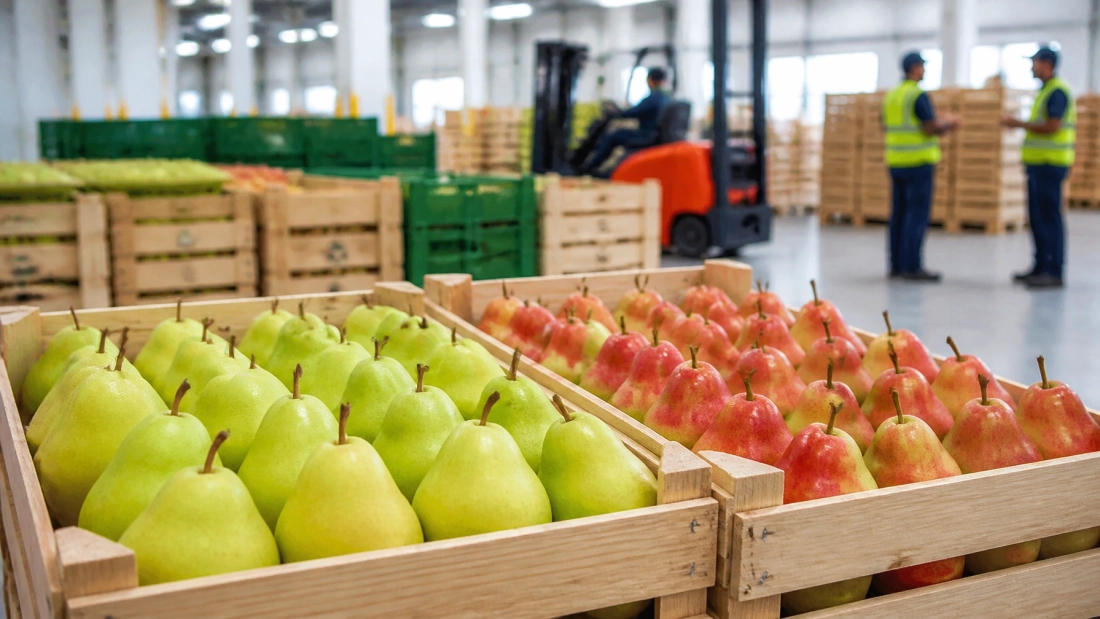
Display of premium pear varieties including Packham, Forelle, and Williams

5. Poor Liquidity and Slow Cash Cycles

In the traditional Aweer Market cycle, exporters often wait weeks or even months to receive full payment for their containers. This lack of immediate liquidity can cripple a supplier’s ability to fund the next harvest or manage operational overheads.

The Fix: Secure your cash flow with a Cash & Carry model. In addition to our commission-based services, Mayil Global engages in immediate cash-and-carry container purchases. This model provides exporters with instant liquidity, moving the risk of price volatility to the distributor and allowing the exporter to reinvest their capital immediately. Learn more about how Cash & Carry can transform your inventory management.

6. Overlooking Secondary Quality Factors (Bruising and Packaging)

While the fruit may be high quality at the source, improper cushioning or over-packing leads to "pressure bruising." In the UAE's premium supermarket segment, even minor external blemishes can result in significant price markdowns or "B-grade" classification.

The Fix: Use ventilated, telescopic cartons or trays that provide individual cell protection for the fruit. Proper palletization and secure strapping are essential for the long-haul sea freight typical of the pear trade. Our inspection teams at Mayil Global perform strict quality control at every stage, ensuring that only the finest produce reaches the end buyer, thus protecting your brand reputation.

7. Failing to Establish a Direct Professional Partnership

Many exporters act as "silent shippers," sending containers to various brokers without establishing a consistent presence or partnership in the market. This lack of a direct relationship makes it difficult to resolve quality disputes or negotiate better terms during market downturns.

The Fix: Build a long-term, B2B relationship with a reliable UAE partner. Success in the Dubai produce trade is built on trust and operational excellence. By working with an established entity like Mayil Global, you gain more than just a buyer; you gain a logistics partner dedicated to efficient distribution and hygienic handling.

Professional B2B partnership and handshake in a Dubai corporate setting

Conclusion: Maximizing Your Pear Export Profits

Exporting pears to Dubai does not have to be a high-risk venture. By avoiding these seven common mistakes: specifically regarding labeling, cold chain integrity, and financial structures: you can secure a stable and profitable position in the UAE market.

At Mayil Global, we are committed to providing international exporters with a professional, transparent alternative to traditional brokerage. Whether you prefer our 3% commission model for maximum market exposure or our Cash & Carry model for immediate liquidity, our goal is to streamline your supply chain and maximize your returns.

Looking for a Pear Buyer in Dubai?
Contact us today to discuss your next shipment and experience the advantage of a farm-direct sourcing partner with a global reach.

Contact Mayil Global for Partnership Inquiries


Comparison infographic showing the 3% commission model vs traditional 10% models, highlighting higher profit margins for the exporter.

Why the 3 Percent Commission Distributor UAE Model Will Change the Way You Sell Your Containers

In the high-stakes world of international food trade, particularly within the competitive landscape of the United Arab Emirates, the difference between a profitable season and a financial setback often boils down to a single percentage point. For years, exporters and container owners shipping fresh produce and dry staples to the UAE have navigated a traditional distribution landscape characterized by high commissions, opaque fee structures, and frustrating liquidity gaps.

However, a shift is occurring in the Dubai wholesale market. At Mayil Global, we are at the forefront of this transformation through our innovative 3 percent commission distributor UAE model. This lean, transparent approach is specifically designed to maximize margins for global exporters while ensuring that local B2B buyers: ranging from supermarkets to large-scale catering companies: receive the freshest products at the most competitive rates.

In this comprehensive guide, we examine why the 3% commission model is not just a pricing strategy, but a fundamental evolution in food logistics and wholesale distribution.

The Problem with Traditional Distribution Models

Traditionally, food distribution companies in the UAE have operated on a commission basis ranging from 5% to 10%, often supplemented by "hidden" handling fees or marketing costs. For an exporter dealing in high-volume, low-margin commodities like wholesale fruits and vegetables, these costs can erode potential profits quickly.

Furthermore, traditional models often involve long credit cycles. When an exporter sends a container to the Al Aweer market, they might wait weeks or even months for final settlement as the distributor waits for retailers to pay their invoices. This creates a liquidity crisis for the exporter, preventing them from reinvesting in the next harvest or shipment.

Understanding the 3 Percent Commission Model

The 3% commission model offered by Mayil Global is built on the pillars of transparency, efficiency, and speed. Here is how the process works:

  1. Direct Sourcing & Arrival: You ship your container (be it onions, potatoes, spices, or rice) to the UAE.
  2. Professional Handling: As your dedicated 3 percent commission distributor UAE, Mayil Global manages the customs clearance, municipality inspections, and internal logistics.
  3. Transparent Expense Reporting: All local costs (port charges, duty, transportation) are documented and deducted at cost.
  4. The Flat Fee: A flat 3% commission is applied to the gross sales value of the inventory.
  5. Rapid Liquidity: Leveraging our cash and carry food wholesale Dubai network, we prioritize sales to buyers who pay on short terms, allowing for much faster remittance to the exporter.

Comparison infographic showing the 3% commission model vs traditional 10% models, highlighting higher profit margins for the exporter.

Why This Model is a Game-Changer for Exporters

1. Maximized Profit Margins

The most immediate benefit is the direct impact on your bottom line. By reducing the intermediary’s cut from 10% to 3%, exporters can retain a significantly higher portion of the market value. This is especially critical for staples like bulk rice and premium spices where market prices are highly sensitive.

2. Daily Liquidity and Cash Flow

The "Cash & Carry" aspect of our model is the engine that drives your business growth. In the traditional Aweer market setup, capital is often tied up in accounts receivable. Mayil Global’s strategy focuses on B2B buyers who provide immediate or short-cycle payments. This ensures daily liquidity, enabling you to settle your local costs and fund your next container immediately.

3. Incentive Alignment

When a distributor takes a 10% cut, they can remain profitable even if they sell your goods slowly or at mediocre prices. However, in a 3% model, our success is entirely dependent on your volume and the speed at which your cargo moves. This aligns our interests perfectly with yours: we are motivated to achieve the highest possible price in the shortest amount of time.

4. Full Transparency

One of the primary frustrations for international shippers is the lack of clarity regarding local expenses in the UAE. Our model utilizes rigorous quality control and reporting. Exporters receive detailed breakdowns of every dirham spent, from port handling to storage, ensuring a relationship built on trust rather than guesswork.

Fresh fruits and vegetables being sorted and inspected in a clean, modern wholesale warehouse facility in Dubai.

Strategic Advantages for UAE B2B Buyers

While the 3% commission model is a boon for exporters, it also provides substantial advantages for local B2B buyers like supermarkets, hotels, and restaurants.

Reliable and Steady Supply

Because our exporters receive faster payments and better margins, they are more likely to prioritize the UAE market and Mayil Global. This creates a steady, reliable supply chain of fresh produce and premium food products. Our buyers don't have to worry about stockouts or inconsistent quality.

Competitive Pricing

By stripping out the inefficiencies and high commissions of the traditional distribution chain, we can offer wholesale prices that are more reflective of the true market value. This allows local retailers to either increase their own margins or offer better prices to the end consumer.

Farm-Fresh Quality

The speed of the 3% model: where containers are cleared, sold, and distributed rapidly: means less time in storage. Whether it's farm-fresh eggs or delicate citrus fruits, the turnaround time is minimized, ensuring that the product on your shelves is as fresh as the day it was packed.

The Diverse Product Portfolio of Mayil Global

Our 3% commission and cash-and-carry model is applied across a wide range of essential food categories, ensuring we are a one-stop shop for food distribution companies in UAE.

  • Fresh Fruits & Vegetables: From high-demand items like ginger, tomatoes, and lemons to seasonal specialties. (See our guide on exporting onions to Dubai).
  • Premium Spices: Sourced globally and handled with strict hygienic standards to preserve potency and flavor.
  • Premium Rice: Supplying various grades of long-grain and aromatic rice to the UAE's diverse culinary sector.
  • Farm Fresh Eggs: Distributed through an organized logistics network to maintain cold chain integrity.

A variety of premium spices and dry food staples like rice and lentils displayed in bulk wholesale packaging, representing the company's diverse inventory.

Operational Excellence: The Backbone of the Model

A low-commission model only works if the underlying logistics are flawless. At Mayil Global, we have invested heavily in our sourcing and logistics infrastructure.

  • Global Supply Network: We maintain active partnerships across multiple countries, ensuring a year-round supply regardless of seasonal shifts in any single region.
  • Strict Quality Control: Every container is inspected at multiple stages: from the farm to the final market delivery: to ensure compliance with UAE safety standards.
  • Hygienic Handling: Our facilities follow international safety protocols, ensuring that premium food products are stored and packaged in a manner that prevents contamination and spoilage.
  • Strategic Location: Operating within the heart of the UAE’s food trade hub allows us to move containers from port to market with minimal delay.

Conclusion: Partnering for a More Profitable Future

The 3 percent commission distributor UAE model is more than just a cost-saving measure; it is a strategic partnership framework. For the exporter, it offers a pathway to higher margins and better liquidity. For the B2B buyer, it guarantees a reliable, cost-effective, and high-quality supply of essential food products.

In an industry often marred by complexity, Mayil Global stands for simplicity and operational excellence. If you are a container owner looking to maximize your returns in the Al Aweer market, or a local retailer seeking a more dependable wholesale partner, it is time to move beyond the traditional 10% commission.

Are you ready to change the way you sell your containers?

Contact Mayil Global today to discuss how our 3% commission model can streamline your supply chain and boost your profitability in the UAE market.


rPEHxeX2g8a

The Ultimate Guide to How to Export Food to Dubai: Everything You Need to Succeed as a Global Supplier

Dubai serves as the premier commercial gateway for the Middle East, offering a highly developed infrastructure for food distribution and a robust demand for high-quality fresh produce. For global exporters, understanding how to export food to Dubai is not merely about logistics; it is about navigating a sophisticated regulatory environment and identifying the right distribution partners to ensure long-term profitability.

As the UAE imports approximately 80-90% of its food requirements, the opportunity for international suppliers is immense. However, success in this market requires adherence to strict quality controls, efficient cold chain management, and a strategic approach to local market pricing. This guide provides a comprehensive overview of the operational requirements and the competitive advantages offered by Mayil Global’s specialized distribution models.

Understanding the Dubai Food Import Landscape

The UAE food market is characterized by high turnover and a demand for diverse, premium-grade products. Dubai, specifically through the Jebel Ali Port and the Al Aweer Fruits and Vegetable Market, acts as a re-export hub for the entire GCC region. To successfully penetrate this market, exporters must align their operations with the rigorous standards set by local authorities.

Establishing a presence in the wholesale fruits and vegetables Dubai sector requires a deep understanding of daily price discovery. Prices at the Al Aweer market are determined by real-time supply and demand, meaning that consistent quality and timely arrival are the primary drivers of an exporter’s realized margins.

Navigating Regulatory Compliance: DM and MOCCAE

Regulatory compliance is a non-negotiable pillar of the export process. Two primary bodies govern food imports in Dubai:

  1. Dubai Municipality (DM): Responsible for food safety, product registration, and labeling. All packaged food items must be registered via the Food Import and Re-export System (FIRS).
  2. Ministry of Climate Change and Environment (MOCCAE): Oversees agricultural quarantine and phytosanitary controls. Every shipment of fresh produce must be accompanied by a Phytosanitary Certificate from the country of origin.

Ensuring that labels include mandatory Arabic text, country of origin, production/expiry dates, and net weight is critical. Failure to meet these requirements often leads to costly delays at the port of entry or total rejection of the consignment.

Logistics and Cold Chain Management: Ensuring Freshness

Maintaining the integrity of the cold chain is paramount when shipping perishables. Most bulk produce, such as onions, potatoes, and citrus fruits, arrive via sea freight in refrigerated containers (reefers).

  • Temperature Control: For most vegetables, maintaining a steady temperature between 2°C and 4°C is essential.
  • Ventilation: Utilizing export-grade, ventilated cartons prevents the buildup of ethylene and heat, ensuring the produce remains firm and marketable upon arrival.
  • Tracking: Utilizing modern logistics providers who offer real-time temperature tracking minimizes the risk of quality degradation.

Mayil Global emphasizes sourcing and logistics excellence to ensure that every container transitioning from the port to the market maintains its premium status.

High-quality red and yellow onions packed for export, demonstrating the standard required for the Dubai market.

The Al Aweer Market: Dubai’s Wholesale Hub

The Al Aweer Fruits and Vegetable Market is the epicenter of fresh produce trade in the UAE. Operating on a 24-hour cycle, it is where bulk quantities are broken down for distribution to supermarkets, restaurants, and secondary wholesalers.

Exporters typically work through commission agents who manage the sale of the goods. Traditional models in Al Aweer often involve commissions ranging from 5% to 10%, which can significantly erode the exporter's profit. Furthermore, many traditional agents operate on long credit cycles, creating liquidity gaps for the supplier.

Strategizing for Profit: The 3% Commission and Cash & Carry Models

To empower global exporters, Mayil Global has introduced a disruptive 3% commission model. By reducing the standard commission fee, we ensure that a higher percentage of the gross sales value returns to the exporter. This transparency in pricing and cost-efficiency is designed to foster long-term partnerships with high-volume shippers.

Business professionals discussing the 3% commission strategy to maximize profit margins for food exporters.

Beyond the commission advantage, our Cash & Carry wholesale model addresses the primary pain point of international trade: liquidity. Instead of waiting for retail collections, Mayil Global facilitates immediate transactions, allowing exporters to reinvest their capital into the next shipment immediately. This is particularly effective for high-turnover commodities like bulk rice.

Case Study: Importing Onions to Dubai

Importing onions dubai is a high-volume business with consistent year-round demand. However, the market is highly sensitive to origin: with India, Pakistan, and Egypt being major players: and quality grading.

  • Market Dynamics: Price discovery for onions happens daily at Al Aweer. High supply from one region can depress prices, making it vital for exporters to have an agent who provides real-time market intelligence.
  • Operational Excellence: Red onions must be well-cured and packed in mesh bags or ventilated cartons to survive the transit.
  • The Mayil Advantage: Our 3% commission model is especially beneficial for onion exporters where margins can be tight. By choosing a partner that prioritizes high-volume turnover and fast payment, exporters can manage the volatility of the onion market more effectively.

Step-by-Step Export Checklist for Global Shippers

For those seeking to understand the granular details of how to export food to Dubai, following a standardized checklist is essential:

Documentation Requirements

  • Bill of Lading: Issued by the shipping line.
  • Commercial Invoice: Detailing the value and description of the goods.
  • Packing List: Specifying the number of cartons/bags and net/gross weight.
  • Certificate of Origin: Authenticated by the chamber of commerce in the exporting country.
  • Phytosanitary Certificate: Mandatory for all fresh produce.

Quality Control Standards

  • Grading: Ensure produce is uniform in size and color.
  • Hygiene: Goods must be free from soil, pests, and chemical residues.
  • Packaging: Use pallets for easy handling and to prevent crushing during transit.

Busy wholesale distribution at Al Aweer Market, showing the scale of fresh produce handling in Dubai.

Conclusion: Your Gateway to the UAE Market

Exporting food to Dubai offers a lucrative path for global suppliers who prioritize quality and operational efficiency. By aligning with a partner like Mayil Global, exporters gain access to a streamlined supply chain, a transparent 3% commission structure, and the liquidity provided by a Cash & Carry wholesale model.

Whether you are specialized in wholesale fruits and vegetables Dubai or are looking to start importing onions to Dubai, the key to success lies in professional execution and reliable market partnerships. Mayil Global remains committed to ensuring that our global suppliers achieve maximum value through rigorous standards and innovative distribution strategies.


vbBC0ujZFMa

7 Mistakes You’re Making with 3 Percent Commission Distributors in UAE (and How to Fix Them)

Navigating the Al Aweer Fruit and Vegetable Market in Dubai requires more than just high-quality produce; it demands a sophisticated understanding of the local commission structures. For international exporters and container owners, the promise of a 3 percent commission distributor in UAE is often the primary draw. This model, when executed correctly, offers unparalleled margins and rapid liquidity. However, many business owners fall into operational traps that erode these benefits.

Securing a reliable partnership with food distribution companies in UAE is a strategic move, but errors in vetting and management can lead to significant financial leakage. Below, we outline the seven most critical mistakes exporters make when engaging with the 3% commission model and the professional protocols required to fix them.

1. Conflating Headline Rates with Total Cost of Distribution

The most frequent error is accepting a 3% commission rate without scrutinizing the underlying fee schedule. In many traditional setups, a low headline rate is offset by "hidden" costs, including inflated handling fees, cooling surcharges, and unspecified administrative levies.

The Fix: Demanding an Itemized Fee Schedule
Before dispatching a container, you must secure a written cost structure that clearly separates the 3% commission from fixed operational costs. Professional distributors like Mayil Global provide a transparent breakdown, ensuring that wholesale fruits and vegetables in Dubai are handled with predictable costs. Ensure your agreement caps handling and storage fees per pallet or ton to prevent margin erosion.

2. Neglecting Real-Time Data and Information Transparency

Information asymmetry is a persistent challenge in the UAE wholesale market. Exporters often wait days or weeks to receive sales summaries, only to find unexplained "market loss" deductions or lower-than-expected sales prices. Without real-time visibility, you lose the ability to adjust your supply chain in response to market fluctuations.

Transparency in commission models showing clear 3 percent fees vs hidden costs

The Fix: Implementing Daily Reporting Protocols
Insist on a partner that provides daily sales and settlement reports. These reports should detail the quantity sold, the unit price achieved, and the remaining stock balance. Access to this data allows for better decision-making regarding future shipments and ensures that your 3 percent commission distributor in UAE is maintaining high-velocity sales.

3. Partnering with Non-Asset Based "Paper" Brokers

Many entities claiming to be distributors are merely intermediaries with no physical infrastructure in Al Aweer. These brokers sub-contract the handling, storage, and sales, leading to higher damage rates, increased shrinkage, and a lack of accountability during quality disputes.

The Fix: Verifying Physical Infrastructure and Logistics
Prioritize distributors that own or lease dedicated cold storage and handling units. Verifying that your partner has a physical presence: such as a registered unit in Al Aweer: ensures they have direct control over the quality and safety of your produce. Proper storage and handling from farm to market are non-negotiable pillars of a successful B2B supply chain.

4. Misunderstanding the "Cash" in Cash & Carry Wholesale

A significant mistake is assuming that all "Cash & Carry" operators provide immediate liquidity. Some distributors use the exporter’s stock to provide 15–30 days of credit to local retailers, effectively forcing the exporter to finance the distributor's customers. This negates the primary advantage of the cash and carry food wholesale Dubai model.

Premium fresh produce including apples and ginger representing quality control

The Fix: Validating Settlement Cycles
Ask specifically: "What percentage of sales is cash-based, and what is the exact payment schedule for the exporter?" A true cash and carry model should offer daily or near-daily settlements. This rapid cash cycle is essential for maintaining operational liquidity and reinvesting in your next shipment.

5. Accepting Vague Quality Claims and Market Loss Deductions

Without standardized arrival inspection procedures, exporters are vulnerable to arbitrary quality claims. "Market loss" or "damaged goods" are often used as catch-all terms for price reductions that haven't been properly documented or justified.

The Fix: Standardizing Arrival Inspections and Documentation
Establishing a rigorous inspection protocol upon arrival is mandatory. This includes high-resolution photo or video documentation of the container opening and the condition of the pallets. Agreeing on an acceptable wastage percentage in advance and requiring third-party surveys for major claims protects both the exporter and the distributor.

6. Shipping Without Synchronizing with Local Market Seasonality

Exporting high volumes of produce during local harvest peaks or periods of oversupply is a strategic failure. Many exporters rely on outdated market data or "gut feelings," resulting in containers sitting in cold storage while prices plummet.

Corporate setting displaying real-time supply chain data and market analysis

The Fix: Utilizing Local Market Feedback Loops
Your distributor should serve as your eyes and ears on the ground. Before loading a container of premium spices or fresh produce, consult with your partner about current stock levels and price trends. A 3% commission distributor only profits when you profit; therefore, they should provide data-driven advice on shipment timing and volume to maximize your returns.

7. Operating Without a Comprehensive Distribution Agreement

Relying on verbal agreements or informal WhatsApp messages is a risk many exporters take to save time. However, when disputes over payment timelines or audit rights arise, the lack of a formal contract becomes a liability.

The Fix: Formalizing Audit Rights and Termination Clauses
Ensure your distribution agreement includes a clause granting you the right to audit sales records. This transparency ensures that the prices reported to you match the prices at which the goods were sold to retailers. Clearly define the conditions for termination, such as delayed payments or failure to provide daily reports, to maintain professional leverage.

Building a Dependable Supply Chain with Mayil Global

Success in the UAE food wholesale sector depends on choosing a partner committed to operational excellence and transparency. At Mayil Global, we have institutionalized the 3% commission model to serve the specific needs of international exporters and local B2B buyers.

Why Exporters Choose Mayil Global:

  • Transparent 3% Commission: No hidden percentages; a flat rate focused on volume and efficiency.
  • Immediate Cash-and-Carry Liquidity: We prioritize cash transactions to ensure fast settlements and daily liquidity.
  • Rigorous Quality Control: Every shipment undergoes inspection at our controlled facilities to ensure safety and hygiene.
  • Direct B2B Network: We supply directly to major supermarkets, restaurants, and retailers across the UAE, bypassing unnecessary intermediaries.

By avoiding these seven common mistakes and implementing professional fixes, you can transform your UAE export operations into a high-margin, high-velocity business. For exporters seeking a reliable 3 percent commission distributor in UAE, Mayil Global provides the infrastructure and transparency required to dominate the market.

Ready to secure your margins? Contact our procurement team today to discuss your next container shipment and experience the Mayil Global advantage.

FDUxZFMgt6x

Looking For a Verified Buyer for Exporters UAE? Here Are 10 Things You Should Know Before Shipping Your Next Container

Navigating the international food trade requires more than just a quality product; it demands a reliable gateway into the target market. For exporters eyeing the United Arab Emirates, the landscape is both lucrative and complex. As a premier hub for wholesale fruits and vegetables in Dubai, the UAE offers immense opportunities, but only for those who understand the operational nuances of the region.

At Mayil Global, we operate as a cornerstone of the UAE’s food supply chain, bridging the gap between global producers and local demand. Whether you are importing onions to Dubai or supplying premium rice and spices, the success of your shipment hinges on partnering with a verified buyer who prioritizes transparency and efficiency.

Before you dispatch your next container, here are 10 critical factors every exporter must understand to ensure a profitable and seamless entry into the UAE market.

1. Navigating the Al Aweer Central Market Ecosystem

The Al Aweer Central Fruit and Vegetable Market is the pulse of the UAE’s fresh produce trade. It is a high-volume, fast-paced environment where prices can fluctuate hourly based on supply arrivals from across the globe. For an exporter, understanding this ecosystem is vital. Goods are often moved through commission agents who sell to local wholesalers, supermarkets, and catering companies. To succeed here, you need a partner with a physical presence and a deep understanding of daily price movements to ensure your cargo is positioned correctly.

2. The 3% Commission Advantage

Transparency is the most significant concern for global exporters. Traditional trade models often involve hidden fees that erode margins. Mayil Global addresses this through our 3% commission-based distribution model. We charge a flat 3% commission on the gross sales value. This model ensures that our interests are aligned with yours; the higher the sale price we achieve for your produce, the better the outcome for both parties. It provides a clear, predictable cost structure that is essential for financial planning.

High-quality bulk red onions and fresh ginger in professional mesh bags and wooden crates inside a clean, modern wholesale warehouse in Dubai.

3. Immediate Liquidity with Cash & Carry

Liquidity gaps can cripple an export business. Recognizing this, Mayil Global offers a Cash & Carry wholesale option. For exporters who prefer immediate payment over the consignment model, we facilitate container purchases with prompt settlements. This allows you to reinvest capital quickly into your next shipment without waiting for the full retail cycle to complete. This flexibility is a key reason why many choose us as their verified buyer for exporters in the UAE.

4. Understanding Dubai Municipality Regulations

The UAE has rigorous food safety standards. All food imports must be registered through the Dubai Municipality’s Food Import and Re-export System (FIRS). Products must also comply with the ZAD portal requirements for federal-level monitoring. Failure to pre-register your products can lead to significant delays at the port or even the rejection of the entire shipment. Partnering with a knowledgeable local distributor ensures that all administrative hurdles are cleared before the ship even docks at Jebel Ali.

5. Essential Documentation for Smooth Clearance

When you are learning how to export food to Dubai, documentation is your first line of defense against logistical bottlenecks. Every shipment must be accompanied by:

  • Commercial Invoice: Detailing the value and HS codes.
  • Certificate of Origin: Authenticated by the relevant Chamber of Commerce.
  • Phytosanitary Certificate: Crucial for fresh produce to prove it is pest-free.
  • Health Certificate: Issued by the exporting country’s food authority.
  • Packing List: Detailing the net and gross weight and packaging types.

Missing even a single stamp can result in expensive demurrage charges at the port.

6. Packaging and Labelling: The Arabic Requirement

UAE law (and broader GCC standards) mandates specific labelling requirements. While English is common, Arabic is mandatory for retail-ready packaging. For bulk wholesale items like onions or potatoes in mesh bags, the labels must clearly state the product name, country of origin, net weight, and the dates of production and expiry. Durable packaging is also essential; for instance, importing onions to Dubai requires high-tensile mesh bags that allow for maximum ventilation to prevent rot during transit and storage.

Busy but organized wholesale environment of Al Aweer Central Fruit and Vegetable Market in Dubai.

7. Logistics: Reefer Containers and Temperature Control

The UAE’s climate is unforgiving. Maintaining a strict cold chain is non-negotiable for perishables. Most wholesale fruits and vegetables in Dubai arrive in reefer (refrigerated) containers. It is the exporter’s responsibility to ensure the set point temperature and ventilation settings are correct for the specific variety of produce. A lapse of just a few degrees can drastically reduce the shelf life of the goods once they reach the Al Aweer market, leading to lower sale prices.

8. Quality Control: The Non-Negotiable Standard

In a competitive B2B market, quality is the ultimate differentiator. Mayil Global conducts strict quality control inspections at every stage: from arrival at the port to the warehouse. We look for uniformity in size, firmness, and the absence of mechanical damage or mold. Exporters who consistently deliver "Grade A" produce build a reputation that allows them to command premium prices even during supply gluts.

A professional quality control inspector checking fresh fruits and vegetables in a high-tech Dubai distribution center.

9. Real-Time Pricing and Market Volatility

Success in the UAE depends on timing. Prices are influenced by religious holidays (like Ramadan), seasonal shifts in local production, and global supply chain disruptions. As your local partner, we provide real-time market insights. We advise our exporters on the best windows to ship their containers to maximize returns. Information on current wholesale vegetables in Dubai is shared transparently to ensure no one is shipping blindly into a saturated market.

10. Building a Long-Term Partnership with Mayil Global

One-off shipments rarely lead to sustainable growth. The goal should be to establish a reliable supply pipeline. By working with Mayil Global, you gain access to a global supply network and a partner dedicated to your long-term success. We focus on B2B supply to the UAE’s leading supermarkets, restaurants, and retailers, ensuring that your produce reaches the highest-value endpoints in the country.

Conclusion

Exporting to the UAE is a high-stakes endeavor that requires a blend of logistical precision and market intelligence. By understanding the regulatory environment, optimizing your documentation, and leveraging the 3% commission model offered by Mayil Global, you can transform the way you do business in the Middle East.

Are you ready to scale your export operations? Whether you are dealing in fresh produce, premium rice, or spices, Mayil Global is your verified partner for the UAE market.

Contact us today to discuss your next container and experience the advantage of transparent, professional distribution.


xtd7OtoVtCI

Why Everyone Is Talking About the 3% Commission Distributor UAE Model (And You Should Too)

The landscape of global food trade is undergoing a seismic shift, and at the heart of this transformation is the UAE’s food distribution sector. For years, exporters and container owners shipping to the Aweer Central Fruit & Vegetable Market have navigated a complex web of high commissions, hidden fees, and delayed payments. However, a new standard is emerging that prioritizes the exporter’s liquidity and transparency above all else: the 3% commission distributor UAE model.

At Mayil Global, we have recognized that the traditional methods of wholesaling are no longer sufficient for a fast-paced, volume-driven market. By pivoting toward a transparent, commission-based structure paired with a robust cash and carry food wholesale dubai operation, we are redefining how produce and premium food products move from global farms to local shelves.

Redefining UAE Food Distribution: The 3% Shift

In the highly competitive world of food distribution companies in uae, margins are often razor-thin. When an exporter ships a container of onions, potatoes, or citrus to Dubai, they are essentially taking a calculated risk. Traditional commission agents often charge between 5% and 10%, frequently adding opaque "handling fees" or "marketing costs" that erode the exporter's profit.

The 3% commission model is designed to eliminate these inefficiencies. Under this structure, Mayil Global acts as a dedicated partner rather than just a middleman. We charge a flat, transparent 3% commission on the gross sales value of the produce. This model is built on volume and trust; by helping our partners move more containers with better margins, we grow alongside them.

What Exactly is a 3% Commission Distributor in the UAE?

A 3% commission distributor manages the entire lifecycle of a container once it reaches the port. This includes:

  • Logistics and Clearing: Navigating customs and municipality inspections.
  • Market Positioning: Placing the produce in the Al Aweer market or directly into our B2B distribution network.
  • Transparent Reporting: Providing a detailed breakdown of every dirham spent and earned.

By keeping the commission low and fixed, we ensure that the majority of the market value returns to the person who grew and shipped the product. This is particularly vital for the wholesale fruits and vegetables dubai sector, where market prices can fluctuate daily.

Crates of fresh red onions and tomatoes in a clean, modern distribution center, highlighting quality control.

Transparency Over Hidden Fees: The Exporter’s Advantage

Transparency is the cornerstone of the 3 percent commission distributor uae strategy. One of the most significant pain points for international exporters is the "black box" of settlement sheets. Many agents provide a final figure without a clear explanation of the deductions.

At Mayil Global, we provide itemized settlement sheets that include:

  1. Actual Customs and Municipality Duties: Verified by government receipts.
  2. Logistics and Handling: Port-to-warehouse and market transport costs.
  3. Sales Breakdown: Exactly what was sold, at what price, and to which segment of the market.
  4. The 3% Commission: A simple, direct calculation based on the total sales.

This level of detail is essential for exporters who need to audit their own supply chains and optimize their next shipments. Whether you are exporting onions to Dubai or shipping bulk quantities of potatoes, knowing your exact costs is the only way to ensure long-term sustainability.

Itemized Costs and Ethical Wholesaling

Ethical wholesaling means ensuring that the distributor doesn't profit from "hidden" margins. In many traditional models, if an agent sells a crate for 50 AED but reports 45 AED to the exporter, they have effectively taken an extra 10% margin on top of their commission. Mayil Global’s model strictly forbids this. Our success is tied directly to the 3% fee, incentivizing us to achieve the highest possible market price for your container.

A professional digital tablet showing a transparent financial breakdown of a 3% commission settlement.

Solving the Liquidity Gap with Cash & Carry

The primary reason why the 3% model is gaining such traction is its integration with cash and carry food wholesale dubai principles. In a standard distribution setup, the agent sells produce on credit to local retailers or small groceries. The exporter then has to wait 30, 60, or even 90 days to receive their funds.

Liquidity is the lifeblood of an export business. If your capital is tied up in a container sitting in Dubai, you cannot afford to buy the next load of produce at the farm level.

Mayil Global solves this by prioritizing cash-based transactions and immediate liquidity. Our Cash & Carry model ensures that as soon as the produce is sold, the funds are accounted for and ready for settlement. For container owners in the Aweer market, this means the difference between a stagnant business and one that can rotate capital four times a month.

Fast Settlement for High-Volume Exporters

Our goal is to provide daily or near-daily liquidity. By focusing on B2B buyers: supermarkets, high-end restaurants, and large-scale caterers: who value quality and consistent supply, we can maintain a steady flow of incoming cash. This allows us to settle accounts with our exporters far faster than traditional commission houses. This rapid turnaround is a key reason why we are one of the most sought-after food distribution companies in uae.

Sourcing Excellence: Beyond the Market Floor

While our 3% commission model focuses on the distribution of fresh produce, Mayil Global’s operations extend into a diverse portfolio of premium food products. We don't just wait for containers at the port; we actively source from trusted global networks to ensure that our B2B clients in the UAE have access to the best products year-round.

Our supply chain includes:

  • Premium Rice: Sourcing high-grade Basmati and long-grain varieties for the UAE’s demanding culinary sector.
  • Premium Spices: Ensuring that the spices used in the region’s kitchens are of the highest purity and potency.
  • Farm-Fresh Eggs: Maintaining strict temperature-controlled logistics from farm to market.

Premium sacks of rice and jars of vibrant spices, showcasing Mayil Global's diverse wholesale portfolio.

Our Core Portfolio: Rice, Spices, and Eggs

By diversifying our offerings, we provide a "one-stop-shop" for supermarkets and restaurants. This vertical integration allows us to leverage our logistics network across multiple product categories. A truck delivering wholesale vegetables can also carry premium rice and spices, reducing the "last-mile" cost for our buyers and increasing efficiency for our suppliers. You can explore our full range of offerings on our products page.

Why UAE Supermarkets and Restaurants are Switching

It’s not just exporters who benefit from the 3 percent commission distributor uae model. Local B2B buyers: the supermarkets, retailers, and restaurants: are also seeing the advantages. When a distributor operates on a low, transparent commission, the end price of the product remains competitive.

In a market like Dubai, where consumers demand both quality and value, being able to source bulk rice or fresh produce at a fair price is a significant competitive advantage.

Reliability and Organized Logistics

Reliability is the currency of the food industry. A restaurant cannot afford to have a missing ingredient during a dinner rush, and a supermarket cannot have empty shelves. Mayil Global’s organized logistics and strict quality control ensure that "fresh" isn't just a label: it's a standard. Every stage of our distribution process, from inspection at the port to delivery at the warehouse, is handled with surgical precision.

A professional refrigerated delivery truck unloading goods at a modern UAE supermarket loading bay.

Conclusion: The Future of Your Supply Chain

The 3% commission model isn't just a pricing strategy; it's a commitment to a more efficient, honest, and liquid food supply chain in the UAE. By choosing a partner like Mayil Global, exporters secure their margins and liquidity, while local B2B buyers ensure they are receiving world-class produce handled with the highest standards of hygiene and professionalism.

Whether you are an exporter looking for a reliable buyer in Dubai or a supermarket manager seeking a consistent wholesale partner, the move toward transparency is undeniable. The conversation around the 3% commission model is growing because it works: it protects the producer, empowers the distributor, and satisfies the consumer.

Join the shift toward a more profitable and transparent future. Partner with Mayil Global, the leading name in cash and carry food wholesale dubai.

nv5p0OqLZdz

5 Steps How to Export Onions to Dubai and Secure Your Profit (Easy Guide for Global Shippers)

Dubai remains one of the world's most dynamic hubs for the fresh produce trade, acting as a critical gateway for the entire Middle East and North Africa (MENA) region. For global shippers, particularly those focused on importing onions to Dubai, the market offers high volume and consistent demand. However, the complexity of international logistics, coupled with fluctuating market prices at the Al Aweer Central Fruit and Vegetable Market, requires a strategic approach to ensure profitability.

At Mayil Global, we specialize in bridging the gap between global exporters and the UAE's retail and wholesale sectors. Our operational model is built on transparency and efficiency, offering a disruptive 3% commission-based distribution and immediate Cash & Carry options for container owners.

This guide outlines the five essential steps to successfully exporting onions to the UAE while securing your margins through professional logistics and strategic partnerships.


Step 1: Regulatory Compliance and Documentation

The first pillar of any successful food export operation is strict adherence to UAE federal and municipal regulations. Dubai Municipality and the Ministry of Climate Change and Environment (MOCCAE) maintain rigorous standards to ensure food safety and security.

To export onions to Dubai, shippers must provide a comprehensive set of documents:

  • Commercial Invoice: Detailing the HS Code (070310), variety, and value.
  • Packing List: Specifying the number of bags, net weight, and gross weight.
  • Phytosanitary Certificate: Issued by the exporting country’s plant protection organization, confirming the onions are free from regulated pests.
  • Certificate of Origin (COO): Verifying the source of the produce.
  • Bill of Lading (B/L): The primary transport document for sea freight shipments.

Failure to provide accurate documentation can lead to costly delays at Jebel Ali Port or even the rejection of the entire consignment. For a deeper understanding of our handling of these processes, visit our Sourcing and Logistics page.


Step 2: Quality Control and Standardized Packaging

In the competitive landscape of wholesale fruits and vegetables in Dubai, quality is the ultimate differentiator. Onions destined for the UAE market must be properly cured, dry, and free from sprouting or decay.

Packaging Standards

Standardization in packaging facilitates easier handling and better ventilation during transit. For the Dubai market, the following are preferred:

  1. Red Mesh Bags: 10kg, 18kg, or 25kg weights are the industry standard.
  2. Proper Labeling: Each bag must clearly state the product name, country of origin, net weight, and the exporter’s details.
  3. Size Grading: Uniformity in bulb size (typically 45mm to 60mm+ for premium grades) is essential for securing top-tier prices at Al Aweer.

Implementing a strict quality control inspection at every stage: from the farm to the packing house: is a non-negotiable requirement of the Mayil Global standard.

Crates of fresh produce being prepared for B2B distribution


Step 3: Optimizing Logistics and Cold Chain Integrity

Logistics management is the most significant variable in the cost-to-profit ratio. For onions, which are semi-perishable, maintaining a stable environment during the 10-to-14-day sea transit from major origins like India or Egypt is vital.

Container Management

While onions can often be shipped in ventilated ambient containers, premium red onions or shipments during peak summer months often require temperature-controlled reefer containers. This ensures that the bulbs do not sweat or develop mold due to the high humidity and temperatures typical of the Arabian Gulf.

By organizing logistics with an experienced food distribution company in the UAE, exporters can minimize "liquidity gaps" caused by transit delays. Our infrastructure includes temperature-controlled warehousing that maintains the integrity of the supply chain from the moment the container is offloaded at the port.

Modern refrigerated cold storage warehouse in Dubai


Step 4: Understanding Al Aweer Market Dynamics

Navigating the pricing structures of the Al Aweer Central Fruit and Vegetable Market is often the most challenging aspect for international shippers. Prices are influenced by daily supply volumes, seasonal demand (such as during Ramadan), and re-export requirements for neighboring GCC countries.

Pricing Mechanisms

  • Wholesale Rates: These are stabilized prices offered to supermarket chains and large-scale caterers.
  • Cash Rates: Highly volatile daily rates negotiated within the market stalls for immediate turnover.

To maximize profit, exporters must have access to real-time market intelligence. Timing the arrival of a container to coincide with low inventory levels in the market can significantly enhance the final sale price.


Step 5: Securing Profit via the 3% Commission & Cash & Carry Model

The final and most critical step in how to export food to Dubai is choosing the right distribution partner. Traditional agents in Al Aweer often charge a 5% commission and operate on slow payment cycles, which can stifle an exporter’s ability to reinvest in new stock.

The Mayil Global Advantage

At Mayil Global, we have disrupted this traditional model to favor the exporter:

  1. 3% Commission Model: We charge a lean 3% commission for distribution, allowing exporters to retain an additional 2% of their gross revenue. For high-volume onion shippers, this translates into substantial annual savings.
  2. Immediate Cash & Carry: We understand that liquidity is the lifeblood of your business. Our Cash & Carry model facilitates rapid container exits, providing immediate payments so you can cycle your capital faster.
  3. Direct B2B Access: We bypass multiple layers of middlemen by supplying directly to a robust network of supermarkets, restaurants, and wholesale distributors across the UAE.

Business partners finalizing a 3% commission distribution agreement


Conclusion: Building a Sustainable Export Partnership

Exporting onions to Dubai is a highly profitable venture when executed with professional rigor and the right local partner. By focusing on regulatory compliance, quality packaging, and efficient logistics, global shippers can establish a consistent presence in the UAE market.

Mayil Global is committed to building long-term relationships with international exporters based on trust, transparency, and operational excellence. Whether you are moving a single container or a weekly shipment, our 3% commission strategy and Cash & Carry options are designed to protect your margins and accelerate your growth.

For exporters ready to secure their profits in the Dubai market, contact our procurement team today to discuss your next shipment.


e-5rYHqpHtW

Why the 3% Commission Strategy Will Change the Way You Supply Wholesale Fruits and Vegetables in Dubai

The landscape of food distribution in the United Arab Emirates is undergoing a significant transformation. For years, the traditional wholesale model in Dubai’s Al Aweer market has operated on varying commission structures, often leaving exporters and container owners with unpredictable returns and delayed liquidity. As the UAE continues to solidify its position as a global redistribution hub, the need for a more transparent, efficient, and financially viable model has never been greater.

At Mayil Global, we have introduced a disruptive 3% commission strategy coupled with a robust Cash & Carry model. This approach is designed specifically to address the pain points of international exporters and local B2B buyers, providing a stable platform for wholesale fruits and vegetables in Dubai. By prioritizing operational excellence and financial transparency, we are redefining how the supply chain functions in one of the world's most competitive food markets.

The Evolution of the Al Aweer Market Dynamics

The Al Aweer Central Fruits & Vegetables Market is the heartbeat of the UAE’s fresh produce trade. Traditionally, commission agents have facilitated the sale of imported goods, with rates and expenses often varying significantly between providers. For an exporter, this lack of standardization creates uncertainty.

Sourcing high-quality produce from global farms requires significant capital and logistical coordination. When those goods arrive in Dubai, the primary goal is a swift sale at the best possible market price with minimal deductions. Our 3% commission distributor UAE model provides this exact clarity. By fixing the commission at a competitive 3%, we enable exporters to calculate their margins with precision, ensuring that a larger portion of the sale value returns to the source.

A row of modern shipping containers at a Dubai port, representing global logistics and supply chain efficiency.

Decoding the 3% Commission Strategy: A USP for Exporters

The core of our value proposition for international and local exporters is the 3% commission-based distribution. This is not merely a discount; it is a strategic alignment with the exporter’s profitability goals.

Ensuring Higher Net Returns

In a typical commission-based sale, the gross value is subject to several deductions: handling fees, municipality charges, storage costs, and the agent's commission. By maintaining a lean 3% commission, Mayil Global ensures that the overhead of distribution does not erode the exporter's profit. This model is particularly effective for high-volume staples such as onions, potatoes, and tomatoes, where even a 1-2% difference in commission can significantly impact the bottom line.

Transparency in Market Realization

Building trust in the Al Aweer market requires transparency. We provide detailed reporting on daily market prices and real-time sales data. Exporters are no longer left in the dark about the realized value of their containers. This level of communication allows for better decision-making regarding shipping schedules and volume adjustments based on current UAE demand.

The Cash & Carry Advantage: Immediate Liquidity

Liquidity is the lifeblood of the food distribution industry. One of the most significant challenges for container owners is the waiting period between the arrival of goods and the final settlement of funds. Mayil Global addresses this through our cash and carry food wholesale Dubai model.

Delivering Immediate Financial Solutions

For exporters who require immediate capital to fund their next shipment, we offer immediate cash-and-carry container purchases. Instead of waiting for the market to absorb the produce over several days, we purchase the entire container outright at fair market rates. This provides:

  • Instant Liquidity: Immediate access to funds for reinvestment.
  • Risk Mitigation: Protection against price fluctuations that may occur during the selling period.
  • Operational Speed: Faster turnaround of containers, allowing for higher annual volumes.

This model is a game-changer for food distribution companies in UAE, as it bridges the gap between international supply and local demand without the typical financial bottlenecks.

Burlap sacks filled with premium spices and grains, highlighting the variety and quality of Mayil Global's wholesale offerings.

Operational Excellence: Sourcing, Logistics, and Quality Control

Mayil Global is more than just a commission agent; we are a comprehensive wholesale supplier committed to the highest international standards. Our operations are built on three non-negotiable pillars:

  1. Sourcing from Trusted Farms: We engage in farm-direct sourcing from a global network of suppliers. This ensures that the products entering our distribution chain: whether fresh fruits, premium spices, or bulk rice: meet our rigorous quality benchmarks.
  2. Strict Quality Control: Every stage of the logistics process involves a detailed inspection. From the moment produce is harvested to the point it reaches the market, we monitor hygiene and handling standards. This commitment to quality minimizes wastage and ensures that our B2B clients receive only the freshest produce.
  3. Organized Logistics: Our logistics network is optimized for the UAE’s climate. Proper storage and climate-controlled handling are essential for maintaining the shelf life of fresh produce. By managing the supply chain from farm to market, we ensure timely delivery and consistent supply.

Benefits for Local B2B Buyers: Supermarkets and Restaurants

While the 3% commission model attracts global exporters, the resulting efficiency directly benefits our local UAE customers. Supermarkets, restaurants, and retailers require a reliable wholesale supply that does not compromise on quality or price.

Building Long-Term Relationships

By attracting a steady stream of high-quality containers through our exporter-friendly policies, we ensure that our local inventory is always fresh and abundant. B2B buyers benefit from:

  • Competitive Pricing: Our lean operational costs and direct sourcing translate to better wholesale prices for local retailers.
  • Consistent Quality: Our rigorous inspection protocols ensure that the produce delivered to a restaurant or supermarket meets the expectations of their end consumers.
  • Hygienic Handling: We strictly follow safety standards in packaging and storage, ensuring that food safety is never compromised.

A professional quality inspector checking the freshness of fruits in a warehouse setting, ensuring international standards.

Strategic Supply of Premium Staples

Beyond fresh produce, Mayil Global is a leading supplier of premium spices, rice, and farm-fresh eggs. The 3% commission strategy extends to bulk exporters in these categories as well. The UAE's diverse culinary landscape demands a steady supply of high-grade ingredients, and our global network is positioned to meet this demand.

Whether it is exporting onions to Dubai or supplying bulk spices, our focus remains on functional clarity and dependable supply. We understand that our clients’ success depends on our ability to provide consistent products and transparent pricing.

Conclusion: Partnering with Mayil Global

The introduction of the 3% commission strategy and the Cash & Carry model represents a new era in Dubai’s food wholesale sector. By focusing on the "Who, What, and How" of business operations, Mayil Global provides a stable and professional environment for both global exporters and local B2B buyers.

Ensuring liquidity for exporters and consistent quality for retailers are the twin engines of our growth. We invite exporters looking for a transparent 3 percent commission distributor in UAE and B2B buyers seeking a reliable supply partner to connect with our team. Together, we are building a more efficient and profitable supply chain for the UAE.

For more information on our sourcing and distribution capabilities, visit our Sourcing & Logistics page or explore our full range of products.

Mxt01wdZWn4

The Global Exporter’s Guide to Finding a Verified Food Buyer at Al Aweer Market

The United Arab Emirates serves as the primary re-export hub for the Middle East and North Africa (MENA) region. At the center of this multi-billion dollar food trade is the Al Aweer Central Fruit and Vegetable Market in Dubai. For global exporters, the challenge is not merely producing high-quality crops but navigating the complexities of the Dubai market to find a verified buyer who ensures consistent liquidity and fair market value.

As a leading wholesale supplier of fresh produce in the UAE, Mayil Global provides a structured pathway for international shippers to enter the market with confidence. Whether you are importing onions to Dubai or supplying premium fruits, understanding the operational standards of Al Aweer is essential for long-term profitability.

The Landscape of Al Aweer: The Hub of Food Distribution

Al Aweer, also known as the Ras Al Khor Market, is the largest wholesale hub for fresh produce in the region. It operates as a high-velocity ecosystem where thousands of tonnes of fruits and vegetables are traded daily. The market serves supermarkets, luxury hotels, restaurants, and wholesale distributors across the UAE and neighboring GCC countries.

For an international exporter, Al Aweer represents a massive opportunity but also a sophisticated environment. Trade here is fast-paced, and price fluctuations are constant. Success in this market requires a partner who understands wholesale fruits and vegetables in Dubai from a logistics and pricing perspective.

The Challenge of Finding a Verified Buyer

The primary risk for global exporters is the lack of transparency in the "consignment sales" model often found in traditional markets. Many exporters ship containers without a guaranteed price, leaving them vulnerable to market volatility and "hidden" fees from middle-men.

To mitigate these risks, exporters must seek a verified buyer that offers:

  1. Transparent Fee Structures: Avoiding hidden costs that erode margins.
  2. Verified Logistics: Ensuring the cold chain remains intact from the port to the market.
  3. Financial Stability: Ensuring immediate payment or structured liquidity options.

Mayil Global addresses these concerns through a modernized B2B approach, positioning itself as a reliable bridge between global farms and the UAE’s demanding retail sector.

Professional meeting between a global exporter and a Dubai distributor.

The Mayil Global Advantage: The 3% Commission Model

One of the most significant barriers for exporters is the high commission often charged by market agents. Mayil Global has revolutionized this by offering a transparent 3% commission-based distribution model.

How the 3% Commission Strategy Works:

  • Direct Access: We provide global exporters direct access to the UAE market.
  • Minimized Overhead: By capping our commission at 3%, we ensure that the lion's share of the profit remains with the producer.
  • Liquidity Management: We focus on providing daily liquidity, allowing exporters to reinvest in their next shipment immediately.

This model is specifically designed for high-volume commodities where margins are tight. You can learn more about how this strategy secures your profit in our detailed guide on the 3% commission strategy and daily liquidity.

Exporting Onions and Staple Vegetables to Dubai

Onions are one of the most consistently demanded commodities in the UAE. However, importing onions to Dubai requires strict adherence to quality and packaging standards. Onions must be uniform in size, free from sprouting, and packed in well-ventilated mesh bags (typically 10kg or 25kg).

At Mayil Global, we specialize in the high-volume distribution of staples, including onions, potatoes, and tomatoes. Our dedicated onion export guide highlights how our commission model and Cash & Carry options maximize returns for onion shippers from India, Pakistan, Egypt, and beyond.

Premium onions in export-grade mesh bags stored in a clean facility.

How to Export Food to Dubai: A Step-by-Step Guide

Navigating the regulatory framework of the UAE is mandatory for any successful shipment. Here is a professional overview of how to export food to Dubai for global exporters.

1. Documentation and Compliance

Every shipment must be accompanied by a standard set of documents to pass through Dubai Customs and Dubai Municipality inspections:

  • Commercial Invoice & Packing List: Detailing the HS codes and quantity.
  • Certificate of Origin: Validated by the chamber of commerce in the exporting country.
  • Phytosanitary Certificate: Issued by the agricultural authority, ensuring the produce is free from pests.
  • Health Certificate: Confirming compliance with food safety standards.

2. Registration with FIRS

All food products must be registered in the Food Import & Re-export System (FIRS) managed by Dubai Municipality. Mayil Global assists its partners in ensuring all product registrations are compliant before the container leaves the port of origin.

3. Port Logistics and Cold Chain

Upon arrival at Jebel Ali Port or Port Rashid, containers are subjected to food safety checks. Maintaining the cold chain during this transition is critical. Mayil Global manages sourcing and logistics to ensure that produce is moved swiftly in refrigerated trucks to our temperature-controlled facilities.

Refrigerated logistics truck being loaded with fresh produce at a distribution center.

Cash & Carry: Empowering Local B2B Buyers

While we provide a pathway for global exporters, Mayil Global also serves the local UAE market through a robust Cash & Carry wholesale model. This is specifically designed for:

  • Supermarkets: Needing daily fresh inventory without long-term credit constraints.
  • Restaurants: Seeking premium quality at wholesale prices.
  • Retail Distributors: Looking for a reliable source of bulk products.

Our Cash & Carry model ensures that we have the liquidity to purchase containers outright from exporters, providing them with immediate cash flow: a rare and valuable advantage in the Al Aweer market environment.

Quality Control as a Non-Negotiable Pillar

In the B2B food sector, reliability is built on quality control. Mayil Global employs a strict inspection protocol at every stage:

  • At Origin: We work with farms that follow GAP (Good Agricultural Practices).
  • At Arrival: Every shipment is inspected for color, size, and defects.
  • At Distribution: Hygienic handling and packaging ensure that the produce reaching the end-user meets international safety standards.

Establishing Long-Term Partnerships

The Al Aweer market is built on relationships. However, in the modern era, these relationships must be backed by corporate standards and transparent data. Mayil Global is committed to building long-term partnerships with exporters who value operational excellence and consistent supply.

By choosing a partner that offers a 3% commission model and has a deep understanding of the wholesale fruits and vegetables market in Dubai, global exporters can transition from being "just another shipper" to a preferred supplier in one of the world's most lucrative food hubs.

Conclusion

Exporting to Dubai’s Al Aweer market does not have to be a high-risk venture. With the right documentation, a clear understanding of logistics, and a verified partner like Mayil Global, exporters can secure their margins and scale their operations.

If you are ready to export your first container or are looking for a more transparent distribution partner in the UAE, contact us today to discuss our 3% commission model and how we can facilitate your entry into the Dubai wholesale market.

DU7RSdlcIxh

Why Everyone Is Talking About Cash and Carry Food Wholesale Dubai (And You Should Too)

The landscape of food distribution in the UAE is undergoing a significant transformation. As Dubai continues to solidify its position as a global logistics hub, the traditional models of food wholesaling are being challenged by more efficient, transparent, and liquid-focused strategies. For supermarkets, restaurants, and international exporters, the shift toward cash and carry food wholesale Dubai is no longer just a trend: it is a strategic necessity.

At Mayil Global, we are at the forefront of this evolution. By integrating the speed of the cash-and-carry model with a unique 3 percent commission distributor UAE structure, we are providing solutions that address the primary pain points of the industry: liquidity, transparency, and consistent quality.

The Evolution of Food Distribution in the UAE

For decades, the food supply chain in the UAE relied on extended credit terms and complex intermediary layers. While this served the market during its early growth phases, the modern B2B environment demands greater agility. Today’s food distribution companies in UAE must cater to a fast-paced market where inventory turnover is critical and cash flow is the lifeblood of business operations.

The rise of the cash-and-carry model in Dubai is a direct response to these demands. By eliminating the delays associated with credit cycles and providing immediate access to high-quality goods, this model allows businesses to operate with lower overheads and higher responsiveness.

Why the Cash and Carry Model is Dominating

The "Cash and Carry" approach is predicated on two simple pillars: immediate payment and immediate collection. For a restaurant or a supermarket, this translates to several operational advantages:

  1. Price Transparency: Buyers see exactly what they are paying for, without hidden rebates or fluctuating credit-based markups.
  2. Inventory Control: Instead of waiting for weekly deliveries that may or may not arrive on time, businesses can source exactly what they need, when they need it.
  3. Quality Assurance: The ability to inspect produce at the point of sale: particularly in a hub like the Aweer Market: ensures that only the highest standards are met.

Mayil Global enhances this model by bridging the gap between global sourcing and local distribution. Our facilities are designed to handle high-volume transactions while maintaining the integrity of our fresh produce.

Commission and Liquidity

The 3% Commission Advantage: A Game-Changer for Exporters

One of the most discussed topics in the Aweer Market today is the 3 percent commission distributor UAE model introduced by Mayil Global. Traditionally, exporters and container owners faced significant risks when sending goods to the UAE. Opaque pricing and long waiting periods for payment often hampered their ability to reinvest in their next shipment.

How the Model Works

We offer a transparent, commission-based distribution service specifically for container owners and international exporters. Instead of taking large, hidden margins, Mayil Global operates on a flat 3% commission.

  • Immediate Liquidity: We prioritize cash-and-carry transactions, ensuring that container owners receive their funds quickly.
  • Operational Transparency: Every transaction is documented, giving exporters full visibility into the market value of their products.
  • Risk Mitigation: By focusing on rapid turnover and cash sales, we reduce the exposure to bad debt that often plagues traditional distribution.

This model has made us a preferred partner for those exporting onions, lemons, and ginger to the UAE market.

Delivering Excellence: Our Product Portfolio

A distribution model is only as strong as the products it moves. Mayil Global specializes in a diverse range of essential and premium food products, ensuring that our B2B clients have access to a one-stop-shop for their wholesale needs.

Wholesale Fruits and Vegetables Dubai

As a leading provider of wholesale fruits and vegetables Dubai, we maintain strict quality control at every stage. From farm-direct sourcing to the final inspection at our warehouse, we ensure that the produce meets the rigorous standards expected by top-tier restaurants and supermarkets.

Premium Spices and Rice

Beyond fresh produce, our inventory includes premium spices and bulk rice. We source these from trusted global suppliers, ensuring consistency in flavor, texture, and purity. Our 3% commission model also applies to bulk spice and rice exporters, providing them with the same liquidity benefits enjoyed by fresh produce shippers.

Farm Fresh Eggs

Hygiene and safety are paramount when dealing with poultry products. Our farm-fresh eggs are handled in climate-controlled environments and follow all UAE safety regulations, ensuring they reach our clients in optimal condition.

Quality Control

Rigorous Quality Control: The Pillar of Trust

In the B2B food sector, trust is built on consistency. Mayil Global employs a multi-stage inspection process to ensure that every pallet leaving our facility is of the highest grade.

  1. Sourcing: We work directly with farms and global suppliers who adhere to international agricultural standards.
  2. Inspection: Upon arrival at our Dubai facilities, goods are inspected for freshness, size, and weight.
  3. Hygienic Packaging: We utilize modern packaging techniques to preserve shelf life and prevent contamination during transport.

Our commitment to these standards is why we are recognized as one of the most reliable food distribution companies in UAE.

Logistics and Global Supply Network

Efficient distribution is the backbone of the cash-and-carry model. Mayil Global manages an organized logistics network that spans multiple countries, ensuring a steady and reliable supply even during seasonal shifts.

Our sourcing and logistics team coordinates the movement of containers from international ports to our central hubs in Dubai. By managing the supply chain end-to-end, we can offer competitive pricing and minimize the delays that often disrupt the operations of our clients.

Logistics Network

Why Supermarkets and Restaurants are Switching

The move toward cash and carry food wholesale Dubai is driven by the need for financial efficiency. In an industry where margins are often thin, the ability to save on procurement costs can be the difference between profit and loss.

  • Supermarkets: Gain access to a consistent supply of high-demand items like tomatoes, potatoes, and onions, ensuring their shelves are never empty.
  • Restaurants: Benefit from the ability to buy smaller quantities more frequently, reducing food waste and ensuring the freshest ingredients for their kitchens.
  • Wholesale Distributors: Can leverage our global network and 3% commission model to diversify their own offerings without the burden of heavy inventory costs.

Partnering with Mayil Global

Mayil Global is more than just a wholesaler; we are a strategic partner for businesses looking to navigate the complexities of the UAE food market. Whether you are an exporter seeking immediate liquidity or a retailer looking for a dependable supply of bulk rice and fresh produce, our models are designed to support your growth.

Premium Products

Getting Started

We invite container owners, exporters, and local B2B buyers to experience the benefits of our transparent wholesaling model.

  • For Exporters: Secure your margins and ensure daily liquidity with our 3% commission strategy.
  • For B2B Buyers: Explore our extensive product range and benefit from our efficient cash-and-carry system.

For more information on how we can streamline your food supply chain, visit our About Us page or Contact Us today.

Conclusion

The shift toward cash and carry food wholesale Dubai and the adoption of the 3 percent commission distributor UAE model are signs of a maturing market. By prioritizing liquidity, transparency, and operational excellence, Mayil Global is setting new benchmarks for the industry. In a city that never stops moving, our goal is to ensure that your business has the reliable, high-quality food supply it needs to stay ahead.

Join the conversation and discover why the industry's most successful players are choosing Mayil Global for their wholesale needs.