


Today’s briefing
This edition of UAE export news brings together the latest available Al Aweer Market price movements, current logistics developments, food-trade compliance considerations and practical market insights for exporters and UAE buyers.
The Al Aweer figures below are from the 20 October 2026 report, the latest available report for this briefing. They are indicative wholesale movements, not guaranteed transaction prices. Actual traded prices vary by quality, quantity and negotiation.
Al Aweer Market updates: 20 October price movements
The latest report shows gains in selected specialty vegetables and fruit, alongside declines in several allium and citrus items.
| Top gainers | Daily change |
|---|---|
| Goose Berry (Amla) | +10.2% |
| Drumstick | +9.9% |
| Pomegranate (~10 pc) | +9.1% |
| Lemon | +8.6% |
| Garlic (Normal) | +8.2% |
| Top drops | Daily change |
|---|---|
| Pomelo Honey (~6 pc) | −20.0% |
| Onion | −20.0% |
| Garlic | −18.3% |
| Shallots (Small Onion) | −16.7% |
| Pomelo Red (~6 pc) | −12.4% |
The Al Aweer report tracks about 160 items daily. Its percentage changes are useful market signals, but buyers should confirm the grade, origin, pack size and available volume before making procurement decisions.
What the price split indicates
The onion and garlic complex is moving in different directions. Onion and one garlic listing declined, while Garlic (Normal) gained 8.2%. That divergence suggests prices are responding to origin, quality or product specification rather than moving uniformly across the category.
Onion, garlic and shallots together account for three items in the top drops list. Fresh arrivals may be easing pressure on parts of the allium basket. At the same time, amla and drumstick, along with pomegranate and lemon, firmed.
This volatility is consistent with earlier October movements: cabbage rose 38.9% on 10 October, Valencia orange gained 42.8% on 9 October and tapioca advanced 28.0% on 16 October. Double-digit daily shifts have occurred across the month, reinforcing the value of regular price checks for both purchasing and shipment planning.
UAE export news: logistics capacity and supply-chain resilience
Dubai authorities are working to keep perishable food moving amid regional port delays. On 6 October, the Khaleej Times reported that authorities are prioritising perishables at ports and coordinating with traders and logistics partners. Measures reported include an additional 120 days for the customs-suspension period, temporary instalment arrangements for customs duties and an 80% reduction in customs-case penalties.
For exporters, priority handling can help protect shelf life, but it does not remove the need for accurate documentation, coordinated transport and timely communication with buyers and logistics providers.
Air-cargo capacity is also developing. In October, flydubai Cargo began dedicated freighter operations from Dubai World Central (DWC). The airline announced three Boeing 737-800 freighters, each adding 23,000 kg of payload per flight, with specialised handling for perishables among other cargo categories. See the flydubai announcement. This creates another option for suitable time-sensitive shipments; exporters should confirm route availability, handling requirements and commercial terms for each consignment.
Meanwhile, UAE retailers and producers have responded to supply-chain disruption by diversifying sourcing and arranging dedicated vessels. The National’s 9 October report describes businesses shifting toward closer markets and securing supply through dedicated transport and advance purchasing. For exporters, the message is operational: build flexibility into routes and lead times, and keep buyers updated when transit conditions change.

Regulatory updates exporters should monitor
Product registration and shipment documentation
Food exporters should confirm the product’s registration and import requirements before shipment. The UAE’s ZAD portal is the federal food-product registration platform. Dubai’s food import and re-export workflows also involve local systems and procedures, including FIRS-related requirements. Confirm the current process with the relevant authority or UAE importer for the product and shipment.
Export documentation and food-safety controls remain essential. Depending on the product and applicable requirements, documentation may include health and origin certificates, compliant labelling and supporting shipment records. The buyer and exporter should verify requirements before goods leave origin, rather than relying on clearance arrangements after arrival.
Origin checks and food-safety standards
The UAE suspended trade with Iran-origin suppliers on 19 August 2026. Iran-origin products are non-compliant under the stated restriction. Exporters and buyers should verify product origin and supplier details accurately; rerouting goods through another country does not change their origin.
Food-safety compliance is also a focus for UAE-bound produce. On 14 October, FreshPlaza reported calls for stronger compliance among Pakistani produce exporters, including pesticide-residue controls, hygienic harvesting, traceability and cold-chain practices. Abu Dhabi’s ADAFSA Agricultural Transformation Strategy is likewise focused on a more sustainable and resilient local food system. The authority oversees food safety, agriculture and food-security responsibilities in Abu Dhabi; exporters can read more about its remit on the ADAFSA website.

Market insights for exporters and UAE buyers
Three points stand out in today’s Al Aweer market updates:
- Daily movement can be significant. Recent October reports show that individual items can move sharply in a single day. Buyers should check current market conditions rather than rely solely on older quotes.
- Category averages can conceal differences. The opposing movements in garlic listings show why origin, grade and specification matter when comparing offers.
- Transit planning is part of quality control. Port delays, customs processes and changing routes can affect shelf life. Exporters should allow for transit variability and maintain appropriate buffer inventory where possible.
The Abu Dhabi Dates Exhibition, which opened on 7 October with 95 pavilions from 12 countries, also highlighted the UAE’s role in connecting producers, processors, exporters and buyers. Gulf News coverage describes the exhibition as a platform spanning the wider dates value chain, including processing, packaging, marketing and trade.
How to export food to Dubai: a practical starting point
For businesses researching how to export food to Dubai, a reliable process starts with five checks:
- Confirm the product’s UAE market eligibility and registration requirements.
- Verify origin, supplier documentation and any applicable restrictions.
- Check food-safety, labelling and certification requirements with the importer and relevant authority.
- Agree product specifications, quality expectations, packaging and shipment terms with the buyer.
- Plan transport, storage and delivery around the product’s shelf life, allowing for possible transit variability.
Requirements vary by product and shipment. Exporters should confirm details with their UAE importer and the relevant authority before dispatch.
Mayil Global: a verified buyer and 3% commission distributor in the UAE
Mayil Global supplies fresh fruits and vegetables, premium spices, premium rice and farm fresh eggs to supermarkets, restaurants and retailers across the UAE. The company sources from trusted farms and global suppliers, with inspection at every stage, hygienic handling and packaging, organized logistics and appropriate storage from farm to market.
For international and local exporters, Mayil Global offers a 3% commission distributor UAE model and is positioned as a verified buyer for exporters UAE. Exporters can discuss distribution through the commission model or enquire about immediate cash-and-carry container purchases, subject to product, volume and agreed terms. The 3% commission model is designed to provide a clear distribution arrangement while connecting exporters with UAE B2B demand.
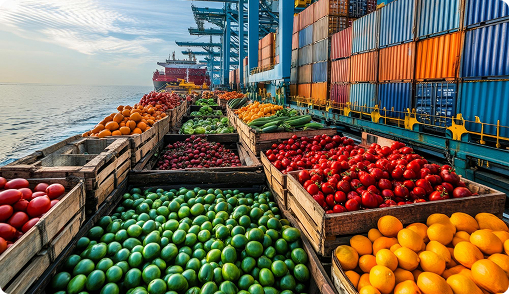
For supermarkets, restaurants and wholesale distributors, Mayil Global provides dependable wholesale supply backed by quality control, hygienic handling and coordinated delivery. Explore Mayil Global’s sourcing and logistics, review products, or contact the team to discuss supply or export distribution requirements.
Daily takeaway: The 20 October Al Aweer data shows a mixed market, while logistics developments and regulatory requirements keep shipment planning central to UAE food trade. Daily price monitoring, verified origin and documentation, and dependable distribution remain essential for exporters and local buyers.