


Briefing date: October 21, 2026. The latest available Al Aweer comparisons show a sharp onion decline alongside contrasting movements in garlic grades. At the same time, Dubai’s port-priority measures and customs facilitation are intended to support the movement of perishable food through a disrupted logistics environment. For exporters and UAE buyers, the practical focus is clear: match product grade to demand, protect shelf life, and work with a verified commercial partner.
Al Aweer market update: a split signal in garlic, continued onion price pressure
The indicative wholesale rates for October 20 show both strong gains and steep declines. Goose berry (amla) rose 10.2%, drumstick 9.9%, pomegranate (10 pc) 9.1%, lemon 8.6%, and Garlic (Normal) 8.2%. Among the largest drops, onion fell 20.0%, generic garlic 18.3%, small shallots 16.7%, honey pomelo (6 pc) 20.0%, and red pomelo (~6 pc) 12.4%.
The prior day’s market movement adds context. On October 19, cabbage rose 33.3%, fresh turmeric root 28.0%, green chili pepper 25.1%, zucchini 18.2%, and red pomelo (~6 pc) 14.2%. Broccoli fell 27.8%, cherry tomatoes and bunch tomato each fell 20.0%, white onion declined 14.7%, and cucumber fell 12.4%.
These are indicative wholesale rates, not guaranteed transaction prices. Actual traded prices vary by quality, quantity, origin, condition, and negotiation. Review the October 20 report and October 19 report alongside shipment specifications and buyer feedback.

Onion cost leadership and garlic grade arbitrage
Onion declines create a procurement window
Onion fell 20.0% on October 20, following a 14.7% decline in white onion the day before. The consecutive drops strengthen onion’s position as a short-term cost-leadership opportunity for importers and bulk buyers. Supermarkets, restaurants, and wholesalers can assess replenishment needs against current landed costs, while exporters can use the movement to review sales timing and stock rotation.
A lower market indication does not make every shipment equivalent. Buyers should compare variety, size, firmness, skin condition, pack format, origin, and remaining storage life. Exporters should present these details with current images and a consistent grade specification. That allows a buyer to evaluate the offer against the right market segment, rather than relying on a broad “onion” price alone.
Garlic’s divergence is a grade signal, not a contradiction
On October 20, Garlic (Normal) gained 8.2%, while generic Garlic declined 18.3%. The two movements point to a potential grade and specification arbitrage story. The data does not prove why the prices diverged, but it does show that an undifferentiated garlic category can conceal meaningfully different market behavior.
Exporters should clarify the grade, size profile, curing and condition, origin, packaging, and quantity available. Buyers should confirm that the offer matches their retail or food-service use. If a shipment is priced as a higher specification, its quality documentation and inspection should support that positioning. Clear grading helps prevent a low-priced generic offer from being compared directly with a different quality tier.
Dubai port priority: operational support for perishable cargo
At a Fruits and Vegetables Traders Stakeholders Meeting on October 6 at Mina Rashid, the Ports, Customs and Free Zone Corporation (PCFC) and Dubai Chambers discussed disruption-related delays and their effect on produce shelf life. PCFC Chairman Abdulla Bin Damithan chaired the meeting, attended by Dubai Chambers President and CEO Mohammad Ali Rashed Lootah.
PCFC said Dubai ports would give clear priority to perishable food shipments, coordinating with Dubai Ports Authority and terminal operators. A Joint Follow-up Committee, chaired by Capt. Ibrahim AlBlooshi, Executive Director of Dubai Ports Authority, was established to address vessel berthing and discharge priorities, shipping charges, and trucking issues. PCFC also described an independent mechanism to review disputed charges and dedicated complaint and disclosure channels through Dubai Trade.

This policy is a useful operational signal for exporters, but it is not a substitute for shipment planning. Port priority cannot remove the need to book suitable transport, prepare complete documents, communicate accurate cargo details, and coordinate trucking and receiving capacity. It does, however, place perishable cargo handling explicitly on the Dubai port agenda.
The broader port figures underline the scale of the supply chain. Mina Rashid recorded 25,618 tonnes of general food cargo so far in 2026, compared with 20,547 tonnes in 2024, while vessel calls doubled to around 600. Mina Hamriyah handled more than 436,000 tonnes of general cargo in 2025 and receives more than 700,000 head of livestock annually.
Customs facilitation and wider UAE export news
Dubai Customs measures reviewed at the meeting included an additional 120-day extension to the customs suspension period, temporary instalment payments for import duties, an 80% reduction in penalties on customs cases, and an adjusted e-commerce duty exemption threshold. Authorities reported AED 134 million in additional trade value and approximately 60,000 tonnes of additional fruit and vegetable trade in May–June 2026 compared with March–April. More than 112,000 declarations were processed through the Green Corridor in March–April.
These measures are part of the current UAE export news environment, not a guarantee of clearance time or eligibility for every shipment. Exporters should confirm applicable customs treatment and documentation with their importer, broker, and relevant authorities before loading.
Retailers are also adapting to logistics disruption through closer sourcing markets and dedicated chartered vessels, as reported by The National on October 9. Longer term, the ADAFSA Agricultural Transformation Strategy, reported on October 16, focuses on a more sustainable, resilient food system, including stronger local production, efficient resource use, and improvements across logistics and trade.
How to export food to Dubai: a practical shipment sequence
For exporters searching how to export food to dubai, the essential principle is coordination before dispatch. Exact requirements vary by product and origin, so confirm current requirements with the UAE importer and competent authorities.
- Verify the buyer and commercial route. Confirm the receiving company, product demand, delivery point, volume, payment conditions, and whether the transaction is commission distribution or an outright cash-and-carry purchase.
- Agree a precise specification. Document product variety, grade, size, origin, packaging, quantity, and acceptable quality tolerances. Attach current photos or inspection records where relevant.
- Confirm regulatory and customs requirements. Coordinate the required certificates, product and label details, customs classification, and shipment documents with the importer or broker before loading.
- Plan for shelf life. Select appropriate packaging and temperature management for the product. Share estimated arrival times and prepare receiving, inspection, and onward distribution arrangements in advance.
- Reconcile costs and settlement. Confirm freight, port and trucking charges, commissions, any applicable customs arrangements, and the method and timing of payment in writing.
For fresh produce and other food products, hygienic handling, quality control, and suitable storage from origin through delivery are central to protecting saleable condition. Mayil Global’s sourcing and logistics process describes its approach to sourcing, inspection, hygienic handling, and distribution for UAE businesses.
A 3% distribution model for exporters and UAE buyers
For exporters assessing a 3 percent commission distributor uae, Mayil Global offers a 3% commission-based distribution model for fresh produce and food products. The model is designed to connect suppliers with local B2B demand while emphasizing clear commercial terms and distribution coordination. Exporters should agree the commission basis, reporting, settlement timing, handling responsibilities, and any other charges before sending cargo.
For suppliers seeking immediate liquidity, container purchases on a cash-and-carry basis are a separate route to discuss. The purchase terms, product inspection, price, and payment timing should be confirmed before the transaction is finalized. Read more about Mayil Global’s 3% commission distribution approach.
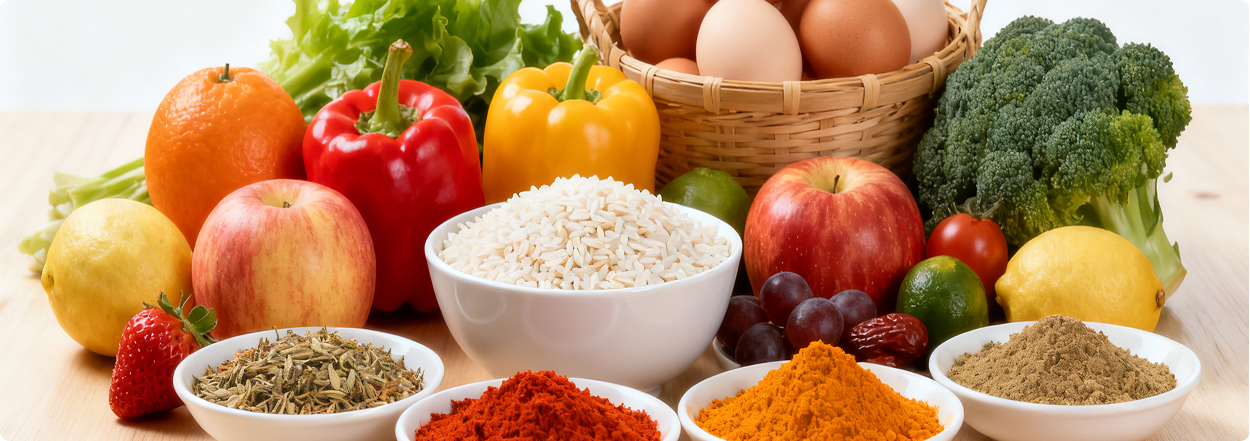
For local supermarkets, restaurants, retailers, and wholesale distributors, Mayil Global supplies fresh fruits and vegetables, premium spices, rice, and farm-fresh eggs. Its product range is supported by farm-direct sourcing from trusted farms and global suppliers, quality control, hygienic handling, and organized distribution.
Next steps: verify the buyer and the shipment plan
Exporters evaluating a verified buyer for exporters uae should request a documented product requirement, confirm the receiving business and delivery process, and establish written commercial terms before dispatch. Share current grade specifications, available volume, origin, shipment schedule, and inspection information so both parties can assess fit accurately.
For buyers, verification means checking the supplier’s product consistency, sourcing, handling practices, delivery capacity, and transaction terms, not only the quoted price. For both sides, the October 21 briefing reinforces the same priorities: track Al Aweer market updates, distinguish grades carefully, protect shelf life through coordinated logistics, and build a dependable supply relationship.
To discuss wholesale supply, exporter distribution, the 3% commission model, or container purchase options, contact Mayil Global.