

Dubai’s food distribution market continues to expand beyond traditional staple products. Supermarkets, restaurants, retailers, and wholesale distributors are increasing their demand for specialty grains and pulses that offer consistent quality, reliable availability, and clear commercial value.
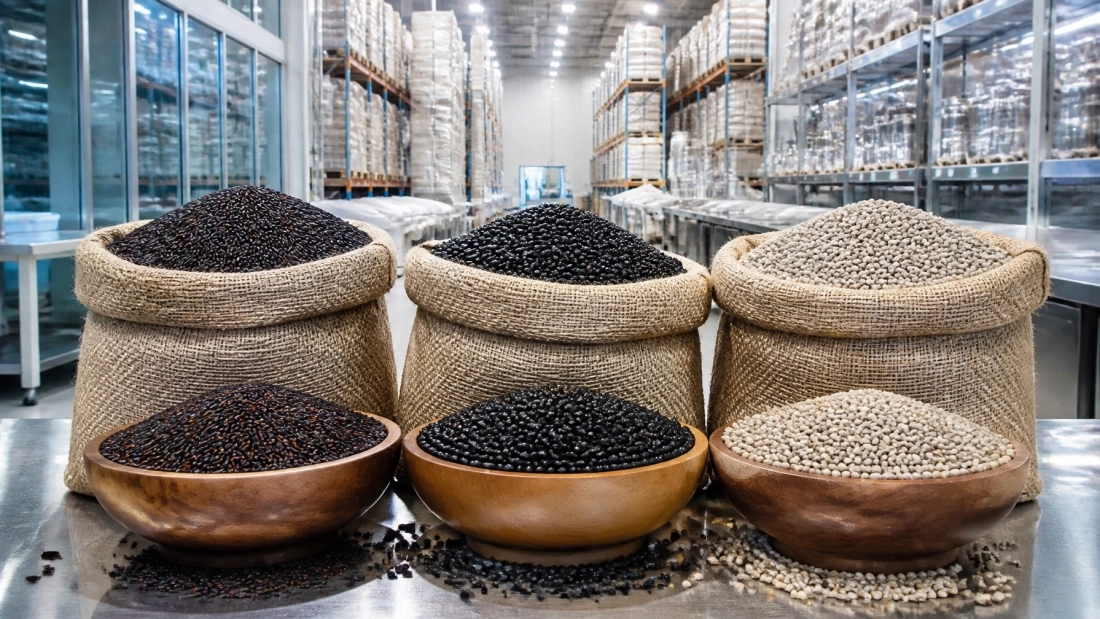
Black rice, moong dal, and sorghum are three products with strong potential in the UAE wholesale market. Black rice serves premium, health-focused, and specialist retail segments. Moong dal remains a high-volume pulse for households, restaurants, caterers, and food manufacturers. Sorghum, also known as jowar, supports both human food and agricultural feed applications, subject to the required import controls.
For international exporters, the main challenge is not only finding demand. It is establishing a dependable route into the UAE through compliant documentation, transparent distribution, quality control, and efficient logistics. Mayil Global addresses this requirement through a farm-direct sourcing network, structured distribution services, and a transparent 3% commission model for qualified export supply.
Why Black Rice, Moong Dal, and Sorghum Matter in Dubai
Dubai is a major food-import and distribution hub connecting global suppliers with supermarkets, restaurants, retailers, and regional markets. Buyers require products that meet agreed specifications and arrive through an organized supply chain.
Black Rice for Premium Wholesale Buyers
Black rice, often called forbidden rice, is positioned within the premium rice segment. Its distinctive dark colour and specialist market profile make it suitable for:
- Gourmet restaurants and hotels
- Health-focused supermarkets
- Specialty food retailers
- Premium grocery distributors
- Food businesses developing differentiated product ranges
For bulk rice suppliers Dubai, black rice provides an opportunity to supply a higher-value variety rather than competing only in conventional rice categories. Buyers typically assess grain uniformity, cleanliness, packaging integrity, origin, shelf life, and consistency between shipments.
Mayil Global supports this segment by connecting exporters with wholesale distribution channels and maintaining inspection procedures from sourcing through delivery.
Moong Dal for Consistent Foodservice Demand
Moong dal, also known as green gram, is a widely used pulse in South Asian cuisine and commercial food preparation. It may be supplied as split moong dal or whole green gram, depending on buyer requirements.
Demand comes from:
- Restaurants and catering companies
- Supermarkets serving regional consumer segments
- Wholesale grocery distributors
- Institutional kitchens
- Food processors and packaged-food businesses
Moong dal requires careful control of moisture, foreign matter, infestation, colour, and packaging. Consistent grading is important because buyers need predictable cooking performance and stable shelf life.
Mayil Global’s sourcing and inspection process is designed to help exporters supply agreed product specifications while giving UAE buyers access to dependable pulse availability.
Sorghum for Food and Feed Applications
Sorghum, or jowar, is a versatile grain used in food products, flour, traditional preparations, and animal feed. Its end use affects the required specifications, documentation, packaging, and regulatory process.
For Dubai buyers, sorghum can support:
- Grain wholesalers
- Feed distributors
- Agricultural supply businesses
- Food manufacturers
- Retailers supplying alternative grains
Sorghum shipments require particular attention to plant-health compliance. The UAE’s agricultural consignment procedures identify sorghum among feed products for which treatment or additional phytosanitary declarations may apply when imported from countries affected by regulated pests. Exporters should confirm current requirements with the competent authorities before shipping.
Mayil Global’s 3% Commission Model
Mayil Global operates as a transparent 3 percent commission distributor UAE for qualified export arrangements. The objective is to provide international suppliers with a clear market-entry structure while giving Dubai-based buyers access to a reliable wholesale supply channel.
Under the model, the commercial agreement defines:
- The product, grade, origin, and packaging format
- The shipment quantity and delivery terms
- The agreed distribution or sales value
- Mayil Global’s 3% commission
- Responsibility for documentation, inspection, logistics, and related costs
- Payment terms and settlement timelines
The 3% commission keeps the distribution cost visible from the beginning. It helps exporters plan margins accurately and avoids the uncertainty associated with opaque intermediary mark-ups.
For approved suppliers and suitable container-load transactions, Mayil Global may also support an immediate cash-and-carry container purchase model. This provides faster liquidity to exporters and reduces the waiting period commonly associated with extended wholesale payment cycles. Each transaction remains subject to product verification, commercial approval, documentation, and agreed terms.
How to Export Food to Dubai Through a Structured Supply Chain
Understanding how to export food to Dubai is essential for avoiding clearance delays and protecting product quality. The process requires coordination between the exporter, the UAE importer or distributor, regulatory authorities, shipping partners, and wholesale buyers.
1. Confirm Product Specifications
Before quotation or shipment, exporters should provide complete product information, including:
- Product name and variety
- Country of origin
- Intended use
- Grade and quality parameters
- Packing size and material
- Net weight and container capacity
- Production and expiry information
- Available laboratory or quality reports
Mayil Global uses this information to match products with the requirements of supermarkets, restaurants, retailers, and wholesale distributors in the UAE.
2. Review Export and UAE Import Requirements
Each exporter must confirm the rules of the country of origin as well as UAE import requirements. Product registration, label approval, certificates, and inspection procedures can vary according to the commodity and intended use.
Relevant documentation may include:
- Phytosanitary certificate
- Health certificate, where applicable
- Certificate of origin
- Commercial invoice
- Packing list
- Bill of lading or shipping documents
- Customs declarations
- Laboratory or treatment reports, where required
- Arabic and English product labelling
The UAE’s MOCCAE agricultural consignment release service outlines requirements for agricultural products and identifies the importance of phytosanitary certification, customs documentation, certificates of origin, and inspection.
Where rice is intended for re-export from the UAE, exporters and buyers should also review the applicable UAE Ministry of Economy rice export permission service. Regulations can change according to origin, product category, and trade route.
3. Complete Quality Control Before Loading
Quality control begins before the container reaches the port. Mayil Global works with trusted farms and international suppliers and applies inspection procedures across the supply chain.
For black rice, moong dal, and sorghum, checks may cover:
- Product cleanliness
- Moisture condition
- Foreign matter
- Signs of pest activity
- Grain or pulse uniformity
- Packaging strength
- Label accuracy
- Container hygiene
- Loading condition
These controls reduce the risk of rejection, quality disputes, and loss during transportation.

4. Manage Hygienic Packaging and Logistics
Hygienic handling and secure packaging are non-negotiable requirements for food distribution. Packaging must protect the product from contamination, moisture, damage, and handling risks during international transport and local delivery.
Mayil Global coordinates organized logistics from arrival through storage and distribution. Its sourcing and logistics process covers supplier selection, inspection, hygienic handling, storage, transportation, and delivery planning.
This supply-chain discipline benefits exporters by protecting shipment value. It benefits Dubai buyers by improving availability and reducing inconsistencies between orders.
Benefits for Dubai-Based Wholesale Buyers
A Dubai wholesale food buyer requires more than a competitive quotation. The buyer needs confidence that the product will be available, compliant, correctly packed, and delivered according to schedule.
Mayil Global supports local B2B buyers through:
Dependable Supply
A global sourcing network helps reduce dependence on a single origin or supplier. This supports continuity during seasonal fluctuations, production changes, or freight disruptions.
Consistent Quality
Inspection at each stage supports consistent product performance. Buyers receive black rice, moong dal, and sorghum according to agreed specifications rather than relying on unverified spot-market supply.
Competitive Commercial Structure
A transparent 3% distribution model reduces uncertainty in the supply chain. Efficient coordination can support competitive wholesale pricing while preserving clear margins for exporters and buyers.
Organized Distribution
Mayil Global supplies supermarkets, restaurants, retailers, and wholesale distributors across the UAE through structured logistics and delivery planning.
Access to Verified Export Supply
International suppliers seeking a verified buyer for exporters UAE can use Mayil Global’s established B2B network to present products to a qualified distribution channel. Instead of approaching multiple unknown intermediaries, exporters can discuss product specifications, volume, compliance, and commission terms through one structured process.
Building a Reliable Farm-to-Market Partnership
Successful grain and pulse distribution depends on coordination at every stage. Mayil Global combines farm-direct sourcing, international supplier relationships, quality control, hygienic packaging, storage management, and efficient distribution logistics.
For exporters, the 3% commission model creates a practical route into the Dubai market. Immediate cash-and-carry container purchases can provide liquidity for approved shipments. For UAE buyers, the model supports access to reliable wholesale supply without unnecessary layers of distribution.
Black rice, moong dal, and sorghum each serve different market segments, but all require the same operational foundations: accurate specifications, compliant documents, safe handling, transparent pricing, and dependable delivery.
Exporters can review Mayil Global’s product range, while supermarkets, restaurants, retailers, and distributors can contact Mayil Global to discuss wholesale requirements.
Frequently Asked Questions
What is Mayil Global’s 3% commission model?
It is a transparent distribution arrangement in which Mayil Global supports qualified export supply and UAE wholesale distribution for an agreed 3% commission. The commission basis, responsibilities, payment terms, and logistics costs are defined in the commercial agreement.
Can Mayil Global purchase full containers immediately?
For verified suppliers and approved products, Mayil Global may offer immediate cash-and-carry container purchases. Approval depends on product quality, documentation, demand, shipment terms, and commercial review.
Is black rice suitable for Dubai supermarkets and restaurants?
Yes. Black rice is suitable for premium grocery, health-focused retail, gourmet foodservice, and specialty distribution channels, provided it meets the buyer’s quality, labelling, packaging, and import requirements.
What documents are commonly required for sorghum and pulses?
Requirements may include a phytosanitary certificate, certificate of origin, commercial invoice, packing list, bill of lading, and additional treatment or laboratory documentation depending on origin and intended use.
How can exporters reach a wholesale buyer in Dubai?
Exporters should present clear product specifications, available volumes, origin, packaging details, certifications, and delivery terms. Mayil Global provides a structured route for exporters seeking a verified UAE distribution partner under its 3% commission model.