


1. Daily market briefing: weekend consolidation and Week 34 outlook
The Al Aweer market is closing GCC Week 33 on a broadly stable foundation. Core fresh-produce categories are consolidating around mid-August baselines, with only minor routine adjustments linked to arrival timing, grade, stock rotation, and daily buyer activity.
The weekend trading position is stable rather than inactive. Supermarkets, restaurants, retailers, and distributors are replenishing inventory ahead of the new trading week. Buyers are prioritising dependable supply, usable shelf life, and confirmed delivery windows over speculative purchases based only on the lowest headline price.
Week 33 wrap-up
The principal market signals are:
- Stable core produce benchmarks: Cucumbers, tomatoes, bananas, garlic, and okra remain useful planning references, subject to grade and availability.
- Persistent avocado premium: Arrival gaps and tight regional spot-market inventory continue to support elevated prices.
- Citrus discount pressure: South African lemons and mandarins remain under downward pressure as peak-season arrivals increase.
- Onion sourcing transition: UAE/Iran trade suspension continues to require compliant alternative-origin planning.
- Higher landed-cost floors: Cape reroutings, transshipment delays, vessel bunching, and war-risk-related surcharges continue to affect reefer economics.
Week 34 outlook
Week 34 is expected to begin from a consolidated baseline. Buyers should plan replenishment early, particularly for products requiring specific grades or short delivery windows. The market is likely to remain selective:
- Premium avocados require forward planning and controlled stock allocation.
- South African lemons and mandarins may provide a short-window buying opportunity for operators with fast sales rotation.
- Onion importers should confirm compliant origin, documentation, payment routes, and arrival timing before loading.
- Freight quotes should be revalidated before every booking because the surcharge stack remains material.
These benchmarks are for planning only. Actual commercial prices vary according to origin, quality, packaging, freight, exchange rates, inspection results, clearance timing, wastage, and trader margins.
2. Importing onions Dubai: origin comparison and import economics
Businesses importing onions Dubai must evaluate more than the purchase price at origin. The correct decision includes legal eligibility, shipment reliability, payment compliance, curing, dry matter, packaging, freight exposure, and expected sell-through.
The current UAE/Iran trade suspension continues to affect Iranian brown onions and Red Shirazi onions. There is no restoration timeline in the current briefing position. Unresolved payments, compliance exposure, and transshipment risk mean that previously competitive Iranian benchmarks should not be treated as executable supply options without formal confirmation.
Indicative onion-origin comparison
| Origin | Indicative Al Aweer benchmark | Current sourcing view | Importer action |
|---|---|---|---|
| India, new crop | AED 2.00/kg | Compliant alternative with potential volume support | Confirm crop, size, curing, packing, export availability, and freight |
| Egypt | AED 1.30/kg | Competitive bulk alternative | Verify dry matter, skin condition, grading, and arrival shelf life |
| Yemen | AED 1.60/kg | Regional alternative that may support shorter replenishment | Confirm available volumes, route, documents, and delivery schedule |
| Iran, brown onions | Previously about AED 1.67/kg | Caution flag under current suspension | Do not proceed without legal, trade, payment, and origin confirmation |
| Iran, Red Shirazi | Previously about AED 1.05/kg | Caution flag under current suspension | Treat as non-operational until restrictions and compliance status are confirmed |
Why alternative-origin sourcing matters now
A lower origin price does not automatically create a lower landed cost. An importer must account for:
- Freight and reefer availability.
- Port and clearance timing.
- Product deterioration and wastage.
- Size and grade acceptance.
- Packaging and ventilation.
- Payment-bank eligibility.
- Documentation consistency.
- Ability to repeat the supply programme.
For onions, Mayil Global supports structured sourcing from trusted farms and global suppliers. The objective is maintaining dependable supply while protecting quality control, hygiene, and regulatory compliance.
3. Category-level trading view: avocado premium versus citrus discount
Avocado: premium persists
Avocado prices remain elevated because regional spot-market inventory is tight and arrival gaps continue. Buyers should avoid treating avocados as a routine commodity purchase during this period.
Buyer action steps:
- Confirm variety, maturity, size, dry-matter expectations, and packaging before purchase.
- Reserve supply against an agreed arrival window.
- Allocate premium avocado volumes to channels that can support the higher price.
- Maintain strict cold-chain and handling controls.
- Review arrival quality immediately and adjust repeat orders based on sell-through.
South African lemons and mandarins: short-window discount opportunity
South African lemons and mandarins remain under heavy downward pressure because of peak-season arrivals and extended-transit condition variances. Secondary lots may require aggressive floor discounting.
This creates an opportunity for buyers with high stock velocity. Restaurants, processors, retailers, and distributors that can rotate inventory quickly may secure commercial value from suitable discounted lots.
Buyer action steps:
- Separate primary and secondary lots before committing.
- Inspect colour, firmness, decay, pressure damage, and remaining shelf life.
- Calculate expected wastage at the discounted price.
- Match volume to confirmed customer demand.
- Use fast delivery and rapid rotation rather than long storage.
The operating principle is clear: premium categories require quality protection, while discounted citrus requires speed and disciplined stock management.
4. Logistics and landed-cost reality
Ocean logistics continue to influence final pricing across the UAE fresh-produce supply chain. Cape reroutings, transshipment delays, vessel bunching, and erratic arrival windows create uncertainty between booking and market delivery.
The current surcharge stack may include:
- Base ocean freight.
- Reefer equipment and operating costs.
- Peak Season Surcharge.
- Emergency Conflict Surcharge.
- War Risk Surcharge.
- Transshipment or rerouting costs.
- Port, documentation, clearance, and inland reefer transport.
- Storage, demurrage, and inspection-related charges.
CMA CGM lowered the reefer Peak Season Surcharge from North Europe to the Middle East Gulf to USD 1,000 per container effective August 15. However, Emergency Conflict Surcharges and War Risk Surcharges of approximately USD 4,000 for reefer equipment remain relevant to planning. Freight quotations must be confirmed directly for the route, vessel, date, and equipment type.
Velocity protects margin
Stock velocity is a landed-cost control. Delayed clearance or slow sales can convert a favourable purchase into a loss through:
- Deterioration.
- Repacking.
- Discounting.
- Additional storage.
- Missed customer delivery windows.
Mayil Global’s sourcing and logistics process combines supplier coordination, inspection, hygienic handling, storage, and organised distribution to support timely delivery.
5. How to export food to Dubai: eight operating steps
Exporters searching for how to export food to dubai should use a controlled sequence for both trial containers and repeat programmes.
1. Define the product specification
Confirm commodity, variety, origin, grade, size, packaging, net weight, quantity, expected shelf life, and target arrival date.
2. Identify a verified UAE counterparty
Confirm the importer or distributor’s company details, food-trading capability, receiving location, payment structure, and ability to coordinate clearance.
3. Verify market fit
Check current Al Aweer demand, benchmark pricing, customer channel, competitive origins, and expected stock velocity before loading.
4. Confirm regulatory requirements
Review applicable import approvals, product registration, labelling, phytosanitary requirements, certificates of origin, and current restrictions affecting origin or payment channels.
5. Agree the commercial structure
Set the price basis, freight responsibility, inspection terms, payment timing, wastage allocation, commission terms, and dispute process in writing.
6. Prepare and inspect the cargo
Grade the product, verify packaging, pre-cool where required, check container cleanliness, and record loading photographs, weights, lot numbers, and seal details.
7. Coordinate freight and UAE delivery
Book suitable reefer capacity, monitor transit, prepare documents early, arrange customs clearance, and schedule refrigerated transport to the buyer or Al Aweer distribution point.
8. Review the shipment before scaling
Measure arrival condition, clearance time, wastage, realised price, customer acceptance, and payment performance before moving from trial containers to regular supply.
6. Mayil Global’s 3% commission distributor UAE model
Mayil Global provides exporters with a structured route to UAE market access through its 3 percent commission distributor uae model. The model is designed for international and local exporters that require local distribution support without immediately building a complete UAE sales and logistics operation.
Under the agreed 3% commission structure, Mayil Global can support:
- Product-specific buyer coordination.
- UAE market and distribution access.
- Commercial communication.
- Shipment and delivery planning.
- Quality and arrival coordination.
- Repeat-order development.
- Transparent commission-based execution.
The commission scope, shipment value, payment timing, responsibilities, and service deliverables should be documented before commercial execution.
Immediate Cash & Carry container purchases
Exporters requiring immediate liquidity may also present suitable containers for immediate Cash & Carry purchase. This option is subject to product inspection, origin eligibility, documentation, quality, volume, arrival timing, and commercial approval.
Exporters should provide:
- Product and origin.
- Grade, size, and packaging.
- Available quantity.
- Loading date and expected arrival.
- Container and freight details.
- Target price.
- Certificates and inspection records.
Cash & Carry purchasing can reduce receivables exposure and support rapid stock movement when the product and market conditions are suitable.
7. Wholesale fruits and vegetables Dubai supply for UAE buyers
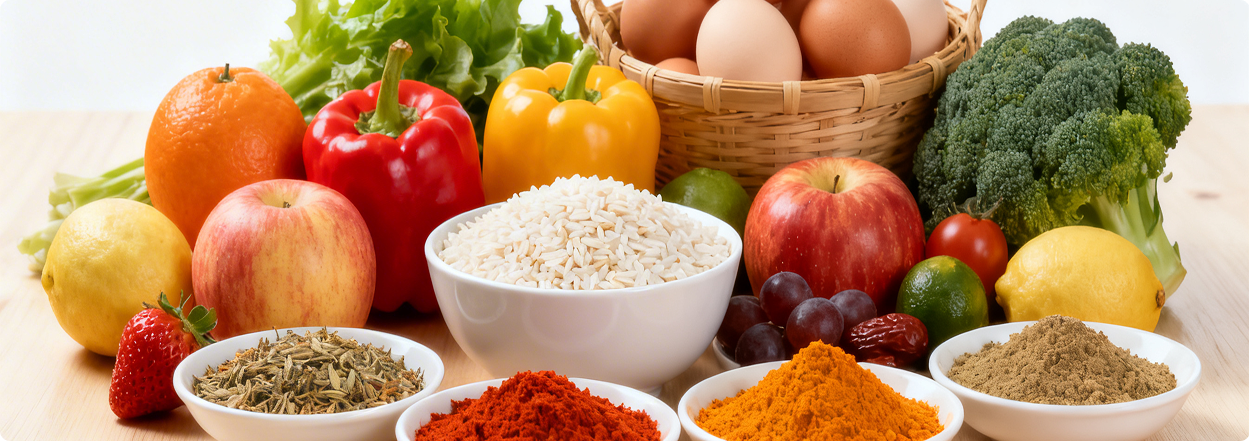
Mayil Global serves supermarkets, restaurants, retailers, and wholesale distributors requiring wholesale fruits and vegetables Dubai supply. The company also supplies premium spices, rice, and farm-fresh eggs.
The service model is based on:
- Farm-direct sourcing and trusted global suppliers.
- Inspection at every important supply-chain stage.
- Hygienic handling and packaging.
- Proper storage and product protection.
- Organised distribution and timely delivery.
- Multi-country sourcing for supply continuity.
- Long-term B2B relationships.
UAE buyers can review the available Mayil Global product categories and the company’s business profile.

8. Product and buyer verification guidance
Exporters seeking a verified buyer for exporters uae should not rely on a general expression of interest. Verification must be product-specific.
A buyer for Egyptian onions may not be the correct buyer for Indian okra, premium avocados, Chinese garlic, rice, spices, or farm-fresh eggs. The exporter should ask whether the UAE contact is a verified buyer of that particular product.
Verification should cover:
- Exact product and origin preference.
- Grade, size, packaging, and volume.
- Delivery location.
- Import and receiving capability.
- Payment terms and banking route.
- Inspection and rejection process.
- Expected buying frequency.
- Ability to accept Cash & Carry or commission distribution terms.
Product verification protects exporters from unsuitable offers. Buyer verification protects UAE businesses from inconsistent quality and unclear counterparties.
9. Commercial checklist
Before confirming a shipment or purchase, complete the following:
- Confirm product, origin, grade, size, and packaging.
- Confirm current benchmark and expected landed cost.
- Verify legal eligibility and payment compliance.
- Verify the buyer or exporter’s company details.
- Confirm certificates and document consistency.
- Agree inspection, rejection, and wastage terms.
- Confirm freight, reefer, surcharge, and delivery costs.
- Plan stock velocity and customer allocation.
- Document the 3% commission where applicable.
- Confirm whether the transaction is Cash & Carry or credit-based.
- Arrange refrigerated delivery and arrival inspection.
- Review results before scaling the programme.
10. Conclusion: disciplined supply for Week 34
The August 23 Al Aweer market position is one of weekend consolidation with selective pressure by category. Avocados retain a premium. South African lemons and mandarins present a short-window discount opportunity for fast-moving buyers. Onion importers must shift toward compliant alternative origins and evaluate total landed cost rather than origin price alone. Ocean surcharges and vessel irregularity remain central to planning.
Mayil Global supports exporters and UAE B2B buyers through verified counterparties, multi-country sourcing, strict quality control, hygienic handling, organised logistics, and dependable distribution. Exporters can use the 3% commission distribution model or explore immediate Cash & Carry container purchases for suitable cargo.
For exporter onboarding, buyer verification, wholesale supply, or current commercial discussions, contact Mayil Global.