

Daily installment: August 13, 2026
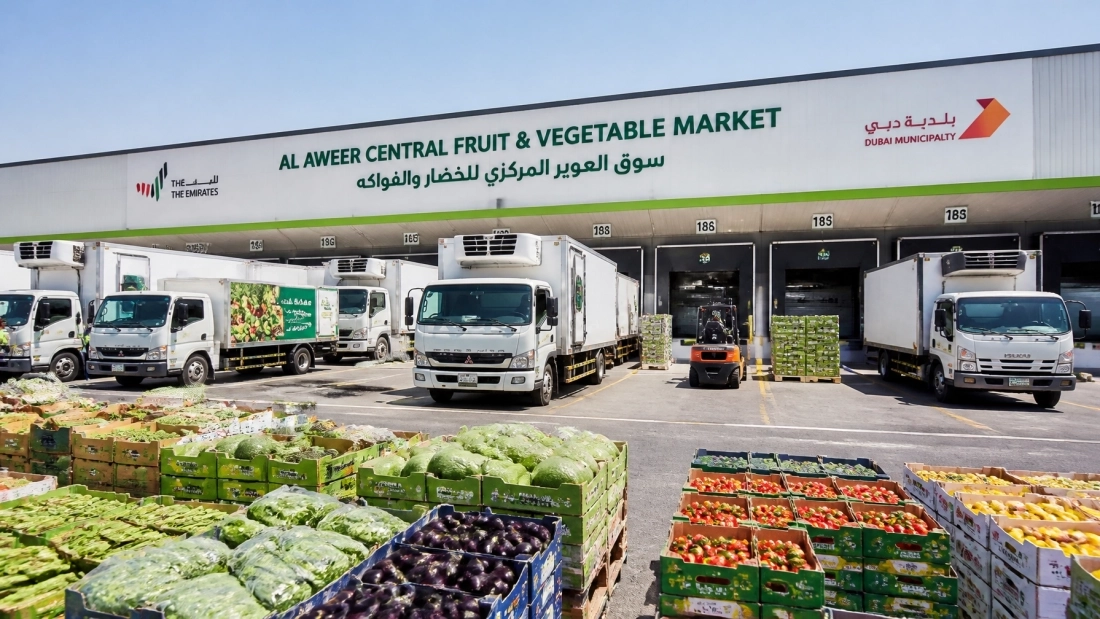
For international exporters targeting the UAE, Dubai’s Al Aweer Central Fruit and Vegetable Market remains a critical pricing and distribution centre. The market provides access to supermarkets, restaurants, retailers, and wholesale distributors, but success depends on disciplined sourcing, accurate quality grading, regulatory compliance, and fast logistics.
Mayil Global supports global and local exporters through a transparent 3% commission-based distribution model and an immediate Cash & Carry system for full container purchases. These two routes provide exporters with practical options for managing market volatility, improving liquidity, and accessing verified B2B buyers in the UAE.
Al Aweer Market Pricing: The August 13 Operating Picture
Al Aweer pricing changes according to container arrivals, origin, pack size, quality, buyer demand, and the timing of daily trading. Exporters should treat market prices as active commercial indicators rather than fixed quotations.
New-crop onion benchmark
Current market intelligence indicates that Indian new-crop onions in 18 kg breathable mesh packs have stabilized around AED 1.95/kg as a working benchmark. Good-quality lots may trade above this level, with recent indications moving within an approximate AED 2.00–2.15/kg range, depending on grade, size, arrival timing, and buyer negotiation.
The benchmark should be evaluated alongside the following factors:
- Origin: Indian, Egyptian, Iranian, and other origins trade under different demand and quality conditions.
- Pack format: 18 kg mesh sacks are widely used for Indian new-crop onions.
- Size specification: Uniform 55+ mm bulbs can receive stronger buyer interest than mixed-size stock.
- Condition: Dry skin, clean presentation, low damage, and good curing protect shelf life.
- Arrival concentration: Multiple containers reaching the market at the same time can pressure prices.

Managing up to 30% intraday volatility
Core produce lines at Al Aweer can experience intraday volatility of up to 30%. This movement is generally associated with:
- Container discharge and arrival timing.
- Vessel delays or accelerated arrivals.
- Sudden demand from retail and HORECA buyers.
- Quality differences between available lots.
- Short-term shortages or oversupply in specific origins.
This volatility creates a direct risk for exporters relying on delayed sales or informal intermediaries. A container that is commercially viable in the morning may face a different price environment later in the day if competing arrivals enter the market.
Mayil Global’s distribution structure addresses this risk by connecting arriving shipments with pre-verified B2B buyers and organized wholesale channels. Exporters can choose the 3% commission model for market participation or the Cash & Carry option when immediate container liquidity is the priority.
Grade 1 Quality Creates a 20–30% Premium Opportunity
Quality grading is not a presentation issue. It directly affects the price realization, buyer retention, and speed of movement through the wholesale supply chain.
At Al Aweer, Grade 1 and Grade 2 produce can create a 20–30% premium gap when the lots are compared under similar origin, pack size, and market conditions. The exact difference changes daily, but the commercial principle remains consistent: uniform, well-prepared produce captures stronger demand.
Grade 1 onion characteristics
Grade 1 or premium onion lots generally demonstrate:
- Uniform bulb size and consistent weight.
- Clean, dry outer skin.
- Good curing and low moisture exposure.
- Limited sprouting, bruising, rot, or mechanical damage.
- Consistent colour and variety.
- Correct packaging and traceability information.
- Reliable net weight in each 18 kg sack.
Grade 2 lots may remain commercially saleable, but they typically contain greater variation in size, appearance, or condition. Mixed sizing and visible defects can reduce buyer confidence and lead to discounting.
For exporters, the most effective strategy is to define the product specification before loading. “Onions” is not a sufficient commercial description. A buyer needs the origin, variety, size band, grade, pack weight, expected shelf life, and inspection standard.
Importing Onions Dubai: Compliance Requirements
Successfully importing onions Dubai requires coordination between the exporter, UAE importer, shipping agent, customs broker, and market distributor. Compliance should be completed before the container reaches the port.
Core documentation checklist
For fresh onions and other plant products, exporters should prepare and reconcile the following documents:
- Phytosanitary certificate issued by the competent agricultural authority in the country of origin.
- Original health certificate, where required by the relevant UAE and Dubai authorities.
- Commercial invoice showing the correct product description and value.
- Packing list matching the actual number and weight of sacks.
- Bill of lading or airway bill.
- Delivery order for container release.
- Certificate of origin, particularly where origin is not clearly stated on another official document.
- Any applicable pesticide-residue, analysis, or inspection documentation.
The importing establishment must also have the appropriate UAE trade licence and registrations. Dubai Municipality’s Food Import and Re-Export System, commonly referred to as FIRS, is used for relevant food import procedures. Agricultural consignments may also require clearance and release procedures involving the UAE authority responsible for plant and agricultural products.
Exporters should review the current requirements with their UAE importer and the relevant authorities before shipment. Official guidance is available through the Dubai Municipality Food Safety Department and the UAE government’s phytosanitary certificate services.
Onion labeling and traceability
Each sack should be prepared according to the buyer’s specification and applicable UAE requirements. Information should be clear, consistent, and traceable, including:
- Country of origin.
- Product name and variety.
- Net weight.
- Grade and size specification.
- Packing or production information, where applicable.
- Exporter or packer identification.
- Any required Arabic and English labeling.
Data on the label, invoice, packing list, health certificate, and phytosanitary certificate must match. Inconsistent descriptions can create delays, inspections, detention, or additional handling costs.
How to Export Food to Dubai: A Practical Step-by-Step Route
Exporters asking how to export food to Dubai should approach the process as a controlled supply chain rather than a single shipment transaction.
Step 1: Confirm the product specification
Define origin, grade, size, pack format, volume, shelf-life expectation, and target buyer segment. For onions, confirm whether the buyer requires 18 kg mesh sacks, a 55+ mm size band, or another specification.
Step 2: Validate the commercial route
Select either:
- 3% commission distribution: Mayil Global sells and distributes the shipment through its UAE B2B network for a transparent 3% commission on sales value.
- Immediate Cash & Carry purchase: Mayil Global purchases eligible full-container shipments upon arrival, supporting immediate exporter liquidity and rapid reinvestment.
The 3% commission model is suitable for exporters seeking market upside and transparent sales reporting. Cash & Carry is suitable for exporters prioritizing speed, certainty, and immediate capital turnover.
Step 3: Complete pre-shipment compliance
Coordinate certificates, labels, product registration requirements, shipping documents, and UAE importer details before loading. Document preparation should reflect the actual product and packing configuration.
Step 4: Protect product condition in transit
Onions require breathable packaging and appropriate container ventilation. Moisture, heat, poor stacking, and rough handling can create fungal spoilage, sprouting, weight loss, and downgrading.
Quality control should begin at the farm or packing house, continue during loading and transit, and remain active during port discharge and delivery to Al Aweer.
Step 5: Coordinate port clearance and market delivery
Once the container arrives, the importer and logistics team coordinate inspection, customs processing, agricultural release, and onward movement. Reducing dwell time is essential in a volatile fresh-produce market.
Mayil Global’s sourcing and logistics operations are structured around proper storage, hygienic handling, organized distribution, and timely delivery to UAE business buyers.
Step 6: Execute the B2B sale
Cleared produce can be distributed to supermarkets, restaurants, retailers, and wholesale distributors. Accurate grading and transparent reporting help exporters understand realized prices, buyer demand, wastage, and future shipment requirements.
Why the 3% Commission Model Matters
Traditional distribution can involve several intermediaries, unclear deductions, delayed settlement, and limited visibility over the final sales price. The 3% commission model provides a defined distribution cost and aligns Mayil Global’s commercial interest with the exporter’s revenue objective.
Key advantages include:
- Transparent commission structure.
- Access to verified UAE B2B buyers.
- Reduced reliance on informal market intermediaries.
- Faster movement through Cash & Carry and wholesale channels.
- Better visibility into market pricing and customer demand.
- Lower inventory and warehousing exposure.
- Support for repeat container trading and long-term supply relationships.
For exporters with urgent liquidity requirements, the immediate Cash & Carry system provides a separate route for full-container purchases. This allows the exporter to recover working capital quickly while Mayil Global manages local distribution and wholesale movement.
Building Dependable Supply in Dubai
Mayil Global supplies wholesale fruits and vegetables Dubai buyers through farm-direct sourcing, global supplier relationships, strict quality control, hygienic packaging, and organized logistics. The same operational discipline applies across onions, potatoes, tomatoes, citrus, apples, premium rice, spices, and farm-fresh eggs.
For exporters, the objective is straightforward: deliver compliant, correctly graded products into a reliable UAE distribution channel. For supermarkets, restaurants, retailers, and wholesale buyers, the objective is dependable supply and consistent quality.
Market volatility cannot be eliminated. It can be managed through accurate pricing intelligence, Grade 1 quality preparation, complete compliance documentation, rapid logistics, and a transparent distribution model.
To discuss an onion or fresh-produce container, visit the Mayil Global contact page or review the company’s wholesale product range.
Frequently Asked Questions
What is the current onion price benchmark at Al Aweer?
Indian new-crop onions in 18 kg packs have recently stabilized around AED 1.95/kg as a working benchmark. Actual prices vary according to grade, origin, size, arrivals, and buyer negotiation.
How much premium can Grade 1 onions achieve?
Grade 1 produce can create a 20–30% premium gap over Grade 2 lots under comparable market conditions. The premium depends on uniformity, curing, packaging, shelf life, and daily demand.
What is Mayil Global’s 3% commission model?
Mayil Global distributes an exporter’s shipment through its UAE B2B buyer network and charges a transparent 3% commission on the total sales value.
What is the Cash & Carry option?
The Cash & Carry option enables immediate purchase of eligible full-container shipments upon arrival. It is designed for exporters that prioritize rapid liquidity and reduced market exposure.
What documents are required for importing onions into Dubai?
Common requirements include a phytosanitary certificate, original health certificate where applicable, commercial invoice, packing list, bill of lading, delivery order, certificate of origin, and any required inspection or residue documentation. Requirements should be confirmed for each origin and shipment.