

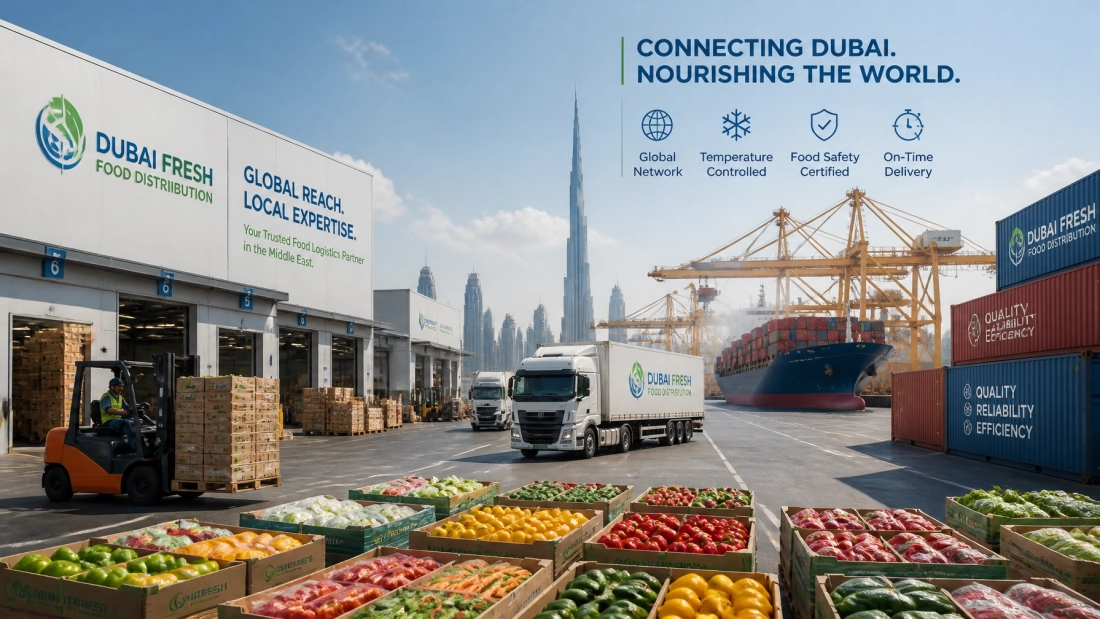
Entering the United Arab Emirates food distribution market represents a significant commercial opportunity for international agricultural exporters, producers, and trade aggregators. However, dispatching a container without rigorous preparation, inadequate risk management, or an unverified counterparty frequently leads to severe financial exposure, extended demurrage charges, and margin erosion. As part of our Verified Buyer & Exporter Authority Series, this comprehensive operational guide outlines the ten critical factors every exporter must evaluate before committing cargo to the UAE market.
Whether you specialize in wholesale fruits and vegetables dubai, importing onions dubai, or coordinating with bulk rice suppliers dubai, understanding local market mechanics is paramount to securing consistent profitability.
1. Master the Regulatory Framework and Documentation
Before arranging freight forwarding, exporters must thoroughly understand how to export food to dubai. Dubai Municipality enforces rigorous food safety, labeling, and import regulations. Every shipment requires precise documentation, including Certificates of Origin, Phytosanitary Certificates, bills of lading, and commercial invoices that strictly align with UAE standards. Failing to comply with pre-clearance protocols results in port delays and potential cargo rejection.
2. Secure a Genuine, Verified Buyer for Exporters UAE
The most common pitfall for international shippers is engaging with unverified intermediaries who promise unrealistic profit margins but lack established distribution networks. Locating a truly verified buyer for exporters uae requires inspecting commercial credentials, verifying trade licenses issued by the Department of Economy and Tourism, and confirming physical warehousing capabilities within major trade hubs such as the Al Aweer Central Market.

3. Leverage the Advantage of a 3 Percent Commission Distributor UAE
Traditional commission structures in regional wholesale markets often involve hidden fees, opaque pricing tiers, and deductions that can exceed 5% to 8% of gross sales. Partnering with a specialized 3 percent commission distributor uae changes this dynamic entirely. Under a transparent 3% flat commission model, the distributor acts as your commercial agent, maintaining your product ownership during consignment while aggressively competing for peak market pricing in Dubai.
4. Understand the Dynamics of the Al Aweer Central Market
The Al Aweer Central Fruit and Vegetable Market serves as the epicenter of food distribution across the Emirates. Navigating this fast-paced environment requires localized expertise. Exporters dealing in wholesale fruits and vegetables dubai must understand daily price volatility, seasonal demand fluctuations, and buyer purchasing habits to prevent distressed selling upon container arrival.
5. Implement Strict Cold Chain Standards for Perishables
Perishable commodities require uncompromising temperature control throughout the supply chain. From maritime reefer container plugging at Jebel Ali Port to specialized refrigerated transport heading into regional distribution centers, maintaining unbroken cold chains preserves product integrity. For sensitive commodities, rigorous handling prevents premature ripening and weight loss, protecting your bottom line.
6. Optimize Logistics for Bulk Commodity Imports Like Onions
Commodities with high volume turnover, such as onions and potatoes, require specialized storage and rapid clearance protocols. When importing onions dubai, ventilation, humidity regulation, and immediate post-discharge inspection are critical. Working with a wholesale partner who understands bulk agricultural logistics ensures your cargo reaches B2B buyers in pristine condition.

7. Evaluate Cash & Carry Versus Consignment Models
Cash flow is the lifeblood of international trade. While consignment models allow exporters to capture upside market pricing, traditional payment cycles can strain liquidity. Integrating a Cash & Carry wholesale facility: where trusted distributors purchase your container outright upon arrival: eliminates credit risk and provides immediate liquidity for subsequent production cycles.
8. Partner with Established Bulk Rice Suppliers and Buyers
The UAE serves as a major re-export hub for staple grains across the Middle East and East Africa. Exporters collaborating with bulk rice suppliers dubai must ensure that grading, milling standards, and moisture content certifications match local consumer expectations. Reliable distribution partners ensure steady, high-volume absorption through supermarket and institutional channels.
9. Identify a Trusted Wholesale Food Buyer Dubai for B2B Channels
Retail hypermarkets, independent supermarkets, five-star hospitality groups, and catering enterprises form the backbone of UAE food consumption. B2B exporters must bypass fragmented retail chains and connect directly with an established wholesale food buyer dubai who maintains direct supply agreements with institutional end-users, guaranteeing continuous demand.
10. Partner with Mayil Global for Operational Excellence
Navigating the UAE import landscape is significantly streamlined when you collaborate with an industry leader. Mayil Global provides comprehensive wholesale distribution services across the UAE, combining farm-direct sourcing, rigorous quality control, hygienic packaging, and organized logistics.
By offering both a transparent 3% commission model and immediate Cash & Carry container purchases, Mayil Global eliminates the uncertainty of finding a verified buyer for exporters uae. Whether you are shipping fresh fruits, vegetables, farm-fresh eggs, or bulk staples, Mayil Global stands as your dependable bridge to the lucrative Dubai market.

Secure Your UAE Export Profits Today
Ready to eliminate market uncertainty and secure reliable buyers for your next container? Contact Mayil Global today to leverage our transparent 3% commission structure, instant Cash & Carry liquidity, and robust B2B distribution network across the UAE.