

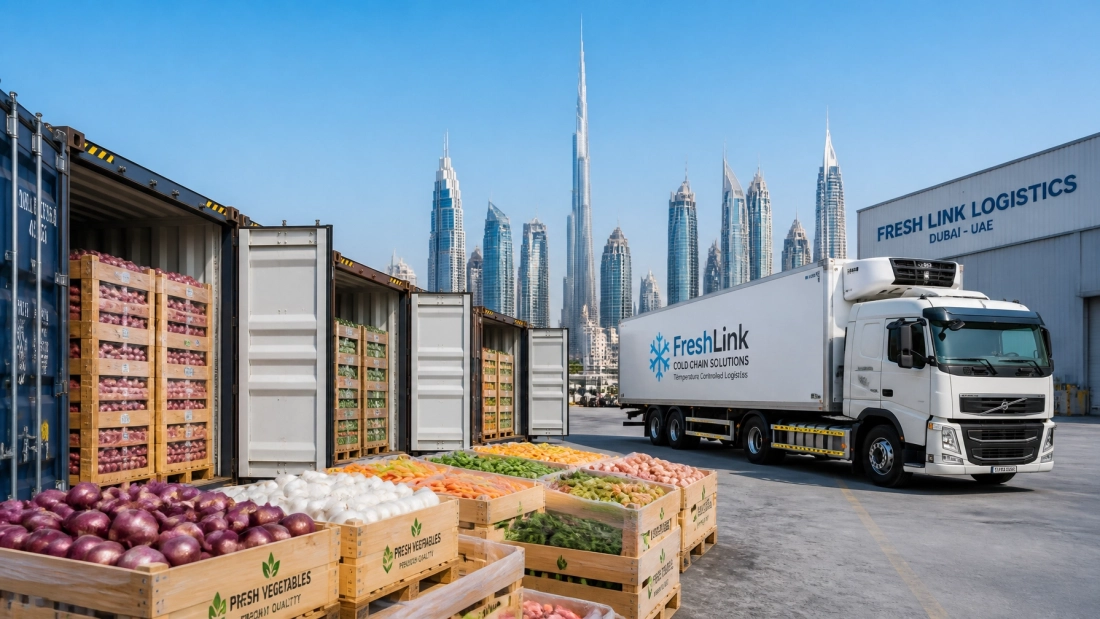
The UAE’s position as a global trade hub has reached unprecedented heights. In the first half of 2026, the UAE’s non-oil trade hit a staggering AED 1.937 trillion, underscoring the nation's critical role in international food security and logistics. For exporters looking at importing onions to Dubai or expanding into wholesale fruits and vegetables in Dubai, the market presents both significant opportunities and rigorous regulatory demands.
Success in this high-volume environment requires more than just high-quality produce; it demands a deep understanding of Dubai’s logistical framework and a reliable local partner. Mayil Global continues to lead this sector by providing a transparent, 3% commission-based distribution model that prioritizes exporter liquidity and operational efficiency.
The 2026 Market Context: Growth and Supply Dynamics
The landscape of food imports in the UAE is evolving rapidly. Recent trade milestones include India’s first successful exports of Areko cherries and Scentrose plums to the UAE, alongside specialized shipments of Ladakh apricots. Furthermore, the establishment of the UAE-Syria food security corridor has streamlined the movement of essential commodities across the region.
However, the market remains sensitive to supply fluctuations. Currently, the Al Aweer Fruit and Vegetable Market is experiencing notable trends:
- Onion Supply Constraints: Tightening supply from traditional corridors has increased the demand for new, verified sources.
- Pricing Trends: Fresh grapes are currently trading at approximately 21–24 AED per 5.5kg box, reflecting the high standards and competitive nature of the Al Aweer auction system.
For exporters, navigating these trends requires a partner who acts as a verified buyer for exporters in the UAE, ensuring that containers are moved quickly and at the best possible market rates.
Step 1: Navigating Documentation and Compliance
To successfully execute the process of how to export food to dubai, exporters must adhere to a strict multi-layered documentation process. Failure to comply with these digital and physical standards can result in costly delays or shipment rejections at the port.
1. MOCCAE and ZAD Registration
All food products must be registered in the National Food Accreditation and Registration System (ZAD), overseen by the Ministry of Climate Change & Environment (MOCCAE). This ensures all agricultural imports meet UAE health and safety standards.
2. The FIRS Platform
For shipments entering through Dubai ports, such as Jebel Ali, the Food Import & Re-export System (FIRS) is mandatory. The importer must file a Food Import Request for every consignment, detailing HS codes (e.g., HS 0703.10 for fresh onions).
3. Essential Certificates
Every container must be accompanied by:
- Phytosanitary Certificate: Issued by the exporting country’s National Plant Protection Organization (NPPO).
- Original Health Certificate: Attesting that the produce is fit for human consumption.
- Certificate of Origin (COO): To verify the source and comply with customs regulations.
- Bilingual Labeling: For retail-packed items, labels must be in both Arabic and English, listing the product name, country of origin, net weight, and shelf-life dates.

Step 2: Al Aweer Market Logistics and Quality Control
Once the produce clears the port, the focus shifts to the Al Aweer Fruit and Vegetable Market. This is the central nervous system for wholesale fruits and vegetables in Dubai. Managing the transition from the container terminal to the auction floor requires precision.
Cold Chain Handling
Maintaining the cold chain is non-negotiable. Produce like onions, while more resilient than leafy greens, still require temperature-controlled environments to prevent sprouting or rot during the transition. Mayil Global ensures that all logistics partners utilize refrigerated transport that meets strict hygiene standards.
Quality Inspection and Grading
At Al Aweer, quality dictates price. Upon arrival, consignments undergo a physical inspection. Inspectors look for:
- Consistency: Uniform sizing and grading within the crates.
- Integrity: Freedom from mechanical damage, pests, and moisture.
- Compliance: Verification that the physical goods match the FIRS declaration and phytosanitary documents.

Step 3: Mayil Global’s 3% Commission and Cash & Carry Model
Traditional distribution models often leave exporters waiting for weeks to realize their returns. Mayil Global has revolutionized this by offering two distinct paths for exporters:
1. The 3% Commission Distribution Model
We operate as your dedicated agent in the Al Aweer market. We handle the sales, logistics, and collections for a flat 3% commission. This model ensures that the exporter retains the majority of the profit while benefiting from our established network of buyers. You can learn more about how this 3 percent commission distributor UAE model functions.
2. Immediate Cash & Carry Purchases
For exporters who prioritize immediate liquidity, Mayil Global offers a Cash & Carry system. We purchase entire containers at a fair market price upon arrival and inspection. This Cash & Carry wholesale solution eliminates the risk of market price fluctuations for the exporter and provides instant cash flow for their next shipment.
Step-by-Step: From Farm-Gate to Al Aweer Sale
For a seamless export experience, follow this operational blueprint developed by Mayil Global:
- Sourcing and Grading: Source onions or fresh produce from trusted farms. Ensure they are graded and packed into clean, standardized crates suitable for international transit.
- Document Preparation: Secure the Phytosanitary Certificate, Health Certificate, and COO. Ensure your UAE importer (Mayil Global) has registered the product in ZAD and FIRS.
- Container Loading: Load the produce into a pre-cooled refrigerated container. Ensure the temperature and humidity settings are calibrated for the specific variety of produce.
- Dubai Arrival and Clearance: Upon arrival at Jebel Ali, Mayil Global manages the customs clearance and MOCCAE inspections.
- Market Placement: The container is transported to our facilities at the Al Aweer market. Depending on the agreed model, the produce is either sold via auction at the wholesale vegetables in Dubai hub or purchased directly by us.
- Liquidity Realization: Exporters receive their funds based on the 3% commission sales or the immediate Cash & Carry agreement.

Conclusion: Partnering for Reliable Supply Chains
The Dubai market is rigorous but highly rewarding for exporters who prioritize quality and compliance. By leveraging Mayil Global’s infrastructure, you gain access to a verified buyer who understands the intricacies of importing onions to Dubai and the broader wholesale fruits and vegetables sector.
Our commitment to a transparent 3% commission and immediate cash-and-carry options provides the stability exporters need to scale their operations in the UAE. Whether you are shipping onions from India, cherries from the Levant, or vegetables from Europe, Mayil Global is your operational anchor in Dubai.
For inquiries regarding container-level distribution and verified buyer services, contact Mayil Global today to secure your position in the UAE's thriving food trade network.