

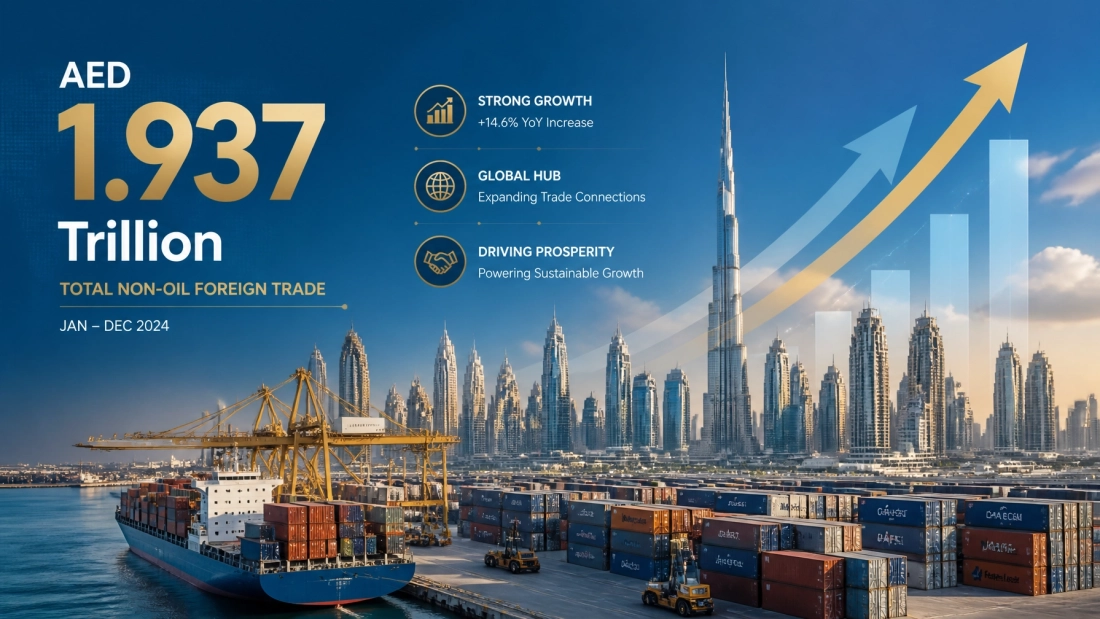
The UAE’s economic landscape has reached a significant milestone in the first half of 2026. According to the latest UAE export news, non-oil foreign trade has surged to a record-breaking AED 1.937 trillion, representing a 13.1% increase compared to the same period in 2025. This robust growth underscores the UAE's position as a premier global trade hub and a pivotal gateway for food distribution across the Middle East.
For international exporters and local stakeholders, these figures are more than just statistics; they represent a fundamental shift in market capacity and regulatory sophistication. As the non-oil sector continues to diversify, the demand for high-quality food products, efficient logistics, and reliable distribution partners is at an all-time high.
H1 2026: A Landmark Period for UAE Non-Oil Trade
The H1 2026 data reveals a sophisticated trade ecosystem that is increasingly decoupled from oil price fluctuations. Non-oil exports alone reached an all-time high of AED 452.8 billion. This surge is driven by several key factors:
- Commodity Leadership: Gold remains the leading non-oil commodity, reflecting the UAE's strength in precious metals refining and trade.
- Strategic Global Status: The United States recently upgraded the UAE to Category A5 export control status, facilitating smoother trade transitions for advanced technologies and high-value goods.
- Sector Diversification: Beyond metals and electronics, the food and beverage sector has shown resilient growth, contributing significantly to the overall trade volume.
For those looking into how to export food to dubai, this macroeconomic stability provides a secure environment for long-term investment and large-scale supply contracts.

The Power of Comprehensive Economic Partnership Agreements (CEPAs)
The UAE’s aggressive pursuit of Comprehensive Economic Partnership Agreements (CEPAs) has paid dividends. In H1 2026, trade with CEPA partner nations jumped by an astounding 121%. These bilateral agreements have effectively lowered tariffs, eliminated trade barriers, and streamlined customs procedures, making the UAE a more attractive destination for global exporters.
These partnerships have directly benefited the food sector, specifically in the import of staples. For instance, importing onions dubai has become more efficient through reduced duties and faster clearance protocols for CEPA-aligned countries. This trade liberalization ensures that the UAE market remains well-supplied with essential produce while offering exporters better profit margins.
Al Aweer Market Updates: Navigating Daily Price Fluctuations
As the primary hub for fresh produce in the region, the Al Aweer market updates for July 2026 highlight a period of high activity and significant price volatility. Daily price trends in the market are influenced by global supply chain shifts, seasonal harvests in exporting nations, and local demand peaks.
Traders and exporters must recognize that the Al Aweer Market operates on real-time market intelligence. Prices for wholesale fruits and vegetables dubai can vary significantly between morning and evening sessions. To navigate this volatility, exporters require more than just a destination; they need a reliable distribution partner who understands the rhythm of the market.
Key Market Factors in July 2026:
- Seasonal Shifts: End-of-season transitions in the Southern Hemisphere are impacting the availability of certain citrus and stone fruits.
- Supply Chain Logistics: While trade volumes are up, organized logistics remain critical to preventing spoilage and ensuring that produce reaches the shelf within its prime window.
- Liquidity Demands: The fast-paced nature of Al Aweer requires immediate cash flow. Exporters often face "liquidity gaps" while waiting for containers to clear and sell.

Navigating the 2026 Regulatory Landscape
The record trade figures come with increased regulatory oversight to ensure food safety and consumer protection. All food exporters and importers must align their operations with the latest UAE standards:
1. The ZAD Platform
Registration on the ZAD platform is now mandatory for all food imports. This unified national electronic system facilitates the registration of food products, ingredients, and the obtaining of import permits. Failure to maintain an updated ZAD profile can lead to significant delays at the port of entry.
2. Arabic Labeling Requirements
Arabic labeling is a non-negotiable requirement for all pre-packed food products. In 2026, authorities have intensified inspections to ensure that labels include mandatory information in Arabic, including product names, ingredients, allergen warnings, and country of origin.
3. Federal Law No. 6 of 2025 on Veterinary Quarantine
This law governs all animal-origin consignments. It mandates strict veterinary inspection, health certificates, and quarantine procedures for products like eggs and dairy. As a wholesale supplier of farm fresh eggs, we ensure that every shipment adheres to these rigorous safety standards.
4. Minimum Shelf-Life Requirements
The UAE has strict guidelines regarding the remaining shelf-life of food products upon arrival. Exporters must ensure that their logistics timeline accounts for shipping duration to meet these local municipality standards.

Mayil Global: Your Strategic Partner in the UAE
At Mayil Global, we understand the complexities of the UAE trade environment. We have positioned ourselves as a verified buyer for exporters uae, providing a bridge between global producers and the lucrative Al Aweer Market.
The 3% Commission Distributor Model
Our primary USP for international exporters is our 3 percent commission distributor uae model. Unlike traditional distributors who may take significant margins, our transparent 3% commission structure ensures that the exporter retains the lion's share of the profits.
Why exporters choose Mayil Global:
- Daily Liquidity: We solve the problem of cash flow by offering immediate cash-and-carry options for container-load purchases. This allows exporters to reinvest their capital quickly without waiting for retail cycles.
- Al Aweer Market Access: We provide direct access to the Al Aweer Market buyer network, ensuring your products are seen by the right B2B customers, including supermarkets and large-scale caterers.
- Comprehensive Logistics: Our expertise in wholesale vegetables in Dubai ensures that your produce is handled with strict quality control from farm to market.
Whether you are exporting onions to Dubai or looking to supply premium rice and spices, our model is designed to maximize your efficiency and profitability. You can learn more about our operational excellence in our guide on the 3% commission strategy for daily liquidity.

Conclusion
The H1 2026 trade data confirms that the UAE is entering a golden era of non-oil trade. With AED 1.937 trillion in trade volume and a 121% boost from CEPAs, the opportunities for food exporters are vast. However, success in this market requires more than just high-quality produce; it requires regulatory compliance, market intelligence, and a distribution partner that prioritizes your liquidity.
As a leading 3 percent commission distributor in the UAE, Mayil Global is ready to help you navigate the Al Aweer Market and beyond. We are currently seeking reliable exporters for long-term partnerships.
Are you ready to scale your exports in the UAE?
Contact Mayil Global today to discuss how our commission-based distribution and cash-and-carry models can grow your business.