

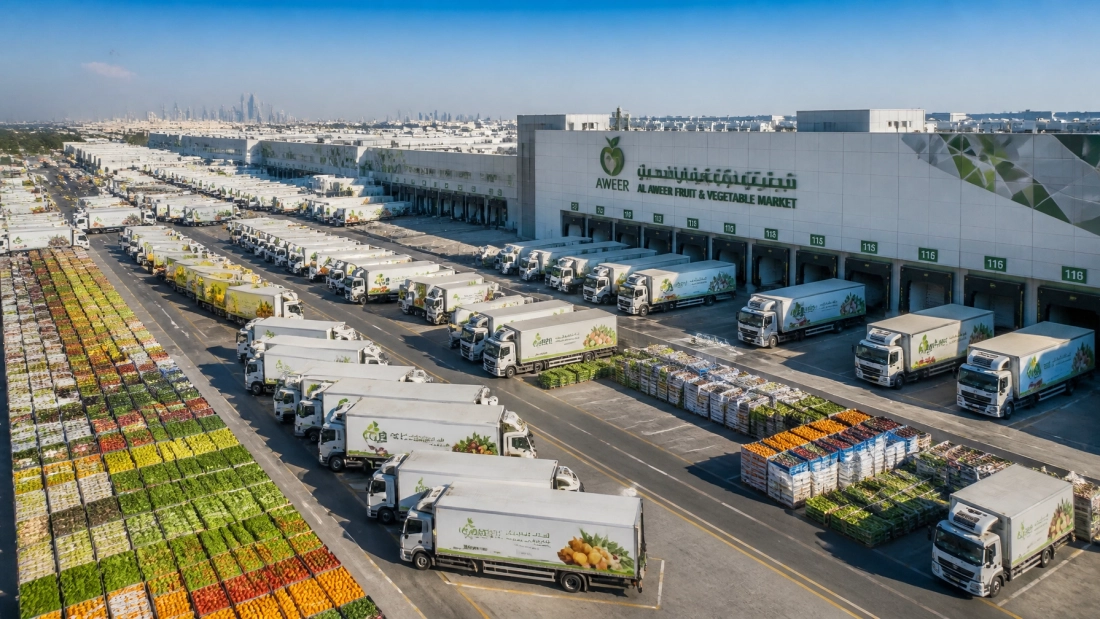
Navigating the complexities of the UAE food market requires more than just high-quality produce; it demands a strategic understanding of real-time market dynamics and a reliable local partner. As of July 2026, the Al Aweer Fruit and Vegetable Market continues to serve as the primary gateway for fresh produce in the GCC, albeit amidst a landscape of shifting pricing structures and rigorous regulatory requirements.
For global food exporters, the challenge lies in balancing rising import costs with the need for immediate liquidity. Mayil Global addresses this gap by offering a transparent 3% commission-based distribution model and immediate cash-and-carry container purchases, ensuring that exporters maintain a competitive edge in one of the world’s most demanding food hubs.
July 2026 Al Aweer Market Analysis: Current Pricing Trends
The mid-summer period in Dubai typically presents unique logistical challenges, and July 2026 is no exception. Wholesale prices for wholesale fruits and vegetables in Dubai have seen moderate upward pressure, primarily driven by a 20% increase in regional freight charges and global supply chain adjustments.
Product-Specific Volatility
Data from the Al Aweer wholesale boards indicate significant intraday price swings. For instance, as of mid-July 2026:
- Green Chilli (India, Sea Freight): Approximately AED 9.21/kg (a 45.7% increase).
- Green Papaya (Oman, Road): Approximately AED 3.57/kg.
- Onions and Potatoes: These staples remain volatile. While importing onions to Dubai is a high-volume trade, supply tightening from traditional corridors has made real-time pricing intelligence essential.
- Citrus and Apples: Navel oranges and premium apple varieties have risen by 5–8% due to seasonal shifts from the Southern Hemisphere.
Exporters must recognize that fixed-price contracts are increasingly difficult to sustain in this environment. Success in July 2026 depends on high-velocity turnover and a partner capable of navigating these fluctuations with precision.

The Mayil Global Advantage: 3% Commission and Cash-and-Carry
The traditional brokerage model often leaves exporters waiting for payments, trapping capital in long settlement cycles. Mayil Global has revolutionized this process to prioritize the exporter's cash flow.
3% Commission Distribution
Our 3% commission model is designed for exporters who seek transparency and market-rate returns. Under this arrangement, Mayil Global acts as your authorized distributor in Al Aweer. We handle the sales, logistics, and collections, charging a flat 3% fee. This ensures that the bulk of the market value returns directly to the exporter, providing the daily liquidity needed to fund the next shipment.
Cash-and-Carry Model
For those seeking immediate exit and zero market risk, our Cash-and-Carry model allows for the direct purchase of containers upon arrival and inspection. This is particularly beneficial for high-volume commodities like rice, onions, and potatoes, where price stability is paramount. By choosing this model, exporters can bypass market volatility entirely.
Strategic Logistics: How to Export Food to Dubai in 2026
The regulatory framework for food imports in the UAE has become more integrated and digitized. To successfully navigate the "how to export food to Dubai" process, exporters must adhere to the following 2026 standards:
1. Mandatory Systems Registration
- ZAD (National Food Accreditation and Registration System): All food items must be registered here to ensure they meet UAE health and safety standards.
- FIRS (Food Import and Re-export System): Specifically for items entering via Dubai’s ports, registration in FIRS is mandatory for both local consumption and re-export.
2. Documentation and Compliance
Exporters must prepare a comprehensive documentation pack to avoid the AED 50,000 penalties associated with non-compliance. Required documents include:
- Original Health Certificate: Issued by the competent authority in the country of origin.
- Phytosanitary Certificate: Essential for all fresh produce to certify freedom from pests.
- Arabic Labeling: Labels must be pre-approved (valid for 12 months) and must include ingredients, expiry dates, and country of origin in Arabic.
- Bayyan 2.0 Import Declaration: Filed at least 48 hours before arrival via Dubai Customs.

Leveraging the India-UAE CEPA Benefits
The India-UAE Comprehensive Economic Partnership Agreement (CEPA) remains a cornerstone of the bilateral food trade in 2026. For Indian exporters, this agreement offers a significant competitive advantage over non-CEPA counterparts.
Tariff Elimination
CEPA has removed or significantly reduced the standard 5% import duty on a wide range of food products. This includes many spices, varieties of rice, and processed foods. While some fresh produce items remain on a "sensitive list," many categories now enjoy zero-tariff entry, directly improving the landed-cost economics for Indian shipments.
Food Security Corridor
The dedicated food-security corridor established under CEPA ensures that essential commodities move with priority through UAE ports. This minimizes transit delays: a critical factor for perishable wholesale fruits and vegetables.
Step-by-Step Logistics Process for Exporters
To ensure a seamless entry into the Dubai market through Mayil Global, we recommend the following operational workflow:
- Market Alignment: Contact our sourcing team to review the current week’s pricing trends for your specific commodity.
- Product Registration: Ensure your SKUs are registered in ZAD and FIRS. Mayil Global can provide guidance on labeling compliance.
- Cold-Chain Booking: Secure reefer containers with precise temperature settings (e.g., 12–14°C for bananas, -18°C for frozen goods).
- Document Transmission: Send digital copies of the Health Certificate, Phytosanitary Certificate, and Invoice 48 hours before the vessel berths.
- Inspection and Liquidation: Upon arrival at Al Aweer, goods undergo quality inspection. Depending on your chosen model, we either proceed with the 3% commission sale or initiate the cash-and-carry buyout.

Conclusion: Securing Your Position in the UAE Supply Chain
The July 2026 market at Al Aweer is characterized by high demand but requires a sophisticated approach to risk management. For global exporters, the path to profitability lies in high-standard quality control, regulatory adherence, and leveraging the right financial model.
Mayil Global stands as a pillar of reliability in this landscape. Whether you are exporting bulk rice, premium spices, or seasonal vegetables, our infrastructure is built to protect your margins and ensure consistent supply to the UAE's leading supermarkets and restaurants.
Contact Mayil Global today to secure your 3% commission distribution agreement and stabilize your export operations in the Middle East.