

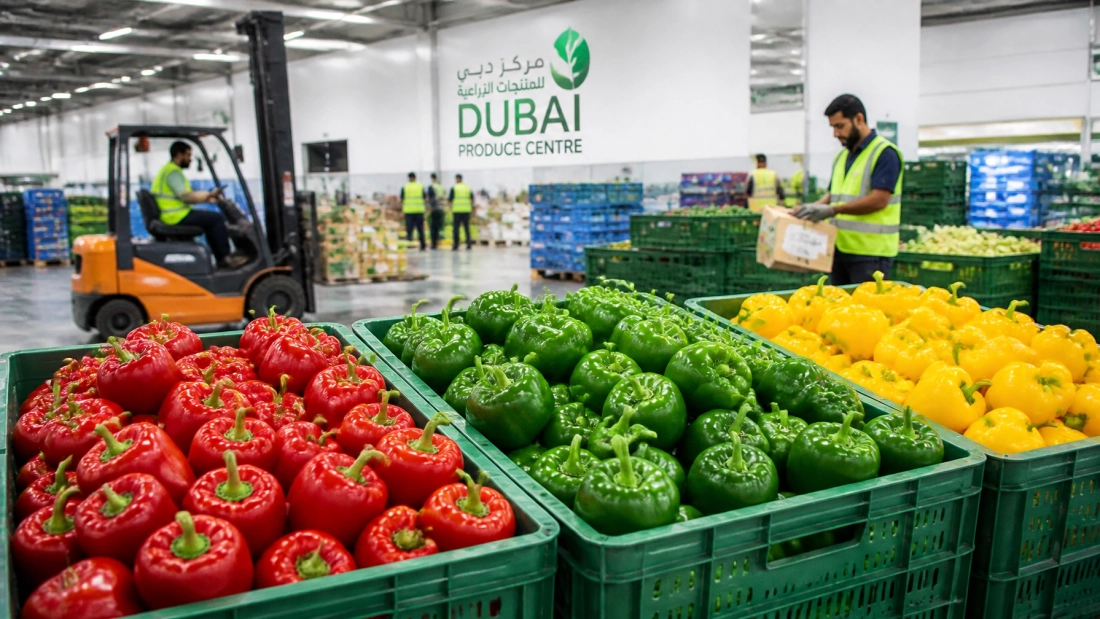
The United Arab Emirates represents one of the most dynamic and high-demand markets for fresh produce in the Middle East. As a net importer of vegetables, Dubai serves as a primary hub for the distribution of capsicum (bell peppers) across the GCC. However, for international exporters, navigating the complexities of the Dubai market: from regulatory compliance to selecting the right distribution model: requires a strategic approach to ensure profitability and long-term viability.
Finding a reliable capsicum buyer in Dubai is not merely about making a sale; it is about establishing a partnership with a distributor that understands market fluctuations, adheres to rigorous quality standards, and offers transparent financial models. At Mayil Global, we specialize in bridging the gap between global growers and the UAE’s thriving B2B sector, including supermarkets, restaurants, and wholesalers.
This guide outlines the five essential steps to successfully exporting capsicum to Dubai while maximizing your margins through our unique 3% commission and Cash & Carry models.
1. Understanding the Dubai Capsicum Market Dynamics
The Dubai fresh produce market, centered around the Al Aweer Fruits & Vegetables Market, is a high-volume environment where prices are dictated by daily supply and demand. Capsicum is a staple ingredient in the UAE’s diverse culinary landscape, ranging from high-end hospitality sectors to local retail chains.
Market demand remains steady year-round, but pricing is highly sensitive to the origin of the produce. Exporters from India, Jordan, Turkey, and Europe compete for market share, making it imperative for suppliers to have real-time visibility into wholesale price trends. Without a local partner to provide accurate market intelligence, exporters often face "liquidity gaps" or price shocks that erode their margins.
By partnering with an established distributor, exporters can gain access to consistent demand from our established network of wholesale customers. Understanding that the market is competitive but rewards quality is the first step toward a successful export strategy.
2. Navigating UAE Regulatory and Documentation Standards
Exporting to the UAE requires strict adherence to the standards set by the Dubai Municipality and the Ministry of Climate Change and Environment (MOCCAE). Failure to provide the correct documentation can lead to shipment delays or total rejection at the port of entry.
Key documentation requirements for capsicum exports include:
- Commercial Invoice: Detailing quantity, description, and value.
- Certificate of Origin: Validated by the Chamber of Commerce in the country of origin.
- Health/Phytosanitary Certificate: Issued by the competent authority in the exporting country, confirming the produce is fit for human consumption and free from pests.
- Packing List: Including HS codes (typically 0709.60 for fresh capsicum).
- Bill of Lading: For sea freight or Airway Bill for air shipments.
At Mayil Global, we facilitate the sourcing and logistics process by ensuring that all incoming shipments meet UAE food safety and residue limits. We advise our partners on labeling requirements, which must include the product name, country of origin, net weight, and date of packing to comply with local regulations.
3. Ensuring Quality Control and Cold Chain Integrity

Capsicum is a highly perishable commodity. Maintaining the "farm-to-market" cold chain is critical to preserving the firmness, color, and nutritional value of the peppers. In the UAE's high-temperature environment, any break in the cold chain can lead to rapid degradation and financial loss.
Sourcing and Handling Standards:
- Harvesting: Products should be harvested at the peak of maturity and pre-cooled to remove field heat immediately.
- Grading: Consistency in size, shape, and color is vital for B2B buyers in Dubai. We look for uniform grading that meets international standards.
- Packaging: Capsicum should be packed in ventilated, high-strength corrugated cartons to allow for air circulation while protecting the produce from physical damage during transit.
- Temperature Control: Maintaining a consistent temperature between 7°C and 10°C is essential throughout the journey.
Our quality control protocols involve inspection at every stage: from the moment the container arrives at the port to the final distribution to supermarkets and restaurants. By prioritizing hygienic handling and proper storage, we ensure that the product retains its premium value upon reaching the buyer.
4. Maximizing Margins: The 3% Commission Model

One of the biggest challenges for exporters is the lack of transparency in traditional wholesale models. Many distributors operate on high, opaque margins that leave the exporter with minimal profits. Mayil Global addresses this by offering a transparent 3% commission-based distribution model.
How the 3% Model Works:
- Transparent Reporting: We sell your capsicum containers in the Dubai market at the best possible daily price.
- Fixed Fee: We charge a flat 3% commission for our distribution services, including marketing, sales, and collection.
- Full Disclosure: Exporters receive detailed sales reports, ensuring they see exactly what their produce sold for and the costs involved.
This model is designed for exporters who want to maintain control over their pricing and benefit from the full upside of market peaks. By keeping our fees low and our operations lean, we ensure that the majority of the revenue flows back to the producer. This transparency builds the "long-term relationships" that are the foundation of our business.
5. Securing Immediate Liquidity: The Cash & Carry Model

For exporters who prioritize cash flow and want to mitigate the risks associated with market volatility, Mayil Global offers a Cash & Carry model. In this scenario, we act as a direct wholesale buyer, purchasing your containers upon arrival in Dubai or directly at the Aweer market.
Benefits of the Cash & Carry Model:
- Immediate Payment: No waiting for retail collections or sales cycles. You receive payment immediately upon inspection and delivery.
- Risk Mitigation: The market risk is transferred to us. Once the price is agreed upon and the sale is finalized, you are protected from subsequent price drops.
- Operational Simplicity: This model allows you to focus on production and export logistics while we handle the local B2B distribution to our network of retailers and restaurants.
Whether you choose the 3% commission model for higher potential returns or the Cash & Carry model for stability, Mayil Global provides the flexibility needed to succeed in the UAE market. We are more than just a buyer; we are your organized logistics and distribution partner in the UAE.
Conclusion: Building a Reliable Supply Chain
Exporting capsicum to Dubai is a lucrative opportunity for global suppliers who can meet the UAE’s high standards for quality and safety. By following these five steps: understanding the market, ensuring compliance, maintaining quality, and choosing the right financial model: you can maximize your margins and secure a permanent foothold in the region.
Mayil Global is committed to operational excellence and transparency. Our farm-direct sourcing philosophy and global supply network ensure a steady and reliable supply of fresh produce for our customers, and a fair, profitable platform for our exporting partners.
If you are a capsicum exporter looking for a reliable, professional, and transparent buyer in Dubai, contact us today to discuss how our 3% commission or Cash & Carry models can work for you.