

Navigating the international food trade requires more than just a quality product; it demands a reliable gateway into the target market. For exporters eyeing the United Arab Emirates, the landscape is both lucrative and complex. As a premier hub for wholesale fruits and vegetables in Dubai, the UAE offers immense opportunities, but only for those who understand the operational nuances of the region.
At Mayil Global, we operate as a cornerstone of the UAE’s food supply chain, bridging the gap between global producers and local demand. Whether you are importing onions to Dubai or supplying premium rice and spices, the success of your shipment hinges on partnering with a verified buyer who prioritizes transparency and efficiency.
Before you dispatch your next container, here are 10 critical factors every exporter must understand to ensure a profitable and seamless entry into the UAE market.
1. Navigating the Al Aweer Central Market Ecosystem
The Al Aweer Central Fruit and Vegetable Market is the pulse of the UAE’s fresh produce trade. It is a high-volume, fast-paced environment where prices can fluctuate hourly based on supply arrivals from across the globe. For an exporter, understanding this ecosystem is vital. Goods are often moved through commission agents who sell to local wholesalers, supermarkets, and catering companies. To succeed here, you need a partner with a physical presence and a deep understanding of daily price movements to ensure your cargo is positioned correctly.
2. The 3% Commission Advantage
Transparency is the most significant concern for global exporters. Traditional trade models often involve hidden fees that erode margins. Mayil Global addresses this through our 3% commission-based distribution model. We charge a flat 3% commission on the gross sales value. This model ensures that our interests are aligned with yours; the higher the sale price we achieve for your produce, the better the outcome for both parties. It provides a clear, predictable cost structure that is essential for financial planning.

3. Immediate Liquidity with Cash & Carry
Liquidity gaps can cripple an export business. Recognizing this, Mayil Global offers a Cash & Carry wholesale option. For exporters who prefer immediate payment over the consignment model, we facilitate container purchases with prompt settlements. This allows you to reinvest capital quickly into your next shipment without waiting for the full retail cycle to complete. This flexibility is a key reason why many choose us as their verified buyer for exporters in the UAE.
4. Understanding Dubai Municipality Regulations
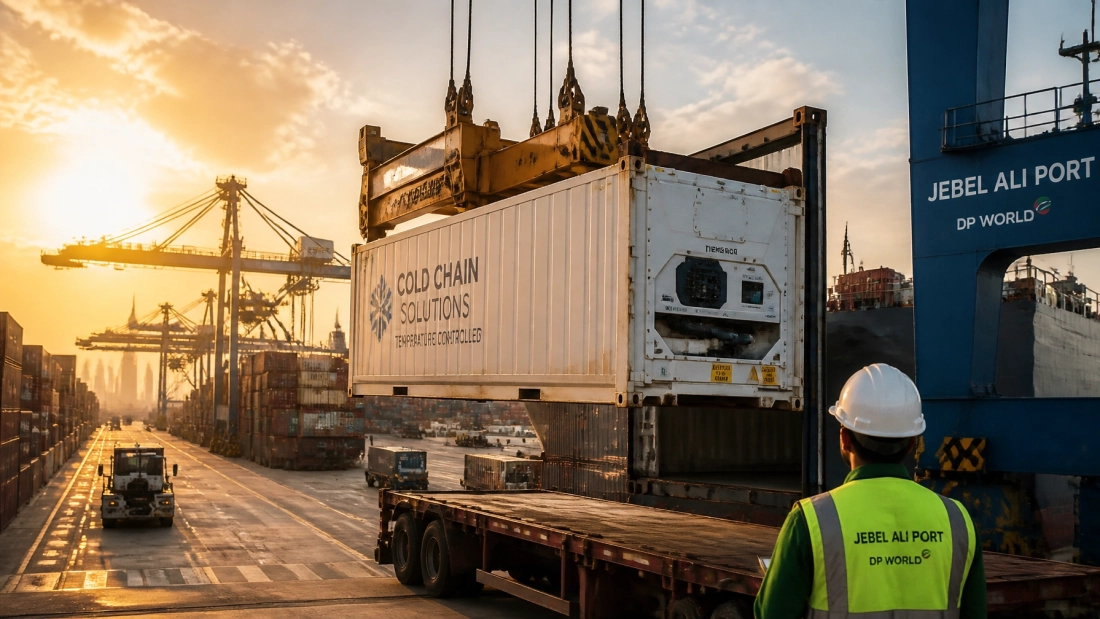
The UAE has rigorous food safety standards. All food imports must be registered through the Dubai Municipality’s Food Import and Re-export System (FIRS). Products must also comply with the ZAD portal requirements for federal-level monitoring. Failure to pre-register your products can lead to significant delays at the port or even the rejection of the entire shipment. Partnering with a knowledgeable local distributor ensures that all administrative hurdles are cleared before the ship even docks at Jebel Ali.
5. Essential Documentation for Smooth Clearance
When you are learning how to export food to Dubai, documentation is your first line of defense against logistical bottlenecks. Every shipment must be accompanied by:
- Commercial Invoice: Detailing the value and HS codes.
- Certificate of Origin: Authenticated by the relevant Chamber of Commerce.
- Phytosanitary Certificate: Crucial for fresh produce to prove it is pest-free.
- Health Certificate: Issued by the exporting country’s food authority.
- Packing List: Detailing the net and gross weight and packaging types.
Missing even a single stamp can result in expensive demurrage charges at the port.
6. Packaging and Labelling: The Arabic Requirement
UAE law (and broader GCC standards) mandates specific labelling requirements. While English is common, Arabic is mandatory for retail-ready packaging. For bulk wholesale items like onions or potatoes in mesh bags, the labels must clearly state the product name, country of origin, net weight, and the dates of production and expiry. Durable packaging is also essential; for instance, importing onions to Dubai requires high-tensile mesh bags that allow for maximum ventilation to prevent rot during transit and storage.

7. Logistics: Reefer Containers and Temperature Control
The UAE’s climate is unforgiving. Maintaining a strict cold chain is non-negotiable for perishables. Most wholesale fruits and vegetables in Dubai arrive in reefer (refrigerated) containers. It is the exporter’s responsibility to ensure the set point temperature and ventilation settings are correct for the specific variety of produce. A lapse of just a few degrees can drastically reduce the shelf life of the goods once they reach the Al Aweer market, leading to lower sale prices.
8. Quality Control: The Non-Negotiable Standard
In a competitive B2B market, quality is the ultimate differentiator. Mayil Global conducts strict quality control inspections at every stage: from arrival at the port to the warehouse. We look for uniformity in size, firmness, and the absence of mechanical damage or mold. Exporters who consistently deliver "Grade A" produce build a reputation that allows them to command premium prices even during supply gluts.

9. Real-Time Pricing and Market Volatility
Success in the UAE depends on timing. Prices are influenced by religious holidays (like Ramadan), seasonal shifts in local production, and global supply chain disruptions. As your local partner, we provide real-time market insights. We advise our exporters on the best windows to ship their containers to maximize returns. Information on current wholesale vegetables in Dubai is shared transparently to ensure no one is shipping blindly into a saturated market.
10. Building a Long-Term Partnership with Mayil Global
One-off shipments rarely lead to sustainable growth. The goal should be to establish a reliable supply pipeline. By working with Mayil Global, you gain access to a global supply network and a partner dedicated to your long-term success. We focus on B2B supply to the UAE’s leading supermarkets, restaurants, and retailers, ensuring that your produce reaches the highest-value endpoints in the country.
Conclusion
Exporting to the UAE is a high-stakes endeavor that requires a blend of logistical precision and market intelligence. By understanding the regulatory environment, optimizing your documentation, and leveraging the 3% commission model offered by Mayil Global, you can transform the way you do business in the Middle East.
Are you ready to scale your export operations? Whether you are dealing in fresh produce, premium rice, or spices, Mayil Global is your verified partner for the UAE market.
Contact us today to discuss your next container and experience the advantage of transparent, professional distribution.