cD_T0RIQRcz

The Ultimate Guide to 3 Percent Commission Distributor UAE Models: Everything You Need to Succeed

The landscape of food distribution in the United Arab Emirates is undergoing a significant transformation. As Dubai continues to solidify its position as a global logistics hub, the traditional models of wholesaling are being challenged by more transparent, efficient, and cost-effective structures. For international exporters and local container owners, navigating the complexities of the Al Aweer Fruit and Vegetable Market requires a strategic partner capable of providing not just logistics, but financial clarity.

Mayil Global is at the forefront of this shift, introducing a disruptive 3 percent commission distributor UAE model. This guide provides a comprehensive analysis of how this model operates, the benefits of the Cash & Carry strategy, and why shifting away from high-commission legacy systems is essential for modern food exporters and B2B buyers.

Understanding the 3% Commission Model in UAE Food Wholesale

Traditionally, commission agents in the UAE: particularly within the Al Aweer market: have charged anywhere from 7% to 10% of gross sales value to handle and sell imported containers. For high-volume exporters, these percentages represent a significant erosion of profit margins.

The 3% commission strategy offered by Mayil Global simplifies the financial relationship between the exporter and the distributor. By capping the commission at a flat 3%, we prioritize volume and long-term partnership over short-term high-margin gains.

Key Pillars of the 3% Model:

  1. Transparent Costing: All local handling fees, including customs clearance, municipality inspections, and internal transport, are documented and charged at cost. There are no hidden markups.
  2. Predictable Returns: Exporters can calculate their Return on Investment (ROI) with higher precision before the container even leaves the port of origin.
  3. Competitive Edge: Lower intermediary costs allow for sharper pricing in the local market, ensuring faster inventory turnover: a critical factor when dealing with perishable fresh produce.

Wholesale display of premium rice, vibrant spices, and farm-fresh eggs emphasizing quality control

Maximizing Liquidity through Cash & Carry Food Wholesale Dubai

Liquidity is the lifeblood of any export business. One of the primary challenges faced by container owners in the UAE is the delayed remittance of funds. In many traditional distribution setups, funds are tied up in credit cycles that can last weeks or even months.

Mayil Global addresses this through a robust cash and carry food wholesale dubai model. By focusing on immediate sales to a vast network of supermarkets, restaurants, and secondary wholesalers, we ensure that liquidity is returned to the exporter as quickly as possible.

The Benefits of Cash & Carry for Exporters:

  • Immediate Cash Flow: Transactions are handled on a cash-and-carry basis, meaning the capital from sales is realized instantly.
  • Reduced Credit Risk: By eliminating long-term credit terms for local buyers, we protect the exporter from the risks of non-payment or delayed settlements in the local market.
  • Rapid Re-investment: Faster payment cycles allow exporters to reinvest their capital into the next shipment, increasing the total annual volume and overall profitability.

For more information on how this affects your specific product, see our guide on how to get paid faster in the Aweer market.

Navigating the Al Aweer Fruit and Vegetable Market

The Al Aweer Central Fruit and Vegetable Market is the primary gateway for fresh produce in the Middle East. Operating within this environment requires a deep understanding of local regulations, buyer behavior, and logistics.

Mayil Global acts as your professional representative on the ground. We manage the entire lifecycle of the container from the moment it arrives at Jebel Ali Port or the Aweer dry port. Our team ensures that all products meet the rigorous standards set by the Dubai Municipality, ensuring seamless entry into the market.

Whether you are a ginger buyer in Dubai or looking to export large volumes of onions, potatoes, or citrus fruits, our 3% model provides the most efficient path to market.

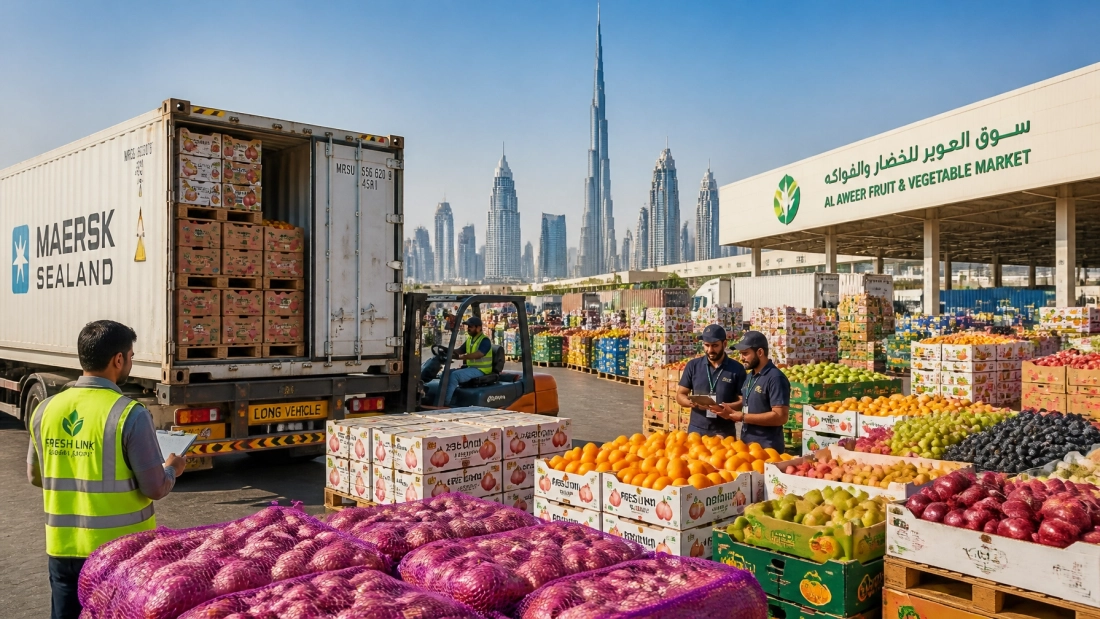
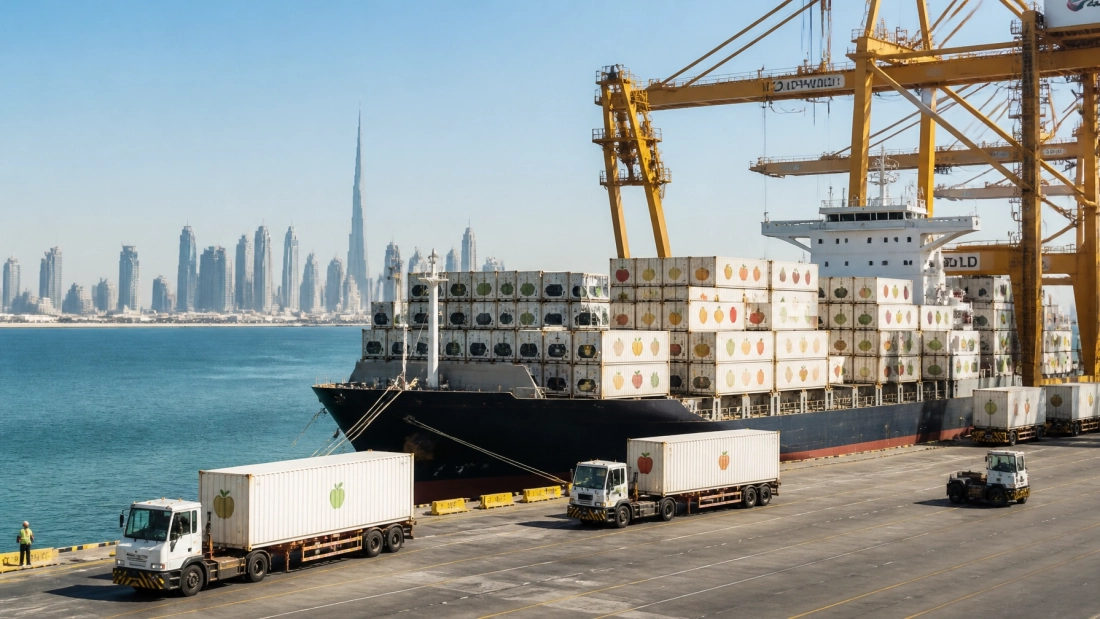
Logistics operations at Al Aweer Market showing a refrigerated container being unloaded

Core Product Categories and Global Sourcing

While our presence in the Aweer market is a cornerstone of our operations, Mayil Global’s expertise extends across a wide range of essential food staples. We serve as a comprehensive food distribution company in the UAE, supplying:

1. Fresh Fruits and Vegetables

We source directly from trusted farms globally to supply the UAE's demand for high-quality produce. Our rigorous inspection process at every stage ensures that only the freshest items reach our B2B clients.

2. Premium Spices

The UAE is a global hub for the spice trade. We handle bulk imports of premium spices, ensuring they are stored in temperature-controlled, hygienic environments to preserve their potency and flavor.

3. High-Grade Rice

From long-grain basmati to essential jasmine varieties, our rice supply chain is built on reliability and consistent quality. We cater to the large-scale requirements of catering companies and supermarket chains.

4. Farm Fresh Eggs

We provide a steady supply of farm-fresh eggs, adhering to the highest safety and hygiene standards. Our organized logistics ensure that these sensitive products are delivered to retailers with minimal lead times.

Operational Excellence: Our Commitment to Quality

In the wholesale food industry, operational excellence is non-negotiable. Mayil Global has built its reputation on three core pillars:

Strict Quality Control

Every shipment undergoes a multi-stage inspection process. From the point of origin to the final delivery at a supermarket loading dock, we monitor temperature, humidity, and handling procedures to prevent spoilage and maintain international food safety standards.

Organized Logistics and Distribution

Our logistics network is designed for speed. We utilize a fleet of refrigerated trucks and strategically located storage facilities to ensure that the cold chain is never broken. This efficiency is what makes us a preferred partner for wholesale fruits and vegetables in Dubai.

Global Supply Network

We do not rely on a single source. Our network spans multiple countries across continents, allowing us to maintain a steady supply even during seasonal shifts or global supply chain disruptions. This reliability is a key reason why B2B buyers trust Mayil Global for their inventory needs.

Professional B2B interaction between a distributor and a supermarket manager

Why B2B Buyers and Exporters Choose Mayil Global

Choosing a partner in the UAE food wholesale sector is a decision that impacts your bottom line directly. Mayil Global is engineered to serve the specific needs of two primary groups:

For International Exporters:

  • The 3% Advantage: Retain more of your hard-earned revenue.
  • Market Intelligence: Receive daily updates on market prices and demand trends in Dubai.
  • Trust and Transparency: Work with a partner that provides full visibility into every dirham spent and earned.

For Local B2B Buyers (Supermarkets, Restaurants, Retailers):

  • Consistent Supply: Access a wide variety of fresh produce and staples through a single, reliable vendor.
  • Competitive Wholesale Pricing: Benefit from our efficient sourcing and low-overhead commission model.
  • Quality Assurance: Reduce waste and customer complaints with our strictly inspected, fresh inventory.

Conclusion: Securing Your Position in the UAE Market

The UAE food market is highly competitive but offers immense opportunities for those who operate with efficiency and transparency. By adopting the 3 percent commission distributor UAE model and leveraging the power of cash and carry food wholesale, Mayil Global provides a blueprint for success in one of the world's most dynamic trading environments.

Our mission is to build long-term, mutually beneficial relationships with exporters and buyers alike. We provide the infrastructure, the expertise, and the financial model necessary to thrive.

If you are ready to optimize your export strategy or streamline your B2B supply chain, contact Mayil Global today. Let us demonstrate how our 3% commission model can transform your business operations in Dubai.
2v3uJ6a9v9s

How to Export Food to Dubai: 5 Steps to Maximize Profit Using a 3% Commission Partner

Dubai remains one of the world's most lucrative hubs for the international food trade. As a primary gateway for the Middle East, the city's demand for fresh produce, premium grains, and spices continues to grow. For international exporters, the challenge is not just entering the market, but doing so with a strategy that protects margins and ensures consistent liquidity.

At Mayil Global, we specialize in bridging the gap between global farms and the UAE’s B2B sector. Our operational model is built on transparency, offering a dedicated 3% commission-based distribution service that allows exporters to maximize their returns while leveraging our established local infrastructure.

Step 1: Navigating UAE Food Import Regulations

The first pillar of a successful export operation is strict compliance with the UAE’s regulatory framework. Dubai Municipality and the Ministry of Climate Change and Environment (MOCCAE) oversee all food imports to ensure public safety and quality standards.

To initiate the process, every food item must be registered through the Food Import and Re-export System (FIRS) or the federal ZAD portal. This involves uploading detailed product specifications, ingredients, and labeling information. Labels must be in Arabic (or bilingual Arabic/English) and include mandatory details such as the country of origin, production and expiry dates, and storage instructions.

Partnering with an experienced distributor like Mayil Global ensures that your documentation: from phytosanitary certificates to health certificates: is handled with precision, preventing costly delays at the port of entry.

Step 2: Implementing Strict Quality Control and Farm-Direct Sourcing

Quality is the non-negotiable currency of the Dubai food market. Whether you are exporting fresh tomatoes or premium lemons, the product must meet international standards upon arrival.

A professional inspector conducting a quality check on crates of fresh produce in a clean warehouse.

Mayil Global emphasizes farm-direct sourcing. By eliminating unnecessary intermediaries at the source, we ensure that the produce is harvested, packed, and shipped under optimal conditions. Our quality control team performs rigorous inspections at every stage: from the farm to the final distribution point in Dubai. For exporters, this means fewer rejections and a higher reputation among local B2B buyers.

Step 3: Optimizing Logistics and Cold Chain Integrity

Logistics in the UAE require more than just transportation; they require a robust cold chain that can withstand the region's climate. Efficient distribution is essential for maintaining the shelf life of fresh fruits and vegetables.

Our logistics network is designed for speed and reliability. Once a container reaches Jebel Ali or Dubai International Airport, our team manages the rapid transfer to temperature-controlled storage facilities. We utilize organized logistics to ensure that products are moved from the port to the market in the shortest possible timeframe.

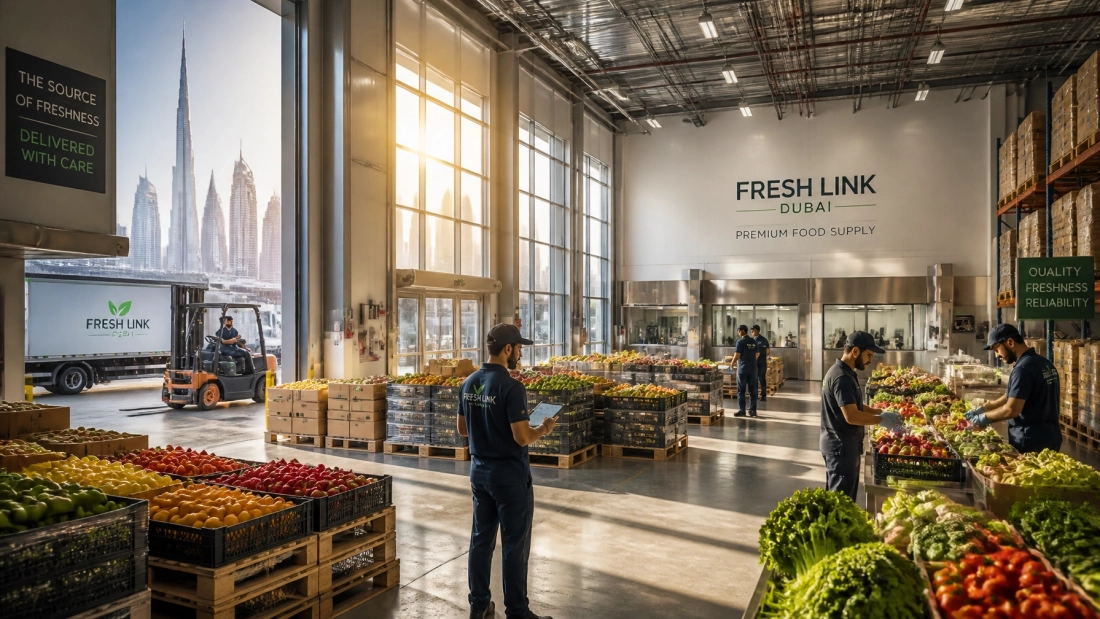
A professional scene at a modern wholesale food distribution center in Dubai with refrigerated trucks.

For B2B buyers like supermarkets and restaurants, this reliability ensures they receive "farm-fresh" products daily. For the exporter, it minimizes wastage and preserves the commercial value of the shipment.

Step 4: Leveraging the 3% Commission Model for Maximum Profit

The traditional import-export model often involves high markups by middlemen, which can erode the exporter's profit. Mayil Global offers a more transparent and profitable alternative: the 3% commission-based distribution model.

A sleek, corporate infographic-style illustration featuring a 3% symbol and commerce icons.

Under this model, we act as your local representative and distributor in the UAE. We manage the sales and logistics, and in return, we charge a flat 3% commission on the sale value. This provides several strategic advantages:

  • Transparency: Exporters have clear visibility into the market price and the final sale value.
  • Higher Margins: By capping the distributor's fee at 3%, the bulk of the profit remains with the producer/exporter.
  • Risk Mitigation: We leverage our local market expertise to find the best buyers at the Aweer Central Fruit & Vegetable Market.

In addition to our commission model, we also offer immediate cash-and-carry container purchases. This is ideal for exporters who prioritize immediate liquidity and want to move large volumes quickly without waiting for consignment sales.

Step 5: High-Velocity Distribution via Aweer Market

The Aweer Central Fruit & Vegetable Market is the heartbeat of Dubai’s produce trade. Navigating this high-volume environment requires established relationships and a physical presence.

Premium quality fresh yellow lemons and a burlap sack of long-grain basmati rice.

Mayil Global operates as a prominent wholesale supplier in Dubai, connecting international exporters directly with Aweer market produce buyers, retail chains, and wholesale distributors. Whether you are shipping bulk rice, onions, or ginger, our distribution network ensures that your goods reach the right buyers at the right price.

Building Long-Term B2B Relationships

Our goal is not just a single transaction but the establishment of long-term, dependable supply chains. We provide our partners with regular market updates, pricing trends, and quality feedback, ensuring that every subsequent shipment is more optimized than the last.

Conclusion: Partnering for Success in the UAE

Exporting food to Dubai is a complex but rewarding venture. By following these five steps: ensuring regulatory compliance, maintaining farm-direct quality, optimizing cold-chain logistics, utilizing a 3% commission model, and tapping into high-velocity markets: exporters can secure a stable and profitable presence in the UAE.

Mayil Global is committed to being the most reliable 3 percent commission distributor in the UAE. We invite international exporters and local producers to explore our sourcing and logistics services and join our global supply network.

Ready to maximize your export profits? Contact Mayil Global today to discuss how our 3% commission model can transform your business in the Dubai market.

zqbBs3unNlg

5 Steps How to Export Food to Dubai and Secure Your Profit (Easy Guide for Global Shippers)

The United Arab Emirates, and Dubai specifically, represents one of the most sophisticated and lucrative food import hubs in the world. As a nation that imports over 80% of its food requirements, the demand for high-quality produce is constant. However, for global shippers, the challenge often lies not in the demand, but in navigating the regulatory landscape and securing a distribution partner that ensures financial liquidity.

At Mayil Global, we operate as a cornerstone of the Dubai food supply chain, specializing in the wholesale distribution of fresh produce. This guide outlines the precise technical and operational steps required for how to export food to dubai while leveraging our unique 3% commission model to maximize your margins.

Step 1: Market Intelligence and Commodity Selection

Before initiating any shipment, an exporter must conduct rigorous market analysis. Dubai is a high-volume market, particularly for staples. When considering importing onions dubai, for instance, shippers must understand that the market prefers specific grades and sizes: typically 55mm and above for red and yellow varieties.

The wholesale fruits and vegetables dubai market is centralized at the Al Aweer Fruit and Vegetable Market. Pricing here is dynamic, fluctuating daily based on global supply chains and local arrivals. Successful exporters monitor these trends through official market data apps or by maintaining close communication with their local distribution partners.

Key Considerations for Selection:

  • Seasonality: Align your harvest cycles with UAE demand peaks.
  • Variety Preference: Ensure your produce matches local culinary and retail standards (e.g., long-grain premium rice or specific onion varieties).
  • Volume Stability: The Dubai market rewards consistent suppliers who can maintain a steady flow of goods throughout the year.

Step 2: Navigating Regulatory Compliance and Product Registration

The UAE has established world-class food safety standards. Every food item entering the country must be registered and approved by the relevant authorities.

The ZAD and Foodwatch Systems

All imported food products must be registered in the National Food Accreditation and Registration System (ZAD). This federal system ensures that every product meets UAE safety and quality standards before it enters the market. Furthermore, Dubai-based operations are managed through Foodwatch, a digital platform by Dubai Municipality that tracks food safety and traceability across the entire supply chain.

Mandatory Documentation for Shippers:

  1. Commercial Invoice and Packing List: Detailing the HS codes, quantity, and value.
  2. Certificate of Origin: Authenticated by the chamber of commerce in the exporting country.
  3. Phytosanitary Certificate: Essential for fresh produce to ensure the shipment is free from pests and diseases.
  4. Health Certificate: Issued by the competent government authority in the country of origin.
  5. Halal Certification: Mandatory for meat, poultry, and products containing animal derivatives.

Ensuring your labels are bilingual (Arabic and English) and include production/expiry dates, ingredients, and country of origin is non-negotiable for clearing Dubai Customs.

Professional close-up of high-quality onions in mesh bags, representing the strict quality control and uniform sizing required for the Dubai wholesale market.

Step 3: Optimizing Logistics and Cold Chain Management

Maintaining the integrity of the cold chain is critical for wholesale fruits and vegetables dubai. A single break in temperature control can lead to spoilage, insurance disputes, and significant financial loss.

Exporters should utilize 40ft reefer containers with remote monitoring capabilities. Once the cargo arrives at Jebel Ali Port or Dubai World Central, the transition to local storage must be seamless. At Mayil Global, we prioritize "farm-to-market" handling, utilizing organized logistics and temperature-controlled storage to ensure that the quality at the farm is the same quality that reaches the retailer.

Logistics Checklist:

  • Temperature Calibration: Set reefer units according to the specific requirements of the commodity (e.g., specific humidity for onions vs. leafy greens).
  • Transit Documentation: Ensure all original documents are sent via courier or digital channels to the importer ahead of arrival to prevent demurrage charges.
  • Insurance: Secure comprehensive transit insurance to cover potential losses during sea or air freight.

Step 4: Leveraging the 3% Commission Model for Maximum Margin

One of the primary risks for global exporters is the high cost of distribution. Traditional distributors in the UAE often charge high margins or hidden fees that erode the exporter’s profit.

Mayil Global addresses this through our transparent 3% Commission Distribution Model. Instead of taking a large cut, we operate on a flat 3% commission. This model is designed specifically for high-volume exporters who require a reliable "Verified Buyer" and distribution partner in the Al Aweer market.

Benefits of the 3% Model:

  • Transparency: You know exactly what your distribution costs are before you ship.
  • Market-Leading Rates: By capping our commission at 3%, we ensure the exporter retains the lion's share of the market price.
  • Expert Distribution: Your goods are moved through our established network of supermarkets, restaurants, and wholesale distributors across the UAE.

For a deeper dive into how this helps, read about our 3% commission strategy for Al Aweer exporters.

Infographic style image representing the digital food import systems in Dubai, such as ZAD and Foodwatch, highlighting the professional and structured nature of UAE trade.

Step 5: Securing Immediate Liquidity with Cash & Carry

The "Cash & Carry" model is a game-changer for international shippers who often face 30-to-90-day payment cycles. In the fast-moving world of fresh produce, liquidity is essential for reinvesting in the next shipment.

Mayil Global offers immediate cash-and-carry container purchases. When your cargo meets our quality standards and is cleared for the market, we facilitate immediate payment options. This removes the "liquidity gap" that plagues many export businesses. Whether you are exporting onions to Dubai or bulk rice, our financial stability becomes your operational advantage.

Why Liquidity Matters:

  • Reinvestment: Faster payouts allow you to secure more inventory at origin.
  • Risk Mitigation: Reduces exposure to long-term currency fluctuations or market volatility.
  • Operational Scale: Enables you to increase your shipment frequency, becoming a preferred supplier in the region.

Learn more about why cash and carry matters for your bottom line.

Minimalist corporate graphic representing 3% commission and Cash & Carry, focusing on financial transparency and liquidity for global food exporters.

Conclusion: Partnering for Long-Term Success

Exporting food to Dubai is a structured process that requires a combination of regulatory adherence, logistical excellence, and the right local partnership. By following these five steps: conducting market intelligence, ensuring compliance, maintaining the cold chain, choosing a low-commission distributor, and securing immediate liquidity: global shippers can build a sustainable and highly profitable trade route into the UAE.

Mayil Global is committed to being the most reliable link in your supply chain. Our focus on B2B supply to the UAE’s top supermarkets and restaurants, combined with our 3% commission model, provides the stability your business needs to grow.

Are you ready to scale your exports to Dubai?
Contact Mayil Global today to discuss your next shipment and learn how our 3% commission model can secure your profits.

A high-angle shot of a temperature-controlled logistics warehouse in Dubai. Stacks of clean, organized crates of fresh fruits and vegetables are ready for distribution. A professional quality control inspector in a white coat and hairnet is examining a tray of premium tomatoes. The setting is sterile, modern, and industrial.

The Al Aweer Price War: How to Stay Profitable When the Market Dips

The Al Aweer Fruit and Vegetable Market in Dubai stands as the primary engine of food distribution for the GCC. In 2026, the intensity of this market has only increased, characterized by high-volume trading, rapid turnover, and, most critically, significant price volatility. For exporters and B2B buyers alike, the "price war" is a daily reality. Navigating these fluctuations requires more than just luck; it demands a sophisticated sourcing strategy, a transparent commission structure, and a resilient logistics network.

Remaining profitable during a market dip: where wholesale prices can plummet overnight due to a surplus of containers or seasonal shifts: is the ultimate test of a food distribution partner. At Mayil Global, we provide the operational stability needed to survive these downturns and capitalize on market recovery.

Understanding the Mechanics of Al Aweer Price Volatility

The Al Aweer market serves as the price-discovery hub for the entire UAE. Because the region relies heavily on imported produce, local prices are hypersensitive to global supply chain shocks. When a sudden influx of onions from India or potatoes from regional farms hits the market simultaneously, the resulting price dip can erode margins for those stuck in traditional, opaque trading models.

Several factors drive this volatility:

  1. Import Dependence: With a significant portion of fresh produce air-freighted or shipped via Jebel Ali, any change in global freight costs or origin-country harvest conditions immediately impacts the daily Al Aweer rate.
  2. Perishability Pressures: Fresh produce is a "ticking clock." When supply exceeds immediate demand, traders often initiate aggressive discounting to clear stock, creating a downward price spiral.
  3. Logistical Bottlenecks: Delays at ports or clearing houses can lead to a "bunching" of arrivals, where multiple shipments land on the same day, artificially flooding the market.

For international exporters, these dips represent a high-risk period where the lack of a transparent partner can lead to substantial financial loss.

The Exporter’s Strategy: Securing Profits with the 3% Commission Model

In a volatile market, the traditional "fixed price" or "high-margin" distribution model often fails the exporter. When market prices drop, many distributors prioritize their own margins, leaving the exporter with the remains of a devalued shipment.

Mayil Global addresses this instability through our 3% commission-based distribution model. This USP is designed specifically for international exporters who require transparency and daily liquidity.

How the 3% Commission Protects You

Under this model, Mayil Global acts as your dedicated distribution arm. Instead of hidden fees or predatory pricing during a market dip, we charge a flat 3% commission on the total sale value. This ensures that:

  • Interests are Aligned: We are incentivized to achieve the highest possible market price for your container.
  • Transparency is Absolute: Exporters receive clear data on sale prices, ensuring no "shadow margins" are taken during market fluctuations.
  • Liquidity is Maintained: Our cash-and-carry container purchase option provides immediate capital, allowing exporters to reinvest in their next shipment without waiting for long credit cycles.

Whether you are exporting ginger or bulk rice, the 3% model provides a predictable cost structure that is essential for long-term profitability in the UAE.

A high-angle shot of a temperature-controlled logistics warehouse in Dubai. Stacks of clean, organized crates of fresh fruits and vegetables are ready for distribution. A professional quality control inspector in a white coat and hairnet is examining a tray of premium tomatoes. The setting is sterile, modern, and industrial.

For Local B2B Buyers: Navigating the Dip to Protect Your Margins

Supermarkets, restaurants, and hospitality groups in the UAE face a different challenge during price wars. While a market dip theoretically lowers procurement costs, the inherent instability can lead to inconsistent quality and supply chain disruptions. If your current supplier is struggling to maintain their own margins, the quality of the produce delivered to your door is often the first thing to suffer.

Strategic Sourcing for Restaurants and Supermarkets

To stay profitable, local B2B buyers must move away from "spot buying" at Al Aweer and toward a reliable wholesale supply partnership.

  1. Farm-Direct Sourcing: By partnering with a supplier like Mayil Global, which utilizes farm-direct sourcing, you bypass the multiple layers of market speculation. This results in more stable pricing even when the open market is fluctuating wildly.
  2. Strict Quality Control: A market dip often leads to a "dumping" of lower-grade produce. Mayil Global employs a multi-stage inspection process to ensure that even during price wars, the fresh fruits and vegetables delivered to your facility meet international safety and hygiene standards.
  3. Inventory Optimization: Utilizing a cash and carry food wholesale approach allows businesses to manage liquidity more effectively, buying what is needed without tying up capital in vast inventories that may lose value if prices continue to drop.

The Role of Logistics and Organized Storage

Profitability in the Al Aweer market is as much about logistics as it is about trading. When prices dip, the ability to store produce correctly can mean the difference between a total loss and a profitable recovery.

Mayil Global invests heavily in organized logistics and proper storage handling. Our distribution network is designed to ensure that produce moves from the farm or the container to the market in the shortest possible time, maintaining the cold chain throughout.

  • Hygienic Handling: Every stage of our supply chain: from sourcing to packaging: follows strict safety standards. This minimizes spoilage, which is critical when margins are thin.
  • Efficient Distribution: Our logistics team ensures timely delivery to supermarkets and restaurants across the UAE, allowing our clients to maintain their operations without the stress of market-driven delays.

A close-up shot of high-quality premium spices (turmeric, cardamom, and black pepper) displayed in professional wholesale packaging. The focus is on the texture and vibrant colors, representing the premium export quality of Mayil Global's sourcing.

Diversification: Stabilizing with Premium Spices and Grains

One of the most effective ways to stay profitable when the fresh produce market dips is diversification. While fresh fruits and vegetables are subject to high volatility, premium spices and premium rice offer a more stable price floor.

Exporters who trade in a mix of commodities: leveraging our 3% commission model across both fresh and dry goods: can hedge their risks. For the B2B buyer, having a single, reliable supplier for both fresh produce and pantry staples like farm-fresh eggs and premium grains simplifies the procurement process and provides more leverage during price negotiations.

Building Long-Term B2B Partnerships in the UAE

The Al Aweer "price war" is not a temporary phenomenon; it is a structural feature of the UAE’s food trade. Success in this environment is not about outmaneuvering the market on a single day, but about building a resilient, long-term supply chain.

For exporters, this means choosing a distributor that offers:

  • A transparent 3% commission.
  • Immediate cash-and-carry container purchases.
  • Direct access to a wide network of local B2B buyers.

For local supermarkets and restaurants, this means choosing a wholesale supplier that provides:

  • Consistent quality through strict inspection.
  • Reliable supply via global sourcing networks.
  • Stable pricing through farm-direct relationships.

Mayil Global is committed to being that partner. We provide the stability, transparency, and operational excellence required to turn market volatility into a competitive advantage.

A professional meeting in a bright, modern office overlooking a Dubai industrial zone. A business exporter is shaking hands with a procurement manager. On the table are brochures for

Conclusion: Ensuring Stability in an Unstable Market

The Al Aweer market remains a land of opportunity for those who understand its rhythms. By focusing on quality, logistics, and transparent commission models, exporters and B2B buyers can navigate price dips without sacrificing profitability.

At Mayil Global, we continue to lead the way in providing dependable supply and professional distribution services in the UAE. Our 3% commission model and farm-direct sourcing are not just business features; they are the pillars upon which we build lasting, successful relationships with our global and local partners.

wB4VgRW62or

Banana Export Secrets Revealed: How Our 3% Commission Model Protects Your Margins in Al Aweer

For international banana exporters, the United Arab Emirates represents one of the most lucrative and high-demand markets in the Middle East. With banana imports exceeding US$150 million annually and a consistent growth trajectory, the appetite for high-quality Cavendish, organic, and specialty bananas in Dubai remains robust. However, for many exporters from Ecuador, India, the Philippines, and Central America, the primary challenge is not finding demand: it is securing a distribution partner that offers both transparency and fair margins.

At Mayil Global, we have identified a significant gap in the traditional distribution model at the Al Aweer Fruit and Vegetable Market. Traditional commission agents often charge anywhere from 5% to 15% in hidden fees, market charges, and service commissions, eroding the hard-earned profits of the exporter. To solve this, we have introduced a disruptive 3% Commission Model designed to maximize exporter returns while providing a reliable gateway into the UAE’s premier wholesale hub.

The Dubai Banana Market: A Strategic Overview

The UAE is almost entirely dependent on imports for its fresh produce, making it a critical node in the global food supply chain. The Al Aweer market, also known as the Dubai Central Fruit and Vegetable Market, serves as the primary distribution point for these imports. It is the heart of the region's trade, supplying local supermarkets, the hospitality sector (HORECA), and re-exporting significantly to neighboring GCC countries like Saudi Arabia and Qatar.

Exporters targeting this market must navigate a landscape where quality standards are non-negotiable and price volatility is common. To succeed, you need more than just a buyer; you need a distribution partner that operates with the efficiency of a global logistics firm and the transparency of a trusted financial partner.

Protecting Your Margins: The 3% Commission Advantage

The standard trading practice in Al Aweer often leaves exporters in the dark regarding the final sale price of their containers. High commissions and opaque "handling fees" can lead to disappointing net returns, even when market prices are high.

Mayil Global’s 3% commission model is built on the pillar of functional clarity. We charge a flat, transparent commission of 3% on the gross sale value of your consignment. This model is specifically engineered for:

  1. Profit Maximization: By keeping our fees at a market-leading 3%, we ensure that the lion's share of the market price returns to the exporter.
  2. Full Transparency: Every transaction is documented, ensuring you know exactly what your product sold for in the Dubai market.
  3. Risk Mitigation: We act as your boots-on-the-ground, ensuring your bananas are sold at the best possible market rate through our extensive network of B2B buyers.

Why 3%?

We believe in building long-term relationships. By offering a lower commission than the market average, we attract the highest quality exporters, ensuring a steady, reliable supply of premium bananas for our local customers. It is a symbiotic model that prioritizes volume and reliability over high per-container fees.

A bustling scene at a professional wholesale market showing crates of fresh produce.
The Al Aweer market is the engine of the Middle East's fruit trade, and Mayil Global is your gateway to its potential.

Immediate Liquidity: The Cash & Carry Model

For exporters who prioritize cash flow over market upside, Mayil Global offers an alternative: the Immediate Cash & Carry Container Purchase. In this model, we purchase your container outright at a fixed, agreed-upon price.

  • Zero Commission: There are no fees or percentages deducted. The price we agree on is the price you receive.
  • Instant Payment: We provide immediate liquidity, eliminating the 7–14 day wait time typical of consignment sales.
  • Market Independence: You are protected from price fluctuations that might occur after the container arrives in Dubai.

This model is ideal for large-scale exporters looking to move high volumes quickly and maintain a steady cash flow for their operations. Whether you choose the 3% commission model or the Cash & Carry option, Mayil Global provides the flexibility to suit your business strategy.

Ensuring Quality: From Farm to Al Aweer

Bananas are a highly sensitive commodity. Success in the Dubai market depends on the fruit arriving at the perfect stage of maturity and being handled with extreme care. Mayil Global employs strict quality control and sourcing & logistics protocols to ensure your product maintains its premium status.

1. Sourcing and Inspection

We partner with farms and exporters who adhere to international safety and hygiene standards. Our team conducts inspections at every stage, from the initial loading at the origin to the final arrival at our storage facilities.

2. Temperature-Controlled Logistics

The heat of the UAE is the enemy of fresh produce. We utilize organized logistics and temperature-controlled storage to ensure that the cold chain is never broken. This is essential for preventing premature ripening and ensuring a long shelf-life for the end-user.

3. Professional Handling

Hygienic handling and packaging are non-negotiable. We ensure that every carton is handled according to safety standards, minimizing bruising and physical damage during the unloading and distribution process.

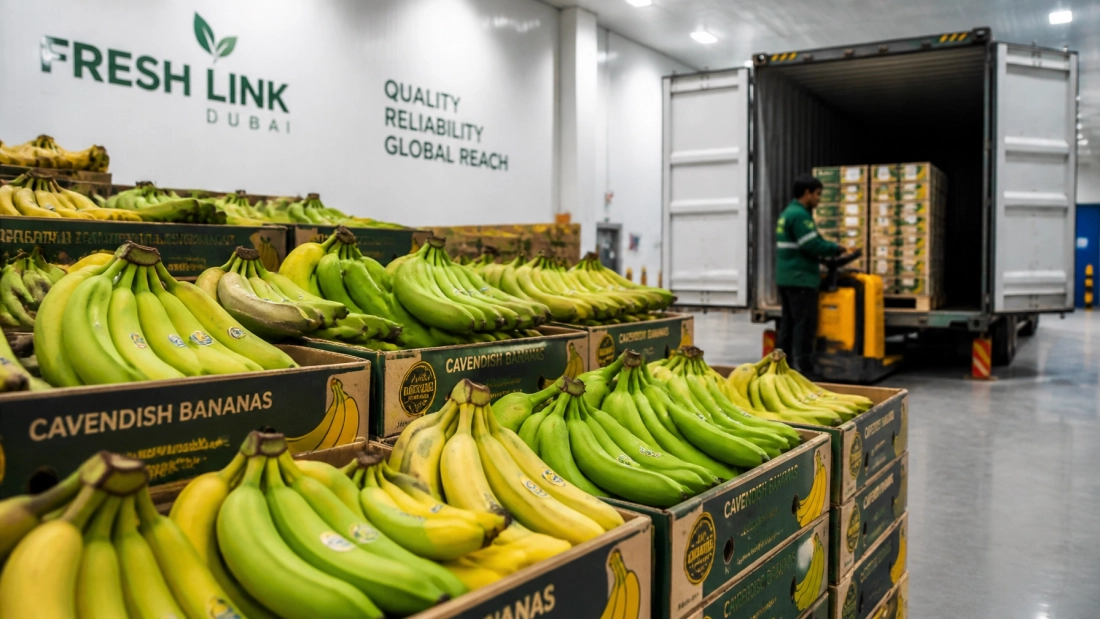
Close-up of a quality inspector checking the ripeness and quality of a batch of bananas.
Strict quality control is at the core of our operations at Mayil Global.

Scaling Your Business in the UAE

Choosing Mayil Global means more than just finding a buyer in Dubai; it means gaining a strategic partner dedicated to your growth. We focus on B2B supply to supermarkets, restaurants, and retailers, providing you with direct access to the most stable and high-paying segments of the market.

Our Global Supply Network

We maintain a global supply network across multiple countries, ensuring a steady and reliable supply for our clients while offering exporters a consistent outlet for their produce. By centralizing our operations in Dubai, we leverage the city’s world-class infrastructure to distribute your products efficiently across the region.

Operational Excellence

Our business operations are built on the principles of stability and competence. We do not just sell fruit; we manage a complex supply chain that includes:

  • Proper Storage: Farm-to-market handling that preserves quality.
  • Organized Logistics: Timely delivery to B2B clients across the UAE.
  • Regulatory Compliance: Ensuring all imports meet the strict standards of the Dubai Municipality and UAE federal laws.

A professional logistics warehouse showing refrigerated trucks and shipping containers.
Our logistics infrastructure ensures your bananas reach the market in peak condition.

Join the Mayil Global Network

Are you looking for a reliable banana buyer in Dubai? Are you tired of high commissions and lack of transparency in your export operations?

Mayil Global is currently seeking high-quality banana exporters to partner with our 3% commission distribution model or our immediate Cash & Carry program. We offer the stability of a corporate partner and the specialized knowledge of a local market leader.

Why Partner With Us?

  • 3% Commission: The lowest transparent rate in Al Aweer.
  • Cash & Carry: Immediate liquidity for your containers.
  • Market Expertise: Deep roots in the Dubai wholesale and retail sectors.
  • Safety & Hygiene: International standards for handling and storage.

To discuss your next shipment or to learn more about our distribution models, contact us today. Let us help you protect your margins and grow your presence in one of the world's most dynamic food markets.

Conclusion

The secret to successful banana export to Dubai is not just in the quality of the fruit, but in the integrity of the distribution chain. By eliminating excessive commissions and providing a clear, professional pathway to the Al Aweer market, Mayil Global empowers exporters to take control of their profitability. Whether you are an established global supplier or a growing farm, our 3% commission model is designed to ensure your hard work results in the margins you deserve.

For more information on our services and our commitment to excellence, visit our About Us page or explore our full range of wholesale products.

Professional logistics team inspecting a shipment of fresh produce in a climate-controlled warehouse in Dubai.

The Ultimate Guide to Exporting Grapes to Dubai: Everything You Need to Succeed with Our 3% Commission Model

The United Arab Emirates, and Dubai specifically, serves as a premier global hub for the fresh produce trade. As a net importer of fresh fruits, the demand for high-quality table grapes remains consistently high across retail, hospitality, and re-export sectors. For international exporters, the challenge often lies not in the quality of their harvest, but in navigating the local distribution landscape and securing a fair, transparent return on investment.

At Mayil Global, we have optimized our operations to support international exporters through a disruptive 3% Commission Model and an efficient Cash & Carry system. This guide provides a comprehensive roadmap for exporting grapes to Dubai, detailing regulatory compliance, market trends for 2024–2025, and how our specialized B2B distribution network maximizes your profitability.

Understanding the Dubai Grape Market (2024–2025)

Dubai functions as more than just a destination; it is a critical logistics node for the Middle East and North Africa (MENA) region. The market for fresh grapes in the UAE is characterized by:

  • Year-Round Demand: With a high-income population and a thriving tourism sector, the UAE requires a constant supply of seedless green, red, and black grape varieties.
  • Net Import Reliance: Local production is minimal, making the UAE almost entirely dependent on global suppliers from South Africa, India, Egypt, Chile, and Australia.
  • Quality Sensitivity: Modern retail chains and premium B2B buyers prioritize firmness, brix levels (sweetness), and pesticide residue compliance.
  • Re-export Potential: Approximately 20-30% of fresh produce entering Dubai is re-exported to neighboring GCC countries, expanding the reach for high-volume exporters.

Navigating UAE Regulatory Compliance

Success in the Dubai market begins with strict adherence to the standards set by the Ministry of Climate Change & Environment (MOCCAE) and the Dubai Municipality.

1. Phytosanitary Requirements

Every shipment of fresh grapes must be accompanied by an original Phytosanitary Certificate issued by the plant protection authority in the country of origin. This document certifies that the grapes are free from quarantine pests and diseases.

2. Maximum Residue Limits (MRLs)

The UAE has significantly upgraded its laboratory testing capabilities. Compliance is measured against Codex Alimentarius standards. If no Codex standard exists, EU MRLs are often applied. It is imperative that exporters maintain rigorous spray records and pre-harvest testing to avoid shipment rejection at the port.

3. Labeling and Documentation

For bulk shipments entering the wholesale market, labels must include:

  • Product name and variety
  • Country of origin
  • Net weight
  • Packer’s name and address
  • Production/Packing date

Professional logistics team inspecting a shipment of fresh produce in a climate-controlled warehouse in Dubai.

Maximizing Profit: The 3% Commission Model vs. Traditional Agents

The most significant hurdle for exporters is often the traditional commission structure in the Al Aweer Fruit & Vegetable Market, where fees can range from 5% to 10%, often accompanied by non-transparent "handling" charges.

How Our 3% Commission Model Works

Mayil Global offers a lean, transparent alternative designed to keep more revenue in the hands of the exporter:

  1. Direct Sales: We sell your grapes at the prevailing daily market price to our network of supermarkets, restaurants, and wholesale distributors.
  2. Itemized Expenses: All costs: including customs duties, municipality fees, port charges, and local transport: are documented and deducted at actual cost.
  3. Flat 3% Fee: We charge a flat 3% commission on the gross sales value. There are no hidden fees or service markups.
  4. Transparent Reporting: Exporters receive detailed sales reports, providing full visibility into the prices achieved and the costs incurred.

By choosing the 3% model, an exporter moving a high volume of containers can significantly improve their net margin compared to traditional 8% or 10% agency agreements.

The Cash & Carry Advantage for Immediate Liquidity

For exporters who prioritize cash flow and want to eliminate market price risk, Mayil Global offers a Cash & Carry model. Under this arrangement, we purchase containers directly upon arrival after a successful quality inspection.

  • Immediate Payment: No waiting for market sales cycles.
  • Risk Transfer: Mayil Global assumes the risk of price volatility once the purchase is finalized.
  • Operational Efficiency: Ideal for exporters with high-frequency shipping schedules who need to reinvest capital into the next harvest immediately.

Quality Control and Cold Chain Excellence

Grapes are highly perishable and sensitive to temperature fluctuations. Our sourcing and logistics infrastructure ensures that the cold chain remains unbroken from the moment the container arrives at the port to the point of final delivery.

Inspection at Every Stage

Upon arrival in Dubai, our quality control team conducts a rigorous inspection:

  • Visual Assessment: Checking for stem freshness, berry turgidity, and uniform coloring.
  • Brix Testing: Ensuring sweetness levels meet the specifications required by premium UAE retailers.
  • Packaging Integrity: Verifying that crates and clamshells have survived transit without damage.

Close-up of a digital refractometer testing the brix levels of green grapes to ensure high sugar content for the Dubai market.

Step-by-Step Guide to Exporting Grapes with Mayil Global

Transitioning your export operations to the Dubai market is seamless when following our structured process:

  1. Initial Consultation: Discuss your variety, volume, and preferred model (3% Commission or Cash & Carry).
  2. Documentation Review: Our team assists in verifying that your Phytosanitary Certificates and Certificates of Origin meet UAE customs standards.
  3. Shipment Planning: Coordinate with our logistics team for container arrival at Jebel Ali Port or Dubai Al Maktoum Airport.
  4. Clearance and Inspection: We manage the Dubai Municipality and MOCCAE clearance processes.
  5. Distribution and Sale: Goods are moved to our climate-controlled facilities and sold to our B2B partners.
  6. Settlement: Rapid remittance of funds based on the agreed-upon model.

Why Partner with Mayil Global?

We are not just a distributor; we are your operational partner in the UAE. Our focus on B2B supply to supermarkets, restaurants, and retailers ensures that your produce reaches the highest-value segments of the market.

  • Reliability: We prioritize long-term relationships with international exporters.
  • Efficiency: Our organized logistics ensure timely delivery and minimal wastage.
  • Transparency: Our 3% commission model is built on trust and functional clarity.

Ready to Export?

If you are looking for a reliable grape buyer in Dubai or a transparent commission partner, Mayil Global is ready to facilitate your entry into the UAE market. We leverage our global supply network and local expertise to ensure your export business thrives.

Contact Mayil Global today to discuss your next shipment of fresh grapes and secure your margins with our 3% commission model.

Aerial view of the Dubai skyline and Jebel Ali Port, representing the gateway for international fresh produce exporters into the MENA region.

An infographic style image showing a 3% commission sign next to a stack of fresh cabbage, symbolizing transparent trading and high margins for exporters

Looking for a Cabbage Buyer in Dubai? The Ultimate Guide to Everything You Need to Succeed in the Aweer Market

The Dubai fresh produce market represents one of the most dynamic trading hubs in the Middle East, with the Al Aweer Central Fruit and Vegetable Market serving as its primary engine. For international cabbage exporters, securing a reliable buyer in Dubai is not merely about finding a point of sale; it is about establishing a transparent, efficient, and profitable supply chain.

Navigating the complexities of international trade requires more than just high-quality produce. It demands a partnership with a distributor that understands the nuances of price discovery, regulatory compliance, and financial liquidity. Mayil Global is positioned as a strategic gateway for exporters seeking to maximize their margins through our industry-leading 3% commission model and immediate Cash & Carry solutions.

The Landscape of the Al Aweer Fruit and Vegetable Market

The Al Aweer Market, also known as the Ras Al Khor Market, operates as the central wholesale hub for the entire UAE and surrounding regions. Understanding how this market functions is critical for any exporter looking for a cabbage buyer in Dubai.

  • Daily Price Discovery: Prices are determined every morning based on the volume of arrivals and the immediate demand from supermarkets, restaurants, and sub-wholesalers.
  • High Velocity Trading: Cabbage is a staple commodity in the UAE, moving in large volumes daily. Success depends on the ability to move stock quickly to maintain freshness.
  • Quality Sensitivity: The market rewards consistency. Exporters who provide uniform grading and superior cold-chain management consistently achieve higher price points.

By aligning with a partner physically present in this hub, exporters gain real-time market intelligence, allowing them to adjust shipment volumes and timing for optimal returns.

Why Exporting Cabbage to Dubai is a Strategic Move

Dubai’s position as a re-export hub and its growing population create a steady, year-round demand for fresh brassica vegetables. Cabbage, being a versatile ingredient in various cuisines, maintains a consistent presence on the shopping lists of major retail chains and hospitality providers.

Sourcing high-quality cabbage from global farms and delivering it to the UAE market requires a robust logistics framework. At Mayil Global, we bridge the gap between international growers and local demand, ensuring that the journey from farm to market is seamless.

Overcoming Exporter Challenges: The Mayil Global Advantage

Traditional distribution models in Dubai often leave exporters vulnerable to opaque pricing, hidden fees, and extended payment cycles. We have restructured our operations to eliminate these pain points, focusing on two core pillars: transparency and liquidity.

Maximizing Returns with our 3% Commission Model

One of the most significant hurdles for exporters is the "black box" of traditional wholesale. Many distributors buy at a low fixed price or charge high, undefined margins.

Mayil Global operates on a flat 3% commission model. Under this structure:

  • Full Transparency: Exporters see the actual wholesale price at which their cabbage was sold in the Al Aweer market.
  • Aligned Interests: Our revenue is a direct percentage of your sales. This motivates our team to negotiate the highest possible market price for your produce.
  • Cost Efficiency: By removing unnecessary intermediaries, we ensure that a larger share of the final sale value returns to the exporter.

This model is specifically designed for high-volume exporters who prioritize long-term profitability and clear financial reporting.

An infographic style image showing a 3% commission sign next to a stack of fresh cabbage, symbolizing transparent trading and high margins for exporters

Accelerating Cash Flow through Cash & Carry

Liquidity is the lifeblood of any export business. Waiting 30, 60, or even 90 days for payment can stifle growth and limit your ability to fund the next harvest.

Our Cash & Carry model provides an immediate solution. By facilitating rapid sales to our network of B2B buyers: including supermarkets and restaurants: we ensure that capital is recycled back to the exporter as quickly as possible. This immediate cash-and-carry approach for container purchases allows you to maintain operational momentum without the burden of outstanding receivables.

Navigating Regulatory and Logistics Requirements

Successfully landing your produce in Dubai requires strict adherence to UAE food safety standards. Ensuring compliance is not just a legal necessity; it is a prerequisite for maintaining the integrity of your brand in the Middle East.

Essential Documentation

To avoid delays at Jebel Ali Port or Dubai World Central (DWC), every shipment must be accompanied by accurate documentation:

  1. Phytosanitary Certificate: Issued by your local agricultural authority, confirming the cabbage is free from pests.
  2. Certificate of Origin: Validating the source of the produce.
  3. Detailed Packing List & Commercial Invoice: Essential for customs clearance and VAT processing.
  4. Health Certificate: Ensuring the product meets UAE food consumption standards.

Packaging and Cold Chain Standards

Cabbage is a living commodity that requires precise temperature control. Maintaining a consistent cold chain from the point of harvest to the Al Aweer warehouse is non-negotiable.

  • Temperature Control: Shipments must be maintained in refrigerated (reefer) containers at 0°C to 2°C with appropriate ventilation.
  • Packaging: Use strong, ventilated corrugated cartons or crates. Proper packaging prevents bruising and allows for the necessary airflow to prevent spoilage.
  • Labeling: Labels must be in both English and Arabic, clearly stating the product name, country of origin, net weight, and production/expiry dates.

A refrigerated shipping container being loaded with boxes of fresh cabbage, focusing on the quality control process and logistics excellence

Partnering with Mayil Global: A Step-by-Step Integration

We simplify the entry into the Dubai market through a structured onboarding and distribution process. Our goal is to function as an extension of your own export department.

  1. Inquiry and Consultation: Reach out to us via our Contact Page to discuss your cabbage varieties, volumes, and harvest schedules.
  2. Agreement on Terms: We formalize the 3% commission structure, ensuring all parties are clear on the handling and sales process.
  3. Logistics Coordination: Our sourcing and logistics team assists in coordinating the shipment, providing guidance on documentation and arrival windows.
  4. Market Arrival and Inspection: Upon arrival in Dubai, our quality control team inspects the produce at our Al Aweer facility to ensure it meets our strict quality standards.
  5. Sales and Remittance: The cabbage is sold through our wholesale network. You receive a detailed sales report and prompt remittance of your funds, minus our transparent 3% commission.

Conclusion

Finding a cabbage buyer in Dubai is the first step, but finding a partner who prioritizes your profitability is what ensures long-term success. The Al Aweer market offers immense potential for global exporters willing to commit to quality and transparency.

By leveraging Mayil Global’s 3% commission model and efficient distribution network, you can bypass the traditional hurdles of the UAE export market. We invite you to join our network of successful global suppliers and experience a new standard in fresh produce distribution.

A Mayil Global distribution truck being loaded with fresh produce for delivery to major supermarkets in Dubai

acodKM1T0Mq

7 Mistakes You’re Making with Grapes Exports to the UAE (and How to Fix Them for Higher ROI)

Exporting fresh grapes to the United Arab Emirates (UAE) is a high-reward venture, but the margin for error is razor-thin. As one of the world's most sophisticated food hubs, Dubai demands excellence in every crate. For international exporters, the challenge isn't just growing the fruit; it is navigating the logistical, regulatory, and financial complexities of the Middle Eastern market.

Looking for a Grapes Buyer in Dubai?

At Mayil Global, we specialize in bridging the gap between global growers and the UAE’s premium B2B buyers. Whether you are shipping from India, South Africa, Egypt, or Chile, understanding the local landscape is essential for securing a high Return on Investment (ROI).

Below are the seven most common mistakes exporters make when shipping grapes to the UAE, along with the operational fixes required to maximize profitability.

1. Compromising the Cold Chain (Temperature Abuse)

Grapes are highly perishable and physiologically active. A common mistake among exporters is failing to achieve the correct pulp temperature before loading or allowing fluctuations during transit. Temperature "spikes" lead to stem desiccation, berry softening, and increased susceptibility to fungal pathogens like Botrytis cinerea.

The Fix: Rigorous Temperature Management

  • Pre-cooling: Ensure grapes are pre-cooled to 0°C to 1°C within hours of harvest.
  • Reefer Settings: Maintain a consistent set-point of -1°C to 0°C with high humidity (90-95%).
  • Monitoring: Utilize real-time GPS-enabled temperature loggers in every container.

Ensuring a seamless cold chain from your packhouse to our facility in Dubai is the primary way to prevent "shrink" and cargo rejections.

Modern refrigerated shipping container being loaded with grapes

2. Inadequate Packaging for Long-Haul Transit

Many exporters use standard cartons that lack the structural integrity required for high-stacking in sea freight containers. Weak packaging leads to carton collapse, which physically crushes the grapes and creates "berry shatter." Furthermore, insufficient ventilation prevents the even distribution of cold air, creating "hot spots" within the pallet.

The Fix: Export-Grade Structural Standards

  • Ventilation: Use cartons with optimized air-hole patterns (minimum 5% of surface area).
  • Liner Bags: Implement perforated sulfur dioxide (SO2) pads and plastic liners to regulate moisture and prevent decay.
  • Palletization: Secure pallets with high-quality corner posts and strapping to withstand the vibrations of sea and land transport.

3. Documentation Discrepancies and Compliance Gaps

The UAE authorities, including the Dubai Municipality and the Abu Dhabi Agriculture and Food Safety Authority, have strict documentation requirements. Mistakes in the Commercial Invoice, Packing List, or Phytosanitary Certificate can lead to shipments being detained at Jebel Ali Port or Dubai World Central.

The Fix: Standardized Documentation Protocol
Ensure every shipment includes:

  • Original Phytosanitary Certificate: Validating the fruit is pest-free.
  • Certificate of Origin (COO): Attested by the relevant Chamber of Commerce.
  • Health Certificate: Confirming the product is fit for human consumption.
  • HS Code Accuracy: Use the correct HS Code (0806.10) for fresh table grapes.

Our team at Mayil Global provides comprehensive guidance on UAE import requirements to ensure your cargo clears customs without delay.

4. Overlooking Arabic Labeling and Regulatory Standards

While the UAE is a global market, local laws mandate specific labeling for retail-ready produce. A common mistake for exporters targeting supermarkets is failing to include Arabic text on the packaging, which is a legal requirement for consumer-facing goods.

The Fix: Localized Labeling Strategy

  • Retail Packs: Ensure clamshells or punnets include the product name, country of origin, packer details, and production/expiry dates in both English and Arabic.
  • Traceability: Include a scannable QR code or batch number that links to the farm and packing date, enhancing trust with premium buyers.

Professional quality inspector checking grape sugar levels (Brix)

5. Failing to Monitor Brix and Variety Preferences

Dubai’s market is segmented. Five-star hotels and high-end retailers demand high-Brix (sweetness) and specific varieties like Sable, Crimson, or Cotton Candy. Conversely, wholesale markets may prioritize volume and size. Sending the "wrong" grape to the "right" buyer results in discounted prices.

The Fix: Market-Aligned Sourcing

  • Quality Inspection: Conduct pre-shipment inspections to verify Brix levels (typically 16%+ for premium) and berry size.
  • Variety Selection: Align your export schedule with the UAE’s seasonal demand. For instance, demand spikes during festive periods and Ramadan.

6. Falling Into the "Hidden Commission" Trap

The traditional distribution model in Dubai can be opaque. Many exporters work with middlemen who charge fluctuating commissions, hidden "handling fees," or "marketing costs," often eroding the exporter’s profit to unsustainable levels.

The Fix: Mayil Global’s 3% Commission Model
Transparency is the cornerstone of our operations. We offer a fixed 3% commission-based distribution model.

  • Predictable Costs: You know exactly what you pay for our logistics and sales services.
  • No Hidden Fees: We provide clear, itemized reporting on every sale.
  • Direct Access: We act as your boots-on-the-ground, connecting you directly to high-volume buyers while we handle the wholesale supply chain.

A busy wholesale market environment in Dubai for fresh produce distribution

7. Suffering from Liquidity Gaps (The Payment Delay)

In international trade, waiting 30, 60, or 90 days for payment can cripple an exporter’s cash flow. Many exporters struggle because their capital is tied up in containers currently at sea or sitting in a buyer’s warehouse.

The Fix: Immediate Cash & Carry Model
To solve the liquidity challenge, Mayil Global offers an Immediate Cash & Carry container purchase model.

  • Instant Liquidity: We purchase full container loads of grapes directly, providing you with immediate payment.
  • Reduced Risk: We take on the local market price volatility, allowing you to reinvest your capital into your next harvest immediately.
  • Operational Efficiency: This model is ideal for large-scale exporters who prioritize fast turnover and capital security.

B2B partnership and financial transparency with Mayil Global

Partner with Mayil Global: Your Gateway to the UAE Market

Navigating the UAE’s fresh produce sector requires more than just a good product; it requires a reliable, transparent partner. By avoiding these seven mistakes and leveraging our specialized models, you can secure a stable and profitable presence in the Middle East.

Why Exporters Choose Mayil Global:

  1. Fixed 3% Commission: The most competitive and transparent rate in the industry.
  2. Cash & Carry Purchases: Immediate payment for your grape containers.
  3. B2B Network: Direct supply to UAE’s leading supermarkets, restaurants, and wholesalers.
  4. Operational Excellence: Expert handling of logistics, cold storage, and quality control.

Ready to maximize your grape export ROI?

Building long-term relationships is our priority. If you are an international exporter looking for a dependable buyer in Dubai, let’s discuss how our distribution network can work for you.

Contact Mayil Global today:


ObrWUcEray8

Pears Export Secrets Revealed: What High-Volume Shippers Don’t Want You to Know About Dubai Liquidity

The pear export market to the United Arab Emirates represents one of the most stable and high-value opportunities for global shippers in 2026. With the Middle East consuming over 647,000 tons of pears annually, Dubai has established itself as the primary gateway for distribution across the GCC. However, while the volume of trade remains consistent, the internal mechanics of the Dubai wholesale market: specifically regarding liquidity and commission structures: often remain shielded from international exporters.

Navigating the Al Aweer Fruit and Vegetable Market requires more than just high-quality produce; it demands an understanding of how capital moves within the supply chain. High-volume shippers have long utilized specific liquidity strategies to maintain their dominance, often at the expense of smaller or newer exporters who face opaque pricing and high commission fees. At Mayil Global, we are committed to dismantling these barriers through our transparent 3% commission-based distribution and immediate Cash & Carry models.

Understanding the Dubai Pear Market Dynamics

The UAE is a net importer of pears, with significant volumes arriving from South Africa, China, and Turkey. In 2024, the average import price for pears in the region hovered around USD 1,029 per ton, while the re-export price from Dubai achieved a premium of approximately USD 1,275 per ton. This price delta highlights Dubai's role as a value-added hub for sorting, repacking, and regional redistribution.

Exporters targeting this market must recognize that quality expectations are exceptionally high. Varieties such as Packham’s Triumph, Forelle, and Williams (Bartlett) are staples in the retail sector, while Asian "Nashi" varieties find strong demand in specialized markets. Success in this territory is not merely about landing a container; it is about ensuring that the logistics provider can maintain cold-chain integrity from the port to the final retail shelf.

Looking for a Pears Buyer in Dubai?

Organized fruit distribution hub in Dubai during early morning operations

For international exporters asking, "Who is the most reliable pears buyer in Dubai?", the answer lies in the business model of the distributor. Traditional commission agents in the Al Aweer market typically operate on a 5% to 10% margin, often accompanied by hidden handling fees and delayed payment cycles. This traditional approach creates a liquidity gap that can paralyze an exporter's ability to fund subsequent shipments.

Mayil Global operates as a strategic B2B partner for exporters looking to bypass these inefficiencies. We specialize in the wholesale supply of fresh produce, offering two distinct pathways for global shippers:

  1. 3% Commission-Based Distribution: A transparent model designed to maximize the exporter's net return by minimizing overhead.
  2. Immediate Cash & Carry Container Purchases: A liquidity-focused model where we purchase full containers outright, providing immediate capital to the exporter.

By positioning yourself with a buyer that offers these flexible models, you secure not only a market for your fruit but also the financial stability required to scale your export operations.

The 3% Commission Model: Why Transparency Wins

In the competitive landscape of food distribution, the commission rate is the single most significant factor affecting an exporter's bottom line. Most distributors in the UAE maintain high commission structures to cover their operational inefficiencies. However, our 3% commission strategy is built on a foundation of lean logistics and direct-to-retail supply chains.

Direct Benefits to the Exporter:

  • Maximizing Margins: Reducing the commission from the industry standard of 7-10% down to 3% translates directly into higher profits per container.
  • Operational Transparency: Exporters receive clear, itemized reporting on sale prices and market fees, eliminating the "hidden costs" often associated with Al Aweer trading.
  • Market Intelligence: We provide real-time data on price fluctuations within the Dubai market, allowing shippers to time their arrivals for maximum profitability.

Varieties and Quality Standards: Meeting UAE Expectations

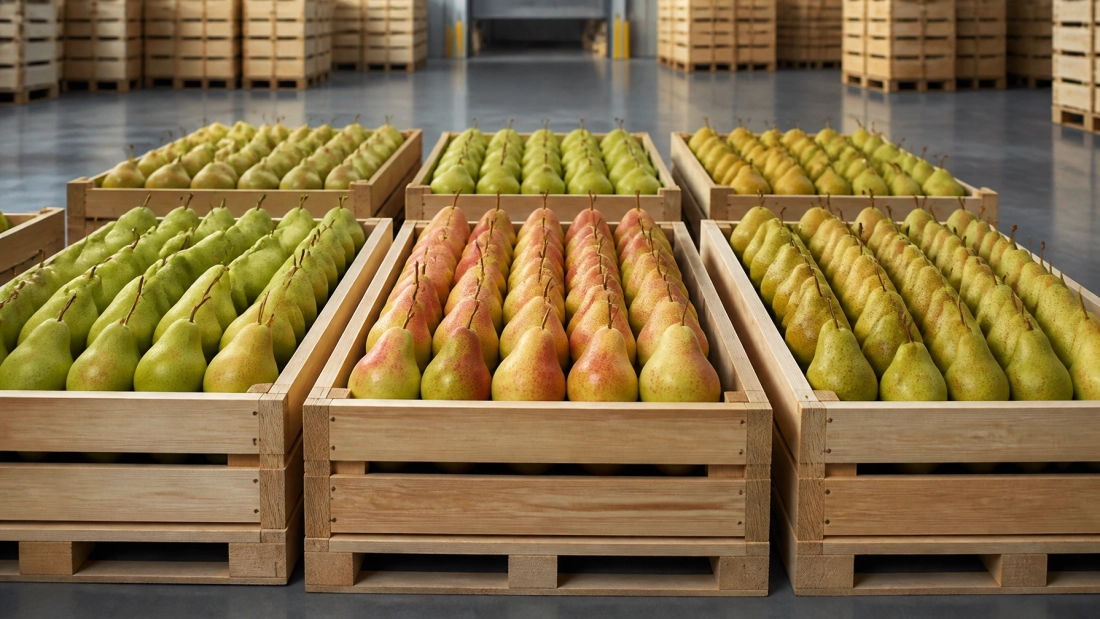
Quality inspection of fresh Forelle pears in a professional environment

Dubai's consumer base is diverse, ranging from high-end hospitality sectors to massive retail chains like Lulu and Carrefour. To penetrate these markets, exporters must adhere to strict quality control protocols.

Key Pear Varieties in Demand:

  • Packham’s Triumph: Highly valued for its long shelf life and consistent ripening.
  • Forelle: A premium, "blushed" variety that commands higher prices in the boutique retail sector.
  • Williams / Bartlett: Preferred by the foodservice industry for its flavor profile and versatility.
  • Asian Pears (Ya/Century): Dominant in the crisp-fruit segment, largely sourced from China.

At Mayil Global, we perform rigorous inspections at every stage of the distribution process. From the moment a container arrives at the port, our quality control team ensures that the fruit meets the standards required by UAE supermarkets and restaurants. Proper storage and handling are non-negotiable pillars of our operation, ensuring that the "farm-fresh" quality is preserved until the point of sale.

Solving the Liquidity Gap: The Cash & Carry Model

The primary challenge for most exporters is the time lag between shipping a container and receiving payment. In a consignment model, this can take weeks or even months. For high-volume shippers, this delay is unacceptable.

Mayil Global’s Cash & Carry model is specifically engineered to solve this liquidity problem. When you have a container arriving in Dubai, we offer the option of an immediate purchase. This provides the exporter with instant cash flow, allowing for the procurement of more produce and the maintenance of a continuous supply chain.

This model is particularly effective for exporters of bulk rice, spices, and perishables like pears, where market volatility can occur. Securing a guaranteed price upon arrival mitigates the risk of market crashes and provides financial predictability.

Logistics and Global Supply Network

Loading of refrigerated containers at a modern shipping port for global distribution

The logistics of pear exportation involve sophisticated cold-chain management. Pears are sensitive to temperature fluctuations and ethylene exposure. Our organized logistics and storage facilities are optimized to handle these requirements, following international safety and hygiene standards.

We maintain a global supply network that allows us to provide a steady and reliable supply to our B2B customers in the UAE. By partnering with Mayil Global, exporters gain access to this network, which includes:

  • Strategic Storage: High-tech warehousing in proximity to the Al Aweer market.
  • Efficient Distribution: A fleet of refrigerated trucks ensuring timely delivery to supermarkets and retailers.
  • Compliance Expertise: Navigating the regulatory requirements of Dubai Municipality and UAE Customs.

Conclusion: Partnering for Profitability

The "secrets" of high-volume shippers are no longer out of reach. By focusing on liquidity, transparency, and operational excellence, any global exporter can thrive in the Dubai pear market. Mayil Global is not just a distributor; we are a strategic extension of your business in the Middle East.

Whether you are looking to utilize our 3% commission model for long-term brand building or our Cash & Carry model for immediate liquidity, Mayil Global provides the infrastructure you need to succeed.

Looking for a Pears Buyer in Dubai?
Contact Mayil Global today to discuss your next shipment and secure your margins with our industry-leading commission and liquidity models.


A professional infographic comparing 'Traditional Wholesaler 15% Margin' vs 'Mayil Global 3% Commission', showing more profit returning to the exporter with a clear, corporate design

Banana Export Secrets Revealed: How the 3% Commission Model Beats Traditional Dubai Wholesalers

For international banana exporters, the UAE represents one of the most lucrative yet competitive markets in the Middle East. As a primary re-export hub and a massive consumer of fresh produce, Dubai’s demand for high-quality Cavendish and G9 varieties remains consistent. However, the traditional path to entry: selling to high-margin wholesalers: often leaves exporters with thin profits and zero transparency.

At Mayil Global, we are disrupting this status quo. By introducing a transparent 3% commission-based distribution model, we empower global shippers to retain more of their hard-earned revenue while maintaining full visibility over their sales in the Al Aweer market.

Looking for a Banana Buyer in Dubai?

If you are an exporter in the Philippines, Ecuador, or India, you are likely searching for a "Banana buyer in Dubai" who offers more than just a low-ball fixed price. The market is shifting. Experienced exporters no longer want to hand over 15% to 20% of their margins to traditional middlemen who hide the true market value of the fruit.

Whether you are looking to move 5 containers a week or a single trial shipment, understanding the logistics and financial models of the UAE market is critical to your success.

The Traditional Wholesaler Problem: High Margins and Hidden Costs

For decades, the Dubai fresh produce market operated on two primary models: the fixed purchase and the high-commission consignment.

  1. Fixed Purchase: The wholesaler buys your container at a set price (FOB or CIF). While this offers immediate liquidity, the price is often heavily discounted to protect the wholesaler against market fluctuations. You lose the upside when market prices spike.
  2. Traditional Consignment: The agent takes your goods and sells them in the market, charging a commission that typically ranges from 10% to 15%. When you add in "hidden" handling fees, unloading charges, and storage costs, your net return shrinks significantly.

In both scenarios, the exporter carries the risk of production and shipping, while the wholesaler captures the majority of the value. This is the "secret" traditional wholesalers don't want you to know: their business model thrives on your lack of market access.

A professional infographic comparing 'Traditional Wholesaler 15% Margin' vs 'Mayil Global 3% Commission', showing more profit returning to the exporter with a clear, corporate design

The Mayil Global Advantage: The 3% Commission Model

Our approach is built on the pillars of operational excellence and transparency. We operate as your dedicated distribution partner in the UAE, not just another buyer.

How the 3% Model Works

Instead of taking a massive chunk of your sales, Mayil Global charges a flat 3% commission on the gross sale value. This model is designed for exporters who want to treat the Dubai market as their own satellite operation.

  • Transparent Reporting: You receive detailed reports on the final sale price of every carton.
  • Cost Control: All third-party costs (port clearance, market fees, ripening) are passed through at cost, with no hidden markups.
  • Market Upside: If the price of Cavendish bananas rises in Dubai due to supply shortages, you capture that extra profit: not us.

Why 3%?

We believe in long-term synergy. By reducing our commission, we attract the highest quality exporters. Higher quality leads to faster turnover and better relationships with Dubai’s top supermarkets and retailers. We win when you win.

Immediate Liquidity: The Cash & Carry Alternative

While the commission model maximizes profit, we understand that sometimes cash flow is the priority. For exporters who need immediate settlement, Mayil Global offers a Cash & Carry model.

We provide immediate container purchases for high-quality stock arriving at Jebel Ali. This provides:

  • Instant Liquidity: Move your stock and get paid immediately.
  • Risk Mitigation: Transfer the price volatility risk to us.
  • Operational Simplicity: We handle the entire "last mile" from the port to the end-user.

Learn more about our bulk distribution strategies and how they solve liquidity gaps for global shippers.

Sourcing and Logistics: Ensuring Quality from Farm to Market

Bananas are a highly sensitive commodity. A slight deviation in temperature or a delay in clearance can result in "ripe and turn" issues, leading to massive losses. Mayil Global’s logistics infrastructure is designed to protect your investment.

Cold Chain Integrity

We manage temperature-controlled logistics with rigorous standards. Bananas must be maintained at a steady 13–14°C (55–57°F) during transit. Upon arrival at our facilities, we ensure the cold chain is never broken, utilizing advanced cold storage to maintain the fruit at Stage 1 or 2 maturity until it is ready for ripening or sale.

Strict Quality Control

Our inspection team performs quality checks at every stage:

  1. Port Inspection: Verification of container settings and fruit pulp temperature.
  2. Visual Audit: Checking for latex stains, bruising, and finger length uniformity.
  3. Ripening Management: For exporters requiring ripening services, we coordinate with professional ripening rooms in Dubai to ensure the fruit reaches the retail shelf at the perfect Stage 5 color.

A close-up of premium green Cavendish bananas being inspected by a quality control officer in a sterile, professional environment with modern monitoring tools

Exporting Bananas to the UAE: Requirements Checklist

To successfully partner with Mayil Global, exporters must meet the UAE’s stringent import regulations. Ensuring your documentation is in order is the first step toward a seamless 3% commission partnership.

Necessary Documentation:

  • Phytosanitary Certificate: Issued by your NPPO, confirming the shipment is free of pests.
  • Commercial Invoice: Including HS Code 080390 (Fresh Bananas).
  • Packing List: Detailing the number of 13kg or 18kg cartons and net weight.
  • Certificate of Origin: Authenticated by your local Chamber of Commerce.

Packaging Standards:

The Dubai market prefers 13kg net weight cartons for premium Cavendish. Cartons must be high-strength, corrugated, and well-ventilated to withstand refrigerated shipping and stacking in high-humidity environments.

Strategizing for the Dubai Market

The UAE banana market is influenced by seasonal demand and global supply shifts. For example, during Ramadan or peak tourist seasons, demand from the HORECA (Hotel, Restaurant, and Café) sector spikes.

By using our 3% commission model, you can strategically time your shipments to hit these peaks. Traditional wholesalers may not share this market intelligence with you, but at Mayil Global, we view market data as a shared asset.

The bustling but organized Al Aweer Fruit and Vegetable Market in Dubai, showing active trade and professional handling of fresh produce pallets

Build a Long-Term Partnership with Mayil Global

We aren't just looking for a one-time deal; we are building a global supply network. Our focus is on B2B supply to the most reputable supermarkets and retailers in the UAE. When you export through us, your brand gains exposure to the highest-paying segments of the market.

Our Commitment to Exporters:

  • Farm-Direct Sourcing: We value the hard work that happens at the plantation level.
  • Hygienic Handling: We follow international safety standards (HACCP) to ensure food safety.
  • Organized Logistics: Our distribution network ensures your product moves from the port to the buyer in the shortest time possible.

If you are ready to stop giving away your profits to traditional wholesalers and start maximizing your returns with a reliable partner, it is time to switch.

Contact Mayil Global Today

Are you ready to send your next container of bananas to Dubai? Contact our procurement team to discuss how our 3% commission model can transform your export business.