wmdiAjBFwYR

Al Aweer Market Secrets Revealed: What Experts Don’t Want You to Know About the 3% Commission Strategy

The Al Aweer Fruit and Vegetable Market, also known as the Ras Al Khor Market, serves as the nerve center for food distribution in the Middle East. For decades, the operations within this hub have been governed by a select group of intermediaries and commission agents. While the market facilitates the movement of thousands of tons of produce daily, the financial mechanics behind these transactions often remain opaque to international exporters and local retailers alike.

A significant shift is currently occurring in how wholesale fruits and vegetables in Dubai are traded. Traditionally, experts and established agents have benefited from complex fee structures and hidden markups that erode the profit margins of growers and exporters. However, the emergence of the 3% commission strategy is disrupting these long-standing norms. By providing a transparent, volume-based alternative, Mayil Global is exposing the inefficiencies of the traditional model and offering a more sustainable path for B2B food trade in the UAE.

The Traditional Commission Trap: Why Transparency is Rare

In the standard operating procedure at Al Aweer, commission agents typically charge a visible fee of 5% to 7%. On the surface, this appears reasonable for the service of clearing containers and finding buyers. However, the "secrets" that industry experts rarely disclose involve the additional deductions and price "adjustments" that occur before the final remittance reaches the exporter.

Many food distribution companies in UAE operate on a "black box" pricing model. When a container of apples, onions, or citrus arrives, the agent sells the stock to various sub-wholesalers or retailers. The exporter often receives a sales report that lacks granular detail regarding the exact timing of sales or the peak prices achieved during the trading day. This lack of transparency allows intermediaries to retain a larger portion of the market value while claiming only a standard commission.

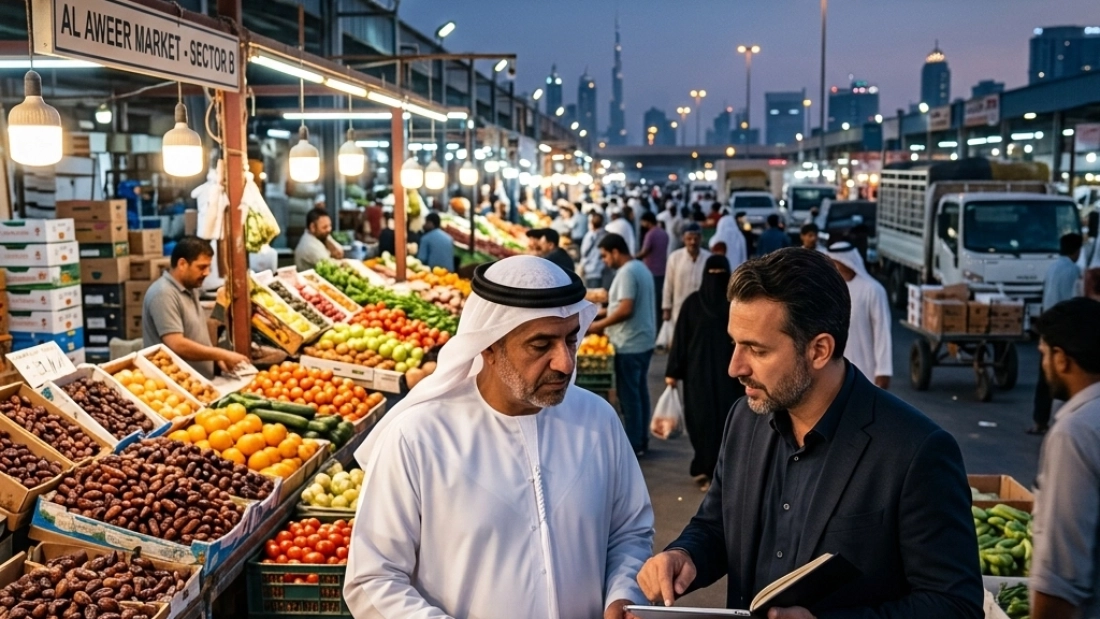
Crowded Al Aweer Fruit and Vegetable Market hub during morning wholesale distribution in Dubai.

Decoding the 3% Commission Strategy

The 3% commission strategy is a disruptive financial model designed to prioritize the exporter’s liquidity and profitability. Unlike traditional agents who may rely on high margins from low volumes, a 3 percent commission distributor in UAE like Mayil Global focuses on high-volume throughput and long-term partnerships.

How the Model Functions

The process is straightforward and eliminates the ambiguity typical of the Al Aweer market:

  1. Direct Market Access: The container is received and positioned within the Al Aweer wholesale environment.
  2. Transparent Sales: Every unit of produce is sold at the prevailing market rate.
  3. Flat Fee Deduction: A transparent 3% service fee is applied to the gross sales value.
  4. 97% Return: The exporter retains 97% of the actual market value of their goods.

This model is particularly effective for high-demand commodities. For instance, those exporting onions to Dubai or shipping bulk potatoes find that the 2% to 4% saved on commissions directly translates into thousands of dollars in additional profit per shipment.

The Liquidity Crisis: Why Cash & Carry is the Solution

One of the most guarded secrets in the Al Aweer market is the extent of the credit cycles. Many agents sell produce on 30, 60, or even 90-day credit terms to local supermarkets and retailers. This practice forces the exporter to act as an unofficial bank, waiting months to receive payment for perishable goods that were sold within 48 hours of arrival.

Mayil Global addresses this systemic issue through its cash and carry food wholesale Dubai model. By maintaining significant internal liquidity, we offer immediate or accelerated payment terms to exporters. This "Cash & Carry" approach ensures that international shippers can reinvest their capital into the next shipment immediately, rather than having their funds tied up in the UAE's retail credit cycles.

Successful B2B partnership for cash and carry food wholesale services in a Dubai warehouse.

Advantages of Immediate Liquidity:

  • Operational Velocity: Exporters can maintain a continuous supply chain without waiting for previous invoices to clear.
  • Risk Mitigation: Reducing the time between shipment and payment minimizes exposure to currency fluctuations and market volatility.
  • Negotiation Power: Exporters with ready cash can negotiate better rates with their own growers and logistics providers.

For more details on managing these financial gaps, you can read our guide on how Aweer market exporters can secure daily liquidity.

Strategic Sourcing and Market Timing

Success in the UAE food wholesale sector is not just about the commission rate; it is about timing. Experts often keep "market intelligence" close to their chests, but at Mayil Global, we believe that informed exporters make better partners.

The Al Aweer market is highly sensitive to supply fluctuations. For example, when there is a shortage of ginger or tomatoes, prices can spike by 40% within a single morning. A transparent distributor provides real-time data to their partners, advising them when to accelerate shipments and when to hold back.

Our sourcing and logistics infrastructure is designed to handle these fluctuations. By utilizing cold storage and efficient offloading, we ensure that the quality of the produce is maintained, allowing it to be sold during peak demand windows rather than being dumped at a discount during a market glut.

Advanced tracking of fresh ginger and tomato stock for 3 percent commission distribution in UAE.

Servicing the UAE B2B Sector: Supermarkets and Restaurants

While the 3% commission model benefits the exporter, our integrated distribution network provides equal value to local UAE buyers. Supermarkets, hypermarkets, and restaurant chains require a "reliable global sourcing" partner that can guarantee consistency in both quality and price.

As one of the leading food distribution companies in UAE, Mayil Global leverages its direct relationships with global exporters to supply premium spices, rice, eggs, and fresh produce to the local market. By cutting out multiple layers of sub-agents, we can offer competitive wholesale pricing to B2B clients.

Our B2B Product Categories Include:

  • Fresh Produce: Wholesale fruits and vegetables sourced directly from farms in India, Africa, and Europe.
  • Premium Spices: Ensuring high essential oil content and purity for restaurant supply.
  • Bulk Grains: High-quality rice varieties for catering and retail.
  • Eggs: Reliable, temperature-controlled supply chains for high-volume users.

Local retailers can explore our full range of offerings on our products page.

Eliminating the "Hidden Costs" of Logistics

In the traditional Aweer model, logistics costs are often padded with "handling fees" that are not clearly defined. At Mayil Global, our operational excellence is built on rigorous standards and functional clarity. We treat logistics as a service, not a profit center.

From the moment a container arrives at Jebel Ali Port to its final sale at Al Aweer, every step: customs clearance, transport, and warehousing: is managed with the goal of preserving the product's shelf life. Maintaining the cold chain is non-negotiable. Whether it is a shipment of delicate berries or robust onions, our sourcing and logistics team ensures that the "market-ready" condition of the produce is maximized.

International food logistics showing refrigerated container shipping at Jebel Ali Port for UAE supply.

Why the 3% Model is the Future of Food Wholesale

The "experts" who profit from the status quo are resistant to the 3% model because it forces a shift from high-margin/low-transparency to high-volume/high-transparency. In a globalized economy, the old way of doing business in Al Aweer is becoming obsolete.

Exporters are becoming more sophisticated. They are no longer willing to accept vague sales reports and delayed payments. They are looking for partners who provide:

  1. Predictable Fee Structures: Knowing exactly what the cost of distribution is.
  2. Operational Excellence: Professional handling of perishable inventory.
  3. Financial Stability: Reliable cash flow through Cash & Carry models.

Mayil Global is committed to being that partner. By focusing on the "Who, What, and How" of business operations, we provide a stable platform for both global exporters and local B2B buyers.

Partner with Mayil Global

Navigating the Al Aweer market does not have to be a game of secrets. By choosing a partner that prioritizes your liquidity and offers a transparent 3% commission structure, you can secure your margins and build a sustainable export business in the UAE.

Whether you are an exporter looking for a reliable 3 percent commission distributor in UAE or a local business seeking a dependable wholesale fruits and vegetables supplier, Mayil Global provides the infrastructure and expertise you need.

To learn more about how we can optimize your food distribution strategy, visit our About Us page or Contact Us today to discuss your next shipment. For a deeper look into our specific commodity strategies, you can explore our blog posts on bulk rice exports and securing profits with ginger.
cDvUWZDad3X

The Ultimate Guide to Wholesale Fruits and Vegetables Dubai: Everything You Need to Succeed

Dubai stands as the undisputed commercial gateway to the Middle East, serving as a high-velocity hub for the global food trade. For exporters looking to penetrate the GCC market and for local businesses seeking reliable procurement, understanding the dynamics of wholesale fruits and vegetables Dubai is the difference between marginal gains and significant scaling.

At Mayil Global, we operate at the heart of this ecosystem. The market is evolving beyond traditional brokerage toward a model defined by transparency, rapid liquidity, and logistical excellence. This guide outlines the essential components of the Dubai produce trade, from the bustling Al Aweer Central Market to our disruptive 3% commission model.

The Epicenter: Understanding Al Aweer Central Market

Any discussion regarding wholesale produce in the UAE begins with the Al Aweer Central Fruit and Vegetable Market. Spanning over 6,000 hectares, it is one of the largest distribution hubs in the region. The market is divided into wholesale blocks and retail sections, operating nearly 24 hours a day to facilitate both local consumption and massive re-export volumes to neighboring countries like Oman, Saudi Arabia, and Kuwait.

The operational efficiency of Al Aweer has been bolstered by recent multi-million dollar renovations, adding fully air-conditioned facilities that are critical for maintaining the cold chain. For global exporters, Al Aweer isn't just a marketplace; it is a price-setting engine for the entire region.

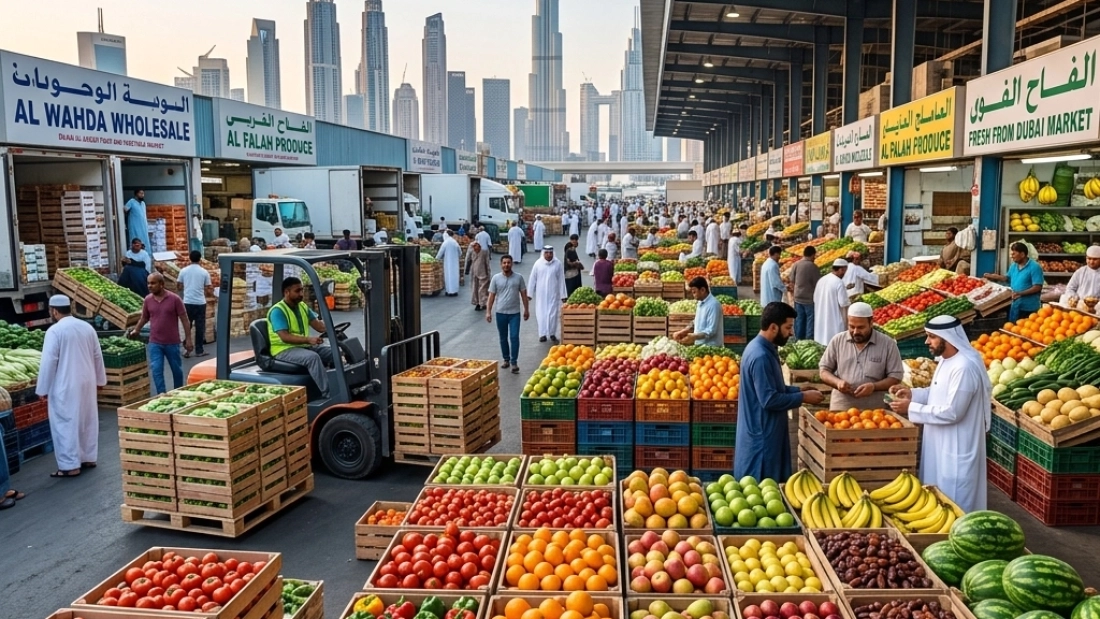
Al Aweer Central Market wholesale fruits and vegetables Dubai distribution hub with fresh produce crates.

The Mayil Global Advantage: The 3% Commission Model

Traditionally, exporters sending containers to Dubai have faced high commission rates: often ranging from 5% to 10%: which significantly erode profit margins. Mayil Global has disrupted this traditional structure by introducing a 3% commission strategy.

Our model is designed to attract high-volume exporters who prioritize transparency. By lowering the entry cost, we allow exporters to remain competitive in a price-sensitive market while ensuring they receive professional representation. This model covers the "Who, What, and How" of distribution:

  • Who: Professional exporters from India, Egypt, Spain, South Africa, and beyond.
  • What: Bulk shipments of onions, potatoes, citrus, and seasonal vegetables.
  • How: Leveraging our established network in Al Aweer to move volume quickly.

You can learn more about how this impacts your bottom line in our detailed breakdown of the 3% commission strategy for Aweer Market exporters.

Cash & Carry: Solving the Liquidity Gap

One of the greatest challenges for exporters is the "payment gap": the time between shipping a container and receiving funds. In the fast-paced world of wholesale fruits and vegetables Dubai, liquidity is king.

Mayil Global operates a Cash & Carry wholesale model. For verified exporters with high-quality produce, we offer immediate liquidity by purchasing containers outright. This eliminates the uncertainty of the "wait-and-see" sales model. For local B2B buyers, such as restaurants and hotels, this means they can access a consistent supply of fresh produce that has already been quality-vetted and cleared for immediate distribution.

This model is a cornerstone of our service, ensuring that our partners can reinvest their capital faster. Discover why Cash & Carry is changing the way UAE businesses manage inventory.

How to Export Food to Dubai: A Step-by-Step Guide

For international producers, the question of how to export food to Dubai involves navigating specific regulatory and logistical hurdles. The UAE maintains strict standards to ensure food safety and security.

1. Registration and Documentation

Before shipping, exporters must ensure their products meet the standards of the Dubai Municipality and the Ministry of Climate Change and Environment (MOCCAE). Key documents include:

  • Commercial Invoice and Packing List.
  • Certificate of Origin.
  • Phytosanitary Certificate (issued by the exporting country).
  • Health Certificate.

2. Sourcing and Packaging

Quality control begins at the farm level. Whether you are exporting onions to Dubai or shipping delicate stone fruits, packaging must be durable enough to withstand sea freight while maintaining ventilation.

3. Logistics and Cold Chain

Dubai’s logistics infrastructure, centered around Jebel Ali Port and Al Maktoum International Airport, is world-class. Maintaining the cold chain from the point of origin to our warehouse in Al Aweer is non-negotiable for preserving shelf life.

Refrigerated shipping container at a Dubai warehouse maintaining cold chain for imported wholesale food.

Focus Commodities: Importing Onions, Potatoes, and More

While Dubai imports a vast variety of produce, certain commodities drive the highest volumes and require specialized market knowledge.

Importing Onions to Dubai

Onions are a staple of the UAE diet and a high-demand item year-round. Successful importing onions Dubai requires timing the market correctly based on harvest seasons in India, Pakistan, and Egypt. We help exporters navigate these price fluctuations to maximize returns.

Wholesale Potatoes and Roots

Potatoes are another high-volume commodity where consistency in size and grade is vital. We specialize in connecting potato exporters with large-scale catering companies and retail chains. If you are a producer, check our guide on finding a potato buyer in Dubai.

Ginger and Garlic

Specialty items like ginger require specific storage conditions to prevent moisture loss and mold. Mayil Global provides the specialized handling required for these high-value items, offering an advantageous 3% commission for ginger exporters.

Pricing Dynamics in the Dubai Market

Wholesale prices in Dubai are influenced by several factors:

  1. Seasonality: Supply peaks from regional neighbors (like Jordan and Egypt) during winter months often lower prices, while summer relies more heavily on long-distance imports from the Southern Hemisphere.
  2. Global Events: Logistics disruptions or crop failures in major exporting nations (like India’s onion export bans) create immediate price spikes in Al Aweer.
  3. Local Demand: Religious holidays like Ramadan see a massive surge in demand for fruits, leafy greens, and dates.

Understanding these cycles is essential for any exporter looking to "win" in the Dubai market. At Mayil Global, we provide our partners with real-time insights to help them decide when to ship and when to hold.

Expert quality inspection of wholesale onions and potatoes using real-time Dubai market data insights.

Quality Control and Hygiene Standards

Professionalism in the food trade is defined by a commitment to safety. Mayil Global adheres to rigorous hygiene standards. Our facilities and processes are designed to meet international safety benchmarks, ensuring that every crate moving through our system is fit for the high standards of the UAE’s hospitality and retail sectors.

We prioritize:

  • Traceability: Knowing exactly where every batch originated.
  • Inspection: Rigorous checking of produce upon arrival at the Al Aweer facility.
  • Speed: Minimizing "dwell time" to ensure maximum freshness for the end consumer.

Why Partner with Mayil Global?

The Dubai wholesale market is competitive, but it offers unparalleled rewards for those who operate with the right partners. Mayil Global isn't just a distributor; we are a strategic extension of your business in the UAE.

  • Reliability: We offer a dependable supply chain for local buyers and a stable exit strategy for exporters.
  • Transparency: Our 3% commission model is straightforward: no hidden fees, no complex rebates.
  • Liquidity: Our Cash & Carry options ensure that your business remains cash-flow positive.

Whether you are looking for wholesale vegetables in Dubai or you are ready to send your first container of onions, Mayil Global provides the platform you need to succeed.

Massive wholesale produce warehouse in Dubai showing organized inventory for global food distribution.

Conclusion: Securing Your Future in the UAE Market

Success in the wholesale fruits and vegetables Dubai market requires more than just good produce; it requires a deep understanding of logistics, a commitment to quality, and a partner who values your margins as much as you do. By leveraging the 3% commission model and the speed of our Cash & Carry operations, global exporters can secure a permanent and profitable foothold in the UAE.

Ready to scale your export business? Explore our sitemap to find more specific guides on commodities or contact us directly to discuss your next shipment. The Al Aweer market is waiting( let’s move your volume together.)

69oyrHQlNRN

Why Our Cash & Carry Model Will Change the Way You Export Pears and Premium Fruit to the UAE

The United Arab Emirates, and Dubai in particular, stands as one of the most sophisticated hubs for the global fruit trade. For international exporters of premium fruit, specifically pears, the UAE represents a high-value market with consistent demand throughout the year. However, the traditional methods of entering this market: often fraught with opaque commission structures and long payment cycles: have historically limited the growth potential of global shippers.

At Mayil Global, we are redefining these dynamics. By introducing a dual-model approach featuring a transparent 3% commission structure and a revolutionary Cash & Carry model, we provide exporters with the liquidity and financial certainty required to dominate the Middle Eastern market.

The Traditional Export Hurdle: Why the Old Way is Failing Exporters

For decades, the Aweer Central Fruit and Vegetable Market has operated on a traditional commission-based system. In this environment, many agents charge anywhere from 5% to 10% in commissions. Beyond the stated percentage, exporters often face "hidden costs": unforeseen handling fees, storage charges, or market "adjustments" that are rarely documented with full transparency.

Furthermore, the traditional model places all the risk on the exporter. You ship your container of premium Conference or Packham pears, wait for it to clear customs, and then wait even longer for the agent to sell the produce in the open market. Only after the sale is finalized: and after the agent takes their cut: do you receive your payment. If the market price dips while your container is on the water, your profit margins evaporate.

Looking for a Pear Buyer in Dubai? Here is Why Mayil Global is Different

If you are currently searching for a reliable pear buyer in Dubai, you are likely looking for more than just a transaction; you are looking for a strategic partner who understands the value of your produce. Pears are a delicate commodity. Whether you are exporting Anjou, Williams, or Bosc varieties, maintaining the cold chain and ensuring rapid turnover is essential to preserving quality and value.

Fresh premium pears including Conference and Packham varieties for export to Dubai.

Mayil Global addresses these challenges through two distinct pathways designed to maximize your ROI:

1. The 3% Commission Model: Unmatched Transparency

For exporters who prefer to maintain ownership of their goods until the final sale, our 3% commission strategy offers the most competitive rates in the UAE. By capping our commission at just 3%, we ensure that more of the final sale price stays in your pocket. We provide detailed reporting and real-time market data, allowing you to see exactly how your produce is performing without hidden deductions.

2. The Cash & Carry Model: Immediate Liquidity

This is the game-changer for high-volume shippers. Under our Cash & Carry model, Mayil Global acts as a direct buyer. We purchase your containers outright. Instead of waiting for the market to fluctuate, you secure a fixed price and receive immediate liquidity. This model is specifically designed to solve the cash flow gaps that often plague international trade.

How the Cash & Carry Model Transforms Your Supply Chain

In the world of food distribution and wholesale, cash is king. The ability to reinvest capital immediately into your next harvest or shipment is the difference between stagnation and scaling.

Eliminating Market Volatility

The price of premium fruit in Dubai can be volatile, influenced by seasonal arrivals from South Africa, Europe, and Asia. When you export on a commission basis, you are at the mercy of the daily market rate at the time of arrival. With our Cash & Carry approach, we mitigate this risk. By selling the container directly to us, you lock in your margins and eliminate the stress of market downturns.

Accelerating Operational Cycles

Typical payment terms in the Aweer market can stretch from 15 to 45 days. For an exporter managing multiple containers, this delay creates a significant liquidity gap. Our model ensures you get paid faster, enabling you to manage your restaurant inventory or wholesale operations with precision.

Conceptual image showing immediate cash flow and liquidity for fruit exporters in the UAE.

Strategic Advantages for Pear Exporters

Pears require specialized handling. Unlike harder fruits, premium pear varieties have a specific ripening window. Any delay in the sales process can lead to quality degradation and lower price points.

  • Cold Chain Integrity: Mayil Global prioritizes rigorous standards in logistics and distribution. From the moment your container arrives at the port to its placement in our wholesale facility, we maintain the optimal temperature to preserve the crispness and flavor profile of the fruit.
  • Direct Access to B2B Buyers: As a leading wholesale vegetable and fruit supplier, we have an established network of supermarkets, luxury hotels, and catering companies. This direct-to-market access ensures that your premium fruit reaches the highest-paying customers in the UAE.
  • Consistency in Supply: We value long-term relationships. By using our Cash & Carry model, you become a preferred supplier, allowing us to build a consistent supply chain that benefits both your production schedule and our distribution needs.

Sourcing and Quality Control: Our Commitment to Excellence

At Mayil Global, we don’t just move boxes; we manage quality. We understand that "premium" isn't just a label: it’s a standard. Our team conducts thorough inspections to ensure that every shipment meets UAE import regulations and our own internal benchmarks for size, sugar content, and skin integrity.

For exporters of bulk rice, spices, or other perishables like onions, our systems are equally robust. We apply the same level of professional rigor to pears as we do to every category in our portfolio.

Professional cold storage and distribution warehouse for premium fruit in the UAE.

Step-by-Step: Exporting Your First Container to Mayil Global

Transitioning to a more profitable model is straightforward. We have streamlined our onboarding process to ensure that global shippers can begin exporting with minimal friction.

  1. Inquiry and Documentation: Contact our sourcing team with your product specifications, variety, and expected volume.
  2. Model Selection: Decide whether the 3% commission model or the Cash & Carry purchase suits your current liquidity needs.
  3. Logistics Coordination: Our logistics experts will guide you through the documentation required for UAE customs and phytosanitary clearance.
  4. Arrival and Inspection: Upon arrival at the port or our facility in Aweer, we conduct a quality assessment.
  5. Immediate Settlement: For Cash & Carry transactions, payment is initiated promptly, ensuring your capital is ready for your next shipment.

Why the UAE Market for Pears is Growing

The UAE's population is diverse, with a high demand for healthy, premium food options. Pears are increasingly favored for their nutritional value and versatility in both retail and hospitality sectors. By positioning your brand with Mayil Global, you are not just selling a product; you are securing a foothold in one of the world's most resilient economies.

Premium pears showcased in a luxury Dubai hospitality setting to attract high-value buyers.

Whether you are an exporter of apples, lemons, or premium pears, the goal remains the same: maximizing margins and minimizing risk.

Conclusion: Partnering for Profitability

The landscape of food distribution in the UAE is evolving. The days of accepting high commissions and delayed payments as "the cost of doing business" are over. Mayil Global offers a modern, professional, and transparent alternative that puts the exporter first.

By choosing our Cash & Carry model, you solve the fundamental problem of liquidity in international trade. By choosing our 3% commission model, you gain a level of transparency that is virtually unheard of in the traditional fruit and vegetable markets of the Middle East.

Are you ready to change the way you export? If you are looking for a dedicated pear buyer in Dubai who understands the nuances of the premium fruit trade, Mayil Global is your destination. Let us help you secure your margins and scale your business in the UAE.

For more information on our specific models and how we can assist with your next container, visit our sitemap or explore our latest market insights.

IsFbk-LLoNx

7 Mistakes You’re Making with Food Distribution Companies in UAE (And How Our 3% Commission Model Fixes Them)

The United Arab Emirates, specifically Dubai, serves as the central hub for global food trade. With a heavy reliance on imports, the efficiency of the supply chain is the difference between a thriving enterprise and a failing one. For many exporters, container owners, and local retailers, navigating the landscape of food distribution companies in uae often leads to common pitfalls that drain capital and degrade product quality.

At Mayil Global, we recognize that the traditional distribution model is frequently opaque and inefficient. By shifting the paradigm toward a 3 percent commission distributor uae model and a robust cash and carry food wholesale dubai strategy, we solve the most pressing challenges in the industry.

Here are the seven critical mistakes businesses make when dealing with food distribution in the UAE and how our innovative approach provides the solution.

1. Overlooking the "Liquidity Trap" in Distribution

Many exporters and container owners enter the UAE market expecting quick returns, only to find their capital locked in a cycle of credit terms and delayed payments. Traditional distributors often take products on a consignment basis but fail to provide immediate liquidity, leaving the exporter unable to fund their next shipment.

The Mistake: Relying on distributors who prioritize their own cash flow over yours, leading to stagnant inventory and frozen capital.

The Mayil Global Fix: Our 3% commission model is specifically designed to address liquidity. We operate as a high-volume bridge between global exporters and the Aweer market. By charging a flat, transparent 3% commission, we focus on moving volume quickly. For exporters, this means faster sales and immediate access to daily liquidity, ensuring that your business remains operational and ready for the next container. Learn more about how we secure your margins.

Shipping container opening to reveal liquidity for food distribution companies in UAE using a 3 percent commission model.

2. Underestimating the Importance of Cold Chain Integrity

The UAE’s climate is unforgiving. A break in the cold chain for even thirty minutes can reduce the shelf life of wholesale fruits and vegetables dubai by days. Many businesses prioritize lower shipping rates over the quality of the refrigerated transport and storage used by their distribution partner.

The Mistake: Assuming all distributors maintain the same rigorous standards for temperature control, leading to high spoilage rates and rejected shipments.

The Mayil Global Fix: We prioritize cold chain excellence as a non-negotiable pillar of our operations. From the moment a container arrives at the port to its placement in our specialized storage facilities, temperature monitoring is constant. By maintaining strict protocols, we ensure that premium produce: whether it’s apples, lemons, or ginger: reaches the end buyer in peak condition, preserving your reputation and your profits.

3. Dealing with Excessive Middlemen

Every hand that touches a product adds a layer of cost and a delay in time. In the traditional UAE wholesale market, a product might pass through three or four intermediaries before reaching a supermarket or restaurant. This inflates prices and compromises the freshness of perishable items.

The Mistake: Utilizing a fragmented supply chain that dilutes your margins and disconnects you from the final market price.

The Mayil Global Fix: We advocate for a streamlined, direct-to-market approach. Our sourcing and logistics framework connects global exporters directly to the UAE’s primary wholesale hubs. By utilizing our 3% commission strategy, exporters bypass the "margin-stacking" of multiple middlemen. We act as your direct representative in the Aweer market, ensuring transparency and maximum return on every container.

Modern cold storage rows for high-volume wholesale fruits and vegetables in Dubai distribution centers.

4. Prioritizing Unit Price Over Consistent Quality

For local B2B buyers: such as restaurants and retailers: the temptation to always source from the lowest bidder is high. However, in the food industry, inconsistency is a silent killer of brand loyalty. A batch of low-quality rice or sub-standard eggs can ruin a restaurant's reputation overnight.

The Mistake: Sacrificing consistency for short-term savings, resulting in customer dissatisfaction and increased waste.

The Mayil Global Fix: Through our cash and carry food wholesale dubai model, we provide local businesses with access to premium, consistent inventory. We source bulk rice, eggs, and fresh produce from reliable global partners who meet our stringent quality benchmarks. When you buy from Mayil Global, you aren't just getting a price; you are getting a guarantee of quality that remains stable shipment after shipment.

5. Neglecting Regulatory Compliance and Food Safety

The UAE has some of the world's most stringent food safety regulations, governed by entities like the Dubai Municipality and ESMA. Navigating the documentation, labeling requirements, and health certifications can be a minefield for international exporters.

The Mistake: Failing to verify that your distributor is fully compliant with local mandates, leading to seized containers and heavy fines.

The Mayil Global Fix: We serve as a regulatory anchor for our partners. Our team stays abreast of every change in UAE food law, ensuring that all products: from premium spices to bulk vegetables: meet local standards before they even hit the warehouse floor. This proactive compliance reduces risk for the exporter and provides peace of mind for the local buyer.

Quality control inspector checking fresh tomatoes for food distribution companies in UAE safety standards.

6. Poor Inventory Visibility and Communication

In a fast-moving market like Dubai, information is as valuable as the inventory itself. Many food distribution companies in the UAE operate with "black box" systems where exporters have no visibility into how their products are being sold or at what price.

The Mistake: Partnering with distributors who lack transparent reporting, leaving you in the dark regarding market trends and sales performance.

The Mayil Global Fix: Transparency is the core of our 3 percent commission distributor uae philosophy. We provide our partners with clear, data-driven insights into market movements. By maintaining open lines of communication, we help exporters decide when to ship and what products are in high demand, ensuring a strategic advantage in a competitive market. Our 3% commission strategy explained details exactly how this transparency benefits your bottom line.

7. Ignoring the "Last-Mile" Efficiency

Even the best product is useless if it doesn't arrive when the customer needs it. In the B2B world, a late delivery of eggs or vegetables can halt a kitchen's operations. Many distributors have robust international logistics but fail at the local, last-mile delivery.

The Mistake: Choosing a partner with a weak local delivery network, causing disruptions in the supply chain of restaurants and supermarkets.

The Mayil Global Fix: Our Cash & Carry model is built for speed and reliability. We ensure that our inventory is strategically positioned to serve the UAE’s major commercial centers efficiently. For retailers and hospitality businesses, our reliable supply chain means they can maintain leaner inventories, knowing that Mayil Global can replenish their stock of wholesale fruits and vegetables dubai with precision and speed.

Refrigerated van delivering wholesale fruits and vegetables in Dubai for cash and carry food wholesale efficiency.

Why the Mayil Global Strategy is the Future of UAE Food Wholesale

The traditional distribution landscape is changing. High margins and opaque processes are being replaced by high-volume, low-commission models that favor both the producer and the consumer.

For the Global Exporter:

The 3% commission model removes the guesswork. You know exactly what your costs are. You gain immediate access to the Dubai market via the Aweer market, and you benefit from the liquidity required to keep your business growing. Whether you are exporting onions or bulk rice, our system is built to maximize your margins.

For the Local B2B Buyer:

Our Cash & Carry model offers the agility your business needs. By sourcing directly from a distributor that manages international logistics and local wholesale, you get fresher products at more competitive prices. We handle the complexity of global sourcing so you can focus on serving your customers.

Global map showing sourcing and logistics for a 3 percent commission distributor in UAE food markets.

Conclusion: Partner with Reliability

Choosing among the various food distribution companies in uae is a decision that impacts every facet of your business. By avoiding the seven mistakes outlined above and embracing a model built on transparency, liquidity, and quality, you position your business for long-term success in the Middle East.

Mayil Global is not just a distributor; we are a strategic partner dedicated to operational excellence. Our 3% commission structure and Cash & Carry solutions are designed to eliminate the inefficiencies of the past and pave the way for a more profitable future for exporters and retailers alike.

To discuss how we can streamline your food supply chain or to learn more about our current inventory of spices, rice, eggs, and fresh produce, contact us today. Let us show you how the right distribution model can transform your business outcomes in the UAE.

MbxTYrdsNmj

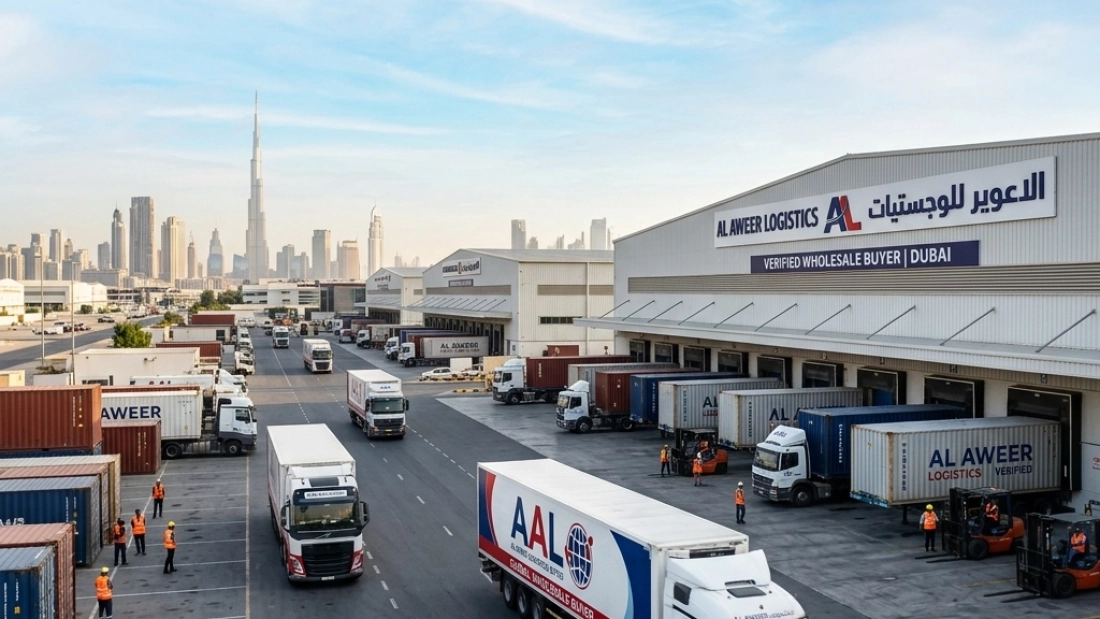
Looking For a Verified Wholesale Buyer in Dubai? Here Are 5 Things You Should Know About Al Aweer Logistics

Navigating the landscape of the United Arab Emirates’ food import sector requires more than just high-quality produce; it demands a strategic understanding of the logistics hub that powers the region. For global exporters, the Al Aweer Fruit and Vegetable Market in Dubai represents the gateway to the Middle East. However, finding a verified wholesale buyer in this bustling environment can be a complex endeavor fraught with pricing volatility and logistical hurdles.

At Mayil Global, we specialize in bridging the gap between international suppliers and the Dubai market. By leveraging our professional distribution network and our signature 3% commission model, we provide a structured path for exporters to secure their margins. Whether you are importing onions to Dubai or managing a shipment of exotic fruits, understanding the mechanics of Al Aweer logistics is essential for long-term success.

Here are five critical things you should know about Al Aweer logistics and how to identify a verified wholesale partner.

1. The Distinction Between Commission Agents and Verified Buyers

In the Al Aweer market, many entities operate as commission agents rather than direct buyers. A standard commission agent takes your goods, sells them at the prevailing market rate, and takes a percentage: often ranging from 5% to 10%: while leaving the exporter to bear the full brunt of price fluctuations and credit risks.

A verified wholesale buyer, such as Mayil Global, operates with a different level of transparency. We prioritize the "Cash & Carry" model, which focuses on immediate liquidity for the exporter. When searching for a partner, you must verify their trade license, their physical presence in the market, and their track record of payments. The risk in Dubai is not just in selling the product, but in ensuring the funds return to the source. We advocate for a 3% commission strategy that maximizes your returns by keeping overheads low and transparency high.

2. Navigating the Regulatory Framework for Food Imports

If you are researching how to export food to dubai, you must understand that logistics starts long before the container reaches Jebel Ali Port. The UAE has stringent standards managed by the Dubai Municipality and the Ministry of Climate Change and Environment (MOCCAE).

  • Documentation: Every shipment must be accompanied by an original bill of lading, a commercial invoice, a packing list, and a health certificate issued by the competent authority in the country of origin.
  • Labeling: Labels must include production and expiry dates, country of origin, and nutritional information in Arabic (or a bilingual format).
  • Product Registration: Before the first shipment, products must be registered on the "Zad" or "FIRS" (Food Import and Re-export System) portals.

Failure to comply with these logistics requirements results in costly delays at the port, which can be devastating for perishable wholesale fruits and vegetables in Dubai. Mayil Global assists our partners in ensuring all sourcing and logistics documentation is in order before the vessel leaves the port of origin.

Refrigerated containers at Jebel Ali Port showing how to export food and onions to Dubai logistics.

3. Real-Time Market Pricing vs. Fixed Contracts

One of the most misunderstood aspects of Al Aweer logistics is the pricing mechanism. Al Aweer is an open, high-velocity wholesale market. Prices for commodities like onions, potatoes, and ginger can fluctuate hourly based on the number of containers arriving at the port.

Exporters often make the mistake of shipping goods based on a price they saw a week ago. To succeed, you need a partner on the ground who provides real-time market intelligence. At Mayil Global, we provide daily updates on market trends. Our 3% commission model is designed to ensure that even in a fluctuating market, the exporter retains the largest possible share of the sale price. By reducing our take to just 3%, we provide a buffer that helps exporters remain profitable even when market prices dip.

4. Cold Chain Integrity and Last-Mile Delivery

The climate in Dubai is a significant factor in logistics. From May to October, temperatures regularly exceed 40°C. Maintaining the cold chain from the port to the Al Aweer warehouse is non-negotiable.

Verified buyers must have access to refrigerated transport and temperature-controlled storage facilities. When importing onions to Dubai, for example, proper ventilation and humidity control are required to prevent sprouting or rot.

At Mayil Global, we emphasize operational excellence in our supply chain. We ensure that your products are moved swiftly from the container to our distribution points, minimizing exposure to ambient heat. This commitment to quality control is why many local B2B clients, including restaurants and smaller wholesalers, prefer our Cash & Carry wholesale offerings. We maintain the integrity of the produce, which in turn maintains the reputation of the exporter.

Fresh wholesale fruits and vegetables in Dubai stored in a temperature-controlled cold storage facility.

5. The Advantage of the Cash & Carry Model for Liquidity

In traditional Al Aweer trading, an exporter might wait 15 to 45 days to receive payment after their goods have been sold. This delay creates a "liquidity gap" that prevents exporters from purchasing more stock and growing their business.

One of the most important things to know about working with a verified buyer in Dubai is whether they can offer faster payment terms. Mayil Global’s Cash & Carry food wholesale model is specifically designed to solve this problem. By selling directly to a network of B2B buyers who pay on the spot or on short terms, we are able to cycle capital back to our global exporters much faster than the market average.

This model is particularly effective for high-volume commodities. If you are a supplier of bulk rice in Dubai, the ability to receive payments quickly allows you to secure the next harvest or container without waiting for long retail credit cycles.

Why Choose Mayil Global as Your Verified Partner?

Mayil Global, led by Suresh Venkat, is more than just a distribution company. We are a strategic partner for global exporters looking to conquer the UAE market. Our professional approach to food distribution is built on three pillars:

  1. Reliability: We operate with full transparency, ensuring that every container is accounted for and every sale is documented.
  2. Efficiency: Our 3% commission model is the most competitive in the Al Aweer ecosystem, allowing you to price your products more aggressively or take home more profit.
  3. Growth: By providing a Cash & Carry platform, we help you maintain the liquidity needed to scale your operations.

Whether you are a seasoned exporter or just learning how to export food to Dubai, the complexities of Al Aweer can be daunting. From the customs clearance of wholesale fruits and vegetables in Dubai to the final sale at the warehouse, every step requires precision.

Verified wholesale buyers at Al Aweer market managing bulk fruit and vegetable distribution in Dubai.

Conclusion: Securing Your Future in the UAE Market

The Al Aweer market is a land of opportunity, but it requires a partner who understands the nuances of logistics, regulation, and finance. By choosing a verified buyer like Mayil Global, you are not just selling produce; you are building a sustainable supply chain.

We invite global exporters to explore our about-us page to learn more about our values and operational standards. If you are ready to ship your next container of onions, ginger, or garlic, contact us today to discuss how our 3% commission model can transform your export business.

Don't leave your profits to chance in the open market. Partner with a company that prioritizes your liquidity and market success. Let Mayil Global be your eyes and ears on the ground in Dubai, ensuring that your journey from farm to the Al Aweer market is profitable, professional, and predictable.

SPHC69zgopr

Looking for a Garlic Buyer in Dubai? 5 Steps to Export and Maximize Profits (Easy Guide for Global Shippers)

The United Arab Emirates, and specifically Dubai, serves as the primary redistribution hub for the entire Middle East and North Africa (MENA) region. For global garlic producers in China, India, Egypt, and Spain, the Dubai market represents a high-volume, high-liquidity destination. However, the path to profitability is often obscured by complex supply chains, fluctuating market prices at the Al Aweer Fruit and Vegetable Market, and traditional brokerage fees that erode your margins.

At Mayil Global, we have restructured the export-import dynamic to favor the shipper. If you are searching for a reliable garlic buyer in Dubai, this guide outlines the professional steps required to enter the market while highlighting how our unique 3% commission and Cash & Carry models ensure you retain the maximum possible profit from every container.

Step 1: Meet Dubai’s Garlic Quality and Variety Standards

Dubai is a diverse market with specific preferences based on the end-user, ranging from high-end hospitality to industrial food processing. Before shipping, you must align your product with local demand.

Popular Garlic Varieties

  • Snow White Garlic: High demand in retail and supermarkets due to its aesthetic appeal.
  • Normal White (Purple) Garlic: Preferred for its robust flavor in traditional cooking and bulk wholesale.
  • Peeled Garlic: A growing segment for the UAE’s massive catering and restaurant sector.

Grading and Packaging

Ensuring quality control starts at the source. The UAE market typically requires garlic to be firm, well-dried, and free from sprouts or mold. Standard packaging involves:

  • Mesh Bags: 5kg, 10kg, or 20kg bags for bulk wholesale.
  • Cartons: 10kg cartons for premium or pre-packed retail garlic.
  • Small Mesh Packs: 250g or 500g packs for direct supermarket distribution.

Premium Snow White and Normal White garlic bulbs with export packaging for the Dubai market.

Step 2: Navigate Regulatory Compliance and Documentation

The UAE Ministry of Climate Change and Environment (MOCCAE) enforces strict standards on imported food products. To avoid delays at the Port of Jebel Ali or Hamriya Port, your documentation must be flawless.

Required documents for garlic export to Dubai include:

  1. Bill of Lading: Issued by the shipping line.
  2. Commercial Invoice: Detailing the value, quantity, and description.
  3. Packing List: Specifying the weight and packaging details.
  4. Certificate of Origin: Attested by the relevant chamber of commerce in the exporting country.
  5. Phytosanitary Certificate: Confirming the shipment is free from pests and diseases.
  6. Health Certificate: Issued by the governing body in your home country.

Compliance is non-negotiable. At Mayil Global, we provide guidance through our sourcing and logistics department to ensure your paperwork aligns with UAE customs requirements before the ship leaves your port.

Step 3: Choose Your Distribution Model (The Mayil Global Advantage)

Most exporters lose significant revenue because they work with traditional middlemen who charge opaque fees or provide inconsistent market data. When looking for a garlic buyer in Dubai, you generally face two choices: traditional commission agents or a structured corporate partner like Mayil Global.

The 3% Commission Model

In the traditional Al Aweer market, commission agents often charge between 5% and 10%, often with "hidden costs" for handling and storage. We have simplified this. Mayil Global operates on a flat 3% commission model.

This transparency allows you to calculate your ROI with precision. We act as your boots on the ground, selling your garlic at the highest daily market price and taking only a 3% fee for our distribution services. This model is ideal for shippers who want to maintain ownership of their goods until the point of sale to maximize their upside. You can read more about how this applies to other commodities like onions and lemons.

The Cash & Carry Model

For exporters who prioritize liquidity and immediate turnover, our Cash & Carry model is the solution. Instead of waiting for the product to sell in the market, Mayil Global can purchase your container directly. This provides you with immediate capital to reinvest in your next shipment, eliminating the risk of market price fluctuations during the selling period.

Dubai food logistics hub with a refrigerated container for exporting garlic to the UAE market.

Step 4: Manage Cold Chain Logistics and Storage

Garlic is a semi-perishable commodity. While it has a longer shelf life than leafy greens, the extreme heat in Dubai (reaching over 40°C in summer) can quickly degrade quality if not managed correctly.

Refrigerated Transport

Global shippers must utilize Reefer (refrigerated) containers maintained at a temperature of 0°C to -2°C with a humidity level of 65-70%. Proper ventilation is critical to prevent moisture buildup, which leads to mold.

Strategic Warehousing

Upon arrival in Dubai, your garlic needs to be moved quickly to temperature-controlled storage. Mayil Global’s infrastructure ensures that the cold chain is never broken. By maintaining the integrity of the garlic, we ensure that you receive the "Grade A" price in the market rather than being forced to sell "Grade B" or distressed stock at a loss.

Step 5: Execute Sales and Maximize Your Profit Margins

The final step is the actual sale. The Dubai market is fast-paced, with prices changing daily based on supply levels from China and India. To maximize profits, you need real-time data.

Market Transparency

We provide our partners with daily updates from the Al Aweer market. This transparency prevents the common "broker trap" where exporters are told the market price is lower than it actually is. With Mayil Global, you see exactly what the buyers are paying.

Diverse Buyer Network

Because we operate both as a distributor and a wholesale supplier, your garlic isn't just sold to market stalls. We distribute directly to:

  • Hotel chains and catering companies.
  • Hypermarkets and retail outlets.
  • Local B2B food manufacturers.
  • Re-exporters shipping to Saudi Arabia, Oman, and Kuwait.

By diversifying the buyer base, we ensure your garlic is sold at the best possible price point, regardless of temporary gluts in the central market.

Garlic supply chain in Dubai serving local restaurants and hypermarket wholesale buyers.

Why Partner with Mayil Global?

Searching for a "garlic buyer in Dubai" can lead you to many doors, but few offer the corporate stability and financial transparency of Mayil Global. We are not just agents; we are supply chain partners focused on long-term growth.

  • Financial Reliability: Our Cash & Carry model solves the liquidity gaps that often plague international trade.
  • Operational Excellence: From customs clearance to final-mile delivery, we handle the logistics so you can focus on farming and sourcing.
  • The 3% USP: Our low commission rate is designed to attract high-volume shippers who are tired of losing their margins to inefficient middlemen.

Comparison: Traditional Broker vs. Mayil Global

Feature Traditional Broker Mayil Global
Commission 5% – 10% 3% Flat Fee
Transparency Often opaque pricing Full market visibility
Payment Delayed until sale Immediate Cash & Carry options
Infrastructure Limited to market stalls Full logistics & warehouse support
Focus Short-term transaction Long-term partnership

Conclusion: Start Your Garlic Export Journey Today

The demand for garlic in the UAE is consistent and growing. Whether you are shipping from the garlic fields of Jinxiang, China, or the plains of Madhya Pradesh, India, Dubai is your gateway to the Middle Eastern market.

Don't leave your profits to chance. Secure your margins with a partner that understands the value of transparency and speed. If you have a container ready or are planning your next harvest, contact us today to discuss how we can bring your product to the Dubai market.

For more insights on exporting other commodities to the UAE, explore our guides on ginger and tomatoes.


About Mayil Global
Mayil Global is a premier food distribution and wholesale company based in Dubai, UAE. We specialize in connecting global exporters with the lucrative Middle Eastern market through innovative 3% commission and Cash & Carry business models. Learn more about us and our commitment to operational excellence in the food supply chain.

jAaxJ9RPMuP

5 Steps How to Export Oranges to Dubai and Get Paid Faster (Easy Guide for Global Shippers)

For international citrus producers, the United Arab Emirates represents one of the most lucrative markets in the Middle East. Dubai, specifically, serves as a global redistribution hub, making it a primary destination for high-quality oranges. However, many exporters face significant hurdles, from complex regulatory requirements to the opaque financial structures of traditional wholesale markets.

If you are looking for an orange buyer in Dubai, the goal is not just to find a purchaser, but to find a partner that ensures your margins are protected and your payments are processed without delay. At Mayil Global, we have redefined the export experience by offering a transparent 3% commission model and immediate Cash & Carry options. This guide outlines the five essential steps to successfully exporting oranges to Dubai while maximizing your liquidity and profit.

1. Navigating Regulatory Compliance and Documentation

The first step in any successful export operation is ensuring that your shipment meets the rigorous standards set by the UAE authorities. The Ministry of Climate Change and Environment (MOCCAE) and the Dubai Municipality oversee the import of all fresh produce. Failure to provide accurate documentation can lead to costly delays at Jebel Ali Port or the Al Aweer Fruit and Vegetable Market.

Essential Documentation for Orange Exports

To ensure a seamless entry into the Dubai market, exporters must prepare a comprehensive documentation package:

  • Commercial Invoice: A detailed breakdown of the shipment's value, quantity, and specifications.
  • Packing List: Clear information regarding the number of cartons, weight per unit, and pallet configuration.
  • Bill of Lading: Issued by the shipping line, serving as the title to the goods.
  • Certificate of Origin: Verified by the chamber of commerce in the country of export.
  • Phytosanitary Certificate: A critical document issued by your local agricultural authority confirming that the oranges are free from pests and diseases.

Official documentation and fresh oranges on a desk overlooking the Dubai skyline for export trade.

Labeling Requirements

All packaging must comply with UAE labeling laws. Labels should be in both English and Arabic, clearly stating the product name, variety (e.g., Navel, Valencia), country of origin, net weight, and the name of the exporter/producer. Precision in this stage prevents administrative bottlenecks that often lead to the spoilage of perishable goods.

2. Adhering to International Quality and Packaging Standards

Dubai is a highly competitive market where buyers: ranging from high-end supermarket chains to large-scale catering companies: demand premium quality. To command the best prices and ensure repeat business, your oranges must meet specific grading and packaging criteria.

Grading and Variety

The most popular varieties in the UAE are Navel oranges (preferred for eating) and Valencia oranges (favored for juicing). Regardless of the variety, the fruit must be uniform in size, free from skin blemishes, and possess a high juice content (Brix levels). Consistent grading is the hallmark of a reliable supplier.

Standardized Packaging

The industry standard for exporting oranges to Dubai is the 15kg telescopic carton. These cartons must be robust enough to withstand the pressure of stacking and the high humidity levels often found in transit. Proper ventilation within the cartons is essential to prevent the buildup of heat and gases that can accelerate ripening and rot.

For more insights on how quality impacts your ability to scale in this region, you might find our guide on 7 mistakes you’re making with food distribution companies in UAE helpful in avoiding common pitfalls.

3. Maintaining Cold Chain Integrity and Logistics

Oranges are highly sensitive to temperature fluctuations. A break in the cold chain for even a few hours can result in "pitting" or fungal growth, significantly reducing the market value of the shipment.

Optimal Storage Conditions

To maintain freshness from the orchard to the Dubai consumer, oranges should be shipped in refrigerated containers (reefers) maintained at a constant temperature of 3°C to 5°C with a relative humidity of 85-90%.

Logistics Management

Sourcing a reliable logistics partner is only half the battle; the other half is ensuring that the transition from the port to the warehouse is handled with speed. At Mayil Global, we prioritize the rapid movement of containers from the port to our temperature-controlled facilities. This minimizes the "shelf-life leakage" that often plagues international shippers.

Fresh oranges stored in a temperature-controlled shipping container to ensure quality in Dubai.

4. Choosing a Transparent Distribution Model: The 3% Advantage

The traditional distribution model in Dubai's Al Aweer market often involves high commissions: ranging from 10% to 15%: and a lack of transparency regarding the final sale price. This "black box" approach leaves exporters unsure of their actual earnings until weeks after the sale.

Why Mayil Global’s 3% Commission Model Matters

We believe that the exporter, who takes the primary risk of cultivation and shipping, should retain the lion's share of the profit. Our 3% commission strategy is designed to provide:

  • Lower Costs: By charging only a 3% service fee, we significantly increase your net margins.
  • Full Transparency: You receive clear reporting on the daily market prices and the exact figures at which your oranges were sold.
  • Market Intelligence: We act as your eyes and ears on the ground, providing real-time data to help you decide when to ship and when to hold.

This model is a game-changer for those who are used to the high-friction, high-cost environments of traditional brokerage. It allows for a more predictable and sustainable export business.

5. Maximizing Liquidity with Cash & Carry Models

The biggest challenge for global shippers is the "liquidity gap": the time between sending a container and receiving payment. In the fresh produce industry, where cash flow is king, waiting 30 or 60 days for payment can stifle your operations.

Immediate Container Purchases

For exporters looking for the fastest possible payment, Mayil Global offers a Cash & Carry model. In this scenario, we can facilitate the immediate purchase of your container upon arrival and inspection. This provides you with instant liquidity, allowing you to reinvest in your next shipment immediately.

Busy Dubai food distribution hub with trucks and pallets of oranges for wholesale export.

Solving the Liquidity Problem

Whether you are exporting oranges, or perhaps exporting onions to Dubai, the ability to access capital quickly is what separates successful exporters from those who struggle. Our infrastructure in the Al Aweer market is built to handle high volumes of "Cash & Carry" transactions, ensuring that "got a container in Aweer" doesn't mean "waiting for money."

Conclusion: Partnering for Success in the UAE Market

Exporting oranges to Dubai is a sophisticated operation that requires precision in logistics, adherence to quality standards, and, most importantly, the right distribution partner. By following these five steps, you can transition from a casual shipper to a dominant player in the UAE food supply chain.

If you are looking for an orange buyer in Dubai who offers transparency, professional reliability, and the best commission rates in the market, Mayil Global is ready to assist. We don't just move boxes; we build long-term relationships based on operational excellence and shared profitability.

For more information on our specific models and how we can help you secure your margins, explore our detailed breakdown of the 3% commission strategy and daily liquidity.

Contact us today to discuss your upcoming orange shipments and experience a more efficient way to trade in Dubai.

IqVcchNffCK

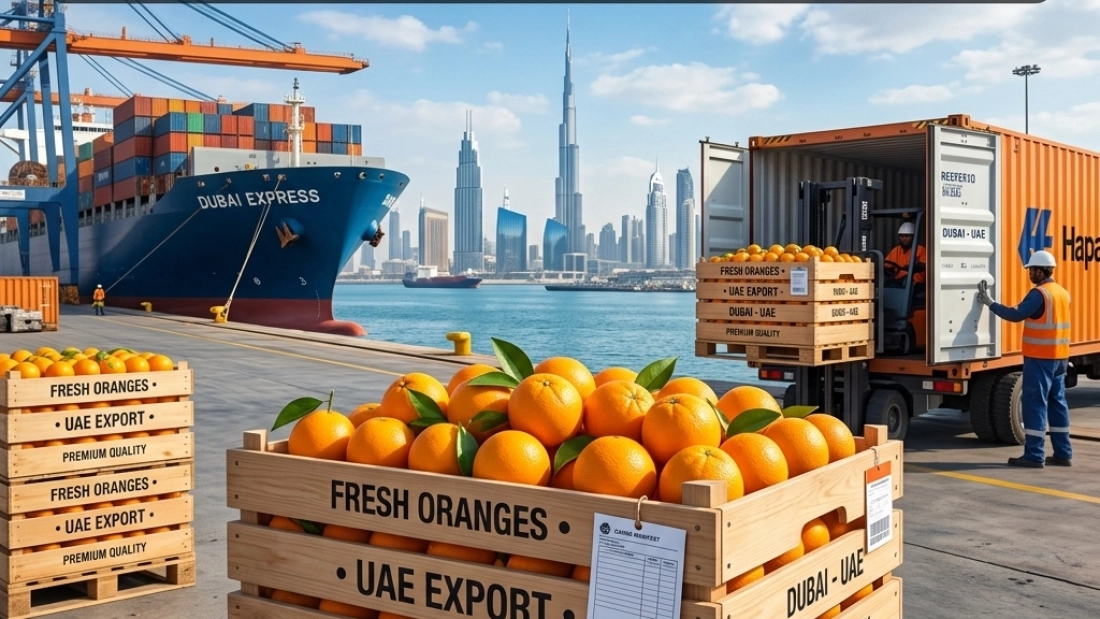
5 Steps How to Export Oranges to Dubai and Maximize Your Margins (Easy Guide for Shippers)

For international fruit exporters, the United Arab Emirates: specifically the Dubai market: represents one of the most lucrative hubs for citrus trade in the Middle East. However, entering this market is often fraught with hidden costs, fluctuating price points, and high commission rates that can quickly erode your profit margins. If you are currently looking for an orange buyer in Dubai, understanding the logistical requirements and financial structures of the Al Aweer Central Fruit and Vegetable Market is essential.

At Mayil Global, we have redefined the export-import relationship by moving away from the traditional high-commission models that penalize the shipper. By focusing on operational transparency and a industry-leading 3% commission structure, we ensure that the value generated by your harvest stays where it belongs: in your pocket.

This guide outlines the five critical steps to successfully exporting oranges to Dubai while utilizing Mayil Global’s specialized models to maximize your returns.

Step 1: Regulatory Compliance and Mandatory Documentation

The Dubai market is governed by rigorous safety and hygiene standards enforced by the Dubai Municipality and the Ministry of Climate Change and Environment (MOCCAE). Navigating these regulations is the first hurdle in ensuring your shipment is not delayed or rejected at Jebel Ali Port or Dubai International Airport.

To ensure a seamless entry into the UAE, exporters must prepare a comprehensive documentation suite. This is not merely a formality; it is a prerequisite for customs clearance and food safety verification. The core required documents include:

  1. Commercial Invoice: A detailed breakdown of the value, quantity, and specific variety of the oranges.
  2. Packing List: Specifying the weight, number of cartons, and pallet configuration.
  3. Bill of Lading: The official document issued by your shipping line.
  4. Certificate of Origin: Authenticated by the Chamber of Commerce in your home country.
  5. Phytosanitary Certificate: A critical document issued by your local agricultural authority, certifying that the oranges are free from regulated pests and diseases.

Furthermore, UAE regulations require clear labeling on every carton. Labels must be in both English and Arabic, stating the country of origin, production and expiration dates, and the specific weight. Failure to meet these labeling requirements can lead to significant fines and the re-export of your goods.

Official shipping documents and a logistics map for exporting oranges to Dubai via Jebel Ali Port.

Step 2: Quality Standards and Market Demand Analysis

Dubai is a highly sophisticated market where buyers: ranging from high-end hotels to hypermarkets: demand premium quality. To maximize your margins, you must align your harvest with the specific preferences of the UAE consumer base.

The most sought-after varieties in Dubai include Valencia and Navel oranges. These are prized for their juice content, sweetness, and skin texture. From a packaging perspective, the industry standard for Dubai is the 15kg telescopic carton. These cartons must be robust enough to withstand the rigors of maritime transit and the high-humidity environment characteristic of port operations in the UAE.

Maintaining high-quality standards is not just about the fruit itself; it is about consistency. When you partner with Mayil Global, we help you understand these market dynamics to ensure your oranges command the highest possible price upon arrival. Our sourcing and logistics expertise ensures that your product meets the expectations of the most discerning buyers in the region.

Step 3: Rigorous Cold Chain Management

The longevity and marketability of your oranges depend entirely on the integrity of the cold chain. Oranges are living organisms that continue to respire after harvest; therefore, temperature control is non-negotiable.

For orange exports to Dubai, a consistent temperature range of 3°C to 5°C is required, with humidity levels maintained between 85% and 90%. Any disruption in the cold chain: whether during trucking to the port of origin, during the voyage, or upon arrival in Dubai: will lead to weight loss, fruit rot, and a significant decrease in shelf life.

Mayil Global prioritizes cold chain stability. By ensuring rapid movement from the port to our temperature-controlled facilities in the Al Aweer market, we minimize the "thermal shock" that often occurs during the offloading process. This preservation of fruit integrity allows you to avoid the "panic selling" that often happens when fruit begins to deteriorate, thereby protecting your margins.

Fresh oranges in a temperature-controlled refrigerated container for cold chain management in Dubai.

Step 4: Maximizing Margins through the 3% Commission Strategy

One of the greatest challenges for exporters in the Dubai market is the traditional commission model. Most distributors in the Al Aweer market charge between 10% and 15% in commissions. When you add in hidden costs, "market fees," and a lack of transparency regarding the final sale price, the exporter often receives a fraction of what the market actually paid.

Mayil Global has disrupted this legacy system. We operate on a transparent 3% commission model.

By significantly reducing the commission fee, we allow exporters to retain an additional 7% to 12% of their gross sales. In a high-volume commodity business like orange exporting, this margin difference is the margin between a struggling business and a highly profitable one.

Our strategy is built on the belief that a successful exporter is a long-term partner. We provide daily sales reports and clear visibility into the market prices, ensuring that you are always aware of how your product is performing. For more information on how this model can revolutionize your export business, you can read our detailed breakdown: The 3% Commission Strategy Explained.

Step 5: Leveraging the Cash & Carry Model for Instant Liquidity

For many exporters, the biggest bottleneck is not the sale itself, but the time it takes to receive payment. Traditional market sales can involve long credit periods, which tie up your working capital and prevent you from purchasing your next shipment.

Mayil Global solves this through our Cash & Carry model. In this framework, we act as more than just a distributor; we can facilitate the direct purchase of entire containers. This provides the exporter with immediate liquidity. Instead of waiting weeks for a container to be sold piecemeal, you receive your funds faster, allowing you to reinvest in your operations and maintain a steady flow of goods.

This model is particularly beneficial for large-scale shippers of bulk products who need to maintain a high frequency of shipments to stay competitive. By combining the 3% commission model for steady distribution with the Cash & Carry model for high-volume liquidity, Mayil Global provides a comprehensive financial solution for the modern exporter.

Wholesale fruit distribution hub in Dubai showcasing high-volume orange export logistics and trade partnership.

Why Partner with Mayil Global in Dubai?

The Dubai food trade is fast-paced and requires a partner who understands the local landscape and the global supply chain. At Mayil Global, we are not just a middleman; we are a strategic extension of your export business.

Whether you are exporting oranges, tomatoes, ginger, or lemons, our goal is to provide a platform where transparency and efficiency are the standard.

Our facilities in Dubai are strategically positioned to serve B2B buyers, including restaurant groups, catering companies, and retail chains. This direct access to the market ensures that your oranges are sold at their peak value to the right buyers.

Our Commitment to Excellence:

  • Transparency: Real-time data on sales and market trends.
  • Efficiency: Streamlined customs and logistics handling to reduce "port-to-shelf" time.
  • Profitability: The lowest commission rates in the UAE market, designed to scale your business.
  • Stability: A reliable partner with deep roots in the Al Aweer Market.

Conclusion

Exporting oranges to Dubai is a complex but rewarding venture. By following these five steps: securing compliance, focusing on quality, managing the cold chain, choosing a low-commission partner, and utilizing cash-and-carry models: you can transform your export operation into a high-margin powerhouse.

Stop settling for traditional 10% commissions and opaque pricing. Secure your profits and grow your international footprint with a partner who prioritizes your bottom line.

If you are ready to take the next step in your export journey, contact us today to discuss how we can bring your oranges to the Dubai market with maximum efficiency and profitability. Explore our full range of sourcing and logistics services to see how we can support your global trade ambitions.

nUGI1N8VGHJ

5 Steps How to Export Oranges to Dubai and Maximize Your Profits (Easy Guide for Shippers)

Looking for an Orange Buyer in Dubai?

The United Arab Emirates represents one of the most lucrative markets for citrus exporters globally. With a growing population and a high demand for premium fresh produce, Dubai serves as the central hub for food distribution across the Middle East. However, for international shippers, the challenge often lies not in finding a market, but in navigating the complexities of the supply chain while protecting thin profit margins.

At Mayil Global, we understand that traditional export models often leave shippers with high risks and low returns. This guide outlines five critical steps to successfully export oranges to Dubai, focusing on operational excellence and the strategic advantages of our 3% commission and Cash & Carry models.


Step 1: Secure Regulatory Compliance and Documentation

Compliance is the foundation of any successful export operation to the UAE. The Dubai Municipality and the Ministry of Climate Change and Environment (MOCCAE) maintain rigorous standards to ensure food safety and hygiene. Failure to provide accurate documentation can lead to containers being held at the port, resulting in demurrage charges and spoilage.

To export oranges to Dubai, you must ensure the following documentation is finalized before the vessel arrives:

  1. Commercial Invoice: A detailed breakdown of the value, quantity, and description of the oranges.
  2. Packing List: Specifying the weight per carton, total carton count, and pallet configuration.
  3. Bill of Lading: Issued by your shipping line as the title of the goods.
  4. Certificate of Origin: Verified by your local chamber of commerce to confirm the source of the produce.
  5. Phytosanitary Certificate: A critical document issued by the exporting country’s agricultural department, proving the oranges are free from pests and diseases.

Furthermore, UAE labeling laws require specific information to be printed on each carton in both English and Arabic. This includes the country of origin, production and expiry dates, and the net weight. Precision in these details is non-negotiable for clearing customs efficiently at Jebel Ali Port.

Official export documentation and certificates for shipping fresh oranges to Dubai.


Step 2: Adhere to High-Quality Standards and Market Demands

Dubai is a quality-driven market. Whether you are exporting Navel oranges, Valencia oranges, or Mandarins, the aesthetic and internal quality of the fruit must meet premium standards to command top market prices. Shippers who prioritize quality control during the sorting and grading process consistently see higher returns.

Grading and Sizing

Consumer preferences in the UAE lean towards medium-to-large sized oranges with high juice content and minimal skin blemishes. Adhering to international grading standards ensures your product is suitable for both retail supermarkets and B2B wholesale buyers.

Packaging for Transit

Packaging must be robust enough to withstand maritime transit and the high humidity of the Gulf region. The industry standard is 15kg telescopic cartons. These are designed for optimal airflow and structural integrity, preventing the fruit at the bottom of the stack from being crushed during long voyages.


Step 3: Implement Rigorous Cold Chain Management

The longevity of your produce: and consequently your profit: depends entirely on cold chain integrity. Oranges are living organisms that continue to respire after harvest. Improper temperature management leads to weight loss, fruit rot, and a significant reduction in shelf life.

For orange exports to Dubai, maintain a consistent temperature range of 3°C to 5°C (37°F to 41°F) with a relative humidity of 85-90%. Even a minor fluctuation in temperature during the 15-to-30-day sea voyage can result in a "container of waste" rather than a container of profit.

At Mayil Global, we prioritize the continuity of this chain. From the moment your container arrives at the Al Aweer Central Fruit and Vegetable Market, we ensure it is handled with the urgency required to maintain its freshness. Securing a buyer who understands the technicalities of refrigerated storage is essential.

Refrigerated shipping container with orange cartons for Dubai cold chain management.


Step 4: Choose a Transparent Distribution Model (The 3% Advantage)

The most significant drain on an exporter’s profit is often the distribution commission. In the traditional Al Aweer market model, many distributors charge commissions ranging from 10% to 15%. When combined with hidden handling fees and fluctuating market prices, the exporter often bears all the risk while the distributor takes a massive cut of the revenue.

Mayil Global has disrupted this traditional model by offering a 3% commission structure. This transparent approach is designed to keep more money in the hands of the shipper.

Why the 3% Commission Model Works:

  • Maximized Margins: By reducing the commission fee, we directly increase your net profit per container.
  • Operational Transparency: We provide clear, honest reporting on daily market prices and sales volumes.
  • Incentivized Sales: Our low-commission model is built on high-volume, long-term partnerships rather than one-off high-margin gains.

For a deeper look into how this strategy benefits global shippers, you can read more about The 3% Commission Strategy Explained.


Step 5: Secure Immediate Liquidity via the Cash & Carry Model

Liquidity is the lifeblood of an export business. Many shippers struggle with the "waiting game": waiting for a container to be sold piece-by-piece before receiving payment. This delay can halt your ability to source the next shipment and disrupt your entire supply chain.

Mayil Global solves this through our Cash & Carry model. We specialize in purchasing full containers of oranges directly from exporters. This provides you with immediate liquidity, allowing you to reinvest your capital into your next shipment without waiting for market fluctuations to settle.

Benefits of the Cash & Carry Model for Exporters:

  • Speed of Payment: We focus on getting you paid faster, which is critical for maintaining operations in the fast-paced food distribution industry.
  • Risk Mitigation: Once the container is purchased under our Cash & Carry model, the market price risk shifts to us.
  • Consistency: You gain a reliable partner capable of moving large volumes of produce daily.

Learn more about how this model solves liquidity gaps for exporters.

B2B partnership handshake in an Al Aweer market orange wholesale warehouse.


Why Partner with Mayil Global in the Al Aweer Market?

Mayil Global is not just a food distribution company; we are a strategic partner for international shippers. Our operations are centered in the Al Aweer market, the heart of Dubai’s fresh produce trade. By combining professional logistics with a B2B-focused wholesale model, we ensure that your oranges reach the right buyers: from major supermarket chains to high-end catering companies.

Our commitment to safety, hygiene, and international standards ensures that your brand reputation remains intact while your profits grow. We focus on building long-term relationships based on trust and dependable supply.

Key Takeaways for Orange Exporters:

  • Documentation is Paramount: Don't risk delays; ensure your Phytosanitary and Origin certificates are perfect.
  • Quality Sells: Target the premium segment of the Dubai market with high-grade, well-packaged fruit.
  • Cold Chain is Non-Negotiable: Invest in high-quality reefers and reliable shipping lines.
  • Minimize Costs: Switch to a 3% commission model to protect your bottom line.
  • Prioritize Liquidity: Partner with a buyer that offers Cash & Carry options to keep your cash flow healthy.

Whether you are a large-scale grower or a specialized citrus exporter, Mayil Global provides the infrastructure and transparency you need to succeed in the UAE.

Premium quality fresh oranges ready for export to the Dubai food market.

Contact Mayil Global Today

Are you ready to optimize your orange exports to Dubai? Our team is standing by to facilitate your next container shipment with the efficiency and transparency your business deserves.

Visit our Products Page to see our current inventory requirements or contact us directly to discuss how our 3% commission model can transform your export margins. Let us help you navigate the Al Aweer market with confidence.

ClR-BQOVT9U

5 Steps How to Export Oranges and Maximize Your Profits (Easy Guide for UAE Exporters)

The United Arab Emirates represents one of the most lucrative markets for fresh citrus globally. As a central trade hub, Dubai serves not only its local population but also acts as a re-export gateway to the wider Middle East and North Africa. For international exporters, navigating the complexities of the Dubai market requires more than just high-quality produce; it requires a strategic partnership with a distributor that prioritizes transparency and operational efficiency.

At Mayil Global, we specialize in streamlining the supply chain for fruit and vegetable exporters. By focusing on a lean 3% commission model and a robust Cash & Carry system, we ensure that the value generated by your hard work returns to your pockets rather than being lost in layers of middleman fees.

If you are looking to scale your citrus operations, follow this comprehensive five-step guide to exporting oranges to the UAE.

Step 1: Secure Regulatory Compliance and Essential Documentation

Exporting food to Dubai is governed by strict safety and quality regulations. To ensure your shipment clears customs at Jebel Ali Port or Dubai International Airport without delay, you must adhere to the requirements set by the Dubai Municipality and the Ministry of Climate Change and Environment (MOCCAE).

Mandatory documentation includes:

  • Phytosanitary Certificate: Issued by the agricultural authority in your home country, certifying the oranges are free from pests and diseases.
  • Certificate of Origin: Authenticated by your local Chamber of Commerce.
  • Commercial Invoice & Packing List: Detailing the weight, variety, and pallet configuration.
  • Bill of Lading: Your primary transport document.

Failure to provide accurate documentation often results in costly storage fees or the rejection of the entire container. Mayil Global assists our partners by ensuring all paperwork is pre-verified before the container arrives, minimizing risk and ensuring a smooth entry into the Al Aweer market.

Official orange export documents and fresh citrus on an executive desk with shipping port background.

Step 2: Align with Market Demand and Quality Standards

Dubai is a quality-sensitive market. B2B buyers: ranging from high-end hotels to large-scale juice manufacturers: have specific requirements for different orange varieties.

  • Variety Selection: Navel oranges are the primary choice for table consumption due to their seedless nature and ease of peeling. Conversely, Valencia oranges are in high demand for the juice industry, particularly among our wholesale restaurant clients.
  • Grading and Sizing: Oranges must be uniform. Grading is typically based on diameter and skin quality. Any scarring, "green-back," or uneven coloring can significantly reduce the market price.
  • Packaging Excellence: Standard 15kg telescopic cartons are the industry norm. These must be durable enough to withstand the humidity and stacking pressures during maritime transit.

Understanding these nuances is the difference between a high-margin sale and a "distress sale." You can learn more about avoiding common export mistakes in our guide on 7 mistakes you’re making with food distribution companies in UAE.

Step 3: Implement Rigorous Cold Chain Management

Oranges are living organisms that continue to respire after harvest. In the heat of the UAE, a failure in the cold chain is catastrophic. To maximize shelf life and maintain fruit turgidity, oranges should be shipped at a consistent temperature of 3°C to 5°C with a relative humidity of 85-90%.

Key logistics considerations:

  1. Pre-cooling: Removing field heat immediately after harvest is vital.
  2. Reefer Settings: Ensuring the container’s ventilation is correctly set to prevent CO2 buildup.
  3. Port-to-Warehouse Speed: Once the container arrives, immediate transfer to temperature-controlled storage is required to prevent "thermal shock."

Mayil Global’s infrastructure is designed to maintain this integrity. We understand that every degree of temperature fluctuation represents a percentage of lost profit.

Premium quality oranges in a shipping carton during a professional quality control inspection.

Step 4: Choose a Transparent 3% Commission Distribution Model

The traditional "consignment" model in Dubai’s Al Aweer market often lacks transparency. Exporters frequently face commissions as high as 10% to 15%, alongside hidden "handling fees" that erode margins.

Mayil Global has disrupted this traditional approach. We offer a fixed 3% commission model. This structure is built on the principle of partnership:

  • Full Transparency: You receive clear, daily reporting on sales prices.
  • Lower Overhead: Our 3% fee covers the essential distribution services, allowing you to retain 97% of the market value.
  • Market Intelligence: We provide real-time feedback on price trends, helping you decide when to ship and when to hold.

For a deeper dive into how this financial model works, read our article on The 3% Commission Strategy Explained.

Step 5: Leverage the Cash & Carry Model for Immediate Liquidity

One of the biggest hurdles for international exporters is the "liquidity gap": the time between shipping a container and receiving payment. In many cases, exporters are forced to wait weeks or even months for their funds, stalling their ability to purchase more stock for the next shipment.

Mayil Global solves this through our Cash & Carry model. We specialize in bulk container purchases. When you have a high-quality container of oranges ready for the Dubai market, we facilitate rapid turnover.

Benefits of our Cash & Carry approach:

  • Daily Liquidity: Secure your capital faster to reinvest in your next harvest or shipment.
  • Reduced Risk: By selling to a dedicated buyer like Mayil Global, you avoid the volatility of a fluctuating "open market" price.
  • Operational Speed: Our facility in the Al Aweer market is optimized for rapid offloading and distribution.

Fresh orange crates stacked inside a refrigerated shipping container at a Dubai logistics hub.

Looking for an Orange Buyer in Dubai?

If you are currently searching for a reliable partner to handle your citrus exports, Mayil Global is ready to assist. We don't just act as a middleman; we act as your operational arm in the UAE. Our goal is to ensure that your oranges reach the end consumer in peak condition while ensuring you receive the highest possible return on your investment.

Beyond oranges, we apply this same high-efficiency model to a variety of produce. If your portfolio includes other items, check out our insights on exporting lemons to Dubai or our specialized strategies for securing margins on tomato exports.

Why Exporters are Switching to Mayil Global

The shift toward more transparent, commission-light distribution is a global trend. Exporters in South Africa, Egypt, and Spain are increasingly moving away from traditional commission agents in favor of the stability offered by Mayil Global.

  • Consistency: We provide a dependable outlet for your containers year-round.
  • Integrity: Our B2B reputation is built on long-term relationships and fair dealing.
  • Efficiency: From customs clearance to final sale, every step is optimized for speed.

Conclusion

Maximizing your profits in the UAE orange trade requires a combination of high-quality agricultural practices and modern financial models. By adhering to the 5 steps outlined above: regulatory compliance, quality alignment, cold chain rigor, the 3% commission model, and Cash & Carry liquidity: you position your export business for long-term success.

Are you ready to optimize your export margins? Contact Mayil Global today to discuss your next container shipment.

Explore more of our services: