

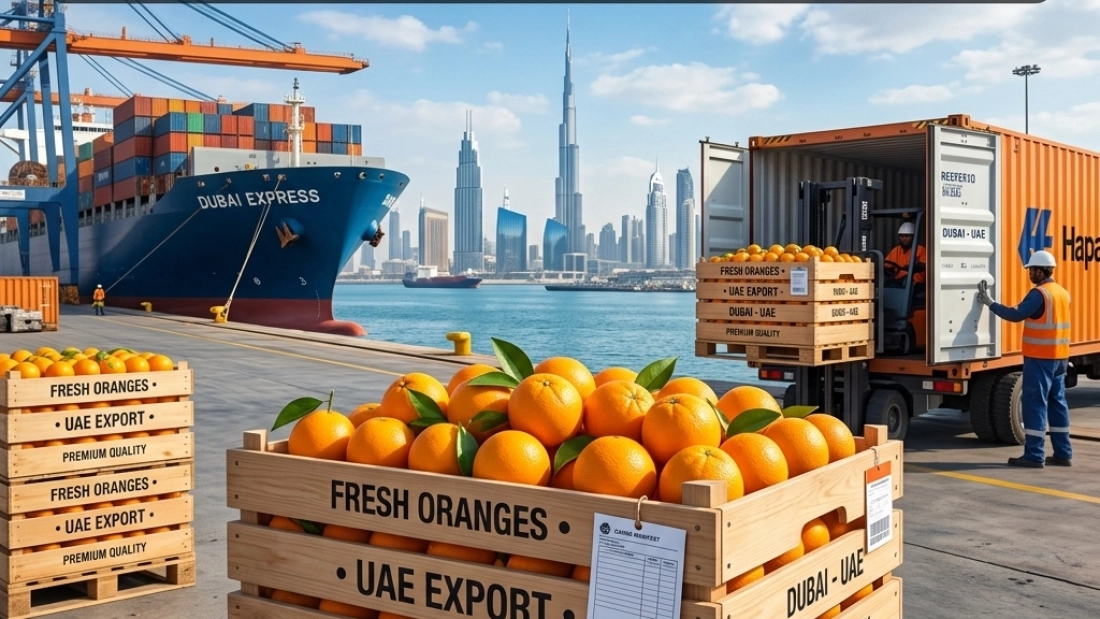
For international fruit exporters, the United Arab Emirates: specifically the Dubai market: represents one of the most lucrative hubs for citrus trade in the Middle East. However, entering this market is often fraught with hidden costs, fluctuating price points, and high commission rates that can quickly erode your profit margins. If you are currently looking for an orange buyer in Dubai, understanding the logistical requirements and financial structures of the Al Aweer Central Fruit and Vegetable Market is essential.
At Mayil Global, we have redefined the export-import relationship by moving away from the traditional high-commission models that penalize the shipper. By focusing on operational transparency and a industry-leading 3% commission structure, we ensure that the value generated by your harvest stays where it belongs: in your pocket.
This guide outlines the five critical steps to successfully exporting oranges to Dubai while utilizing Mayil Global’s specialized models to maximize your returns.
Step 1: Regulatory Compliance and Mandatory Documentation
The Dubai market is governed by rigorous safety and hygiene standards enforced by the Dubai Municipality and the Ministry of Climate Change and Environment (MOCCAE). Navigating these regulations is the first hurdle in ensuring your shipment is not delayed or rejected at Jebel Ali Port or Dubai International Airport.
To ensure a seamless entry into the UAE, exporters must prepare a comprehensive documentation suite. This is not merely a formality; it is a prerequisite for customs clearance and food safety verification. The core required documents include:
- Commercial Invoice: A detailed breakdown of the value, quantity, and specific variety of the oranges.
- Packing List: Specifying the weight, number of cartons, and pallet configuration.
- Bill of Lading: The official document issued by your shipping line.
- Certificate of Origin: Authenticated by the Chamber of Commerce in your home country.
- Phytosanitary Certificate: A critical document issued by your local agricultural authority, certifying that the oranges are free from regulated pests and diseases.
Furthermore, UAE regulations require clear labeling on every carton. Labels must be in both English and Arabic, stating the country of origin, production and expiration dates, and the specific weight. Failure to meet these labeling requirements can lead to significant fines and the re-export of your goods.

Step 2: Quality Standards and Market Demand Analysis
Dubai is a highly sophisticated market where buyers: ranging from high-end hotels to hypermarkets: demand premium quality. To maximize your margins, you must align your harvest with the specific preferences of the UAE consumer base.
The most sought-after varieties in Dubai include Valencia and Navel oranges. These are prized for their juice content, sweetness, and skin texture. From a packaging perspective, the industry standard for Dubai is the 15kg telescopic carton. These cartons must be robust enough to withstand the rigors of maritime transit and the high-humidity environment characteristic of port operations in the UAE.
Maintaining high-quality standards is not just about the fruit itself; it is about consistency. When you partner with Mayil Global, we help you understand these market dynamics to ensure your oranges command the highest possible price upon arrival. Our sourcing and logistics expertise ensures that your product meets the expectations of the most discerning buyers in the region.
Step 3: Rigorous Cold Chain Management
The longevity and marketability of your oranges depend entirely on the integrity of the cold chain. Oranges are living organisms that continue to respire after harvest; therefore, temperature control is non-negotiable.
For orange exports to Dubai, a consistent temperature range of 3°C to 5°C is required, with humidity levels maintained between 85% and 90%. Any disruption in the cold chain: whether during trucking to the port of origin, during the voyage, or upon arrival in Dubai: will lead to weight loss, fruit rot, and a significant decrease in shelf life.
Mayil Global prioritizes cold chain stability. By ensuring rapid movement from the port to our temperature-controlled facilities in the Al Aweer market, we minimize the "thermal shock" that often occurs during the offloading process. This preservation of fruit integrity allows you to avoid the "panic selling" that often happens when fruit begins to deteriorate, thereby protecting your margins.

Step 4: Maximizing Margins through the 3% Commission Strategy
One of the greatest challenges for exporters in the Dubai market is the traditional commission model. Most distributors in the Al Aweer market charge between 10% and 15% in commissions. When you add in hidden costs, "market fees," and a lack of transparency regarding the final sale price, the exporter often receives a fraction of what the market actually paid.
Mayil Global has disrupted this legacy system. We operate on a transparent 3% commission model.
By significantly reducing the commission fee, we allow exporters to retain an additional 7% to 12% of their gross sales. In a high-volume commodity business like orange exporting, this margin difference is the margin between a struggling business and a highly profitable one.
Our strategy is built on the belief that a successful exporter is a long-term partner. We provide daily sales reports and clear visibility into the market prices, ensuring that you are always aware of how your product is performing. For more information on how this model can revolutionize your export business, you can read our detailed breakdown: The 3% Commission Strategy Explained.
Step 5: Leveraging the Cash & Carry Model for Instant Liquidity
For many exporters, the biggest bottleneck is not the sale itself, but the time it takes to receive payment. Traditional market sales can involve long credit periods, which tie up your working capital and prevent you from purchasing your next shipment.
Mayil Global solves this through our Cash & Carry model. In this framework, we act as more than just a distributor; we can facilitate the direct purchase of entire containers. This provides the exporter with immediate liquidity. Instead of waiting weeks for a container to be sold piecemeal, you receive your funds faster, allowing you to reinvest in your operations and maintain a steady flow of goods.
This model is particularly beneficial for large-scale shippers of bulk products who need to maintain a high frequency of shipments to stay competitive. By combining the 3% commission model for steady distribution with the Cash & Carry model for high-volume liquidity, Mayil Global provides a comprehensive financial solution for the modern exporter.

Why Partner with Mayil Global in Dubai?
The Dubai food trade is fast-paced and requires a partner who understands the local landscape and the global supply chain. At Mayil Global, we are not just a middleman; we are a strategic extension of your export business.
Whether you are exporting oranges, tomatoes, ginger, or lemons, our goal is to provide a platform where transparency and efficiency are the standard.
Our facilities in Dubai are strategically positioned to serve B2B buyers, including restaurant groups, catering companies, and retail chains. This direct access to the market ensures that your oranges are sold at their peak value to the right buyers.
Our Commitment to Excellence:
- Transparency: Real-time data on sales and market trends.
- Efficiency: Streamlined customs and logistics handling to reduce "port-to-shelf" time.
- Profitability: The lowest commission rates in the UAE market, designed to scale your business.
- Stability: A reliable partner with deep roots in the Al Aweer Market.
Conclusion
Exporting oranges to Dubai is a complex but rewarding venture. By following these five steps: securing compliance, focusing on quality, managing the cold chain, choosing a low-commission partner, and utilizing cash-and-carry models: you can transform your export operation into a high-margin powerhouse.
Stop settling for traditional 10% commissions and opaque pricing. Secure your profits and grow your international footprint with a partner who prioritizes your bottom line.
If you are ready to take the next step in your export journey, contact us today to discuss how we can bring your oranges to the Dubai market with maximum efficiency and profitability. Explore our full range of sourcing and logistics services to see how we can support your global trade ambitions.