

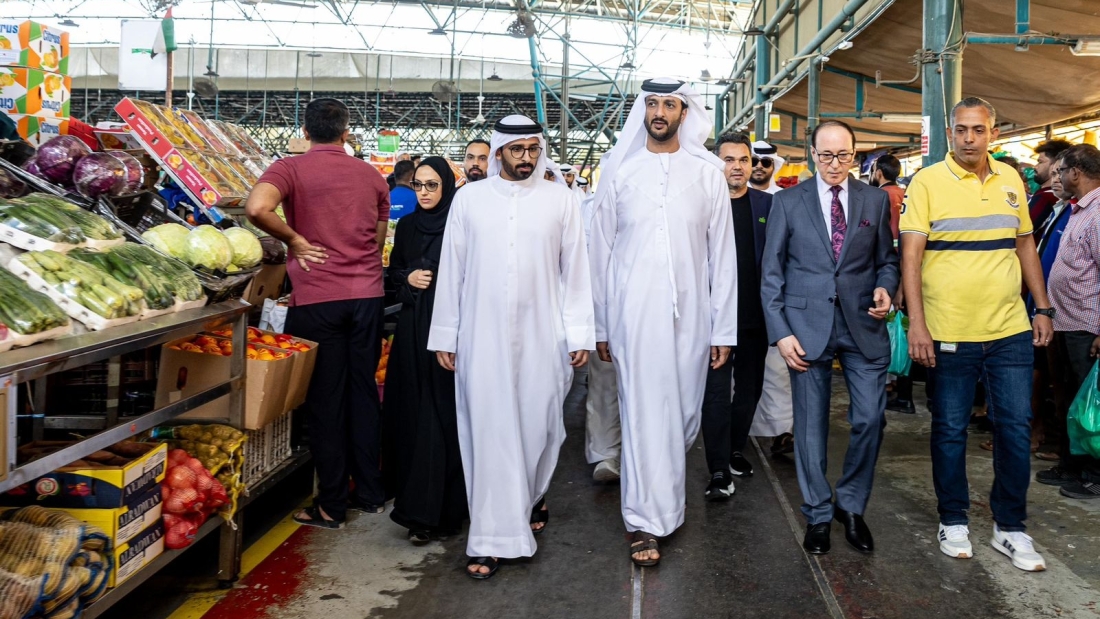
The UAE food trade continues to expand through stronger international partnerships, upgraded logistics infrastructure, and resilient wholesale distribution channels. For exporters monitoring Dubai, the latest Al Aweer market signals show stable working prices for new-crop onions, although intraday volatility remains significant across fresh produce categories.
As of August 15, 2026, the key commercial priorities are clear:
- Tracking Al Aweer prices by commodity, grade, origin, and packaging.
- Maintaining accurate UAE food-import documentation.
- Protecting product quality during summer logistics operations.
- Selecting a dependable UAE distribution partner.
- Converting container shipments into liquidity through a transparent 3% commission model or immediate Cash & Carry purchase.
Mayil Global supports international exporters and UAE-based supermarkets, restaurants, retailers, and wholesale distributors through farm-direct sourcing, quality control, hygienic handling, organized logistics, and B2B distribution.
UAE Export News: Trade Expansion Creates New Food-Supply Opportunities
The UAE continues to strengthen its role as a regional gateway for food imports, re-exports, and distribution. Comprehensive Economic Partnership Agreements, improved customs cooperation, and large-scale market infrastructure are creating opportunities for exporters that can meet commercial and regulatory requirements consistently.
UAE–Azerbaijan CEPA Enters into Force
The UAE–Azerbaijan Comprehensive Economic Partnership Agreement entered into force on April 15, 2026, following its signing in July 2025. According to the UAE Ministry of Economy and Tourism, the agreement provides tariff elimination or reduction on more than 95% of qualifying goods made in Azerbaijan or the UAE, including goods from free zones.
The agreement also addresses:
- Rules of origin.
- Customs cooperation.
- Sanitary and phytosanitary measures.
- Non-tariff barriers.
- Logistics and services.
- Digital trade and investment.
For food exporters, CEPA benefits must be evaluated against the correct HS code, country-of-origin requirements, product specifications, and applicable UAE import controls. Preferential access does not remove the need for phytosanitary certification, accurate labeling, food registration, or customs compliance.
Wider CEPA Expansion
The UAE–India CEPA, which entered into force in 2022, remains relevant to fresh produce, rice, spices, and other food supply chains between India and the UAE. It supports tariff reductions, improved market access, and clearer trade procedures.
The UAE and Canada also concluded CEPA negotiations in July 2026, with the agreement subject to the required ratification and implementation processes. Agri-food and seafood are among the sectors expected to benefit once the agreement becomes operational.
For exporters, the commercial implication is direct: the UAE is expanding its international sourcing network, but reliable market access depends on compliant documentation, verified buyers, consistent product quality, and efficient distribution.
Al Aweer Market Update: Onion Prices Remain Within a Narrow Working Band
The latest available market reference places new-crop Indian onions in standard 18 kg packaging at approximately AED 1.90–1.95 per kilogram.
At this level, one 18 kg bag represents an indicative wholesale value of approximately:
- AED 34.20 at AED 1.90/kg
- AED 35.10 at AED 1.95/kg
The Al Aweer onion price reference records a much wider historical range, from approximately AED 1.85/kg to AED 4.90/kg across a 42-trading-day period. This confirms that the current price band should be treated as a planning benchmark rather than a guaranteed forward price.

Intraday Volatility Remains a Commercial Risk
Stable onion pricing does not mean that all fresh produce prices are stable. The Al Aweer market report for August 14, 2026 recorded substantial daily movements in several products:
- Eggplant increased by 56.2%.
- Greenhouse tomato decreased by 22.3%.
- Celery decreased by 20.1%.
- Lettuce increased by 29.4%.
These movements reflect the effect of arrival volumes, product quality, buyer demand, auction timing, and short-term inventory requirements. Supermarkets and restaurants may also place urgent replenishment orders, creating price changes within the same trading day.
Exporters should therefore confirm the following before finalizing a shipment:
- Product grade and size.
- Crop and country of origin.
- Packaging format and net weight.
- Expected arrival date.
- Quality tolerances.
- Freight and handling costs.
- Distribution or container-purchase terms.
How to Export Food to Dubai: Compliance and Documentation Priorities
Understanding how to export food to Dubai requires more than arranging a vessel and securing a product. Exporters must coordinate origin-country requirements with UAE customs, food-control, labeling, and import procedures.
Confirm the UAE Buyer and Import Route
Before loading, exporters should identify the UAE importer, distributor, or wholesale buyer responsible for clearance and market placement. The buyer must confirm the product route, required registrations, inspection requirements, and final delivery location.
Mayil Global serves as a verified buyer for exporters UAE seeking a practical route into Dubai’s B2B food market. Its network supports wholesale distribution to supermarkets, restaurants, retailers, and other commercial buyers.
Prepare the Shipment File
Depending on the product and origin, the shipment file may include:
- Commercial invoice.
- Detailed packing list.
- Certificate of origin.
- Phytosanitary certificate.
- Health or fitness certificate where applicable.
- Fumigation certificate where required.
- Correct HS code.
- Container and seal details.
- Net and gross weights.
- Product specifications.
- Arabic and English label information.
Exporters should verify the final requirements with their UAE importer, customs broker, freight forwarder, and relevant authorities before dispatch.
Complete Advance Manifest Information
Maritime shipments require accurate advance cargo information and timely Shipping Instructions. Exporters should plan to submit complete manifest details at least 72 hours before the applicable vessel departure deadline.
Required information commonly includes:
- Shipper and consignee details.
- Notify party and forwarding agent.
- Ports of loading and discharge.
- Container and seal numbers.
- Cargo description.
- HS code.
- Package count.
- Net and gross weight.
- Container type.
- Transshipment details where applicable.
Descriptions must be specific. “Fresh onions, new crop, packed in 18 kg ventilated bags” provides stronger documentation clarity than “food products.”
Packaging and Food-Safety Requirements
Packaging is a commercial and regulatory control point. Onions and other fresh produce must arrive in a condition suitable for inspection, storage, and wholesale distribution.
Onion Packaging Controls
Exporters should use suitable breathable packaging, including mesh bags, ventilated sacks, or approved perforated formats. Product must be dry and mature before loading. Wet onions, condensation, and poor airflow increase the risk of rot, skin damage, and quality deductions.
The loading process should include:
- Pre-loading quality inspection.
- Removal of damaged, sprouted, or diseased bulbs.
- Verification of bag weight and count.
- Confirmation of origin and grade.
- Stable stacking with adequate airflow.
- Moisture and ventilation checks.
- Clear lot identification and traceability.
Arabic and English product information may be required depending on the product, packaging format, and route to market. Exporters should also confirm whether ZAD registration, nutrition-labeling requirements, or other food-registration procedures apply to packaged or repacked products.
Safety, hygiene, and international standards remain non-negotiable. Compliance protects the exporter from avoidable delays and protects the UAE buyer from inconsistent supply.
Dubai Food District Will Strengthen Distribution Capacity
In January 2026, DP World officially unveiled the Dubai Food District, an expansion and rebranding of the Al Aweer Central Fruit and Vegetable Market.
The first phase is scheduled to begin in 2027. The planned 29-million-square-foot food hub will bring together:
- Cold storage.
- Temperature-controlled warehousing.
- Primary and secondary processing.
- Digital back-office services.
- Cash-and-carry facilities.
- Wholesale and distribution operations.
The development is designed to expand trade capacity, improve speed to market, reduce supply chain risks, and connect international producers with regional buyers. It reinforces Al Aweer’s role as a central gateway for wholesale fruits and vegetables Dubai.

Mayil Global: A Verified Buyer and 3% Commission Distributor
International exporters need more than a market listing. They require a local partner that understands buyer demand, quality control, logistics, documentation, and settlement structures.
Mayil Global offers two commercial pathways.
3 Percent Commission Distributor UAE Model
The 3 percent commission distributor UAE model enables exporters to access UAE wholesale channels while using Mayil Global’s local distribution network.
The model provides:
- A transparent 3% distribution commission.
- Access to UAE B2B buyers.
- Coordination with supermarkets, restaurants, retailers, and wholesalers.
- Product inspection and quality-control support.
- Organized logistics and market placement.
- Reduced dependence on multiple intermediaries.
- Clearer inventory and sales reporting.
This structure is suitable for exporters that want market access while retaining greater control over shipment economics.
Immediate Cash & Carry Container Purchases
Some exporters require immediate settlement instead of a consignment arrangement. Mayil Global can also evaluate Cash & Carry container purchases for suitable products, volumes, specifications, and arrival schedules.
This option can help exporters:
- Recover working capital faster.
- Reduce credit exposure.
- Avoid extended collection periods.
- Simplify UAE market entry.
- Move containers directly into wholesale channels.
- Plan the next shipment with greater liquidity.
The 3% commission model and Cash & Carry model address different commercial requirements. Both are designed to improve supply chain predictability and provide exporters with a dependable UAE buyer pathway.

August 15 Exporter Action Plan
Exporters planning fresh produce or food shipments to Dubai should complete the following steps:
-
Confirm the product specification
Define grade, size, origin, crop, packaging, moisture condition, and expected arrival date. -
Use the onion benchmark carefully
Treat AED 1.90–1.95/kg as a current working reference for new-crop onions in 18 kg packaging, subject to daily negotiation and quality adjustments. -
Monitor intraday movement
Review the latest Al Aweer price reports before committing to a shipment or container sale. -
Select the commercial structure
Choose Mayil Global’s 3% commission distribution model or request an immediate Cash & Carry container purchase. -
Complete documents early
Confirm HS codes, weights, consignee details, certificates, labels, container data, and manifest information before vessel cut-off. -
Protect product quality
Load dry produce in suitable ventilated packaging and control exposure to heat, humidity, and condensation. -
Plan final delivery
Coordinate customs clearance, inspection, transport, storage, wholesale placement, and buyer collection before the container arrives.
For additional guidance, review Mayil Global’s sourcing and logistics services, food export guide, and onion export distribution model.
Conclusion: Converting Trade Expansion into Reliable Supply
The August 15 Al Aweer update presents a workable planning environment for onion exporters, with new-crop Indian onions referenced around AED 1.90–1.95/kg in standard 18 kg packaging. However, intraday price changes, quality variation, documentation requirements, and summer logistics risks continue to influence final margins.
Successful importing onions Dubai operations depend on accurate specifications, compliant documentation, proper packaging, reliable handling, and fast market placement.
Mayil Global combines these capabilities with a transparent 3% commission model, immediate Cash & Carry container purchases, and B2B wholesale distribution across the UAE. For exporters seeking a verified buyer for exporters UAE, the operating objective is direct: source consistently, comply accurately, protect product quality, and convert every container into dependable wholesale value.
Contact Mayil Global to discuss fresh produce shipments, onion containers, premium food products, and UAE distribution requirements.