

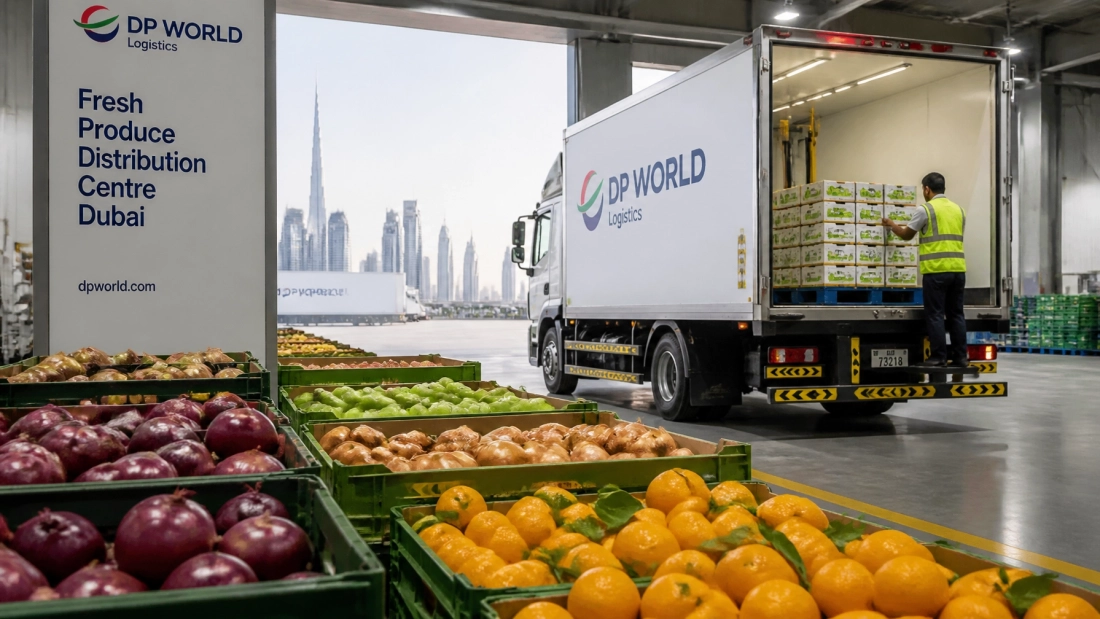
For global exporters, the United Arab Emirates (UAE) represents one of the most lucrative and high-demand markets for food products. As a major re-export hub with a heavy reliance on food imports, the region offers vast opportunities for those who can navigate its complex trade landscape. However, the primary challenge for international suppliers is not just entering the market, but identifying and securing verified buyers who offer financial stability, operational transparency, and consistent demand.
This guide provides a strategic framework for exporters looking to establish a foothold in the UAE. We will explore the mechanics of the wholesale fruits and vegetables Dubai market, the advantages of specialized distribution models, and how to safeguard your international trade operations through verified partnerships.
1. Understanding the UAE Food Import Landscape
The UAE's food security strategy and its position as a global logistics nexus make it a critical destination for fresh produce, grains, and spices. The market is characterized by high standards for quality, rigorous safety inspections, and a fast-paced trading environment centered around hubs like the Al Aweer Central Fruit and Vegetable Market.
When evaluating the market, exporters must distinguish between different types of buyers:
- Wholesale Traders: High-volume purchasers who supply local retailers, supermarkets, and catering companies.
- Commission Agents: Brokers who sell goods on behalf of exporters in exchange for a fee.
- Institutional Buyers: Large-scale entities such as hotel chains, government departments, and hospital groups.
To succeed, exporters must move beyond generic lists of "importers" and focus on entities that possess the infrastructure and financial backing to manage large-scale consignments.
2. Identification vs. Verification: Securing Your Supply Chain
Finding a contact in Dubai is relatively simple; verifying that contact is a legitimate, creditworthy buyer is where the strategic challenge lies. Reliance on unverified directories often leads to payment delays, disputes over quality, or "phantom" buyers who lack the capacity to clear goods at the port.
Using Trade Data for Verification
The most reliable way to identify verified buyers is to analyze actual shipment history. Using customs data and trade intelligence tools allows exporters to see which companies are actively importing onions Dubai or sourcing bulk rice and spices. A company with a consistent record of clearing containers and maintaining a steady flow of goods is far more reliable than one that only exists on a B2B listing site.
The Role of Physical Infrastructure
A verified buyer in the UAE should ideally have a physical presence in key markets. For those dealing in perishables, this means cold storage facilities and a distribution network that can reach the end consumer within hours of arrival. Companies like Mayil Global maintain rigorous quality control and organized logistics, ensuring that the integrity of the produce is maintained from the farm to the market.

3. The 3% Commission Distribution Model: A Competitive Advantage
Traditional commission models in the UAE often involve high fees and hidden costs that erode the exporter’s margins. One of the most effective strategies for exporters today is partnering with a distributor that offers a transparent, fixed-rate commission.
At Mayil Global, we have pioneered a 3% commission-based distribution model. This structure is designed specifically to attract international exporters who require a reliable local partner to manage their inventory without sacrificing their profits.
Why the 3% Model Works:
- Margin Protection: By capping the commission at 3%, exporters can better predict their returns and offer more competitive pricing to the market.
- Operational Excellence: The distributor takes on the responsibility of storage, handling, and local sales, allowing the exporter to focus on production.
- Market Intelligence: Working with an established distributor provides real-time insights into Al Aweer market pricing, helping exporters time their shipments for maximum profitability.
Learn more about how the 3% commission strategy provides daily liquidity for exporters in the Al Aweer market.
4. Maximizing Liquidity with Cash & Carry Wholesale
One of the biggest pain points for exporters is the "credit gap": the time between shipping goods and receiving payment. In the fast-moving world of wholesale fruits and vegetables Dubai, liquidity is king.
The Cash & Carry model addresses this by offering immediate payment for container-load purchases. This is particularly beneficial for exporters of stable commodities like onions, potatoes, and rice. Instead of waiting for goods to be sold piece-meal in the market, exporters can sell the entire container directly to a wholesale buyer who has the capital to pay upfront.
For many exporters, this model is a game-changer. It eliminates the risk of non-payment and allows for the immediate reinvestment of capital into the next shipment. If you are exporting onions to Dubai, leveraging a combination of the 3% commission and Cash & Carry models can significantly maximize your annual turnover.

5. Strategic Logistics and the Al Aweer Market
Successful export operations are built on a foundation of efficient logistics. When importing onions Dubai or other fresh produce, timing and temperature control are non-negotiable.
Navigating Al Aweer Pricing
The Al Aweer market is the heartbeat of Dubai’s food trade. Prices fluctuate daily based on supply and demand, seasonal trends, and the arrival of global shipments. Verified buyers with a presence in Al Aweer can provide the necessary "feet on the ground" to negotiate the best possible wholesale rates.
Logistics Essentials:
- Cold Chain Integrity: Ensuring that refrigerated containers (reefers) are maintained at the correct temperature from the origin port to the Dubai warehouse.
- Documentation Accuracy: Errors in the Bill of Lading, Phytosanitary Certificate, or Certificate of Origin can lead to costly delays at Jebel Ali Port.
- Last-Mile Distribution: Efficiently moving goods from the port to the wholesale market to minimize spoilage and maximize shelf life.
By utilizing Cash & Carry food wholesale, exporters can often bypass the complexities of local retail distribution and sell directly to high-volume buyers.
6. How to Export Food to Dubai: A Compliance Checklist
For those wondering how to export food to Dubai, compliance with UAE standards is the first hurdle. The Dubai Municipality (DM) and the Ministry of Climate Change and Environment (MOCCAE) enforce strict regulations to ensure food safety.
Step-by-Step Export Framework:
- Company Registration: Ensure your company is registered with the necessary trade bodies in your home country.
- Product Registration: Food items must be registered on the "Zad" or Dubai Municipality portal to ensure they meet labeling and additive requirements.
- Quality Inspection: Implement a strict quality control process. Verified buyers like Mayil Global perform inspections at every stage: from farm-direct sourcing to final packaging.
- Logistics Partnership: Align with a logistics provider experienced in handling UAE customs clearance and food safety inspections.
Maintaining high standards is not just a regulatory requirement; it is a prerequisite for building trust with verified buyers. Consistent quality leads to long-term supply contracts and stable pricing.

7. Conclusion: Building Long-Term Strategic Partnerships
Finding verified buyers in the UAE requires a move away from speculative trading toward strategic partnership. For the global exporter, the path to success involves choosing partners who provide transparent pricing, immediate liquidity, and robust operational support.
Whether you are looking to utilize the 3% commission model for maximum market reach or the Cash & Carry model for immediate cash flow, the key is to work with an established entity that understands the nuances of the Dubai market.
At Mayil Global, we are committed to being that partner. Our global supply network and farm-direct sourcing model ensure that we connect the best producers with the most reliable buyers in the UAE. By focusing on B2B supply to supermarkets, restaurants, and retailers, we provide a stable and scalable platform for your export business.