

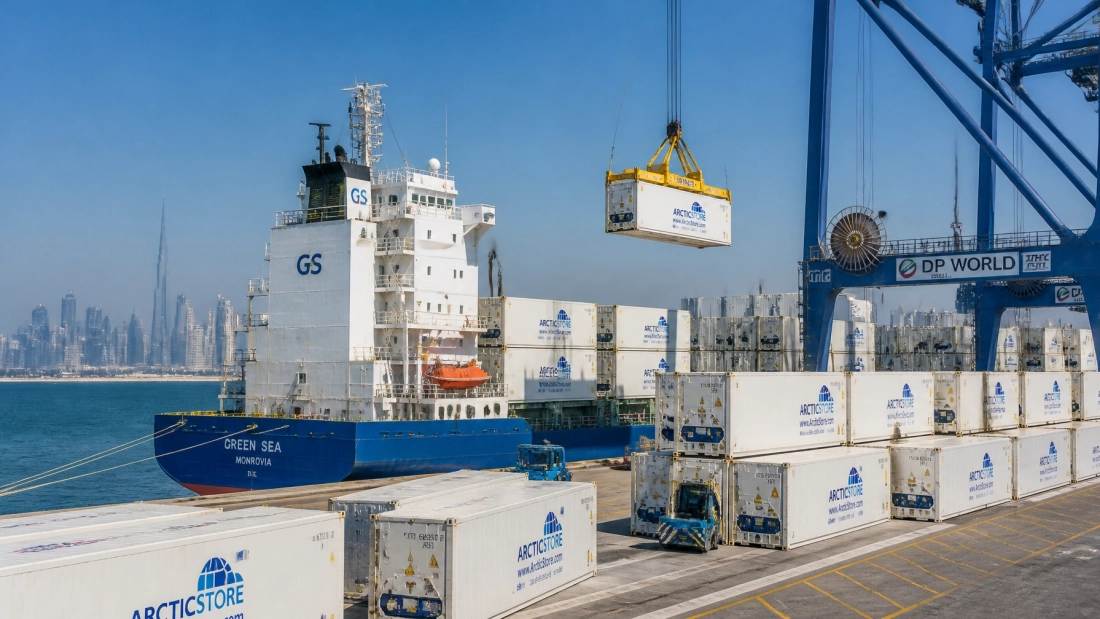
Dubai serves as the premier commercial gateway for the Middle East, offering a highly developed infrastructure for food distribution and a robust demand for high-quality fresh produce. For global exporters, understanding how to export food to Dubai is not merely about logistics; it is about navigating a sophisticated regulatory environment and identifying the right distribution partners to ensure long-term profitability.
As the UAE imports approximately 80-90% of its food requirements, the opportunity for international suppliers is immense. However, success in this market requires adherence to strict quality controls, efficient cold chain management, and a strategic approach to local market pricing. This guide provides a comprehensive overview of the operational requirements and the competitive advantages offered by Mayil Global’s specialized distribution models.
Understanding the Dubai Food Import Landscape
The UAE food market is characterized by high turnover and a demand for diverse, premium-grade products. Dubai, specifically through the Jebel Ali Port and the Al Aweer Fruits and Vegetable Market, acts as a re-export hub for the entire GCC region. To successfully penetrate this market, exporters must align their operations with the rigorous standards set by local authorities.
Establishing a presence in the wholesale fruits and vegetables Dubai sector requires a deep understanding of daily price discovery. Prices at the Al Aweer market are determined by real-time supply and demand, meaning that consistent quality and timely arrival are the primary drivers of an exporter’s realized margins.
Navigating Regulatory Compliance: DM and MOCCAE
Regulatory compliance is a non-negotiable pillar of the export process. Two primary bodies govern food imports in Dubai:
- Dubai Municipality (DM): Responsible for food safety, product registration, and labeling. All packaged food items must be registered via the Food Import and Re-export System (FIRS).
- Ministry of Climate Change and Environment (MOCCAE): Oversees agricultural quarantine and phytosanitary controls. Every shipment of fresh produce must be accompanied by a Phytosanitary Certificate from the country of origin.
Ensuring that labels include mandatory Arabic text, country of origin, production/expiry dates, and net weight is critical. Failure to meet these requirements often leads to costly delays at the port of entry or total rejection of the consignment.
Logistics and Cold Chain Management: Ensuring Freshness
Maintaining the integrity of the cold chain is paramount when shipping perishables. Most bulk produce, such as onions, potatoes, and citrus fruits, arrive via sea freight in refrigerated containers (reefers).
- Temperature Control: For most vegetables, maintaining a steady temperature between 2°C and 4°C is essential.
- Ventilation: Utilizing export-grade, ventilated cartons prevents the buildup of ethylene and heat, ensuring the produce remains firm and marketable upon arrival.
- Tracking: Utilizing modern logistics providers who offer real-time temperature tracking minimizes the risk of quality degradation.
Mayil Global emphasizes sourcing and logistics excellence to ensure that every container transitioning from the port to the market maintains its premium status.

The Al Aweer Market: Dubai’s Wholesale Hub
The Al Aweer Fruits and Vegetable Market is the epicenter of fresh produce trade in the UAE. Operating on a 24-hour cycle, it is where bulk quantities are broken down for distribution to supermarkets, restaurants, and secondary wholesalers.
Exporters typically work through commission agents who manage the sale of the goods. Traditional models in Al Aweer often involve commissions ranging from 5% to 10%, which can significantly erode the exporter's profit. Furthermore, many traditional agents operate on long credit cycles, creating liquidity gaps for the supplier.
Strategizing for Profit: The 3% Commission and Cash & Carry Models
To empower global exporters, Mayil Global has introduced a disruptive 3% commission model. By reducing the standard commission fee, we ensure that a higher percentage of the gross sales value returns to the exporter. This transparency in pricing and cost-efficiency is designed to foster long-term partnerships with high-volume shippers.

Beyond the commission advantage, our Cash & Carry wholesale model addresses the primary pain point of international trade: liquidity. Instead of waiting for retail collections, Mayil Global facilitates immediate transactions, allowing exporters to reinvest their capital into the next shipment immediately. This is particularly effective for high-turnover commodities like bulk rice.
Case Study: Importing Onions to Dubai
Importing onions dubai is a high-volume business with consistent year-round demand. However, the market is highly sensitive to origin: with India, Pakistan, and Egypt being major players: and quality grading.
- Market Dynamics: Price discovery for onions happens daily at Al Aweer. High supply from one region can depress prices, making it vital for exporters to have an agent who provides real-time market intelligence.
- Operational Excellence: Red onions must be well-cured and packed in mesh bags or ventilated cartons to survive the transit.
- The Mayil Advantage: Our 3% commission model is especially beneficial for onion exporters where margins can be tight. By choosing a partner that prioritizes high-volume turnover and fast payment, exporters can manage the volatility of the onion market more effectively.
Step-by-Step Export Checklist for Global Shippers
For those seeking to understand the granular details of how to export food to Dubai, following a standardized checklist is essential:
Documentation Requirements
- Bill of Lading: Issued by the shipping line.
- Commercial Invoice: Detailing the value and description of the goods.
- Packing List: Specifying the number of cartons/bags and net/gross weight.
- Certificate of Origin: Authenticated by the chamber of commerce in the exporting country.
- Phytosanitary Certificate: Mandatory for all fresh produce.
Quality Control Standards
- Grading: Ensure produce is uniform in size and color.
- Hygiene: Goods must be free from soil, pests, and chemical residues.
- Packaging: Use pallets for easy handling and to prevent crushing during transit.

Conclusion: Your Gateway to the UAE Market
Exporting food to Dubai offers a lucrative path for global suppliers who prioritize quality and operational efficiency. By aligning with a partner like Mayil Global, exporters gain access to a streamlined supply chain, a transparent 3% commission structure, and the liquidity provided by a Cash & Carry wholesale model.
Whether you are specialized in wholesale fruits and vegetables Dubai or are looking to start importing onions to Dubai, the key to success lies in professional execution and reliable market partnerships. Mayil Global remains committed to ensuring that our global suppliers achieve maximum value through rigorous standards and innovative distribution strategies.