


Daily B2B market briefing | Thursday, August 27, 2026 | UAE
Executive Summary
The latest UAE export news points to a stronger focus on food security, diversified sourcing and regional logistics resilience. A UAE company has started implementing a five-year, US$500 million wheat supply agreement with Egypt, supported by the Abu Dhabi Exports Office. Oman’s non-oil exports to the UAE have nearly doubled in the first half of 2026 as land-based supply chains expand.
At the product level, new export channels are developing from India and Ladakh. Commercial apricots from Ladakh, dragon fruit from Pune and Onam produce from Kochi are entering UAE markets through structured air-cargo and retail partnerships.
Meanwhile, Al Aweer market updates remain defined by the UAE suspension of trade and financial transactions with Iran. Iranian-origin products, including brown onions, have been removed from normal planning, requiring importers to pivot to India, Egypt, Jordan, Oman and local UAE production.
For exporters, the immediate priorities are clear: documented traceability, regulatory compliance, quality control, cold-chain management and a verified UAE buyer.
UAE Export News: Strategic Food Supply and New Trade Corridors
UAE–Egypt Wheat Agreement Moves into Implementation
UAE-based Al Dahra has begun implementing a five-year wheat supply agreement with Egypt’s General Authority for Supply Commodities. The arrangement is supported by a US$500 million financing programme from the Abu Dhabi Exports Office.
The agreement provides approximately US$100 million annually for wheat purchases and reinforces the UAE–Egypt strategic partnership on food security. It also reflects the wider trade approach promoted by UAE Minister of State for Foreign Trade Dr Thani bin Ahmed Al Zeyoudi, with strategic partnerships being used to improve supply reliability and commercial integration.
For food exporters and distributors, the development demonstrates the importance of:
- Long-term supply agreements.
- Export financing and structured settlement.
- Strategic grain sourcing.
- Reliable storage and logistics capacity.
- Documented origin and quality specifications.
Oman Strengthens Land-Based Supply to the UAE
Oman’s non-oil exports to the UAE reached approximately OMR 1.1 billion during the first half of 2026, an increase of about 93% year on year, according to trade reporting from AGBI.
The increase is linked to the development of food depots and land-based supply chains that reduce dependence on vulnerable maritime routes. Oman is becoming a more important regional logistics and redistribution point as businesses seek alternative corridors through the Gulf.
This creates additional opportunities for exporters supplying the UAE through multimodal logistics. However, land transport does not remove the need for temperature control, customs documentation, phytosanitary certification and accurate landed-cost calculations.
Fresh Produce Export Channels Expand
Several recent shipments demonstrate that UAE demand is supporting new product-specific export programmes:
- Ladakh apricots: A first commercial shipment of approximately 5 metric tonnes of Ladakh apricots reached the UAE under a partnership with Lulu Group. The wider programme targets more than 1,000 tonnes during the 2026 season. Details are available from the Ladakh Administration.
- Pune dragon fruit: A first international dragon-fruit shipment from Pune reached Abu Dhabi by air cargo. The consignment included approximately 1,653 kg across 500 packages, creating a pathway for regular shipments from the region.
- Kochi Onam produce: A chartered flight transported approximately 95,000 kg of fruits, vegetables and other Onam ingredients from Kochi to Abu Dhabi, including banana leaves for the UAE’s Malayali community. The Kochi–Abu Dhabi cargo report highlights the value of planned seasonal logistics.
These shipments show that the UAE market can support both high-volume staples and specialised products. Success depends on matching the exact product, grade, packaging and arrival schedule with a verified buyer.
Al Aweer Market Updates: Supply Pivot After Iran Suspension
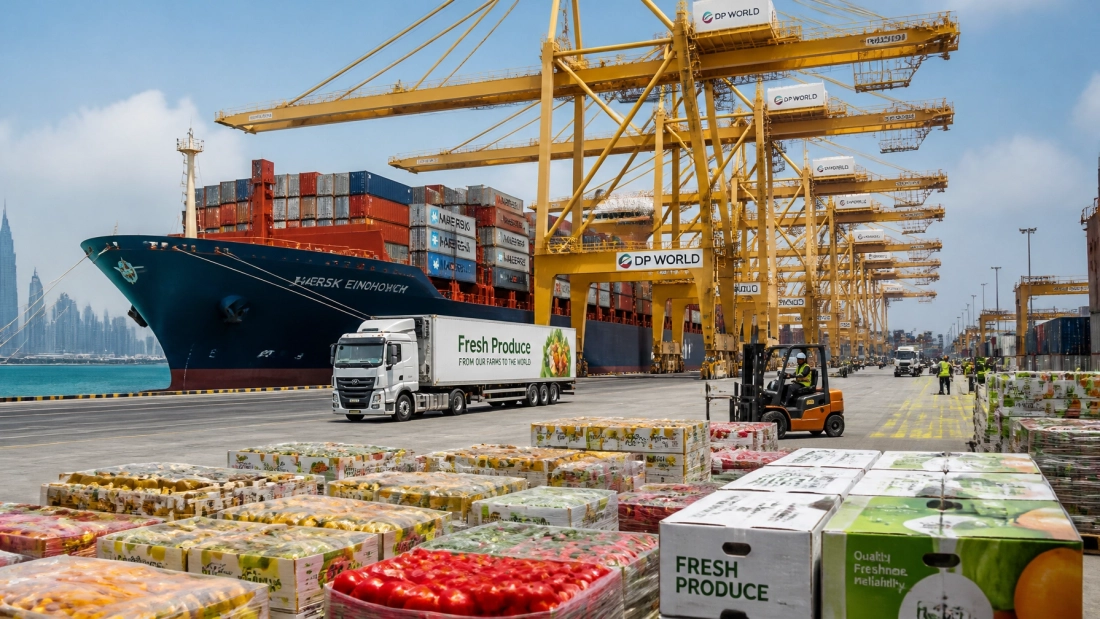
The UAE suspension of trade, commercial exchange and financial transactions with Iran, effective around August 18–19, continues to affect produce planning. Iranian-origin brown onions and other products traditionally entering Dubai are no longer reliable supply options.
Importers are now reviewing:
- India for onions, okra, tomatoes and other vegetables.
- Egypt for onions and selected fruit and vegetable categories.
- Jordan and Oman for regional supply.
- Local UAE farms for selected seasonal products.
- Alternative global suppliers with confirmed compliance.
The suspension also increases the need to verify the true origin of each shipment. Routing Iranian-origin produce through a third country does not eliminate origin, documentation or regulatory obligations. Buyers should not rely on indirect routing or informal payment arrangements.
Indicative Late-August Wholesale Benchmarks
The following figures are planning references for late August. They are not fixed quotations. Actual wholesale prices at Al Aweer fluctuate according to origin, grade, pack size, arrival condition, daily demand, transport costs and available volume. Exporters and buyers should verify prices through a current Al Aweer price reference before confirming a transaction.
| Product | Indicative benchmark |
|---|---|
| Indian new-crop onions | Approximately AED 2.00/kg |
| Tomatoes | Approximately AED 3.14/kg |
| Cucumbers | Approximately AED 1.75/kg |
| G9 Cavendish bananas | Approximately AED 3.85/kg |
| Chinese garlic | Approximately AED 16 per 2.8 kg carton |
| Indian okra | Approximately AED 32 per 4 kg carton |
These benchmarks should be assessed against complete landed cost. A lower origin price may be offset by higher freight, port handling, clearance, storage, wastage or quality claims.
Supply Chain Priorities for Exporters
Diversifying Origin
Supply diversification is now an operational requirement rather than an optional strategy. Exporters should maintain more than one approved origin for high-turnover products and should communicate crop timing, loading capacity and alternative specifications in advance.
For onions and vegetables, buyers should compare India, Egypt, Jordan, Oman and local UAE supply based on:
- Product grade and size.
- Crop and harvest timing.
- Shelf life.
- Packaging and ventilation.
- Transit time.
- Freight exposure.
- Regulatory eligibility.
- Expected wastage.
Maintaining Traceability
Every shipment should have a traceable record from farm or supplier to UAE delivery. The documentation should identify the exporter, country of origin, product specification, lot or batch reference, packing date, loading date and container details.
Traceability supports faster inspection, clearer claims management and stronger confidence among supermarkets, restaurants, retailers and wholesale distributors.
Protecting the Cold Chain
Fresh produce requires proper storage and handling from farm to market. Exporters must confirm pre-cooling, container settings, ventilation, loading practices and expected transit conditions.
Vessel scheduling delays, route changes and peak-season surcharges can increase exposure for perishable products. The commercial plan should include contingency time, alternative routing and a realistic assessment of remaining shelf life on arrival.

How to Export Food to Dubai: Compliance Checklist
Businesses researching how to export food to Dubai should complete the following steps before dispatch:
-
Confirm product eligibility
Identify the product category, origin, HS classification, grade, packaging and intended UAE use. -
Complete product registration
Food products may require registration through the UAE’s national ZAD system and Dubai Municipality’s food import platform. Labels and product information should be approved before shipment. -
Prepare the document pack
Standard documents include the commercial invoice, packing list, certificate of origin and bill of lading or airway bill. -
Obtain certificates
Fresh produce and other plant-origin products generally require a phytosanitary certificate. Food consignments require a health certificate from the competent authority. Additional certificates may apply to eggs, meat, dairy and other animal-origin products. -
Coordinate customs and inspection
The UAE importer must have the correct commercial licence, import permissions and clearance arrangements. Physical or laboratory inspection may apply. -
Confirm cold-chain logistics
Establish temperature requirements, storage location, delivery timing and responsibility for any delay or quality claim.
Exporters should review current requirements through MOCCAE phytosanitary services, Dubai Customs and the relevant UAE food-registration systems.
Mayil Global: A Verified Buyer for UAE Exporters
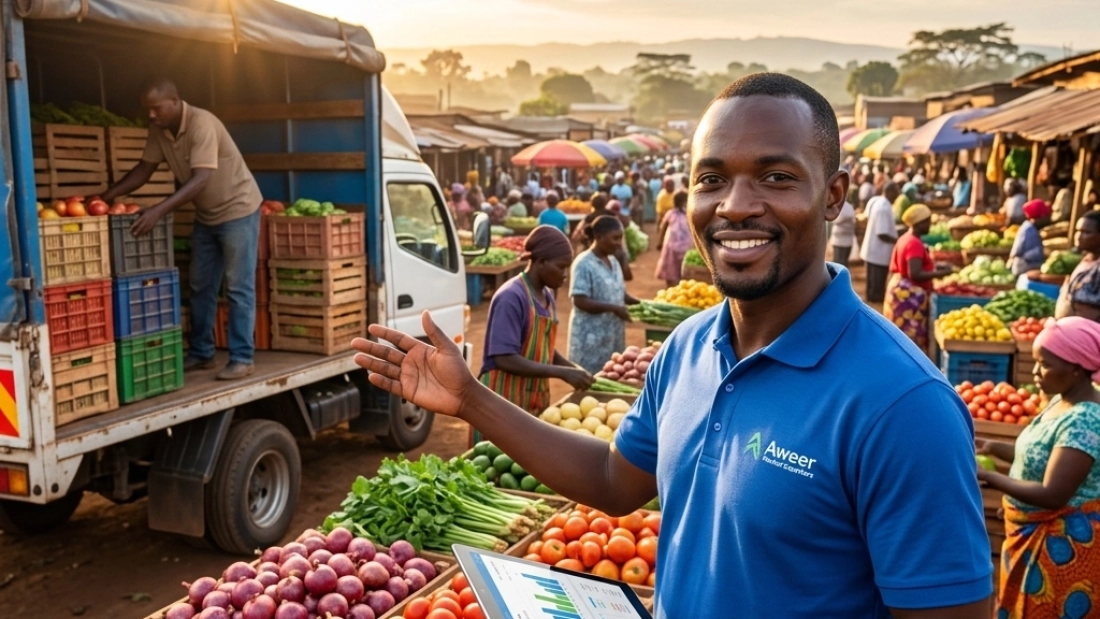
Mayil Global supports international and local exporters entering the UAE wholesale market. The company operates as a verified buyer for exporters UAE businesses can approach for product-specific supply discussions.
The operating model combines:
- Farm-direct sourcing from trusted farms.
- A global supply network across multiple countries.
- Quality control and inspection at every stage.
- Hygienic handling and safety-standard packaging.
- Proper storage from farm to market.
- Organised logistics and timely distribution.
- Supply to supermarkets, restaurants, retailers and wholesale distributors.
The 3 Percent Commission Distributor UAE Model
Mayil Global’s 3 percent commission distributor UAE model is a central commercial USP for exporters seeking structured market access.
Under an agreed distribution arrangement, Mayil Global coordinates product movement, buyer access, quality documentation, market positioning and settlement visibility for a clearly defined 3% commission. The agreement should specify the shipment value, commission basis, product condition, inspection process, deductions, payment timing and claims procedure.
A transparent 3% commission helps exporters calculate net returns before dispatch. It also provides access to an established UAE wholesale network without relying on unverified intermediaries.
Immediate Cash & Carry Container Purchases
Exporters requiring immediate liquidity can also discuss Cash & Carry container purchases. Mayil Global evaluates the product, origin, grade, documentation, quantity, arrival condition and market demand before confirming commercial terms.
This model can help exporters:
- Reduce receivables exposure.
- Recover working capital faster.
- Limit storage and spoilage risk.
- Move containers through established B2B channels.
- Reinvest in future export cycles.
A Cash & Carry purchase remains subject to inspection, regulatory eligibility and agreed documentation.
Final Market View
The August 27 market position is defined by a supply pivot. The UAE–Iran suspension has removed a traditional produce origin, while India, Egypt, Oman, Jordan and UAE farms are becoming more important to procurement planning.
At the same time, UAE export news confirms stronger regional food-security partnerships, expanded land logistics and new air-cargo channels for specialised produce. These developments create opportunities for exporters that can provide consistent quality, accurate documentation and dependable shipment execution.
Price alone is not sufficient. Exporters need a verified buyer of that particular product, a clear distribution structure, strict quality control and realistic landed-cost planning.
To discuss fresh produce, premium rice, spices, farm-fresh eggs, a 3% commission distribution arrangement or an immediate Cash & Carry container purchase, contact Mayil Global. Mayil Global is positioned to support dependable supply and long-term B2B relationships across the UAE market.