

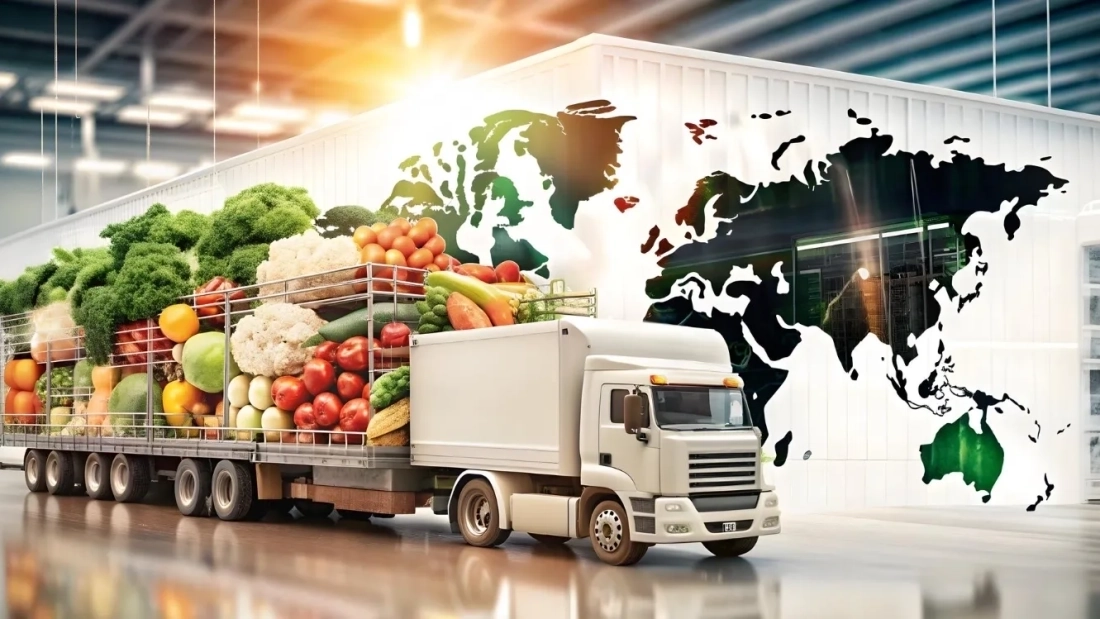
Dubai is a major food-import and re-export hub connecting global exporters with supermarkets, restaurants, retailers and wholesale distributors across the UAE. However, successful market entry requires more than competitive product pricing. Exporters need regulatory compliance, accurate documentation, dependable logistics, quality control and a verified UAE buyer.
This guide explains how to export food to Dubai, with a practical focus on importing onions Dubai, supplying wholesale fruits and vegetables Dubai, and using Mayil Global’s 3% commission distribution and Cash & Carry purchasing models.
Why Dubai Is an Important Wholesale Food Market
Dubai’s Al Aweer Central Fruit and Vegetable Market is a principal wholesale distribution point for fresh produce in the UAE. Daily arrivals, origin, crop cycles, product grade, packaging, freight costs and buyer demand influence prices.
The market serves multiple B2B channels, including:
- Supermarkets and retail chains
- Restaurants, hotels and catering companies
- Independent retailers
- Wholesale distributors
- Re-exporters serving other GCC markets
For exporters, this creates consistent demand but also requires precise commercial planning. The same commodity can achieve different results depending on its size, grade, packing format, arrival condition and remaining shelf life.
Mayil Global supports exporters by coordinating suitable buyers and distribution routes for specific products. The objective is dependable supply, consistent quality and long-term commercial relationships.
Al Aweer Market Pricing: Use Benchmarks, Not Fixed Quotations
Al Aweer prices are negotiated according to daily market conditions. Exporters should use current benchmarks only as planning references and confirm the actual price for the exact specification before shipping.
Indicative onion references from the August 26, 2026 market briefing included:
| Product and origin | Indicative wholesale benchmark |
|---|---|
| India-origin new-crop onions | Approximately AED 2.00/kg |
| Egyptian onions | Approximately AED 1.30/kg |
| Yemeni onions | Approximately AED 1.60/kg |
These figures are not guaranteed transaction prices. Grade, bulb size, dryness, firmness, packing, wastage, arrival timing and market demand can materially change the realized price. Exporters should verify current market information through sources such as Al Aweer Prices before confirming a shipment.
For example, at an indicative AED 2.00/kg selling price, an 18 kg bag represents approximately AED 36 in wholesale value before adjustments for quality, handling, commission and other costs.
Comparing Onion Origins
Lower origin pricing does not automatically mean lower landed cost. A commercially viable comparison should include:
- Product cost at origin
- Export packing and inland transport
- Port handling and documentation
- Sea freight, insurance and applicable surcharges
- UAE customs clearance and inspection
- Storage and market handling
- Distribution and delivery
- Agreed commission
- Expected wastage or quality claims
Egyptian onions may offer a lower benchmark than Indian onions, while Yemeni supply may provide another price point. The correct choice depends on product specification, compliance, freight exposure and buyer requirements.
Importing Onions to Dubai: Product and Compliance Requirements
Exporters involved in importing onions Dubai should define the product before discussing price. A buyer or distributor needs clear information on:
- Country and region of origin
- Onion variety and crop cycle
- Bulb size and grade
- Colour and skin condition
- Dryness and firmness
- Defect and tolerance limits
- Net weight per bag or carton
- Ventilation requirements
- Loading date and expected arrival
- Available certificates and inspection records
Fresh onions and other agricultural products require appropriate phytosanitary and food-safety documentation. Depending on the product and channel, the UAE importer may also need to complete registration and approval procedures through relevant platforms.
Food importers should review the requirements of Dubai Municipality Foodwatch and coordinate customs procedures through Dubai Customs. Retail-bound products must also meet applicable Arabic labelling and packaging requirements.
The Essential Export Document Pack
Incomplete or inconsistent documents can delay clearance and increase storage costs. The exporter and UAE buyer should align the document pack before loading.
Typical documents for onions, fruits and vegetables include:
-
Commercial invoice
Showing the product description, HS code, quantity, unit price and total value. -
Packing list
Detailing the number of bags or cartons, net and gross weight, dimensions and packing type. -
Bill of lading or airway bill
Required for sea or air shipments. -
Certificate of origin
Issued or attested by the relevant authority or chamber of commerce in the exporting country. -
Phytosanitary certificate
Confirming that fresh agricultural produce complies with plant-health requirements. -
Health or fitness certificate
Required where applicable to certify that the food is suitable for human consumption. -
Fumigation or additional certificates
Provided when required by the product, origin country or importing authority.
All documents should match the shipment manifest, consignee details, package counts, weights and product description. For perishable food, exporters should also plan for sufficient remaining shelf life on arrival.
How to Export Food to Dubai: A Step-by-Step Process
Businesses researching how to export food to Dubai can follow this practical sequence.
1. Select the Product and Target Channel
Determine whether the product is intended for wholesale market trading, supermarkets, restaurants, retailers or distribution to other UAE emirates. Packing and quality specifications differ by channel.
2. Confirm the Product Specification
Agree on origin, variety, grade, size, packing, quantity and acceptable tolerances. Avoid using broad descriptions such as “premium onions” without measurable standards.
3. Verify UAE Import Eligibility
Work with a licensed UAE importer or distributor that can coordinate food registration, customs clearance, inspection and delivery. Confirm whether Foodwatch, FIRS, ZAD or other registrations apply to the product.
4. Calculate the Complete Landed Cost
Compare the expected Al Aweer or B2B selling price against the full landed cost. Include freight, clearance, storage, delivery, commission and expected wastage.
5. Complete the Document Pack
Prepare the invoice, packing list, transport document, certificate of origin, phytosanitary certificate and any applicable health or fumigation certificates before dispatch.
6. Inspect and Pack Before Loading
Check weight accuracy, product condition, grade consistency, packaging strength, ventilation and container suitability. Hygienic handling and secure packaging reduce damage and contamination risk.
7. Manage Clearance and Distribution
Most sea shipments enter through Jebel Ali Port before moving to Al Aweer or another approved facility. The UAE buyer or logistics partner coordinates customs, inspection, storage, transport and onward distribution.
8. Review the Shipment Result
After delivery, compare realized selling price, buyer acceptance, wastage, timing, deductions and payment performance. This information improves the next shipment and supports a reliable supply programme.
Mayil Global’s sourcing and logistics system is built around supplier coordination, inspection, hygienic handling, proper storage and organized distribution.
Mayil Global as a Verified Buyer for Exporters in the UAE
Exporters searching for a verified buyer for exporters UAE need more than an informal trading contact. They need a commercial partner that understands the product, buyer channel, documentation process and distribution requirements.
Mayil Global acts as a verified buyer of suitable fresh produce and premium food products for B2B supply across the UAE. Our buyer network includes supermarkets, restaurants, retailers and wholesale distributors.
Our process focuses on:
- Farm-direct sourcing from trusted farms
- Global supplier coordination
- Product-specific quality inspection
- Hygienic handling and safety-standard packaging
- Proper storage from farm to market
- Organized logistics and timely delivery
- Clear commercial terms and reporting
A verified buyer should be able to confirm the required product specification, expected volume, receiving location, quality standards, payment terms and distribution route before the exporter commits cargo.
The 3 Percent Commission Distributor UAE Model
Mayil Global’s 3 percent commission distributor UAE model provides exporters with a defined and transparent route to the UAE market.
Under an agreed commission arrangement, Mayil Global coordinates the sale and distribution of suitable products to approved B2B buyers. The agreement should specify:
- Product and origin
- Shipment quantity and packing
- Commission basis
- Inspection and acceptance procedure
- Permitted deductions
- Handling and delivery responsibilities
- Settlement timing
- Rejection and claim procedures
The 3% commission is a central Mayil Global USP. It gives exporters a clear distribution cost while providing access to UAE wholesale channels and operational support.
For illustration, if a container generates AED 48,000 in net sales, a 3% commission would equal AED 1,440 before any separately agreed costs. Actual calculations depend on the final sales value and commercial agreement.

Immediate Cash & Carry Container Purchases
Some exporters prioritize immediate liquidity rather than consignment-based distribution. Mayil Global can evaluate immediate Cash & Carry container purchases for approved products and shipments.
This model may help exporters:
- Reduce receivables exposure
- Recover working capital faster
- Avoid extended sales cycles
- Limit storage and onward-distribution uncertainty
- Reinvest in the next export shipment
Cash & Carry purchases remain subject to product inspection, regulatory eligibility, documentation, quantity, arrival condition and agreed payment terms. The exporter should provide product specifications, loading details, certificates, estimated arrival and commercial pricing for evaluation.
The model is particularly relevant for high-volume commodities such as onions, potatoes, tomatoes, rice and other wholesale food products where timing and liquidity influence the export cycle.
Wholesale Fruits and Vegetables Dubai: Building Reliable Supply
Mayil Global supplies fresh fruits and vegetables, premium spices, premium rice and farm-fresh eggs to UAE businesses. Our product range is designed for customers that require consistent wholesale supply.
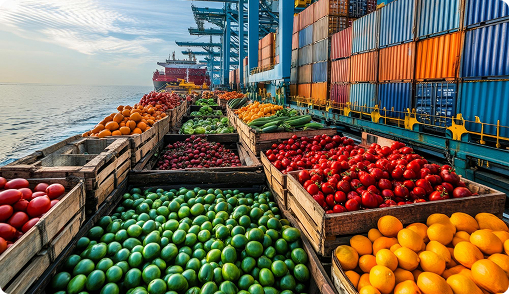
The operating model combines farm-direct sourcing, international supplier coordination, strict quality control, hygienic handling and efficient distribution. Each stage is managed to protect freshness, safety and product value.
For supermarkets, restaurants and retailers, this means more dependable replenishment and fewer quality surprises. For exporters, it means a structured route to buyers that require regular, specification-based supply.
Exporter Checklist Before Contacting a UAE Buyer
Prepare the following information before requesting a Mayil Global proposal:
- Product name and exact variety
- Country and region of origin
- Grade, size and quality specification
- Packing format and net weight
- Available quantity and shipment frequency
- Loading date and estimated arrival
- Photos, inspection reports or product samples
- Phytosanitary and health documentation
- Certificate of origin availability
- Estimated FOB or CIF price
- Preferred 3% commission or Cash & Carry structure
- Target UAE buyer channel
- Payment and settlement expectations
Conclusion
Exporting food to Dubai requires disciplined sourcing, regulatory preparation, logistics planning and buyer verification. For onions and other fresh produce, Al Aweer market pricing should be treated as a daily benchmark rather than a fixed quotation. Origin, grade, packing, freight, shelf life and arrival condition determine the commercial result.
Mayil Global provides exporters with two structured routes: a transparent 3% commission distribution model and an immediate Cash & Carry container purchase option for approved shipments. As a verified buyer for suitable products, Mayil Global connects global suppliers with supermarkets, restaurants, retailers and wholesale distributors across the UAE.
To discuss importing onions to Dubai, wholesale fruits and vegetables, a 3% distribution arrangement or a Cash & Carry container purchase, contact Mayil Global. You can also review our company profile and sourcing and logistics process.