


Daily B2B briefing
The UAE’s announcement on August 18–19, 2026, suspending trade, commercial exchanges, and financial transactions with Iran until further notice is changing procurement planning across Dubai’s wholesale produce sector.
Iranian produce, including competitively priced brown onions, has been an important supply option at Al Aweer. Importers, distributors, supermarkets, restaurants, and retailers must now assess alternative origins based on availability, transit time, landed cost, shelf life, and quality specifications.
The immediate priority is maintaining dependable supply while ensuring that every transaction, shipment, payment route, and origin document complies with UAE requirements. Mayil Global supports this transition through farm-direct sourcing and a global supply network across multiple countries.
For current Al Aweer market updates, buyers and exporters should treat the following figures as planning benchmarks rather than fixed quotations.
Indicative Al Aweer planning benchmarks : August 20, 2026
| Product | Indicative benchmark |
|---|---|
| Indian new-crop onions | Approximately AED 2.00/kg |
| Iranian brown onions | Approximately AED 1.67/kg |
| Egyptian onions | Approximately AED 1.30/kg |
| Yemeni onions | Approximately AED 1.60/kg |
| Red Shirazi onions | Approximately AED 1.05/kg |
| Chinese garlic | Approximately AED 16 per 2.8 kg carton |
| Indian okra | Approximately AED 32 per 4 kg carton |
| Cucumbers | Approximately AED 1.75/kg |
| Tomatoes | Approximately AED 3.14/kg |
| G9 Cavendish bananas | Approximately AED 3.85/kg |
Price disclaimer
These are indicative market-planning benchmarks only. Actual prices vary according to origin, grade, size, packaging, shipment timing, exchange rates, freight, customs clearance, inspection results, stock position, and trader margins. Iranian-origin products are also subject to the current UAE suspension of trade and financial dealings with Iran. Buyers and exporters must obtain current commercial and regulatory confirmation before committing to a transaction.
The Iranian supply pivot
The suspension requires a structured sourcing response. Replacing Iranian onions is not a simple one-for-one substitution because every origin has a different cost structure, transit profile, packing format, quality specification, and seasonal availability.
Alternative origins for onions and produce
Importers may evaluate the following supply options, depending on product and season:
-
Local UAE production
Local farms can support short-haul replenishment and reduce transit exposure for selected vegetables. Volumes and seasonal availability must be confirmed before planning large programmes. -
Egypt
Egyptian onions remain a competitive alternative for bulk requirements. Buyers should verify grade, curing, dry matter, packing, and expected arrival condition. -
Jordan
Jordan can support selected vegetable and fruit programmes, subject to product availability, route planning, and commercial volume. -
Oman
Omani supply may assist regional replenishment, particularly where shorter transit and controlled logistics are priorities. -
Syria
Syrian products may be considered only after confirming legal eligibility, documentation, payment compliance, and product-specific import requirements. -
India
Indian new-crop onions and other vegetables can provide volume, but exporters and buyers must monitor export policy, seasonality, freight availability, and quality consistency.
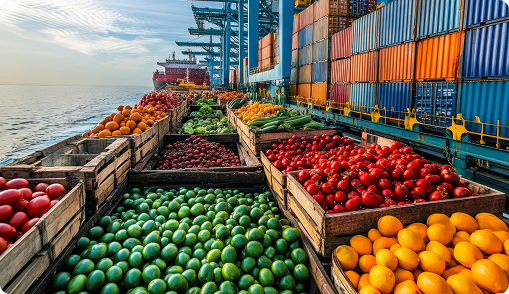
Longer-shelf-life fruits can generally tolerate longer transit better than short-life vegetables. Cucumbers, tomatoes, okra, and leafy products require faster handling, appropriate ventilation, temperature management, and clear arrival specifications.
Importing onions Dubai: product and buyer verification
Businesses importing onions Dubai must verify both the product and the commercial counterparty before shipment.
Product verification
A proper onion specification should include:
- Origin and harvest period.
- Variety, colour, and size range.
- Grade and allowable defects.
- Net weight and packaging format.
- Curing and dry-matter condition.
- Expected shelf life on arrival.
- Container loading plan.
- Ventilation and temperature requirements.
- Inspection and rejection procedures.
The replacement-origin strategy must protect both supply continuity and customer acceptance. A lower quoted price does not necessarily produce a lower landed cost if the product has higher wastage, weaker shelf life, or unsuitable grading.
Buyer verification
Exporters searching for a verified buyer for exporters uae should request clear information before offering cargo:
- Registered company name and trade licence details.
- Product requirement and target volume.
- Delivery location and receiving schedule.
- Required documents and packing standards.
- Payment structure.
- Inspection process.
- Buyer’s ability to receive and clear the shipment.
Exporters should communicate precisely whether they need a verified buyer of that particular product. A buyer for Egyptian onions may not be the correct buyer for Indian okra, Chinese garlic, premium rice, or a specific fruit grade. Product-specific verification improves commercial accuracy and reduces unsuitable offers.
Documents and import coordination
Exporting food into Dubai requires coordinated documentation and shipment control. The exact requirements depend on the product, origin, packaging, transport route, and UAE authority procedures.
The commercial file should normally be prepared around:
- Commercial invoice.
- Packing list.
- Certificate of origin.
- Phytosanitary certificate for applicable fresh produce.
- Health or conformity certificates where applicable.
- Bill of lading or transport document.
- Product specifications and packing details.
- Inspection records and loading photographs.
- Customs and import registration information.
- Payment and banking documentation.
The Iranian suspension adds a critical compliance requirement. Businesses must confirm that the origin, seller, financial institution, shipping route, and counterparties do not conflict with the current UAE restrictions. Goods should not be rerouted through third countries without specific legal and compliance advice.
Mayil Global’s sourcing and logistics process is structured around supplier coordination, quality inspection, hygienic handling, packaging, storage, and organized distribution.
Handling, ventilation, and quality control
Supply continuity depends on more than securing a replacement origin. Proper post-harvest handling protects the commercial value of every container.
Managing fresh vegetables
Short-shelf-life vegetables require:
- Pre-loading inspection.
- Suitable carton or bag specifications.
- Correct ventilation.
- Controlled temperature where required.
- Protection from condensation and physical damage.
- Fast customs and delivery coordination.
- Arrival inspection against the agreed specification.
Onions require particular attention to curing, moisture, airflow, and storage conditions. Excess moisture can increase deterioration during transit. Tomatoes, cucumbers, and okra require more careful temperature and handling control because quality can decline quickly when transit or clearance is delayed.
Maintaining safety standards
Hygienic handling and packaging are non-negotiable. Products should be protected from contamination throughout sourcing, loading, storage, transport, and delivery. Quality control must include inspection at supplier level, loading stage, arrival stage, and before final distribution.
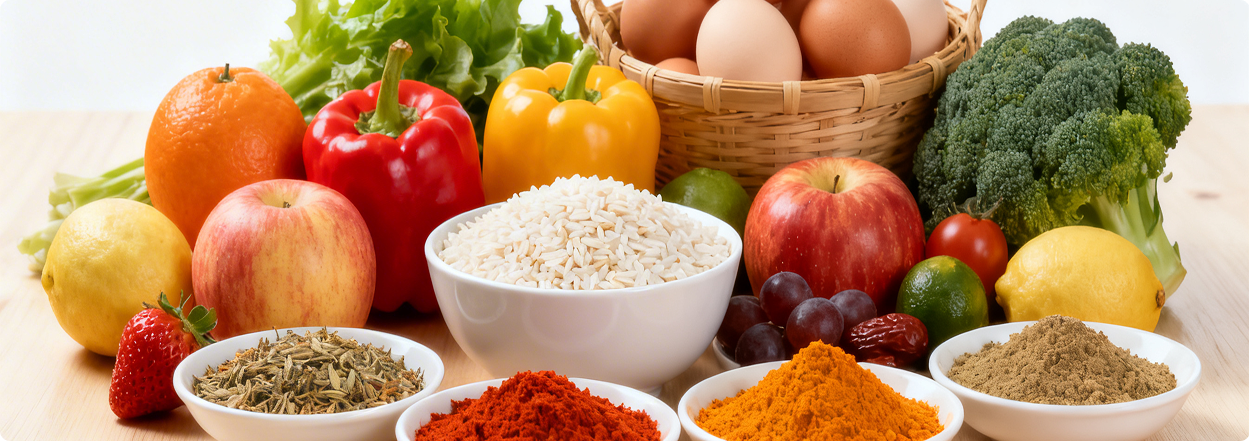
Mayil Global supplies fresh fruits, vegetables, spices, rice, and farm-fresh eggs to supermarkets, restaurants, retailers, and wholesale distributors across the UAE.

How to export food to Dubai: practical sequence
For businesses evaluating how to export food to Dubai, the following sequence provides a practical operating framework:
-
Define the product
Confirm variety, grade, size, origin, packaging, volume, and delivery frequency. -
Verify the buyer
Confirm the UAE buyer’s business registration, receiving capability, product requirement, and payment terms. -
Confirm regulatory eligibility
Check import rules, origin restrictions, certificates, labelling, and food-safety requirements before loading. -
Agree the commercial structure
Establish the price basis, commission, freight responsibility, inspection terms, payment timing, and loss allocation. -
Coordinate shipment logistics
Book the appropriate container, confirm ventilation or temperature controls, and prepare the complete document file. -
Inspect before dispatch
Record product condition, packing, weights, seals, and loading photographs. -
Manage arrival and distribution
Coordinate clearance, receiving, inspection, storage, and onward delivery to the UAE buyer. -
Review performance
Compare landed cost, wastage, buyer acceptance, delivery timing, and repeat-order potential.
Mayil Global’s 3% commission distribution model
Mayil Global provides a structured route for exporters that need commercial distribution in the UAE. Under the 3 percent commission distributor uae model, exporters can access buyer coordination, local market distribution, product communication, and transaction support through a defined commission structure.
The model is designed for exporters that want:
- A verified commercial contact in the UAE.
- Market access without establishing a full local distribution operation.
- Clear product-specific buyer communication.
- Coordinated logistics and delivery planning.
- Reduced uncertainty during a supply-chain pivot.
- A transparent commission-based distribution arrangement.
The 3% commission should be agreed in writing with the product, shipment value, service scope, payment timing, and responsibilities clearly stated.
Immediate Cash & Carry container purchases
For exporters requiring faster liquidity, Mayil Global also evaluates immediate Cash & Carry container purchases. This approach can provide a direct purchase route for suitable products and shipment conditions.
The transaction remains subject to product verification, inspection, documentation, legal compliance, volume, quality, and delivery feasibility. Exporters should provide the product specification, origin, packing details, available quantity, loading date, expected arrival, and target price.
Cash & Carry purchasing can be particularly relevant when exporters need to avoid extended receivables or when market conditions require rapid stock movement.
Mayil Global for UAE wholesale buyers
Mayil Global serves as a wholesale supplier for UAE supermarkets, restaurants, retailers, and distributors requiring consistent food supply. The company combines trusted farms and global suppliers with inspection, hygienic packaging, storage, and organized logistics.
During the Iranian supply pivot, this network supports buyers by:
- Comparing alternative origins.
- Planning product-specific supply.
- Coordinating shipment timing.
- Managing quality expectations.
- Supporting dependable distribution.
- Reducing reliance on a single origin.
- Maintaining long-term supply relationships.
Businesses purchasing wholesale fruits and vegetables Dubai can review Mayil Global’s company approach and supply capabilities. The operating priority remains consistent: delivering dependable supply, consistent quality, and reliable service across the UAE.
Commercial checklist before negotiation
Before confirming any purchase, sale, distribution mandate, or container transaction, complete the following checklist:
- Confirm the exact product and grade.
- Verify origin and current legal eligibility.
- Confirm buyer or exporter registration details.
- Define quantity, packing, and loading date.
- Calculate landed cost, freight, clearance, and expected wastage.
- Agree the 3% commission structure where applicable.
- Confirm whether the transaction is Cash & Carry or credit-based.
- Review inspection and rejection terms.
- Prepare certificates, invoice, packing list, and origin documents.
- Confirm ventilation, temperature, storage, and delivery requirements.
- Verify payment channels and counterparties.
- Establish the arrival inspection and dispute process.
- Confirm whether the buyer needs a verified buyer of that particular product.
- Obtain current market and regulatory confirmation before shipment.
The August 20 market position requires disciplined sourcing and compliance-led execution. Mayil Global’s multi-country supply network, farm-direct sourcing, strict quality control, and 3% commission distribution model are structured to support exporters and UAE wholesale buyers during this transition.