

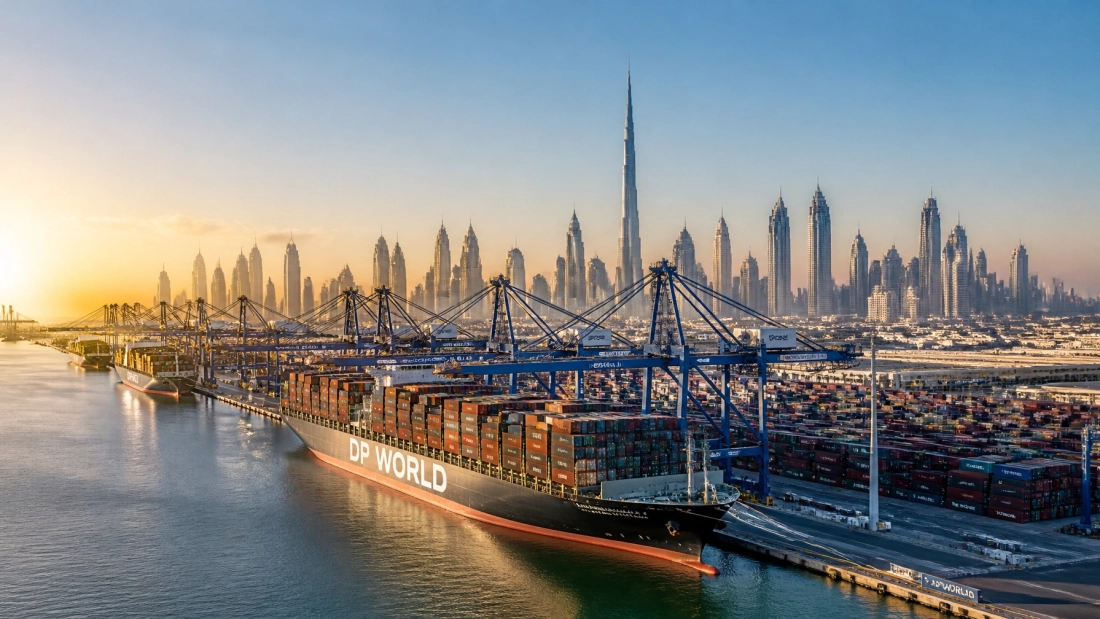
The UAE’s position as a global trade hub has been further solidified as of July 2026, with non-oil foreign trade reaching unprecedented heights. For international exporters and local stakeholders, the current landscape offers both significant opportunities and the necessity for agile supply chain management. This report provides a comprehensive analysis of the latest UAE export news, shifting price dynamics at the Al Aweer Market, and the strategic advantages offered by Mayil Global’s verified buyer for exporters uae model.
UAE Non-Oil Foreign Trade Hits Record Dh1.937 Trillion
The first half of 2026 has marked a historic milestone for the UAE economy. Official data confirms that non-oil foreign trade surged to Dh1.937 trillion, representing a robust 13.1% year-on-year increase compared to 2025. This growth is driven largely by a 23.9% surge in non-oil exports, which reached Dh452.8 billion.
Several strategic developments have catalyzed this expansion:
- CEPA with Canada: The UAE finalized a Comprehensive Economic Partnership Agreement (CEPA) with Canada in July 2026. This agreement is expected to eliminate tariffs on over 95% of trade lines, significantly benefiting exporters of premium food products and industrial goods.
- US Commerce Department A:5 Status: The US Commerce Department has upgraded the UAE to Country Group A:5 status for dual-use technology and high-end industrial exports. This reclassification streamlines licensing requirements and reinforces the UAE's standing as a trusted, high-standard trade partner on the global stage.
For businesses engaged in the wholesale fruits and vegetables dubai sector, these macroeconomic indicators point to a stable, liquid, and expanding market environment.
Al Aweer Market Updates: Volatility and Price Corrections
The Al Aweer Central Fruit & Vegetable Market remains the primary barometer for fresh produce trade in the GCC. As of July 25, 2026, the market is experiencing a significant correction in bulk commodity prices, contrasted by high intraday volatility.
Onion Market: 41% Price Drop
Current wholesale data indicates that importing onions dubai has become highly cost-effective for bulk buyers this month. Wholesale prices for 18kg Indian new-crop onions are averaging AED 1.95/kg, a substantial 41% decrease from the previous month. This downward trend is attributed to stabilized supply chains and high-volume arrivals from South Asia and Egypt.
Intraday Price Swings and Quality Premiums
While the general trend for onions is downward, other commodities are witnessing sharp intraday price swings of up to 30%.
- High-Volatility Items: Cauliflower, cucumbers, and various gourds have seen prices fluctuate by nearly a third within a single 24-hour trading cycle.
- Grade 1 Premium: Market standards remain rigorous. Grade 1 produce currently maintains a 20-30% price premium over Grade 2 arrivals. Exporters who prioritize quality control and hygienic handling consistently achieve better margins.
- Apples and Citrus: These categories are experiencing upward price pressure due to seasonal transitions in the Southern Hemisphere and increased trans-shipment freight costs.

Navigating Regulatory Compliance in Dubai
Exporters looking into how to export food to dubai must adhere to the latest electronic and health safety protocols. The UAE has streamlined its import processes through integrated digital portals to ensure food security and safety.
- ZAD Electronic Portal: All food products must be registered via the ZAD national portal. This system tracks product specifications and ensures compliance with UAE food safety standards.
- FIRS System: The Food Import & Re-export System (FIRS) is the primary interface for Dubai Municipality. It handles the inspection, sampling, and release of all food consignments entering the emirate.
- Halal Certification: For processed foods and meat-based products, strict adherence to GSO Halal standards is mandatory, requiring certification from UAE-approved bodies.
For a detailed walkthrough on regulatory alignment, view our guide on how to export food to Dubai.
Mayil Global: Your 3% Commission Distributor in the UAE
In a market characterized by rapid price fluctuations at Al Aweer, exporters require a partner that provides transparency, speed, and liquidity. Mayil Global operates as a 3 percent commission distributor uae, offering a streamlined model designed to protect the exporter’s interests.
The Verified Buyer Model
Mayil Global serves as a verified buyer for exporters uae, providing two primary avenues for trade:
- 3% Commission Distribution: We manage the entire sales process within the Al Aweer market on your behalf. We charge a flat 3% commission, ensuring that the majority of the market value is returned to the exporter. This model provides full transparency on selling prices and market movements.
- Direct Cash-and-Carry: For exporters seeking immediate liquidity, we offer direct container purchases. We buy your stock at competitive market rates, providing instant payment and assuming the market risk.
Whether you are bulk rice suppliers dubai or specialized spice exporters, our logistics network ensures that your produce is stored in climate-controlled environments and distributed to a vast network of supermarkets and retailers.

Strategic Insights for Wholesale Food Buyers
For local restaurants and retailers, Mayil Global is more than a distributor; we are a reliable wholesale food buyer dubai and supplier. Our direct sourcing from global farms eliminates unnecessary intermediaries, allowing us to offer competitive pricing on:
- Fresh Produce: Daily arrivals of Grade 1 onions, potatoes, and seasonal vegetables.
- Premium Rice: We are among the leading bulk rice suppliers in Dubai, specializing in Basmati and long-grain varieties.
- Spices and Eggs: Farm-fresh eggs and high-grade spices sourced through our global supply network.
Our 3% commission strategy ensures that we maintain a steady flow of high-quality inventory, providing our B2B customers with consistent supply even during peak demand periods.
Practical Steps: How to Export Food to Dubai
Successfully entering the Dubai market requires a structured approach. Exporters should follow these steps to ensure a seamless trade experience:
- Product Selection: Focus on high-demand items like onions, ginger, or tomatoes. (See our analysis on exporting onions to Dubai).
- Documentation: Ensure all Phytosanitary Certificates, Certificates of Origin, and Packing Lists are accurate and match the ZAD registration.
- Logistics Partnering: Choose a distributor like Mayil Global that offers organized logistics and proper storage to maintain produce quality until the final point of sale.
- Market Timing: Monitor Al Aweer market updates closely. Understanding the intraday swings allows for better timing of container arrivals to maximize returns.

Conclusion
The UAE's record-breaking trade figures in H1 2026 reflect a resilient and lucrative market for global exporters. While the Al Aweer market presents challenges in the form of price volatility and strict quality requirements, the right partnership can mitigate these risks.
Mayil Global remains committed to being the most transparent and efficient gateway to the UAE market. By utilizing our 3 percent commission distributor uae model, exporters gain a competitive edge through market expertise, operational excellence, and immediate liquidity.
For inquiries regarding container-load supplies or to register as a partner exporter, contact Mayil Global today.