

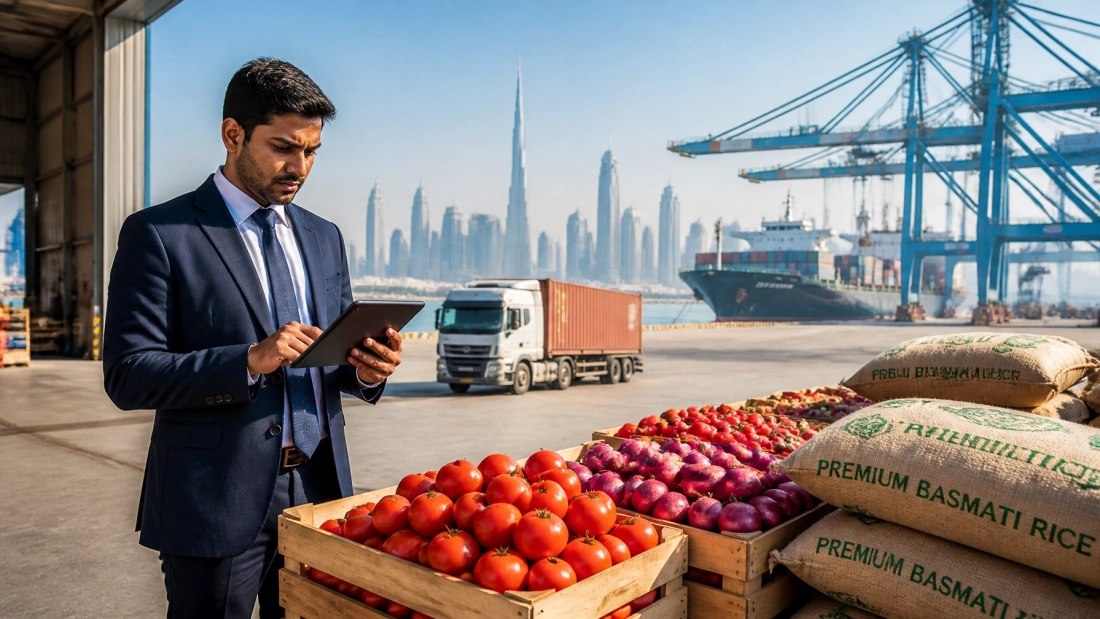
The United Arab Emirates, specifically Dubai, serves as the primary gateway for the global food trade in the Middle East. For international exporters, the Al Aweer Central Fruits & Vegetables Market is the epicenter of this activity. However, navigating this market requires more than just high-quality produce; it demands a strategic partner who understands the nuances of local distribution and pricing.
At Mayil Global, we have optimized the export-import pipeline through our 3% commission-based distribution model and our immediate Cash & Carry wholesale capabilities. Whether you are looking at importing onions to Dubai or supplying premium rice and spices, the following 20 strategy ideas will provide the framework for a successful, high-margin entry into the UAE market.
The Strategic Advantage: The 3% Commission Model
Before diving into specific strategies, it is essential to understand the financial foundation of a successful export business. Traditional importers often operate on opaque margins, sometimes charging upwards of 5-10% in hidden fees or selling goods to internal brokers.
Mayil Global eliminates this ambiguity. Our 3% commission model is designed to protect the exporter’s liquidity and profit. By prioritizing transparency, we ensure that you receive the maximum return on your shipment while we handle the complexities of local logistics and sales.

20 Strategy Ideas for Exporters Targeting the UAE
Pillar 1: Market Intelligence and Pricing
1. Benchmark against Al Aweer Daily Rates
Do not ship blindly. Monitor the daily wholesale prices at Al Aweer Market to understand current demand. Successful exporters align their shipping schedules with market gaps.
2. Leverage Real-Time Pricing Feedback
Utilize your distributor’s local presence to get hourly updates. This allows you to adjust the volume of upcoming containers based on local supply gluts or shortages.
3. Implement a "Landed Cost" Analysis
Calculate every expense: from farm-gate pricing and ocean freight to Dubai Municipality inspection fees: before committing to a shipment.
4. Diversify Product Variety
While exporting onions to Dubai is a high-volume business, consider adding high-margin products like premium spices or long-grain rice to your portfolio.
Pillar 2: Sourcing and Quality Excellence
5. Adopt Strict Grading Standards
The UAE market is highly competitive. Ensure your produce meets international standards: onions should be uniform, typically ≥ 60 mm, with tight, dry skins.
6. Focus on Farm-Direct Sourcing
Cutting out middlemen at the origin allows you to maintain lower costs, which is critical when working on a 3% distribution model.
7. Implement Pre-Shipment Inspections
Use third-party inspectors at the point of origin to verify that the quality matches the "A-Grade" requirements of Dubai’s supermarkets.
8. Optimize Packaging for Durability
Use high-quality mesh bags for onions and ventilated cartons for delicate vegetables. Proper packaging reduces wastage during the transit through Jebel Ali Port.

Pillar 3: Logistics and Supply Chain Optimization
9. Secure Reliable Cold Chain Logistics
For temperature-sensitive items like tomatoes or ginger, a broken cold chain equals a total loss. Partner with logistics providers who offer real-time temperature tracking.
10. Utilize Jebel Ali’s Efficiency
Route your bulk shipments through Jebel Ali Port for cost-effectiveness, and use Dubai International Airport only for high-value, urgent spice or egg shipments.
11. Prepare Digital Documentation Early
Ensure that Phytosanitary Certificates, Certificates of Origin, and Commercial Invoices are digitized and sent to your UAE partner before the vessel docks.
12. Monitor Port Congestion
Stay informed about seasonal congestion at UAE ports. Delays can lead to demurrage costs that eat into your 3% margin.
Pillar 4: Financial Stability and Risk Management
13. Shift to Cash & Carry for Liquidity
Waiting 60 days for payment can cripple an export business. Use Mayil Global’s Cash & Carry model to secure immediate liquidity upon container arrival.
14. Protect Against Currency Fluctuations
The UAE Dirham (AED) is pegged to the USD, providing a stable financial environment for international trade.
15. Start with Trial Shipments
Before sending 20 containers, send two. Use these trial runs to test the logistics pipeline and the responsiveness of your UAE distributor.
16. Use Transparent Commission Agreements
Ensure your contract explicitly states the 3% commission and lists all potential local handling fees to avoid "surprise" deductions.

Pillar 5: Relationship and Brand Building
17. Build a Local Presence through Partners
You don't need a physical office in Dubai if you have a verified buyer and distributor like Mayil Global. We act as your local feet-on-the-ground.
18. Respond to Retailer Feedback
If a supermarket chain in Dubai requests a specific packaging size for onions, adapt quickly. Customization builds long-term B2B loyalty.
19. Leverage "Verified Buyer" Status
Being associated with a reputable distributor enhances your credibility with local banks and global suppliers.
20. Plan for Multi-Country Sourcing
To ensure a steady supply year-round, source your products from different regions (e.g., India, Pakistan, Egypt) depending on the season.

Navigating Al Aweer: Why Your Partner Matters
The wholesale fruits and vegetables Dubai sector is governed by speed and trust. At the Al Aweer market, goods move fast. An exporter needs a partner who can move a container in hours, not days.
Mayil Global’s infrastructure is built for this pace. We manage the entire lifecycle:
- Receiving: Efficient unloading and inspection at our facilities.
- Storage: Proper handling to maintain the shelf life of fresh produce.
- Distribution: Directly supplying to a network of supermarkets and restaurants.
- Financial Settlement: Transparent reporting and fast payouts.
For those wondering how to export food to Dubai with minimal risk, the answer lies in eliminating the layers of middle-market brokers. By moving directly from your farm or warehouse to our distribution network, you retain control over your product's journey and your financial returns.
Conclusion
Exporting to the UAE is a high-reward venture for those who approach it with a structured strategy. By focusing on quality, logistics, and a transparent 3% commission model, exporters can build a sustainable and profitable business in one of the world’s most dynamic markets.
Are you ready to secure a verified buyer in the UAE? Contact Mayil Global today to discuss your next shipment and learn how our Cash & Carry model can accelerate your business growth.