

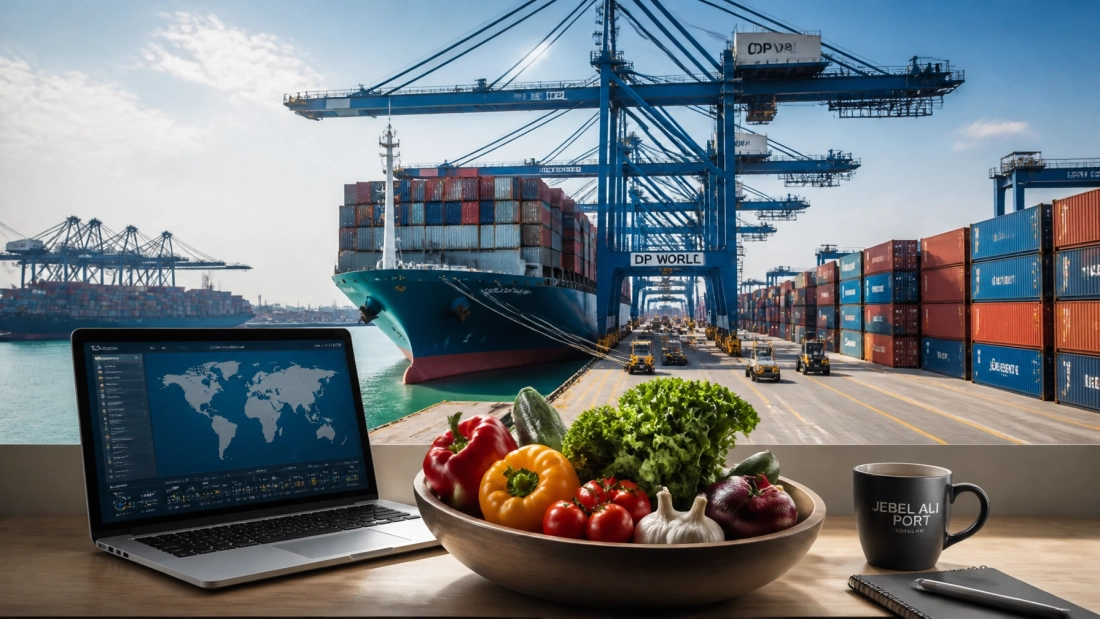
The UAE remains one of the most dynamic and lucrative markets for global food exporters. As a central trade hub, Dubai serves as the gateway to the Middle East, Africa, and beyond. However, navigating the complexities of the Al Aweer Fruit and Vegetable Market and ensuring consistent profitability requires more than just high-quality produce; it demands a strategic understanding of local regulations, logistics, and distribution models.
In this edition of UAE Export News, we provide a comprehensive guide on how to export food to Dubai while maximizing your margins. With the recent withdrawal of export duties on critical commodities like Indian onions and the increasing demand for premium spices and rice, the opportunity for global suppliers has never been greater.
Al Aweer Market Updates: Current Trends and Insights
The Al Aweer Fruit and Vegetable Market is the primary reference point for wholesale pricing in the GCC. Handling over 7,000 tonnes of produce daily, it operates as a supply-driven environment where price fluctuations are common.
Currently, market insights indicate a surge in demand for high-quality staples such as potatoes, citrus, and leafy greens. For exporters, staying updated on daily price benchmarks is essential. Volatility in Al Aweer can erode profits if shipments are not timed correctly or if the supply chain involves too many intermediaries. As a verified buyer for exporters in the UAE, Mayil Global monitors these trends to provide our partners with real-time data and stable distribution channels.

Step 1: Market Intelligence and Data-Driven Planning
Maximizing margins begins long before the goods reach Jebel Ali Port. Exporters must treat Dubai as a data-driven wholesale hub. The first step is conducting rigorous market analysis to identify seasonal gaps.
For instance, identifying periods when local GCC output for tomatoes or cucumbers is low allows international exporters to secure premium pricing. By utilizing Al Aweer market updates, you can build a break-even calculator that accounts for landed costs, wastage, and distribution fees. Successful exporters avoid the "blind shipping" trap by setting a minimum acceptable price based on current market volumes.
Step 2: Ensuring Regulatory Compliance and Product Registration
The UAE maintains strict standards regarding food safety and traceability. Non-compliance is one of the leading causes of margin leakage due to shipment rejections, laboratory testing fees, and administrative fines.
Mandatory ZAD Registration
All food products must be registered in the ZAD portal or local municipal systems before arrival. This process ensures that the product meets the UAE’s "compliance by composition" standards.
Labeling Standards
Labels must strictly adhere to UAE.S GSO 9:2013. Key requirements include:
- Product description in Arabic.
- Clear country of origin and nutritional facts.
- Accurate production and expiration dates.
By ensuring your documentation: including the Phytosanitary Certificate and Bill of Lading: is flawless, you minimize the risk of costly delays at customs.

Step 3: Implementing Rigorous Quality and Grading Standards
In the competitive landscape of the UAE, quality is a non-negotiable pillar. Buyers at Al Aweer and major supermarket chains prioritize uniformity and presentation.
Exporters should aim for a 95% or higher acceptance rate by implementing pre-shipment quality checks at the source. This is particularly critical for sensitive items like fresh ginger or leafy vegetables. Proper grading: sorting by size, ripeness, and defect-free skin: directly impacts the final sale price. High-quality produce commands better negotiation leverage with commission agents, reducing the likelihood of price discounts.
Step 4: Optimizing Logistics and Supply Chain Efficiency
The choice of logistics can define your profit margins. For hardy items like bulk rice or onions, sea freight via Jebel Ali is the most cost-effective route. For high-value, perishable items, air freight via Dubai International Airport ensures freshness but requires higher sell-through prices to maintain margins.
Organized logistics and efficient handling at every stage: from the farm to the market: ensure that produce arrives in peak condition. Utilizing refrigerated transport (reefers) and maintaining a cold chain is essential for fresh produce. Proper storage and hygienic handling prevent spoilage, which is a major contributor to margin loss in the wholesale sector.

Step 5: Securing Margins with the 3% Commission Model
Traditionally, the food distribution chain in Dubai involves multiple brokers, each taking a percentage of the profit. Standard commission rates in the market often range from 5% to 10%, which significantly dilutes the exporter's net return.
Mayil Global addresses this challenge with a disruptive 3 percent commission distributor UAE model. By streamlining the supply chain and acting as a direct wholesale partner, we allow exporters to retain more of their hard-earned revenue.
Benefits of the 3% Model:
- Reduced Intermediaries: We eliminate the need for secondary brokers, connecting exporters directly to the wholesale market.
- Transparent Reporting: Exporters receive clear, itemized statements reflecting the actual market sale price.
- Immediate Liquidity: For many shipments, we offer cash-and-carry container purchases, solving the liquidity gaps often faced by global shippers.
This model is particularly effective for high-volume exports such as onions and tomatoes, where even a 1-2% difference in commission can translate into thousands of dollars in additional profit per container.

Why Mayil Global is the Verified Buyer for Global Exporters
Mayil Global is not just a distributor; we are a strategic partner focused on the long-term success of our suppliers. Our operations are built on the foundations of trust, efficiency, and international standards.
As a verified buyer for exporters in the UAE, we provide:
- Direct Sourcing: We bridge the gap between global farms and UAE retailers.
- Strict Quality Control: Our team performs inspections at every stage to ensure your products meet the highest market standards.
- Global Supply Network: We maintain a steady and reliable supply across multiple countries, ensuring we can handle large-scale shipments.
- Hygienic Packaging: Following safety standards is our priority, ensuring your brand reputation is protected in the local market.
Whether you are exporting bulk rice or looking for a reliable distributor for your fresh produce, Mayil Global offers the logistical expertise and financial transparency required to thrive in the Dubai market.
Conclusion
Exporting food to Dubai is a high-reward venture for those who prioritize planning, compliance, and strategic partnerships. By following these five steps: conducting market research, ensuring regulatory compliance, maintaining high quality, optimizing logistics, and choosing a low-commission distribution model: exporters can safeguard their margins against market volatility.
Stay tuned to our blog for more UAE Export News and daily Al Aweer market updates. For exporters ready to maximize their profits, partner with Mayil Global today and leverage our 3% commission advantage.