

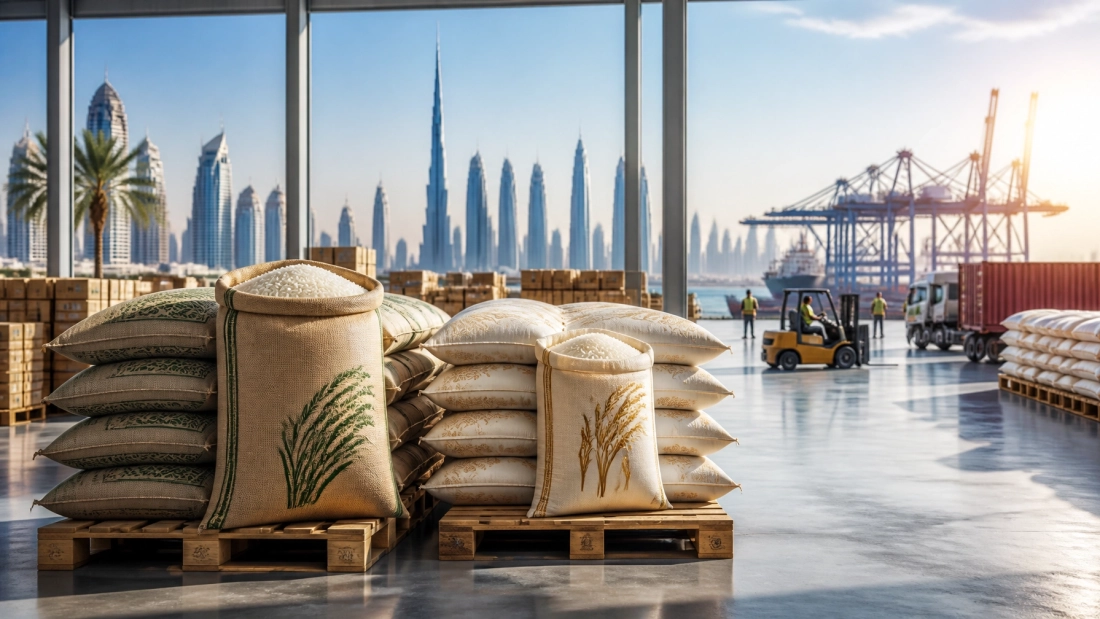
The United Arab Emirates (UAE) stands as a critical global hub for the food trade, particularly for staple commodities like rice. As a nation that imports over 90% of its food requirements, the UAE offers a consistent and high-volume market for international rice exporters. However, navigating the regulatory environment, logistics, and distribution channels requires more than just a quality product; it demands a strategic partnership with a localized expert.
For exporters in India, Pakistan, Thailand, and beyond, finding a reliable wholesale food buyer in Dubai is the first step toward market entry. Mayil Global facilitates this transition by providing a structured, transparent, and high-efficiency distribution model designed to maximize margins for global suppliers.
Navigating the UAE Regulatory Landscape
Exporting rice to the Dubai market involves strict adherence to federal and local regulations. Compliance is non-negotiable to ensure the safety and quality of food products entering the country.
Dubai Municipality and ESMA Standards
The primary authorities governing food imports are the Dubai Municipality (DM) and the Emirates Standardization and Metrology Authority (ESMA). All food products, including rice varieties like Basmati and Jasmine, must be registered through the ZAD (federal food registration) or FIRS (Food Import & Re-export Service) systems.

Mandatory Labeling Requirements
To clear customs, every rice shipment must feature labels that comply with UAE standards. Key requirements include:
- Language: Arabic is mandatory (English may be used alongside).
- Product Details: Brand name, product name, and net weight.
- Origin and Manufacturer: Country of origin and full manufacturer details.
- Dates: Production and expiry dates in the DD/MM/YYYY format.
Failure to meet these labeling standards can lead to shipment rejection or costly delays at the port of entry.
The 3% Commission Model: A Transparent Distribution Solution
One of the most significant challenges for rice exporters is the lack of transparency in traditional distribution models. Many distributors operate on hidden margins that erode the exporter’s profit. Mayil Global addresses this by operating as a 3 percent commission distributor in the UAE.
How the Model Works
Under this framework, Mayil Global acts as your dedicated sales and distribution arm in the UAE. We manage the entire process: from port clearance to final sale: for a flat 3% commission on the gross sales value. This model ensures:
- Full Transparency: Exporters receive detailed reporting on sales prices and market trends.
- Higher Margins: By removing the "middleman" markup, exporters retain a larger portion of the market price.
- Market Alignment: Our interests are aligned with yours; our goal is to achieve the best possible market price for your shipment.
For more details on how this model benefits your bottom line, explore our guide on how the 3% commission strategy secures daily liquidity.
Cash-and-Carry: Immediate Liquidity for Exporters
In addition to our commission-based distribution, Mayil Global provides an immediate solution for exporters seeking rapid turnover. We operate as a direct buyer for full container loads of rice, pulses, and grains through our cash-and-carry model.
As a wholesale food buyer in Dubai, we purchase containers directly at the port or from the Al Aweer market, providing exporters with immediate liquidity. This is particularly beneficial for suppliers who need to reinvest capital quickly into their next harvest or production cycle. You can learn more about how our cash-and-carry model solves liquidity gaps in our dedicated industry analysis.
Rice Varieties in High Demand
The UAE’s diverse population drives demand for several specific rice varieties. Understanding these preferences is vital for successful market positioning.

- Premium Basmati Rice: India and Pakistan are the leading suppliers. The market demands long-grain, aged Basmati with high aromatic properties.
- Jasmine Rice: Primarily sourced from Thailand and Vietnam, this variety is a staple for East Asian and Southeast Asian communities in the UAE.
- Sona Masuri and Non-Basmati Varieties: These are high-volume products used widely in the catering and restaurant sectors.
- Pulses and Grains: Beyond rice, there is a steady demand for lentils (Masoor, Chana), beans, and other legumes.
Ensuring Quality Control and Hygienic Handling
Quality is the cornerstone of our operations. To maintain our reputation as one of the leading bulk rice suppliers in Dubai, Mayil Global employs a rigorous quality control process.
Sourcing and Inspection
We facilitate farm-direct sourcing and conduct inspections at every stage of the supply chain. From the point of origin to the arrival at Jebel Ali Port, we ensure that the rice meets both international standards and the specific quality expectations of UAE buyers.

Storage and Logistics
Our logistics network is designed for efficiency. We ensure proper storage and handling to prevent contamination and maintain freshness. By utilizing organized logistics and modern warehouse facilities, we guarantee that the product reaches supermarkets, restaurants, and retailers in optimal condition.
Partnering with Mayil Global for Long-Term Success
The UAE market is highly competitive. Success requires a partner who understands local price fluctuations, buyer behavior, and the complexities of the Al Aweer market. Whether you are looking for a verified buyer of Basmati rice or a long-term distribution partner, Mayil Global provides the infrastructure you need to scale.

Key Benefits of Our Partnership:
- Market Intelligence: Stay informed with real-time updates on rice price trends in Dubai.
- Global Supply Network: Leverage our connections across multiple countries to diversify your reach.
- B2B Focus: We specialize in supplying high-volume buyers, including major supermarket chains and wholesale distributors.
Conclusion
Exporting rice to the UAE is a lucrative opportunity for global suppliers who prioritize quality and compliance. By utilizing Mayil Global’s 3 percent commission model or our immediate cash-and-carry purchasing, exporters can navigate the Dubai market with confidence and financial security.
Are you ready to expand your rice export business to the UAE? Contact Mayil Global today to discuss how we can facilitate your next container shipment and optimize your distribution strategy.