

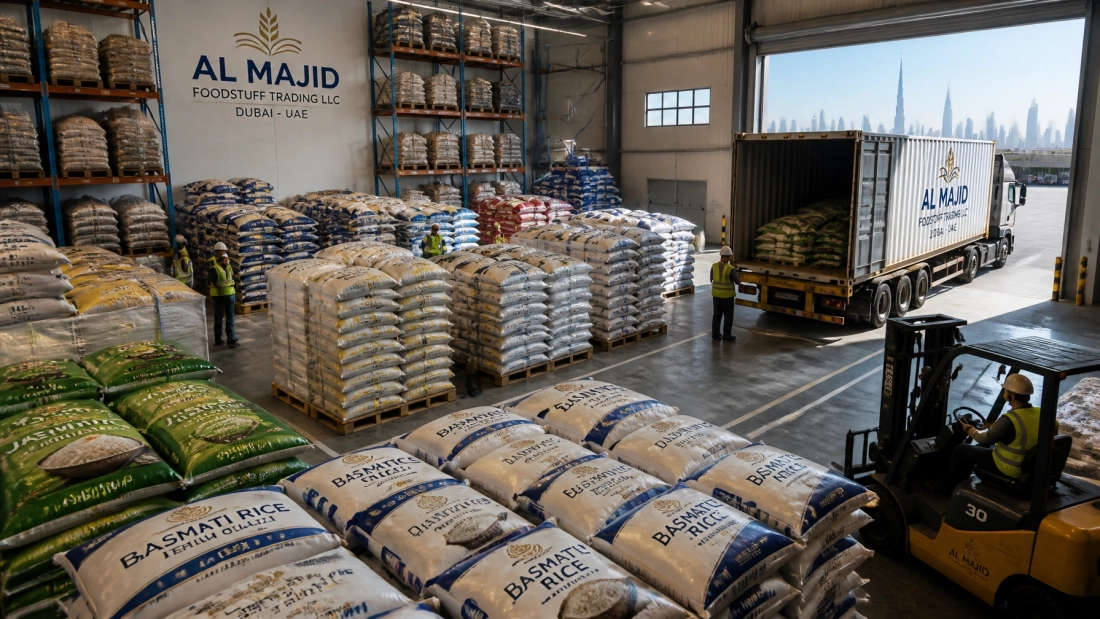
The United Arab Emirates, and Dubai specifically, remains one of the most competitive and lucrative hubs for the global rice trade. As a major re-export center and a high-consumption market for Basmati, Jasmine, and long-grain varieties, the opportunities for international exporters are vast. However, the path from a processing mill in India, Thailand, or Pakistan to the shelves of a Dubai supermarket is fraught with operational risks.
Many exporters approach the UAE market with a generalized strategy, only to face rejected containers, delayed payments, and eroded margins. Navigating the Al Aweer market or securing a reliable wholesale food buyer in Dubai requires more than just a good product; it requires precision in logistics, compliance, and financial modeling.
In this guide, we break down the seven most common mistakes rice exporters make and explain how partnering with a 3 percent commission distributor in the UAE like Mayil Global can secure your supply chain.
1. Failing to Define Precise Quality Specifications
One of the most frequent causes of disputes in the UAE rice trade is the lack of written, detailed specifications. Many exporters rely on verbal agreements or broad terms like "Premium Basmati." In the professional B2B landscape of Dubai, "premium" is not a specification; it is a marketing term.
Failing to specify the "broken percentage," moisture content, crop year, and grain length leads to immediate price renegotiations upon arrival. If your cargo arrives with 8% broken grains when the buyer expected 2%, the financial penalties can be devastating.
At Mayil Global, we act as your eyes on the ground. Our strict quality control protocols ensure that every container matches the pre-approved sample, preventing the costly "quality gap" that plagues many new exporters.
2. Regulatory and Labeling Non-Compliance
The UAE has stringent food safety and labeling laws enforced by the Dubai Municipality and the Ministry of Industry and Advanced Technology. A common mistake is shipping rice with labels only in English or with missing mandatory information.
To clear customs, rice labels must typically include:
- Product name and variety in both Arabic and English.
- Country of origin.
- Net weight in metric units.
- Production and expiry dates in a specific format (DD/MM/YYYY).
- Storage instructions and batch/lot numbers for traceability.
A shipment missing Arabic labeling is often flagged at the port, leading to expensive re-labeling costs or even total rejection. Ensuring compliance before the container leaves the origin is a non-negotiable step for any serious bulk rice suppliers in Dubai.

3. Utilizing Substandard Packaging for Long-Haul Transit
Rice is a sensitive commodity. It absorbs moisture and is prone to infestation if the packaging is compromised. Many exporters try to save costs by using lower-grade PP (Polypropylene) or BOPP bags that lack the necessary thickness to withstand the rigors of maritime shipping and manual unloading in the heat of Dubai.
Bags that tear during handling not only lead to physical product loss but also damage your brand’s reputation with the importer. High-quality, export-grade packaging is a prerequisite for maintaining the integrity of the supply chain. Proper palletization and the use of desiccants in the container are equally critical to preventing "sweating" and mold growth during the voyage.
4. Documentation Errors and Logistics Delays
The paperwork involved in exporting rice to the UAE is extensive. Errors in the Commercial Invoice, Packing List, Certificate of Origin, or Phytosanitary Certificate can lead to containers sitting at Jebel Ali Port, incurring daily demurrage and detention charges.
A common lapse is the failure to coordinate the "Phytosanitary Certificate" correctly with the "Health Certificate." These documents must confirm that the rice is fit for human consumption and free from regulated pests. As a 3 percent commission distributor in the UAE, Mayil Global streamlines this process by reviewing all draft documents before the originals are issued, ensuring a "Green Channel" clearance experience for our partners.
5. Mispricing Due to Ignorance of Local Market Trends
The Dubai rice market is highly volatile, influenced by global export bans, currency fluctuations, and local demand cycles (such as the spike before Ramadan). Exporters who set their prices based solely on their internal costs without tracking the daily Al Aweer wholesale market signals often find themselves uncompetitive.
Trying to lock in long-term fixed prices in a fluctuating market is a recipe for disaster. Successful exporters use a dynamic pricing model that accounts for current freight rates and local inventory levels. Partnering with a distributor that understands these nuances is the only way to protect your margins.

6. Over-Reliance on High-Commission Intermediaries
Traditionally, rice exporters have relied on a network of brokers and agents who charge anywhere from 5% to 10% in commissions, or worse, hide their margins in opaque pricing. These layers of intermediation distance the exporter from the actual market and significantly reduce the net profit.
Mayil Global’s 3 percent commission model is designed to disrupt this. By charging a flat, transparent 3% commission, we allow the exporter to retain more of the value. This model aligns our interests with yours: we win when you sell more volume at better prices. This transparency is why we are becoming the preferred 3 percent commission distributor in the UAE for global rice mills.
7. Ignoring Liquidity and Payment Risks
The biggest risk in international trade is the "liquidity gap": the time between shipping the goods and receiving payment. Many exporters struggle with "Open Account" terms that put all the risk on their shoulders, or "Letters of Credit" that are so complex they are easily contested.
This is where the Cash-and-Carry model becomes a game-changer. For exporters with containers already on the ground or in transit, Mayil Global offers immediate cash-and-carry container purchases. This provides instant liquidity, allowing you to reinvest in your next shipment without waiting for a 60-day credit cycle to conclude.
The Mayil Global Advantage: Sourcing, Quality, and Distribution
Avoiding these seven mistakes requires a partner that understands the "Who, What, and How" of the UAE food industry. Mayil Global is not just a distributor; we are a strategic bridge between global farms and the UAE market.
Global Supply Network and Strict Quality Control
We maintain a global supply network that ensures a steady and reliable supply of fresh produce and premium food products. Our quality control isn't just a final check; it is an inspection at every stage: from the farm to the processing unit to the final distribution point. This rigorous standard is why supermarkets and restaurants trust us as their primary wholesale food buyer in Dubai.
Organized Logistics and Efficient Distribution
Our logistics are organized to ensure timely delivery. We understand that in the food business, time is a commodity as valuable as the rice itself. By managing the storage and handling with international safety standards, we ensure that the product that reaches the market is as fresh as the day it was bagged.

Why a 3 Percent Commission Distributor is the Future
For the exporter, the goal is simple: maximize volume and minimize risk. The traditional model of high-margin middleman is outdated. The Mayil Global 3% commission model offers:
- Transparency: You know exactly what you are paying for.
- Market Access: Direct entry into the UAE’s B2B ecosystem.
- Liquidity: Faster payment cycles through our cash-and-carry options.
- Operational Support: We handle the labeling, municipality approvals, and local logistics.
Whether you are exporting Basmati from the Punjab region or Jasmine rice from Southeast Asia, the mistakes mentioned above are avoidable. By professionalizing your approach and partnering with a transparent distributor, you can turn the UAE from a "risky market" into your most consistent source of revenue.
Looking to scale your rice exports to the UAE? Contact Mayil Global today to learn how our 3% commission and cash-and-carry models can secure your next container.