

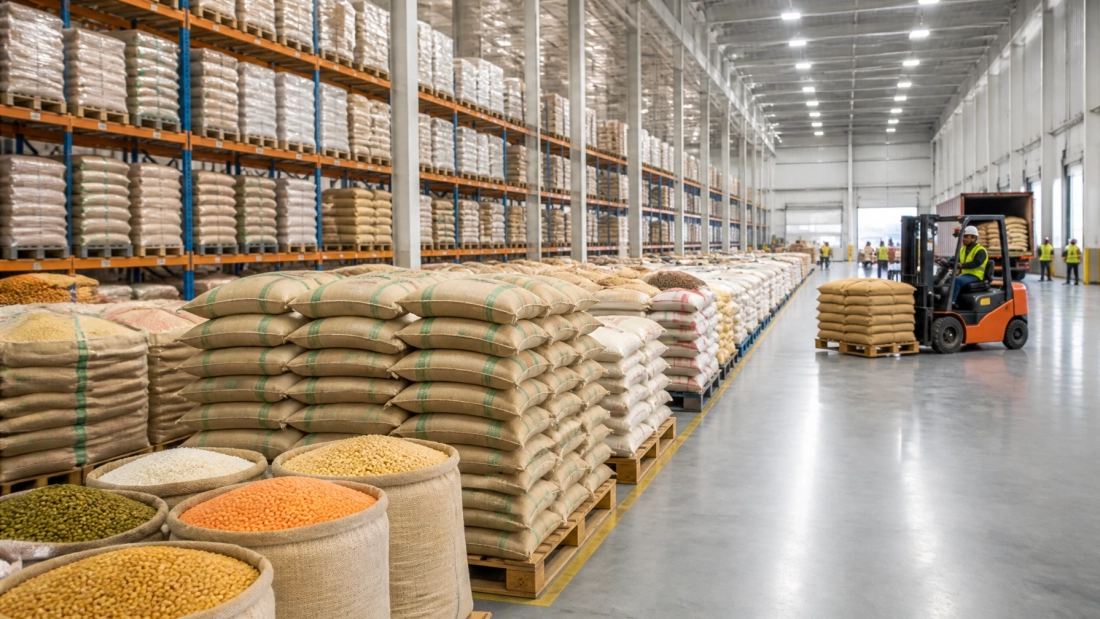
The United Arab Emirates (UAE), and specifically Dubai, serves as a critical epicenter for the global food trade. As a nation that imports over 80% of its food requirements, the demand for staples like rice and pulses remains exceptionally high and consistent. For international exporters and local suppliers, the UAE offers a sophisticated landscape for growth, provided they can navigate the complexities of logistics, quality standards, and distribution.
At Mayil Global, we have optimized this process. By utilizing our specialized 3% commission framework, exporters can tap into the lucrative Middle Eastern market with a level of transparency and efficiency that is unmatched in the industry. This guide outlines the essential steps to exporting rice and pulses to the UAE and how our distribution model serves as a catalyst for your business success.
The UAE Market Opportunity for Rice and Pulses
The UAE's strategic location and world-class infrastructure make it more than just a destination for food products; it is a gateway to the entire MENA (Middle East and North Africa) region.
Why Dubai is the Global Hub for Grains
Dubai imports over 1.5 million tonnes of rice annually. The market is driven by a diverse expatriate population and a booming hospitality (HORECA) sector that requires steady, high-quality supplies of Basmati, Jasmine, and non-Basmati varieties. Furthermore, the UAE government maintains a 0% customs duty on rice, making it one of the most attractive markets for bulk rice suppliers globally.
Pulses: including lentils, chickpeas, and beans: are equally vital. They are fundamental ingredients in the local diet and are widely used across the restaurant and catering industries. For a wholesale food buyer in Dubai, ensuring a reliable supply of these commodities is a top operational priority.
Navigating the Regulatory Framework
To successfully enter the UAE market, exporters must adhere to the stringent regulations set by the Ministry of Climate Change & Environment (MOCCAE) and the Dubai Municipality Food Safety Department.
Mandatory Documentation and Safety Standards
Every shipment of rice or pulses must be accompanied by a specific set of documents to ensure traceability and safety:
- Phytosanitary Certificate: Issued by the plant quarantine authority in the country of origin, confirming the shipment is free from pests.
- Fumigation Certificate: Standard for bulk grains to ensure the cargo has been treated according to international standards.
- Certificate of Origin: Verified by the relevant Chamber of Commerce.
- Commercial Invoice and Packing List: Detailed records of the transaction and cargo specifications.
Failure to provide these documents can lead to significant delays at the port of entry or the total rejection of the shipment.
Labeling and Packaging Compliance
The UAE has strict labeling requirements under the GSO (GCC Standardization Organization) standards. All packaging must be bilingual (Arabic and English) and clearly display:
- Product name and brand.
- Net weight.
- Country of origin.
- Production and expiry dates (DD/MM/YYYY).
- Storage instructions.
For bulk distribution, 50kg bags are the industry standard, while retail-focused exporters often utilize 1kg, 5kg, or 10kg premium packaging.

The Logistics of Importing Grains to Dubai
Efficiency in the supply chain is what separates successful exporters from those who struggle with overhead costs. Most bulk shipments arrive at Jebel Ali Port, the largest man-made harbor in the world and the premier logistics hub for the Middle East.
Port Operations and Inventory Management
Upon arrival, goods undergo inspection by Dubai Municipality officials. Once cleared, the logistics of storage and inland distribution become paramount. Rice and pulses require temperature-controlled or highly ventilated storage to maintain quality, especially during the high-temperature months in the UAE.
Mayil Global’s organized logistics ensure that once a container is cleared, it is moved swiftly to our facilities or directly to our network of buyers. This minimizes "dead time" and protects the integrity of the product. Our bulk rice suppliers in Dubai benefit from our deep integration with port authorities and transportation networks.

The Mayil Global Advantage: The 3% Commission Framework
The traditional distribution model often leaves exporters in the dark regarding the final sale price and the actual margins. At Mayil Global, we operate with a different philosophy: operational transparency and shared growth.
Transparent Distribution for International Exporters
Our 3 percent commission distributor UAE model is designed specifically for international and local exporters who want to maximize their returns. Here is how it works:
- Fixed Fee: We charge a flat 3% commission on the sale of your goods.
- Full Disclosure: Exporters are kept informed of the market rates and the final sale price to the B2B buyer.
- Market Access: We utilize our established relationships with supermarkets, restaurant chains, and wholesale distributors to move your inventory quickly.
This framework removes the guesswork and high markups often hidden by traditional middlemen. It allows the exporter to remain competitive while ensuring Mayil Global is incentivized to achieve the best possible market price.
Immediate Liquidity through Cash-and-Carry
One of the greatest challenges in the export business is the "liquidity gap": the time between shipping a container and receiving payment. To solve this, Mayil Global offers a Cash-and-Carry model. We are prepared to purchase entire containers of rice, pulses, and grains for immediate cash, providing the liquidity you need to fund your next shipment. This is particularly beneficial for exporters operating in the Aweer Market and other major wholesale hubs. You can read more about how this solves liquidity problems here.
Ensuring Quality: Our Sourcing and Inspection Protocols
In the B2B world, reputation is built on consistency. Whether we are sourcing spices or bulk rice, our quality control protocols are non-negotiable.
We employ a multi-stage inspection process:
- Farm-Direct Sourcing: We work with trusted farms and global suppliers to ensure the raw product meets our baseline standards.
- Pre-Shipment Inspection: Verification of grain length, moisture content, and purity.
- Hygienic Handling: Our packaging and storage follow strict food safety standards to prevent contamination.
- Final Quality Check: Every batch is inspected upon arrival in the UAE before distribution to our B2B clients.

Conclusion: Building a Sustainable Export Partnership
Exporting rice and pulses to the UAE is a high-volume, high-reward venture, but it requires a partner who understands the nuances of the Dubai market. By combining a global supply network with a localized, transparent distribution strategy, Mayil Global provides the stability and reliability that modern exporters demand.
The 3% commission framework is more than just a pricing model; it is a commitment to professional, mutually beneficial trade. If you are a supplier of premium rice, lentils, or grains looking to establish a dominant presence in the UAE, the path to success begins with a structured, corporate-grade partnership.
Are you ready to move your next container? Contact Mayil Global today to discuss our 3% commission distribution or our immediate cash-and-carry options.