

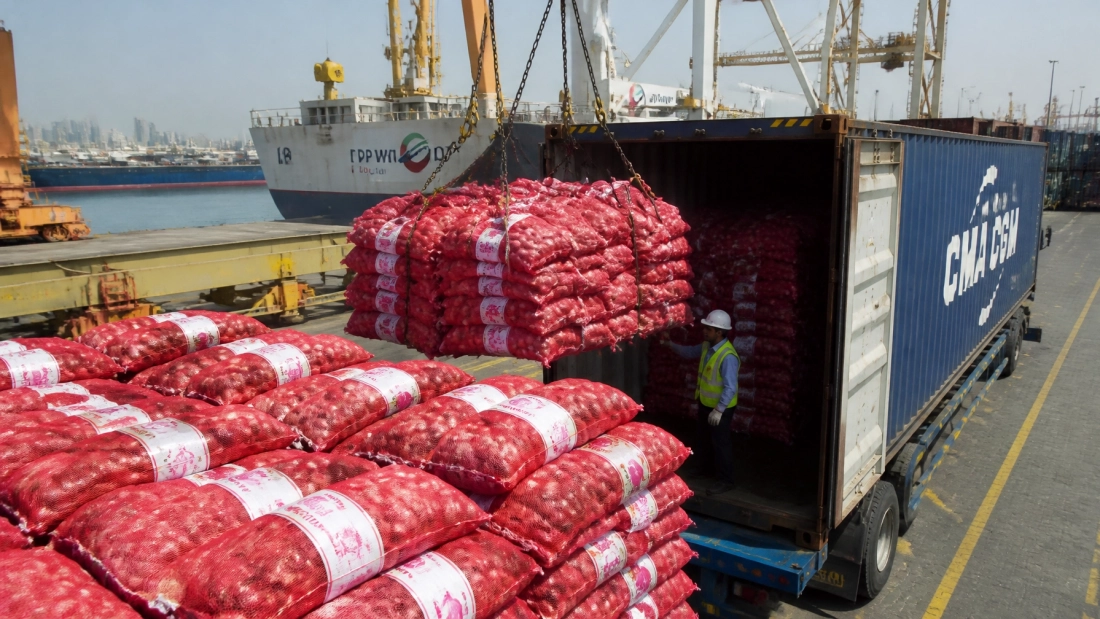
Dubai remains one of the world's most dynamic hubs for the fresh produce trade, acting as a critical gateway for the entire Middle East and North Africa (MENA) region. For global shippers, particularly those focused on importing onions to Dubai, the market offers high volume and consistent demand. However, the complexity of international logistics, coupled with fluctuating market prices at the Al Aweer Central Fruit and Vegetable Market, requires a strategic approach to ensure profitability.
At Mayil Global, we specialize in bridging the gap between global exporters and the UAE's retail and wholesale sectors. Our operational model is built on transparency and efficiency, offering a disruptive 3% commission-based distribution and immediate Cash & Carry options for container owners.
This guide outlines the five essential steps to successfully exporting onions to the UAE while securing your margins through professional logistics and strategic partnerships.
Step 1: Regulatory Compliance and Documentation
The first pillar of any successful food export operation is strict adherence to UAE federal and municipal regulations. Dubai Municipality and the Ministry of Climate Change and Environment (MOCCAE) maintain rigorous standards to ensure food safety and security.
To export onions to Dubai, shippers must provide a comprehensive set of documents:
- Commercial Invoice: Detailing the HS Code (070310), variety, and value.
- Packing List: Specifying the number of bags, net weight, and gross weight.
- Phytosanitary Certificate: Issued by the exporting country’s plant protection organization, confirming the onions are free from regulated pests.
- Certificate of Origin (COO): Verifying the source of the produce.
- Bill of Lading (B/L): The primary transport document for sea freight shipments.
Failure to provide accurate documentation can lead to costly delays at Jebel Ali Port or even the rejection of the entire consignment. For a deeper understanding of our handling of these processes, visit our Sourcing and Logistics page.
Step 2: Quality Control and Standardized Packaging
In the competitive landscape of wholesale fruits and vegetables in Dubai, quality is the ultimate differentiator. Onions destined for the UAE market must be properly cured, dry, and free from sprouting or decay.
Packaging Standards
Standardization in packaging facilitates easier handling and better ventilation during transit. For the Dubai market, the following are preferred:
- Red Mesh Bags: 10kg, 18kg, or 25kg weights are the industry standard.
- Proper Labeling: Each bag must clearly state the product name, country of origin, net weight, and the exporter’s details.
- Size Grading: Uniformity in bulb size (typically 45mm to 60mm+ for premium grades) is essential for securing top-tier prices at Al Aweer.
Implementing a strict quality control inspection at every stage: from the farm to the packing house: is a non-negotiable requirement of the Mayil Global standard.

Step 3: Optimizing Logistics and Cold Chain Integrity
Logistics management is the most significant variable in the cost-to-profit ratio. For onions, which are semi-perishable, maintaining a stable environment during the 10-to-14-day sea transit from major origins like India or Egypt is vital.
Container Management
While onions can often be shipped in ventilated ambient containers, premium red onions or shipments during peak summer months often require temperature-controlled reefer containers. This ensures that the bulbs do not sweat or develop mold due to the high humidity and temperatures typical of the Arabian Gulf.
By organizing logistics with an experienced food distribution company in the UAE, exporters can minimize "liquidity gaps" caused by transit delays. Our infrastructure includes temperature-controlled warehousing that maintains the integrity of the supply chain from the moment the container is offloaded at the port.

Step 4: Understanding Al Aweer Market Dynamics
Navigating the pricing structures of the Al Aweer Central Fruit and Vegetable Market is often the most challenging aspect for international shippers. Prices are influenced by daily supply volumes, seasonal demand (such as during Ramadan), and re-export requirements for neighboring GCC countries.
Pricing Mechanisms
- Wholesale Rates: These are stabilized prices offered to supermarket chains and large-scale caterers.
- Cash Rates: Highly volatile daily rates negotiated within the market stalls for immediate turnover.
To maximize profit, exporters must have access to real-time market intelligence. Timing the arrival of a container to coincide with low inventory levels in the market can significantly enhance the final sale price.
Step 5: Securing Profit via the 3% Commission & Cash & Carry Model
The final and most critical step in how to export food to Dubai is choosing the right distribution partner. Traditional agents in Al Aweer often charge a 5% commission and operate on slow payment cycles, which can stifle an exporter’s ability to reinvest in new stock.
The Mayil Global Advantage
At Mayil Global, we have disrupted this traditional model to favor the exporter:
- 3% Commission Model: We charge a lean 3% commission for distribution, allowing exporters to retain an additional 2% of their gross revenue. For high-volume onion shippers, this translates into substantial annual savings.
- Immediate Cash & Carry: We understand that liquidity is the lifeblood of your business. Our Cash & Carry model facilitates rapid container exits, providing immediate payments so you can cycle your capital faster.
- Direct B2B Access: We bypass multiple layers of middlemen by supplying directly to a robust network of supermarkets, restaurants, and wholesale distributors across the UAE.

Conclusion: Building a Sustainable Export Partnership
Exporting onions to Dubai is a highly profitable venture when executed with professional rigor and the right local partner. By focusing on regulatory compliance, quality packaging, and efficient logistics, global shippers can establish a consistent presence in the UAE market.
Mayil Global is committed to building long-term relationships with international exporters based on trust, transparency, and operational excellence. Whether you are moving a single container or a weekly shipment, our 3% commission strategy and Cash & Carry options are designed to protect your margins and accelerate your growth.
For exporters ready to secure their profits in the Dubai market, contact our procurement team today to discuss your next shipment.