

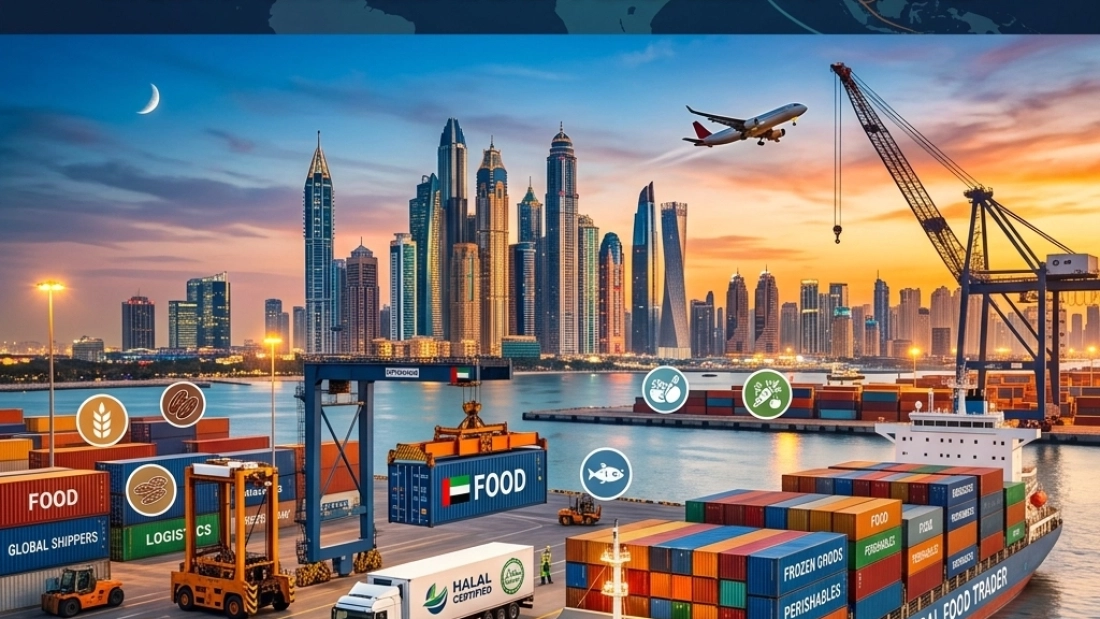
Dubai stands as a premier global hub for the international food trade, serving as a gateway not only to the United Arab Emirates but to the wider Middle East, Africa, and CIS regions. For global shippers, understanding how to export food to dubai is a strategic necessity that requires a deep comprehension of regulatory frameworks, logistics infrastructure, and market-specific distribution models.
At Mayil Global, we facilitate this transition by providing a transparent, high-efficiency pathway for exporters. By leveraging our 3% commission model and robust logistics network, we ensure that global suppliers can navigate the complexities of the Dubai market with operational certainty.
The Regulatory Framework: Navigating Dubai Municipality and Federal Standards
The first step in any successful export operation is ensuring legal and regulatory compliance. The UAE maintains rigorous standards for food safety and quality, managed primarily through the Dubai Municipality (DM) and the Ministry of Climate Change and Environment (MOCCAE).
Business Registration and Licensing
To engage in the food trade, a company must possess a valid trade license issued by the Dubai Department of Economic Development (DED) or a relevant Free Zone authority. For international exporters, the most efficient route is often partnering with an established local distributor like Mayil Global. We manage the local intricacies, allowing you to focus on production and shipment.
Product Registration (FIRS)
Every food item imported into Dubai must be registered in the Food Import and Re-export System (FIRS) managed by Dubai Municipality. This process involves:
- Submitting a detailed product description.
- Providing original artwork of the product packaging.
- Undergoing laboratory testing to ensure compliance with UAE health standards.
Establishing this foundation is critical before any vessel departs its port of origin. Failure to register products correctly results in costly delays at the Port of Jebel Ali.

Essential Documentation for Global Shippers
Accuracy in documentation is non-negotiable in the Dubai food trade. Discrepancies between the packing list and the actual shipment can lead to immediate rejection by customs authorities. To ensure a smooth entry, the following documents are required:
- Commercial Invoice: Must include the total value, currency, and detailed description of the goods.
- Certificate of Origin: Authenticated by the Chamber of Commerce in the country of origin.
- Detailed Packing List: Specifying the HS Code for each item, net weight, and gross weight.
- Health Certificate: Issued by the recognized government authority in the exporting country, confirming the food is fit for human consumption.
- Halal Certificate: Mandatory for all meat and poultry products, issued by an UAE-approved Halal certification body.
- Bill of Lading/Airway Bill: The primary transport document.
For exporters focused on wholesale fruits and vegetables dubai, maintaining a digitized and easily accessible record of these documents is vital for clearing the Al Aweer Central Fruit and Vegetable Market inspections.
The Mayil Global Advantage: The 3% Commission Distribution Model
The traditional export-import model often leaves shippers vulnerable to price fluctuations and hidden margins. Mayil Global operates on a transparent 3% commission model, a strategy designed to maximize the margins of the exporter while ensuring high-volume turnover.
Why the 3% Model Works for Exporters
In a standard trading scenario, an importer may buy low and sell high, keeping the surplus profit for themselves. At Mayil Global, we act as your dedicated distribution partner. We sell your produce: whether it is bulk rice, onions, or ginger: at the best possible market price in Dubai and charge a flat 3% service fee.
This model provides:
- Total Transparency: You see the final sale price achieved in the market.
- Maximum Returns: The majority of the market value is returned to the shipper.
- Daily Liquidity: By selling through our established channels in the Al Aweer market, we ensure fast movement of inventory, which is essential for perishable goods.
Exporters looking for more detail on this can read our breakdown of the 3% commission strategy and how it secures daily liquidity.

Strategic Commodity Focus: Importing Onions and Vegetables to Dubai
When considering importing onions dubai or other staple vegetables, shippers must account for seasonal demand and the logistics of the Al Aweer market. Dubai is a high-volume consumer of onions, potatoes, and tomatoes, but these products are sensitive to supply chain delays.
Wholesale Fruits and Vegetables in Dubai
The Al Aweer market is the pulse of the UAE’s produce trade. Prices fluctuate daily based on global supply chains and local demand. Mayil Global provides real-time insights into these price movements, helping our partners time their shipments for maximum profitability.
For instance, if you are looking for a potato buyer in dubai, our model ensures your containers are moved quickly to avoid spoilage, utilizing our Cash & Carry network to reach local B2B buyers like restaurants and supermarket chains.
Logistics and Supply Chain Integrity
Maintaining the cold chain is the most critical technical aspect of exporting food to Dubai. Given the high ambient temperatures in the UAE, any break in the temperature-controlled environment can result in a total loss of the shipment.
Sourcing and Logistics Management
Our sourcing and logistics department coordinates with international shipping lines to ensure that reefer containers are monitored from the moment they are loaded until they arrive at our wholesale facilities.
Key considerations for logistics include:
- Port Selection: Jebel Ali Port is the primary entry point for sea freight, offering world-class infrastructure.
- Customs Clearance: Pre-clearing goods through the Dubai Trade portal to minimize time spent at the terminal.
- Last-Mile Distribution: Rapid transfer from the port to temperature-controlled warehouses or the Al Aweer market floor.

Quality Standards and Labeling Requirements
UAE regulations regarding food labeling are strict and must be adhered to without exception. Labels must be in Arabic (or bilingual Arabic/English) and must include:
- Product name and brand name.
- Country of origin.
- Manufacturer name and address.
- Production and expiration dates (DD/MM/YYYY format).
- Ingredient list and nutritional facts.
- Storage instructions (e.g., "Keep Refrigerated").
Exporters must also be aware of the "Shelf Life" regulations, which dictate the maximum allowable time a product can stay on the shelf from the date of production. Shipping items with short remaining shelf life is a common mistake that leads to rejection. For more on avoiding these pitfalls, refer to our guide on 7 mistakes you're making with exports to the UAE.
Cash & Carry: Empowering Local B2B Buyers
While we focus on empowering global exporters, Mayil Global also serves as a vital link for local UAE businesses. Our Cash & Carry model allows restaurants, catering companies, and smaller wholesalers to purchase bulk goods: like bulk rice in Dubai: at competitive wholesale prices with immediate availability.
This dual approach creates a self-sustaining ecosystem:
- Exporters send containers to Mayil Global under the 3% commission model.
- Local buyers purchase these goods via our Cash & Carry facilities.
- Exporters receive quick payments and high turnover.
- Local buyers receive fresh, high-quality produce at the best prices.
This synergy is why we are recognized as a leader in wholesale vegetables in dubai.

Steps to Success: Your Export Checklist
To succeed in the Dubai market, global shippers should follow this structured approach:
- Market Analysis: Evaluate current demand for your specific commodity (e.g., onions or lemons).
- Partner Selection: Align with a distributor like Mayil Global that offers transparency and market access.
- Compliance Audit: Ensure labels and ingredients meet UAE standards before production.
- Logistics Planning: Secure reefer containers and coordinate with Mayil Global for port clearance.
- Execution: Send the shipment and monitor the sale via our 3% commission reporting.
Building Long-Term Strategic Partnerships
Exporting to Dubai is not merely about a single transaction; it is about building a dependable supply chain. Mayil Global prioritizes long-term relationships based on trust, consistent quality, and operational excellence. Whether you are a large-scale rice miller or a boutique vegetable grower, our infrastructure is designed to scale with your ambitions.
By focusing on functional clarity and rigorous standards, we ensure that every container shipped to us is handled with professional care, maximizing profit for the exporter and providing consistent value to the UAE market.
If you are ready to expand your footprint in the Middle East, we invite you to explore our products or contact us today to discuss how our 3% commission model can transform your export business.
