The United Arab Emirates, and specifically Dubai, serves as one of the most significant hubs for fruit and vegetable distribution in the Middle East. With a growing population and a high dependency on food imports, the demand for fresh citrus: specifically oranges: remains consistently high throughout the year. For global shippers, exporting oranges to Dubai represents a lucrative opportunity, provided they can navigate the complexities of international trade, logistics, and market pricing.
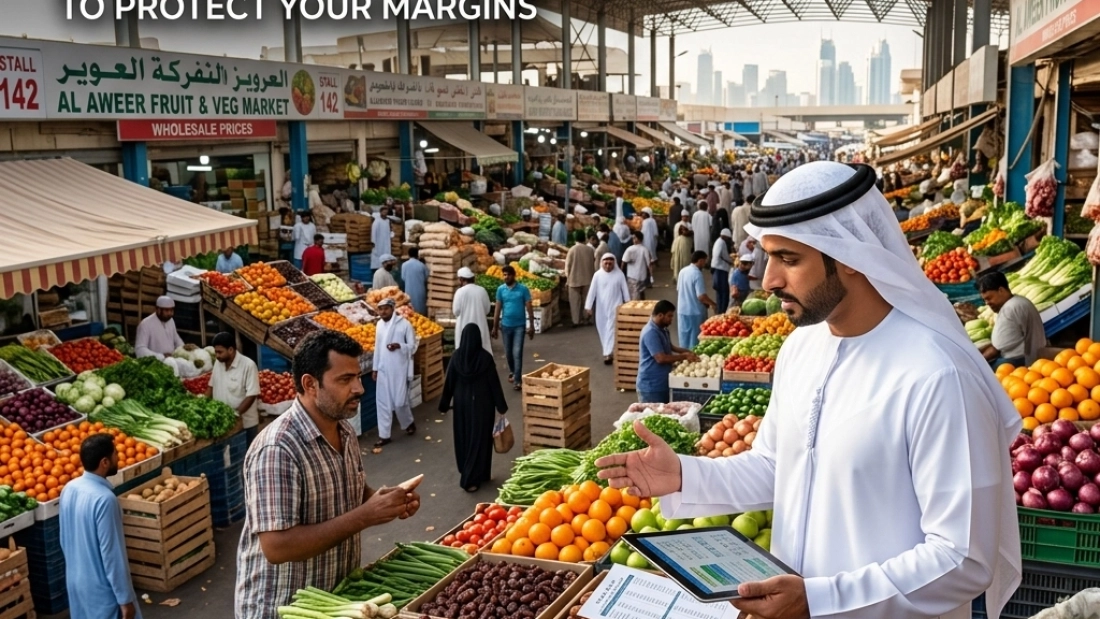
However, many exporters struggle with low profit margins due to high intermediary fees, lack of transparency in the Aweer Market, and delayed payments. At Mayil Global, we specialize in solving these challenges through our transparent 3% commission model and our robust Cash & Carry system. This guide outlines the essential steps to successfully export oranges to Dubai while ensuring you retain the maximum possible return on your investment.
Looking for an Orange Buyer in Dubai?
If you are currently searching for a reliable orange buyer in Dubai, you are likely looking for two things: security and profitability. The traditional trading model often leaves exporters in the dark regarding the final sale price of their containers, leading to "hidden" deductions that eat into margins.
At Mayil Global, we function differently. We provide a platform where international exporters can access the UAE market with total clarity. Whether you are shipping Valencias from Egypt, Navels from South Africa, or high-quality citrus from India, our infrastructure is designed to handle bulk volume while prioritizing your liquidity.
Step 1: Obtain Essential Documentation and Registrations
Before the first crate of oranges leaves your facility, you must ensure your business is legally compliant for international trade. For exporters, particularly those based in India, this involves several layers of registration.
Key Certifications Required:
- Import Export Code (IEC): This is the primary requirement for any business looking to export from India.
- APEDA Registration: The Agricultural and Processed Food Products Export Development Authority (APEDA) license is vital for citrus exporters. It ensures your products meet the quality standards required for global markets.
- Trade License and TIN: Standard business registrations that establish your company as a legal entity.
- AD Code: An Authorized Dealer Code from your bank is necessary to track foreign exchange and ensure your payments are processed legally.
Having these documents ready avoids administrative delays at the port. Preparation at this stage is the foundation of a professional supply chain.

Step 2: Comply With UAE Food Safety and Labeling Standards
The UAE market is governed by strict regulations managed by the Ministry of Climate Change & Environment (MOCCAE). Failure to comply with these standards can result in the rejection of your entire shipment, leading to massive financial losses.
Labeling Requirements:
Every carton of oranges must be clearly labeled in both English and Arabic. The labels must include:
- Product Name (e.g., "Fresh Valencia Oranges")
- Country of Origin
- Net Weight
- Production and Expiration Dates
- Name and Address of the Producer/Exporter
Quality and Hygiene:
The UAE adheres to international food safety standards, including ISO and HACCP. Ensuring your oranges are free from pests, chemical residues, and rot is non-negotiable. At Mayil Global, we prioritize quality control to ensure that the produce arriving at our facilities meets the high expectations of UAE B2B buyers and retailers.
Step 3: Sourcing High-Quality Oranges and Managing Logistics
The profitability of your export venture is heavily dictated by the quality of the fruit and the efficiency of the cold chain. Oranges are perishable, and any break in the temperature-controlled environment can lead to spoilage.
Sourcing Strategy:
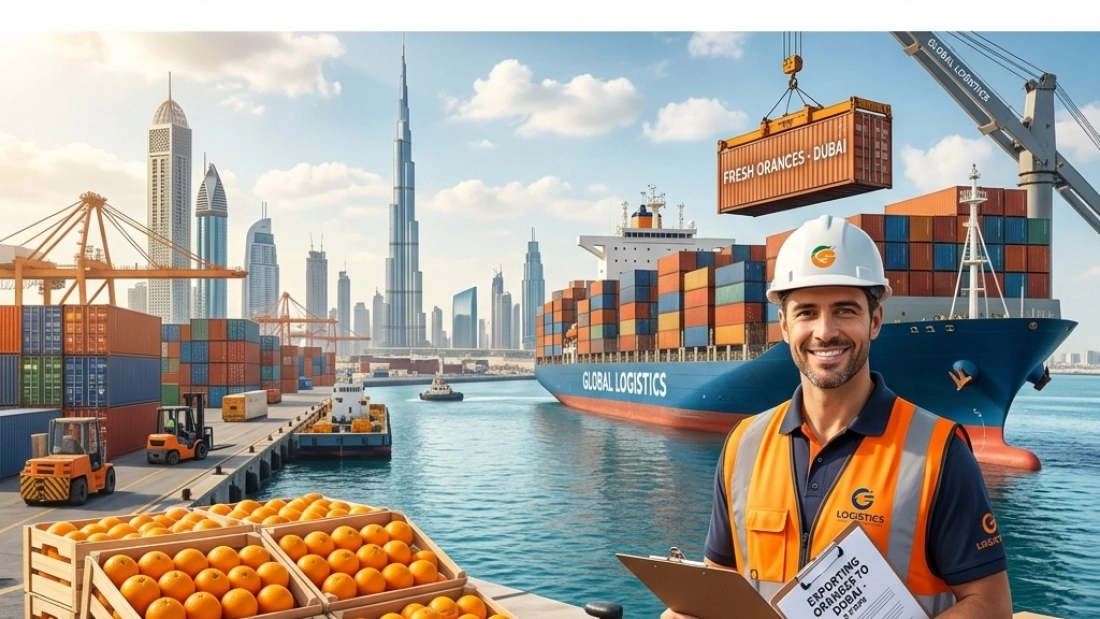
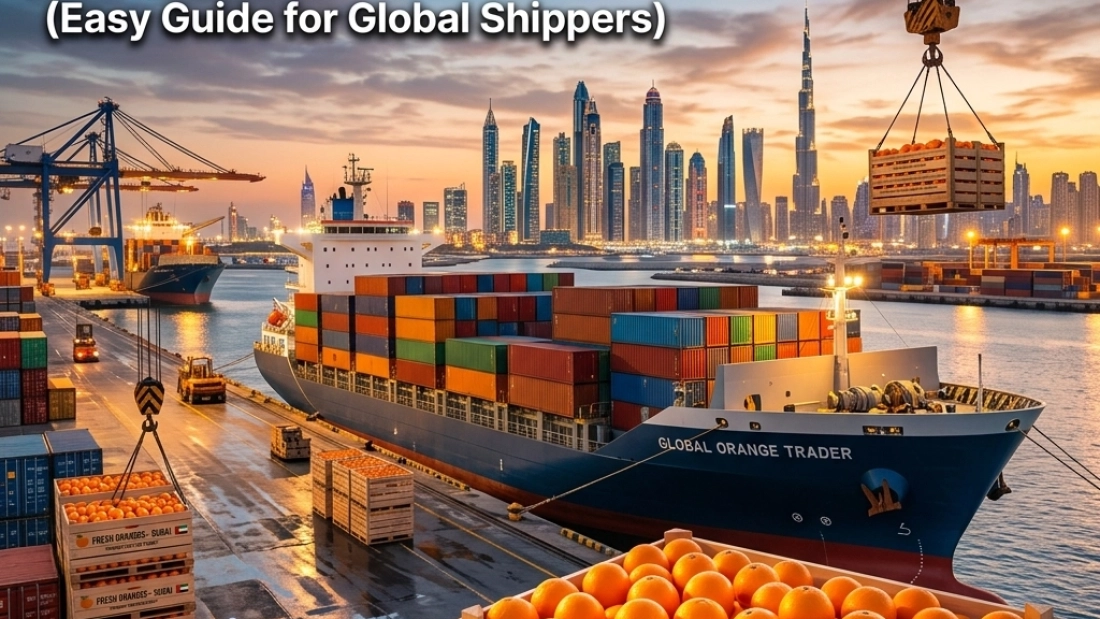
Work with growers who understand export-grade requirements. Oranges should be uniform in size, color, and juice content. For example, the transit time from Mumbai to Dubai is typically only 3 to 5 days, which is ideal for maintaining freshness. However, for shippers from more distant regions, choosing the right freight forwarder is critical.
Logistics and Cold Chain:
Oranges should be transported in refrigerated containers (Reefers) at temperatures between 3°C to 8°C, depending on the variety and duration of travel. Proper ventilation is also required to prevent the buildup of ethylene gas.
For more information on how we manage these complexities, you can read our guide on sourcing and logistics.
Step 4: Utilize the 3% Commission Model for Transparency
One of the biggest risks for exporters in the Dubai market is the "Consignment" model, where the agent sells your goods but provides vague reports on the final price. This lack of transparency is why many shippers are switching to Mayil Global.
The 3% Commission Strategy Explained:
We operate on a fixed 3% commission model. This means that as an exporter, you know exactly what our fee is. There are no hidden charges or surprise deductions. We act as your dedicated distribution partner in the Aweer Market, ensuring your oranges are sold at the best possible market rate while providing you with full visibility into the transaction.
This model is designed to:
- Eliminate Opaque Pricing: You receive clear reports on sales.
- Increase Trust: We build long-term relationships based on measurable data.
- Maximize Returns: Lower commission rates mean more money stays in your pocket.

Step 5: Secure Fast Liquidity with Cash & Carry
In the world of food distribution, cash flow is king. Waiting weeks or months for payment can cripple an export business. This is where Mayil Global’s Cash & Carry model provides a significant competitive advantage.
Solving the Liquidity Gap:
For many shippers, the "Cash & Carry" approach means that once the container arrives and the quality is verified, the goods are moved quickly through our wholesale channels. This generates immediate liquidity, allowing you to reinvest in your next shipment without delay.
By combining the 3% commission for distribution with the speed of Cash & Carry, Mayil Global helps exporters avoid the common pitfalls of the UAE market. Whether you are exporting tomatoes, lemons, or oranges, the goal is always the same: get paid faster and maintain higher margins.
Maximizing Your Margins with Government Incentives
Beyond the operational efficiencies provided by Mayil Global, exporters should also take advantage of government-backed schemes. For Indian exporters, tools like the RODTEP (Remission of Duties and Taxes on Exported Products) scheme can provide a 3% return on the export value. Additionally, a duty drawback of approximately 0.15% can further boost your bottom line.
When you combine these government incentives with Mayil Global’s low 3% commission, you are looking at one of the most profitable ways to export oranges to the UAE.
Why Choose Mayil Global for Your Orange Exports?
Mayil Global is not just a buyer; we are a strategic partner in the UAE food distribution sector. Our business is built on the pillars of Safety, Hygiene, and International Standards. We understand that for an exporter, your reputation is as important as your profit.
Our Professional Commitment:
- Dependable Supply Chain: We manage the movement of goods from the port to our wholesale facilities with rigorous attention to detail.
- Operational Excellence: Our team handles the local complexities so you can focus on sourcing and production.
- Direct B2B Access: We connect your products directly with bulk buyers, including supermarkets, catering companies, and restaurants across the UAE.
If you are ready to scale your orange export business and want to work with a partner who values transparency as much as you do, it is time to connect with us.
Explore our full range of products or contact us today to discuss how we can help you secure your margins in the Dubai market. By choosing the right model today, you ensure the growth of your business for years to come.